Key takeaways
- Grow coffee as a glossy houseplant first; any beans are a fun bonus, not a supply
- Keep it at 18-24°C and never below 15°C, away from cold draughts and radiators
- An east-facing window is ideal; strong midday sun scorches the leaves
- Shop plants are often a clump of seedlings, so separate or thin them in the first spring
- Water when the top 2-3cm of compost is dry, using rainwater if your tap water is hard
- Mature plants may flower after three to five years; cherries take most of a year to ripen
A coffee plant is two buys in one pot. As a houseplant, Coffea arabica is a winner, with glossy, dark green leaves and a neat upright shape. As a source of coffee, it’s more of a fun experiment. A mature plant might give you enough beans for a cup or two a year.
This guide covers both sides: how to keep a coffee plant thriving in a UK home, how to coax it into flower, and what to expect when you finally roast your harvest.
Is it worth growing a coffee plant for the beans?
Grow it for the leaves and treat the beans as a bonus. Each coffee cherry holds just two beans, and an indoor plant only carries a modest crop. Expect a cup or two in a good year, not a daily supply.
That doesn’t make it a bad plant. The leaves are glossy and handsome, it grows steadily once settled, and it forgives the odd missed watering. Mature plants carry white, sweetly scented flowers, then cherries that ripen from green to deep red. If you love leafy plants for a warm, bright room, the conservatory houseplants round-up has more.

A handful of beans is a realistic harvest. Enough for a proud single cup and a good story.
Buying a coffee plant: separate the seedling clump
Many coffee plants are sold as a crowded clump of seedlings in one pot, so split or thin them in the first spring. Left alone, the seedlings compete for water and food, and the whole pot often struggles.
To separate them, water the pot and slide the clump out. Gently tease the roots apart in a bowl of tepid water. Pot each seedling into its own 9-10cm pot of peat-free compost, or an ericaceous mix if your tap water is hard. Expect them to droop for a week or so while the roots recover.
If that feels too fiddly, thin instead. Snip off all but the strongest two or three stems at compost level. You keep fewer plants, but the roots stay undisturbed.

On the left, a clump as it’s often sold. On the right, one seedling with room to grow. Splitting them gives each a proper chance.
What light and temperature does a coffee plant need?
Coffee needs bright light without harsh midday sun, and steady warmth of 18-24°C. In the wild it grows in the shade of taller trees. An east-facing window suits it well, with gentle morning sun and bright light the rest of the day. A south window in summer can scorch the leaves, so pull it back or use a sheer curtain.
Never let it sit below 15°C. Cold slows growth and can make leaves drop. Cold draughts show up as brown leaf edges, so keep it away from outside doors. Don’t leave it on a sill trapped behind closed curtains on winter nights.
Radiators are the other problem. Hot, dry air rising from a radiator below the window browns leaf tips fast. From November to March, move the plant a metre or two away.

An east-facing sill gives lovely morning light. Notice the radiator below, though: in winter, move the plant away from it.
Watering, humidity and feeding a coffee plant
Water when the top 2-3cm of compost feels dry, and keep the air around it a little humid. That usually means watering about once a week in summer and less often in winter. Never leave the pot standing in water.
Use rainwater if you can, especially in a hard-water area. Coffee likes slightly acidic compost, and lime from hard tap water slowly builds up. That can cause yellowing new leaves and brown edges. A water butt makes it easy, and the guide to rainwater harvesting shows how to set one up.
Centrally heated rooms get very dry in winter. Stand the plant on a pebble tray, a saucer of stones with water kept just below the pot base. Grouping it with other houseplants helps too. Misting only helps for a short while, so the tray does more.
Feed monthly from April to September with a half-strength liquid houseplant feed. Don’t feed in winter.

A pebble tray and some leafy neighbours keep the air moister around the leaves, which helps stop brown tips.
Repotting and pruning an indoor coffee plant
Repot every spring, one pot size up, until it’s in a 30cm pot. After that, scrape off the top few centimetres of compost each March and replace it with fresh. Always use a pot with drainage holes. The guide to repotting houseplants walks you through it.
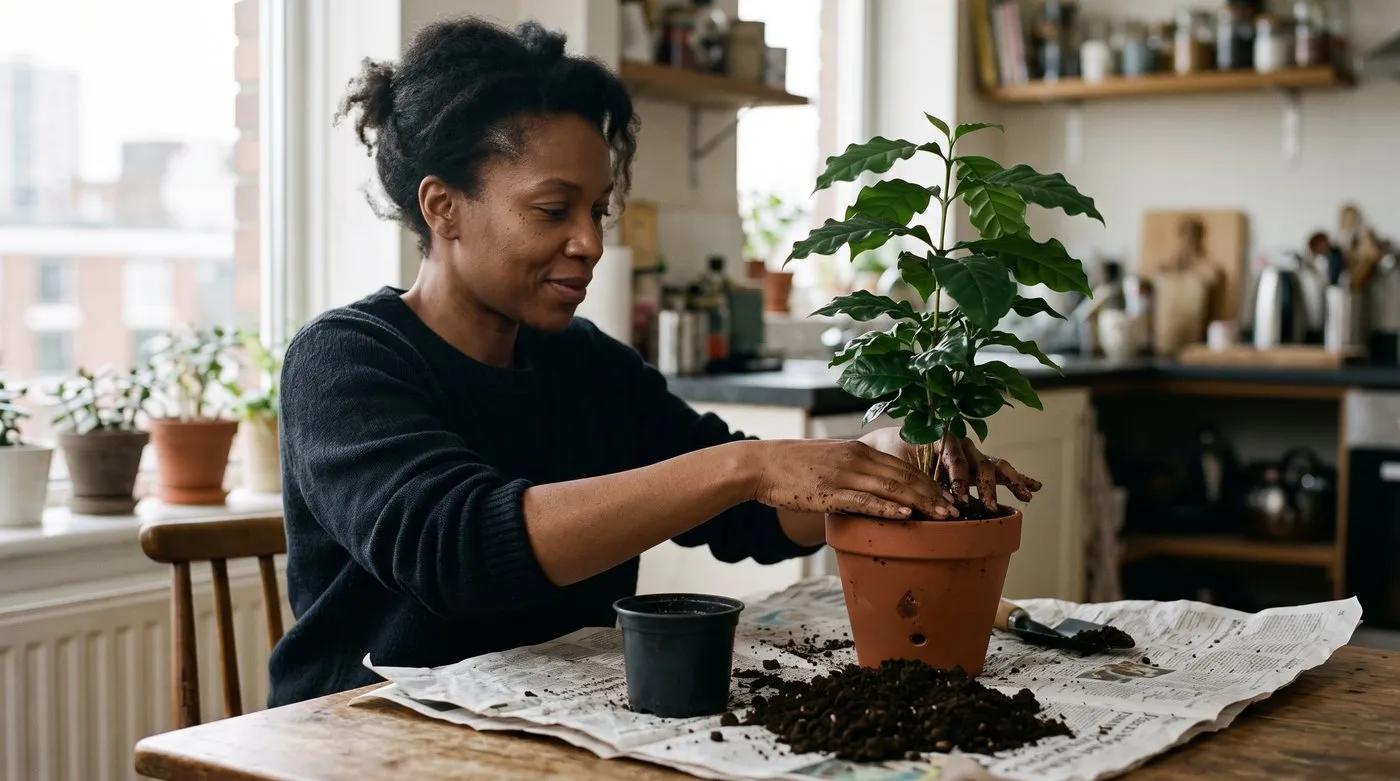
Go up just one pot size each spring. A snug pot with fresh compost keeps the roots healthy and the leaves glossy.
Left unpruned, a coffee plant can reach well over a metre and get leggy. Prune in spring. Cut the main stem back to the height you want, just above a pair of leaves. Shorten any long side branches too.
New side shoots grow from below each cut, making a bushier plant. That helps flowering as well, because flowers form where the leaves join the branches. More branches means more places for flowers.
How do you get a coffee plant to flower?
Be patient: a coffee plant usually flowers only once it’s three to five years old. A mature, bushy plant in good light has the best chance.
A slightly cooler, drier winter seems to help it set buds. From November to January, keep it at about 15-18°C and let the compost dry a little more between waterings. Then return to normal care as the days lengthen in spring.
Clusters of white, jasmine-scented flowers open where the leaves meet the stems. They only last a few days. Coffee can pollinate itself, but indoors there are no bees or breeze to help. Hand-pollinate by brushing a small, soft paintbrush gently over each flower once or twice a day while they’re open.

A soft paintbrush does the job of the bees. A few minutes while the flowers are open helps more cherries set.
From flower to cup: harvesting and roasting
Coffee cherries take most of a year to ripen, turning from green to deep red. Tiny green fruits appear a few weeks after flowering. They stay hard and green for months, then colour up through yellow and orange to red.
The cherries ripen unevenly, so pick only the fully red ones, every few days. Green cherries won’t ripen once picked.
To turn them into coffee:
- Squeeze out the beans. Each cherry pops out two seeds.
- Soak and rinse. Leave the beans in a jar of water for a day or two to loosen the sticky coating, then rinse well.
- Dry. Spread them on a rack in a warm, airy room for about two weeks, until hard.
- Peel off the papery skin, called parchment, by rubbing the dry beans between your hands.
- Roast. Stir them in a dry frying pan over a medium heat until they crackle and turn brown. Open a window, as it gets smoky.
- Rest and grind. Leave them a day before grinding and brewing.

Cherries on one branch ripen weeks apart. Pick only the deep red ones and leave the rest to colour up.
A month-by-month coffee plant calendar
| Month | What to do |
|---|---|
| January | Keep it cooler and slightly drier. Check for draughts on cold nights |
| February | Look for spider mite in dry heated air. Keep the pebble tray topped up |
| March | Repot or top-dress. Return to normal watering as light improves |
| April | Start monthly half-strength feeding. Turn the pot weekly |
| May to June | Watch for flowers on mature plants and hand-pollinate. Shade from strong midday sun |
| July to August | Peak growth. Water when the top 2-3cm is dry and keep feeding |
| September | Last feed of the year |
| October | Stop feeding. Water a little less |
| November to December | Move away from radiators. Keep it at 15-18°C for its winter rest. Pick any red cherries |
Which pests attack coffee plants indoors?
Spider mite, scale insects and mealybugs cause most of the trouble. Dry winter air makes all three more likely.
- Spider mite leaves fine pale speckles on leaves and webbing underneath. A pebble tray helps prevent it. The guide to spider mite control covers what to do next.
- Scale insects look like small brown bumps on stems and leaf veins, with sticky leaves below. See scale insect identification and treatment.
- Mealybugs are white, cottony blobs tucked into leaf joints. The mealybug guide explains how to clear them.
Check the undersides of leaves and the leaf joints each time you water. Pests are much easier to clear when you spot them early. More houseplant care help is in the houseplants hub.
Common coffee plant mistakes
Most indoor coffee plants struggle for the same few reasons.
- Leaving the seedling clump crowded. It looks bushy, but the stems compete and decline. Separate or thin them in the first spring.
- Parking it over a radiator. Hot, dry air browns the leaves. Move it away in winter.
- Using hard tap water. Lime builds up and leaves yellow and brown. Use rainwater where you can.
- Overwatering. Soggy compost rots roots. Wait until the top 2-3cm is dry.
- Expecting a coffee supply. One plant gives a cup or two at best. Enjoy it as a houseplant with a bonus.
If you fancy a home-grown brew that’s easier, a tea plant gives more cups for less fuss.
Frequently asked questions
Can you grow a coffee plant indoors in the UK?
Yes, coffee grows happily indoors as a houseplant. Give it steady warmth of 18-24°C, bright light without harsh midday sun, and air that isn’t too dry. Treat it as a leafy houseplant first and any beans as a bonus.
How much coffee does one plant actually produce?
Not much: a good year might give a cup or two. A mature indoor plant may carry a small cluster of cherries, each holding two beans. It’s a fun project and a talking point, but not a way to supply your morning coffee.
How long does a coffee plant take to flower?
Usually three to five years, sometimes longer indoors. The plant needs to be mature, with plenty of side branches. A slightly cooler, drier spell in winter seems to help it set flower buds.
Why are the leaf edges on my coffee plant turning brown?
Cold draughts, dry heated air or hard tap water are the usual causes. Check whether it sits on a cold sill or above a radiator first. Then switch to rainwater and stand it on a pebble tray, and new leaves should come through clean.
Should I mist a coffee plant?
Misting helps only briefly, so there are better ways to add humidity. Stand the pot on a tray of wet pebbles and group it with other houseplants. That keeps the air around the leaves moister all day.
Is a coffee plant safe around cats and dogs?
No, keep it away from pets. The leaves and beans contain caffeine, which is harmful to cats and dogs. Place it somewhere they can’t chew it, and call your vet if a pet eats some.
Now your coffee plant has the right spot, read our guide to growing citrus trees in the UK for another warm-room plant that gives you something to pick.
Our team produces practical UK gardening guidance from source research, contributor records and established horticultural practice. Editorial standards are overseen by Matt W.