Key takeaways
- Buying peat-free compost is the easiest carbon-friendly swap you can make
- Composting garden and kitchen waste turns rubbish into free compost
- No-dig beds with a yearly mulch disturb the soil less and save effort
- Water butts cut the mains water you use in summer
- Hand, push and battery tools avoid petrol fumes and fuel costs
- Reuse plastic pots and buy bare-root trees and hedging in winter
Carbon-friendly gardening is mostly about small swaps: buy less, waste less and let nature do more of the work. Going peat-free, composting your own waste, no-dig beds, water butts and hand tools are the biggest wins. Most of them save money too.
You don’t need to change everything at once. Pick one or two swaps that fit how you garden, then add more each season. If you’re planning a whole new garden with nature in mind, the eco-friendly design guide linked at the end covers layout and planting.
Where does a garden’s carbon footprint come from?
A garden’s footprint comes mostly from what you buy and how you power it. The main sources are:
- Peat compost. Peat bogs lock up carbon. Digging them up for compost releases it.
- Petrol tools. Mowers, strimmers, blowers and rotavators burn fuel.
- Bought-in materials. Bags of compost, bark, fertiliser and new plastic pots all carry manufacturing and transport costs.
- Mains water. Treating and pumping water uses energy.
- Waste sent away. Garden waste collected and processed elsewhere, when it could be composted at home.
The good news is that every one of these has a simple swap, and most also improve the garden.
Switch to peat-free compost
Going peat-free is the easiest carbon-friendly change you can make. Peat bogs are one of the UK’s biggest natural carbon stores, and they’re also precious wildlife habitat. Peat-free compost leaves them where they are.
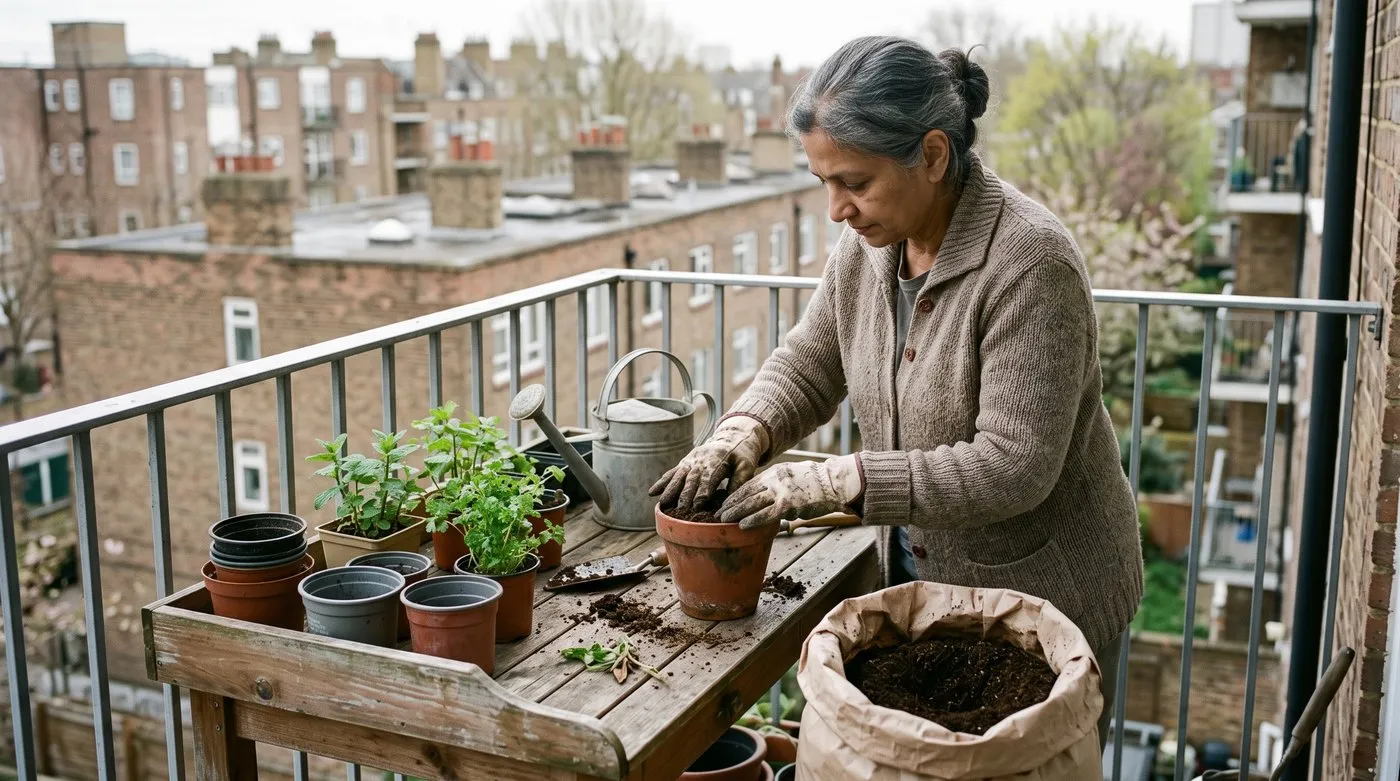
Peat-free compost and reused pots: two easy swaps you can make the next time you pot up.
Most garden centres now stock plenty of peat-free compost. A few tips help it work well:
- Check before watering. Peat-free compost can look dry on top while still damp below. Push a finger in first.
- Feed a little sooner. Some mixes run short of nutrients faster, especially for hungry plants in pots.
- Find one you like. Mixes are based on bark, wood fibre, coir or green waste, and they all behave a little differently.
The peat-free compost guide explains the different types and how to get the best from them.
Compost your garden and kitchen waste
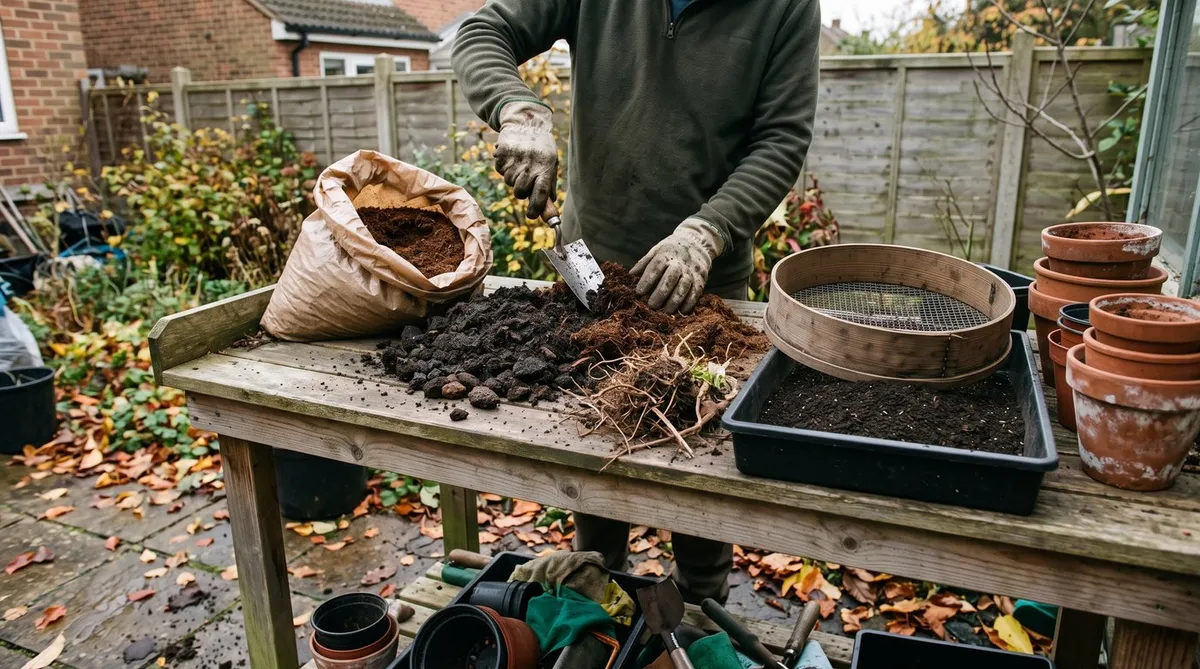
Home composting turns waste into free compost and cuts what you need to buy. Mix soft, green waste such as grass clippings and veg peelings with brown, dry waste such as cardboard, straw and dead leaves. Turn it now and then and you’ll have crumbly compost in a few months to a year.
Two bins or bays make life easier, as one can rot down while you fill the other. The guide on how to make compost covers the whole process from bin to finished compost.
Two extras help with the trickier waste:
- Bokashi bins take cooked food scraps, which a normal heap can’t handle. The fermented waste then goes into the compost or the ground.
- Wormeries turn kitchen scraps into rich worm compost and fit in small gardens, or even a shed.
Autumn leaves make leaf mould, a free mulch and potting ingredient. Pile them in a wire cage or a bin bag with holes and leave them for a year or two.

Several bays let one batch rot down while you fill the next. Free compost, and nothing leaves the garden.
Stop digging with no-dig beds
No-dig means you stop digging and add compost on top instead. Each year you spread a few centimetres of compost or well-rotted manure over the beds, and worms pull it down into the soil. The soil structure and soil life are left undisturbed.
It saves time and effort, and you can sell the rotavator. Digging brings buried weed seeds to the surface, so no-dig beds usually need less weeding too. Adding organic matter every year also helps the soil hold carbon and water.
Setting up a no-dig bed is simple:
- Cut weeds down to the ground. Leave the roots in.
- Lay overlapping cardboard over the area.
- Cover with a thick layer of compost.
- Plant or sow straight into the compost.
- Top up with a few centimetres of compost each year.
The no-dig gardening guide covers the method in detail.

No-dig beds get a fresh layer of compost on top each year instead of being dug over.
Make your own liquid feeds
Comfrey and nettle feeds can replace many bought liquid fertilisers. Pack leaves into a bucket, cover with water and leave for a few weeks. Dilute the liquid before use.
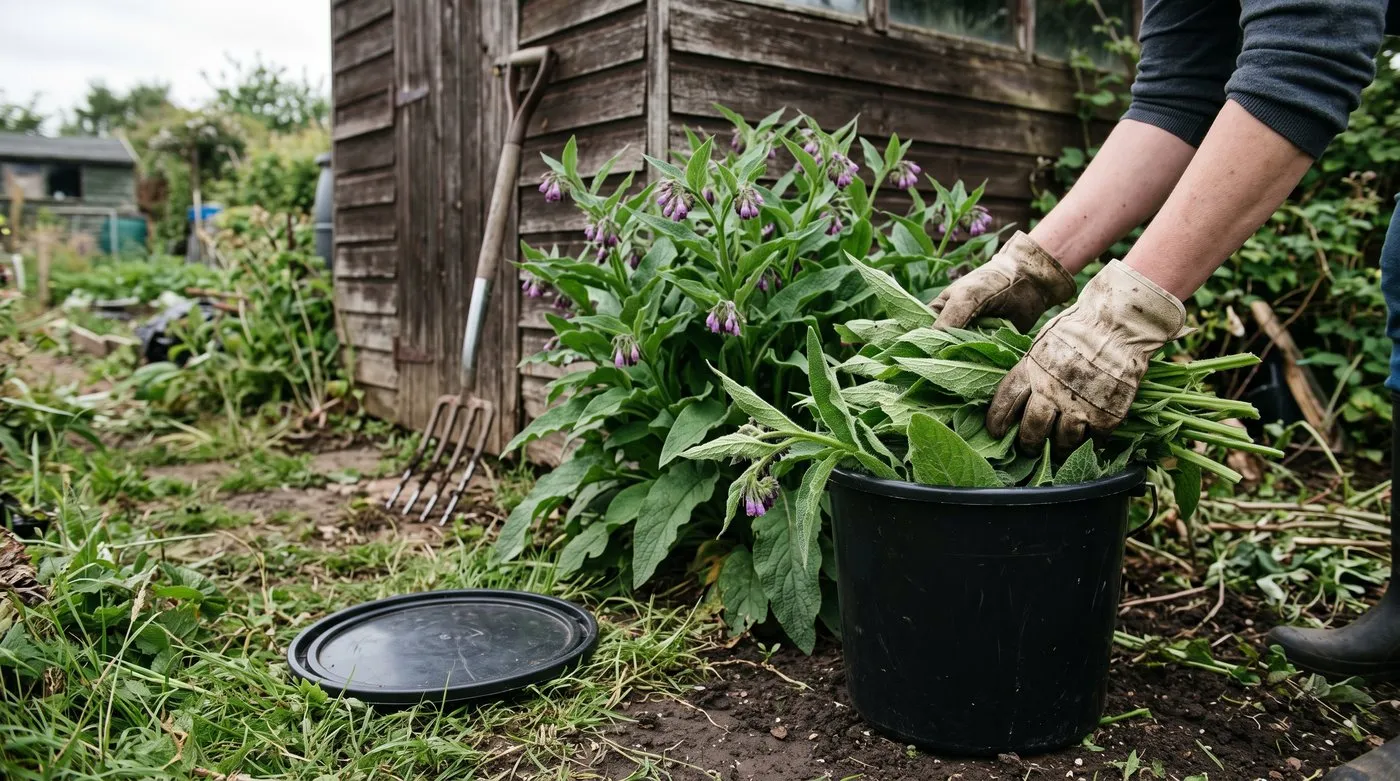
Cut comfrey regrows several times a year, so one clump keeps you in free tomato feed all summer.
- Comfrey feed is rich in potash, so it suits tomatoes, peppers, courgettes and other fruiting crops.
- Nettle feed is richer in nitrogen, so it suits leafy growth in spring.
The mix is strong and smelly, so keep the bucket covered and away from the house. The guide to making comfrey and nettle feed explains how to make and dilute them.
Green manures such as clover, field beans and phacelia are another free source of goodness. Sow them on empty beds in late summer or autumn. They cover the soil over winter, and the legumes among them add nitrogen.
Collect and save rainwater
Water butts cut how much treated mains water you use. Fit one to every downpipe you can, on the house, shed and greenhouse. Even a small shed roof fills a butt quickly in a summer shower.
Rainwater is ideal for established plants and especially for acid-loving plants such as blueberries and camellias. For seeds and young seedlings, stick to tap water, as stored rainwater can carry disease. Fit a lid to stop algae, mosquito larvae and curious children.
Saving water also means watering well. Water in the morning or evening, soak the roots rather than the leaves, and mulch to keep the moisture in. The rainwater harvesting guide covers butts, diverters and bigger tanks.

Linking two water butts doubles your storage. Every can you fill from a butt is one less from the tap.
Swap petrol tools for hand or battery tools
Hand tools use no fuel at all, and battery tools have no exhaust fumes. The simplest swaps are:
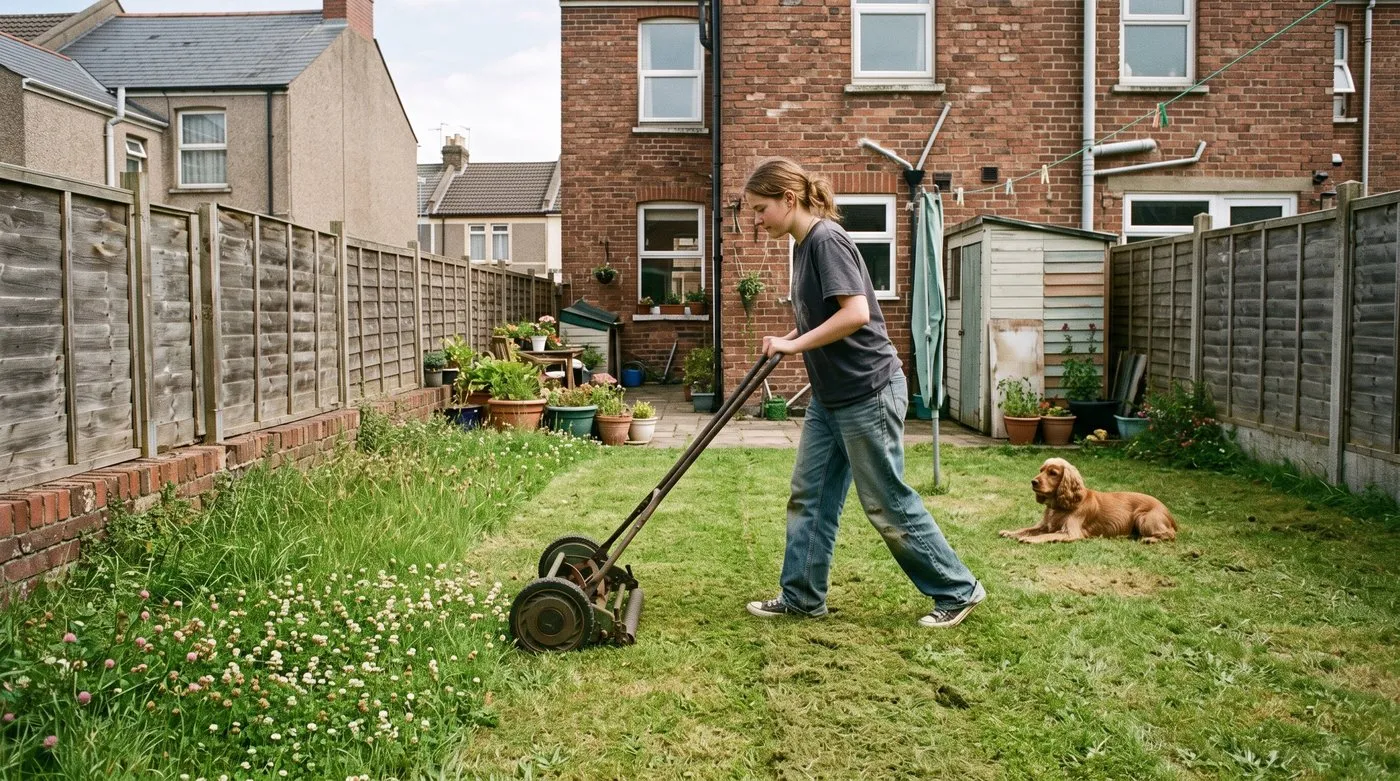
A push mower suits a small lawn: no fuel, no cable and barely any noise.
| Job | Swap from | Swap to |
|---|---|---|
| Mowing a small lawn | Petrol mower | Push cylinder mower |
| Mowing a bigger lawn | Petrol mower | Battery or robot mower |
| Edges and long grass | Petrol strimmer | Shears, or a battery strimmer |
| Leaves | Leaf blower | Rake, then use the leaves for leaf mould |
| Preparing beds | Rotavator | No-dig with a compost mulch |
Mowing less helps too. Leaving part of the lawn to grow longer saves effort and fuel, and gives flowers and insects a home.
Cut down on plastic
Reuse what you have, and buy less new plastic. Every plastic pot you wash and reuse is one less to make.
- Reuse pots, trays and labels every season. Wash them in warm soapy water first.
- Make paper pots from newspaper for seedlings. They go straight into the ground.
- Buy bare-root trees, roses, fruit and hedging between November and March. They come without pots or compost and usually cost less.
- Choose plastic-free extras where you can, such as wooden labels, jute twine and metal tools that last.
Many garden centres take back plastic pots for reuse or recycling, so ask before throwing them away.
Plant trees and native hedges
Trees and hedges store carbon as they grow, year after year. Native trees and shrubs also feed and shelter a huge range of wildlife.
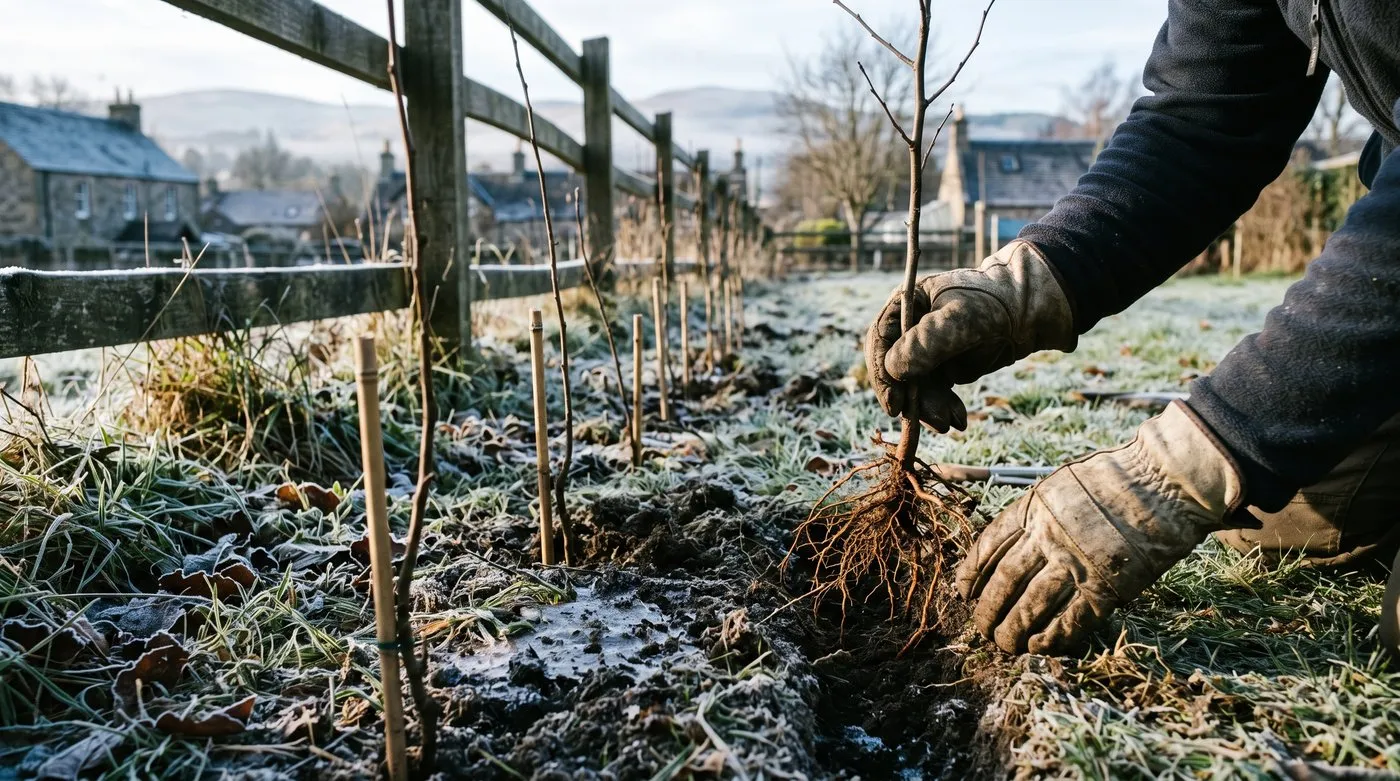
Bare-root hedging comes with no pot or compost and settles in well when planted in winter.
Choose a tree that fits your space when fully grown. Rowan, field maple, crab apple, hawthorn and hazel all suit smaller gardens. A mixed native hedge of hawthorn, hazel, blackthorn and field maple is a great choice for a boundary. The guide to native trees for UK gardens suggests trees for every size of plot.
Plant bare-root between November and March, while the trees are dormant. The guide on how to plant bare-root trees shows how. Water well through the first summer, and always check for nesting birds before trimming hedges between March and August.
Common carbon-friendly gardening mistakes
- Buying new kit to go green. The greenest tool is the one you already own. Replace things only when they wear out.
- Overwatering. Watering little and often wastes water. Soak less often, at the roots.
- Throwing away autumn leaves. They make free leaf mould.
- Sending prunings away. Chop them for compost, or stack them as a log pile for wildlife.
- Trying to do everything at once. Start with one or two swaps and build up.
Find more practical guides on the how-to hub.
Frequently asked questions
What is the biggest source of carbon in a UK garden?
For most gardeners, the biggest easy win is avoiding peat compost. Peat bogs store huge amounts of carbon, and digging them up for compost releases it. After that, look at petrol tools, plastic pots and the stuff you buy in, from fertiliser to bagged bark.
Does composting at home really make a carbon difference?
Yes, it turns waste into something useful on your doorstep. Garden and kitchen waste becomes free compost instead of being collected, carried away and processed. It also means you buy fewer bags of compost and soil improver, each with its own packaging and transport.
How does no-dig gardening help the climate?
Digging less leaves the soil and its life undisturbed. A yearly layer of compost on top feeds the soil and builds up organic matter, which holds carbon. You also skip the petrol rotavator, and the beds need less weeding and watering.
Is peat-free compost as good as peat-based for growing?
Good peat-free compost grows plants just as well for most jobs. It can look dry on top while still damp underneath, so check before watering. Some types need feeding a little sooner. Try a couple of brands and stick with the one that suits you.
Should I only use harvested rainwater in the garden?
Use rainwater wherever it suits, but tap water is fine too. Rainwater saves treated mains water and suits acid-loving plants such as blueberries. For seeds and young seedlings, use tap water, as stored rainwater can carry disease.
Do homemade liquid feeds replace bought fertilisers?
They can replace a lot of them. Comfrey feed is rich in potash for tomatoes and other fruiting crops, and nettle feed gives leafy growth a boost. Strength varies from batch to batch, so dilute well and watch how plants respond.
How many trees should I plant to offset my garden’s footprint?
Plant what suits your space rather than aiming for a number. One well-chosen native tree or a mixed native hedge gives years of shade, shelter and food for wildlife. Plant bare-root in winter, with no plastic pot, and water well in the first summer.
Ready for the next step? The guide to eco-friendly garden design shows how to plan a whole garden that works with nature.
Our team produces practical UK gardening guidance from source research, contributor records and established horticultural practice. Editorial standards are overseen by Matt W.