Key takeaways
- House martins are Red-listed in the UK and need all the help they can get
- Fit artificial nest cups in groups, at least 2m up, tight under an overhanging eave
- Keep a patch of sticky mud wet nearby from mid-April to June
- A pond and a spray-free garden grow the flying insects they eat
- A nest being built or used is protected by law, so leave it alone
- A droppings board below the nest deals with the mess
House martins are the little blue-black birds that build mud nests under the eaves of UK houses. To attract them, give them three things: a safe spot high on the wall, wet mud to build with in spring, and plenty of flying insects to eat.
They nest in groups and often return to the same walls year after year. Numbers have dropped a lot, so a house that welcomes them really helps. This guide covers telling them apart from swallows and swifts, putting up nest cups, and living happily with a colony. For birds that use feeders and bird tables, see the guide on how to attract birds to your garden.
How do you tell a house martin from a swallow or swift?
Look for the white rump. A house martin is glossy blue-black on top, white underneath, with a short forked tail and a bright white patch just above it. Even its legs are covered in little white feathers.
The swallow has a red throat and long tail streamers. It nests inside barns, porches and sheds rather than on the outside wall. The swift is bigger and all dark, with long curved wings and a screaming call. Swifts nest in roof spaces and never perch on wires. The sand martin is brown on top and digs nest burrows in sandy riverbanks.
| Bird | Where it nests | How to spot it | How to help |
|---|---|---|---|
| House martin | Mud cup under house eaves | Blue-black, white rump | Nest cups and a mud patch |
| Swallow | Inside barns, porches and sheds | Red throat, long tail streamers | Leave a way into outbuildings |
| Swift | Roof spaces and gaps under tiles | All dark, screaming call | Swift boxes high on the wall |
| Sand martin | Burrows in sandy banks | Brown back, brown chest band | Leave sandy banks undisturbed |
Our guide to identifying common UK garden birds helps with the rest of your visitors.
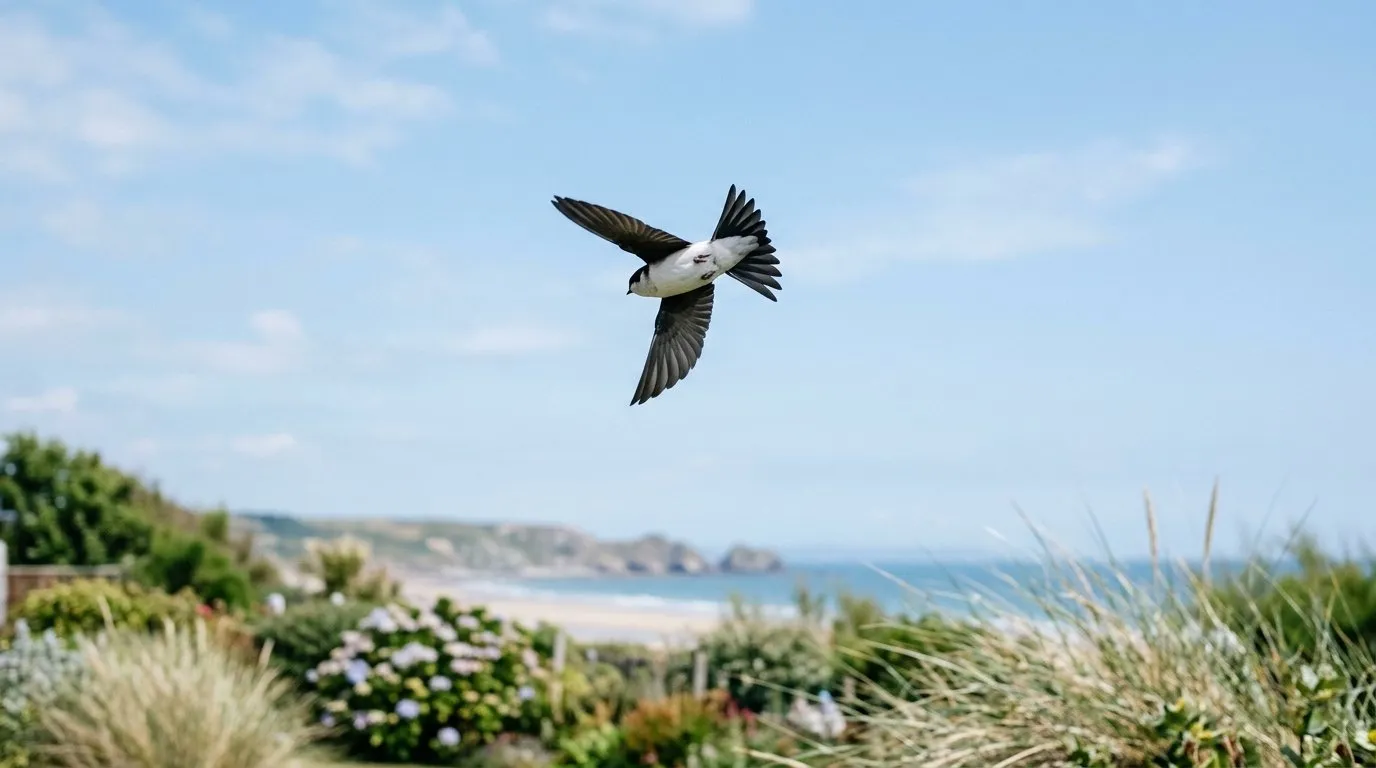
A house martin overhead. If you can catch the white rump as it turns, you know it isn’t a swallow.
Why are house martins struggling?
House martins are on the UK Red list of birds of conservation concern. Three things make life hard for them, and gardens can help with all of them.
- Fewer nest sites. Plastic soffits and smooth render give mud little to grip, and some nests get knocked down.
- Fewer flying insects. Tidy gardens and insecticides mean fewer of the tiny flies and aphids they eat.
- No mud. Paved front gardens and dry springs leave them nothing to build with.
The RSPB house martin page has more on the bird itself.
How do house martins build their nests?
A pair builds a closed mud cup under an overhang, with a small entrance hole near the top. Both birds carry wet mud one beakful at a time, letting each layer dry before adding the next. It takes hundreds of trips, and they need sticky, clay-rich mud. Dry or sandy mud just crumbles.
Once the cup is finished, they line it with grass and feathers. A pair often raises two broods in a summer, sometimes three. They happily repair and reuse a sound old nest, which is a good reason to leave one in place.
Warning: A nest that is being built is already protected. Don’t scrape off half-built mud to put the birds off.
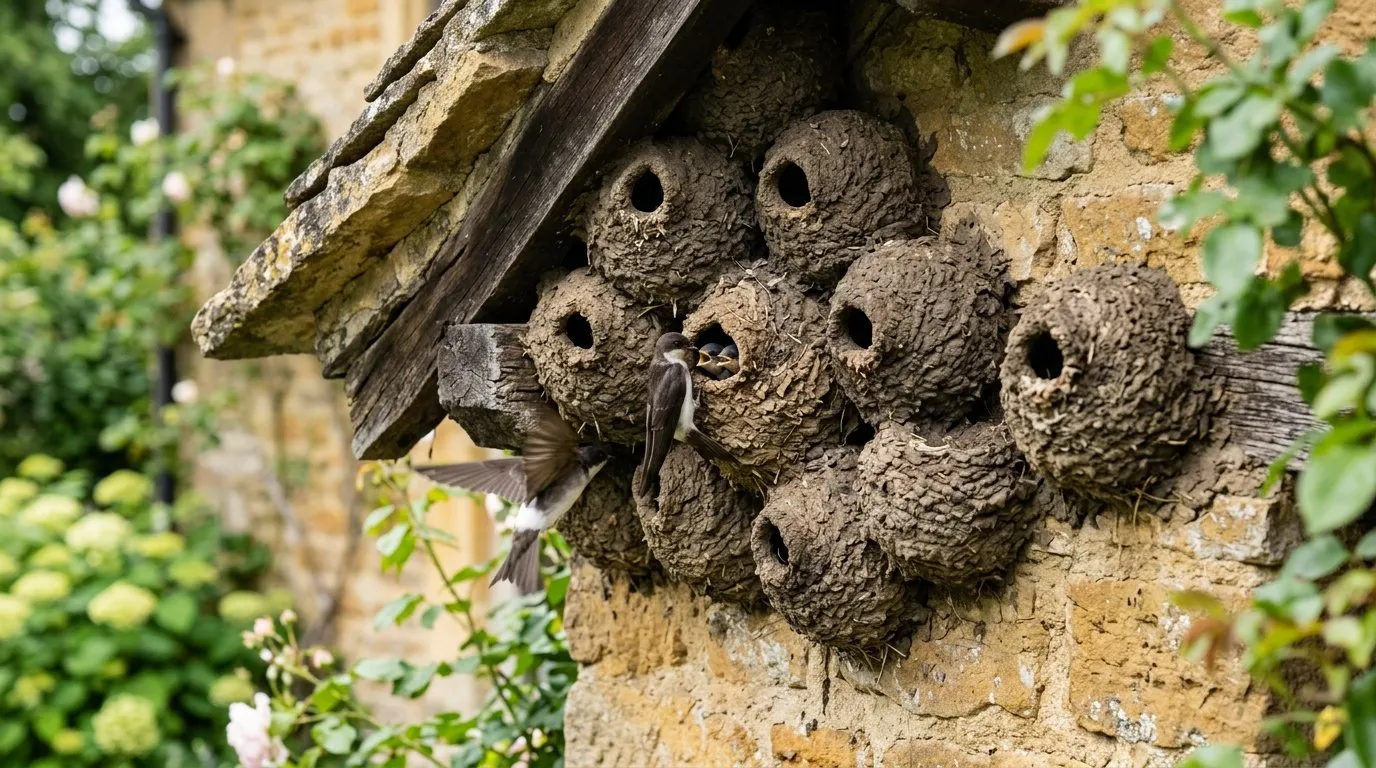
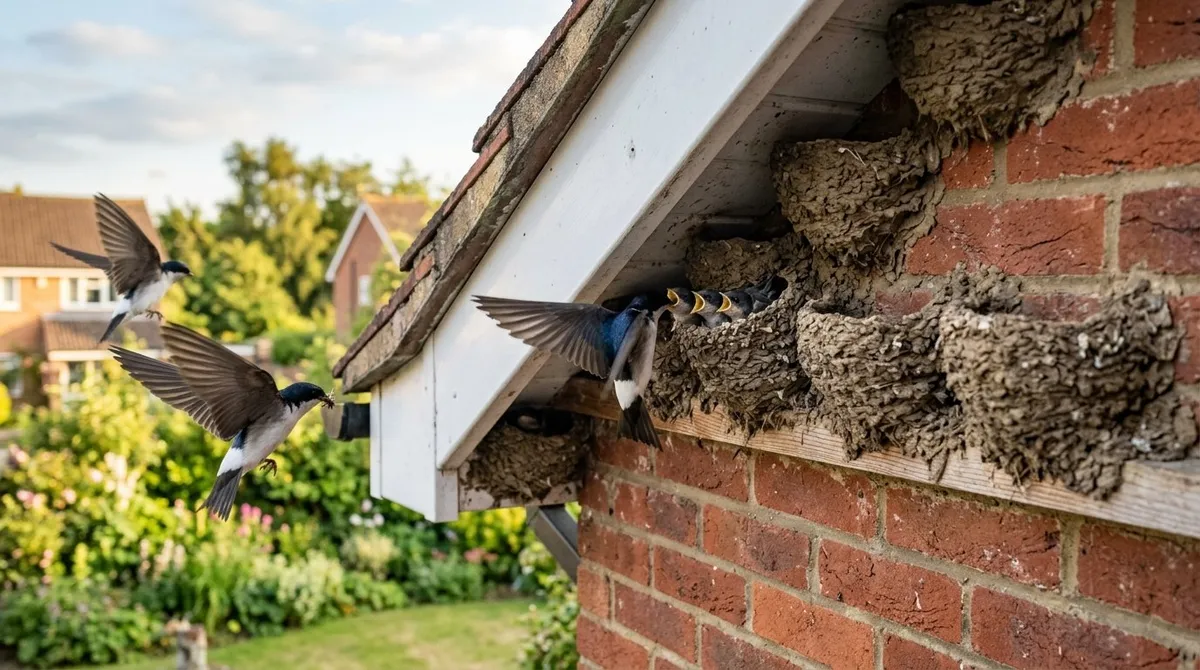
Mud nests packed together under an old eave. House martins like company, which is why cups work best in groups.
Where to put artificial house martin nest cups
Fit artificial nest cups in a group, high up and tight under an overhanging eave. A ready-made cup saves the birds days of building, and martins will often settle in cups next to natural nests.
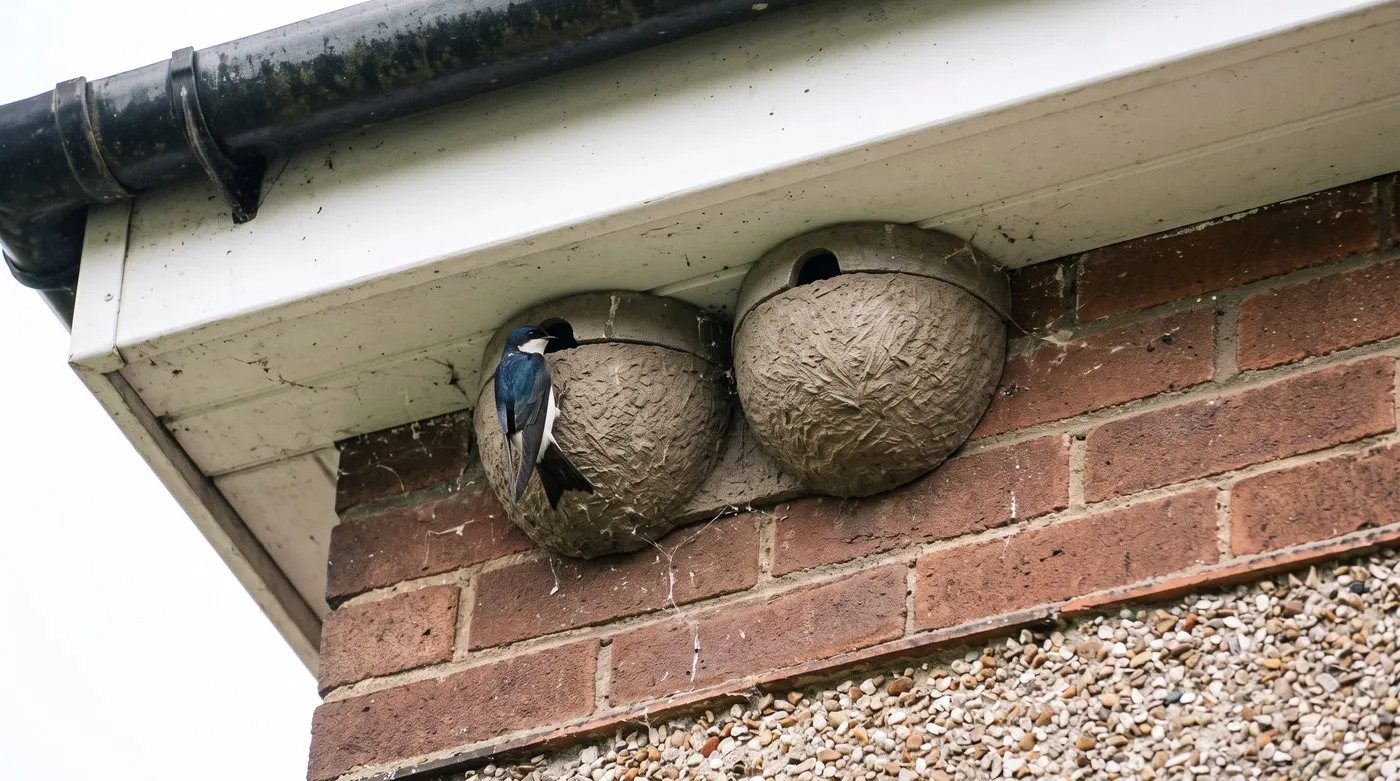
Closed cups fitted right up under the eave, in a pair, give house martins a ready-made home they can move straight into.
- Height: at least 2m up, and higher is better.
- Shelter: right under the eave, so rain and hot sun don’t hit the cup.
- Aspect: a north or east-facing wall stays cooler. A hot south wall can overheat chicks.
- Grouping: two or more cups side by side, so the spot looks like a colony.
Put cups up in autumn or winter, well before the birds return. Some people play recordings of house martin calls near the cups in spring to catch passing birds’ attention. Be patient. It can take a few seasons before a pair moves in.
How to give house martins mud in spring
Keep a patch of wet, sticky mud close to your house from mid-April to the end of June. This is the bit most gardens miss, and in a dry spring it can make all the difference.
Scrape a shallow dip in an open, sunny spot and keep it wet. On a paved plot, a shallow tray or old dustbin lid filled with garden soil does the job. Aim for soft modelling clay, not soup. Clay soil is ideal. Top it up with water every day or two while the birds are building, then let it dry out once the nests are done.
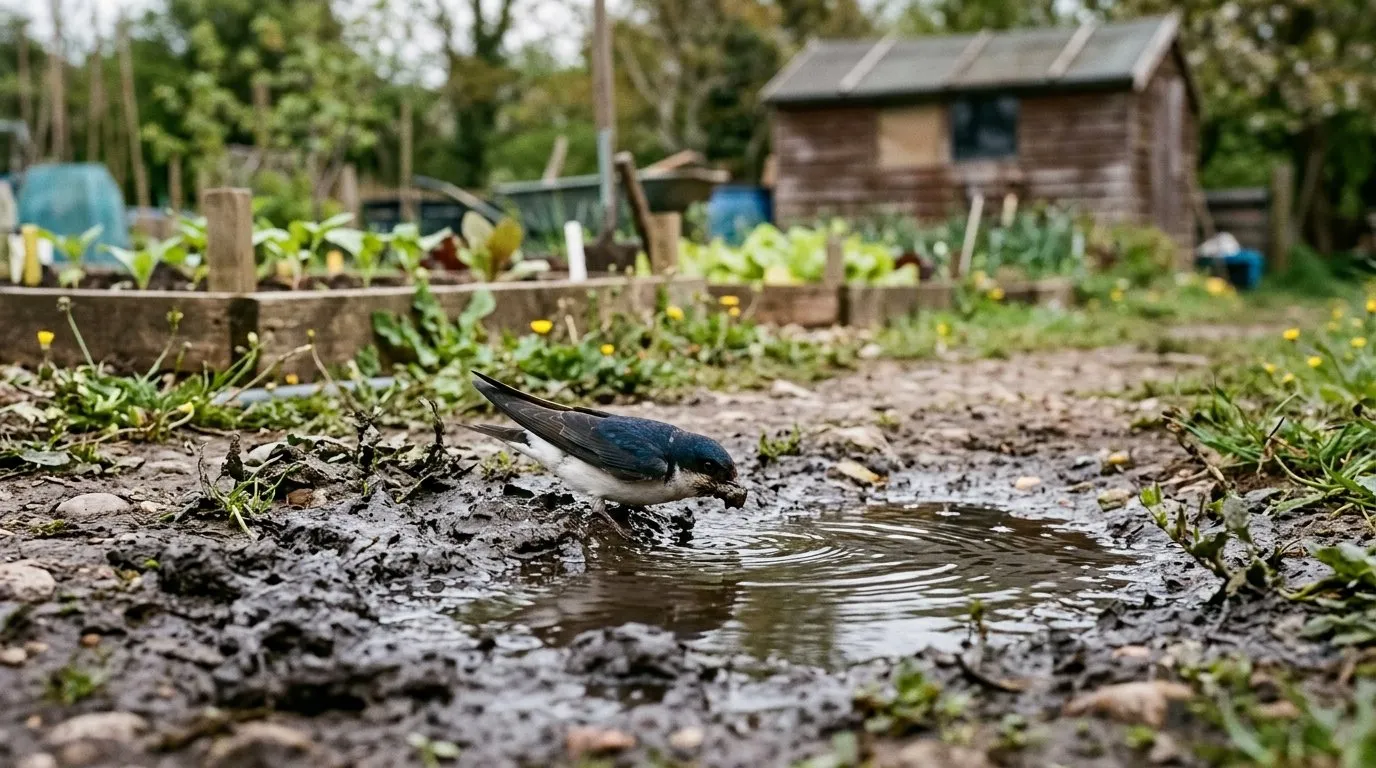
A puddle edge is a building supply shop for house martins. A kept-wet patch helps most in a dry spring.
How a pond and a spray-free garden feed house martins
House martins eat only flying insects, caught in the air, so you can’t put food out for them. What you can do is grow more insects.
A pond is the best thing you can add. It produces midges and other small flies from spring onwards, and martins swoop low over water on cool days. Our guide to building a wildlife pond shows how. Long grass, native shrubs and a nectar-rich border all help too. The guide to creating a wildlife garden brings these together.
Stop using insecticides, especially in spring and summer. A spray for aphids also kills the flies martins feed their chicks. Our guide to safe, legal pest control options covers gentler ways to deal with pests.

Open water breeds the small flies that martins catch on the wing, so a pond works like a feeding station.
Living with a house martin colony and the law
Once house martins start building on your wall, the nest must stay until they leave in autumn. It is an offence to damage, destroy or block a nest while it is being built or used. That includes netting over an active nest or boarding up the eave.
Netting is only an option on a bare wall before any building starts, and it must not trap birds. Old, empty nests can come down in winter, between November and February, once you’re sure nothing is using them. Leaving them is kinder, as the birds often come back to repair them. If you do clear one, put up a nest cup in its place to keep the colony.
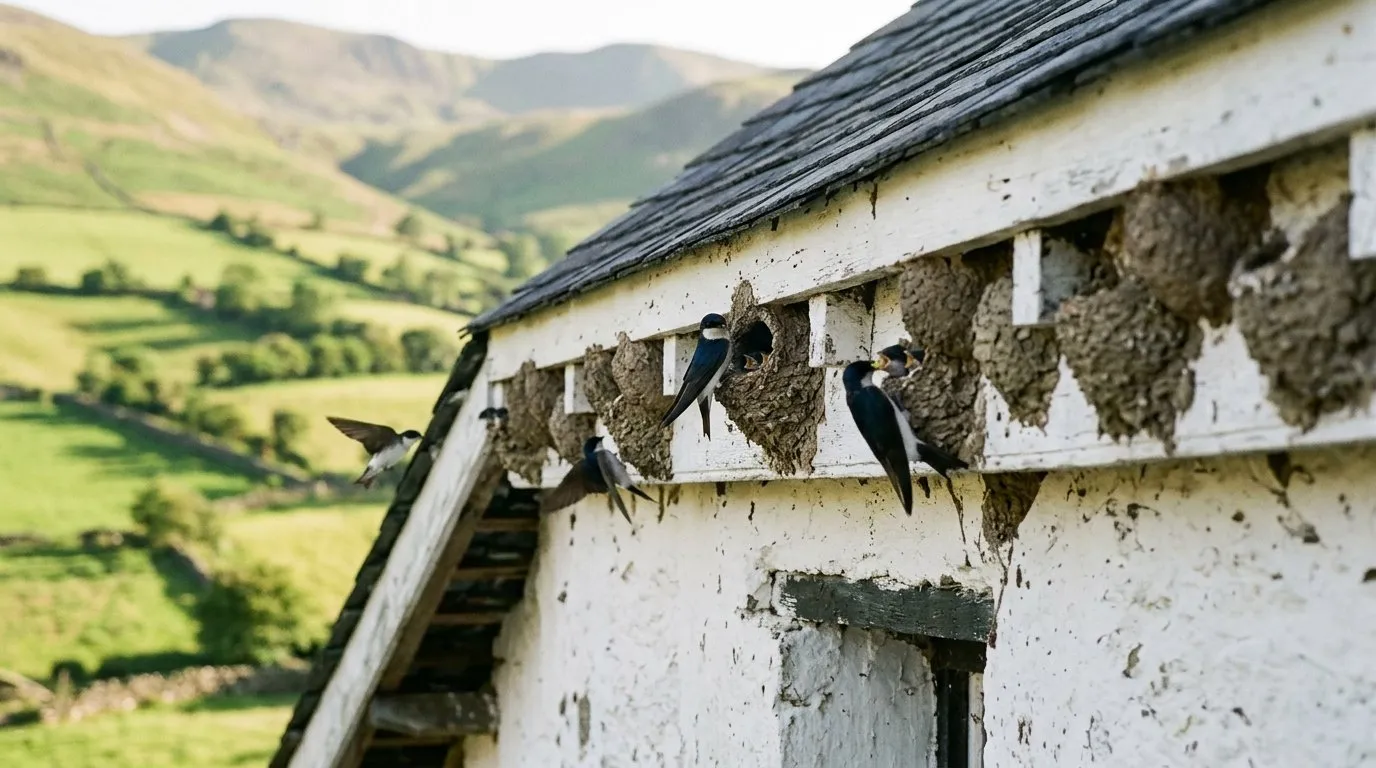
A well-established colony. Every nest here stays protected from the first beakful of mud until the birds leave.
How to deal with house martin droppings
Fit a droppings board about 60cm below the nest. A plank 15-20cm wide on simple brackets catches droppings before they reach the wall, window or path. Then you clean the board, not the brickwork. Make sure it doesn’t get in the way of the birds flying up to the nest.
The mess only lasts a few busy weeks while the chicks are being fed. Once the birds have gone, the marks wash off walls with plain water.
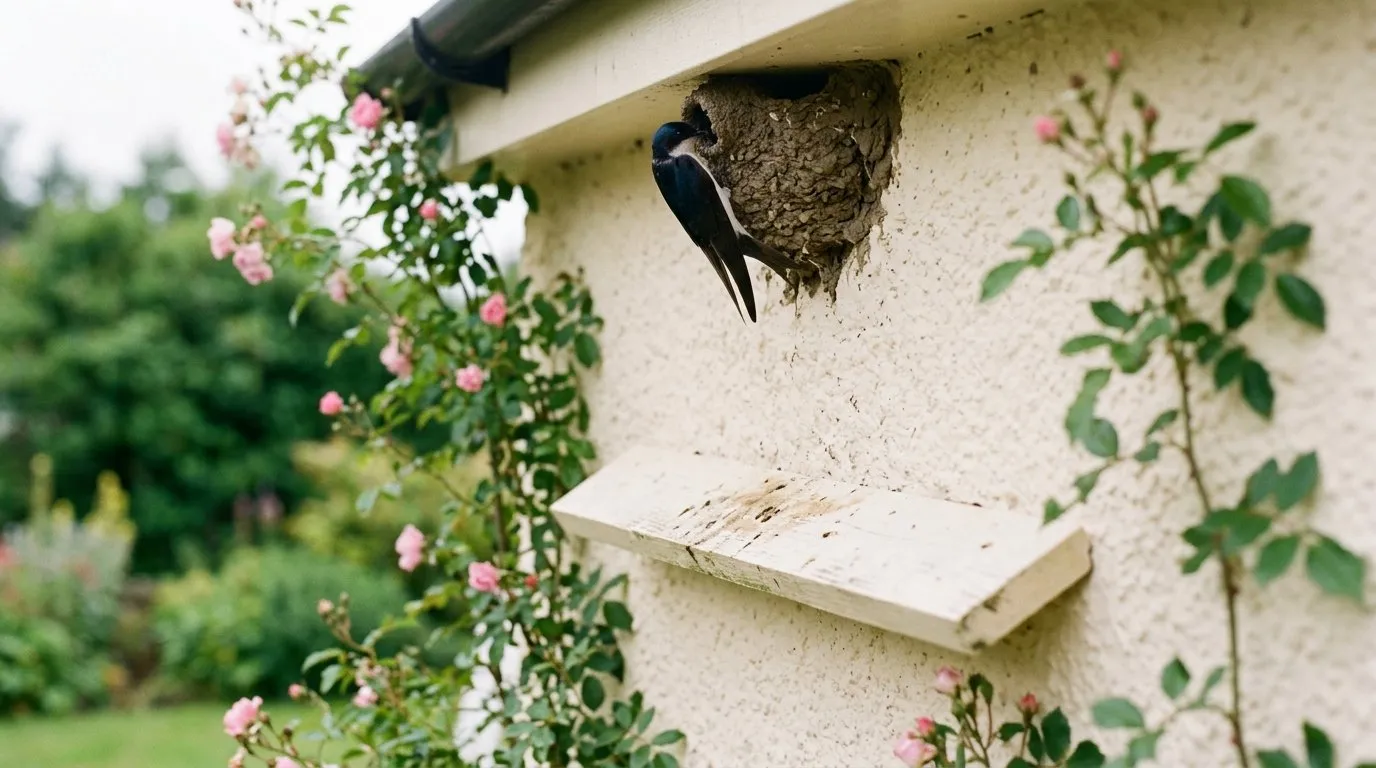
A simple board below the nest catches the mess, so there’s no need to touch the nest itself.
Month-by-month house martin calendar
| Month | What’s happening and what to do |
|---|---|
| November to February | Birds in Africa. Fit or repair nest cups. Clear old nests only if you must |
| March | Check fixings and droppings boards before the birds return |
| April | First birds arrive. Start keeping a mud patch wet from mid-month |
| May | Building is in full swing. Keep the mud wet and leave the eaves alone |
| June | Chicks hatch. Keep the mud going for second nests. No insecticides |
| July | First young fledge and second broods begin |
| August | Busy nests and lots of feeding overhead |
| September | Birds gather and start heading south. Late broods may still be in nests |
| October | The last martins leave. Wash droppings off walls |
Common mistakes when attracting house martins
- Cups fitted too low. A cup at ladder-friendly height on a bare wall feels exposed. Go high and tuck it under the eave.
- A single cup. House martins nest in groups. One lonely cup rarely gets used.
- No mud. Cups help, but the birds still need mud to seal and repair nests. Keep a wet patch through spring.
- Giving up too soon. A colony can take a few seasons to start. Leave the cups up.
- Spraying in spring. Insecticides wipe out the flies the chicks are fed on.
Once your cups are up, read our guide to building a wildlife log pile for another easy way to boost the insects a colony feeds on. For more wildlife ideas, browse the wildlife hub.
Frequently asked questions
How do you attract house martins to your house?
Put up artificial nest cups under the eaves and keep wet mud nearby. Fit them in groups of two or more, at least 2m up, ideally on a shaded wall. Keep a muddy patch wet through spring. An insect-rich, spray-free garden below does the rest.
Are house martin nests protected by law?
Yes, a nest being built or used is protected by law. It is an offence to damage, destroy or block an active nest. Leave it alone until the birds have finished and left in autumn.
What is the difference between a house martin and a swallow?
House martins have a white rump; swallows have long tail streamers. Swallows also have a red throat and nest inside barns, porches and sheds. House martins nest on the outside of buildings, under the eaves.
How do I stop house martin droppings without breaking the law?
Fit a droppings board about 60cm below the nest. It catches the mess before it reaches walls, windows or paths, and you clean the board instead. Never knock down or block an active nest.
When do house martins arrive and leave the UK?
They arrive from April and most leave in September and October. Building gets going in May. Late broods can still be in the nest into early autumn, then the birds head to Africa for winter.
Why won’t house martins use my nest cups?
Usually there is no wet mud nearby, or the cups are too low. Cups need to be high under an overhang, in a group. A dry spring leaves the birds with nothing to build or repair with. It can take a few seasons for martins to move in.
Can I remove an old house martin nest?
Only in winter, once it is empty and no longer in use. Martins often reuse old nests, so leaving them is kinder. If you do clear one, put up an artificial cup in its place.
Our team produces practical UK gardening guidance from source research, contributor records and established horticultural practice. Editorial standards are overseen by Matt W.