Key takeaways
- Robins feed low down, so use a bird table or ground tray, not a hanging feeder
- Mealworms are their favourite treat; soak dried ones in warm water before putting them out
- Robins nest in open-fronted boxes, not hole-fronted ones, tucked into cover below 2m
- Dig or weed and a robin will often follow you for the worms you turn up
- A shallow dish of water and some thick, low cover keep a robin in your garden
- Most gardens hold just one robin or one pair, because robins defend their patch fiercely
To attract robins, feed them low down, give them thick cover and an open-fronted nest box, and turn the soil when you garden. Robins already link people with food, so they are one of the easiest garden birds to win over.
Robins are with us all year in almost every UK garden. Unlike tits and finches, they feed close to the ground and nest in open, half-hidden spots, so they need a slightly different setup. These seven steps cover what robins want, from the right food to the right box. For the basics that suit every bird, start with the guide on how to attract birds to your garden.
Why are robins so tame?
Robins follow gardeners because digging turns up worms and grubs. It’s the same trick they use in the wild.
In mainland Europe, robins are thought to follow wild boar and deer, which root through the soil. British robins seem to have swapped the boar for the person with the fork. Robins on the continent tend to be much shyer, so the friendly robin on your spade handle is a very British thing.
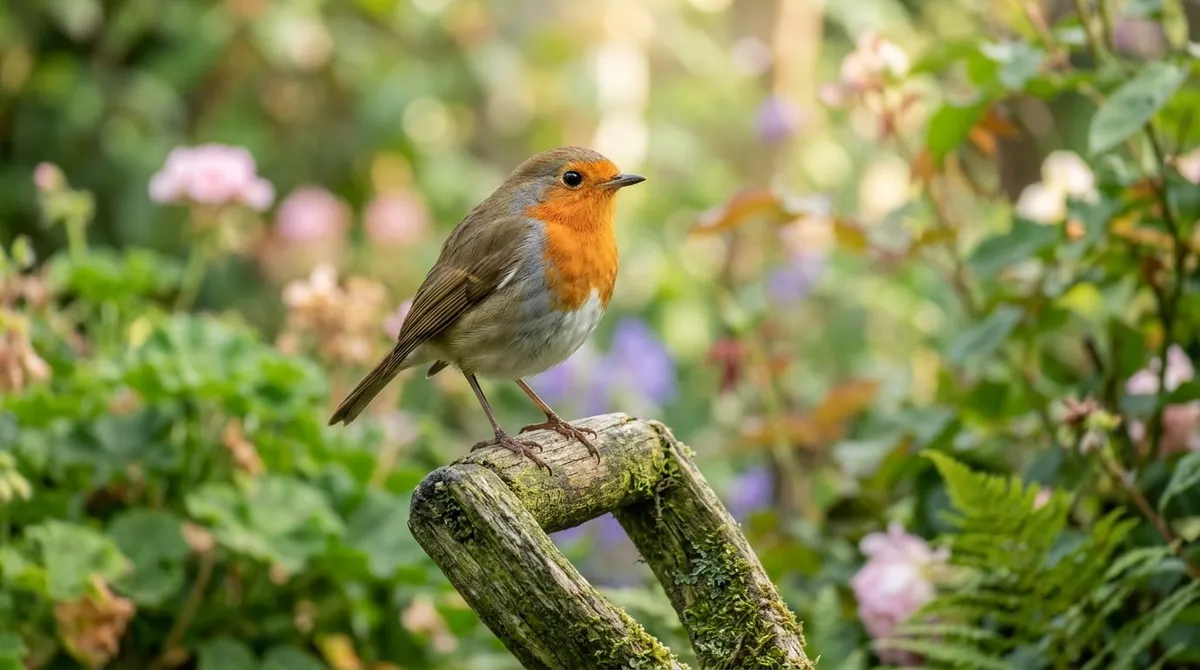
Males and females look the same, both with an orange-red face and breast. Young robins in summer have no red at all. They are speckled brown, so people often don’t recognise them.
What do robins eat in a UK garden?
Robins mainly eat insects and other small creatures: earthworms, beetles, spiders and caterpillars. In winter, when the ground is hard, they also eat berries, suet, seeds and mealworms.
They hunt by watching from a low perch, then dropping onto their prey. That’s why they like a flat surface near the ground rather than a swinging feeder.
| Food | How to offer it | Best time |
|---|---|---|
| Mealworms, live or soaked dried | Ground tray or bird table | All year, especially spring |
| Suet pellets | Bird table or open dish | Autumn to spring |
| Sunflower hearts | Bird table or ground tray | All year |
| Grated mild cheese | A little near cover | Cold snaps only |
| Berries and windfall fruit | Left on the ground | Autumn and winter |
Step 1: Put out mealworms
Mealworms are the quickest way to get a robin’s attention. Many robins will come to a tray within days, and some will even take them from your hand.
Dried mealworms are easy to store. Soak them in warm water for a while before putting them out, so they are soft and moist. Live mealworms are even more popular, and keep best in the fridge.
Put out a small handful once or twice a day. Little and often is better than a big pile that attracts every starling in the street. The bird feeding guide by season shows what to offer through the year.
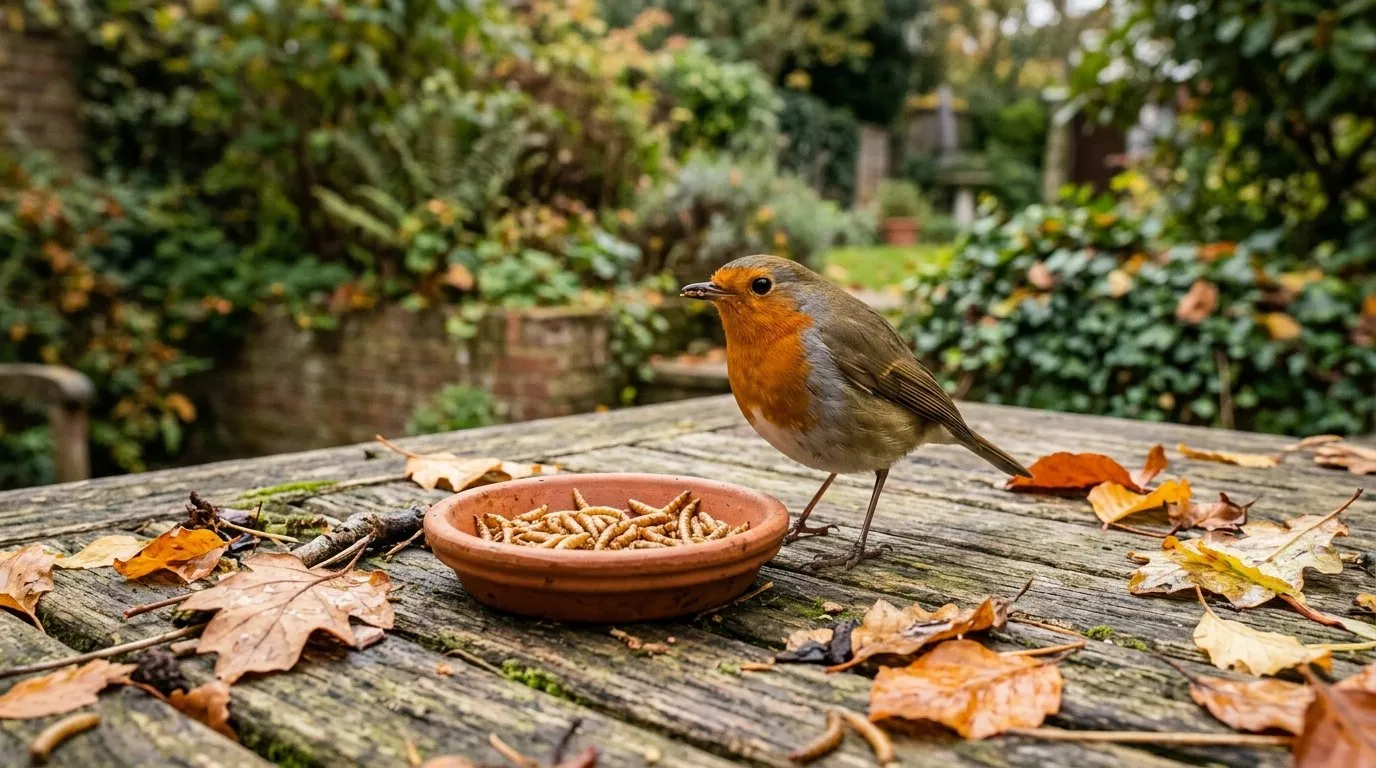
A small, shallow dish of mealworms on a flat surface is exactly what a robin wants.
Step 2: Use a bird table or ground tray
Robins feed low, so a bird table or ground tray works far better than a hanging feeder.
Set a bird table at about 1.2-1.5m high, or put a shallow tray on the lawn. Place it within a couple of metres of a shrub or hedge, so the robin can dash for cover. Keep the ground around it fairly open, so a cat can’t creep up unseen.
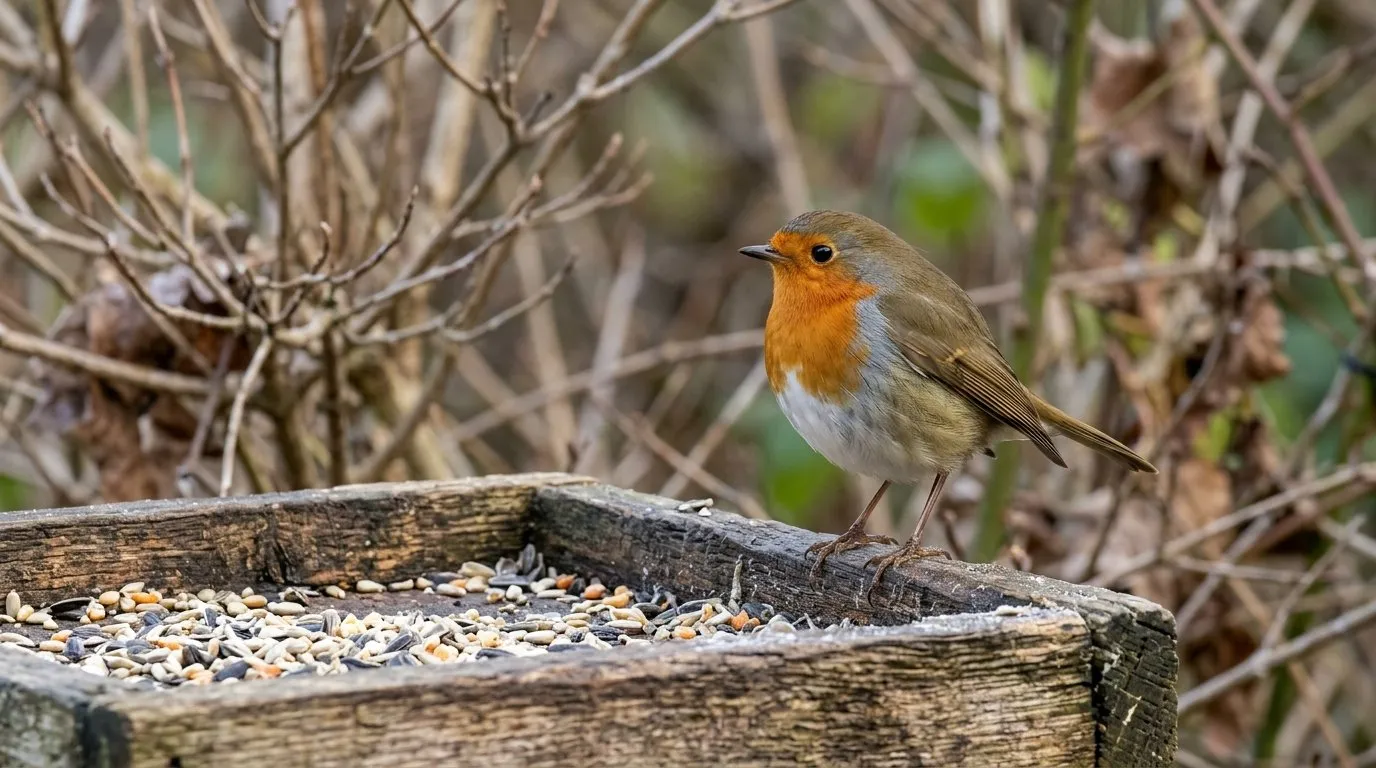
Robins like a flat, open spot to feed from, with somewhere to hide close by.
Step 3: Fit an open-fronted nest box
Robins nest in open-fronted boxes, not the round-hole boxes that tits use. This one detail decides whether a box gets used.
The front panel should only come part of the way up, leaving a wide gap above. Fix the box below 2m, tucked into ivy, a climber or a thick shrub so it’s well hidden. Face it somewhere between north and east, out of strong sun and driving rain. Keep it away from busy feeders. A box on a bare, open wall is rarely used.
Robins also nest in odd places: shelves in sheds, old kettles, plant pots and even coat pockets. If you leave the shed door open in spring, check inside before you shut it.
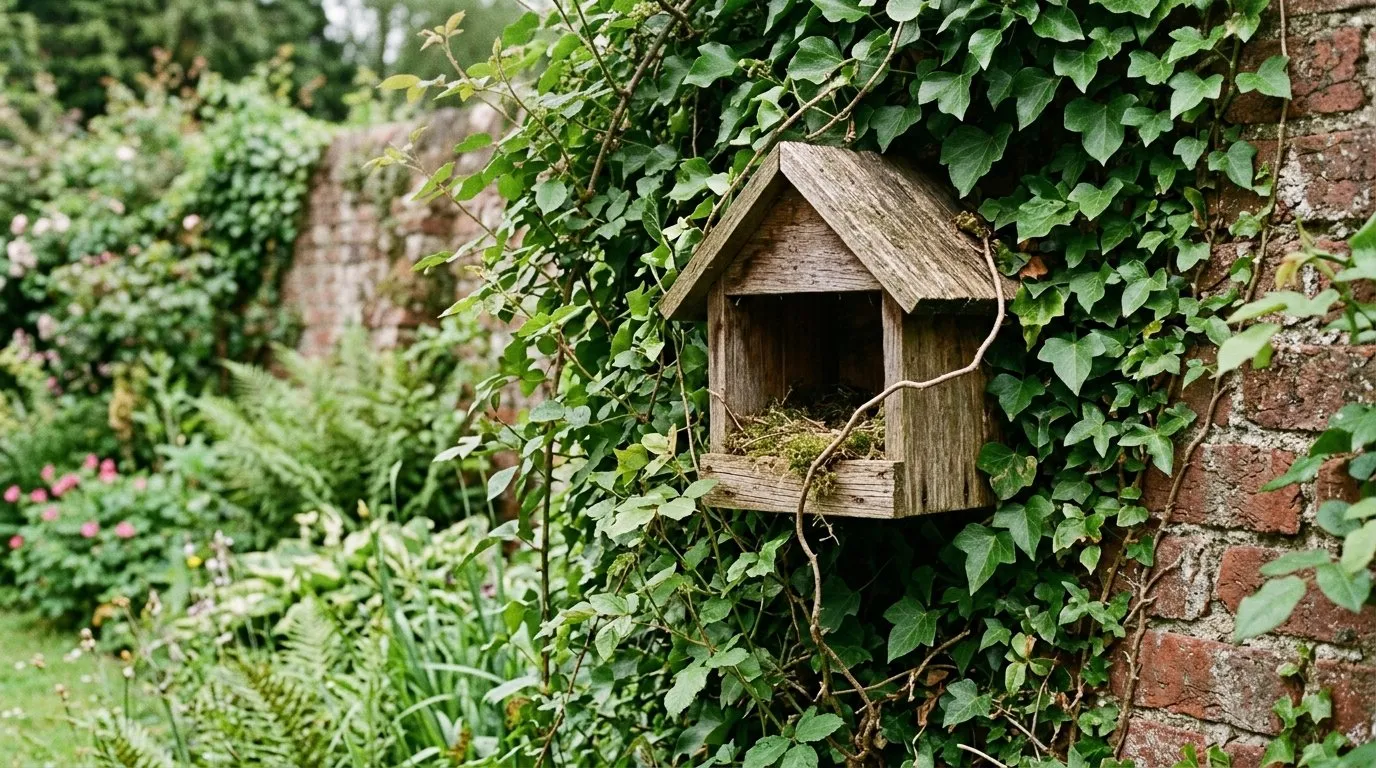
An open-fronted box hidden in ivy feels safe to a robin. Notice how the front only comes part of the way up.
Step 4: Grow thick, low cover and leave perches
Robins need thick cover to nest in and open perches to sing from. A garden with both suits them best.
Grow shrubs and hedges they can slip into, such as hawthorn, holly, ivy and pyracantha. Leave a wild corner with leaf litter, where robins can flick through leaves for spiders and beetles. Leave a few clear perches too, such as a fence top, a low branch or the edge of a shed roof.
Avoid cutting hedges from March to August, when robins and other birds are nesting. It is an offence to damage or destroy an active nest at any time of year. The guide on when to cut hedges in the UK has the details.
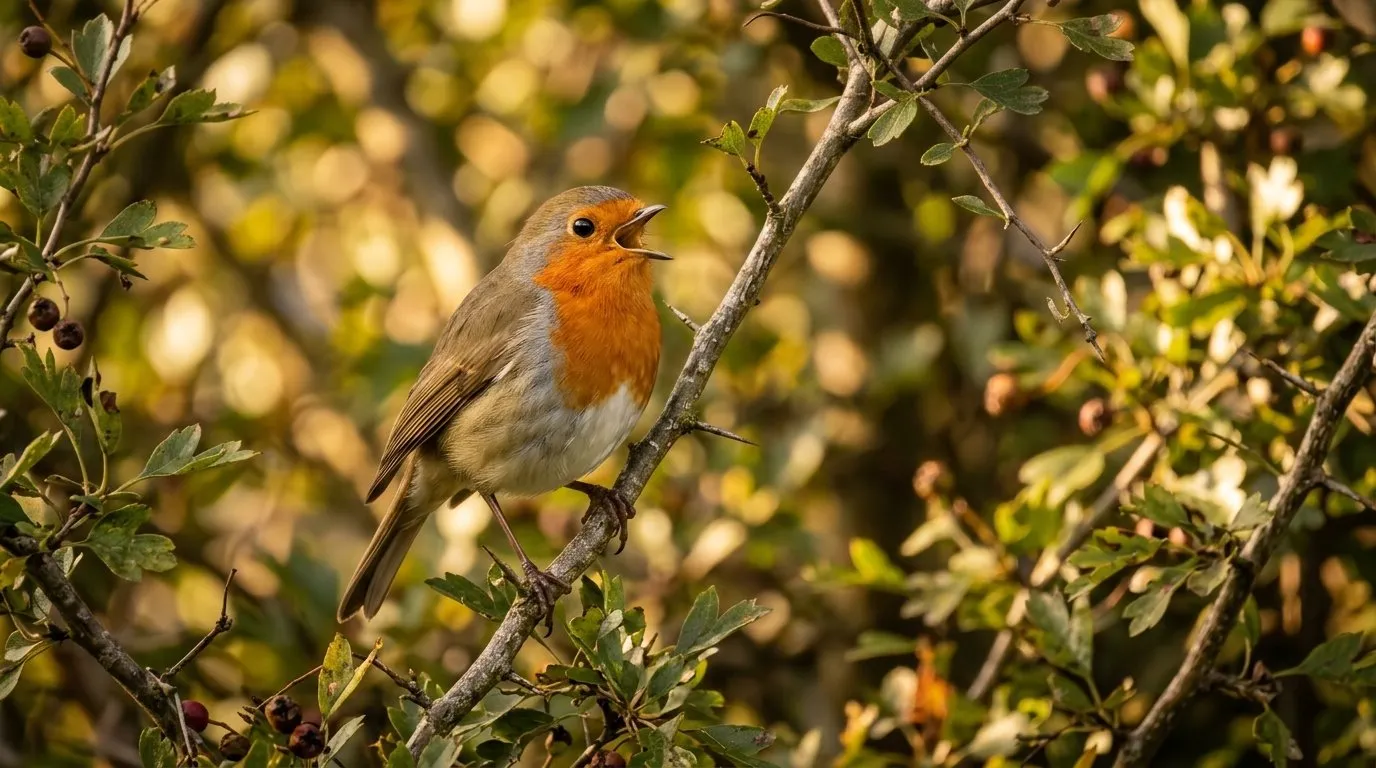
A hawthorn gives a robin cover, insects and a perch to sing from, all in one plant.
Step 5: Dig a border and let the robin follow you
Turn the soil and a robin will often appear within minutes. Freshly dug earth shows up the worms and grubs it lives on.
Use this when you weed, plant or turn the compost. Work slowly and leave the dug soil open for a few minutes. You can scatter a few soaked mealworms on the fresh earth too. Do this regularly through a winter and the same robin may soon perch on your fork handle while you work.
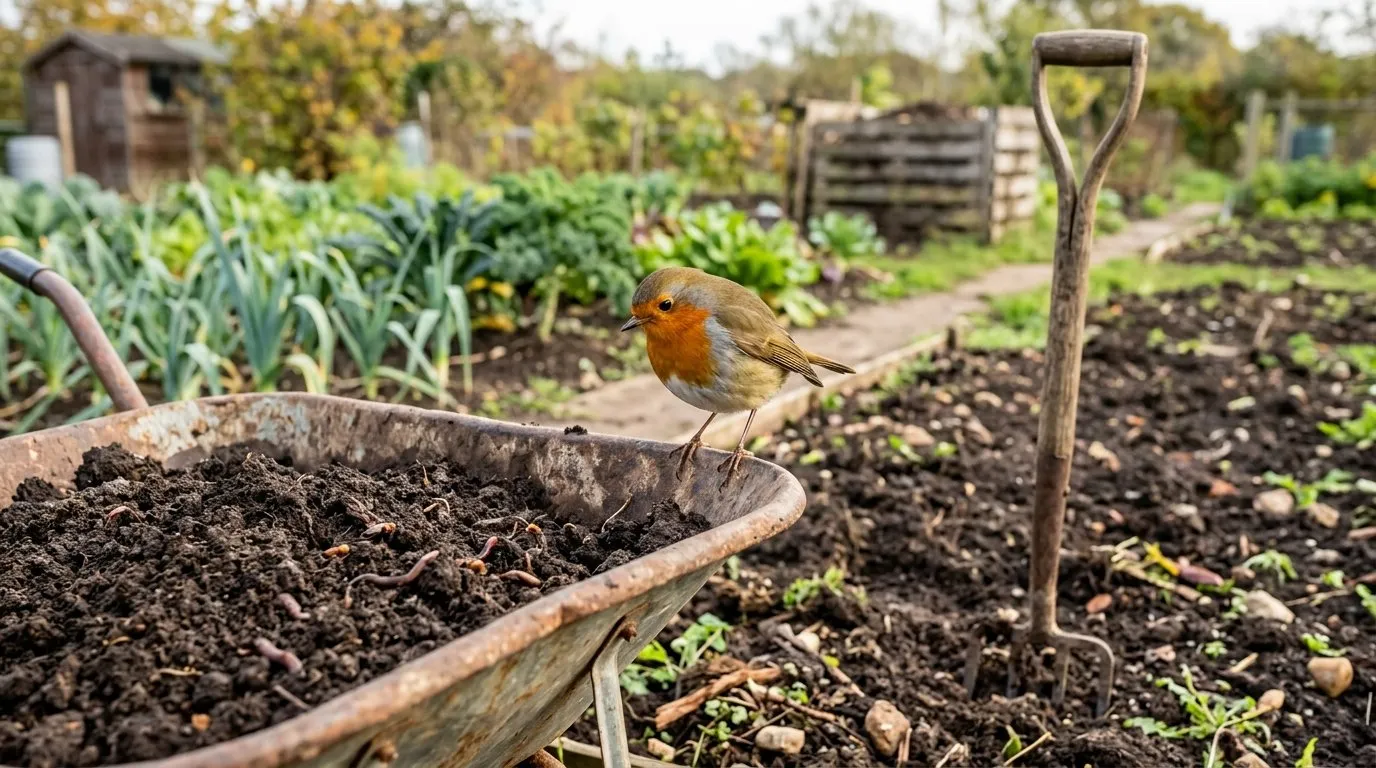
A wheelbarrow of freshly dug soil is a feast for a robin. Leave it for a few minutes and see who turns up.
Gardener’s tip: Keep a small tub of mealworms by the back door. Put a pinch in some warm water before you head out to dig, and they’ll be soft by the time a robin turns up.
Step 6: Give robins shallow water all year
Robins drink and bathe every day, in winter as well as summer. A reliable bath keeps a robin coming back even when there’s plenty of food elsewhere.
Use a shallow dish no deeper than about 5cm, with sloping or stepped sides to stand on. Put it near cover so a wet, heavy bird can escape a cat. In frosty weather, melt the ice with warm water. The guide to bird bath placement and cleaning covers keeping it clean.
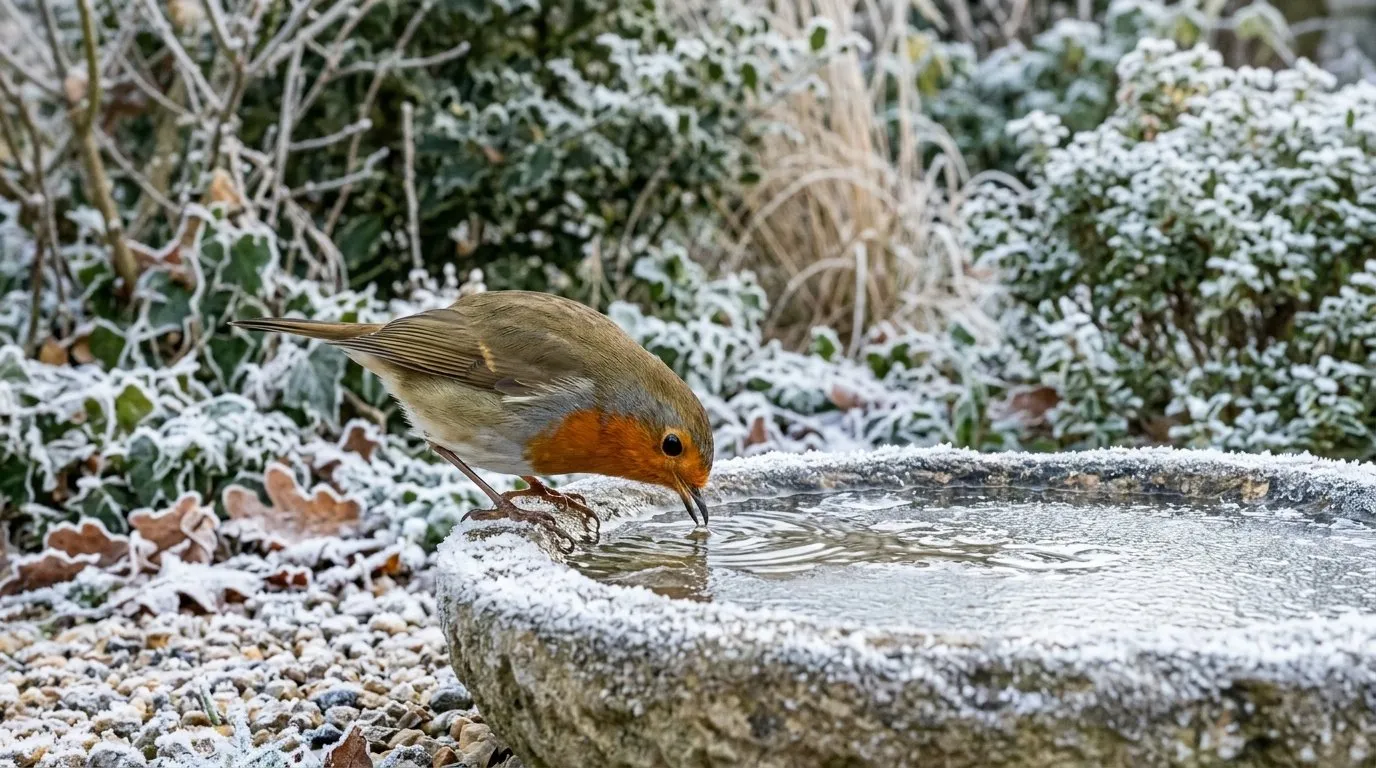
On a frosty morning, a bath of open water can be the only drink around. Break the ice every day.
Step 7: Go easy on garden chemicals
Robins feed their chicks almost entirely on soft insects, so the fewer pesticides you use, the more food there is.
- Skip slug pellets if you can. Hedgehogs, thrushes and robins all hunt in the same beds. The guide to getting rid of slugs covers other options.
- Avoid insecticide sprays, especially from March to July when chicks need caterpillars and grubs.
- Leave some leaf litter under shrubs. It’s full of the beetles and spiders robins love.
Hand-weeding, mulching and barriers do the job just as well in most gardens. The same approach helps hedgehogs in your garden and lots of other wildlife.
Why does my garden only have one robin?
Robins are fiercely territorial, so most gardens hold just one robin, or one pair in spring. Both males and females defend their own patch through autumn and winter.
The red breast is a warning sign. A robin puffs it out and sings to drive rivals away. If that fails, it fights. Robins sometimes attack their own reflection in windows and car mirrors.
Robins sing for most of the year. They only go quiet in late summer while they moult. You may even hear one singing at night under a streetlight.
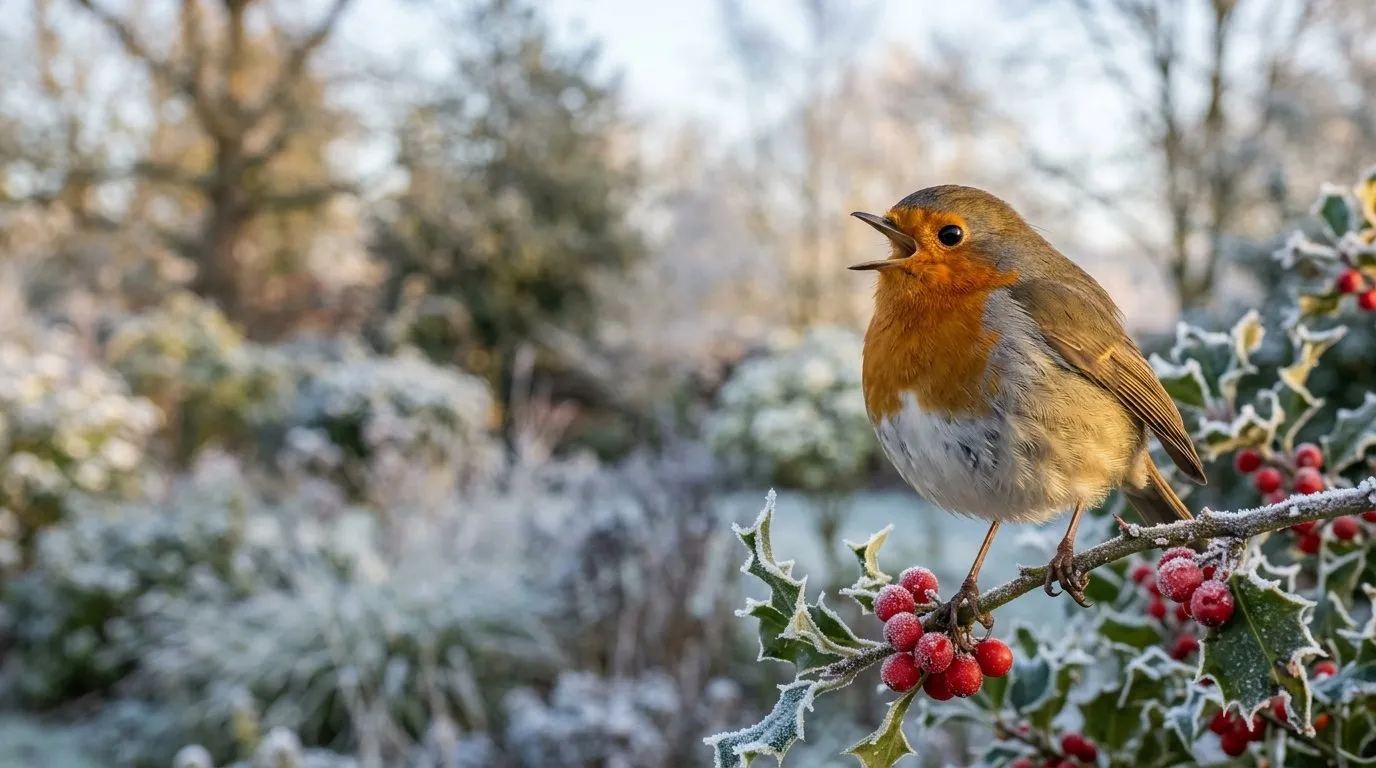
A robin singing in winter is defending its patch. If you hear it every day, your garden is part of its territory.
Month-by-month robin calendar
| Month | What to do |
|---|---|
| January | Feed every day. Break ice on the water. Listen for song as pairs form |
| February | Put up open-fronted nest boxes. Keep feeding |
| March | Nesting begins. Avoid hedge cutting from now until the end of August |
| April | Put out soaked mealworms for busy parents |
| May | First young robins appear, speckled brown with no red breast |
| June | Second broods. Keep water topped up |
| July | Adults moult and go quiet. Keep feeding |
| August | Robins hide away in cover while they moult |
| September | Autumn song starts as robins claim winter patches. Plant ivy and shrubs |
| October | Clean out nest boxes. Add suet pellets |
| November | Plant bare-root hedging for next year’s cover |
| December | Daily food and water matter most in freezing weather |
Common mistakes when attracting robins
- Using a hole-fronted box. A round-hole box keeps robins out. They need an open front.
- Hanging food up high. Robins feed low. A tube feeder at head height is often ignored.
- Putting the nest box in the open. Hide it in ivy or a shrub, below 2m.
- Forgetting to soak dried mealworms. Soak them, especially in spring when chicks are being fed.
- Spraying in late spring. Insecticides wipe out the soft food that robin chicks need.
- Expecting lots of robins. One robin or one pair per garden is normal.
If you enjoy your robin, try the guide to attracting wrens next. Wrens love the same thick cover and leaf litter, and there are more wildlife ideas in the wildlife section.
Frequently asked questions
What food attracts robins to a garden?
Mealworms attract robins faster than any other food. Put them on a ground tray or bird table, not a hanging feeder. Soak dried mealworms in warm water first. Robins also like suet pellets, sunflower hearts, a little grated mild cheese and soft fruit.
What kind of nest box do robins use?
Robins use open-fronted nest boxes, not ones with a round hole. The front panel only comes part of the way up. Fix the box below 2m, hidden in ivy, a climber or a shrub, and well away from feeders. A box on a bare wall is rarely used.
Why do robins follow gardeners?
They are after the worms and grubs your digging turns up. In Europe, robins are thought to follow wild boar and deer for the same reason. In Britain they seem to have swapped the boar for the person with the fork, which is why our robins are so bold.
Do robins come back to the same garden?
Yes, most British robins stay in the same area all year. Both males and females hold winter territories, so you often see the same bird day after day. Keep food, water and cover going and your garden may stay part of its patch.
When do robins nest in the UK?
Robins nest from about March to July, often raising two broods. They usually lay four to six eggs, and chicks leave the nest about two weeks after hatching. Nests are low in cover, or in odd spots like sheds, old kettles and plant pots.
Do robins eat from hanging bird feeders?
Most robins struggle on hanging feeders and prefer to feed low down. A few learn to cling to caged suet feeders, but they’re happier on a flat surface. A bird table or ground tray near cover suits them far better.
Why do robins fight each other?
Robins fight to defend their territory, and fights can be serious. A robin will puff out its red breast and sing to warn rivals off. It may even attack its own reflection in a window. That’s why most gardens have just one robin or one pair.
Our team produces practical UK gardening guidance from source research, contributor records and established horticultural practice. Editorial standards are overseen by Matt W.