Key takeaways
- UK house sparrow numbers fell 71 percent between 1977 and 2018 (BTO Bird Trends)
- Sparrows are colonial nesters: install nest boxes in groups of three or more with 32mm holes
- Chicks need insects for the first 14 days, so plant caterpillar-rich shrubs
- Sunflower hearts and mixed seed are the top winter foods, eaten by every UK garden flock
- Sparrows need dust baths and shallow water within 5m of dense cover
The house sparrow vanishing act is the biggest UK garden bird story of the past 50 years. Numbers fell 71 percent between 1977 and 2018 according to BTO Bird Trends, and attract sparrows UK garden searches have climbed every year since the species hit the Red List. The good news is that this is one wildlife problem you can fix on your own patch.
Step 1: Plant a dense native hedge
Use mixed native species planted bare-root in November to March. The cheapest whips at 60-90cm cost around £1 each from suppliers like Hopes Grove Nurseries. Plant at 4 per metre in a single staggered row, or 6 per metre in a double row for thicker cover. Mulch with bark chip, water through the first summer, and the hedge knits up within three years.
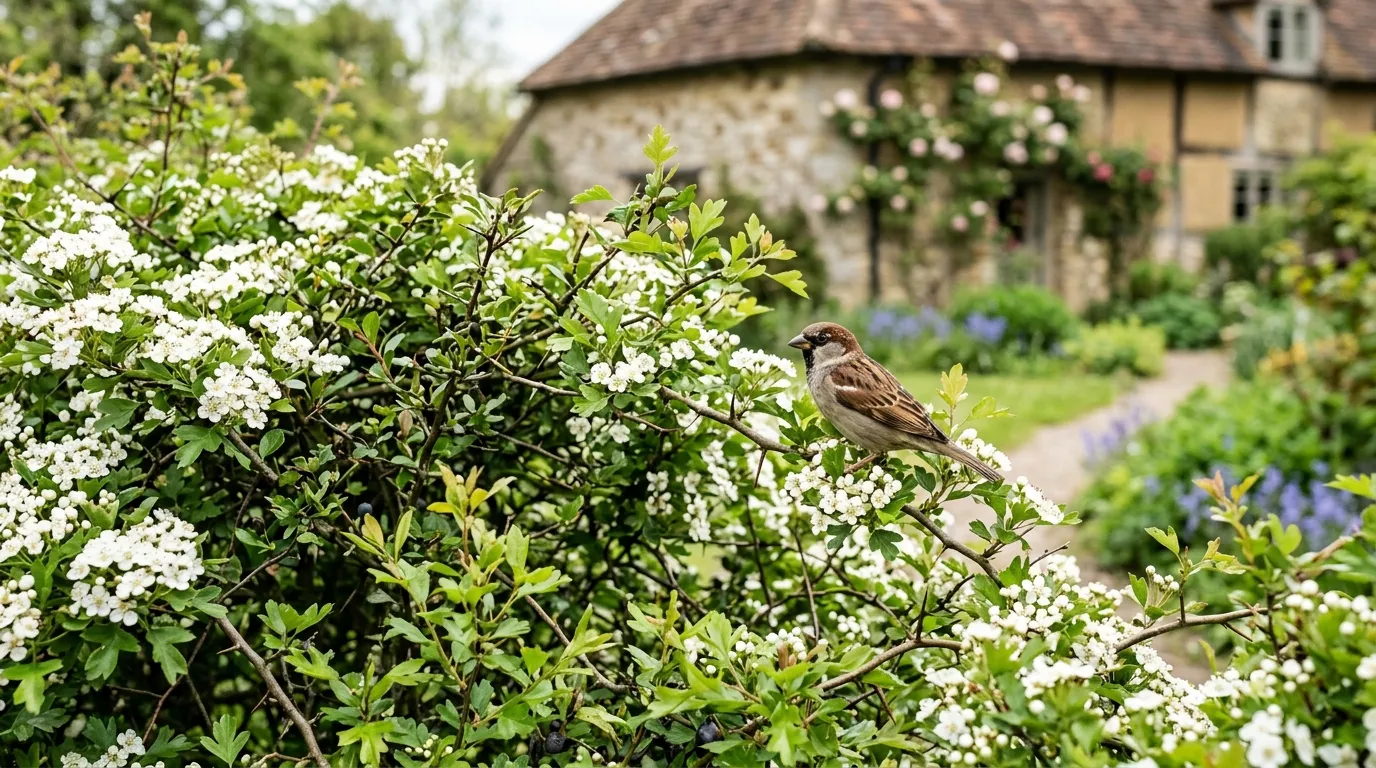 A 1.6m mixed native hedge of hawthorn, blackthorn and field maple. This is what gave our Staffordshire flock the cover it needed to settle.
Step 2: Install nest boxes in terraces
Sparrows are colonial nesters. A single nest box on its own often goes unused. Install boxes in groups of three or more, mounted within 1-2m of each other.
The entrance hole must be 32mm. Smaller and adult sparrows cannot get in. Larger and you let in starlings. Two boxes are widely used in the UK:
- Vine House Farm sparrow terrace (around £45). Plywood three-hole box, lighter, easier to mount on a fence panel.
Mount the box under an eave or overhang where rain cannot drive into the entrance. Aim for north or east-facing to avoid afternoon heat. Height should be 3m or higher, well clear of cats. Clean boxes out in October once chicks have fledged.
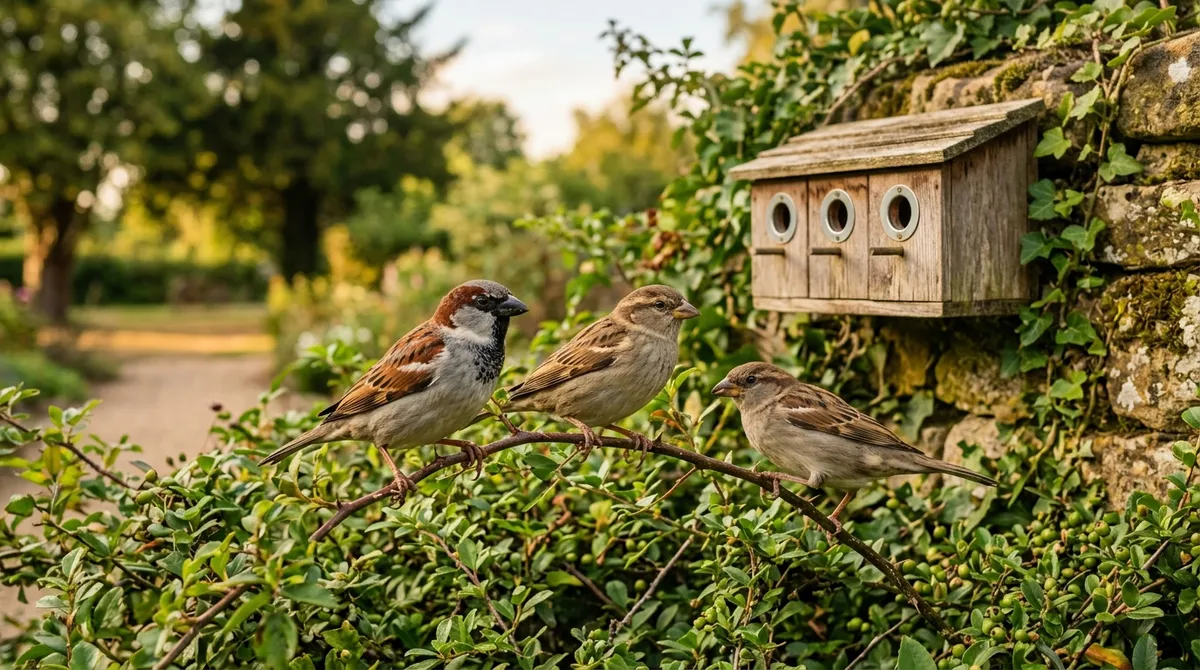
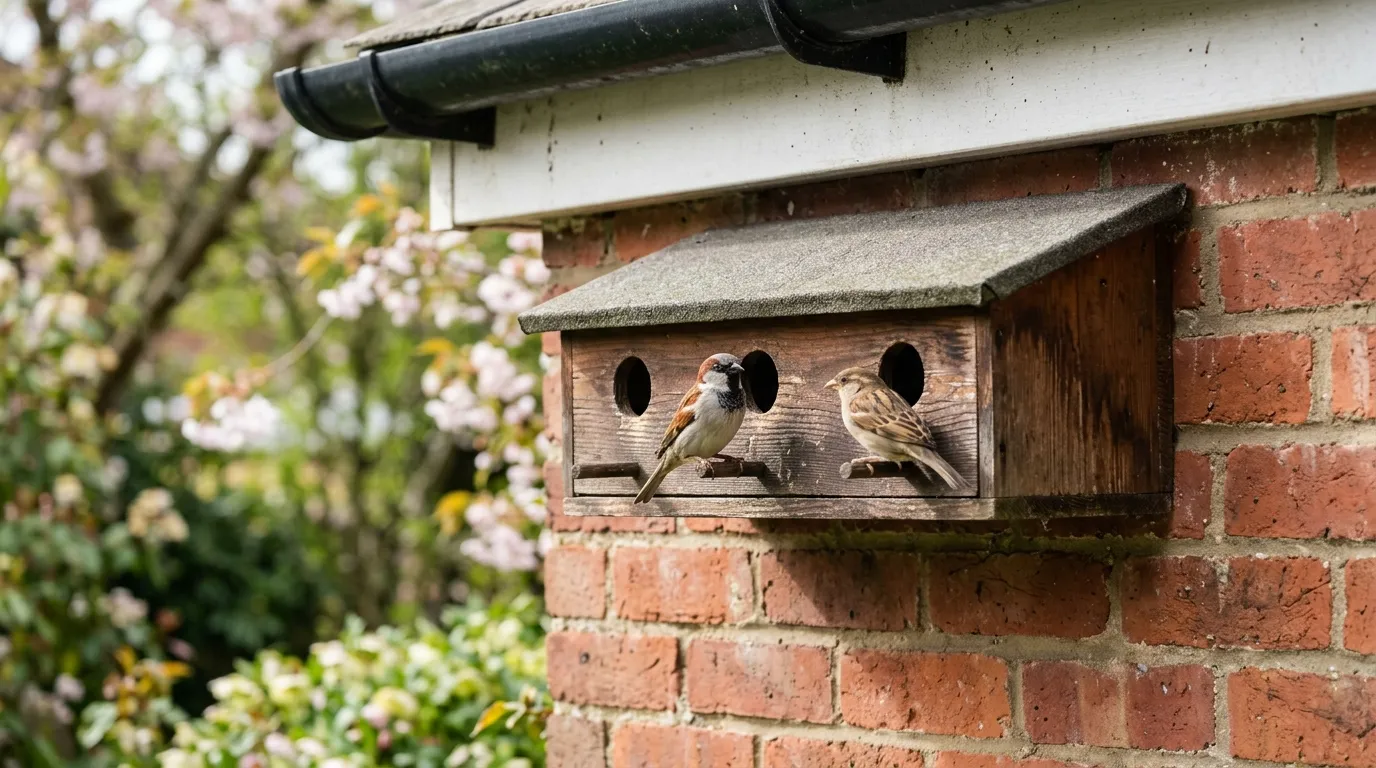 A three-hole terrace box mounted at 4m on a north-facing wall. Sparrows are colonial, so grouped boxes far outperform isolated single boxes.
Step 3: Feed insects in spring and summer
This is where most well-meaning gardens fail. Putting up feeders is easy. Growing insects is harder, and chicks need them.
Adult sparrows feed nestlings on caterpillars, aphids, beetle larvae and flies for the first 14 days. No insects, no chicks. The collapse in farmland insects is one of the biggest drivers of the sparrow decline, and gardens with no soft-leaved plants suffer the same effect.
- Caterpillar host plants. Nettle patches in a 2m square corner feed peacock and small tortoiseshell caterpillars. Garlic mustard hosts orange-tip caterpillars. Native shrubs like hawthorn host over 150 insect species, hazel supports 100.
- Stop pesticides. No slug pellets, no aphid spray, no lawn weedkillers. A single insecticide treatment can clear a garden of soft-bodied insects for weeks, and that timing usually clashes with peak chick-feeding.
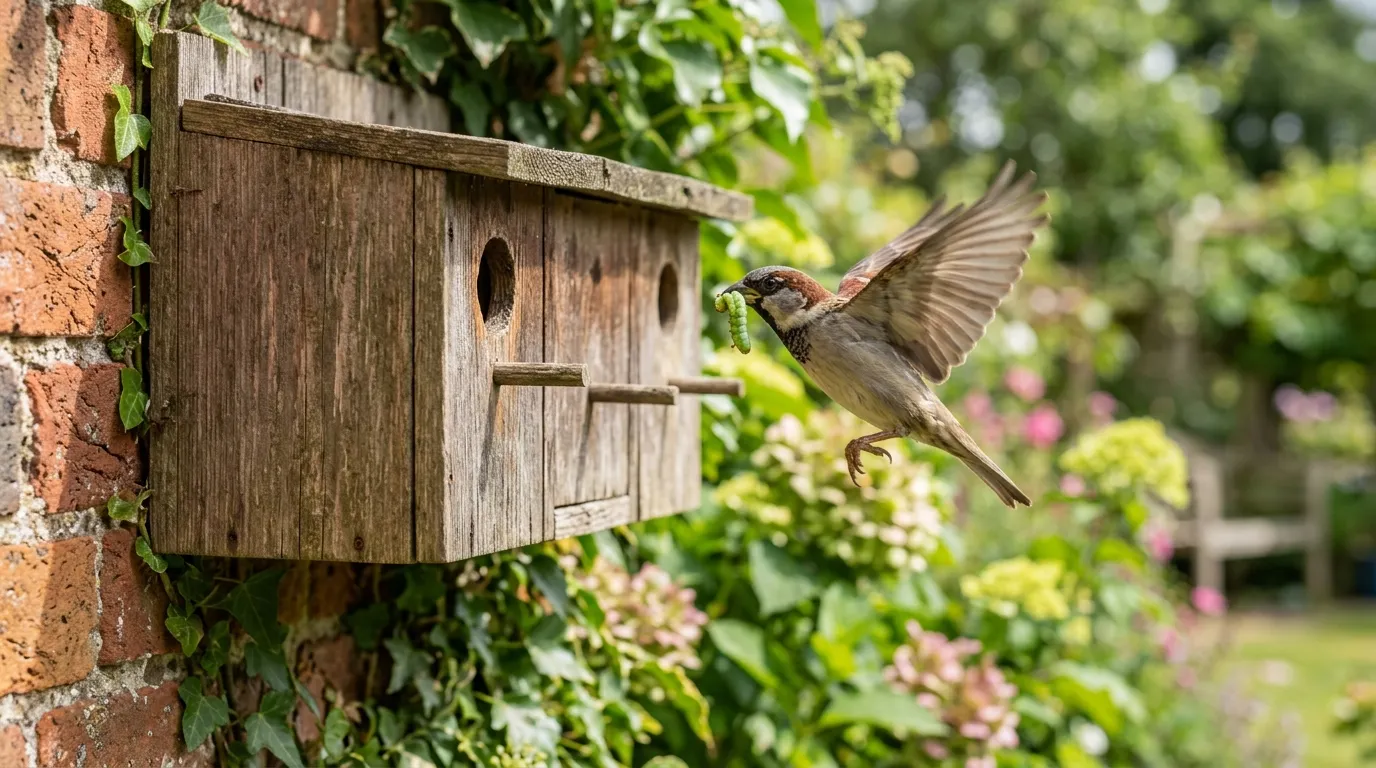 An adult house sparrow brings a caterpillar to its nest box. Chicks need live insect food for the first 14 days, which is why pesticide-free planting matters.
Step 4: Feed seed in autumn and winter
From October to March, switch the emphasis to high-energy seed. Adult sparrows eat seed year-round but rely on it heavily through cold months when insects are scarce.
Sunflower hearts are the top food. Buy 12.5kg bags from Vine House Farm (around £35) or Haith’s Wild Bird Food. They leave no husks, so the ground stays clean and sparrows do not waste energy de-husking. Every UK flock eats them.
Mixed seed blends with millet, canary seed and red dari attract sparrows that prefer ground feeding. Choose blends without wheat, which is bulked into cheap mixes and gets thrown out by most species.
Place feeders 2m from cover so birds have an escape route from sparrowhawks. Spread food across two or three feeding points to reduce squabbling and disease spread. Ground trays work well because sparrows naturally feed below shrubs.
Step 5: Provide water for drinking and bathing
Water is the second-most-overlooked need after insects. Sparrows drink daily and bathe frequently, even in winter.
A bird bath should be shallow (no deeper than 5cm), with a sloped or stepped edge for gripping. Set it within 5m of dense cover so birds can escape if a cat or sparrowhawk approaches. Position it slightly above ground on a pedestal or upturned pot to keep mice out.
Refill and rinse every 2-3 days in summer to stop trichomonosis spreading. In winter, break the ice each morning and top up with lukewarm water. Never use salt or antifreeze.
Step 6: Build a dust bath
Sparrows dust bathe to control parasites and to keep their feathers in condition. A dust patch is the easiest single addition to make to a garden, and a feature most gardens lack.
If garden space is tight, an upturned terracotta pot saucer 30cm across filled with dry sand works. Keep it dry. A wet dust bath is useless.
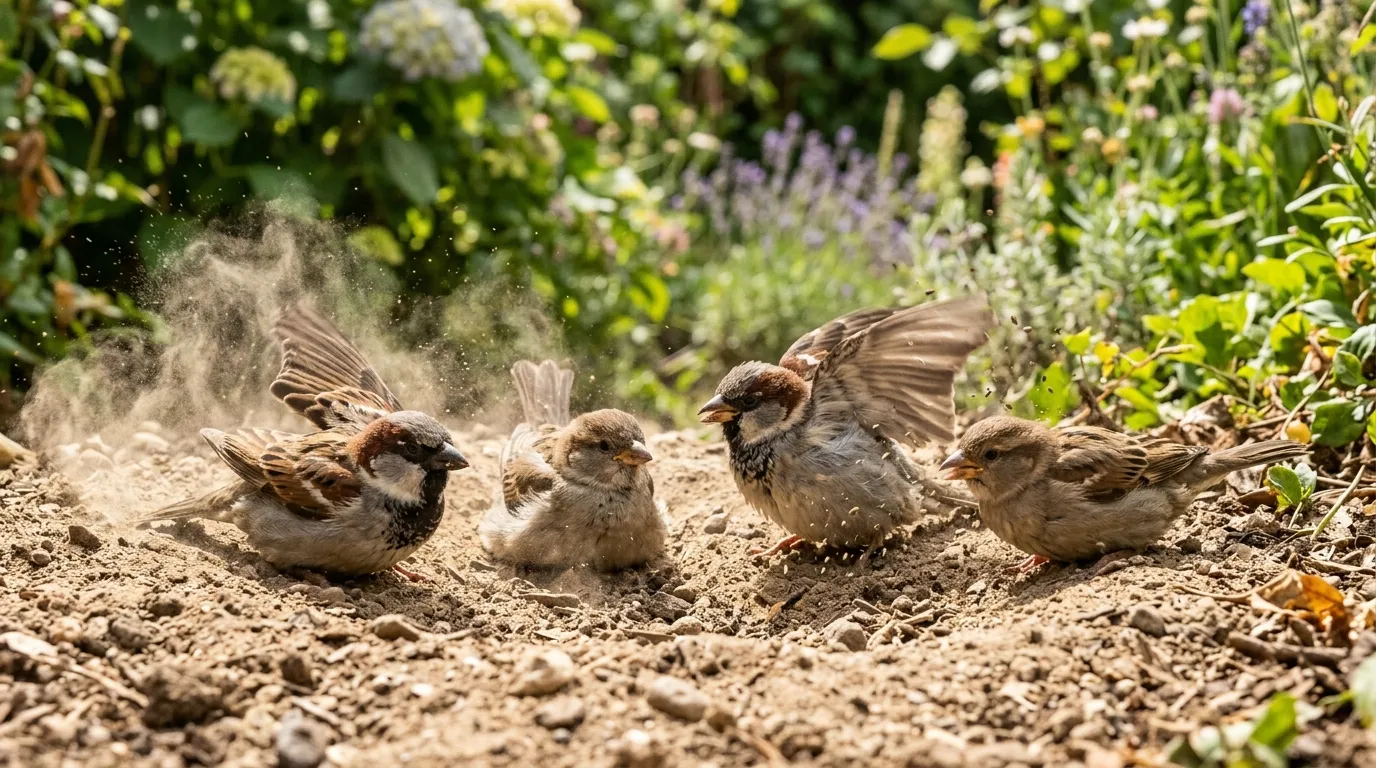 A group of sparrows using a dust bath. The pit is 40cm wide and filled with dry sandy soil, sieved compost and a little fine wood ash.
Step 7: Stop using garden chemicals
This is non-negotiable. Sparrows feed insects to chicks for the first two weeks of life. Every insecticide application reduces the food supply, and many garden chemicals affect birds directly.
- No slug pellets containing metaldehyde. Birds eat poisoned slugs.
- No neonicotinoid sprays on flowering plants. These remain active in pollen and nectar for weeks.
- No glyphosate in lawns or borders if you can avoid it. Reduces invertebrate diversity even when it does not directly kill insects.
Switch to hand-weeding, mulching, beer traps for slugs, and physical barriers. The first year is the hardest. By the second summer, ladybirds, parasitic wasps and ground beetles establish strong populations that handle most pest issues without intervention.
Comparison: What sparrows need vs what most gardens provide
| Need | What sparrows require | What an average UK garden provides | Easiest fix |
|---|---|---|---|
| Dense low cover | 1.5m+ native hedge within 5m of food | Fence panels and short shrubs | Plant 2m run of mixed native whips |
| Nest sites | 3+ boxes with 32mm holes, grouped | 0-1 generic nest boxes | Add a Schwegler 1SP terrace box |
| Chick food | Caterpillars and aphids for 14 days | Pesticide-treated lawn and bedding | Stop spraying, plant nettle corner |
| Winter food | Sunflower hearts, mixed seed | Generic peanut feeder | Switch to 12.5kg sunflower hearts |
| Water | Shallow dish, refilled every 2-3 days | Decorative birdbath rarely cleaned | Rinse and refill twice weekly |
| Dust bath | Dry sandy pit 40cm wide | None | Dig a 40cm pit, fill with dry soil |
Month-by-month UK sparrow calendar
| Month | What to do |
|---|---|
| January | Top up sunflower hearts daily. Check nest boxes for damage, clean if missed in October. |
| February | Install new nest boxes before pairs survey sites. Open dust bath area. |
| March | First broods start. Begin offering soaked mealworms. |
| April | Peak nest-building. Leave grass clippings and dry moss in a corner for nest material. |
| May | Chicks hatching. Insect supply critical. Hand-weed instead of spraying. |
| June | Second broods. Refill water daily. Watch for fledglings on the ground (do not pick up). |
| July | Third broods possible. Trim hedges only outside this window (cutting now disturbs nests). |
| August | Fledglings flock together. Keep mealworms and seed running. |
| September | Annual juvenile dispersal. Increase seed feeders before autumn drop. |
| October | Clean out nest boxes once chicks have left. Sweep up under feeders. |
| November | Bare-root hedge planting window opens. Plant whips now. |
| December | Daily seed top-up critical. A sparrow needs 30 percent of body weight in food per day to survive freezing nights. |
Common mistakes
- One nest box on its own. Sparrows are colonial. A solo box rarely attracts breeding pairs. Always install three or more in a tight cluster.
- Wrong hole size. A 28mm hole excludes sparrows entirely. A 45mm hole lets in starlings, which evict sparrow chicks. Stick to 32mm.
- Tidy garden syndrome. A perfectly clipped lawn and weed-free borders host almost no insects. A wild corner, leaf litter and uncut grass support the food chain sparrows need.
- Seed-only feeding. Plenty of feeders but no insect-friendly planting means adults can survive but cannot raise chicks. The garden becomes a population sink.
- Cats hunting at feeders. A free-roaming cat in a small garden can take 6-10 birds per year. Site feeders well clear of low cover that cats can ambush from. A 2m gap of open ground around feeders dramatically cuts kill rates.
Three pitfalls to plan around
- Winter food gaps. A two-day lapse in seed feeding during a cold snap can lose half a small flock. Set a daily reminder or use a high-capacity feeder.
- Hedge cutting timing. Never trim between March and August. The hedge-cutting ban for nesting birds is in force. See our when to cut hedges UK guide for legal dates.
- New nest box first season. Boxes installed this spring may not see use until next year. Sparrows survey sites in January and February before committing.
Bringing it all together
If you do all seven steps you should see resident sparrows within two breeding seasons. Three boxes plus a hedge and pesticide-free planting is enough for most UK gardens of any size. The wider wildlife category on Garden UK covers companion species that benefit from the same setup.
Frequently asked questions
Why have house sparrows disappeared from UK gardens?
Loss of nest sites, insect decline and modern building methods drove the 71 percent fall. Tidier gardens with fewer hedges, sealed roof eaves on new homes, and pesticide-driven insect collapse cut chick survival rates. The BTO lists the house sparrow as a Red List species of highest conservation concern.
What size hole do house sparrow nest boxes need?
Sparrows need a 32mm entrance hole. Install three or more boxes together because the species is colonial. Schwegler 1SP terrace boxes hold three pairs in one unit. Mount under the eaves at 3m or higher, facing north or east to avoid afternoon sun.
Do house sparrows migrate from UK gardens?
No, UK house sparrows are residents year-round. They rarely travel more than 1km from their birthplace. This is why local action matters so much. A garden flock established this year stays for generations if conditions hold.
What do baby house sparrows eat?
Chicks need live insects for the first 14 days. Adults switch to feeding caterpillars, aphids and beetles regardless of how much seed is on offer. This is why a garden full of feeders but no insect-friendly planting still fails to support breeding.
Can I attract sparrows to a small UK garden?
Yes, gardens as small as 30 square metres support sparrows. The key is dense low cover within 5m of food and water. A 2m run of pittosporum or privet hedge along one fence is enough. Even a single terrace nest box on a north-facing wall attracts breeding pairs.
Our team produces practical UK gardening guidance from source research, contributor records and established horticultural practice. Editorial standards are overseen by Matt W.