
Key takeaways
- Spread woodchip 5-8cm thick on top of the soil, never dug in
- It suits shrubs, perennials, fruit trees, soft fruit and paths
- Keep it a few centimetres clear of stems and trunks to avoid rot
- Fresh chip can tie up nitrogen at the surface, so don't sow seeds into it
- Compost chip for about a year before using it on annual veg beds
- Local tree surgeons often drop off loads of chip for free
Woodchip mulch is one of the best cheap ways to improve a UK garden. Spread on the surface, it smothers weeds, keeps the soil moist and slowly feeds the soil as it rots. It suits shrub borders, perennial beds, fruit trees and paths.
The trick is using it in the right places. Dug in, piled against stems or used on seed beds, it causes problems. This guide sticks to woodchip itself. For mulches in general, see what mulch is and how to use it.
Which type of woodchip should you use?
There are three main kinds, and each suits a different job.
Ramial chip is made from small, young branches, chipped while green, often with leaves. It’s the richest kind and rots down fastest, in a year or two. It’s the best choice for building up the soil in borders.
Mature woodchip comes from bigger branches and trunks. It’s chunkier, lasts longer and breaks down slowly. It’s ideal for paths and under trees.
Bagged bark and ornamental chip from garden centres looks tidy and is free of weed seeds. It costs more, so save it for small, visible areas such as the front garden.
Wondering how chip differs from the compost you’d dig in? The guide to whether mulch is the same as compost explains the difference.
| Type | Breaks down | Best for |
|---|---|---|
| Ramial chip | Fastest | Borders, soil building |
| Mature woodchip | Slowly | Paths, under trees, shrub beds |
| Bagged bark | Slowly | Front gardens and neat finishes |
| Composted chip | Already rotted | Vegetable beds |
Where to get woodchip
Tree surgeons are the best source. They often have to pay to get rid of chip, so many will happily drop a load at your house for free or a small charge. Ring a few local firms and ask. Make sure you have room on the drive, as a load can be bigger than you expect.
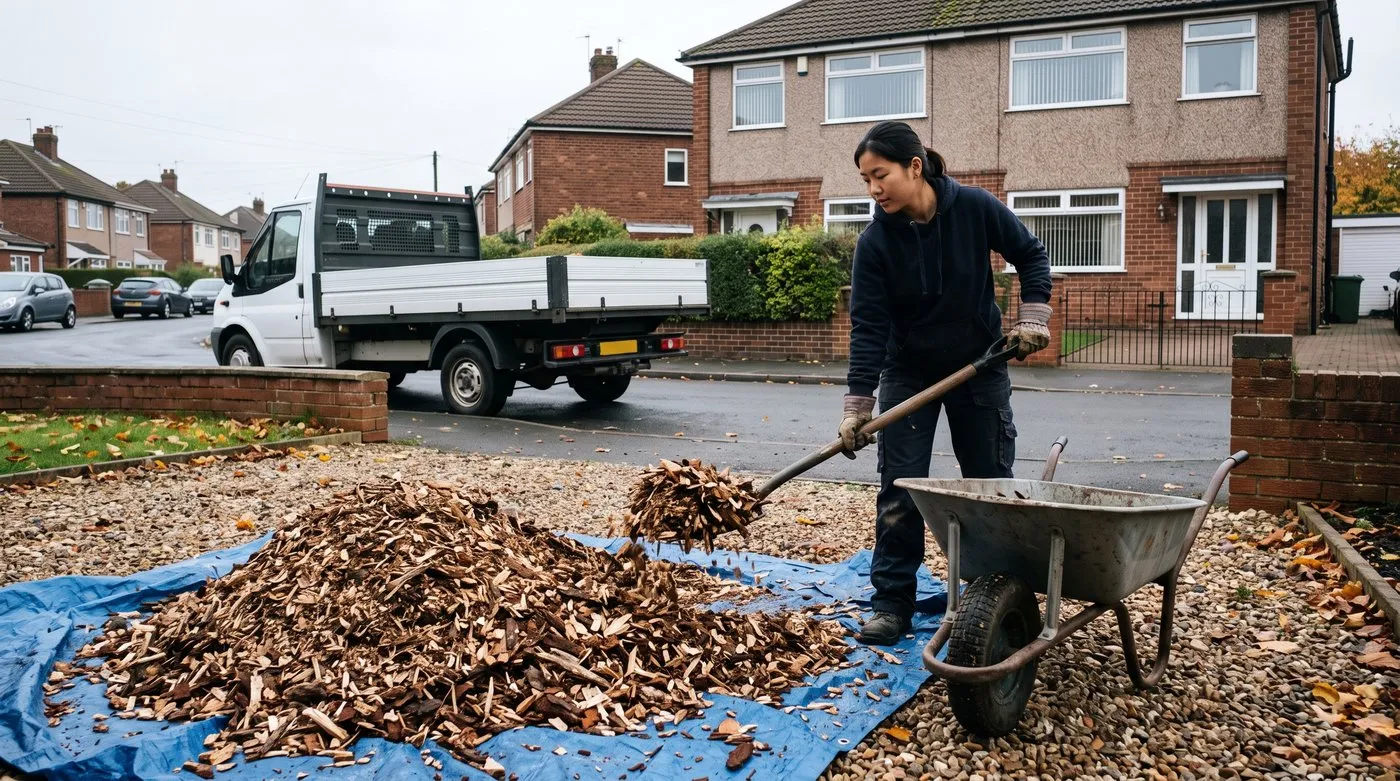
A free load from a local tree surgeon can mulch a whole garden. Lay a tarpaulin down first to save sweeping the drive.
Some councils offer chip from their tree work, and garden centres sell bagged chip for smaller jobs.
Ask what trees the chip came from. Avoid chip from trees that were cut down because they were diseased, and never use chip from treated, painted or pallet wood.
How to spread woodchip mulch
Spread woodchip on top of the soil, not dug in. Here’s how.
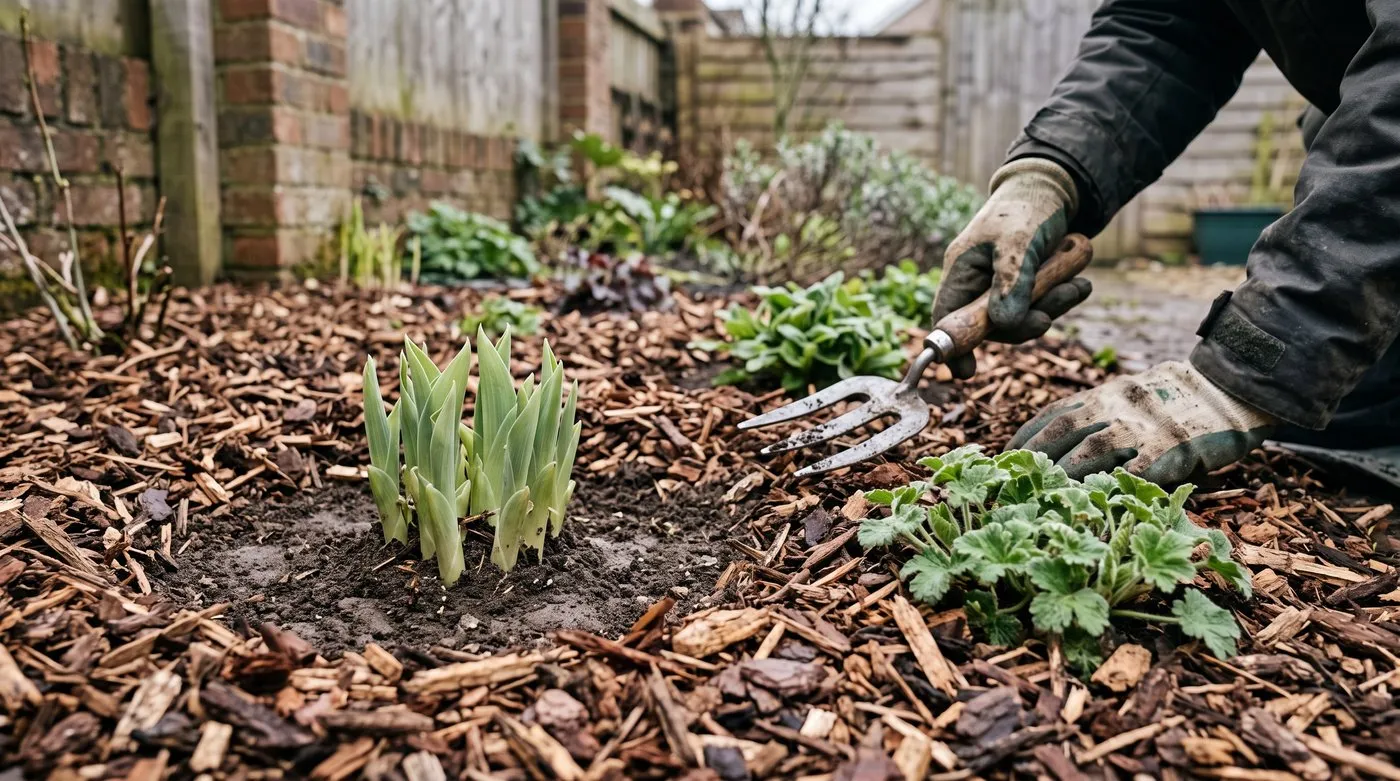
Spread the chip thickly over the soil but leave a little ring of bare earth round each stem. That stops crowns rotting.
- Clear weeds first, and water the soil if it’s dry. Mulch locks in whatever moisture is there.
- Spread the chip 5-8cm thick over the soil surface. Go thicker on weedy ground.
- Keep it clear of stems. Leave a gap of a few centimetres around plants, and a bit more around tree trunks.
- Cover the whole bed. Bare gaps let weeds through.
Too thin, under about 3cm, and weeds push through. Piled very deep, the soil underneath can get airless and sour. Never heap chip against trunks like a volcano, as it rots the bark.
The best times are autumn and early spring, when the soil is moist. Worms pull the bottom layer into the soil over winter. Avoid spreading it over dry soil in summer, as it then keeps rain out.
Does woodchip mulch steal nitrogen?
A little, but only where the chip touches the soil. Microbes breaking down fresh wood need nitrogen, and they take some from the top centimetre or two.
Over time, though, the rotting chip feeds soil life, which is the idea behind feeding the soil, not the plants.
Established trees, shrubs and perennials root much deeper, so they barely notice. Seeds and tiny seedlings live right in that top layer, so they can struggle. That’s why you shouldn’t sow seeds into fresh chip, or dig chip into the soil.
If you’re planting young plants into a freshly chipped bed, pull back the chip, plant into the soil and add a little general fertiliser or well-rotted manure to the planting hole. Then tuck the chip back around them, clear of the stems.
Where woodchip mulch works best
- Shrub and perennial borders. Spread 5-8cm in autumn. Top up every year or two. Weeding drops dramatically. On really weedy ground, lay cardboard under the mulch first.
- Fruit trees. Mulch a wide circle over the roots, leaving a gap round the trunk. It stops grass competing with young trees.
- Soft fruit. Raspberries, currants and gooseberries love a woodland-style mulch. It keeps weeds down and moisture in.
- Asparagus and rhubarb. A layer in autumn after cutting back keeps these permanent beds tidy.
- Paths. Chunky mature chip makes a soft, cheap path between beds. The guide to allotment path building shows how to edge one.
- Around trees in lawns. A ring of chip stops the mower bashing the trunk and cuts grass competition.
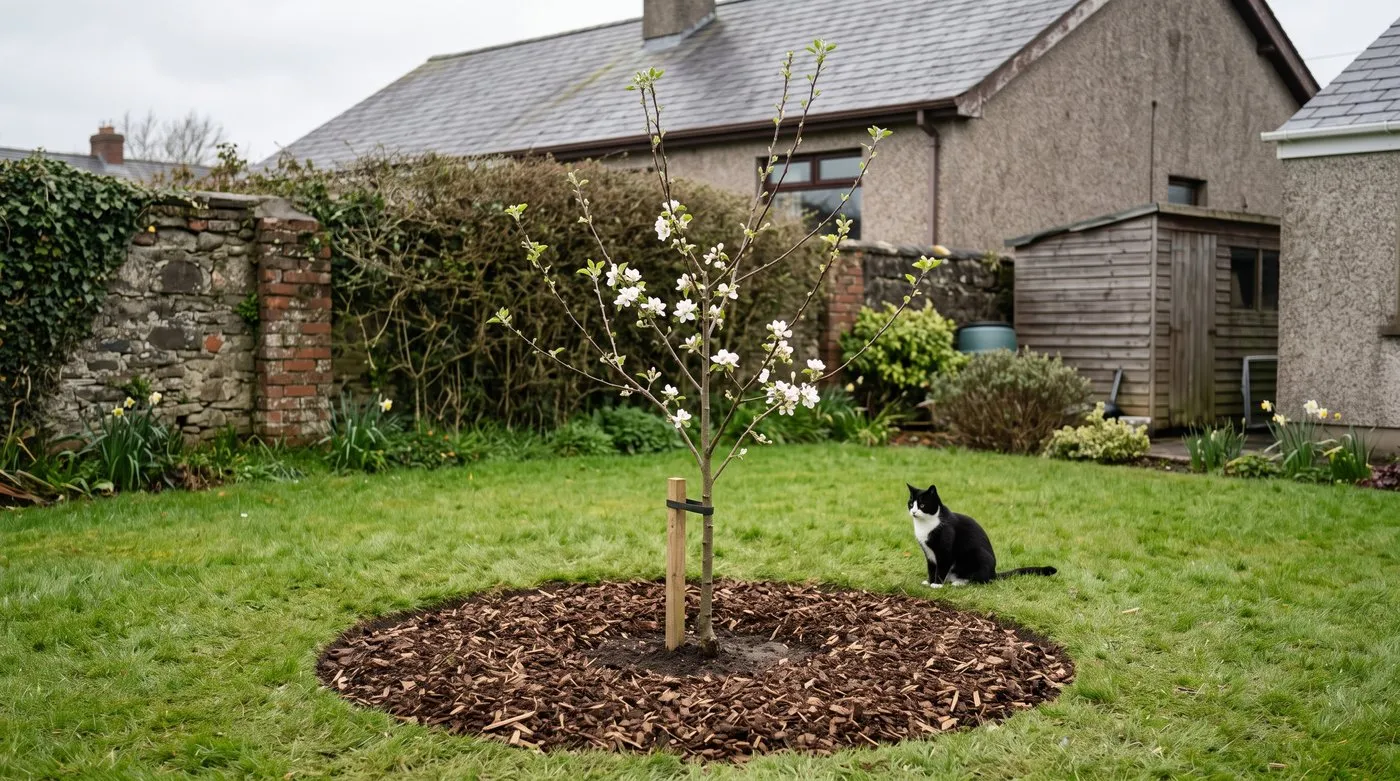
A wide ring of chip stops grass competing with a young fruit tree. Keep it pulled back from the trunk.
For a softer, finer mulch to use around delicate plants, try making your own leaf mould.
Where to avoid woodchip, or compost it first
- Annual vegetable beds. Fresh chip ties up nitrogen at the surface and gets in the way of sowing. Compost it first.
- Seed beds. Wait until seedlings are well grown before mulching around them.
- Mediterranean herbs and alpines. Lavender, rosemary, thyme and sage prefer a dry, gritty surface. Use gravel instead.
- Waterlogged ground. A thick mulch keeps wet soil wetter. Fix the drainage first.
- Right against stems and crowns. This causes rot. Always leave a gap.
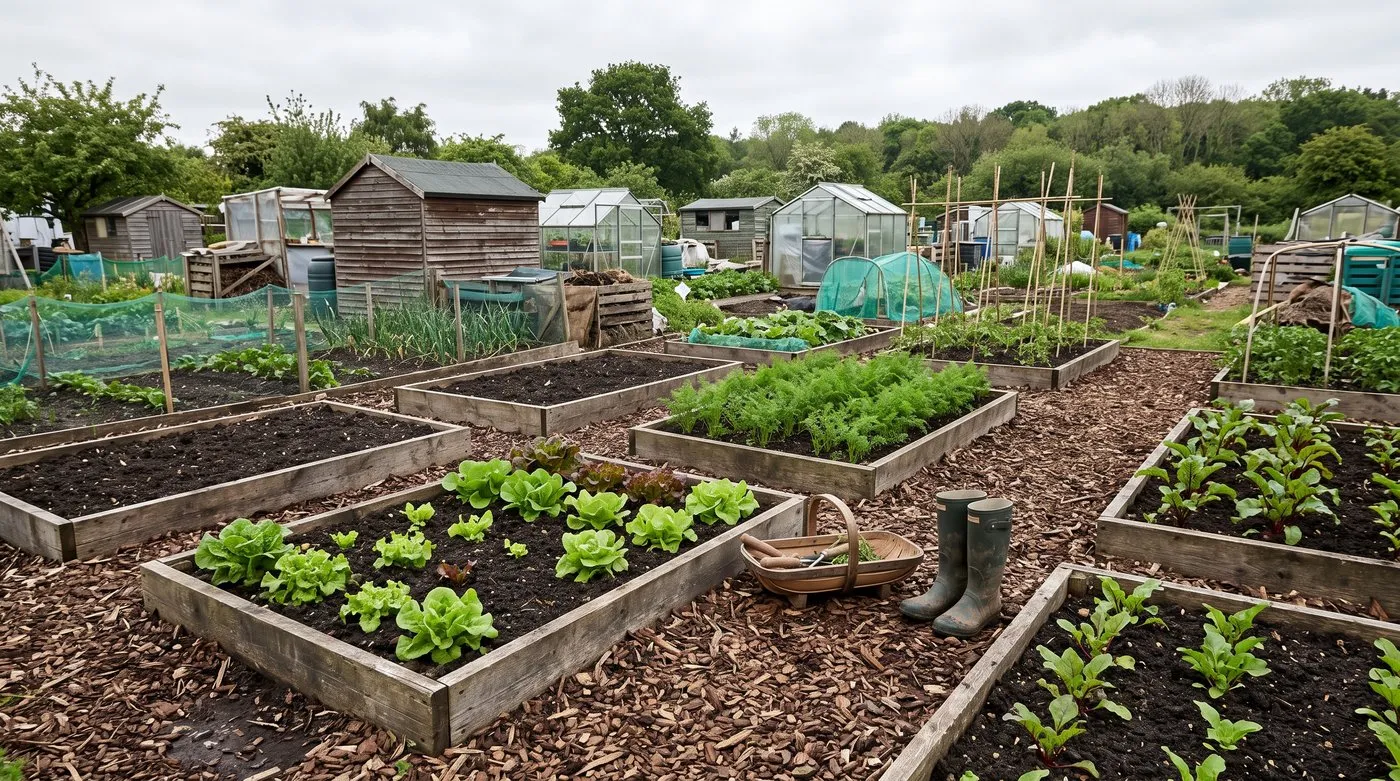
Woodchip on the paths, compost in the beds. Seedlings stay happy and the paths stay mud-free.
How to compost woodchip for vegetable beds
If you have a big pile of chip, compost some for the veg patch.
- Pile it in a separate heap or bay, ideally at least 1m across.
- Mix in green material, such as grass clippings, comfrey leaves or fresh manure. This adds nitrogen and speeds things up.
- Wet the heap well as you build it.
- Turn it after about six months.
- Use it after about a year, once it’s dark, crumbly and smells earthy.
Rotted chip is safe to spread on veg beds or use in a no-dig garden, where you add organic matter on top rather than digging.

A year in its own bay turns woodchip dark and crumbly. Then it’s ready for the vegetable beds.
Woodchip myths, sorted
“Woodchip spreads tree disease.” The risk from healthy trees is low. Just avoid chip from trees known to be diseased.
“Only fresh chip is any good.” Not true. Older, part-rotted chip is great and ties up less nitrogen.
“Woodchip makes soil acidic.” Hardly at all. Chip rots down to something close to neutral.
“Woodchip brings in pests.” Woodlice and beetles may move in, but they feed on the rotting wood, not your plants. Slugs may shelter in any mulch, so keep an eye on young plants.
Common woodchip mulch mistakes
- Digging chip into the soil. Keep it on top, where worms and fungi break it down slowly.
- Mulching dry soil. Water first, or the chip keeps the next rain out.
- Piling chip against trunks. It causes rot. Leave a gap.
- Spreading it too thin. Under about 3cm, weeds sail through.
- Using it on seed beds. Seedlings struggle. Use compost there instead.
Frequently asked questions
Is woodchip a good mulch for UK gardens?
Yes, for borders, fruit trees and shrubs. It smothers weeds, holds moisture in the soil and adds organic matter as it breaks down. Spread it 5-8cm thick on the surface and top it up every year or two.
Does woodchip steal nitrogen from soil?
Only a little, right where it touches the soil. Microbes breaking down fresh wood use some nitrogen at the surface. That matters if you dig chip in or sow seeds into it. Around established plants, a surface mulch has little effect.
What is ramial chipped wood?
Chip made from small, young branches, chipped green. It often includes leaves and twigs. It’s richer than chip from thick, older wood and breaks down faster, so it’s good for building up soil in borders.
Can you use woodchip on vegetable beds?
Yes, around permanent crops, but compost it first for annual beds. Fresh chip suits asparagus, rhubarb and soft fruit as a surface mulch. For beds you sow each year, use chip that has rotted for about a year, or use compost instead.
How long does a woodchip mulch last?
Usually a year or two before it needs topping up. Fine and ramial chip rot down faster than coarse chip from big branches. Add a few centimetres of fresh chip each year to keep the layer thick enough to stop weeds.
Where do I get woodchip in the UK?
Local tree surgeons are the best source. Many are happy to drop off a load for free or a small charge, since it saves them disposal fees. Garden centres sell bagged bark and chip, and some councils offer chipped green waste.
Mulch is just one way to keep weeds down. For more ideas, read our guide on how to prevent weeds without chemicals, or browse more how-to guides.
Our team produces practical UK gardening guidance from source research, contributor records and established horticultural practice. Editorial standards are overseen by Matt W.


