Key takeaways
- Impatiens flower non-stop in shade from June until the first frost
- Traditional busy lizzies often get downy mildew, so grow resistant types
- Beacon, New Guinea impatiens and SunPatiens all resist downy mildew
- Sow indoors in February or March and leave the tiny seeds uncovered
- They're perfect for pots, baskets and north-facing borders
- Take cuttings in September to keep favourites over winter
Impatiens are the best bedding plants for shade in UK gardens. Nothing else gives you such non-stop colour from June to the first frost in spots that barely see the sun. A north-facing border, a shady patio pot, a hanging basket under a porch: busy lizzies brighten them all.
There is one catch. Downy mildew, a disease that hit traditional busy lizzies hard in a big outbreak in 2011, is still around in UK gardens. The good news is that there are now lovely resistant types. Here’s which ones to grow and how to get the best from them. For more shady ideas, see our guide to the best plants for shade.
What types of impatiens can I grow in the UK?
There are three main groups, each with its own strengths.
Busy lizzie (Impatiens walleriana) is the classic. It’s low and mounding, with flowers in almost every colour except blue and true yellow. It was once the UK’s favourite bedding plant, but traditional varieties catch downy mildew easily. The newer Beacon series is a busy lizzie bred to resist it.
New Guinea impatiens have bigger flowers, glossy bronze or dark green leaves and a more upright shape. They resist downy mildew. They take more light than busy lizzies but still like shade from the midday sun.
Balsam (Impatiens balsamina) is the old cottage garden type, with flowers tucked tight against upright stems. You won’t often find it in garden centres, but it’s easy from seed.
New Guinea impatiens, with their bigger flowers, alongside traditional busy lizzies in pots
The downy mildew problem explained
Downy mildew is a disease that attacks busy lizzies. It swept through the UK in 2011, and many councils stopped planting busy lizzies in parks. It’s still around today.
Look for yellowing leaves with white, fluffy growth underneath. Plants then drop their leaves and collapse within days. The disease can hang around in soil and old plant bits, ready to infect new plants, and there’s no cure.
It mainly hits traditional busy lizzies and leaves New Guinea impatiens alone. It loves cool, damp, sheltered spots, which is sadly exactly where busy lizzies are usually planted. The RHS has a helpful guide to spotting and managing it.
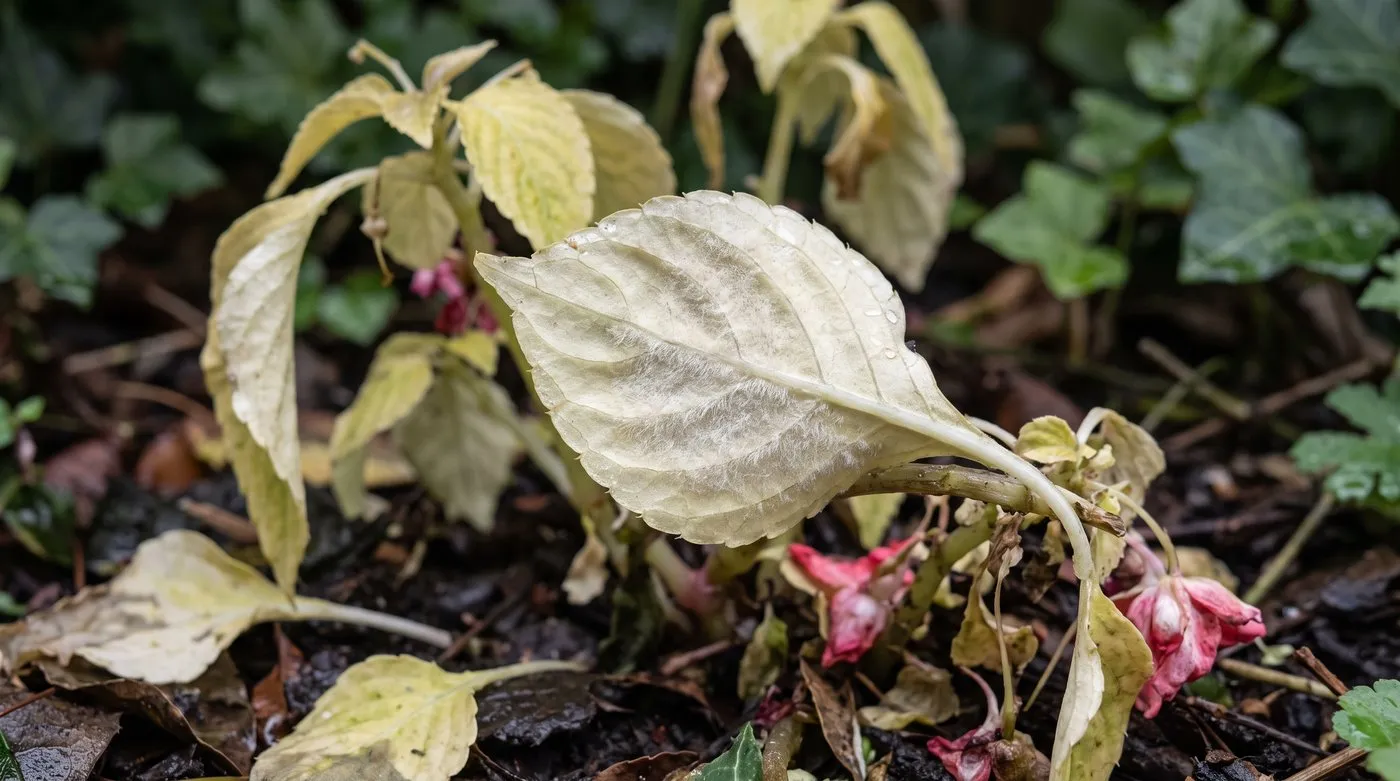
Yellow leaves with white fuzz underneath are the sign to look for. Pull up and bin affected plants straight away, as there’s no cure.
Which mildew-resistant impatiens should I grow?
Beacon is the one to choose if you love the classic busy lizzie look. It’s bred to resist downy mildew, and it’s happy in full shade.
New Guinea impatiens are a safe choice all round. Compact series like Divine and Harmony suit pots, while bigger ones like Florific fill borders quickly.
SunPatiens are vigorous hybrids that, unlike other impatiens, cope with full sun. They flower from June until the first hard frost and are sold as young plants rather than seed.
For more shade-tolerant annuals that go well with impatiens, see our full guide.
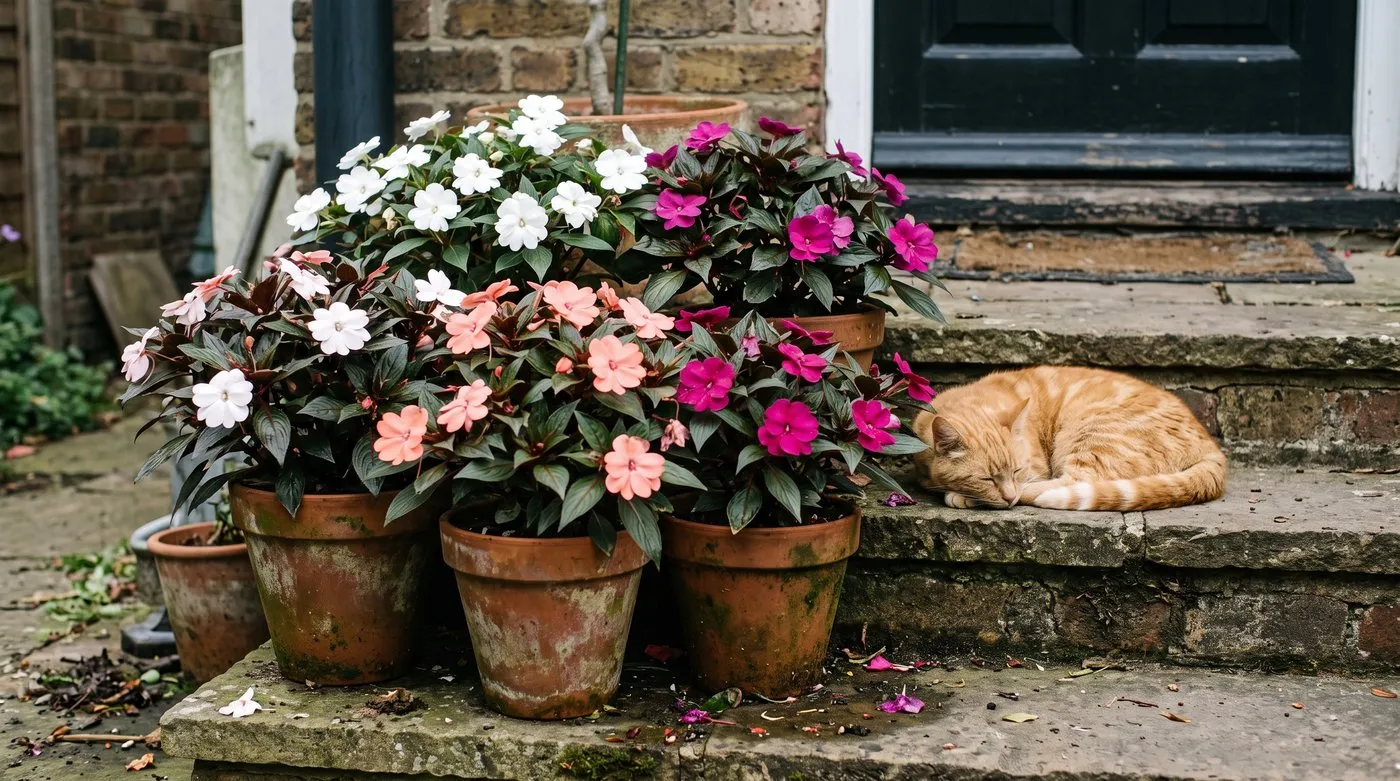
New Guinea impatiens shrug off downy mildew and bring big flowers to shady spots. They like a little morning sun but scorch in hot afternoon sun.
How to grow impatiens from seed
Impatiens seed is fine and dusty, and it needs light and warmth to sprout. Start indoors in February or March, because the seedlings are slow and need a good few weeks before planting out.
Step 1: Fill module trays with fine peat-free seed compost. Water from below and let it drain.
Step 2: Sprinkle the seeds thinly on top. Don’t cover them, because they need light. Press them down gently with a flat board.
Step 3: Cover with a clear lid and put in a heated propagator at about 20-24°C. Seedlings appear in two to three weeks. Take the lid off as soon as they do.
Step 4: Grow on somewhere warm and bright, out of direct sun. Once they have two true leaves, move them into small pots of their own. Hold them by a leaf, never the stem.
Step 5: Harden off over a couple of weeks in late May. Plant out once all risk of frost has passed.
For more tips on starting seeds early, see our indoor seed sowing guide.
Impatiens seedlings with their first true leaves, ready to move on
How to plant impatiens in containers and hanging baskets
Pots are where impatiens really shine. Fresh compost means no lingering mildew from the soil, and you’re in control.
Pots: Use pots at least 25cm across, with drainage holes. A 35cm hanging basket holds three to five plants. In a window box, plant a single row about 15cm apart.
Compost: Use peat-free multipurpose compost with some perlite mixed in. Impatiens hate soggy roots, but they also wilt fast if the compost dries out.
Spacing: Plant 15-20cm apart. In a basket, put one in the middle and three around the edge.
Feeding: Give a balanced liquid feed every couple of weeks from July. Switch to a tomato feed in August for late flowers. Don’t overdo it, or you’ll get more leaves than flowers.
Watering: Check pots daily in summer. Impatiens wilt dramatically when dry but perk up quickly after a drink. Water in the morning and keep the leaves dry, especially on busy lizzies, as damp leaves encourage mildew.

Pop one plant in the middle and three around the edge of a 35cm basket. Fresh compost also means no mildew lurking in old soil.
Growing impatiens in shade and north-facing borders
Impatiens are brilliant in deep shade. They flower happily in spots that get very little direct sun, so they’re perfect for north-facing walls, under trees and in basement areas.
Soil: Dig in lots of compost before planting. Soil near walls and fences is often dry, because the wall blocks the rain. Mulch after planting to keep moisture in, as impatiens have shallow roots.
Spacing: Plant 20-25cm apart and they’ll knit together into a carpet of colour.
Best colours for shade: White, pink and salmon show up best in low light. Deep reds and purples can disappear in heavy shade, so go for white Beacon or pale pink New Guinea types in dark corners.
Good partners: Grow impatiens with hostas, ferns, heuchera and brunnera. The impatiens bring flowers, and the foliage plants bring shape and texture. Our guide to annual bedding plants has more ideas.
Busy lizzies bringing colour to a north-facing border alongside hostas and ferns
How to keep impatiens flowering all summer
Impatiens drop their own old flowers, so there’s no deadheading. New buds just keep on coming.
Pinching out: When plants are about 10cm tall, pinch out the growing tips. They’ll branch out, giving you a bushier plant with more flowers.
Feeding: Regular feeding from mid-July keeps them flowering into autumn. Use a balanced liquid feed every fortnight, then switch to tomato feed from late August.
Steady watering: Impatiens drop their buds if they dry out and then get soaked. Keep the moisture even. Check pots daily and borders a couple of times a week in dry spells.
Cold weather: Growth slows as nights get cooler, and the first frost kills them. In a sheltered town garden they can keep going into November, while in exposed spots they finish earlier.
Overwintering impatiens in the UK
Impatiens are grown as annuals in the UK, but you can keep a favourite going by taking cuttings.
When: September, before the nights turn cold, while the plants are still growing strongly.
How: Cut 8-10cm shoot tips without flowers. Remove the lower leaves, dip the end in rooting powder and push into small pots of half perlite, half multipurpose compost. Water and cover with a clear plastic bag.
Rooting: Stand them on a warm, bright windowsill. Roots form in a few weeks, and you can take the bag off once you see new growth. Or simply root them in a glass of water, changing it every few days.
Over winter: Keep the young plants in a warm, bright room, away from cold draughts. Water sparingly and give a weak feed once a month.
In spring: Pot them on in March and pinch out the tips for bushier plants. Harden off in late May and plant out after the last frost.
New Guinea impatiens are easier to keep over winter than busy lizzies. They cope better with indoor light and are less prone to grey mould.
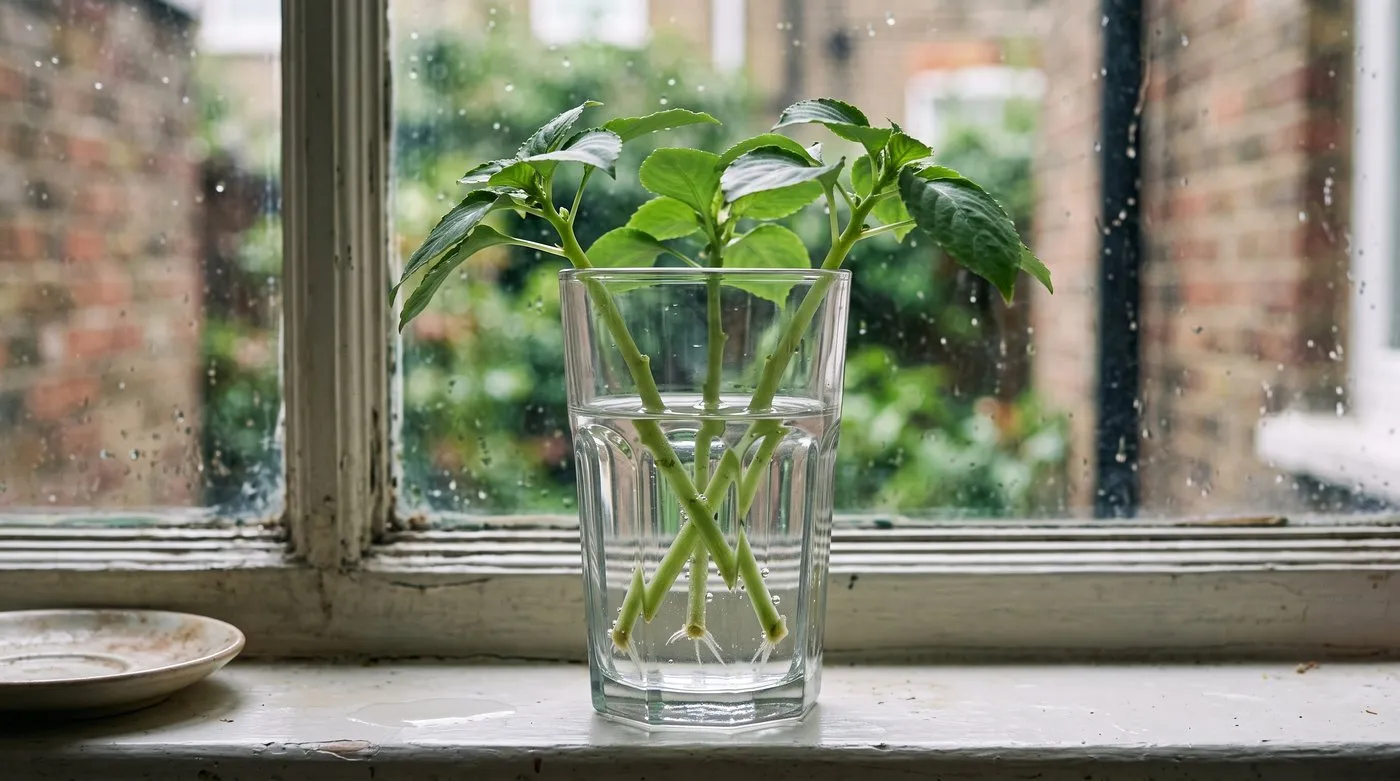
Take shoot tips without flowers in September and root them in water or damp perlite. Change the water every few days and keep them warm over winter.
Slugs and other common problems
Slugs and snails love young plants in spring. Pick them off on evening torch patrols, or use ferric phosphate slug pellets sparingly. Once plants are established, slugs are less of a bother. Our organic pest control guide has more ideas.
Red spider mite can strike in hot, dry spots, especially in greenhouses or against sunny walls. Mist the leaves and keep the air humid. In a greenhouse, predatory mites do a good job.
Vine weevil grubs eat roots in pots, causing sudden wilting. Water in vine weevil nematodes in late summer. Adults leave neat notches in leaf edges.
Grey mould can affect plants kept indoors over winter in damp, stuffy conditions. Pick off dead leaves, let air circulate and keep water off the leaves.
Month-by-month impatiens calendar
| Month | What to do |
|---|---|
| February | Sow seeds indoors in a heated propagator |
| March | Keep sowing. Prick out February seedlings |
| April | Pot on seedlings. Order young plants for May |
| May | Harden off. Plant out after the last frost in the south. Buy young plants |
| June | Plant out in the north. Start feeding pots |
| July | Water daily in hot spells. Feed every couple of weeks |
| August | Switch to tomato feed. Peak flowering |
| September | Take cuttings to keep over winter |
| October | Clear frosted plants. Bring pots indoors before the first frost |
| November | Keep cuttings on a bright, warm windowsill |
Busy lizzies in full flower, happy in their shady spot
For another easy annual to grow alongside impatiens, see our guide on how to grow cosmos from seed.
Frequently asked questions
Can I still grow traditional busy lizzies in the UK?
Yes, but there’s a real risk of downy mildew. The disease is now common in UK gardens, and traditional busy lizzies catch it easily. The Beacon series looks just like the classic busy lizzie but resists the disease. Use fresh compost rather than reusing it from old impatiens plantings.
Do impatiens need sun or shade?
Most prefer shade or part shade. They’re the best bedding plant for shady spots where others won’t flower. Busy lizzies and Beacon types are happy in full shade. New Guinea impatiens like a little morning sun but scorch in hot afternoon sun. SunPatiens cope with full sun.
When should I sow impatiens seeds in the UK?
Sow them indoors in February or March. The seeds are tiny and need light to sprout, so press them onto the compost without covering them. Keep them warm in a propagator. Prick out when they have two true leaves, harden off in late May and plant out after the last frost.
Why are my impatiens dropping their leaves?
Usually cold or downy mildew. Impatiens hate the cold and drop leaves as autumn nights get chilly. Downy mildew causes yellowing leaves with white fuzz underneath, then the leaves fall fast. Pull up and bin affected plants straight away, as it spreads quickly.
Can I overwinter impatiens?
Yes, by taking cuttings in September. Cut 8-10cm shoots without flowers, remove the lower leaves and root them in water or damp perlite on a warm windowsill. Keep them in a warm, bright room over winter, then plant out after the last frost. New Guinea types are the easiest.
What is the difference between New Guinea and standard impatiens?
New Guinea impatiens are bigger, bolder and resist mildew. They have larger flowers and glossy dark leaves, grow more upright and cope with a little more light. Standard busy lizzies have smaller flowers, paler leaves and a spreading shape. Both are killed by frost.
Are SunPatiens the same as impatiens?
Yes, they’re a type of hybrid impatiens. They’re bred from New Guinea impatiens and wild species to be vigorous, mildew-resistant and happy in full sun. They’re sold as young plants rather than seed. SunPatiens are the impatiens to choose for a sunny spot.
Our team produces practical UK gardening guidance from source research, contributor records and established horticultural practice. Editorial standards are overseen by Matt W.