
Key takeaways
- Sensation Mixed is the easy, reliable starting point for pink and white flowers on tall stems
- Purity is the classic pure white cosmos for cutting and pale planting schemes
- Sonata and Xanthos stay under 60cm, so they suit pots and the front of a border
- Apricotta, Rubenza and Double Click Cranberries add peach, deep red and double flowers
- Tall varieties need 40-50cm spacing and a few canes or twiggy sticks in windy gardens
- Every variety flowers longer if you pick or deadhead it every few days
The best cosmos varieties for most UK gardens are Sensation Mixed and Purity for tall stems, and Sonata or Xanthos for pots. Beyond those, there are peach, deep red, double and frilly cosmos to play with. All of them grow from seed in a single season and flower from July until the frosts.
This guide is about choosing. It compares the main varieties by height, colour and best use, so you can pick the right packet. For sowing step by step, the guide to growing cosmos from seed covers the whole process.
Which type of cosmos should you grow?
For most gardens, grow Cosmos bipinnatus. It is the familiar cosmos with feathery leaves and big, open flowers in white, pink, crimson and peach. Nearly every variety on a UK seed rack belongs to it.
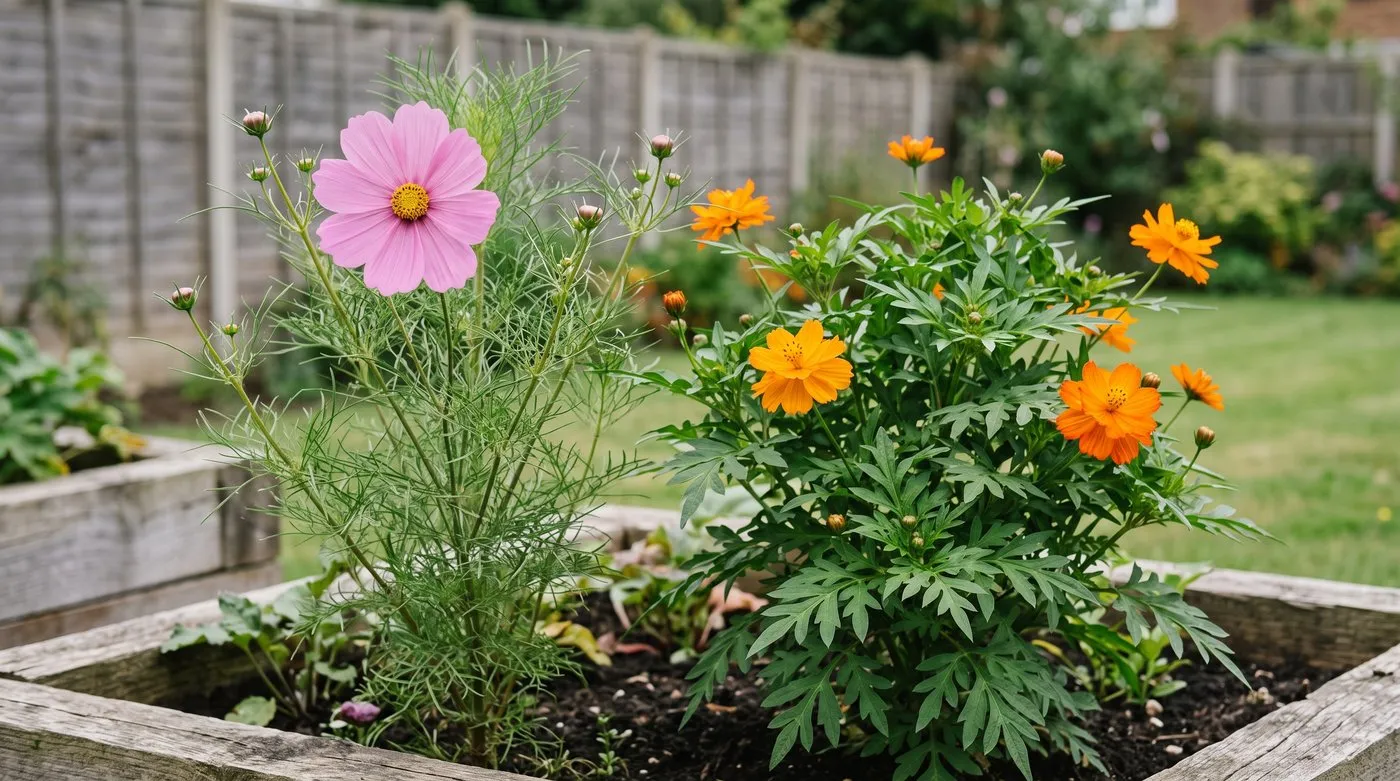
Feathery leaves and pink or white flowers mean Cosmos bipinnatus. Coarser leaves and hot orange flowers mean Cosmos sulphureus.
Two other kinds turn up too:
- Cosmos sulphureus has bolder, toothed leaves and orange, red or yellow flowers. It is usually shorter and loves a hot, sunny spot.
- Chocolate cosmos (Cosmos atrosanguineus) is a tender perennial grown from a tuber, with dark red-brown, cocoa-scented flowers. It needs different care, explained in the guide to growing chocolate cosmos.
Both annual kinds are half-hardy, which means a frost kills them. Sow them under cover in spring, or outdoors once frosts have passed in late May.
Best tall cosmos varieties for cutting and borders
Tall cosmos grows to about 1-1.2m and gives the longest stems for the vase. Plant these at the middle or back of a border, about 40-50cm apart.
| Variety | Height | Flower | Colour | Best for |
|---|---|---|---|---|
| Sensation Mixed | Tall, 1-1.2m | Large single | Pinks, crimson and white | First-timers, cutting |
| Purity | Tall, 1-1.2m | Large single | Pure white | Cutting, pale schemes |
| Picotee | Tall, about 90cm-1m | Single | White edged with pink | Borders, cottage style |
| Daydream | Tall, about 1m | Single | Pale pink, deeper centre | Soft colour schemes |
| Sea Shells | Tall, about 1m | Rolled, tube-like petals | Pinks, crimson, white | Something unusual |
| Double Click Cranberries | Tall, about 1m | Double | Deep red | Fuller flowers for vases |
Sensation Mixed is the one to start with. It is easy, quick and sold almost everywhere. You get a mix of pinks, crimson and white on long, wiry stems.
Purity is the white form of the Sensation type. It glows at dusk and looks lovely with dark dahlias and purple salvias.
Picotee has white petals with a pink rim, and no two flowers look quite alike. Daydream is softer, pale pink with a deeper rose centre.
Sea Shells has petals rolled into little tubes, which gives a frilly, unusual look. Double Click Cranberries has full, double flowers in deep red. Double flowers make less nectar for bees, so mix them with single types.

Tall Sensation cosmos gives long stems for the vase. Cut just above a pair of leaves and the plant will branch and keep flowering.
Peach, red and unusual cosmos colours
Mid-height cosmos usually grows to about 60-90cm. These are the varieties to grow when you want something beyond pink and white.
Apricotta has soft peach to apricot flowers, often in several shades on one plant. It is lovely with bronze fennel and fine grasses such as Stipa tenuissima. Seed can sell out early, so order in winter.
Rubenza opens a rich ruby red and fades to dusky old rose as the flowers age. It looks good with orange calendula for a hot late-summer bed.
Antiquity is a compact plant with crimson flowers that age to softer, bronzy pink tones. It suits a smaller border where tall stems would flop.

Apricotta shifts from pale apricot at the edges to deeper peach in the middle. It’s a softer alternative to the usual pinks.
Best dwarf cosmos varieties for pots
Dwarf cosmos stays under about 60cm. Grow it in pots, window boxes and the front of a border, where it rarely needs staking.
| Variety | Height | Colour | Notes |
|---|---|---|---|
| Sonata Mixed | 45-60cm | Pink, white, carmine | Sturdy, compact version of the classic look |
| Xanthos | 45-60cm | Pale lemon yellow | A rare yellow C. bipinnatus |
| Cosmic Mixed | About 30cm | Orange, yellow, red | A C. sulphureus type that loves heat |
Sonata gives you the classic cosmos look on a short, sturdy plant. It is a good choice for a windy garden where Sensation keeps blowing over.
Xanthos is unusual because yellow is rare in this species. The flowers are a soft lemon, which sits well with blues and whites.
Cosmic is a sulphureus type, so expect hot oranges and yellows. It flowers best in full sun and poor, well-drained soil.

Xanthos brings soft lemon yellow to a cosmos display. Its short habit makes it a natural for pots.
For containers, use a pot at least 30cm wide with peat-free compost. Plant one dwarf cosmos per 30cm pot, or three in a larger trough. Pots dry out fast, so water every day or two in hot spells.

Short cosmos in yellow, pink and orange makes a cheerful row of pots. A mix of varieties gives colour all summer.
How to get the most flowers from any variety
Every cosmos variety flowers more if you treat it a little mean. Rich soil and high-nitrogen feed give lots of leaf and fewer flowers.
Pinch out young plants when they are about 20cm tall. Nip off the top just above a pair of leaves, and the plant sends out several side shoots. The guide to pinching out cut flowers explains which other annuals respond the same way.
Pick or deadhead every few days from July. Cosmos keeps making flowers as long as you stop it setting seed. The guide to deadheading flowers shows the knack.
Water in long dry spells but otherwise leave plants be. In pots, a high-potash feed such as tomato feed every couple of weeks from July helps.

Pinching the tip out of a young plant makes it branch. More stems means more flowers to pick all summer.
Cosmos variety calendar
| Month | What to do |
|---|---|
| January to February | Choose varieties and order seed |
| March to April | Sow indoors in pots or modules at about 18°C |
| May | Harden off plants and plant out after the last frost |
| Late May to June | Sow outdoors where they are to flower. Pinch out young plants |
| July to September | Pick and deadhead every few days. Stake tall types if they lean |
| October to November | Flowering stops with the first frosts. Save seed, then compost the plants |
In colder northern gardens, plant out a week or two later than in the south. The guide to hardening off seedlings helps young plants settle in.
Common mistakes when choosing and growing cosmos
- Growing tall types in a windy spot. Sensation can blow over. Choose Sonata, or stake tall plants early.
- Feeding too much. Rich soil gives leafy plants with few flowers. Skip the general fertiliser in borders.
- Planting out too early. Cosmos is killed by frost. Wait until late May, or early June in the north.
- Planting tall cosmos in front. It hides shorter plants. Put tall types at the back and dwarf types at the front.
- Leaving seed heads on all summer. The plant slows down once it sets seed. Keep picking.
For other summer annuals to grow alongside cosmos, see the list of best half-hardy annuals, or browse more ideas on the plants hub.
Frequently asked questions
What is the best cosmos variety for a UK cutting garden?
Sensation Mixed is the most reliable choice for cutting. It grows about 1-1.2m tall on long stems, with big single flowers in pinks and white. Purity, its pure white sister, is the other cutting favourite.
How tall does cosmos grow in the UK?
Most garden cosmos grows about 1-1.2m tall. Mid-height types such as Rubenza and Apricotta sit nearer 60-90cm. Dwarf varieties such as Sonata and Xanthos stay under 60cm, and Cosmic sulphureus types can be as short as 30cm.
Is there a yellow cosmos?
Yes, Xanthos is a pale lemon-yellow Cosmos bipinnatus. It is short, so it suits pots and edges. For brighter yellow and orange, grow Cosmos sulphureus varieties such as the Cosmic series, which like a hot, sunny spot.
Which cosmos is best for pots?
Choose a dwarf variety such as Sonata, Xanthos or Cosmic. They stay under 60cm, rarely need staking and keep a neat shape. Use a pot at least 30cm wide and water often in hot weather.
Do cosmos need staking in the UK?
Tall varieties often do in windy or exposed gardens. Push in twiggy sticks or a few canes and string when plants reach about 50cm. Dwarf types such as Sonata and Xanthos stand up on their own.
How do you keep cosmos flowering longer?
Pick or deadhead them every few days. Removing faded flowers stops the plant setting seed, so it keeps making new buds until the first frosts. Leave a few seed heads in autumn if you want to save seed.
Now you’ve picked your varieties, plan a whole patch of them with the guide to growing cut flowers.
Our team produces practical UK gardening guidance from source research, contributor records and established horticultural practice. Editorial standards are overseen by Matt W.


