Key takeaways
- Blackthorn is great on a field edge, but its suckers make it hard work in a small garden
- Its long, sharp thorns can cause nasty wounds, so keep it well away from paths and play areas
- Plant bare-root whips from November to March, 5 per metre in a staggered double row
- Its March blossom is an early feast for queen bumblebees
- Trim between September and February, outside the bird nesting season
- Sloes ripen from September to November, ready for sloe gin
Blackthorn splits opinion more than almost any native hedge, and for good reason. Blackthorn, or Prunus spinosa, is one of the best hedges in Britain for wildlife. It’s also one of the thorniest and hardest to keep in its place. Here’s the honest picture: where it shines, where it’s a mistake, and what the suckers, thorns and sloes mean in a real garden.
What blackthorn is
Blackthorn is a thorny native shrub, a wild relative of the plum. Left alone it forms a thick, spiny thicket 3 to 4 metres tall.
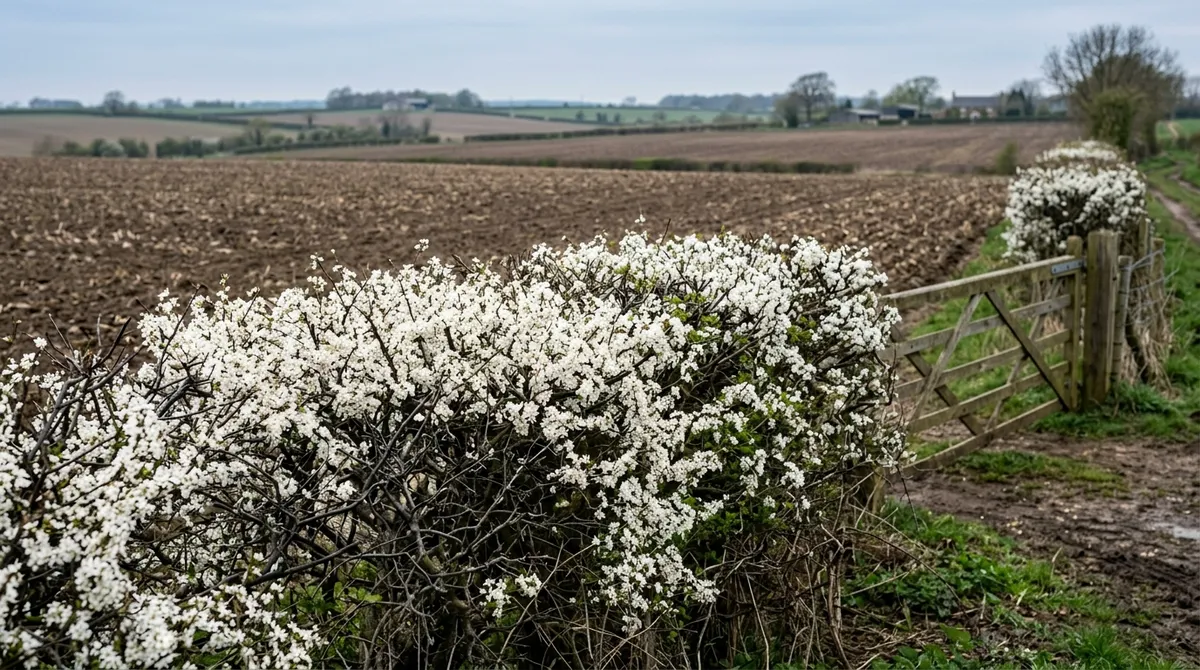
The thorns are its big feature. They’re long, hard and sharp, and unlike hawthorn they often snap off in the skin. It also flowers before the leaves open, so in late March a hedge looks like white froth on black twigs.
It grows 30 to 60cm a year in good conditions. The fruit, the sloe, is a small, blue-black, mouth-puckeringly sour berry and the star of sloe gin.
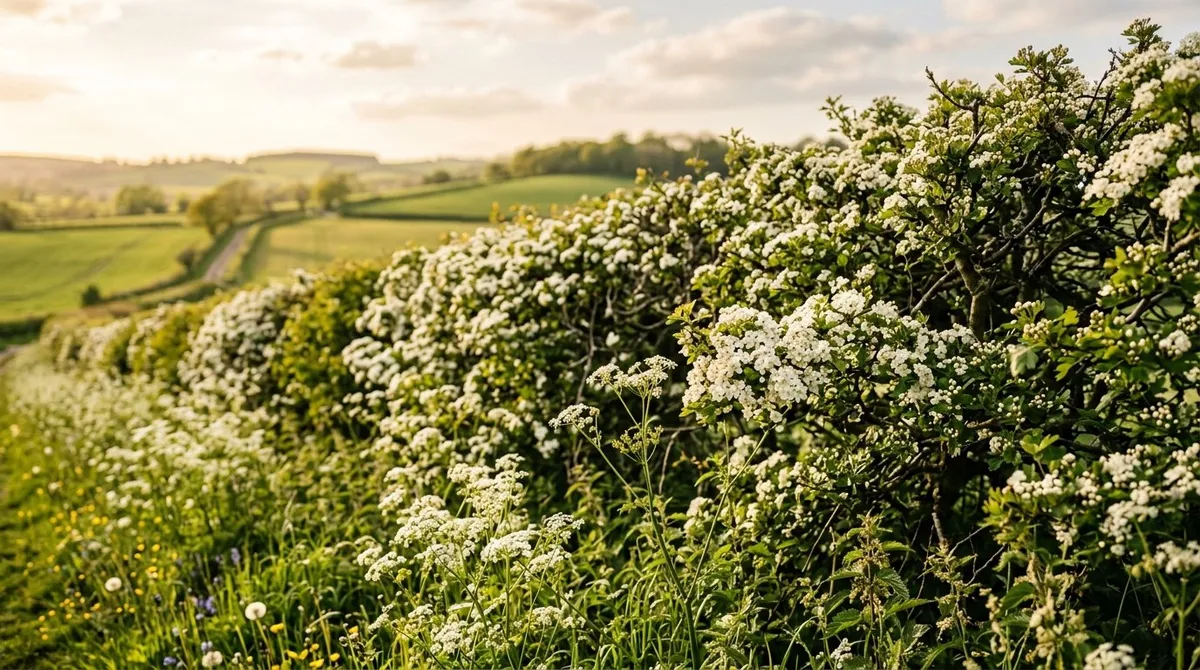
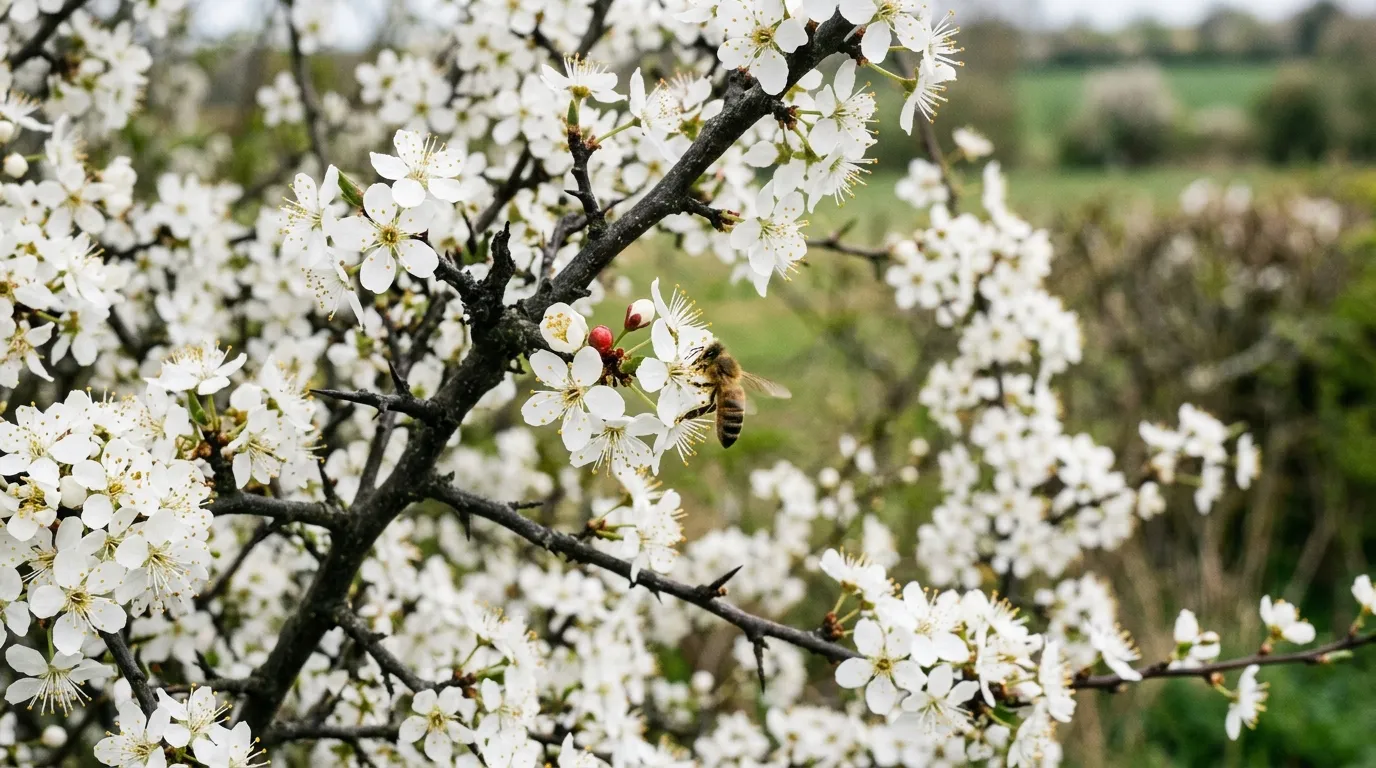 Blackthorn flowers on bare black twigs in late March, weeks before the leaves. That early blossom is its biggest gift to wildlife.
Where a blackthorn hedge is the wrong choice
For most town and suburban gardens, blackthorn is the wrong hedge. It’s a poor fit for small gardens, next to paths and in mixed borders.
Small gardens can’t keep up with the suckers
Blackthorn sends up new shoots, called suckers, 1 to 3 metres from the hedge. In a lawn, regular mowing wears them out. In a border or gravel there’s no easy way to stop them, and cut roots can sprout again. That’s why it belongs on a field edge with grass either side, not next to a flower bed.
Paths and play areas
Keep blackthorn at least 3 metres from paths, patios and play areas. Children brush against hedges, and a blackthorn puncture is far nastier than a hawthorn scratch. Near anywhere people walk, choose a thornless or less thorny hedge.
Mixed borders
In a mixed border, blackthorn bullies everything. Suckers come up through other plants, the thorns make weeding miserable and the shade kills anything underneath. Think of it as a boundary shrub, never a border shrub.
Where a blackthorn hedge is exactly right
On the right site, it’s hard to beat. The habits that make it a pain in a small garden make it ideal on a country boundary.
A field boundary is its natural home. With mown grass or crops either side, the suckers get cut before they take hold. Here they’re actually useful, thickening the base into a stock-proof hedge that cattle and sheep won’t push through.
It also makes a superb security hedge. The thorns put off intruders far better than a fence, and a laid blackthorn hedge is almost impossible to get through. Plenty of country homes grow it under ground-floor windows for just that reason.
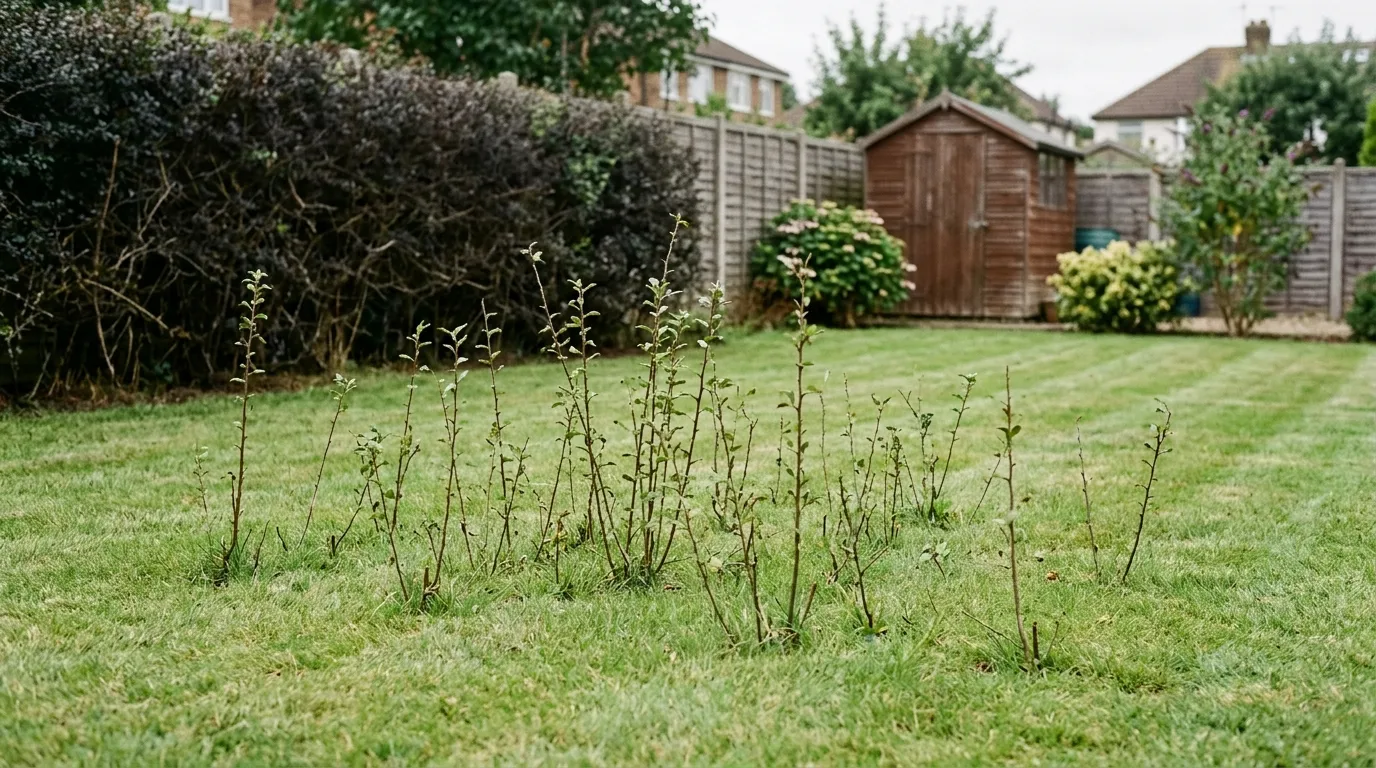 Blackthorn suckers popping up in a lawn, well away from the hedge. The mower keeps them down, but in a border they take over.
Why wildlife loves blackthorn
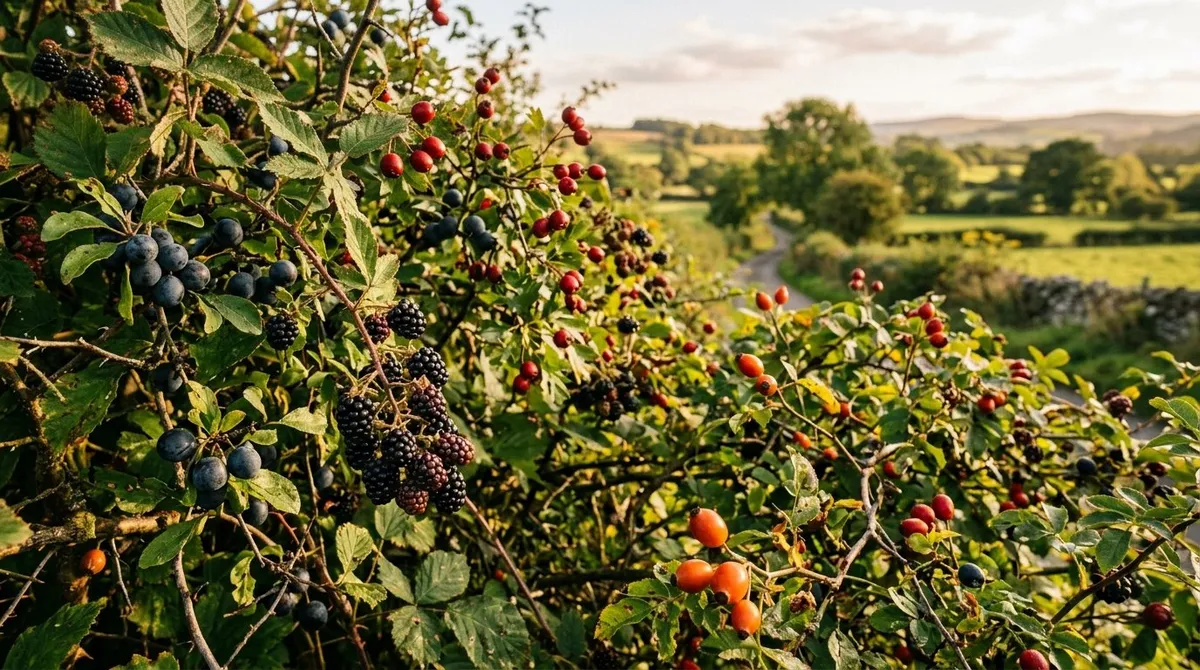
Blackthorn is a real powerhouse for British wildlife, which is why conservation groups love it. Its leaves feed lots of moth caterpillars, birds nest safely among the thorns and the sloes feed them in autumn.
The March blossom is one of the first big nectar feasts of the year. It feeds queen bumblebees and early solitary bees when little else is out. The Bumblebee Conservation Trust has more on helping queens in early spring.
Blackthorn against other native hedges
No single hedge suits every spot. This table helps you match the shrub to the job.
| Hedge | Thorns | Suckers | Wildlife | Best for |
|---|---|---|---|---|
| Blackthorn | Very thorny | Lots, spreads widely | Excellent | Field edges, security, sloes |
| Hawthorn | Thorny | No | Excellent | Most gardens, the safe all-rounder |
| Hornbeam | None | No | Good | Formal hedge on clay |
| Beech | None | No | Good | Formal hedge on drier soil, keeps copper leaves in winter |
| Field maple | None | No | Very good | Mixed native hedge |
| Dog rose | Hooked prickles | A little | Very good | Adding flowers and hips to a mixed hedge |
Near where people walk, hornbeam or beech is the better pick. For a wildlife hedge with thorns you can live with, hawthorn is the sensible default, and our hawthorn growing guide covers it in full. Choose blackthorn only when stock-proofing, security or sloes matter more than the suckers and spines.
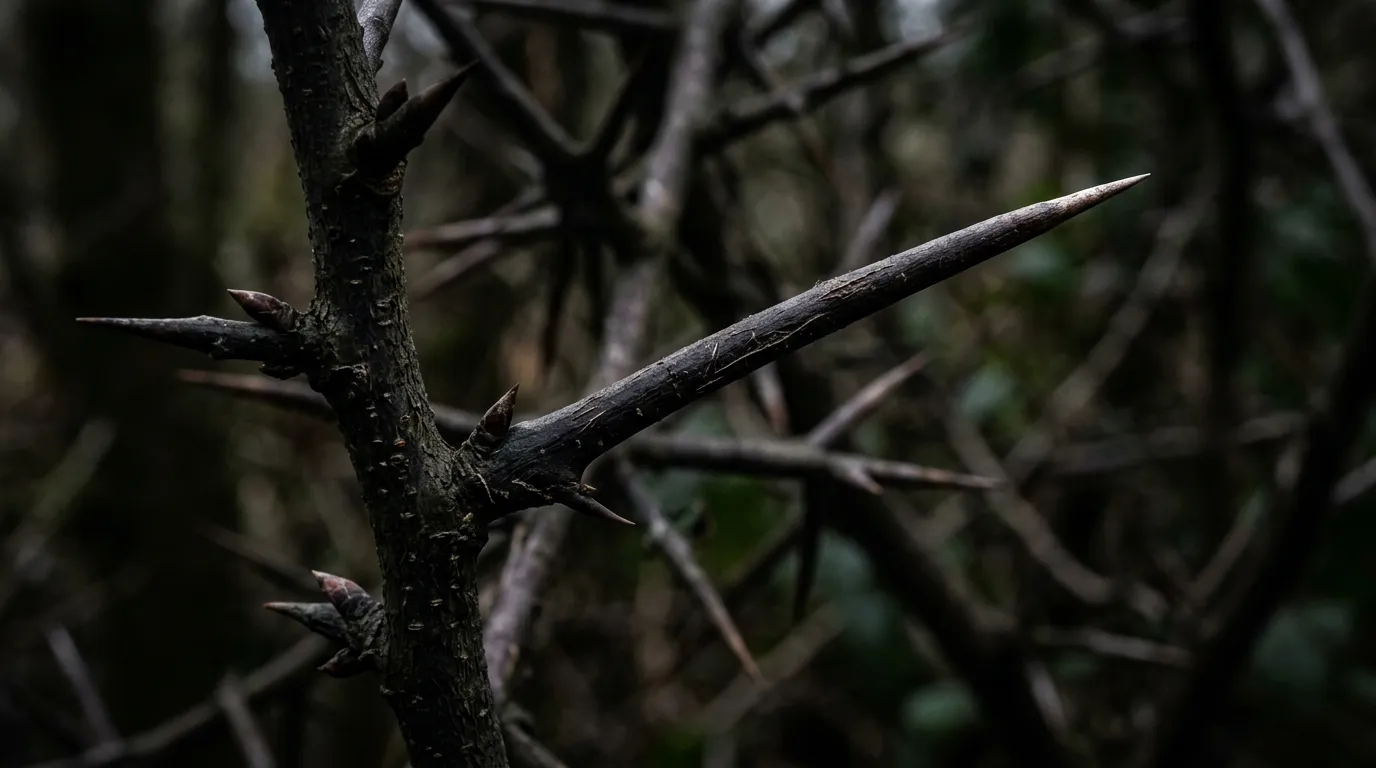 Blackthorn thorns are long and sharp, and they snap off in the skin. Always wear proper gloves.
How to plant a blackthorn hedge
Bare-root plants are the cheapest and easiest way to start. They cost far less than potted plants and settle in just as well.
Plant bare-root whips between November and March, while they’re dormant and the ground isn’t frozen or waterlogged. Buying them in bundles keeps the cost down.
For a stock-proof or wildlife hedge, plant a staggered double row:
- Two rows 45cm apart, with plants 45cm apart in each row, zigzagged between the rows.
- That works out at 5 plants per metre of hedge.
- Dig a slit or trench, spread the roots, firm them in and water if the ground is dry.
- Cut the whips back to 15 to 20cm after planting. It feels brutal, but it makes them bushy at the base.
Mulch along the row with 75mm of bark or wood chip to keep grass down for the first two years. Keep a 1 metre strip weed-free along the hedge, as grass is the main reason new hedges struggle. Our hedge planting guide covers spacing, soil and aftercare in more detail.
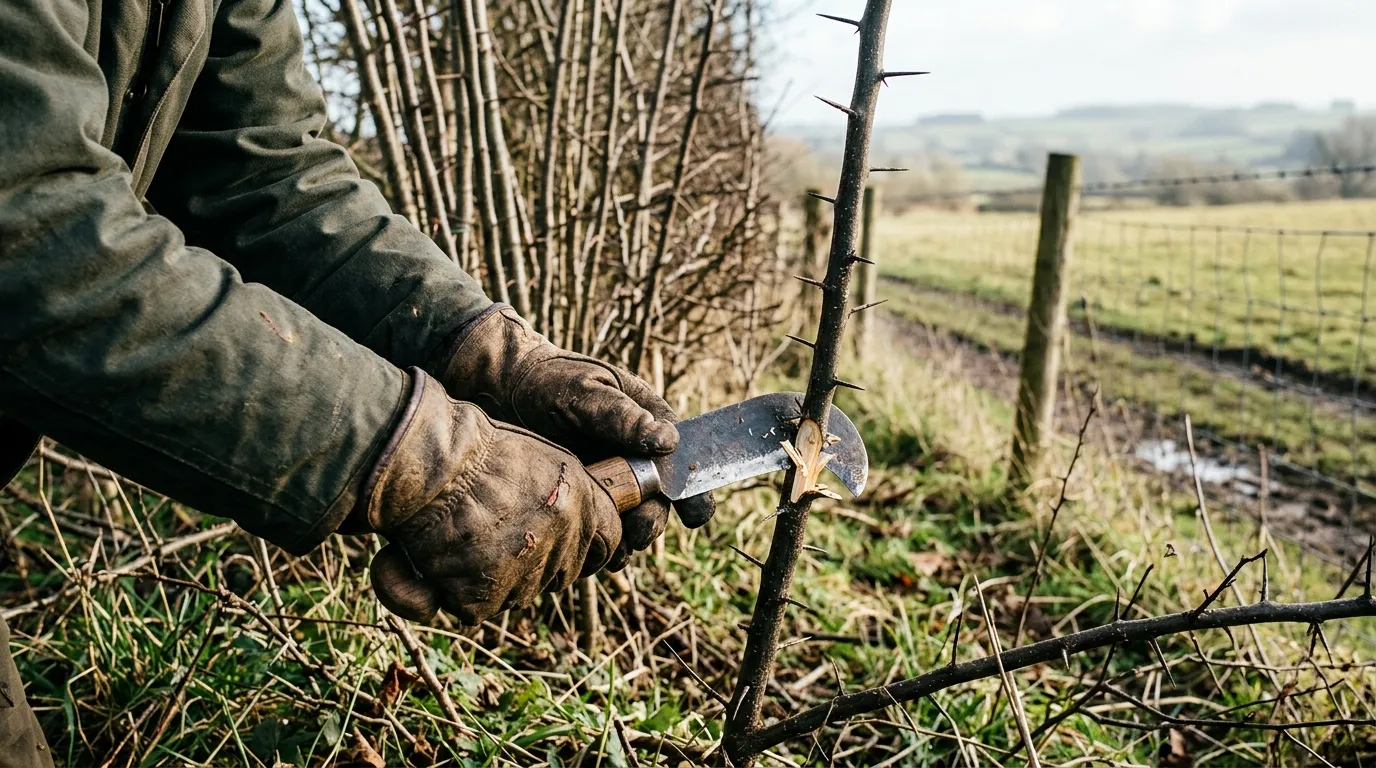 Laying a hedge means part-cutting the stems and bending them over to thicken the base. Always wear thornproof gloves and long sleeves.
Trimming, laying and keeping suckers in check
A blackthorn hedge needs a yearly trim, laying every so often and regular sucker patrol. None of it is hard, but the sucker patrol never ends.
Trim once a year between September and late February. Shape it like a slight A, wider at the bottom, so light reaches the base and it stays thick to the ground. Cutting every two or three years instead of every year gives more blossom and sloes, as it flowers on older wood.
Lay the hedge every 15 to 25 years to give it new life. The main stems are part-cut near the base and bent over so they keep growing while thickening the bottom of the hedge. It’s a winter job, done from December to February, well clear of the nesting season.
When you can cut a blackthorn hedge
Avoid cutting between March and August. That’s the main bird nesting season, and it’s against the law to damage or destroy an active nest.
Farm hedges have their own cutting rules too. For gardeners, the simple rule is to trim, lay and plant blackthorn between September and February.
Check for late nests before you cut in early September. Our guide to legal hedge cutting dates has the full timetable and exceptions.
| Month | Blackthorn jobs |
|---|---|
| January | Lay the hedge, plant bare-root whips if the soil is workable |
| February | Finish planting and laying before the buds break, trim if needed |
| March | Stop cutting, nesting season starts, enjoy the blossom |
| April | No cutting, leave it for nesting birds and early bees |
| May | No cutting, look for new suckers in beds |
| June | No cutting, mow suckers in nearby grass |
| July | No cutting, keep an eye out for aphids and leaf spot |
| August | No cutting, sloes swelling and turning blue |
| September | Cutting season opens, pick sloes after a frost |
| October | Trim and shape, keep picking sloes |
| November | Plant bare-root whips, mulch the row |
| December | Lay older hedges, plant whips, dig out stray suckers |
Picking and using the sloes
For many people, the sloes are the best reason to grow blackthorn. They ripen from September to November.
Pick after the first frost, which softens the skins and takes the edge off the sourness. If the frost is late, pick when they’re dark blue and freeze them overnight instead. For sloe gin, prick or freeze the fruit and half-fill a jar with sloes. Add about 100g of sugar for every 500ml of gin, and leave for 8 to 12 weeks, shaking it every week. Pick in October and it’ll be ready for Christmas.
Common mistakes with blackthorn
Planting it in a small garden. The biggest mistake of all. The suckers become a problem forever in a small plot. Match the shrub to the space.
Planting it next to a path or play area. The thorns can cause infected wounds. Keep it at least 3 metres back from anywhere people walk or children play.
Cutting it in nesting season. Trimming between March and August risks harming nests, which is against the law. Cut between September and February.
Leaving the suckers for years. Young suckers pull out easily. Walk along the bed edges each spring and remove new shoots before they root deeply. A root barrier when you plant saves years of digging.
Handling it bare-armed. Every blackthorn job needs thornproof gloves and long sleeves. Clean any puncture straight away and keep an eye on it for a few days.
Next step: planting your hedge
Still keen? If you have the space and a country boundary, blackthorn is a fantastic choice. Our hedge planting guide takes you through it step by step.
Frequently asked questions
Is blackthorn a good hedge for a small garden?
Usually not, because it sends up suckers everywhere. New shoots pop up well away from the hedge, in lawns and borders. In a small garden that means endless pulling and cutting. The long thorns are a pain beside paths too. Hawthorn, hornbeam or beech stay where you put them.
How fast does a blackthorn hedge grow?
Roughly 30 to 60cm a year once settled. Bare-root whips planted in winter can make a thick, stock-proof hedge in about five years. The first year is often slow while the roots get going. Cutting young plants back after planting makes them bushy from the base.
Why is blackthorn dangerous to handle?
Its thorns can cause painful wounds that easily get infected. They go in deep and can snap off in the skin. Always wear thornproof gloves and long sleeves when you cut or handle it. Clean any puncture straight away, and see a doctor if it turns hot or swollen.
Can you make sloe gin from a blackthorn hedge?
Yes, sloes are the fruit of blackthorn. They ripen from September to November. Pick them after the first frost, or freeze them overnight, which softens the skins. Prick or freeze the sloes, add sugar and gin, and leave for a few months, shaking the jar now and then.
When can you cut a blackthorn hedge legally in the UK?
Avoid cutting from March to August, the main nesting season. It’s against the law to damage or destroy an active bird’s nest. Check for nests before trimming at any time of year. Trim or lay blackthorn between September and February instead.
Our team produces practical UK gardening guidance from source research, contributor records and established horticultural practice. Editorial standards are overseen by Matt W.