Key takeaways
- Monarda flowers from June to September and is a magnet for bees and butterflies
- Monarda didyma likes moist soil, while Monarda fistulosa copes with drier ground
- Powdery mildew is the big problem, so choose a resistant variety like 'Squaw'
- Space plants about 45cm apart in sun so air can flow round them
- Divide clumps every three years or so in spring to keep them flowering well
- The leaves are edible and make a lovely herbal tea
Monarda is one of those plants that makes you stop and watch. From June to September its shaggy, tufted flower heads pull in bees, butterflies and hoverflies like few other plants. Each flower head is a ring of little tube-shaped petals, giving it a fun, slightly punky look in the border.
The name bee balm says it all. Bumblebees love the tubular flowers, and on a warm day you might see several busy on one clump. As a bonus, the leaves smell lovely and make a fine herbal tea.
What species of monarda grow well in the UK?
Two types do the heavy lifting in UK gardens. Monarda didyma is the classic scarlet bee balm. It’s tall, with vivid red flowers from midsummer, and it likes moist, rich soil.
Monarda fistulosa, or wild bergamot, is the tougher one. It comes from dry meadows and prairies, so it copes with poorer, drier soil. Its flowers are lavender-pink, and it’s naturally less prone to mildew. Most modern garden varieties are crosses between the two.
On heavy clay, varieties with fistulosa in them are usually the safer bet, as they cope better with wet winters. On lighter soil that holds moisture, the didyma types give the most dazzling colour.
Which monarda varieties are best for UK gardens?
Picking the right variety makes all the difference. Some hardly ever get mildew, while others can be grey and dusty by midsummer.
| Variety | Height | Flower colour | Mildew resistance | Good to know |
|---|---|---|---|---|
| ’Cambridge Scarlet’ | Medium | Bright scarlet | Poor | Classic colour, but prone to mildew |
| ’Squaw’ | Medium-tall | Deep scarlet | Good | A great red for UK gardens |
| ’Beauty of Cobham’ | Medium | Pale pink, purple bracts | Good | Pretty two-tone flowers |
| ’Mahogany’ | Medium | Dark wine-red | Medium | Give it plenty of space |
| ’Prärienacht’ | Medium | Lilac-purple | Good | Tough and easy |
| ’Scorpion’ | Tall | Violet-purple | Good | Great at the back of a border |
Grow monarda with other pollinator-friendly plants and your garden will buzz. A mix of ‘Squaw’, ‘Beauty of Cobham’ and ‘Prärienacht’ gives you red, pink and purple all at once.
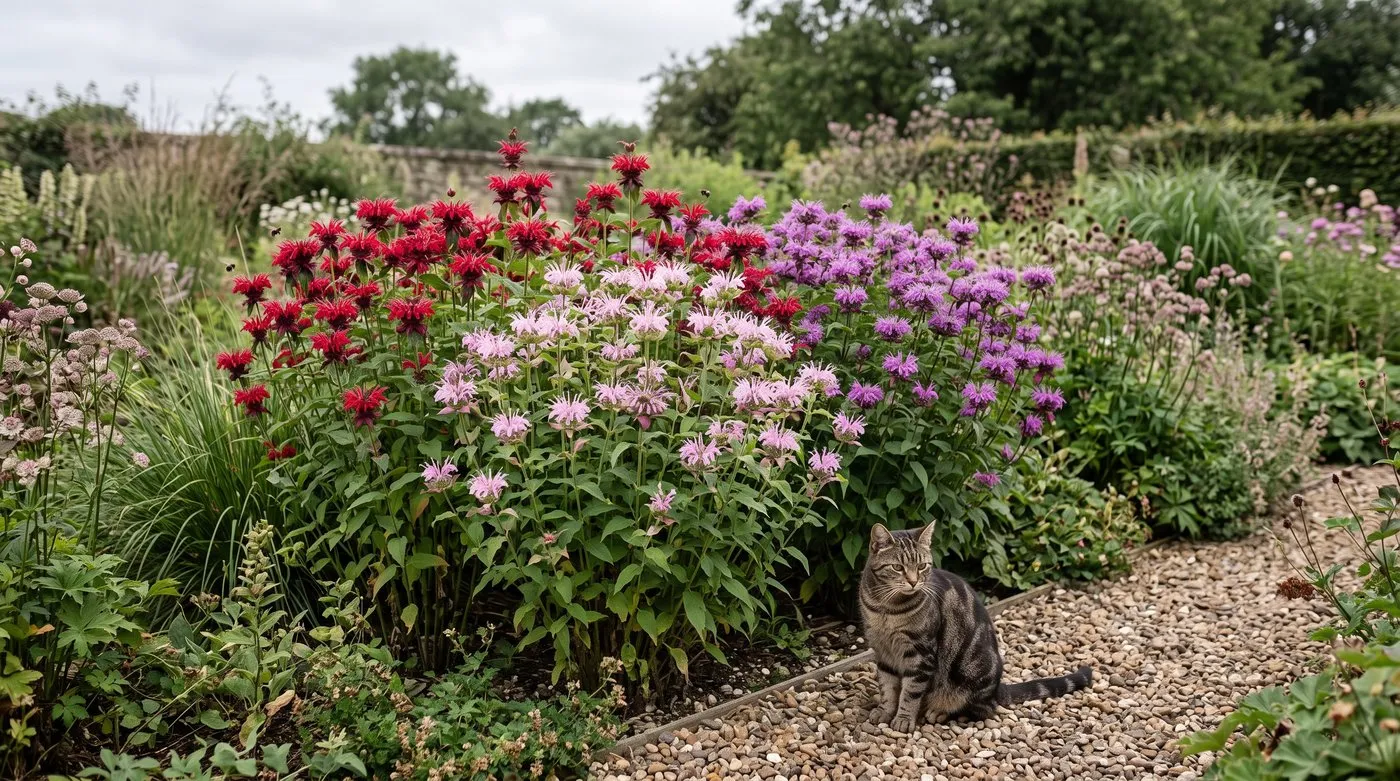
Mixing red, pink and purple varieties gives you a border that hums with bees. Choose mildew-resistant ones for an easier life.
How do you plant monarda in the UK?
Plant in spring (March to May) or early autumn (September to October). Spring is best, as the roots get a whole summer to settle. Pick a spot in sun or light shade with rich soil that holds moisture but drains well.
Dig in plenty of garden compost or well-rotted manure first, as monarda flowers better in rich soil. On heavy clay, add some grit too so it doesn’t sit wet. Space plants 45-50cm apart, at the same depth as in the pot.
Water well after planting and keep the soil moist through the first summer. A mulch of bark or compost helps hold moisture and keep weeds down, but keep it off the stems. Monarda is perfect for cottage garden planting schemes, mingling with other tall plants like delphiniums and phlox.
Why does monarda get powdery mildew?
Powdery mildew is the main headache with monarda in the UK. It coats leaves in a grey-white dust and can make plants look sorry for themselves by late summer. It loves warm, muggy weather and still air, so July and August are prime time.
Some varieties, like ‘Cambridge Scarlet’ and ‘Croftway Pink’, are very prone to it. Varieties with wild bergamot in their family tend to resist it much better.
Good habits help a lot too. Space plants at least 45-50cm apart. Water the soil in the morning, not the leaves. In May, thin crowded clumps by removing about one stem in three, so air can get through. Pick off affected leaves at the first sign of powdery mildew and put them in the bin, not the compost.
The RHS page on powdery mildews also suggests choosing resistant varieties as the best way to avoid it.
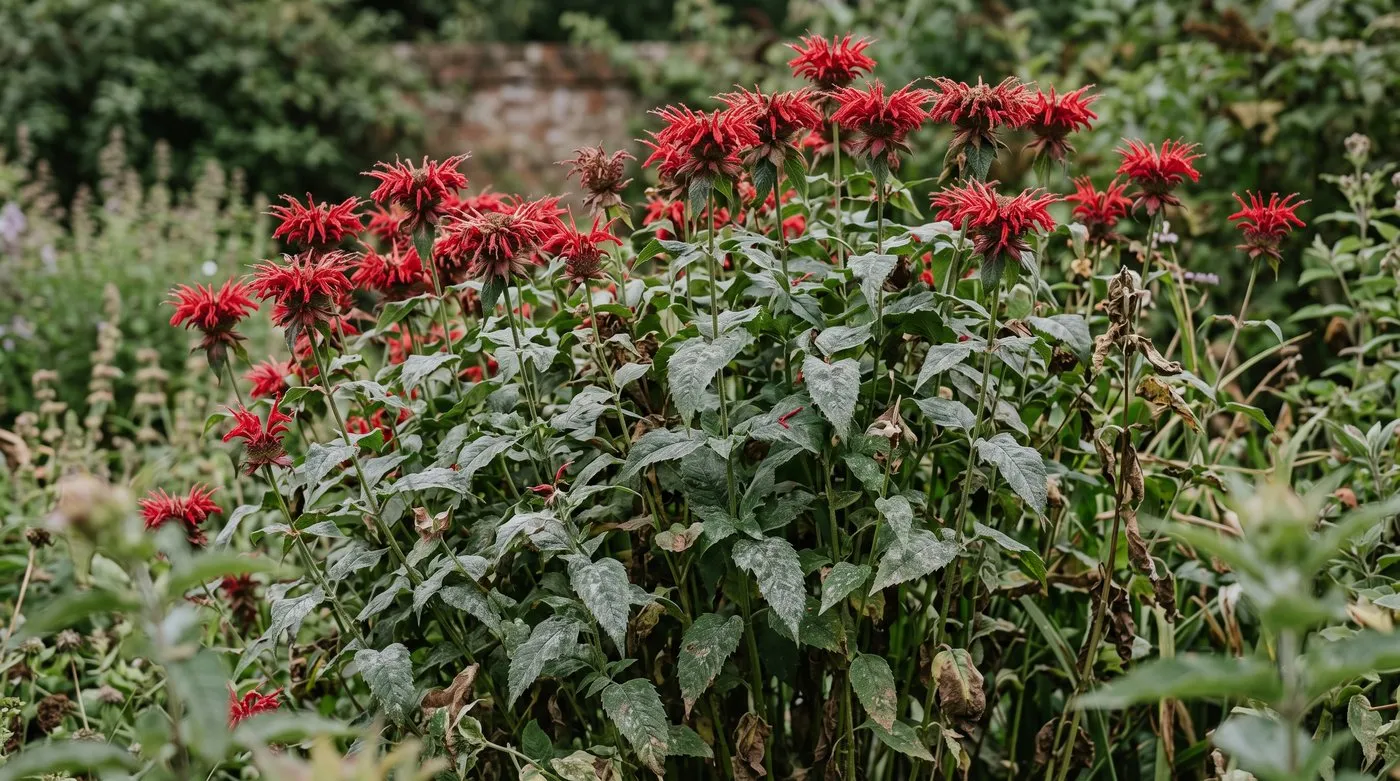
Mildew loves muggy weather and crowded clumps. Thin out one stem in three in May and water the soil, not the leaves.
How do you divide and control monarda spread?
Monarda spreads by underground roots and can fill a good patch of border within a couple of years in rich soil. That’s handy for filling space, but it can crowd out quieter neighbours. Dividing every three years or so keeps it healthy and in check.
Divide in early spring (March to April) when new shoots are a few centimetres tall. Lift the whole clump with a fork. You’ll usually see a ring of strong growth around a tired, woody middle. Throw the middle away and split the outer parts into pieces, each with a few strong shoots and some roots.
Replant straight away at the same depth, water well and mulch. To stop it spreading without dividing, sink a strip of rigid edging into the soil around the clump.
Division is also the way to propagate named varieties. Monarda grows from seed, but seedlings won’t be the same as the parent plant.
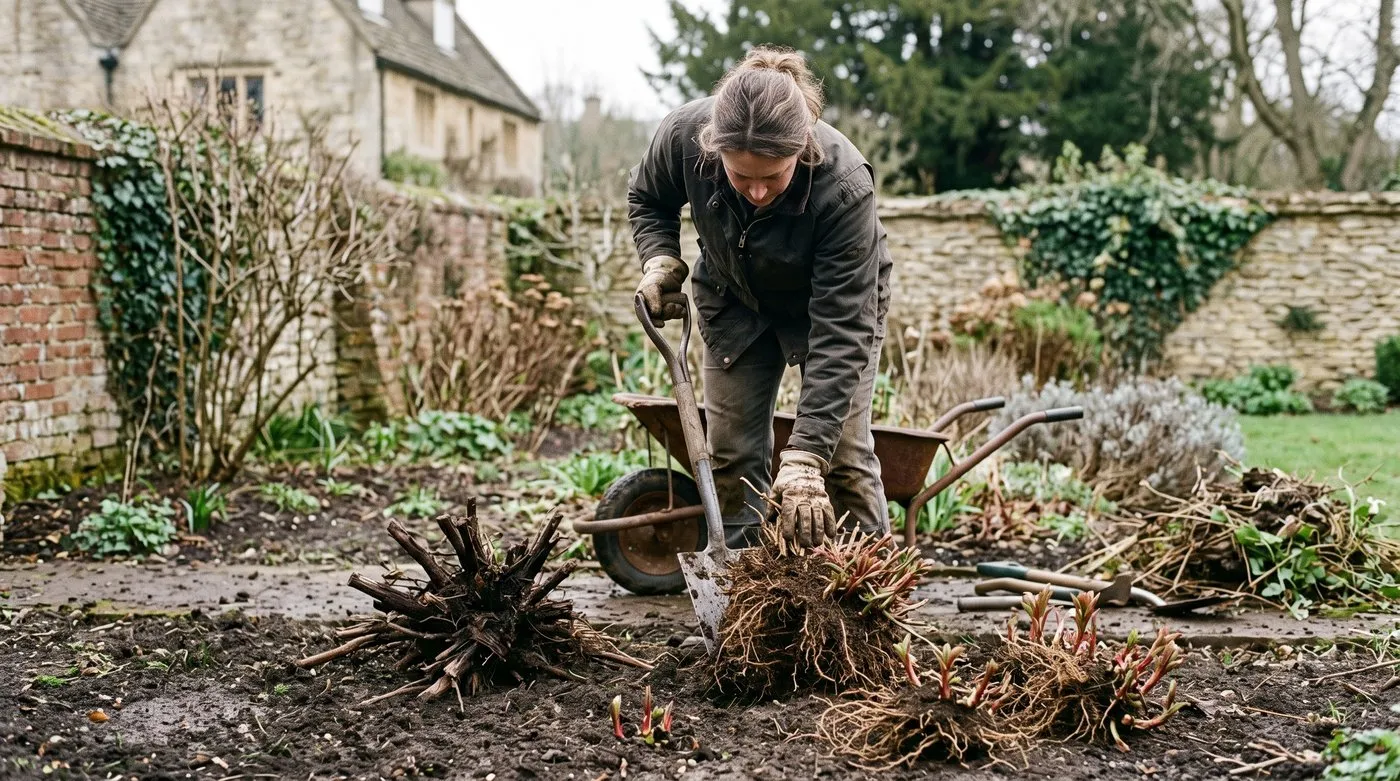
Throw away the tired middle and replant the young outer pieces. Dividing every three years keeps clumps healthy and in check.
Can you use monarda leaves for tea?
Yes, and it’s a lovely use for them. Native Americans made Oswego tea from Monarda didyma leaves long before it reached Europe. The leaves have a warm, spicy, citrusy scent, a bit like Earl Grey.
For tea, pick fresh young leaves before the plant flowers. Use a few fresh leaves or a teaspoon or two of dried leaf per cup. Pour on boiling water and leave it to steep for about five minutes.
How does monarda fit into prairie-style planting?
Monarda is a natural for prairie-style borders, as it comes from North American meadows. Plant it in drifts with ornamental grasses, echinacea and rudbeckia for that loose, natural look that peaks in late summer.
Match the type to your soil. Monarda fistulosa suits the drier, leaner soil most prairie schemes use. Monarda didyma needs more moisture, so it’s better in a damper spot. Try it with Stipa tenuissima, Panicum virgatum and echinacea for a planting that sways in the breeze and hums with insects all summer.
In a prairie scheme, space plants a bit wider so grasses can weave between them. Leave stems and seed heads standing over winter for frosty shapes and birds, then cut everything back in late February before new growth starts.
What problems affect monarda besides mildew?
Apart from mildew, monarda is a tough plant with few problems. Slugs and snails can nibble new shoots in spring, especially in wet years. Biological nematode controls applied in spring are a handy natural option.
Rust sometimes shows as orange-brown spots under the leaves, usually on stressed plants. Remove affected leaves and give the plant better conditions. In very hot, dry summers, spider mites can cause fine speckling on the leaves. Keeping the soil watered helps.
Rabbits tend to leave monarda alone thanks to its strong scent. The most common problem is simply overcrowding. A clump that’s never divided flowers less, gets more mildew and goes bare in the middle.
When should you cut back monarda?
Leave the stems and seed heads standing through autumn and winter. They look great with frost on them and give insects somewhere to shelter.
Cut the whole plant back to ground level in late February or early March, just before new shoots appear. Compost the stems, unless the plant had mildew, in which case put them in the bin.
Don’t cut back in autumn. The old stems help protect the crown over winter, and they show you where the plant is so you don’t dig into it by mistake.
Frequently asked questions
When does monarda flower in the UK?
Monarda flowers from June to September in most UK gardens. The first flowers usually open in midsummer on settled clumps. Snipping off faded flower heads can bring a second flush later in summer. In colder northern gardens, it may start a little later.
Is monarda the same as bergamot?
Monarda is often called bergamot, but it is not the bergamot orange. The leaves just have a similar citrusy, spicy scent. Monarda didyma also goes by bee balm, Oswego tea and scarlet bergamot. The flavour in Earl Grey tea comes from the bergamot orange, though monarda leaves make a nice herbal tea of their own.
How do I stop monarda getting mildew?
Start with a mildew-resistant variety. ‘Squaw’, ‘Prärienacht’ and ‘Scorpion’ are good choices. Space plants 45-50cm apart so air can move. Water the soil, not the leaves, and mulch to keep the soil evenly moist. Pick off any affected leaves straight away.
Can you eat monarda leaves?
Yes, monarda leaves are edible, with a citrusy, slightly herby taste. Add young leaves to salads or dry them for tea. Native Americans used Monarda didyma to make Oswego tea. The flowers are edible too and look pretty on a plate. Pick leaves before the plant flowers for the best flavour.
How often should I divide monarda?
Divide monarda every three years or so in spring. Lift the whole clump in March or April when new shoots are a few centimetres tall. Throw away the tired middle and replant the lively outer bits, each with a few shoots. If you leave it, the centre dies out and it flowers less.
Does monarda grow in shade?
It copes with light shade but flowers best in full sun. In shadier spots it gives fewer flowers and gets more mildew. Monarda fistulosa copes with dappled shade better than Monarda didyma. If you plant in light shade, space plants a bit wider to help the air flow.
Is monarda hardy in the UK?
Yes, monarda is fully hardy in the UK. Cold isn’t the problem. The real winter risk is soggy clay, which can rot the roots. Mix in grit or compost to help drainage if your soil stays wet in winter.
Our team produces practical UK gardening guidance from source research, contributor records and established horticultural practice. Editorial standards are overseen by Matt W.