Key takeaways
- Worm casts are soil left by earthworms and a sign of healthy, living soil
- They are worst in cool, damp weather in autumn and early spring
- No product is authorised in the UK to kill earthworms, and you wouldn't want one
- Let casts dry, then brush them flat with a stiff broom or besom before mowing
- Never mow or walk on wet casts, as they smear into mud where weeds and moss move in
- Raking up leaves and boxing clippings in autumn means fewer casts
Worm casts look messy, but they are good news. They show your soil is full of earthworms, and the fix costs nothing but a stiff broom and a dry day.
Worm casts are the little coils of soil that earthworms leave on the lawn as they feed. They pop up mostly in autumn and spring, when the weather is cool and damp. The only real harm comes when you mow or walk over them wet, which smears them into mud. There’s no chemical answer, and you wouldn’t want one. Here’s why casts appear, how to clear them and how to have fewer next year.
What are worm casts and why do they appear?
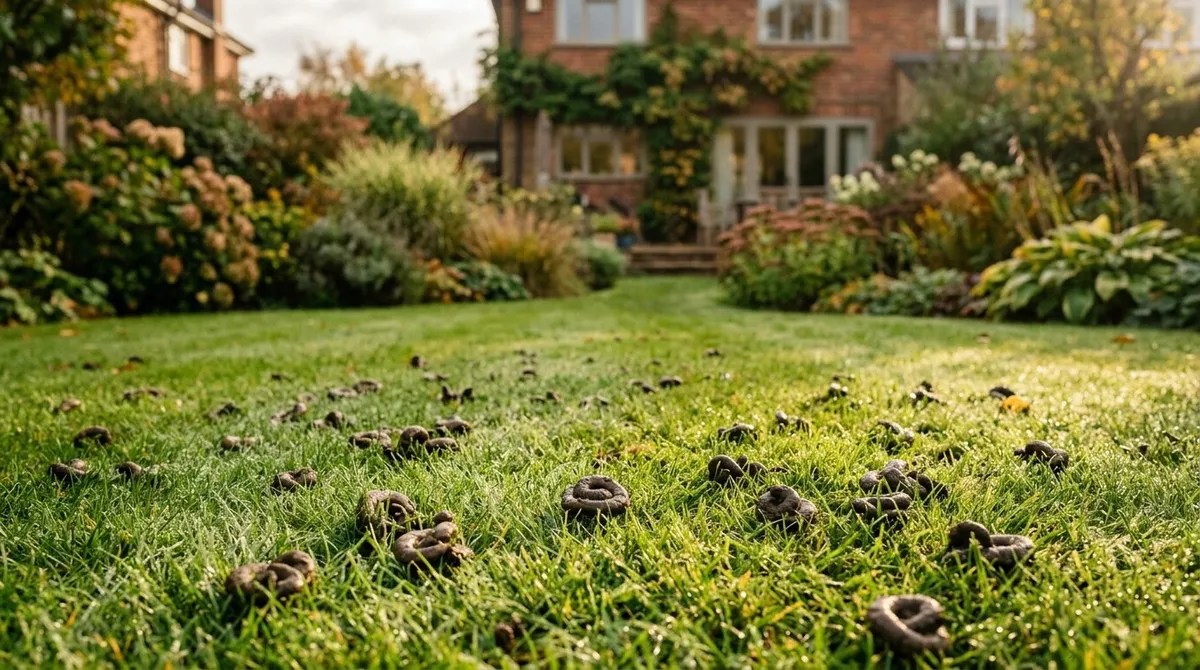
Worm casts are soil that has passed through an earthworm. As a worm tunnels, it swallows soil and bits of dead leaf. It then pushes the leftovers up to the surface as a small muddy coil.
Only a few of the UK’s earthworm species leave casts on the surface. Most worms you dig up in the borders never do. Casting worms are busiest when the soil is cool and moist, which means a British autumn, winter and early spring. In a dry summer or hard frost they go deeper and the casts stop.
If you’d like to know more about the worms themselves, the guide to why earthworms matter in UK gardens covers the different types.
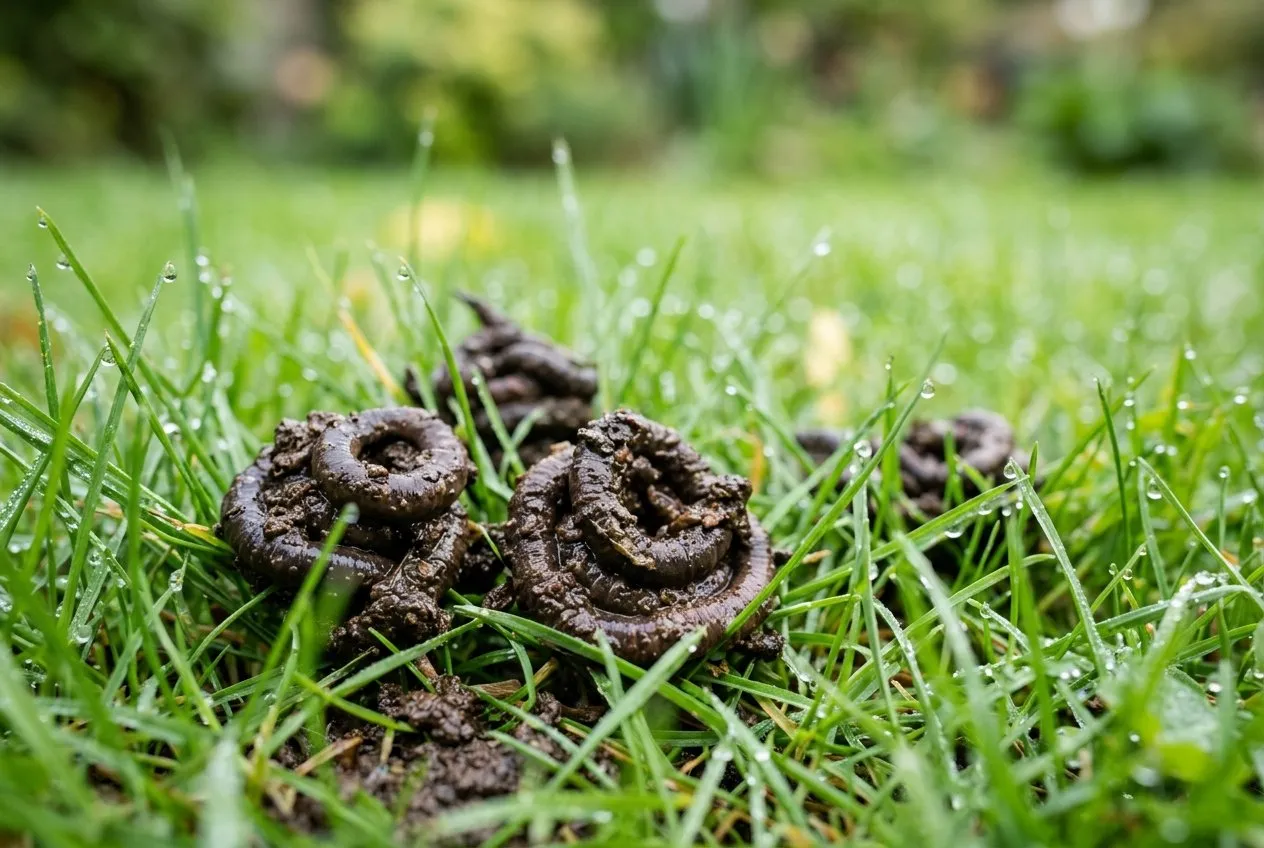
Fresh casts are soft and sticky. Leave them alone until they dry out and they’ll brush away to nothing.
Are worm casts actually a problem?
Not really. For most lawns they are a seasonal nuisance worth putting up with. Trouble only starts when they get squashed while wet.
- Smearing: a wet cast crushed by a mower or a boot spreads into a flat patch of mud and smothers the grass under it.
- Weeds and moss: those bare, muddy patches are perfect spots for weed seeds and moss to settle. The guide to common lawn weeds helps you name anything that moves in.
- Mower mess: wet casts clog the underside of the mower.
On a fine, closely mown lawn the casts stand out. On a family lawn you’ll barely notice them. Either way, the answer is to manage them, not get rid of the worms. If you’re seeing holes rather than heaps, the guide to small holes in the lawn overnight will help you work out the culprit.
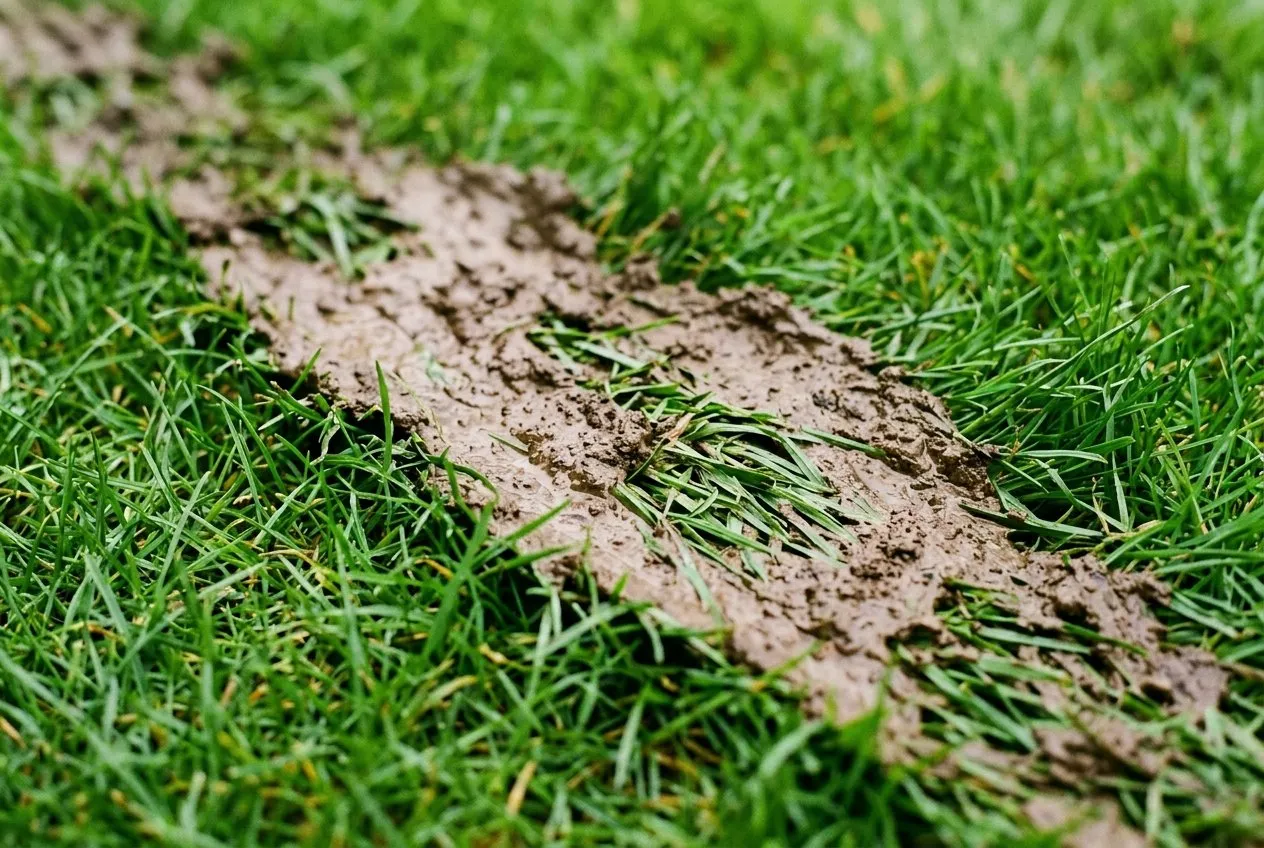
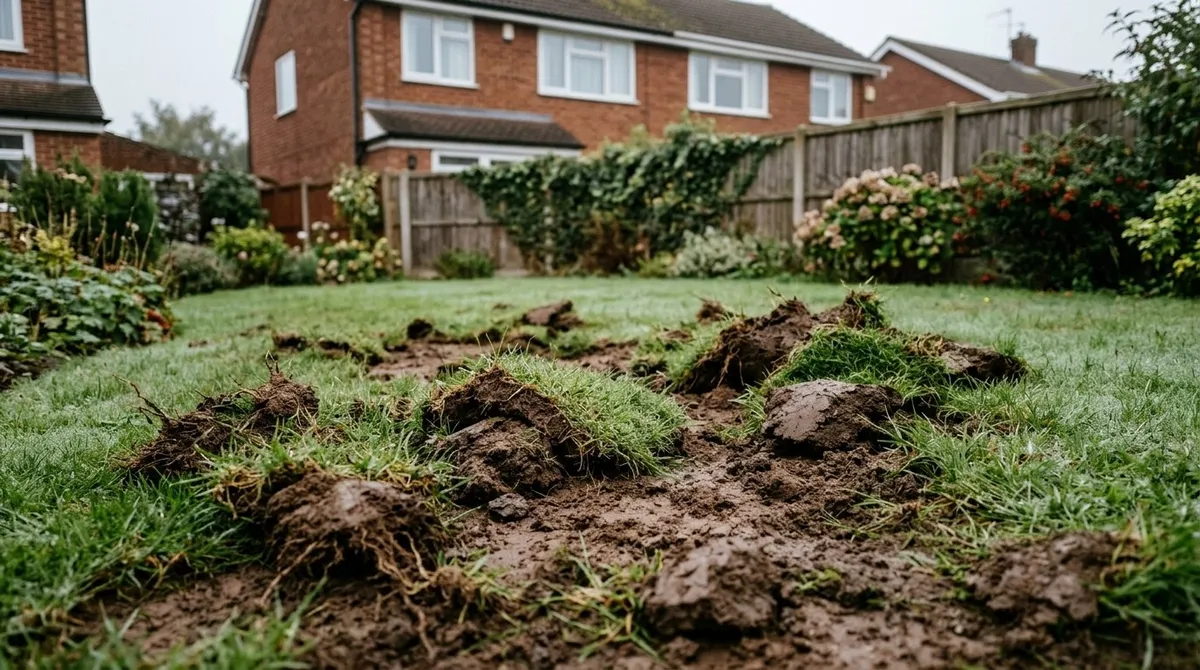
This is the real damage: a wet cast squashed flat. The grass underneath struggles, and weeds love the gap.
How to remove worm casts the right way
Let the casts dry, brush them flat, then mow. That’s the whole job.
- Wait for a dry day. A dry cast crumbles to dust when brushed. A wet one only smears. In autumn you may wait a few days for the right morning.
- Brush them flat. Drag a stiff besom, a stiff yard broom or an old doormat across the lawn. This scatters the dry soil back into the grass.
- Then mow. With the casts gone, mow as normal. The guide on whether you can mow a wet lawn explains why a damp cut makes things worse.
- Brush before a busy weekend. On a lawn that gets lots of use, brush first so feet don’t press damp casts into the turf.
Brushed in, the soil from the casts acts like a free, light top dressing for the lawn. You’re not throwing anything away.

A besom on a dry morning is all it takes. The dry soil scatters back into the grass.
Worm cast fixes compared
Brushing and dry mowing do most of the work. The others simply mean fewer casts over a season.
| Method | What it does | When to use it |
|---|---|---|
| Brush when dry | Spreads dry casts back into the grass | Every time casts appear |
| Mow only when dry | Stops casts smearing into mud | All season |
| Rake up leaves and box clippings | Takes away worm food near the surface | Autumn |
| Aerate and improve drainage | Makes the surface less damp | Late spring or autumn |
| Chemical worm killers | Nothing: none are authorised | Never |
Why chemicals are not the answer
No product is authorised in the UK for killing earthworms in lawns. The old ones were withdrawn years ago.
Killing the worms would be a bad swap anyway. Earthworms keep soil open, so the lawn drains better and doesn’t compact so easily. They also drag dead leaves underground and turn them into plant food. Lose them and the soil turns dense and airless, which is a far bigger problem than a few casts. The RHS advice on worm casts in lawns says the same: put up with the casts and keep the worms.

The worker behind the casts. Earthworms keep your soil open and fed, so they’re well worth keeping.
How to get fewer worm casts next year
You can’t stop casts completely, but you can make the surface less inviting. None of this harms the worms.
- Rake up fallen leaves. Leaves are worm food. A lawn left under leaves all autumn feeds more casting worms.
- Box clippings in autumn. Clippings left on the lawn add more food at the surface. The guide on whether to leave grass clippings on the lawn explains the trade-off.
- Improve drainage. Casts are worst on wet ground. Scarifying and aerating the lawn opens up soggy, compacted turf.
Some greenkeepers use lawn sand or sulphate of ammonia to make the surface more acidic, which casting worms dislike. It’s only worth thinking about on a fine lawn, and it can scorch grass if overdone, so follow the label exactly.

Raking up autumn leaves takes away a big supply of worm food from the lawn surface.
A month-by-month worm cast calendar
| Month | What’s happening and what to do |
|---|---|
| September to October | Casts start as the soil cools and dampens. Rake up leaves as they fall |
| November to December | Casts at their worst. Brush on dry days and mow only when dry |
| January to February | Fewer casts in hard frost. Keep off a frozen lawn |
| March to April | A second busy spell. Brush on dry days and keep mowing high |
| May to August | Casts stop in warm, dry soil. A good time to aerate |
Common worm cast mistakes
- Mowing over wet casts. The worst thing you can do. It smears mud across the lawn and smothers the grass.
- Brushing too soon. A damp cast spreads into a stain. Wait until it crumbles.
- Trying to kill the worms. Nothing is authorised, and you’d harm your soil.
- Leaving leaves down all autumn. It feeds the worms right at the surface and means more casts.
Get the timing right and worm casts are a five-minute job with a broom.

Brush on dry days and mow when it’s dry, and a lawn full of worms can still look this tidy.
Now the casts are sorted, plan the rest of the year’s lawn care with the month-by-month lawn care calendar.
Frequently asked questions
What are worm casts on a lawn?
They are small heaps of soil left on the surface by earthworms. The worms swallow soil and dead leaves as they feed, then push the leftovers up as a muddy coil. Only a few of the UK’s earthworm species do this. Casts are most common in cool, damp weather.
Are worm casts bad for my lawn?
No, they are a sign of healthy soil. Earthworms help air and water get into the ground and recycle dead leaves into plant food. The only real trouble comes when wet casts get smeared by a mower or feet, which smothers grass and gives weeds a gap.
How do I get rid of worm casts?
Let them dry, then brush them flat with a stiff broom. Dry casts crumble and fall back into the grass as fine soil. Mow afterwards, never before. Raking up leaves in autumn also means fewer casts appear.
Can I kill the worms causing casts?
No, nothing is authorised in the UK for killing earthworms in lawns. Killing them would harm the lawn anyway, because worms keep the soil open and well drained. Brush the casts away instead and live with the worms.
Why does my lawn have so many worm casts?
Damp, cool weather and plenty of worm food are the usual reasons. Fallen leaves and clippings left on the lawn feed the worms. Damp, fertile soil that isn’t acidic suits casting worms best. Clearing leaves and improving drainage helps.
When should I brush off worm casts?
Brush them on a dry day once they crumble easily. Wet casts only smear across the grass. In autumn you may need to wait a few days for a dry morning. Brushing just before you mow gives a cleaner cut.
Our team produces practical UK gardening guidance from source research, contributor records and established horticultural practice. Editorial standards are overseen by Matt W.