
Key takeaways
- Cook what's ready in the garden now, and keep recipes simple so the flavour shines
- Squeeze grated courgettes dry before making fritters, or they go soggy
- Roast roots at about 200°C in a single layer for crisp, caramelised edges
- Freeze surplus tomato sauce and soups rather than storing them in jars at room temperature
- Always cook runner beans, as they're not safe to eat raw
- Pick little and often, especially peas, beans and courgettes, for the tenderest crops
Easy recipes are the best way to enjoy home-grown vegetables: they let the fresh flavour do the work. A just-picked pea or a sun-warm tomato needs very little help. The real challenge is keeping up with what the plot produces.
This guide gives you quick, simple recipes for each season, using store-cupboard basics and whatever is ready outside. You’ll need a sharp knife, a decent pan and an oven. If you’re facing a mountain of one crop, our guide to using up a garden glut has plenty more ideas.
Early summer recipes: peas, broad beans and new potatoes
The first fresh crops are sweet and tender, so cook them simply and quickly.
Pea and mint soup. Soften a diced onion in a knob of butter for five minutes. Add 500g podded peas and 600ml vegetable stock. Simmer for five to eight minutes, then blend with a handful of mint. Season and serve hot or chilled. It freezes well.
Broad bean toast. Pod 400g broad beans and boil for two to three minutes. Cool, then slip off the pale outer skins to reveal bright green beans. Mash roughly with olive oil, lemon juice and a crushed garlic clove. Pile onto toasted sourdough.
Crushed new potatoes. Boil 750g small new potatoes until tender, about 15 minutes. Drain, crush lightly with a fork and toss with olive oil, salt and chopped parsley. Roast at 200°C for 15 minutes to crisp the edges.
Gardener’s tip: Peas taste sweetest picked and eaten on the same day. Their sugars slowly turn starchy after picking.

A bowl of just-picked leaves, radishes and herbs is the simplest early summer meal of all. The blue borage flowers are edible too.
Summer recipes: courgettes, tomatoes and runner beans
Summer brings the biggest harvests. These recipes use a lot of veg in one go.
Courgette fritters
The best answer to a pile of courgettes, ready in about 15 minutes.
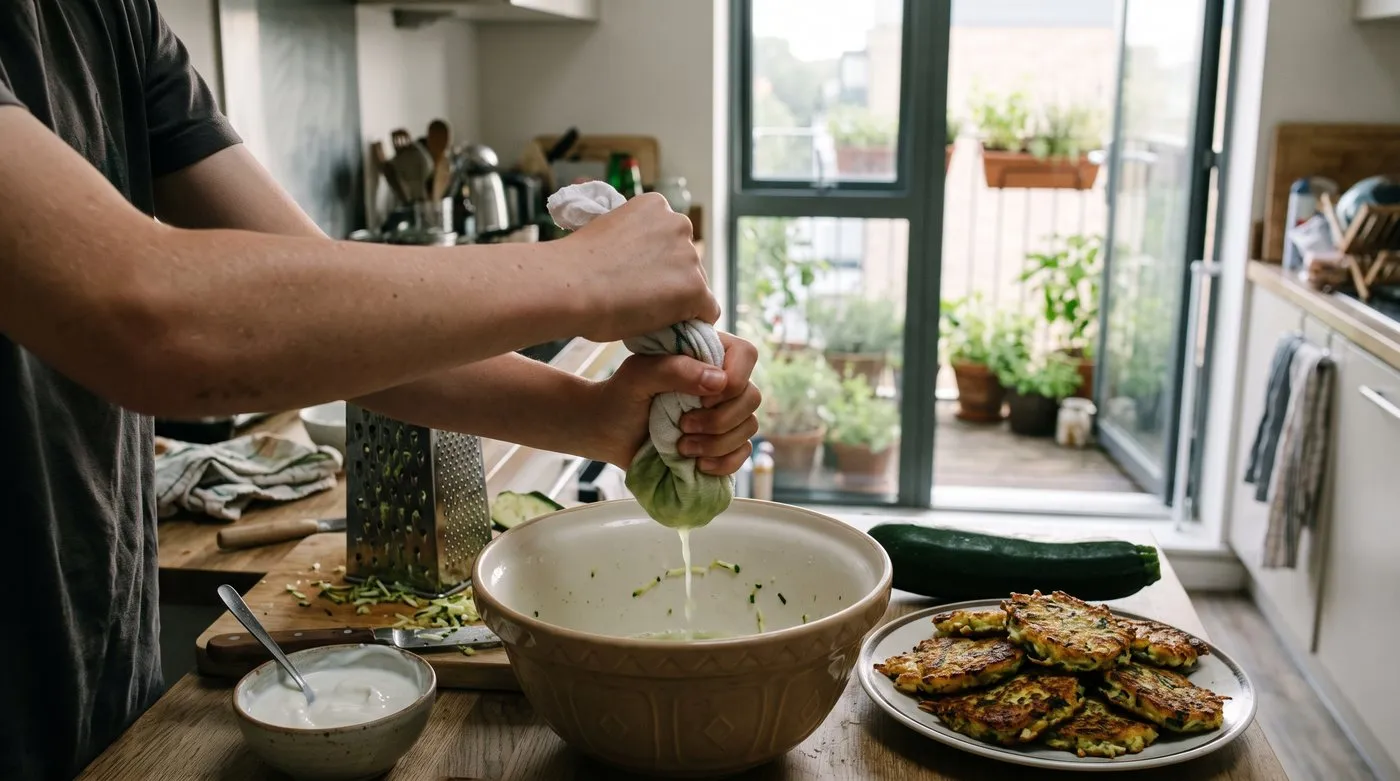
Squeezing the grated courgette hard is the trick that turns soggy fritters into crisp, golden ones.
- Coarsely grate two medium courgettes.
- Sprinkle with a pinch of salt, leave for ten minutes, then squeeze hard in a clean tea towel.
- Mix with one beaten egg, 50g plain flour and 30g grated hard cheese.
- Fry tablespoons of the mix in a little hot oil for two to three minutes each side until golden.
- Drain on kitchen paper and serve with yoghurt and lemon.
Squeezing is the secret. Wet courgette makes soggy fritters. Cooked fritters freeze well and reheat in a hot oven. The courgette growing guide explains why picking them small keeps plants cropping.
Simple tomato sauce
Roughly chop 1.5kg ripe tomatoes. Put them in a heavy pan with two crushed garlic cloves, a splash of olive oil and a handful of basil. Simmer gently for about 30 minutes, stirring now and then. Push through a sieve to remove skins and seeds. Season with salt, pepper and a pinch of sugar if needed.
Cool the sauce and freeze it in portions, or keep it in the fridge for a few days. Home-made tomato sauce isn’t safe to store in jars at room temperature unless it’s properly acidified and heat-processed. Our guide to bottling and canning explains how.
Runner beans with garlic butter
Top, tail and slice runner beans into thin strips. Boil or steam for four to six minutes until just tender. Toss with melted butter, a little crushed garlic and black pepper. Runner beans must always be cooked, as raw beans contain a natural toxin that heat destroys.
For bigger gluts, runner bean chutney is a classic. See our chutney recipes from the garden for a tried-and-tested method.

Ratatouille uses courgettes, tomatoes and peppers in one pan, and it tastes even better the next day.
Autumn recipes: beetroot, squash and roots
Autumn crops are dense and sweet, and they love the oven.
Roasted beetroot soup
Wrap six medium beetroot in foil and roast at 200°C for 45-60 minutes until a knife slides in easily. Cool, peel and chop. Soften a diced onion in butter, add the beetroot and 800ml vegetable stock, and simmer for ten minutes. Blend until smooth. Finish with a swirl of soured cream and some dill. Freeze without the cream. Our beetroot growing guide covers when to lift them.
Roasted root vegetables
Use whatever you have: parsnips, carrots, beetroot, onions or swede. Cut everything into chunks of similar size. Toss in olive oil with salt, pepper and a few sprigs of rosemary or thyme. Spread in a single layer and roast at about 200°C for 35-45 minutes, turning once. Crowding the tray makes the veg steam rather than brown.
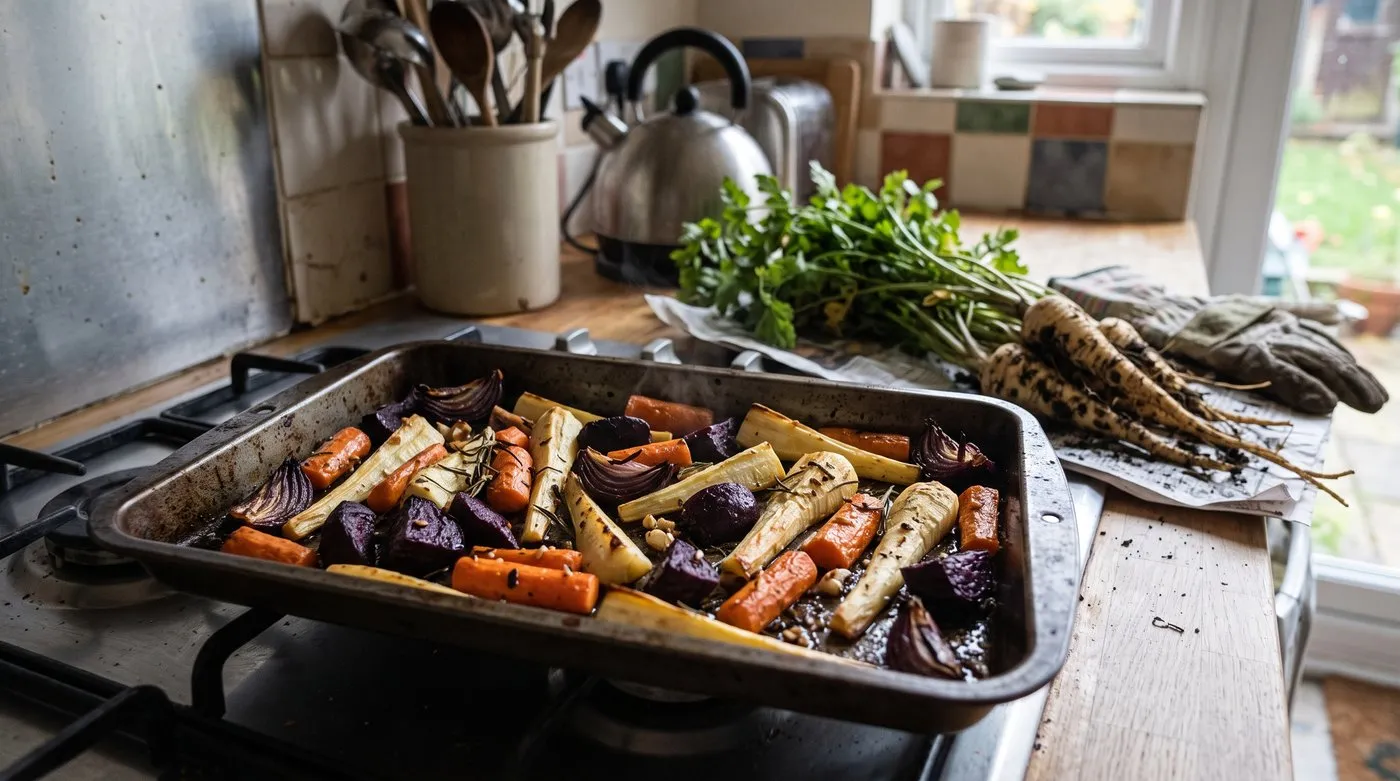
Spread roots in a single layer so they roast to crisp, sticky edges instead of steaming.
Butternut squash risotto
Roast 500g diced squash at 200°C for 25 minutes. Meanwhile, soften a diced onion in butter and stir in 300g risotto rice. Add a glass of white wine, then about a litre of hot stock, a ladleful at a time, stirring often. After about 20 minutes the rice should be creamy but still have a little bite. Fold in the squash, a handful of grated Parmesan and a knob of butter. Serves four.
Winter recipes: leeks, stored roots and the freezer
Winter cooking uses leeks and kale from the plot, stored roots and the summer’s frozen sauces.
Leek and potato soup. Slice three leeks and dice 400g potatoes. Soften the leeks gently in butter for ten minutes without browning. Add the potatoes and a litre of stock and simmer for about 20 minutes. Blend or leave chunky. Season with white pepper and a little nutmeg.
Parsnip crisps. Use a peeler to cut long, thin ribbons from four parsnips. Toss in a tablespoon of oil and a pinch of salt. Bake in a single layer at 180°C for 10-15 minutes, checking often, as they burn quickly. They crisp up as they cool.
Ten-minute freezer stir-fry. Heat a wok with a little oil. Add garlic and grated ginger, then a few handfuls of frozen peas, broad beans and sliced runner beans. Stir-fry for four to five minutes until piping hot. Finish with soy sauce and a little honey.

A big pot of soup turns winter leeks, carrots and potatoes into several easy meals, with extra for the freezer.
Which vegetables are best raw and which are best cooked?
Some crops are lovely raw, while others need heat.
| Vegetable | Raw | Cooked | Easy idea |
|---|---|---|---|
| Tomatoes | Yes | Yes | Salads, sauce, roasting |
| Courgettes | Yes, small ones | Yes | Ribbons in salad, fritters |
| Runner beans | No, never raw | Yes | Steamed with garlic butter |
| Beetroot | Yes, grated | Yes | Slaw, roasted, soup |
| Carrots | Yes | Yes | Sticks, roasting |
| Peas | Yes | Yes | Straight from the pod, soup |
| Broad beans | Only very young ones | Yes | Toast, salads |
| Spinach and chard | Young leaves | Yes | Wilted with garlic |
Seasonal recipe calendar
| Month | What’s ready | Try this |
|---|---|---|
| March to April | Purple sprouting broccoli, spring onions | Broccoli with garlic and chilli |
| May | Radishes, lettuce, early broad beans | Garden salad bowl |
| June | Peas, broad beans, new potatoes | Pea and mint soup, broad bean toast |
| July | Courgettes, runner beans, tomatoes | Courgette fritters, tomato sauce |
| August | Beetroot, sweetcorn, French beans | Beetroot soup, corn on the cob |
| September | Squash, onions, late tomatoes | Squash risotto, ratatouille |
| October | Parsnips, carrots, leeks | Roast roots |
| November to February | Leeks, kale, stored roots, freezer stock | Leek and potato soup, parsnip crisps |
How to freeze surplus vegetables
Freezing is the easiest way to keep a glut. Most vegetables need blanching first: a quick dip in boiling water, then straight into iced water. It keeps colour and texture. Peas need about a minute, beans two to three minutes and sweetcorn kernels a few minutes. Drain well, then freeze in labelled bags.
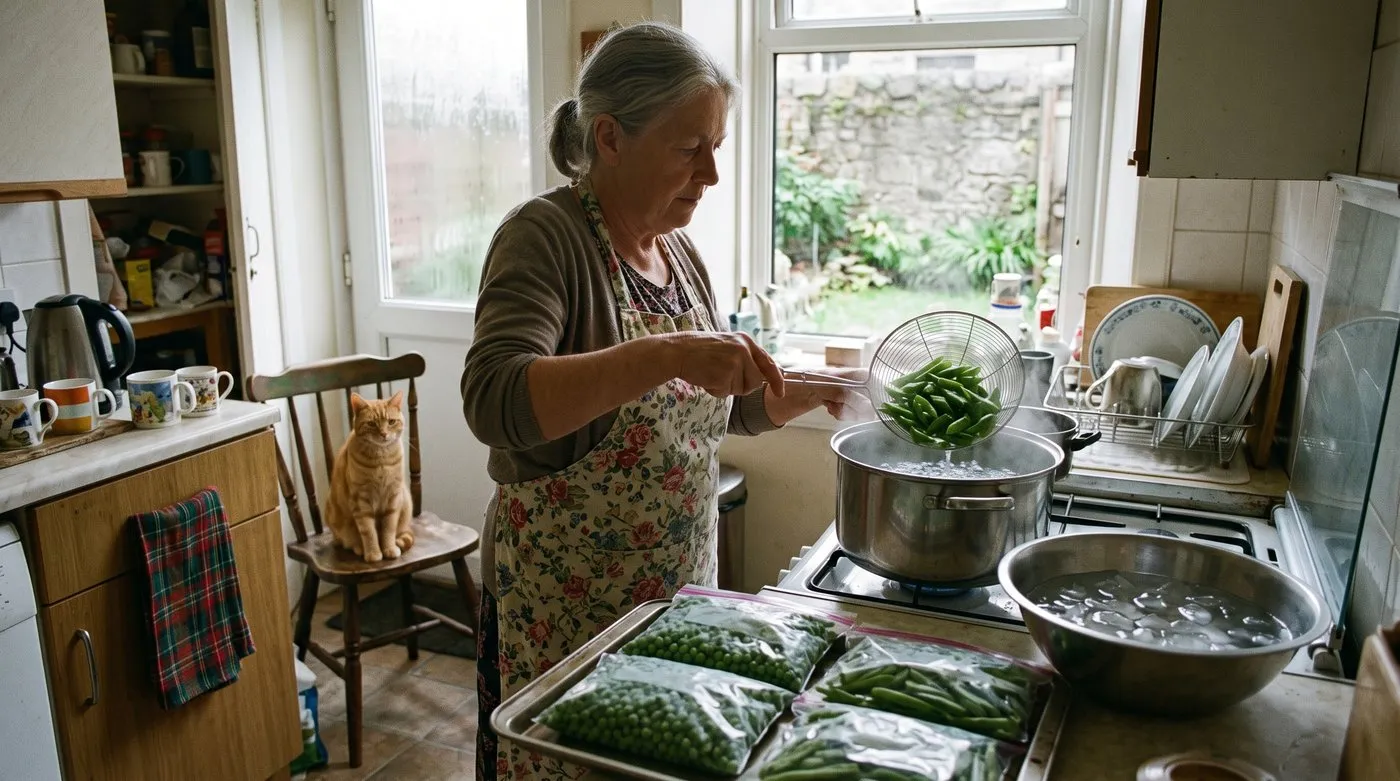
A quick blanch then a dunk in iced water keeps beans bright green and tender in the freezer.
Cooked dishes such as soup, sauce and ratatouille freeze brilliantly in portions. Our guide to freezing vegetables lists blanching times for every common crop.
Common mistakes when cooking home-grown veg
Overcooking. Fresh garden veg cooks faster than shop-bought. Check peas after a couple of minutes and beans after four.
Skipping the squeeze. Courgettes hold a lot of water. Salt and squeeze them before frying.
Using unripe tomatoes for sauce. Pale fruit makes a sharp, thin sauce. Ripen green tomatoes indoors first, or turn them into chutney.
Storing sauces in jars at room temperature. Tomato sauce and vegetables in oil can harbour harmful bacteria. Freeze them or keep them in the fridge.
Cooking for two when you’ve got twenty courgettes. Scale up and freeze extra portions. It saves time later.
Frequently asked questions
What is the easiest recipe for home-grown courgettes?
Courgette fritters are the easiest. Grate two courgettes, squeeze them dry, then mix with an egg, a little flour and some grated cheese. Fry spoonfuls for two to three minutes each side until golden.
Can you freeze home-grown vegetables for cooking later?
Yes, most garden vegetables freeze well. Blanch beans, peas and sweetcorn briefly in boiling water, cool them in iced water, drain and freeze in portions. Cooked dishes such as soup and tomato sauce freeze very well too.
How long does home-made runner bean chutney keep?
Well-made chutney usually keeps for up to a year unopened. Pot it into clean, sterilised jars with vinegar-proof lids and store somewhere cool and dark. Once opened, keep it in the fridge.
How do I make tomato sauce from garden tomatoes?
Simmer chopped ripe tomatoes with garlic, oil and basil for 30 minutes, then sieve. Season to taste. Cool and freeze in portions, or keep in the fridge for a few days.
Can you eat runner beans raw?
No, always cook runner beans before eating. Raw beans contain a natural toxin called a lectin, which cooking destroys. Boil or steam sliced beans for a few minutes until tender.
What is the quickest recipe using garden peas?
Pea and mint soup takes about 15 minutes. Soften an onion in butter, add peas and stock, simmer for a few minutes, then blend with fresh mint. Serve it hot or chilled.
Want to grow more of what you love to cook? Browse the growing hub, then read our guide to growing food from garden to table to plan next year’s kitchen crops.
Our team produces practical UK gardening guidance from source research, contributor records and established horticultural practice. Editorial standards are overseen by Matt W.


