
Key takeaways
- Grow the things you cook every week, not the crops that look good in a catalogue
- Salad leaves, herbs, tomatoes, courgettes and runner beans repay a small space best
- Plant herbs and salad close to the kitchen door so you actually use them
- Sow little and often to avoid a glut followed by nothing
- Freeze, pickle and store gluts so summer crops last into winter
Garden to table growing is simple: grow the food you love to cook, pick it at its best and walk it straight to the kitchen. A tomato warm from the plant or basil cut a minute before it hits the pasta tastes completely different from anything in a shop.
You don’t need an allotment or a big garden. This guide helps you plan a plot around your own meals, so nothing you grow goes to waste. If you’d rather see a list of crops ranked for beginners, our guide to the best vegetables to grow at home is the place to start.
How do you plan a garden around the food you eat?
Start in the kitchen, not the seed catalogue. Write down the meals you cook most weeks, then circle the fresh ingredients in them.
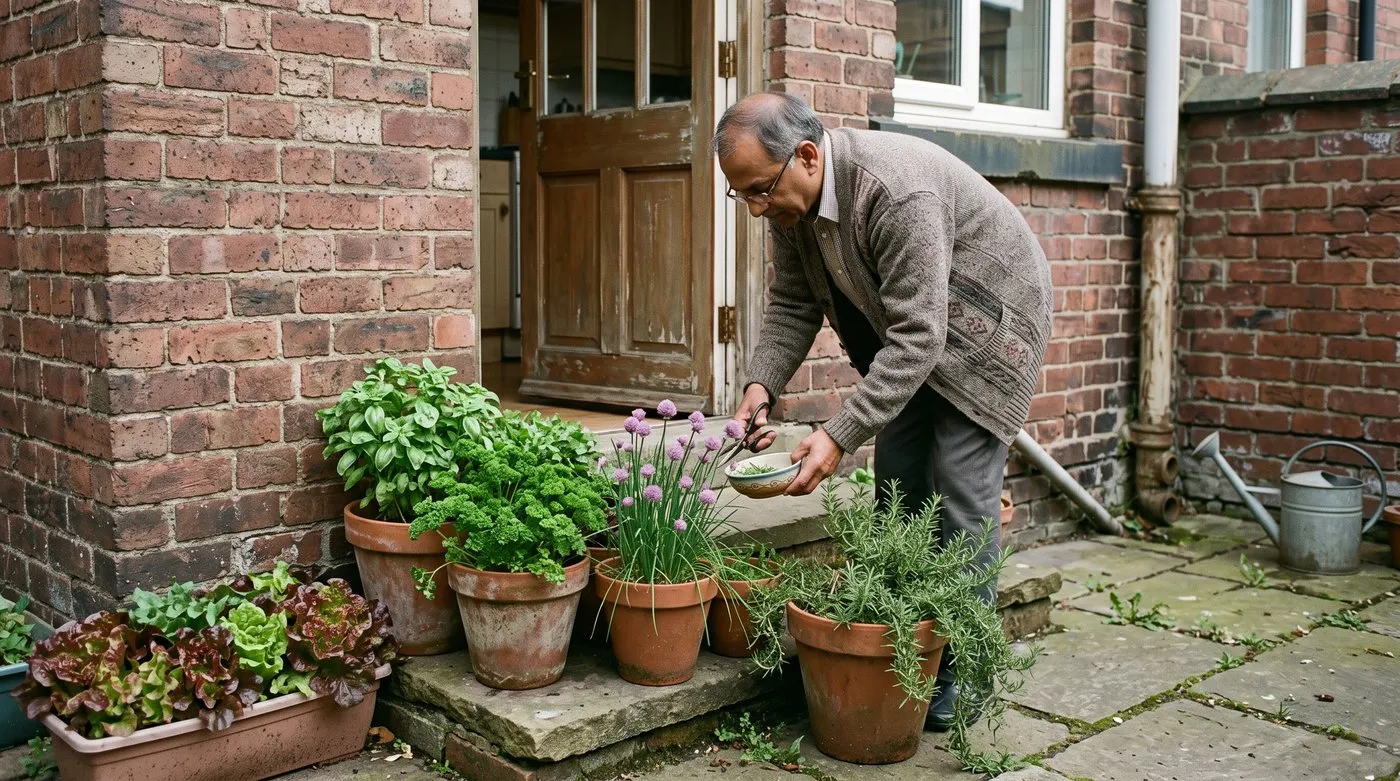
Herbs and salad by the back door get picked every day. Put them where you can reach them in your slippers.
If you make a lot of salads, grow cut-and-come-again leaves. If curries are a staple, grow coriander and chillies. Love Sunday roasts? Leave room for potatoes, carrots and a few leeks. A garden full of crops you never cook with is a waste of space and effort.
Then match that list to your space:
| Your space | Good crops to grow |
|---|---|
| Sunny windowsill | Basil, parsley, chives, microgreens |
| Balcony or patio pots | Salad leaves, bush tomatoes, chillies, dwarf French beans, herbs |
| One raised bed | Salad, beetroot, spring onions, a courgette, a few runner beans |
| Small veg plot | All of the above, plus potatoes, onions, kale and leeks |
Gardener’s tip: Put herbs and salad as close to the kitchen door as you can. You’ll pick them far more often if you don’t need shoes and a coat.
Five crops that change how you cook
These five are easy, crop for weeks and taste much better fresh than bought.
Salad leaves
Salad is the quickest win. Sow cut-and-come-again leaves every two to three weeks from March to August and you’ll have fresh leaves most of the summer. Mix lettuce with rocket, mizuna and mustard for a bowl you’d never find in a bag.
Herbs
Fresh herbs lift everyday cooking. Grow basil and coriander in pots in a sunny, sheltered spot. Plant rosemary, thyme, sage, chives and mint outside, where they come back year after year. Keep mint in a pot, as it spreads. Our guide on how to grow herbs covers each one.
Tomatoes
Home-grown tomatoes are the crop most people start growing for. Cherry types such as ‘Sungold’ and ‘Gardener’s Delight’ are sweet enough to eat like sweets. One or two plants in a sunny spot give you plenty for salads and sauces from late summer.

A summer basket from a small plot. Pick in the morning and it goes straight into lunch.
Courgettes
One or two courgette plants are plenty for most households. Pick them at 15-20cm, every few days in summer. Leave one too long and it turns into a marrow, which is still fine for stuffing.
Runner beans
A wigwam of runner beans crops from midsummer into autumn. Pick every few days while the pods are young and snap cleanly. The more you pick, the more you get.
How to keep food coming instead of gluts and gaps
Sow little and often. A short row every few weeks beats one big sowing that’s all ready at once. Our succession planting guide shows how to time it for each crop.
Grow small amounts of lots of things. Two courgette plants, not six. A short row of lettuce, not a whole bed.
Plan for spring. Early spring is the leanest time in a veg garden, after winter crops finish and before new ones are ready. Purple sprouting broccoli, spring cabbage and chard help. The guide to the hungry gap has more ideas.

A few raised beds of mixed crops near the house. Small amounts of lots of things keeps the kitchen supplied.
What to eat from the garden through the year
Growing your own means cooking with what’s ready. Here’s roughly what to expect in a UK garden each season.
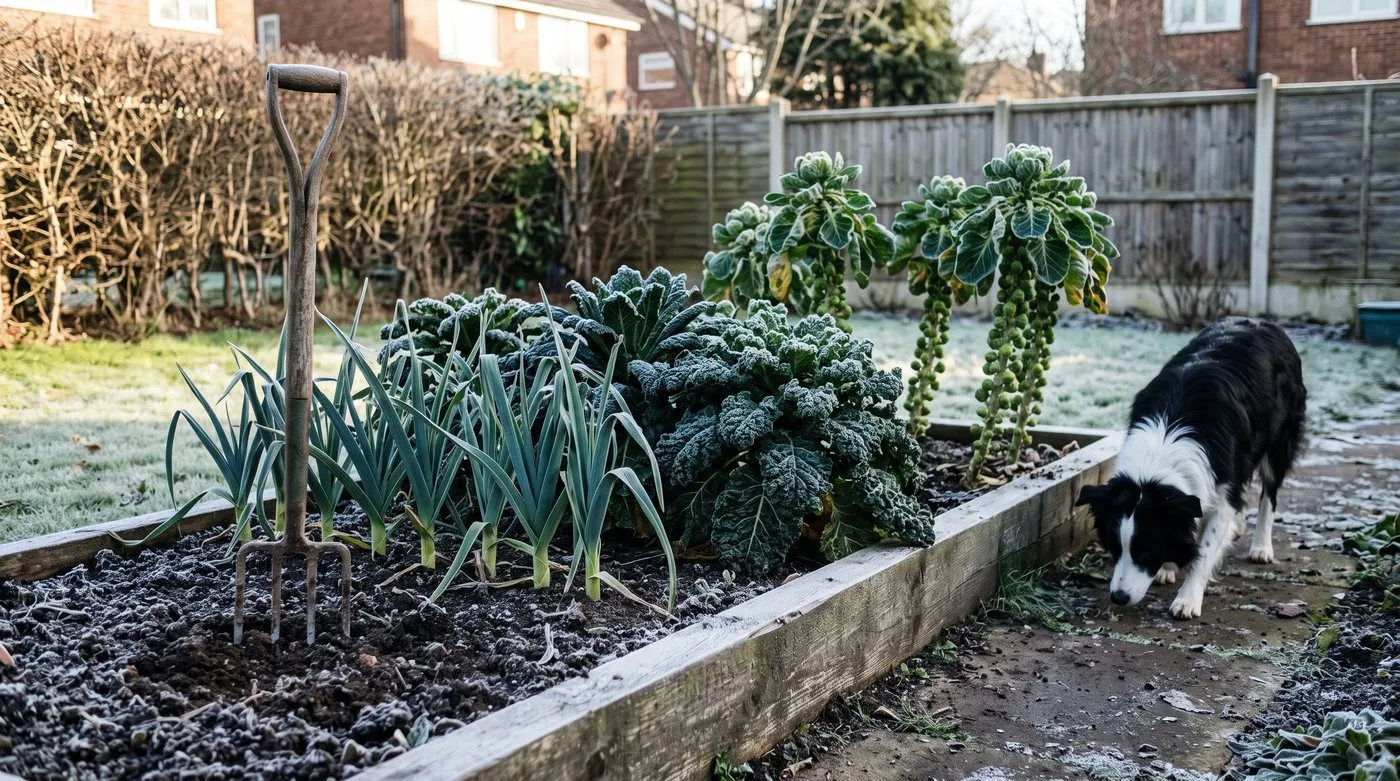
Leeks, kale and sprouts stand happily outside all winter, so there’s still something fresh to pick in December.
| Season | What’s ready to pick |
|---|---|
| Spring (March to May) | Purple sprouting broccoli, spring cabbage, chard, rhubarb, early salad, radishes, herbs |
| Summer (June to August) | Salad, tomatoes, courgettes, beans, beetroot, new potatoes, strawberries, raspberries |
| Autumn (September to November) | Maincrop potatoes, squash, carrots, kale, apples, last tomatoes and beans |
| Winter (December to February) | Leeks, kale, Brussels sprouts, parsnips, stored potatoes, onions and squash |
Check what to pick each month with our what to harvest this month guide.
How to make summer crops last into winter
Freezing is the easiest way to keep a glut. Blanch beans for two to three minutes, cool them fast in cold water, then freeze. Grated courgette and home-made tomato sauce freeze well in portions. See our vegetable freezing guide for blanching times.
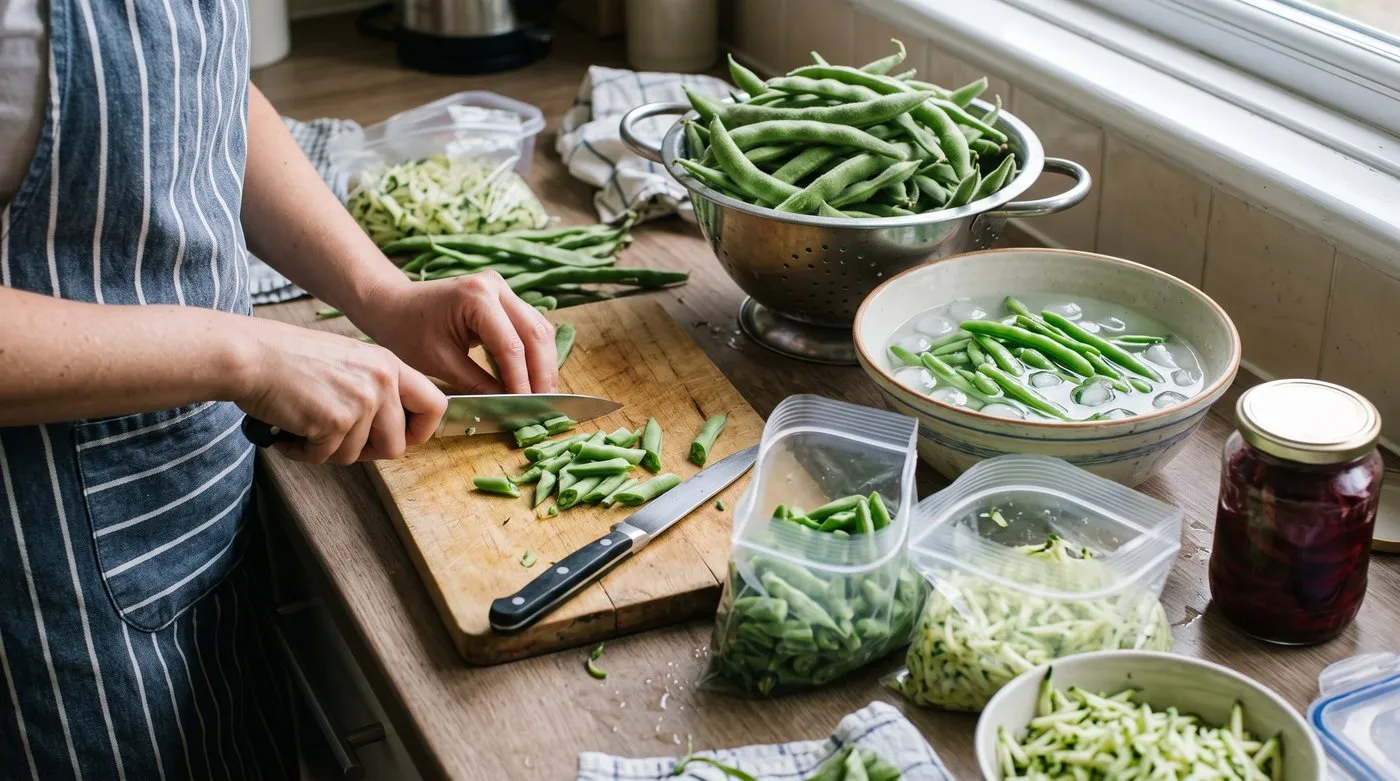
Blanch, cool and freeze. Half an hour on a glut gives you summer beans in the middle of winter.
Pickling turns beetroot, onions, gherkins and green tomatoes into jars for the cupboard. The guide to pickling and fermenting garden produce walks through it.
Storing suits potatoes, onions, squash and roots. Keep them somewhere cool, dark and dry, and check them often for any that start to rot.
Common garden to table mistakes
- Growing too much of one thing. Six courgette plants means courgettes at every meal. Grow less, more often.
- Picking too late. Big beans go stringy and big courgettes go watery. Pick young and often.
- Growing crops you don’t cook. Skip the trendy veg you’ll never use and grow more of your favourites.
- Forgetting winter. Sow kale, leeks and winter salad in summer, or the plot will be empty when you need it most.
Find more ideas for the plot in our growing guides. Once the harvest comes in, try our easy recipes with home-grown vegetables for simple ways to cook it.
Frequently asked questions
What is the easiest food to grow at home?
Salad leaves are the easiest food to grow at home. Sow them in a pot or bed from March and you can start picking in about four to six weeks. Cut-and-come-again types regrow after each picking. Herbs, radishes and spring onions are just as easy.
Does growing your own food save money?
It can, mainly on salad, herbs and soft fruit. These are pricey to buy and cheap to grow from seed or a single plant. Bulky crops such as potatoes and onions are cheap in shops, so grow them for flavour rather than savings.
Can I grow food in a small garden?
Yes, any sunny spot can grow something to eat. A single raised bed, a few patio pots or a windowsill of herbs all help. Pick compact crops such as salad, herbs, bush tomatoes and dwarf beans.
How do I plan what to grow for my kitchen?
Start with a list of the meals you cook most often. Pick out the fresh ingredients that go into them, then check which of those suit your space. Grow small amounts of several crops rather than a lot of one.
What food can I grow all year round?
With some planning you can pick something most months. Salad and herbs run from spring to autumn, and winter salads carry on under cover. Kale, leeks and Brussels sprouts stand outside in winter, and stored potatoes, onions and roots fill the gaps.
When is the best time to pick vegetables for flavour?
Pick most vegetables young and just before you cook them. Courgettes are best at 15-20cm and runner beans before the seeds bulge. Salad and herbs taste freshest picked in the cool of the morning.
Our team produces practical UK gardening guidance from source research, contributor records and established horticultural practice. Editorial standards are overseen by Matt W.


