Key takeaways
- Silvery patches with tiny black specks and no webbing usually mean thrips
- Eggs hide inside the leaf and pupae drop into the compost, out of reach of sprays
- Predatory mites on the plants plus nematodes in the compost cover both hiding places
- Introduce predators early, from about May, before you see damage
- Blue sticky traps help you spot thrips but won't control them
- New plants are the usual way thrips get in, so quarantine them first
If your greenhouse plants have silvery patches with tiny black specks on the leaves, you probably have thrips. They’re tiny, slim insects that scrape at leaves and flowers. Sprays often seem to work, then the damage comes back a week or two later. That’s because thrips spend part of their life where sprays can’t reach.
The good news is that a few simple habits and the right biological controls keep them in check. This guide shows you how to spot thrips, why they bounce back, and what to do about it, from peppers and cucumbers to orchids and streptocarpus.
How to tell thrips from red spider mite
Both pests make leaves look pale and speckled, so they’re easy to mix up. One look tells them apart.
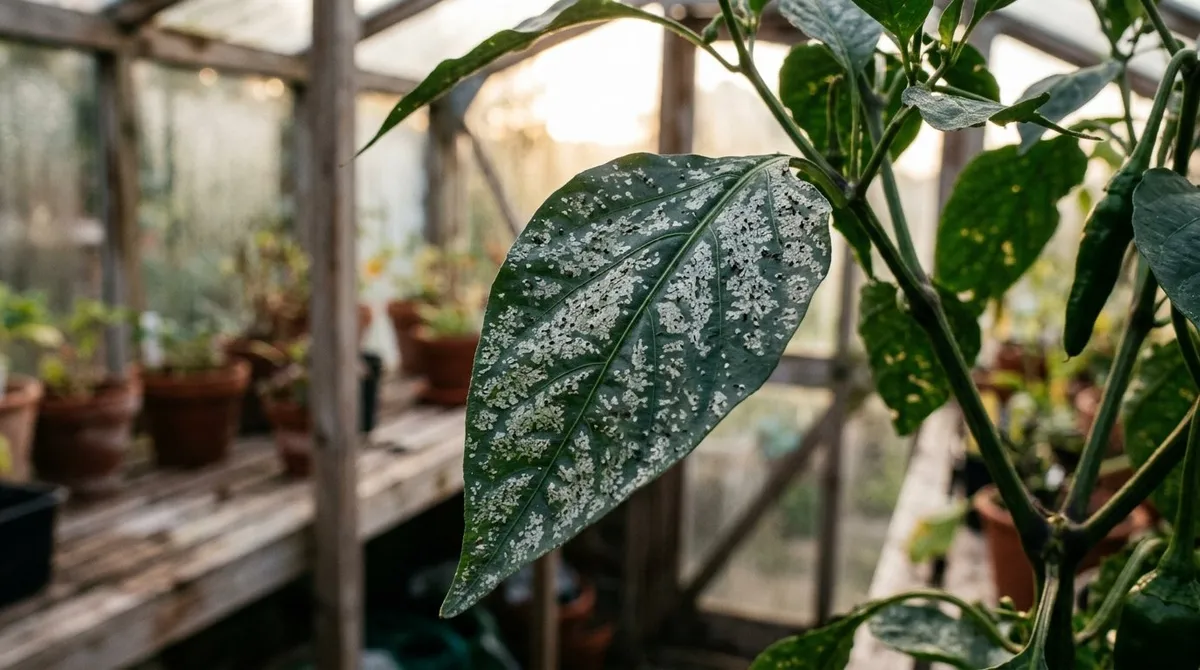
Thrips scrape the leaf surface and suck up the juices. The emptied cells fill with air, so the damage looks silvery, mostly on the upper side of the leaf. You’ll also see tiny black specks, like ground pepper. Those specks are thrips droppings, and they’re the giveaway.
Red spider mite causes a finer, yellower speckling, mostly from the underside of the leaf. In a bad attack you’ll see fine webbing on the shoot tips. Thrips never make webbing.
Other thrips signs include twisted, puckered new growth and pale streaks or brown marks on flower petals. If you find webbing, see the guide to spider mite control in greenhouses. In hot, dry summers it’s quite common to have both.
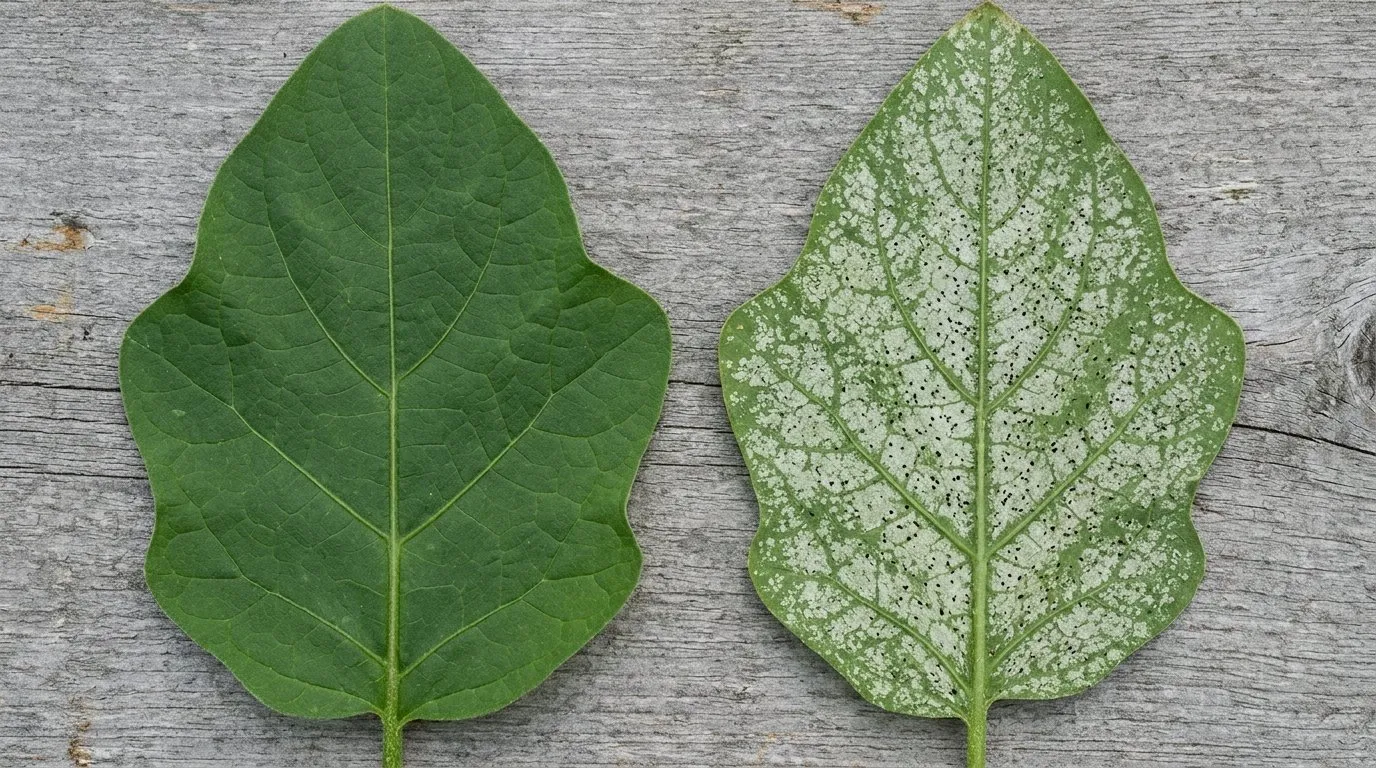
Silvery patches with black specks and no webbing point to thrips. Compare with a healthy leaf and the difference is clear.
Which thrips is in your greenhouse?
Two kinds turn up most often under glass in the UK.
Glasshouse thrips are dark brown to black as adults, slow-moving and rarely fly far. Damage often spreads outwards from one patch. They’re common on bay, azaleas, ferns, citrus and orchids.
Western flower thrips are pale yellow to brown and fly readily from plant to plant. They breed faster, are hard to control with sprays, and often arrive on bought-in ornamental plants.
Warning: Western flower thrips can spread tomato spotted wilt virus and impatiens necrotic spot virus. Signs include rings, blotches and dead patches on leaves. There’s no cure. Bin infected plants, don’t compost them, and never take cuttings from them.
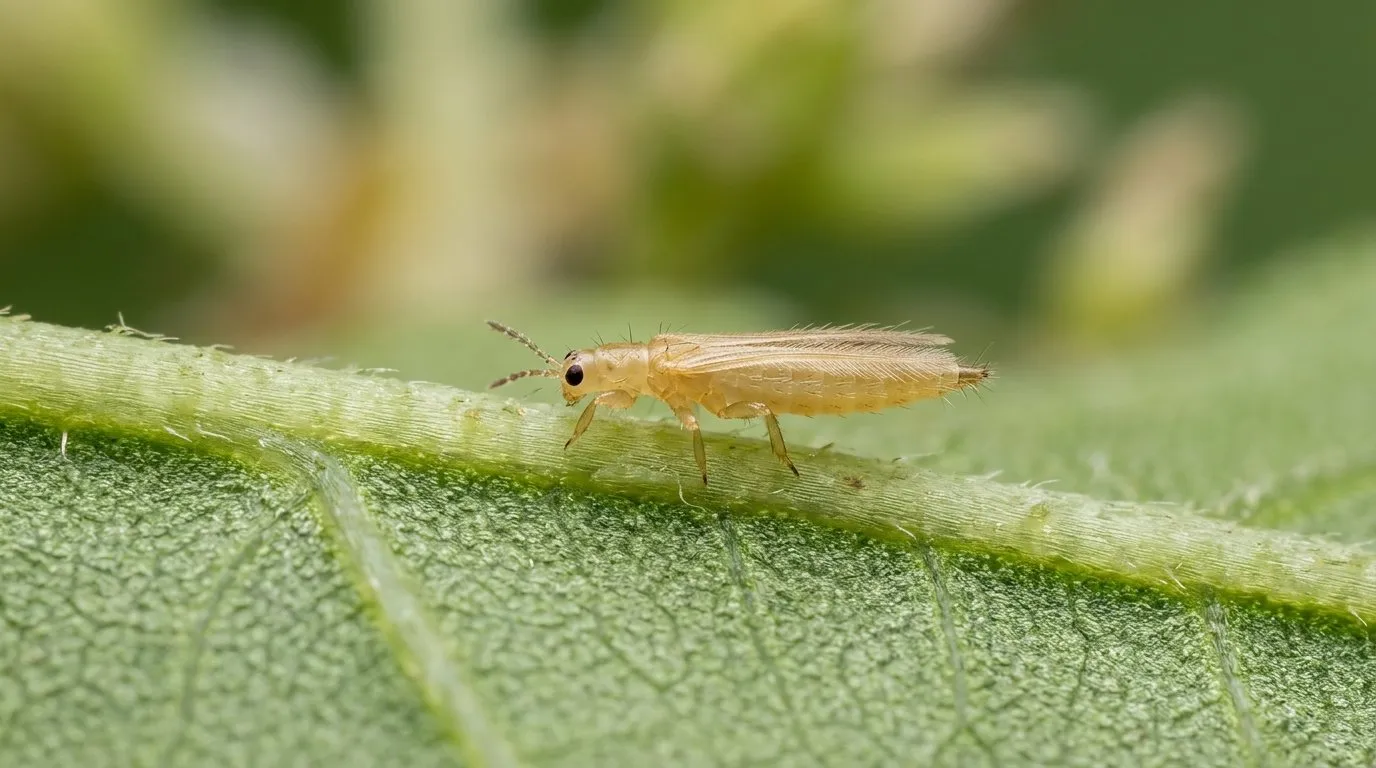
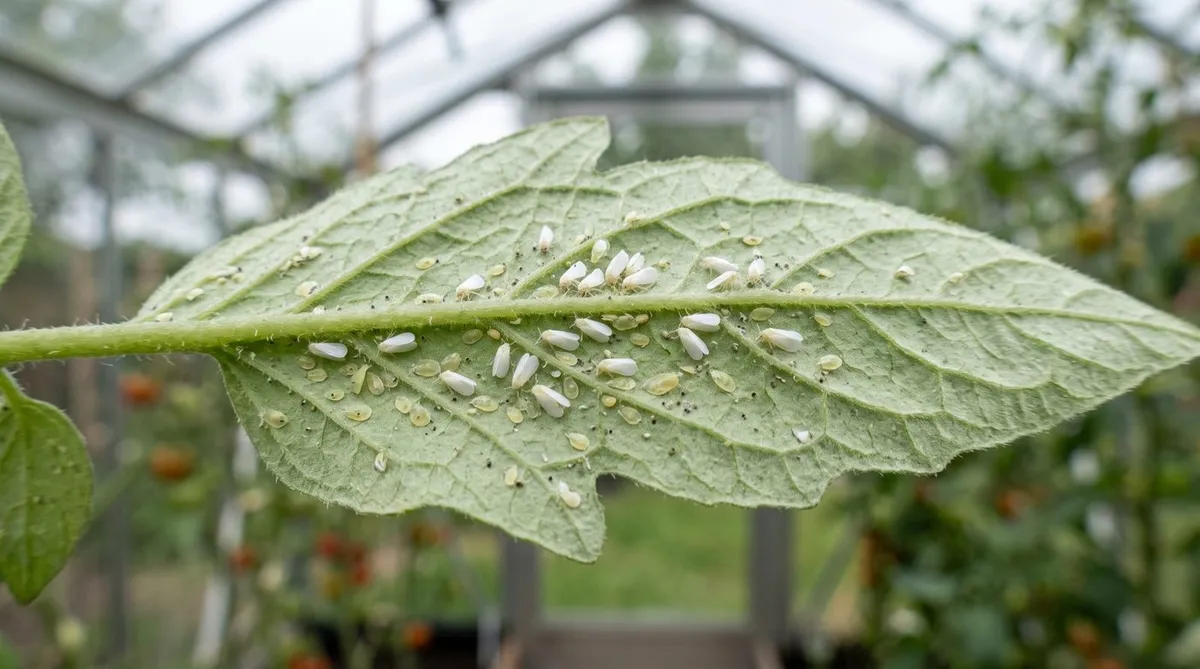
Thrips are so small you’ll usually spot their damage and black specks long before you see one this clearly.
Why sprays keep failing against thrips
Thrips go through several stages, and only some of them are on the leaf where a spray lands.
- Eggs are laid inside the leaf, not on it, so sprays can’t touch them.
- Young larvae hatch and feed on leaves and flowers. These are the ones doing the silvering.
- Pupae form after the larvae drop into the compost or onto the greenhouse floor. Leaf sprays never reach them.
- Adults emerge, fly up and start laying eggs again.
So a spray can kill the larvae and adults it hits, yet leave eggs and pupae untouched. A week or two later, a fresh wave appears. In warm summer weather the whole cycle speeds up, so numbers can rise quickly.
If you do use a spray, choose one approved for thrips on that plant under glass and follow the label exactly, including how often to repeat. Many insecticides also kill the predators that help you, so they don’t mix well with biological control.
The best thrips treatment: predators plus nematodes
The most reliable control under glass is biological: living predators bought from a specialist supplier. The trick is to cover both the leaves and the compost.
Predatory mites go on the plants. Tiny mites such as Amblyseius cucumeris come in small paper sachets that you hang on stems. They release mites gradually over several weeks, and the mites eat young thrips larvae. Another species, Amblyseius swirskii, suits hotter conditions in high summer.
Nematodes go in the compost. These microscopic worms, sold for thrips control, are mixed with water and watered onto the compost. They hunt down the thrips that have dropped off the leaves to pupate.
Together, they cover the two places a spray can’t. Used alone, each only does half the job. Predatory bugs called Orius are another option in summer if numbers climb.
| Control | Where it works | Best for | Notes |
|---|---|---|---|
| Predatory mite sachets | On leaves | Stopping numbers building | Start early; need warmth |
| Nematode drench | In the compost | Pupae and dropping larvae | Keep compost moist afterwards |
| Orius predatory bugs | On leaves and flowers | Extra help in summer | Eat adults and larvae |
| Blue sticky traps | Air around plants | Spotting thrips early | Monitoring only, not control |
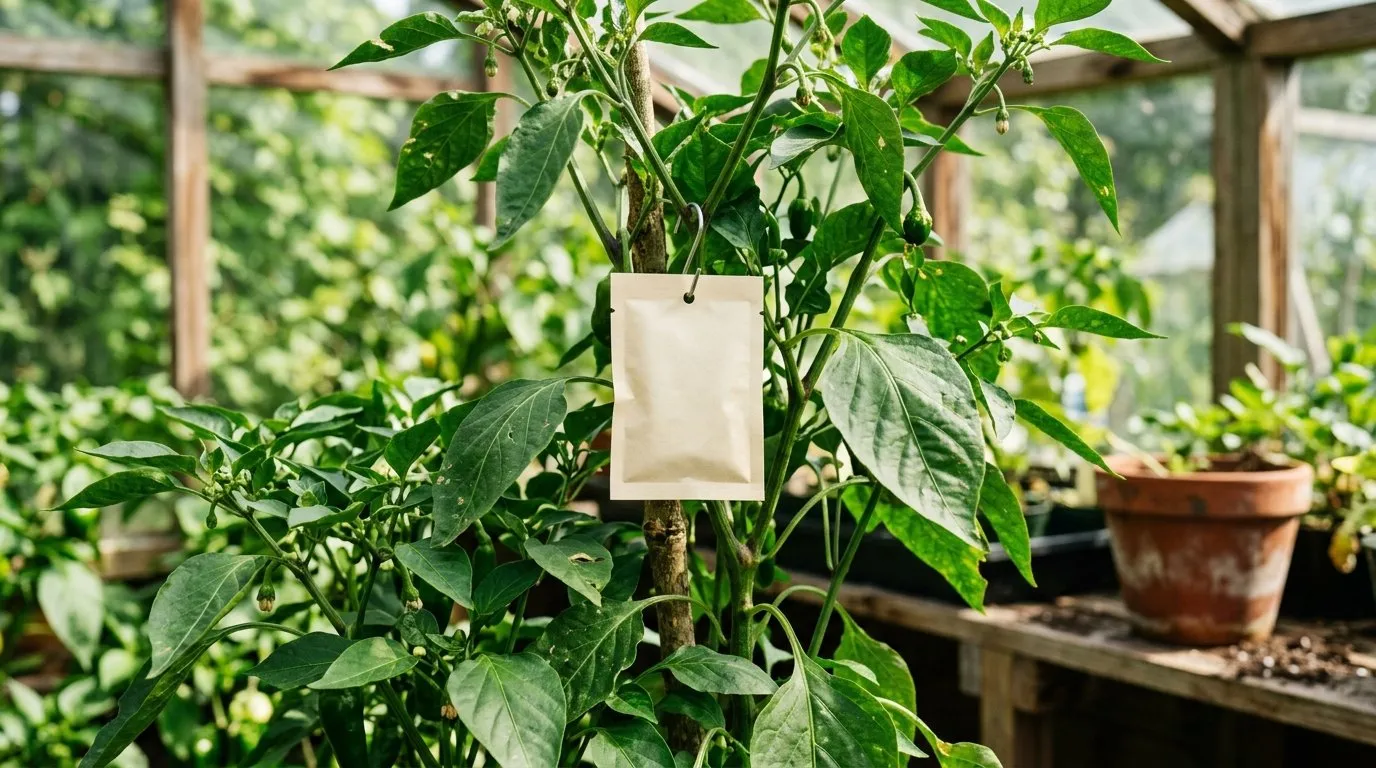
Hang mite sachets on the stems early in the season. They release predators slowly for several weeks.
How to use nematodes against thrips
Nematodes are easy to apply, but they’re living creatures, so a few rules matter.
- Water them onto the compost, not the leaves. Treat every pot and any gravel or matting under the staging.
- Keep the compost moist for a couple of weeks afterwards, as nematodes travel in the film of water in the soil.
- Apply in the evening or on a dull day, because sunlight harms them.
- Check the temperature on the pack. Most need the compost to be reasonably warm, so an unheated greenhouse may not be ready until late spring.
- Repeat every few weeks through the season, as the pack advises.
The guide to biological pest control with nematodes covers storing and mixing them.
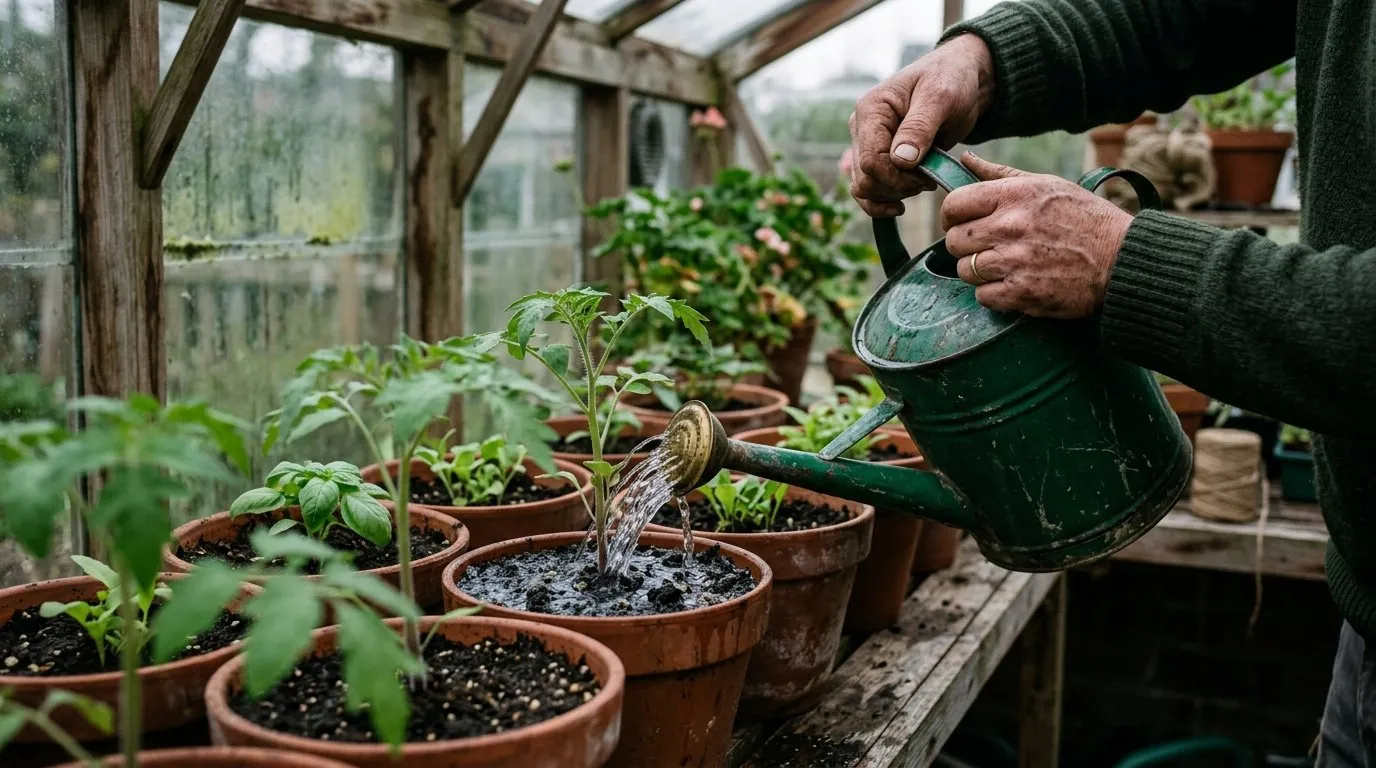
Water nematodes onto the compost, not the leaves. That’s where thrips go to pupate.
Using blue sticky traps to spot thrips
Blue sticky traps are your early warning. Thrips are drawn to blue, while whitefly prefer yellow.
Hang traps at the height of the shoot tips and move them up as plants grow. Check them once a week. If numbers start rising, it’s time to act. Traps also tell you whether your controls are working.
They won’t control thrips on their own. They only catch flying adults, and glasshouse thrips barely fly. If you’re also catching whitefly, the guide to greenhouse whitefly covers that pest.

Hang blue traps at shoot-tip height and check them weekly. They tell you when thrips arrive, not how to get rid of them.
Stopping thrips coming back
Thrips usually come back each year by the same routes, so prevention is mostly about habits.
Quarantine new plants. Bought-in plants are the main way thrips get in. The eggs are inside the leaves, so a plant can look perfectly clean. Keep new arrivals away from the greenhouse for a few weeks, with a blue trap nearby.
Clean up every winter. Thrips can survive the winter in old compost, debris and corners. Bin spent compost, sweep the floor and staging, and wash down the glass and frames.
Start predators early. Introduce predatory mites from about May, before you see damage. They’re best at stopping numbers building.
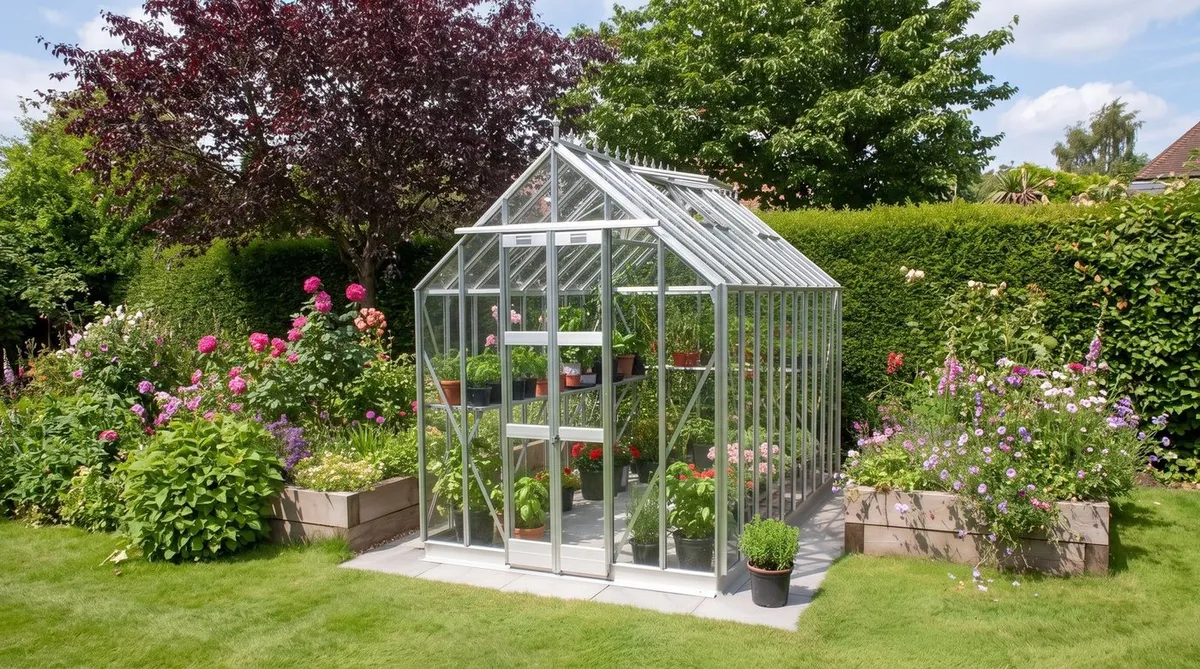
Keep air moving. Thrips like hot, dry, still air. Good ventilation and damping down the floor on hot days help. The guide to greenhouse ventilation and humidity covers the basics.
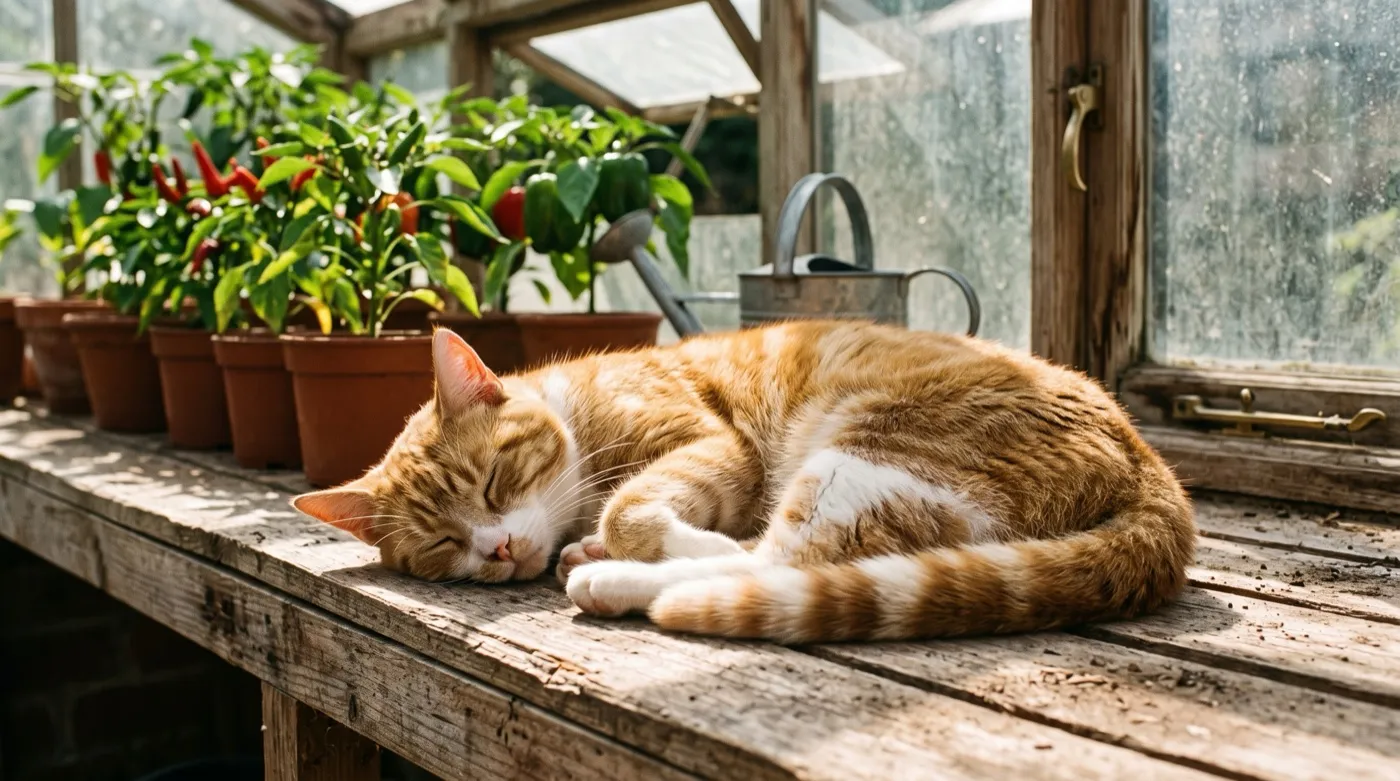
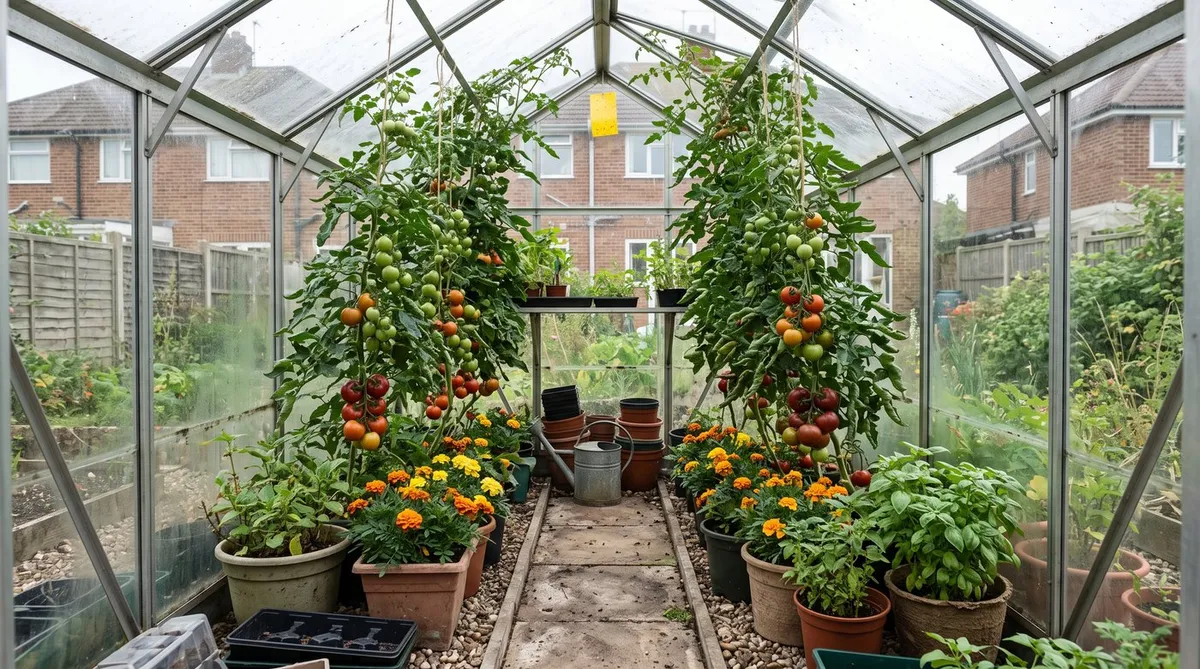
The cat loves a hot, still greenhouse, and so do thrips. Open the vents on warm days to make it less cosy for them.
Thrips calendar for a UK greenhouse
| Month | What to do |
|---|---|
| January to February | Clean the greenhouse. Bin old compost. Check overwintering plants for silvering |
| March | Hang blue sticky traps and start weekly checks |
| April | Quarantine new plants. Watch traps as temperatures rise |
| May | Introduce predatory mites. First nematode drench once the compost is warm |
| June to July | Peak breeding. Renew sachets and drench as the supplier advises. Ventilate well |
| August | Keep checking traps. Damp down and ventilate in hot spells |
| September | Last nematode drench of the season |
| October to December | Clear plant debris. Empty and clean the greenhouse |
Common thrips mistakes
Stopping when the damage pauses. Eggs and pupae survive a spray, so thrips return in a week or two.
Treating only the leaves. The compost is where pupae hide. Nematodes deal with them.
Starting predators too late. Mites prevent build-ups. Ordering them once plants are silvered puts you weeks behind.
Relying on sticky traps. They tell you thrips are there. They don’t get rid of them.
Skipping quarantine. A clean-looking new plant can carry eggs inside its leaves.
Frequently asked questions
How do I tell thrips from red spider mite?
Thrips leave tiny black specks and no webbing. Red spider mite causes finer, yellowish speckling, mostly from the leaf underside, and spins fine webbing on bad infestations. Thrips damage looks silvery, especially when the light catches it.
Why do thrips come back after I spray?
Because sprays miss the eggs inside the leaf and the pupae in the compost. A week or two later, those hatch or emerge and the damage starts again. Any spray needs repeating as the label allows, and biological controls usually work better.
What kills thrips in a greenhouse?
Predatory mites and nematodes are the most reliable option under glass. The mites eat young thrips on the leaves, and nematodes watered into the compost attack the stages that drop off. Start them early, before numbers build.
Are blue sticky traps enough to control thrips?
No, they’re a warning system rather than a cure. Traps only catch flying adults, not eggs, larvae or pupae. Check them weekly so you know when thrips arrive and whether your controls are working.
Do thrips spread plant viruses?
Yes, western flower thrips can spread viruses. These include tomato spotted wilt virus and impatiens necrotic spot virus. There’s no cure, so remove and bin infected plants rather than composting them.
Can I use nematodes for thrips on houseplants?
Yes, nematodes sold for thrips can be watered into houseplant pots. Keep the compost moist afterwards and follow the pack for temperature. Combine them with checking and wiping the leaves for the best result.
When should I introduce predatory mites for thrips?
From about May, before you see any thrips. Predatory mites are best at stopping numbers building, not at rescuing a bad outbreak. They need a warm greenhouse, so follow the supplier’s temperature guide.
Now you’ve got thrips sorted, read our organic greenhouse pest control guide for the other pests under glass, or browse more garden problem guides.
Our team produces practical UK gardening guidance from source research, contributor records and established horticultural practice. Editorial standards are overseen by Matt W.