Key takeaways
- Mini greenhouses fit patios, side passages and the smallest gardens
- Lean-to models fix to a sunny wall and get extra warmth from it
- Tomato houses have the extra height that tall tomatoes need
- Open the door or vent every morning from spring to autumn to stop overheating
- Stand it on level paving or a slab, never bare soil
- Use it for seedlings in spring, tender crops in summer and herbs in winter
A small garden doesn’t mean you can’t have a greenhouse. Mini greenhouses lean against walls, sit on patios and tuck into corners a full-size one would never fit. They’re great for raising seedlings, growing tomatoes and keeping tender plants cosy.
Here’s a look at the main types, where to put one and what to grow. Got more room? See our guide to the best greenhouses for UK gardens. Not sure you need one at all? Our guide do you need a greenhouse compares greenhouses, polytunnels and cold frames.
Types of mini greenhouse
Each type suits a different spot, so think about your space, whether you’ve got a wall to use and what you’d like to grow.
Lean-to greenhouses
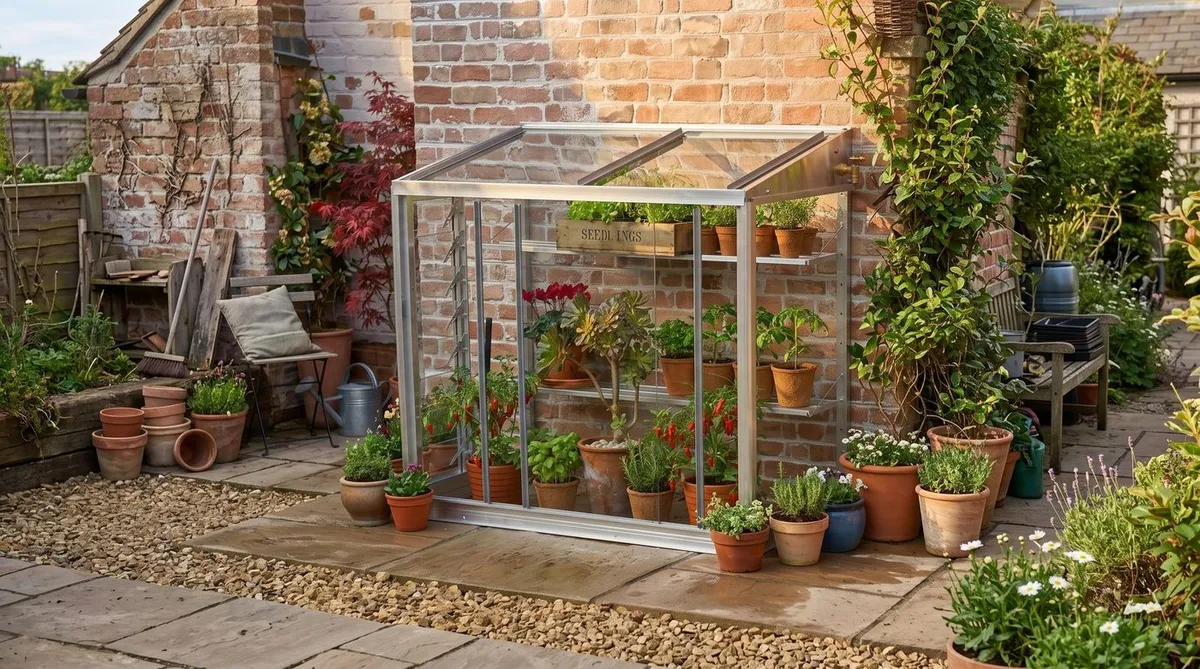
A lean-to fixes to a house wall or solid fence. The wall gives it support, shelter from the wind and warmth at night, which makes a lean-to the cosiest kind of mini greenhouse without a heater.
For a simple, good-value starter, the Access Harlow Mini Lean To is a 2x3ft lean-to with toughened glass and a hinged door. It’s happiest against a sunny brick wall.
If you’d like a smarter finish on the same footprint, have a look at the Access Harewood Lean To. Both suit patios, side passages and small back gardens.
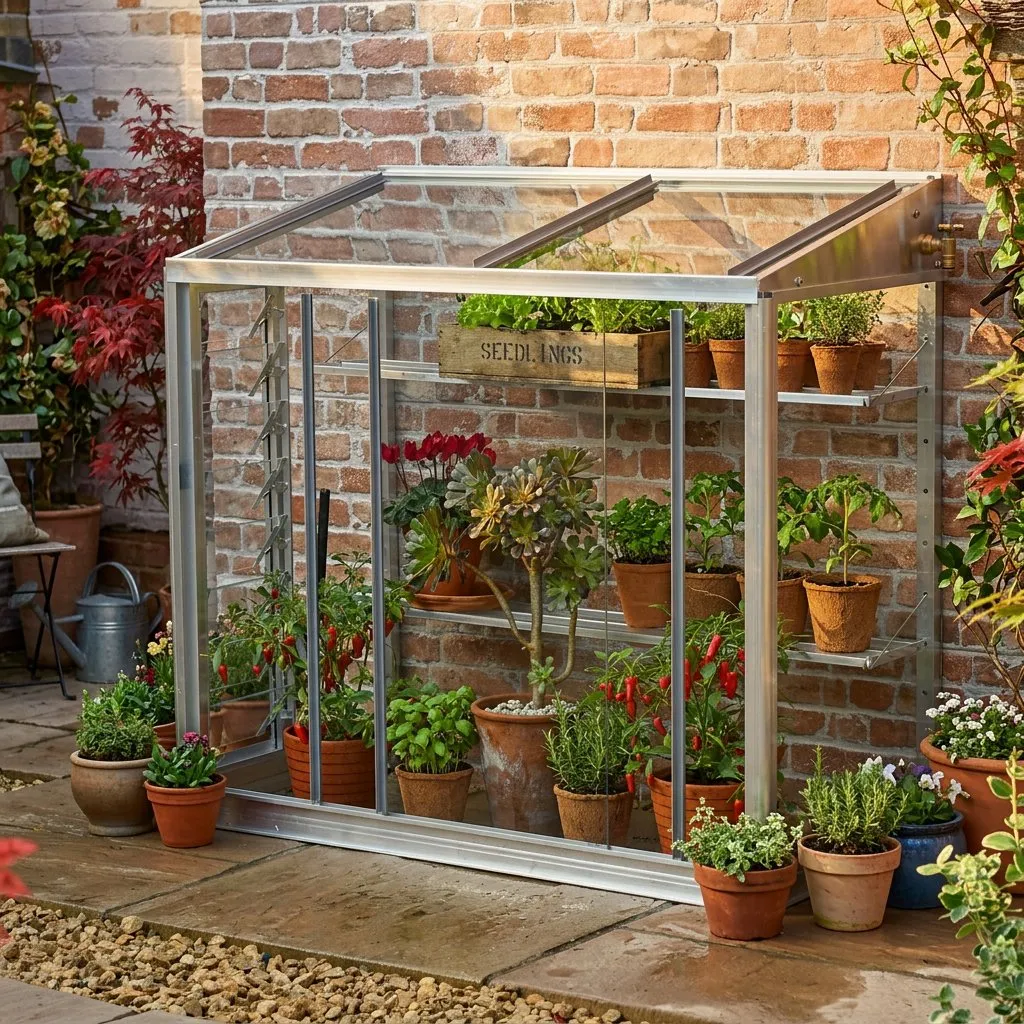 A wall-backed mini greenhouse makes the most of vertical space and keeps trays within easy reach.
Freestanding growhouses
A growhouse stands on its own, so you can put it wherever suits. Most are about 2x3ft, with shelves for seed trays.
The Access City Growhouse is a smart freestanding unit in anthracite grey, with toughened glass and built-in shelves. Stand it on level paving or a concrete slab. Because light comes in from all sides, growhouses are good for plants that need even light through winter.
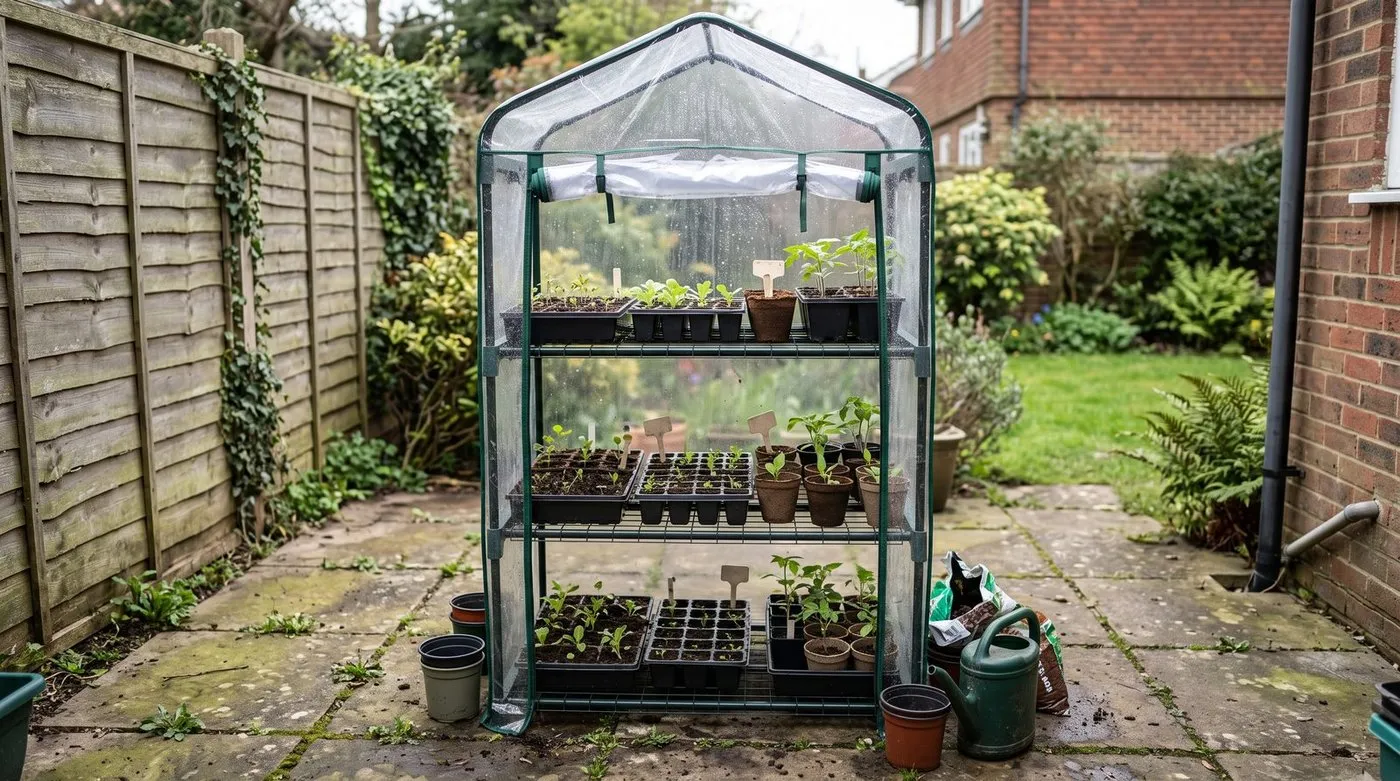 Light from every side makes a freestanding growhouse great for seedlings and overwintering.
For a little more height, there’s also the Access Tomato Growhouse at Greenhouse Stores.
Tomato houses
A tomato house is a mini greenhouse with extra height for tall tomatoes. Ordinary mini greenhouses are often too short for cordon tomatoes once they get going.
The Access Double Tomato Greenhouse gives you a 4x4ft space with plenty of headroom for several tomatoes trained up canes. If growing tomatoes is your main plan, a tomato house is the way to go.
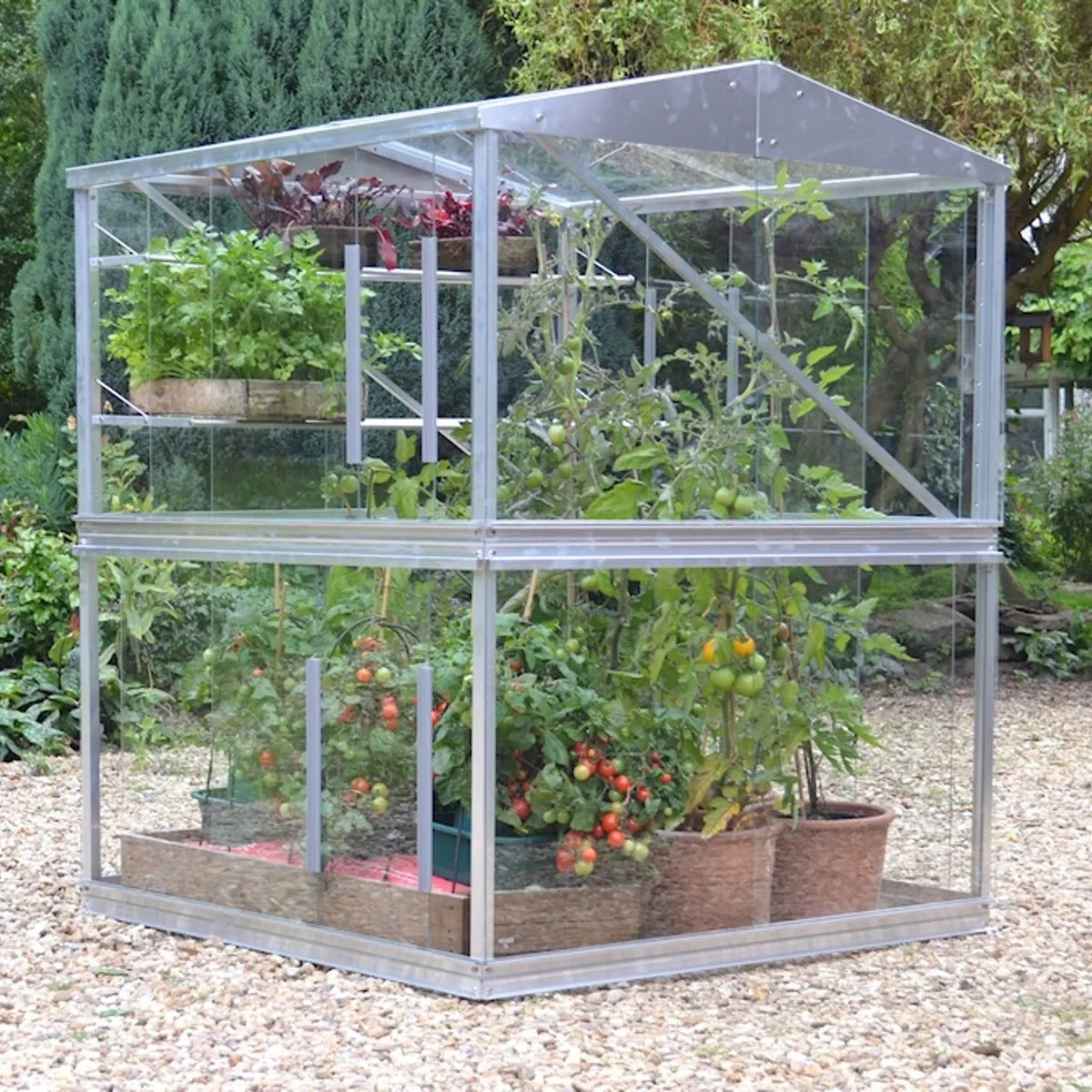 A tall tomato house gives cordon tomatoes room to grow without needing a full-size greenhouse.
Wheeled and specialist units
The Access Mini on Wheels has lockable wheels on a 2x3ft toughened glass frame. Roll it into the sun by day and back against the wall at night. Handy if you rent or need to move it out of the way.
The Access Herb House is the tiniest option at just 1x3ft. It’s made for growing herbs all year in a really small space. Fix it by the back door and you can nip out for rosemary and thyme while you cook.
Mini greenhouses side by side
| Model | Size | Type | Best for |
|---|---|---|---|
| Access Harlow Mini | 2x3ft | Lean-to | A good-value first greenhouse |
| Access Herb House | 1x3ft | Wall-mounted | Herbs in the tiniest spaces |
| Access Harewood | 2x3ft | Lean-to | A smarter lean-to finish |
| Access Tomato House | 4x4ft | Freestanding | Tall tomatoes |
| Access City Growhouse | 2x3ft | Freestanding | All-round, all-year growing |
| Access Mini on Wheels | 2x3ft | Wheeled | Renters and moving around |
| Access Exbury Mini | 3x5ft | Freestanding | The roomiest mini |
| Stali 2x4 Mini | 2x4ft | Freestanding | A sleek, modern design |
Where to put a mini greenhouse
Position matters even more for a small greenhouse than a big one, because it warms up and cools down so quickly.
A sunny south-facing wall is the best spot. Brick soaks up the sun by day and lets the warmth out slowly at night. A west-facing wall is the next best.
North-facing walls are too shady, and the frame will barely warm up. East-facing walls get morning sun but cool down early.
Level ground is a must. Stand it on paving slabs, concrete or decking. Don’t put a glass greenhouse on bare soil, as it can sink and twist. For more patio ideas, see our guide to patio gardens for small spaces.
Tip: Pop a max/min thermometer inside for a week before you start. It shows you how warm and cold it really gets, so cold snaps don’t catch your seedlings out.
Keeping it aired
Overheating is a bigger risk in a small greenhouse than you’d think. A closed frame in full sun gets hot surprisingly fast, even on a cool spring day, and that can scorch seedlings.
Open the door or roof panel every morning from March to October. An automatic vent opener is a great buy if you’re out all day. It opens and closes on its own with no electricity.
Lean-tos have one side against the wall, so air can’t flow straight through. Open the door wider or narrower to adjust. On really hot days, put shade netting over the roof.
In winter, close everything by mid-afternoon to hold onto the day’s warmth. A frame against a house wall stays a little warmer than outside, which helps hardy herbs and overwintering seedlings. Our guide on how to insulate a greenhouse for winter explains how bubble wrap can help in a mini greenhouse too.
What to grow in a mini greenhouse
A mini greenhouse has three big jobs through the year: raising seedlings, growing summer crops and sheltering plants in winter.
Seedlings (February to April)
Start seeds indoors in a heated propagator, then move the trays into the mini greenhouse once they’re up. Tomatoes, peppers, chillies and aubergines all love the extra warmth while they toughen up.
Summer crops (May to September)
Once the last frost has passed, usually mid-May in most of England, a mini greenhouse is perfect for:
- Tomatoes, especially bush or shorter types in smaller frames
- Chillies and sweet peppers
- Aubergines and compact cucumbers
- Herbs such as basil, coriander and parsley
Container vegetable growing tips work inside a mini greenhouse too. Use good-sized pots with free-draining compost.
Winter shelter (October to March)
Bring pots of herbs and borderline plants in before the first frost. Rosemary, bay and lemon verbena are much happier in a mini greenhouse through winter. Wrap pots in bubble wrap to keep roots snug. For more small-space ideas, see our guide to small garden design.
 A cold frame is a low-level alternative, great for hardening off seedlings and sheltering herbs in winter.
If a cold frame suits your space better, the Access Cold Frame at Greenhouse Stores is a neat option.
Your mini greenhouse year
| Month | Jobs |
|---|---|
| January | Clean the glass. Order seeds. Check for loose fittings. |
| February | Start tomatoes and peppers in a heated propagator, then move them in. |
| March | Sow hardy annuals and salads in trays on the shelves. |
| April | Harden off seedlings by opening the door a bit wider each day. |
| May | Plant out tender crops after the last frost. Start daily watering. |
| June | Add shade netting in hot spells. Feed tomatoes weekly. |
| July | Peak growing time. Water morning and evening in heatwaves. Pick salad leaves. |
| August | Keep feeding and watering. Sow autumn lettuce and spinach. |
| September | Water less. Bring tender herbs in for winter. |
| October | Close vents earlier each day. Clear out finished summer crops. |
| November | Add bubble wrap if you’re overwintering tender plants. |
| December | Water sparingly. Check for damage after storms. |
Common mistakes
Cramming it full. A small frame fills up fast. Too many plants block the air and help diseases spread. A few healthy plants beat a crowded jungle.
Forgetting to open it. Even in March, a closed mini greenhouse can overheat by lunchtime. Fit an automatic opener or open the door every morning.
Uneven ground. A tilted frame strains the glass and makes the door stick. Check with a spirit level before you fix it down.
A shady wall. On a north-facing wall it hardly warms up. Choose a south or west-facing spot.
Dirty glass. Grime and algae block light. Wash the glass with warm soapy water in late winter, before the growing season starts.
 Propping the door open each morning stops the most common mini greenhouse problem: overheating.
Good to know: Don’t leave a mini greenhouse shut tight in full sun, even in winter. A bright, still day can heat it up surprisingly fast.
Going a size up
Want the compact feel with more room? The Access Exbury Mini gives you 3x5ft of floor space, with room for more plants and a bit of elbow room. The Stali 2x4 Mini is a sleek, modern option with an anthracite frame.
Both are great if you’ve outgrown a 2x3ft unit but haven’t space for a full-size greenhouse. Growing high up? Our guide to balcony gardening ideas has lots of ideas for small raised spaces.
The RHS greenhouse advice suggests going for the biggest greenhouse your space allows, as a bit more room makes everyday jobs much easier.
Need ideas for your first crops? Read our guide to growing herbs in the UK.
Frequently asked questions
What is the smallest greenhouse you can buy?
Wall-mounted herb houses are about the smallest. At around 1x3ft, they fix to a wall and hold a few herb pots or seedlings. They fit neatly beside a back door.
Can you grow tomatoes in a mini greenhouse?
Yes, though small frames suit compact types best. Bush varieties like Tumbling Tom fit well on a shelf. For tall cordon tomatoes, choose a taller tomato house with room to grow upwards.
Where should I put a mini greenhouse?
Against a sunny south or west-facing wall. The wall soaks up warmth by day and gives it back at night. Avoid shady north-facing spots, as the frame barely warms up.
Do mini greenhouses protect against frost?
They give a little protection on cold nights. That’s enough for hardy herbs and to shelter tough spring seedlings. On freezing nights, add a layer of fleece over tender plants inside.
How do you ventilate a mini greenhouse?
Open the door or roof vent every morning from March to October. A small frame gets very hot very quickly on a sunny day. Prop the door open or fit an automatic vent opener that works on its own.
Is a mini greenhouse worth it?
It can be if you haven’t room for a full greenhouse. It protects seedlings, shelters tender crops and gives herbs somewhere cosy for winter. It’s worth it if you’ll really use the shelves.
Our team produces practical UK gardening guidance from source research, contributor records and established horticultural practice. Editorial standards are overseen by Matt W.


