Key takeaways
- Ben Hope is the safest all-rounder because it resists big bud mite, the worst blackcurrant pest
- Ben Sarek stays about 1.2m tall, so it suits small gardens, pots and fruit cages
- Big Ben and Ebony have the sweetest berries for eating straight off the bush
- Ben Tirran flowers and ripens late, so it dodges spring frosts and stretches the season
- All blackcurrants are self-fertile, so one bush is enough for a crop
- Buy certified virus-free bushes from a specialist fruit nursery
For most UK gardens, Ben Hope is the best blackcurrant because it resists big bud mite and crops reliably. Ben Sarek suits small spaces, Big Ben gives sweet berries to eat fresh, and Ben Tirran ripens late to stretch the season.
This guide helps you choose which blackcurrants to buy. It compares eight popular varieties by size, flavour, ripening time and pest resistance. For planting, pruning and feeding, see our guide to growing redcurrants and blackcurrants.
How to choose a blackcurrant variety
Four things matter most: pest resistance, bush size, flavour and when it ripens. Every modern variety tastes good, so start with your space and your pest risk.
Pest resistance matters because of big bud mite. This tiny mite lives inside the buds, making them swell into round “big buds” that never open. Worse, it spreads reversion virus, which slowly stops a bush cropping. If blackcurrants have struggled near you before, choose Ben Hope.
Bush size decides how many plants you can fit. Ben Sarek stays about 1.2m tall and wide. Ben Lomond and Titania grow larger, up to about 1.5-1.8m.
Flavour varies from sharp, classic jam flavour to sweet berries you can eat by the handful. Big Ben and Ebony are the sweetest.
Ripening time runs from early July to early August. Grow one early and one late variety and you’ll pick for weeks instead of days.
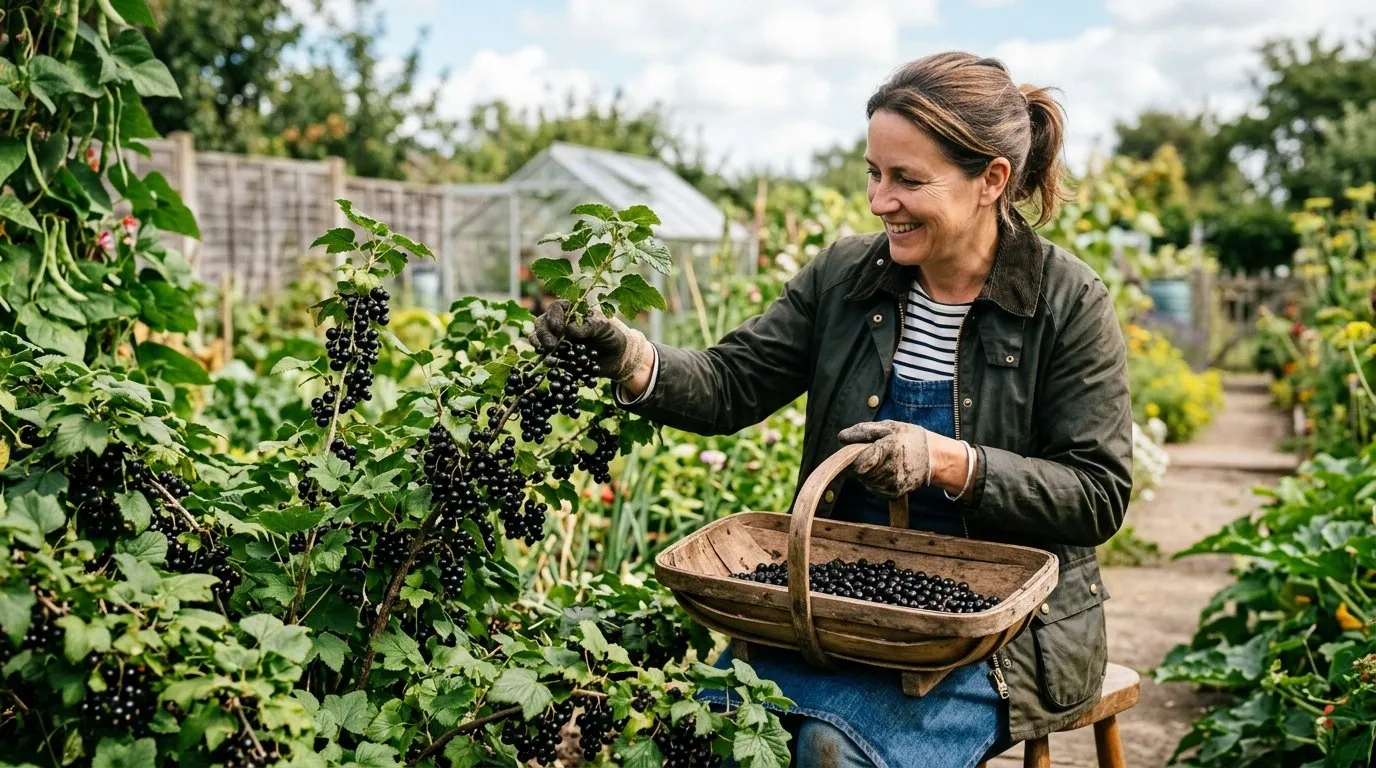
Pick whole strings of berries, called strigs, when they’re all black and glossy. Early and late varieties spread the picking out.
Blackcurrant variety comparison table
| Variety | Ripens | Bush size | Flavour | Best for |
|---|---|---|---|---|
| Ben Hope | Mid-season | Medium to large | Sharp, good all-round | Safest all-rounder |
| Ben Sarek | Mid-season | Compact, about 1.2m | Balanced | Small gardens, pots |
| Ben Connan | Early | Compact | Large, good flavour | Early crop |
| Ben Lomond | Mid to late | Large | Sharp, classic | Jam and cordial |
| Ben Tirran | Late | Medium to large | Sharp | Frosty or northern gardens |
| Big Ben | Early to mid | Medium | Sweet, very large berries | Eating fresh |
| Ebony | Early | Medium | Very sweet | Eating fresh |
| Titania | Mid-season | Large, vigorous | Sharp | Wet gardens, good mildew resistance |
The eight best blackcurrants for UK gardens
Ben Hope
Ben Hope is the safest choice for most gardens. It resists big bud mite, and it also shrugs off mildew and leaf spot well. The bush is upright and vigorous, so it needs regular pruning. The berries are slightly sharp and good for both cooking and eating. If neighbours or past bushes have had big bud, this is the one to plant.
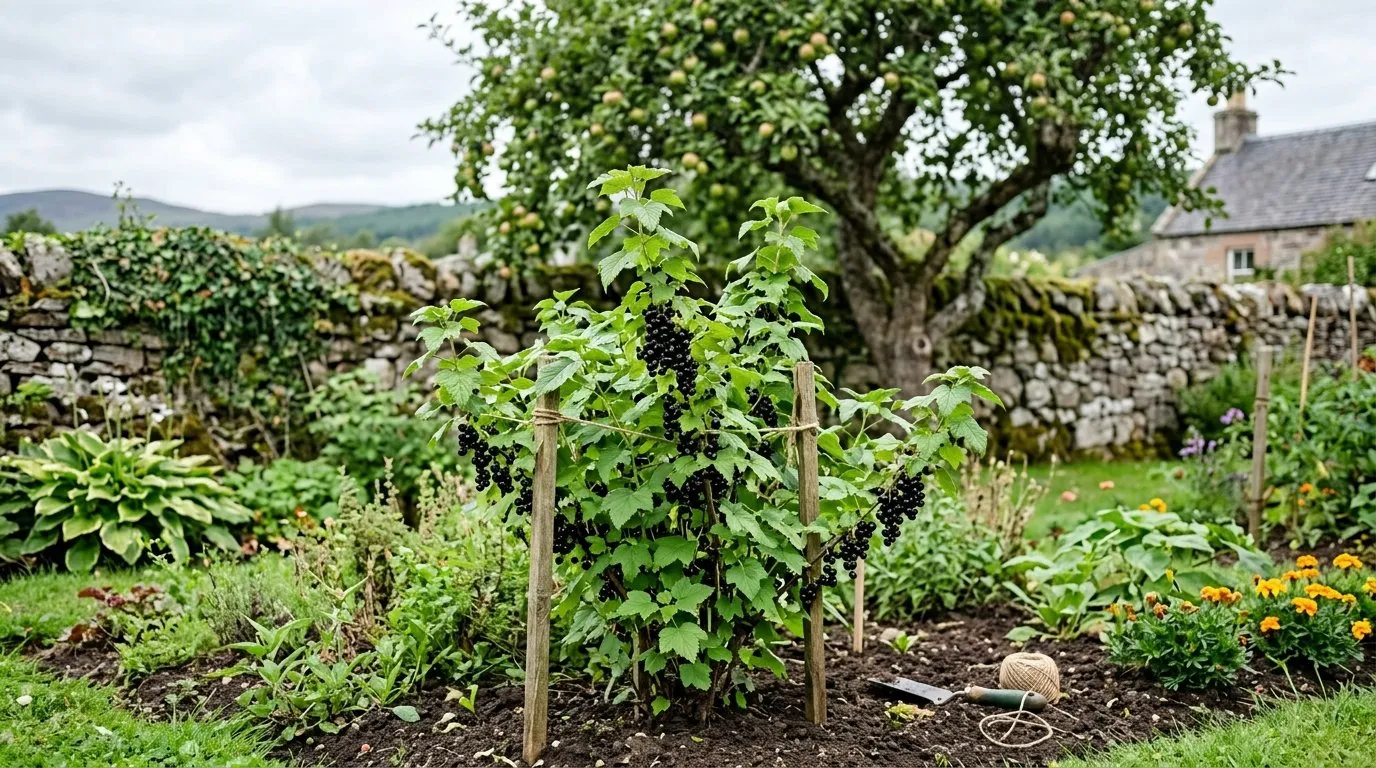
Ben Hope’s clean, healthy leaves make it a good choice for wet gardens and plots where big bud has been a problem.
Ben Sarek
Ben Sarek is the go-to compact blackcurrant. It stays about 1.2m tall and wide, yet still gives a heavy crop of medium-sized berries. It flowers fairly late, which helps it miss spring frosts, and it has good mildew resistance. It’s ideal for a small garden, a fruit cage or a large pot. Our guide to growing fruit in pots explains the container care it needs.
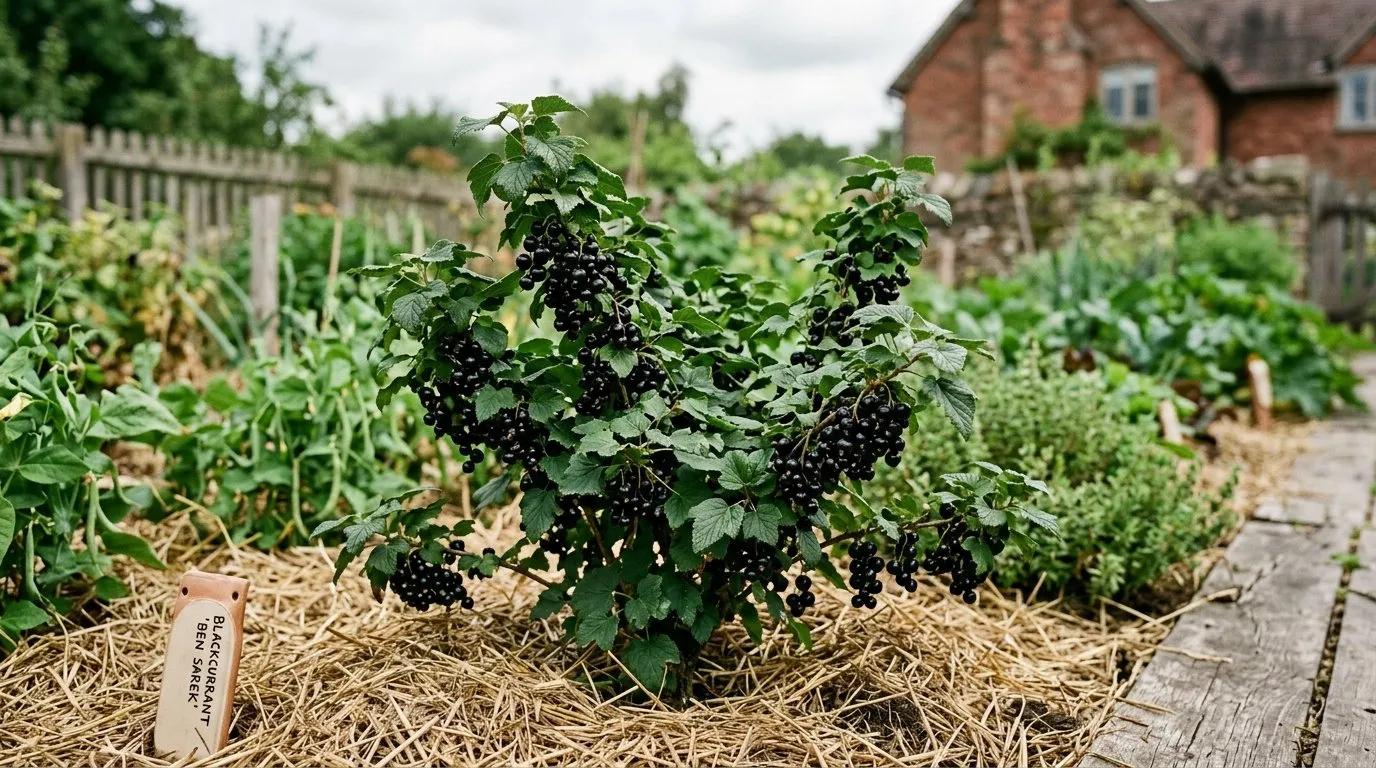
Ben Sarek stays small and tidy, so you can fit several bushes into a fruit cage or a narrow border.
Ben Connan
Ben Connan is one of the earliest Bens, with large, well-flavoured berries in early July. The bush is compact and has good resistance to mildew. It’s a lovely partner for a later variety such as Ben Tirran.
Ben Lomond
Ben Lomond is an older favourite with a big crop of sharp, strongly flavoured berries for jam and cordial. It flowers late, which helps in frosty spots. It makes a large bush and isn’t resistant to big bud mite, so choose it only where the pest isn’t a problem.
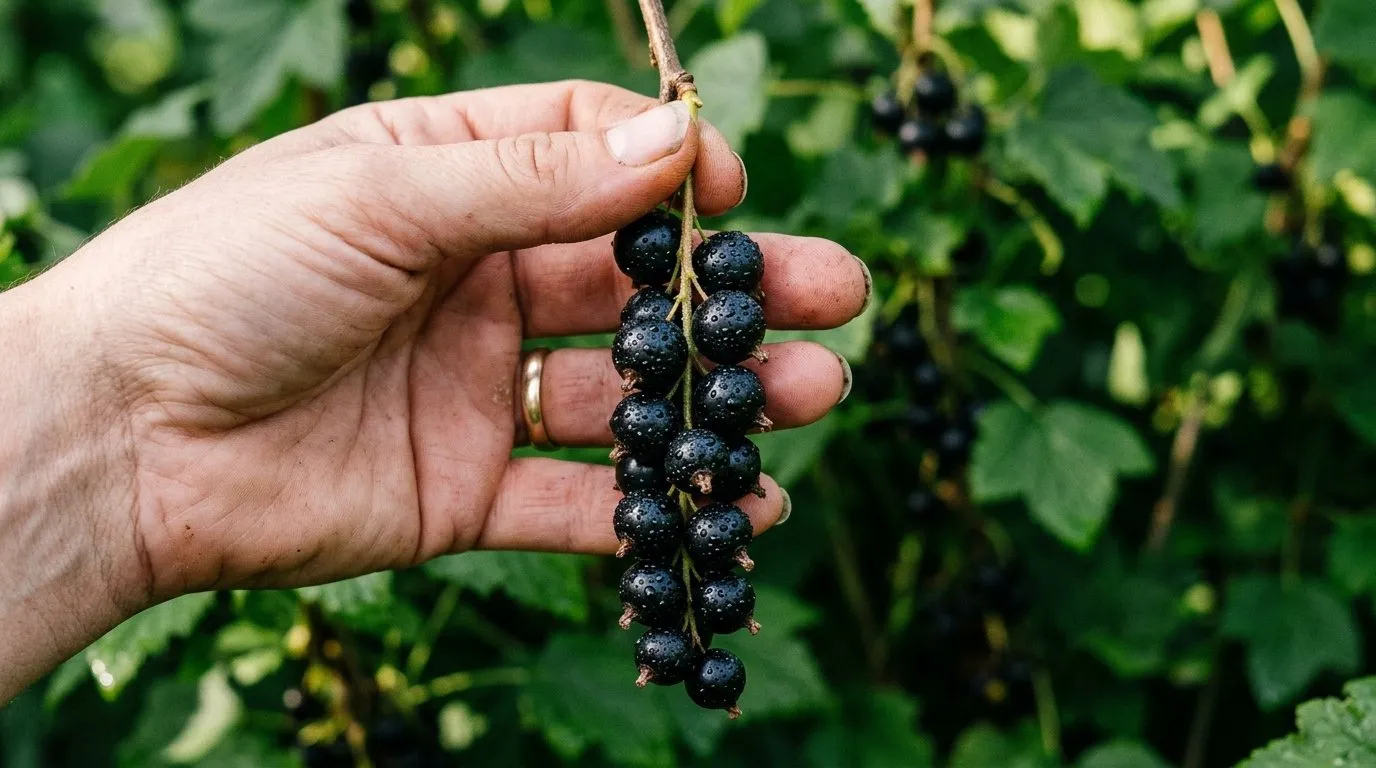
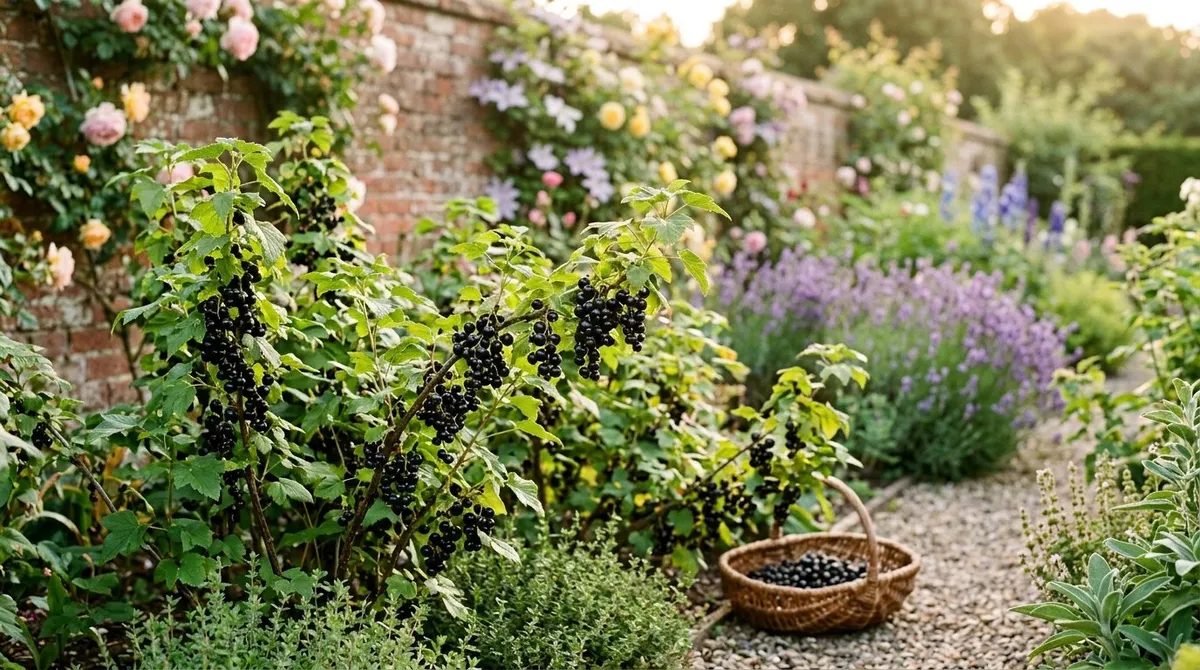
Ben Lomond’s berries hang in long strings with a sharp, classic flavour. They’re perfect for jam.
Ben Tirran
Ben Tirran is the latest Ben to flower and ripen. Late flowers dodge the April frosts that can wipe out earlier varieties, so it’s a good pick for northern gardens and frost pockets. The berries are sharp and best for cooking. Grown with an early variety, it stretches the season well into August.
Big Ben
Big Ben has very large, sweet berries that are good enough to eat as dessert fruit. The bush is a sensible medium size. If you want blackcurrants for the fruit bowl rather than the jam pan, start here.
Ebony
Ebony is known for its sweetness. The glossy berries ripen early and are pleasant raw, so it’s another good choice for eating fresh. The crop is a little lighter than the heaviest Bens.
Titania
Titania is a vigorous Swedish variety with sharp, traditional berries. Its good resistance to mildew makes it a good choice for wetter western gardens. It needs room, as the bush grows large.
Which varieties to plant together
Blackcurrants are self-fertile, so one bush will crop on its own. Planting two or three varieties is about spreading the harvest, not pollination.
- Small garden: Ben Sarek plus Ben Connan, both compact, one early and one mid-season.
- Big bud mite risk: Ben Hope, on its own or with any other variety bought as certified stock.
- Eating fresh: Big Ben or Ebony, with Ben Tirran for a late crop to cook with.
- Jam and cordial: Ben Lomond and Ben Tirran for plenty of sharp-flavoured berries.
Space bushes about 1.5m apart, or a little closer for Ben Sarek. For a mix of soft fruit in one bed, add a bush or two of gooseberries, or try a jostaberry, a blackcurrant and gooseberry cross.
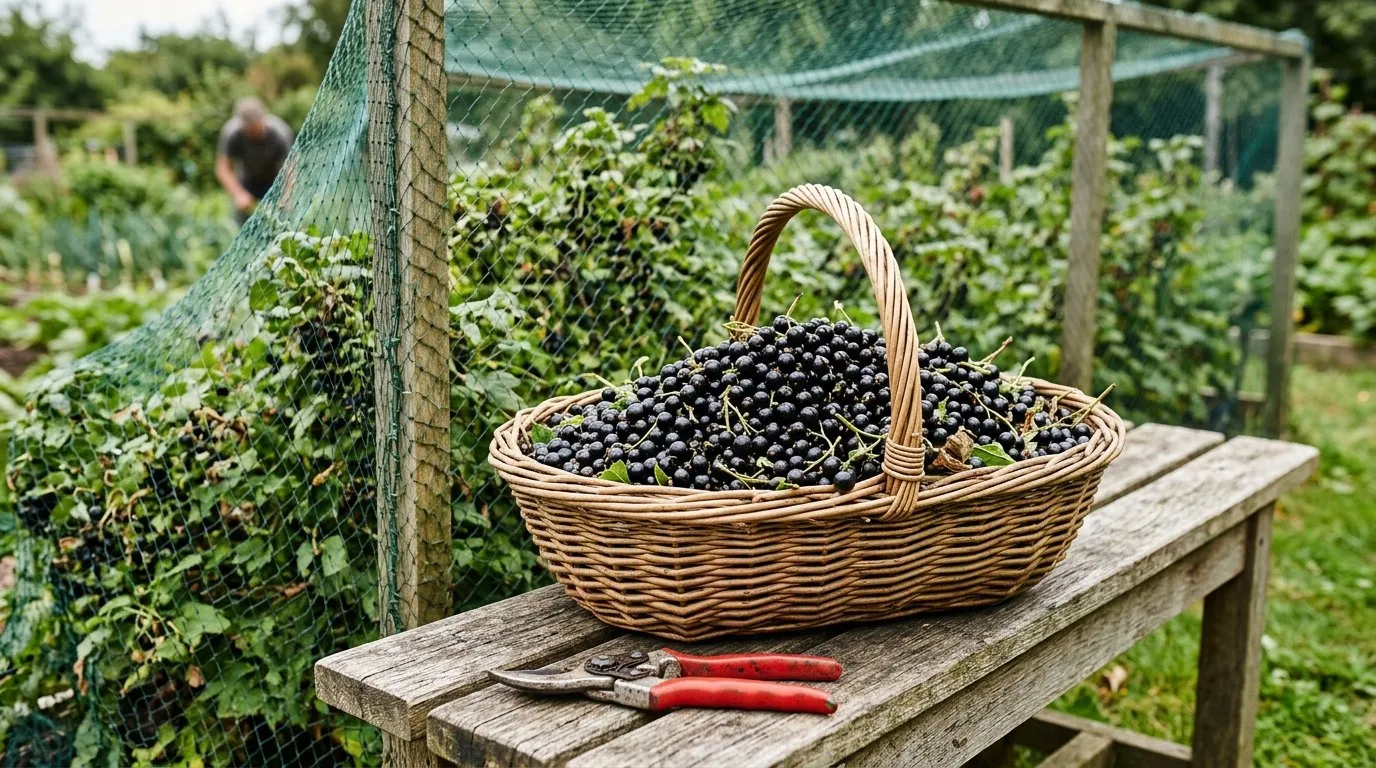
A fruit cage keeps blackbirds off the ripe berries and bullfinches off the buds in winter.
Big bud mite and reversion virus
Big bud mite is the most serious blackcurrant pest in the UK. The mites live inside the buds over winter, making them swell into round, cabbage-like buds that never open. In spring the mites move on to new buds.
The mite also spreads reversion virus. Affected bushes flower poorly, their leaves change shape and they slowly stop cropping. There’s no cure.
To keep on top of it:
- Look over bare stems in winter and pick off any swollen, rounded buds. Bin or burn them, don’t compost them.
- Dig up and destroy badly affected or reverted bushes.
- Plant new bushes in a fresh spot, using certified virus-free stock.
- Choose Ben Hope if big bud has been a problem nearby.
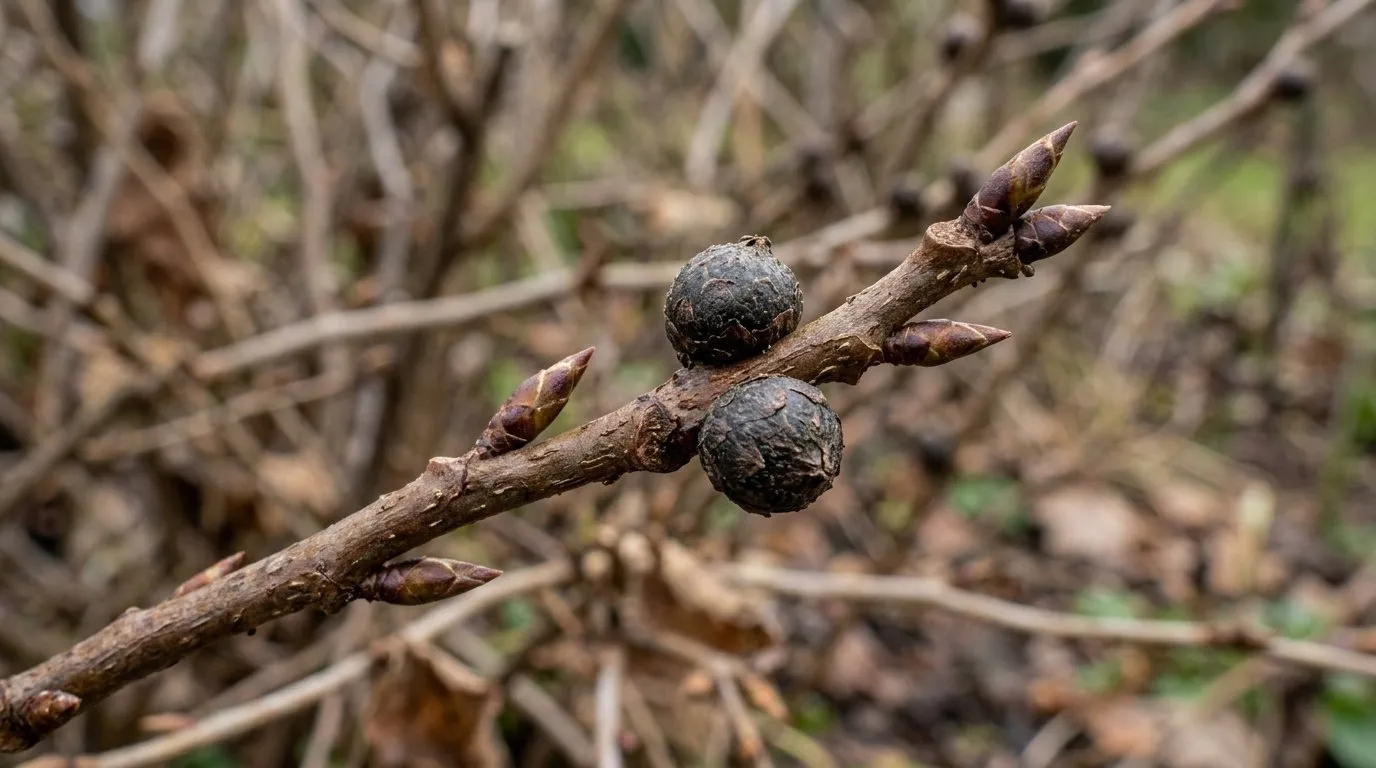
Big buds are round and swollen. Healthy buds are slim and pointed. Pick off the swollen ones in winter.
Blackcurrant calendar
| Month | What to do |
|---|---|
| November to March | Plant bare-root bushes. Prune out about a third of the oldest stems |
| January to February | Pick off any swollen big buds |
| April | Cover bushes with fleece on frosty nights while in flower |
| May to June | Water in dry spells as the berries swell. Net against birds |
| July | Pick early varieties such as Ben Connan and Ebony |
| Late July to August | Pick mid and late varieties, ending with Ben Tirran |
| October | Take hardwood cuttings to make new bushes |
Common mistakes when choosing blackcurrants
- Planting where old blackcurrants grew. Pests and virus can linger. Pick a fresh spot. New bushes are easy to raise from hardwood cuttings of healthy plants.
- Buying uncertified bushes. Cheap or swapped plants may already carry reversion virus. Buy certified stock from a fruit specialist.
- Growing only one variety. You get one short burst of berries. An early and a late variety spread the crop.
- Choosing a big bush for a small space. Ben Lomond or Titania soon crowd a small bed. Ben Sarek fits.
- Planting in deep shade. Blackcurrants crop poorly without sun for at least half the day.
Ready to plant? Our guide on how to feed fruit bushes keeps blackcurrants cropping well, and making jam from garden fruit is the best way to use a glut. For more fruit to grow, browse the growing hub.
Frequently asked questions
What is the best blackcurrant variety for UK gardens?
Ben Hope is the best all-rounder for most gardens. It resists big bud mite, the pest that spreads reversion virus, and crops well. Choose Ben Sarek if space is tight, or Big Ben if you want sweet berries to eat fresh.
Which blackcurrant variety has the largest fruit?
Big Ben has some of the biggest berries you can grow. They’re sweet enough to eat straight from the bush. Ben Connan also gives large berries and ripens early in the season.
Are blackcurrants self-fertile?
Yes, blackcurrants are self-fertile. A single bush will crop on its own. Planting two or three varieties that ripen at different times is still worth it, because it spreads the picking over several weeks.
Which blackcurrant is most resistant to big bud mite?
Ben Hope is the one to choose. It was bred in Scotland for resistance to big bud mite, which also spreads reversion virus. Older varieties such as Ben Lomond and Baldwin are more likely to be attacked.
When do blackcurrants ripen in the UK?
Most ripen in July, with late varieties into August. Ben Connan is one of the earliest. Ben Sarek, Ben Hope and Ben Lomond follow. Ben Tirran is the latest, so it’s useful for stretching the season and for frosty gardens.
Which blackcurrant is best for a small garden or pot?
Ben Sarek is the best choice for small spaces. It stays compact at about 1.2m tall and wide but still crops heavily. Ben Connan is another compact option. In a pot, use a container at least 45cm wide.
Can blackcurrants grow in shade?
They cope with light shade but crop best in sun. A spot with sun for at least half the day gives a much better crop. If your garden is shadier, redcurrants or gooseberries are better choices.
Our team produces practical UK gardening guidance from source research, contributor records and established horticultural practice. Editorial standards are overseen by Matt W.