Key takeaways
- Bletilla striata is the easiest hardy orchid for UK gardens and flowers in late spring and early summer
- Plant pseudobulbs about 5cm deep and 20cm apart in spring, not autumn
- Wet soil in winter kills far more Bletilla than cold, so drainage is everything
- Pots of gritty compost, kept dry from November to March, are the safest way to start
- The native common spotted orchid copes with colder, wetter gardens better than Bletilla
- Only buy nursery-raised orchids; never dig up wild ones
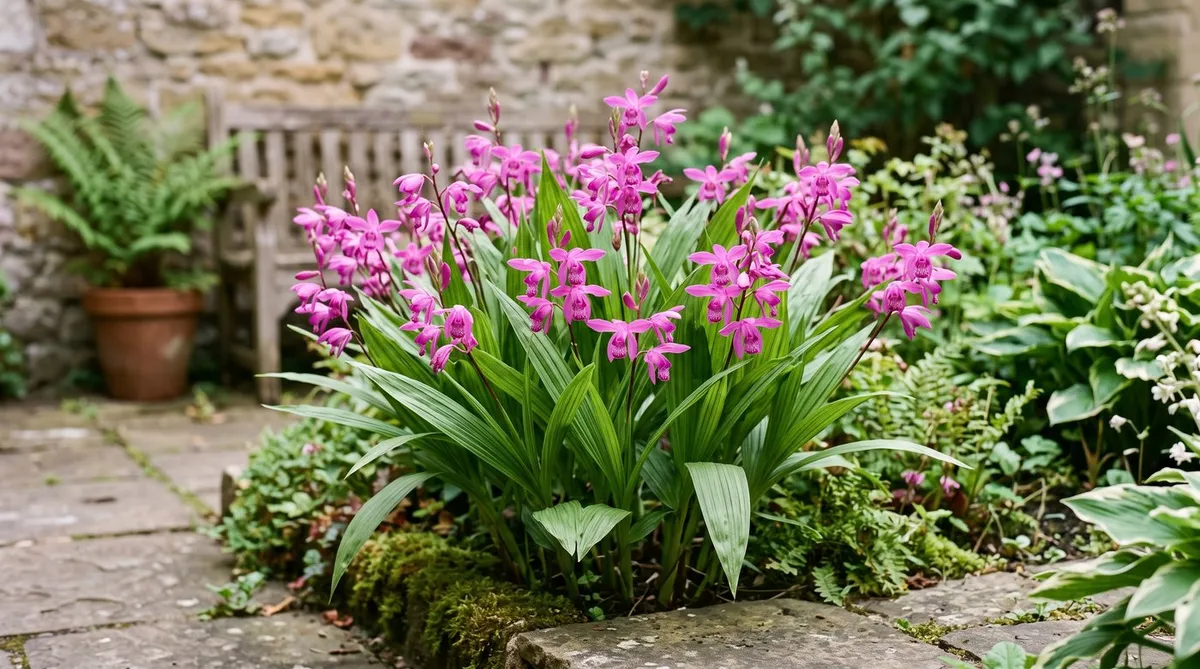
Yes, you can grow orchids outside in the UK. Hardy garden orchids are ground-dwelling types that live in a border or pot, flower every year and slowly build into clumps. The easiest is Bletilla striata, the Chinese ground orchid, with magenta-pink flowers in early summer.
The thing that kills them isn’t cold. It’s winter wet. Get the drainage right and they’re surprisingly easy. This guide covers how to plant and grow Bletilla, how to get it through winter and which other hardy orchids are worth a try.
What does Bletilla striata look like?
Bletilla grows from flattened, knobbly pseudobulbs (swollen storage stems) just under the soil. In spring it sends up pleated, ribbed, strap-shaped leaves that look a bit like small palm leaves.
Flower stems rise above the leaves to about 30-60cm. Each carries several magenta-pink flowers with a frilly lower lip, opening one after another from late May to early July. They look like miniature florist’s orchids. There are white and pale pink forms too.
After flowering the leaves stay green until autumn frosts, then die down. From about November to April there’s nothing to see above ground. Happy plants slowly spread into wider clumps.
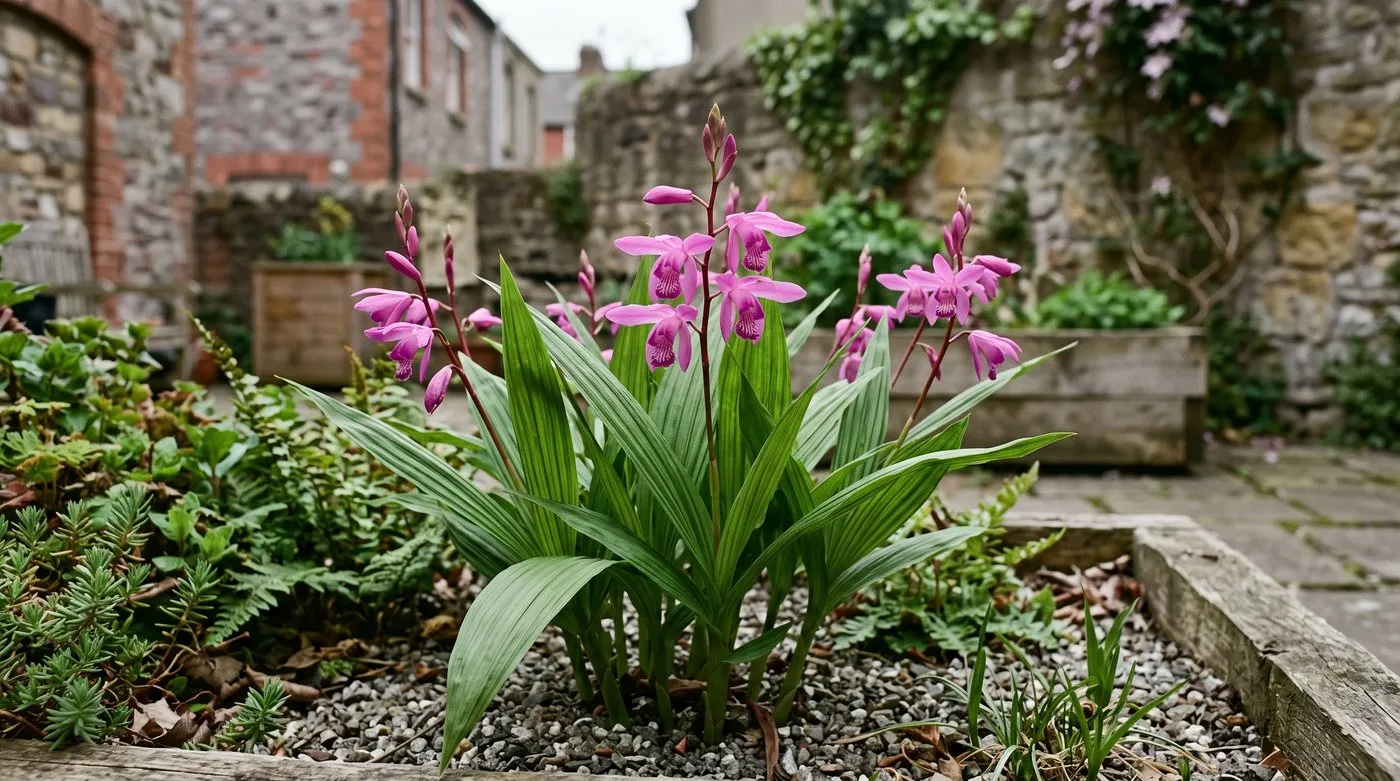
Bletilla in full flower. The pleated, ribbed leaves are almost as handsome as the flowers and last all summer.
Why winter wet kills hardy orchids
In winter, Bletilla is a dormant pseudobulb sitting in the soil. It has no leaves to use up water. If the soil stays soggy for weeks, the pseudobulb rots. A cold snap then finishes it off.
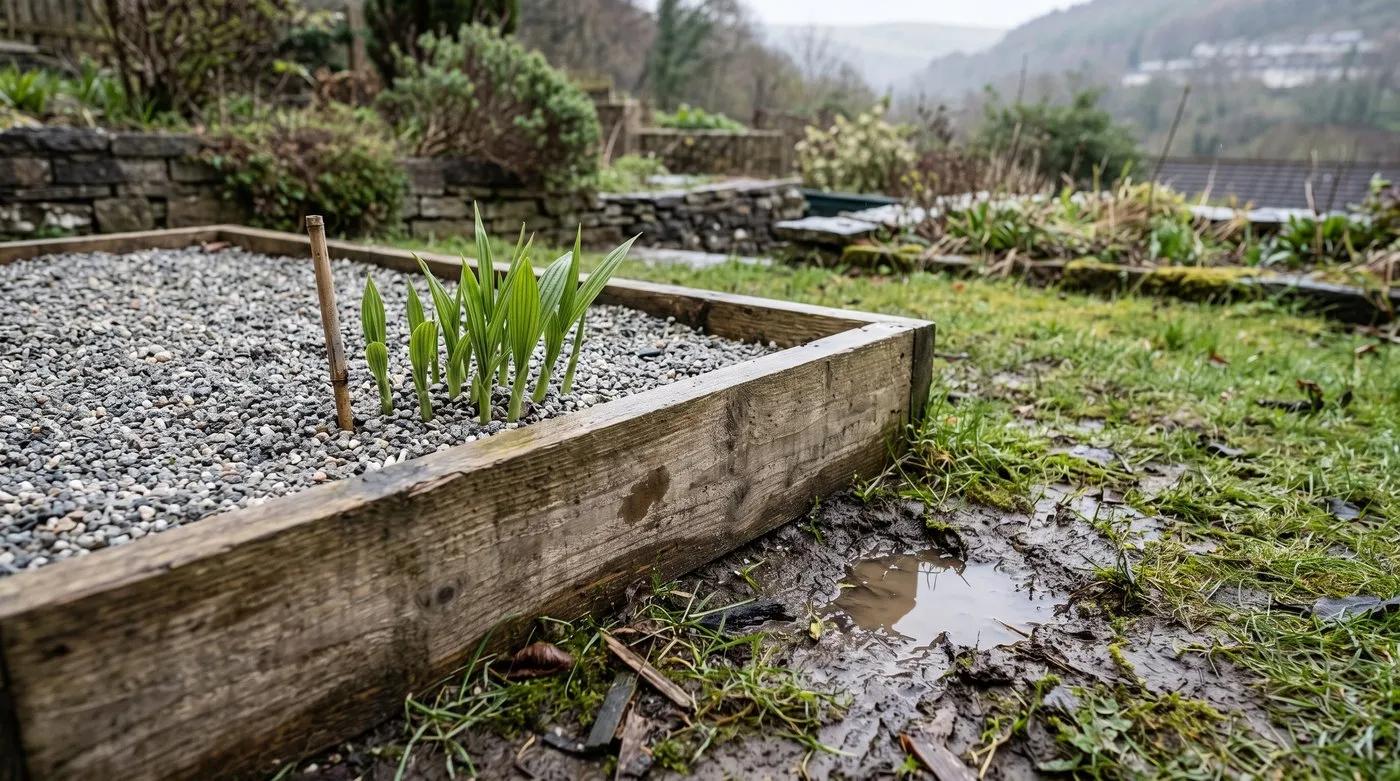
Lifting the planting above wet clay and topping it with grit keeps the dormant pseudobulbs out of standing water.
That’s why plant labels can mislead. A hardiness rating assumes the roots are reasonably dry. On heavy, wet clay, plants can rot in a winter that isn’t especially cold. The loss isn’t obvious until spring, when nothing comes up.
The fix is drainage:
- In pots: use a gritty mix and keep the pot somewhere dry over winter. This is the safest option.
- In heavy soil: make a raised bed and dig in plenty of horticultural grit and fine bark, so the planting sits above the surrounding soil.
- In light, sandy soil: Bletilla usually grows well without extra help.
Our soil drainage and structure guide explains how to check and improve your soil before you plant.
| Where you grow it | Winter rot risk | Good for |
|---|---|---|
| Terracotta pot, kept dry Nov to Mar | Very low | Beginners and heavy-soil gardens |
| Raised gritty bed | Low | Permanent planting on clay |
| Free-draining sandy soil | Low | Planting straight in the ground |
| Unimproved heavy clay | High | Best avoided |
How to plant Bletilla pseudobulbs
Plant in spring, from March in the south to late April in the north, once hard frosts are over. Don’t plant bare pseudobulbs in autumn. They sit in cold, wet soil all winter without roots and often rot.
- Mix your compost. Two parts peat-free multipurpose compost, one part fine bark and one part horticultural grit. In the ground, dig the same into the top 30cm.
- Set each pseudobulb with the growing point upwards.
- Cover with about 5cm of the mix.
- Space them about 20cm apart so they knit into a clump.
- Top with a layer of grit to keep the crown dry and deter slugs.
- Water once, then only when the top few centimetres dry out.
Shoots appear a few weeks later. Bare pseudobulbs sometimes only make leaves in their first year. That’s normal, and they usually flower the year after.
Gardener’s tip: Bletilla disappears completely in winter. Push a short cane in beside each clump in autumn so you don’t dig through it by mistake.
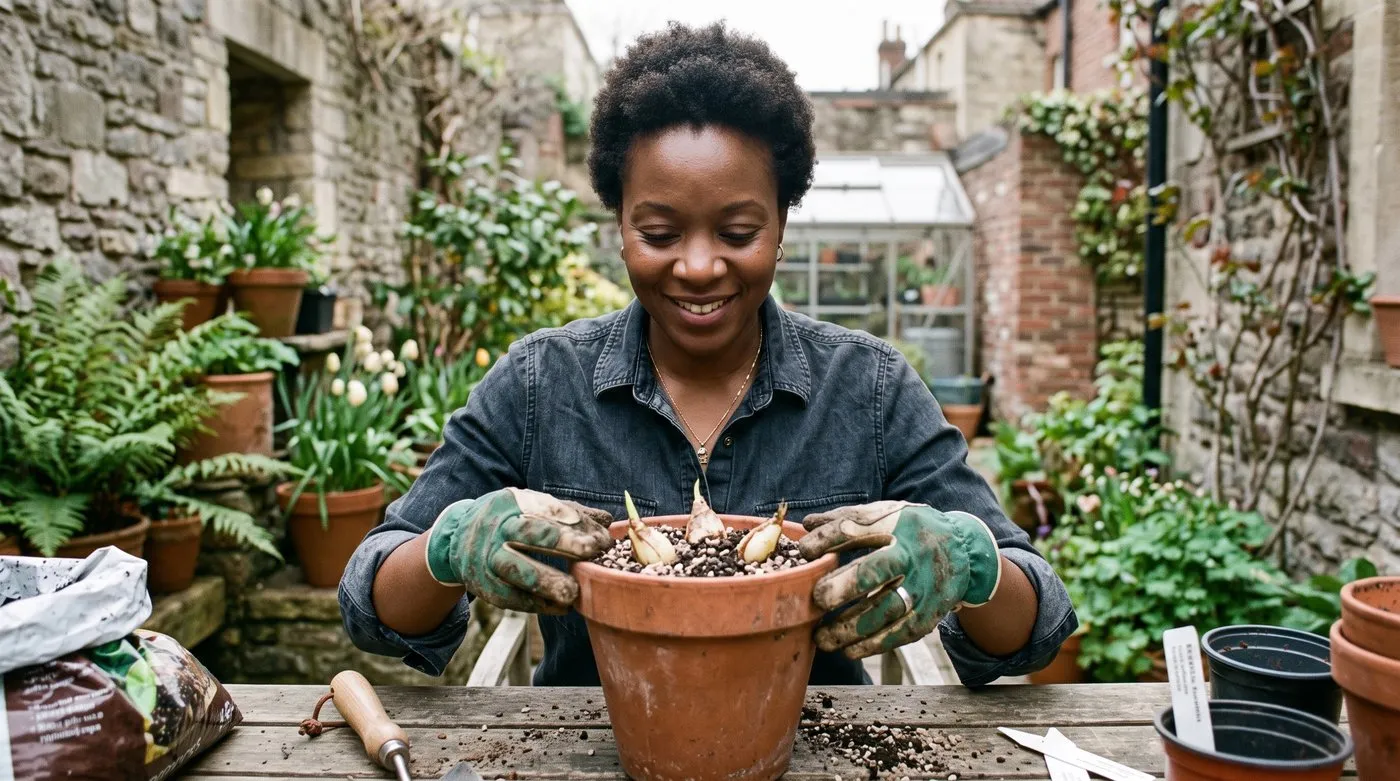
Potting up pseudobulbs in spring, growing points upwards. A gritty mix lets winter rain drain straight through.
Growing hardy orchids in pots
Pots are the easiest way to start, because you control the winter wet. They suit a courtyard or balcony too.
Use a terracotta pot about 25cm wide. Terracotta dries out faster than plastic after rain. Plant three pseudobulbs per pot, about 5cm deep, in the gritty mix above, and top with grit.
In summer, water when the top few centimetres feel dry. Feed with a half-strength balanced liquid feed every few waterings from when shoots appear until flowering ends. Too much feed gives soft, floppy leaves.
From November to March, move the pot somewhere cold but dry, such as an unheated porch, a cold frame or under a bench by the house wall. It doesn’t need light while dormant.
Repot every couple of years in March, before shoots start. Split the clump into groups of three to five pseudobulbs, throw away any soft ones and use fresh compost. Our guide to growing auriculas in pots uses a similar approach, and our courtyard garden ideas show how to make the most of a small paved space.
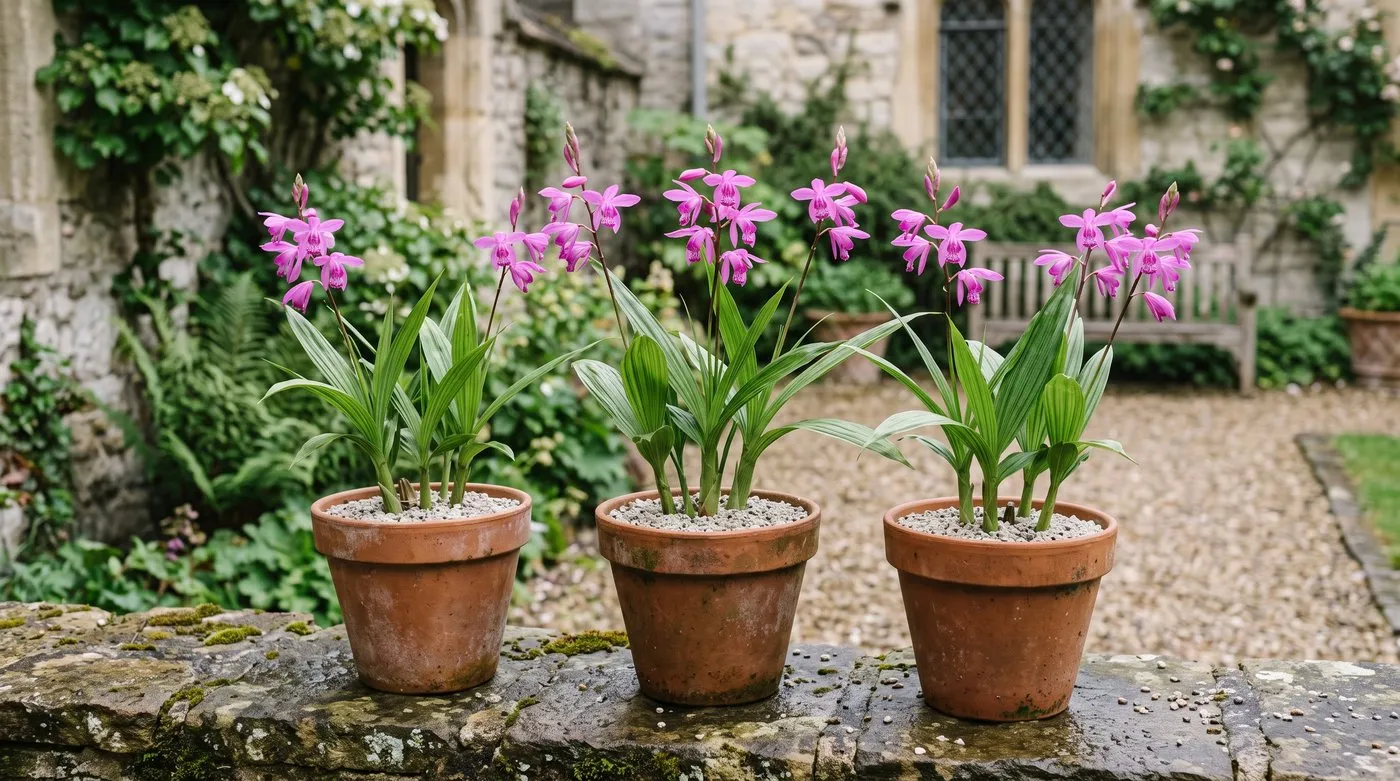
Pots of Bletilla on a sunny wall. Come November, they move somewhere dry until spring.
Other hardy orchids worth growing
Once you’ve had success with Bletilla, there are a few more to try. Each likes slightly different conditions.
| Orchid | Likes | Difficulty | Best for |
|---|---|---|---|
| Bletilla striata | Free-draining soil, sun or part shade | Easy | First orchid, pots and borders |
| Common spotted orchid (Dactylorhiza fuchsii) | Moist soil, sun or part shade | Easy to moderate | Colder, wetter gardens and wildflower areas |
| Epipactis gigantea | Damp soil, part shade | Moderate | Pond edges, spreads slowly |
| Marsh helleborine (Epipactis palustris) | Wet ground | Moderate | Bog gardens |
| Lady’s slipper (Cypripedium hybrids) | Cool, moist, very well-drained soil | Hard | Experienced growers |
Common spotted orchid is a native wildflower with spotted leaves and dense spikes of pale pink flowers in early summer. It copes with damp better than Bletilla, so it’s a good choice for northern gardens. Epipactis suit damp spots such as the edge of a pond or a bog garden. Lady’s slipper orchids are the ones everyone wants, but they’re costly and unforgiving. Get some experience with Bletilla first.
Buy responsibly: Only buy orchids sold as nursery-raised or seed-raised. It’s illegal to dig up wild plants without the landowner’s permission, and some rare orchids are fully protected. If a seller can’t tell you where the plants came from, walk away.
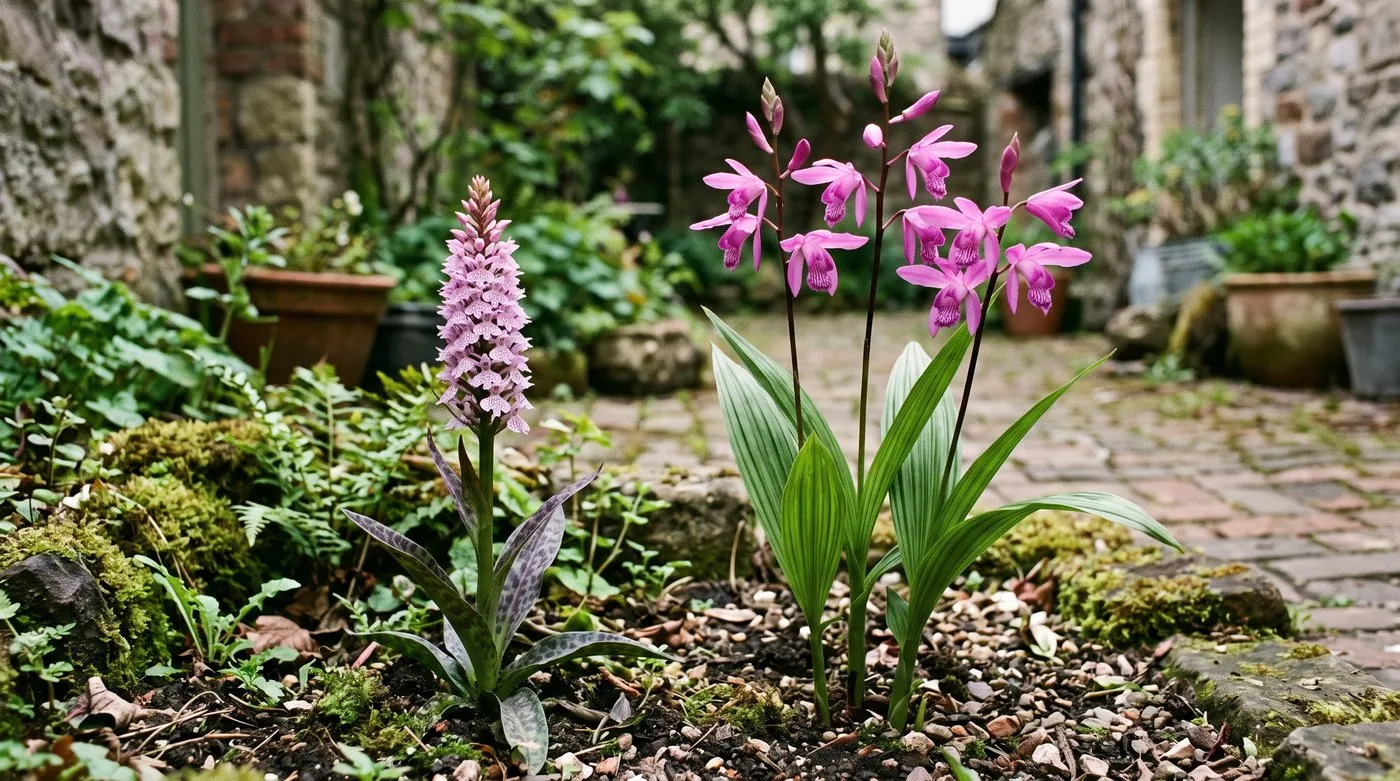
Common spotted orchid (left) has a dense spike of small flowers, while Bletilla (right) has fewer, larger ones.
Where in the UK do hardy orchids grow best?
Rain and soil matter more than how far north you live. A garden with well-drained soil in a cold area can do better than a wet, heavy one in a mild area.
In milder, drier gardens with light soil, Bletilla can live in the ground all year. In colder or wetter gardens, or on clay, grow it in pots, or plant in a raised gritty bed with a winter mulch of grit or bark. In the coldest spots, the native common spotted orchid is the safer bet. Our guide to UK hardiness zones explains why hardiness ratings don’t tell the whole story.
Hardy orchids are a lot like the hardy exotic plants that look tender but cope well once their needs are met.
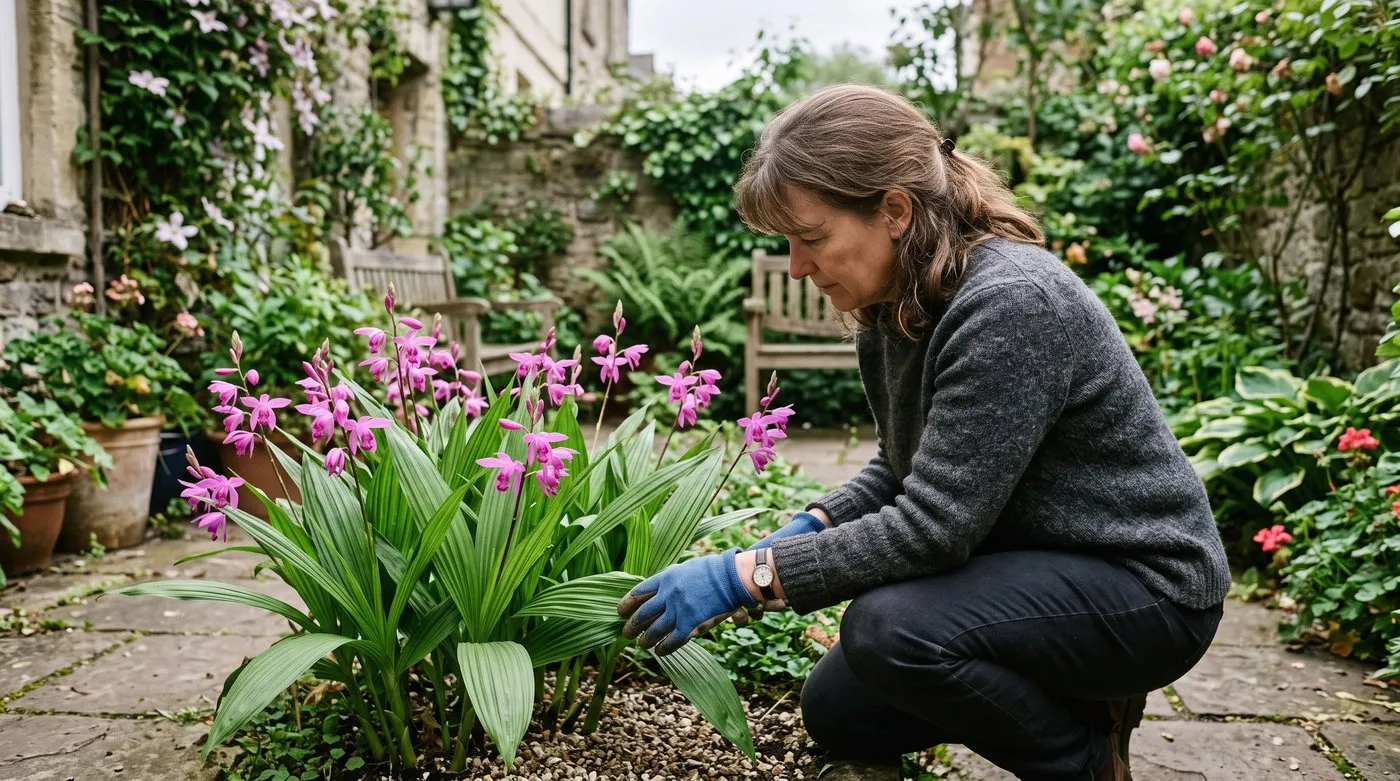
Checking the grit around the crown in late spring. A dry neck at soil level helps as much as good drainage below.
Month-by-month hardy orchid calendar
| Month | What to do |
|---|---|
| January | Keep dormant pots dry and cold. Check ground clumps aren’t under standing water |
| February | Order pseudobulbs for spring planting |
| March | Repot pot-grown plants before shoots appear. Prepare gritty beds |
| April | Plant pseudobulbs about 5cm deep. Bring pots back out. Watch for slugs |
| May | Flowering begins late in the month. Water pots when dry |
| June | Peak flowering. Feed lightly. Cut faded flower stems at the base |
| July | Flowering ends. Stop feeding. Water in dry spells |
| August | Leaves only. Keep pots watered |
| September | Water less. Mark clump positions with canes |
| October | Leaves yellow. Cut them down once fully brown |
| November | Move pots somewhere dry. Add extra grit around ground clumps |
| December | Leave them alone. Don’t dig to check on them |
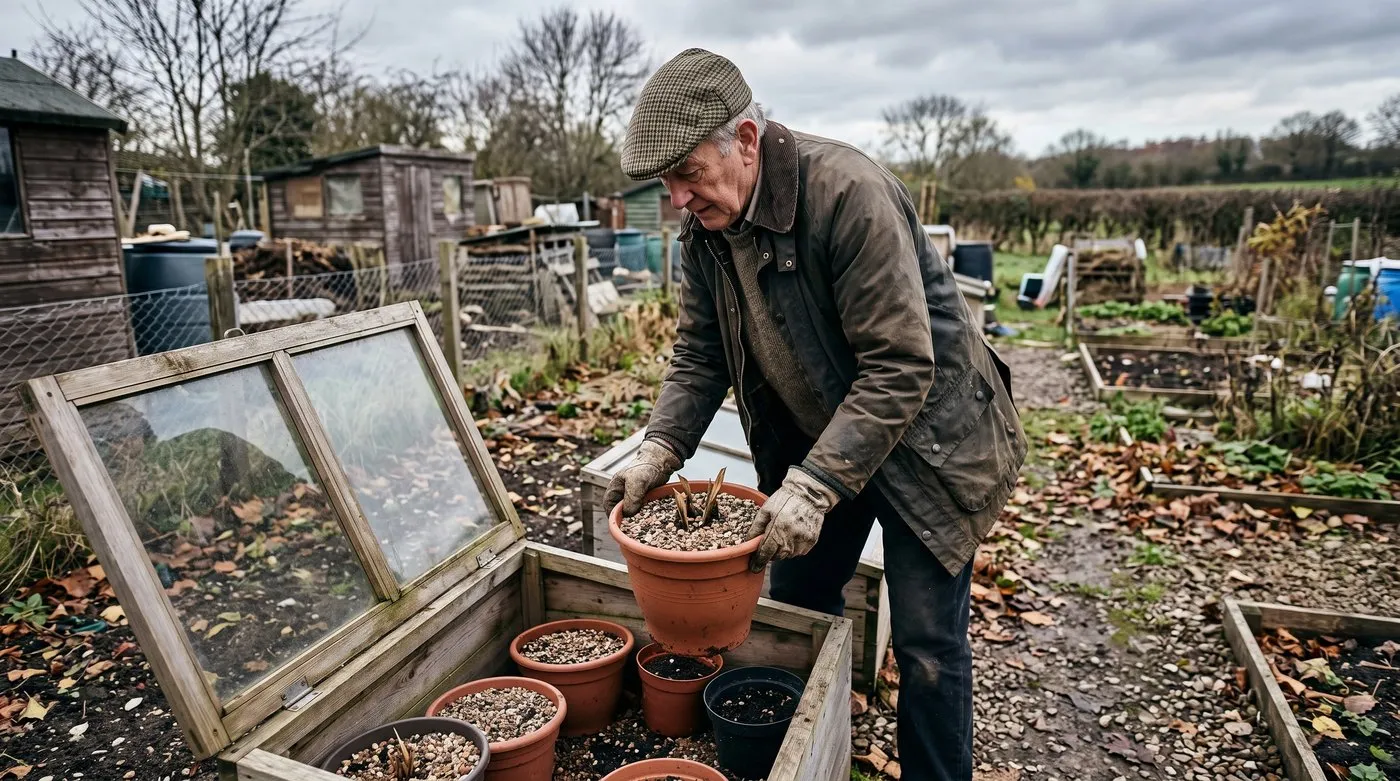
Tucking dormant pots into a cold frame in November keeps winter rain off until the shoots return in spring.
Common hardy orchid mistakes
Planting in autumn. Rootless pseudobulbs sit in wet soil all winter and rot. Store them cool and dry and plant in spring.
Trusting the hardiness label. Ratings assume dry roots. On wet clay, plants can rot in an ordinary winter.
Watering in winter. Dormant plants have no leaves to use water. Keep pots dry from November to March.
Starting with lady’s slippers. They’re expensive and punish any mistake. Learn on Bletilla first.
Forgetting the slugs. New shoots in spring are soft and tempting. A grit top-dressing helps, and our guide to getting rid of slugs has more ideas.
Growing orchids indoors too? Read our guide to caring for orchids indoors, or browse more unusual perennials in the plants section.
Frequently asked questions
Can you grow orchids outdoors in the UK?
Yes, several ground orchids are hardy enough for UK gardens. Bletilla striata, Dactylorhiza and Epipactis can all grow outside year-round. The moth orchids sold as houseplants can’t, which is why many people assume no orchid will.
How hardy is Bletilla striata in the UK?
It’s hardy in much of the UK if the soil drains well. Cold, wet soil in winter rots the dormant pseudobulbs. In cold or wet gardens, grow it in pots you can keep dry, or mulch it well over winter.
How deep do you plant Bletilla pseudobulbs?
Plant them about 5cm deep, growing point upwards. Do this in spring once hard frosts have passed, spacing them about 20cm apart. Planting too deep delays the shoots and raises the risk of rot.
Are hardy orchids better in pots or in the ground?
Pots are safer in most UK gardens because you control winter wet. A terracotta pot of gritty compost, moved somewhere cold but dry from November to March, keeps dormant plants from rotting. Plant in the ground only where the soil drains freely.
Which hardy orchid is easiest for a beginner?
Bletilla striata is the easiest for most gardens. It’s widely sold, flowers reliably and slowly spreads. In colder, wetter gardens, the native common spotted orchid (Dactylorhiza fuchsii) may be the better first choice.
Do hardy garden orchids need special compost?
No, Bletilla grows in an ordinary gritty mix. Try two parts peat-free compost, one part fine bark and one part horticultural grit. In the ground, dig in grit and bark to open up heavy soil.
Is it legal to buy hardy orchids in the UK?
Yes, as long as they’re nursery-raised, not taken from the wild. It’s illegal to dig up wild plants without permission, and some orchids are fully protected. Buy from a reputable nursery that says its plants are seed-raised.
Our team produces practical UK gardening guidance from source research, contributor records and established horticultural practice. Editorial standards are overseen by Matt W.


