Key takeaways
- Gravel is the cheapest hard surface and lets rain soak straight through
- Porcelain pavers cost the most but need no sealing and very little upkeep
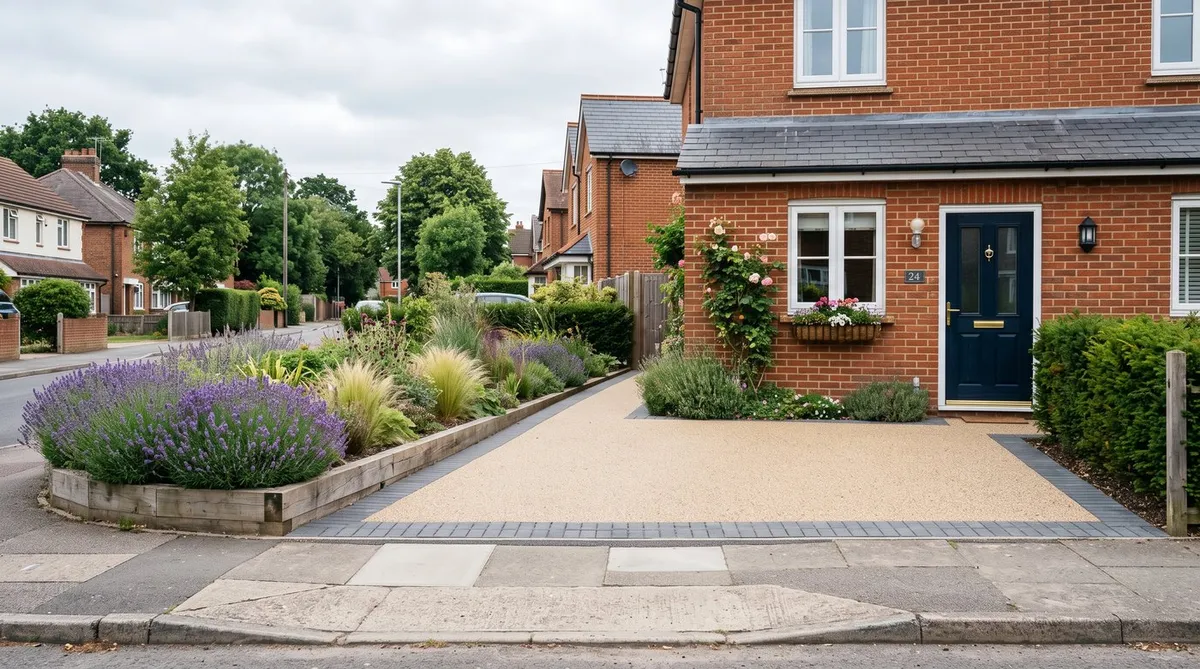
- Resin-bound gravel gives a smooth, permeable finish but needs a solid base and a pro to lay it
- Block paving flexes with the ground, so it suits clay soils better than rigid slabs
- Mixing gravel with stepping stones cuts the cost and helps drainage
- A good sub-base and a fall away from the house matter more than the surface you pick
Paving slabs aren’t your only option, and on plenty of UK back gardens they aren’t the best one. Gravel, porcelain, block paving, reclaimed brick and even plants can all do the job. The right choice comes down to your budget, how well the ground drains and how much wear the area gets.
This guide compares the six main alternatives for a patio, seating area or path out the back. If you’re surfacing a front garden or driveway, the drainage rules matter more, so read our guide to permeable paving for front gardens as well.
Why choose something other than paving slabs?
Slabs are fine, but they’re not always the best fit. Three things push people towards other surfaces.
- Drainage. Solid slabs send rain running off, often towards the house or the road. Gravel and resin-bound let it soak away.
- Ground movement. Large rigid slabs can crack or rock on clay soil that swells in winter and shrinks in summer. Smaller units like blocks flex instead.
- Looks and cost. A plain grey slab patio is the most common surface around. Mixing materials can look better and cost less.
Paving slab alternatives at a glance
Gravel is cheapest, porcelain is lowest upkeep, block paving handles movement and reclaimed brick brings character. Here’s how they compare.
| Surface | Cost | Drains freely? | Upkeep | DIY friendly? | Best for |
|---|---|---|---|---|---|
| Gravel | Low | Yes | Rake and top up | Yes | Budget patios, paths, relaxed gardens |
| Resin-bound gravel | High | Yes | Very low | No, use an installer | Smooth, step-free paths and patios |
| Porcelain pavers | High | No, plan the run-off | Very low | Tricky to cut | Modern patios, busy areas |
| Block paving | Medium | Only permeable types | Low | Yes, with a plate compactor | Clay soil, slopes, heavy use |
| Reclaimed brick or stone | Varies | Depends on joints | Low | Yes, but slow | Older homes, cottage gardens |
| Ground-cover plants | Low | Yes | Weed and trim | Yes | Paths and gaps with light foot traffic |
Gravel: the cheapest and easiest to lay
Gravel is the cheapest hard surface and the easiest for a DIYer. Rain soaks straight through, and it suits almost any style of garden.
Choose angular gravel, around 10-20mm, or a self-binding type with fine dust that packs down firm. Round pea gravel rolls underfoot and wanders into the borders.
Lay it over a compacted base and a weed membrane, about 40-50mm deep. Edge it firmly with timber, metal or brick, or it will spread. Pushchairs, wheelchairs and wheelie bins struggle on loose gravel, so think about who uses the space. Our guide to creating a gravel garden covers planting into it.

Gravel with large stepping stones keeps the cost down, drains well and gives a firm line to walk on.
Resin-bound gravel: smooth with no loose stones
Resin-bound gravel is gravel mixed with clear resin and trowelled smooth. It sets into a jointless surface with no loose stones, and water still drains through it.
It’s firm enough for wheelchairs, buggies and bins, and weeds struggle to get a hold. The catch is the base. It must go over sound concrete or a properly prepared, compacted base, and it’s a job for an experienced installer. On a poor base it cracks like anything else.
Don’t confuse it with resin-bonded, where stones are scattered onto a resin coat. That surface is rougher and doesn’t let water through.

Resin-bound gravel is smooth and step-free, so bins and buggies roll over it easily.
Porcelain pavers: the lowest upkeep
Porcelain pavers are the surface to lay once and almost forget. They’re dense, hard to stain and don’t need sealing.
Outdoor porcelain is usually 20mm thick and laid on a full bed of mortar. It’s one of the dearer options and it’s brittle to cut, needing a wet saw and a steady hand, so many people pay to have it laid.
Porcelain doesn’t let water through, so you need a fall to carry rain away from the house, plus a border, drain or soakaway to take it. Choose a textured, outdoor-rated paver, as smooth indoor tiles get slippery when wet. Our guide to outdoor garden tiles goes into thickness, slip ratings and frost resistance.
Block paving: the surface that flexes
Block paving copes with ground movement better than big slabs. The small blocks sit on a sand bed, held in by firm edges, and shift slightly rather than cracking.
That makes it a good choice on clay soil, on gentle slopes and anywhere that gets heavy use, including driveways. Concrete blocks are cheaper. Clay pavers keep their colour longer and look warmer.
Standard block paving has tight, sand-filled joints and doesn’t drain well. Permeable block paving has wider joints filled with grit, so water drains through to a special open base underneath.

Herringbone block paving locks together tightly, which is why it’s a favourite for driveways that take a car’s weight.
Reclaimed brick and stone: character on a budget
Reclaimed brick, setts and old flagstones give a surface instant age. Re-using old materials is also kinder to the planet than buying new.
Prices vary a lot with what you find. Look in reclamation yards, local selling sites and demolition sales. Check bricks are hard, frost-proof types meant for paving or engineering use, as soft house bricks can flake after a few winters.
The pieces are uneven, so expect more cutting, more jointing and slower progress. It suits an eco-friendly garden design and older homes, where shiny new paving can look out of place.

Old brick and stone settle in quickly and look as if they’ve always been there.
Ground-cover plants: a living path
For paths and corners with light foot traffic, low plants between stepping stones can replace paving. They drain perfectly and are good for bees and other insects.
Creeping thyme is the classic choice for sunny spots. Lawn chamomile ‘Treneague’ and mind-your-own-business (Soleirolia) also take gentle treading, though Soleirolia spreads widely. Set the stepping stones first, then plant between them in spring.
A planted path won’t take a table, chairs and daily traffic. For gaps and side returns, though, it turns a dull strip into something lovely. Our guide to lawn alternatives and ground cover lists more tough plants.

Creeping thyme and chamomile between stepping stones soften a path and smell lovely when you brush past.
Get the base right, whatever you lay
A good sub-base matters more than the surface on top. Get these three things right and any of the options above will last.
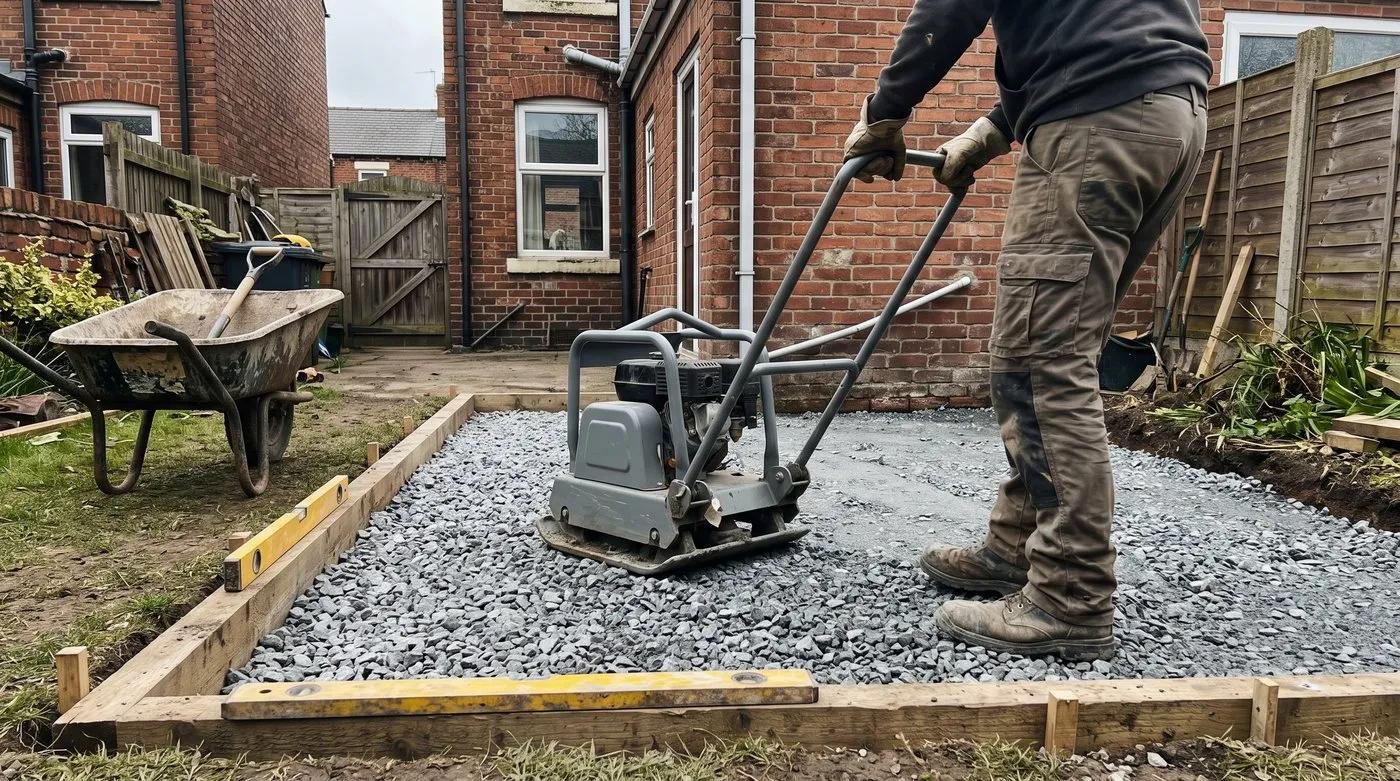
Compacting the sub-base in layers is the job that stops any new surface sinking or cracking.
- Sub-base depth. About 100mm of compacted MOT Type 1 for a patio or path, and around 150mm for anything taking a car. Compact it in layers with a plate compactor.
- A fall for drainage. Slope the surface gently away from the house, about 1:60 to 1:80, so rain runs off. That’s roughly 1.5cm drop for every metre.
- Firm edges. Gravel, blocks and resin all need a solid edge, or they creep and spread.
Our step-by-step guide to laying a patio covers digging out, compacting and setting levels in detail.
Common mistakes when replacing paving slabs
- Skimping on the sub-base. A thin layer of rubble on soft ground leads to sinking and cracks. Dig out and compact properly first.
- No fall. A flat surface holds puddles, goes green and can send water towards the house. Build in the slope from the start.
- Round pea gravel on a patio. It rolls underfoot and spreads. Use angular or self-binding gravel and edge it.
- Forgetting where the water goes. A solid patio sends rain somewhere. Plan a border, gravel strip or soakaway to take it. If your soil is already waterlogged, read our guide to soil drainage and structure first.
- Choosing on looks alone. Match the surface to how you use the space: porcelain or blocks for daily traffic, gravel or plants for quieter spots.
Browse more surface and layout ideas in our garden design hub.
Frequently asked questions
What is the cheapest alternative to paving slabs?
Gravel is the cheapest hard surface. Lay it over a compacted base and a weed membrane, with firm edging to hold it in. Bark is cheaper for paths, but it rots down in a few years, so it isn’t a patio surface.
What can I use instead of paving slabs for a patio?
Porcelain, resin-bound gravel, block paving or reclaimed brick all make good patios. Porcelain is the hardest-wearing, resin is smooth and jointless, and block paving copes with ground movement. For a relaxed look, try gravel with large stepping stones.
Are paving slab alternatives cheaper than slabs?
Gravel is cheaper than slabs; porcelain and resin usually cost more. Most of the saving with gravel comes from easier laying, as it needs no careful jointing or cutting. Get a few local quotes, as prices vary a lot.
Do I need planning permission for a new patio?
Usually not for a back garden patio. Front gardens are different. In England, covering more than 5 square metres of a front garden with a hard surface that drains onto the road needs permission. Permeable surfaces, or draining run-off onto a border, avoid this.
What is the most low-maintenance garden surface?
Porcelain pavers need the least looking after. They don’t need sealing and they shrug off most stains. A sweep and an occasional wash keep them tidy. Resin-bound is close behind, while loose gravel needs raking and topping up now and then.
Can I lay gravel or porcelain over an existing patio?
Sometimes, if the old base is solid and drains well. Porcelain can go on a mortar bed over sound concrete. Gravel can go over old slabs with firm edging, though it raises the level. A cracked or sinking base must come up first.
Which paving alternative is best for a sloping garden?
Block paving or porcelain laid in level terraces works best on a slope. Both stay put. Loose gravel slowly creeps downhill unless it is resin-bound or held in a gravel grid. Terrace the ground first, then choose a fixed surface.
Once your new surface is down, keep it looking good with our guide on how to clean a patio.
Our team produces practical UK gardening guidance from source research, contributor records and established horticultural practice. Editorial standards are overseen by Matt W.