Key takeaways
- Verbena bonariensis is tall and see-through, so it works anywhere in a border
- Trailing verbenas die in frost. Treat them as annuals or take cuttings in August
- All verbenas want full sun and soil that drains well in winter
- Leave bonariensis stems standing until March to protect the crown
- Butterflies and bees love verbena from July right into autumn
Verbena is a brilliant, easy plant, but the name covers two very different things. Tall Verbena bonariensis sends thin, wiry stems up to about 1.8m, with purple flowers floating above the border. Trailing verbenas spill out of hanging baskets and window boxes all summer. Same name, very different plants.
Here’s how to tell them apart, which ones to choose, how to keep them going through a British winter, and what to plant with them for a border buzzing with butterflies.
What’s the difference between Verbena bonariensis and trailing verbena?
Verbena bonariensis is a tall, see-through perennial. Trailing verbenas are low, frost-tender bedding plants.
Bonariensis comes from South America. It grows from a crown at the base and sends up stems 1.5 to 1.8m tall, topped with little clusters of bright purple flowers. You can see straight through it, so it can go at the front of a border without hiding anything.
Trailing verbenas are hybrids bred for baskets and bedding. They spread out to about 60cm and tumble over the edges of pots, in red, pink, white, purple and two-tone shades. These are the ones you see in garden centres from May. They die in a UK winter.
Verbena rigida sits in between. It grows about 60cm tall with stiff, upright stems and purple flowers from July to October. It’s a good choice for the front of a border and suits cottage-style planting.
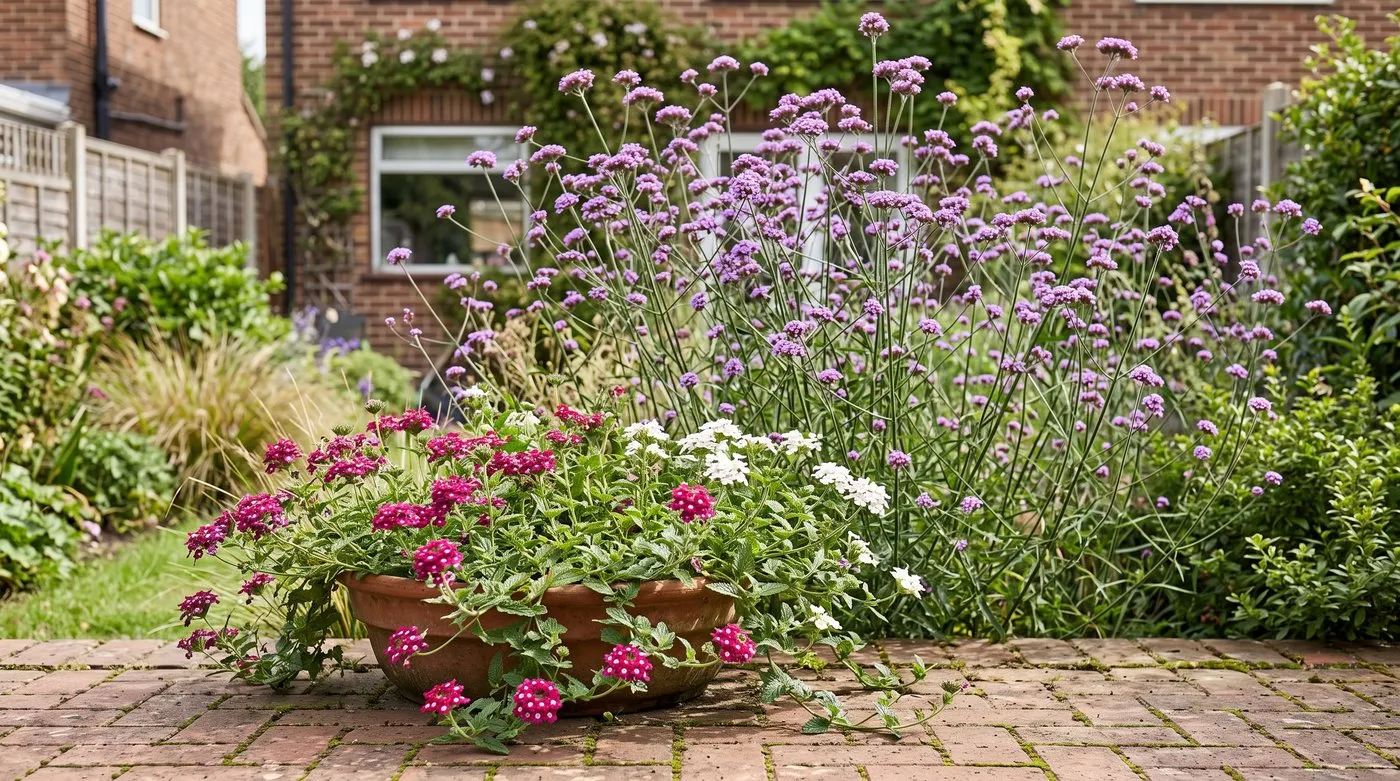
Same name, very different plants. The tall see-through bonariensis is a perennial, while trailing verbenas are tender bedding for pots and baskets.
Which verbena is best for UK gardens?
Verbena bonariensis
The classic tall, see-through verbena. Purple flower clusters sit on 1.5 to 1.8m stems from July into autumn. It’s only borderline hardy, but it self-seeds so freely that new plants turn up each spring. It holds the RHS Award of Garden Merit and is a must for butterfly borders. Our full guide to growing Verbena bonariensis has more on sowing and self-seeding.
Verbena bonariensis ‘Lollipop’
A shorter version, about 60cm tall. Same purple flowers, but better for small gardens, pots and the front of borders. It flops less on windy sites and seeds itself around less.
Verbena rigida
A neat, upright verbena about 60cm tall. It has stiff stems, rough leaves and purple flowers from July to October. It suits the front of a border or a sunny pot and, like bonariensis, seeds itself around a little.
Verbena ‘Homestead Purple’
A trailing verbena with deep purple flowers from June until frost. It’s vigorous and copes well with weather in baskets and window boxes. Treat it as an annual, or root cuttings in August. The simple single flowers are popular with bees and butterflies.
Verbena Tapien series
Fine, feathery leaves covered in small flowers. Colours include pink, purple, blue and white. It spreads to about 60cm as ground cover or a trailer, and is lovely in small pots and window boxes. Flowers June to November.
Verbena Quartz series
An upright bedding verbena about 25 to 30cm tall. Big flower heads in strong colours. Sow it indoors in February and plant out after frost. It’s good for neat bedding and borders that get cleared each autumn.
Verbena varieties at a glance
| Variety | Height | Type | Flowers | Survives winter? | Self-seeds? |
|---|---|---|---|---|---|
| V. bonariensis | 150-180cm | Perennial | July to autumn | Often, in drained soil | Yes, a lot |
| ’Lollipop’ | About 60cm | Perennial | July to October | Often, in drained soil | A little |
| V. rigida | About 60cm | Perennial | July to October | In milder gardens | Yes |
| ’Homestead Purple’ | Trailing | Treat as annual | June to frost | No | No |
| Tapien series | Trailing | Annual | June to November | No | No |
| Quartz series | 25-30cm | Annual | June to frost | No | No |
How to plant verbena
Plant out from late May, once frost has passed. In milder areas, bonariensis and rigida can go in from late April. Trailing and bedding types must wait until frosts are over.
Pick a sunny spot
Full sun, every time. Verbena copes with a little afternoon shade but no more. A breezy spot helps stop mildew. Avoid damp corners where water sits in winter.
Get the drainage right
Free-draining soil matters most. On heavy clay, dig in grit and garden compost to help winter drainage. Our guide to improving clay soil shows you how.
Planting step by step
- Space bonariensis and rigida 45 to 60cm apart, in groups of five or more
- Space trailing verbenas about 30cm apart in pots and beds
- Dig a hole twice as wide as the rootball
- Plant at the same depth it was in the pot, never deeper
- Water in well
- Mulch with grit or gravel rather than bark, to keep the crown drier in winter
The first summer
Water twice a week through the first summer. After that, the perennial types cope well with dry spells. Feed trailing and bedding types every two weeks with liquid tomato feed from June. Don’t feed bonariensis or rigida, as soft growth won’t flower as well or survive winter.
How to keep trailing verbena through winter
Take cuttings in August. The parent plants die at the first hard frost, but cuttings kept frost-free will give you strong new plants by May.
Taking cuttings
- Pick shoots without flowers, 8 to 10cm long
- Cut just below a leaf joint with a clean blade
- Take off the lower leaves, leaving the top two pairs
- Dip in rooting powder if you have it
- Push into gritty compost, half multipurpose and half perlite
- Water once and cover with a clear bag or propagator lid
- Keep somewhere bright and warm, out of direct sun, for three to four weeks
- Pot them on once roots fill the pot
Keep the young plants at a minimum of 7C over winter, in a heated greenhouse or a cool, bright room. Water sparingly from November to February so they don’t rot.
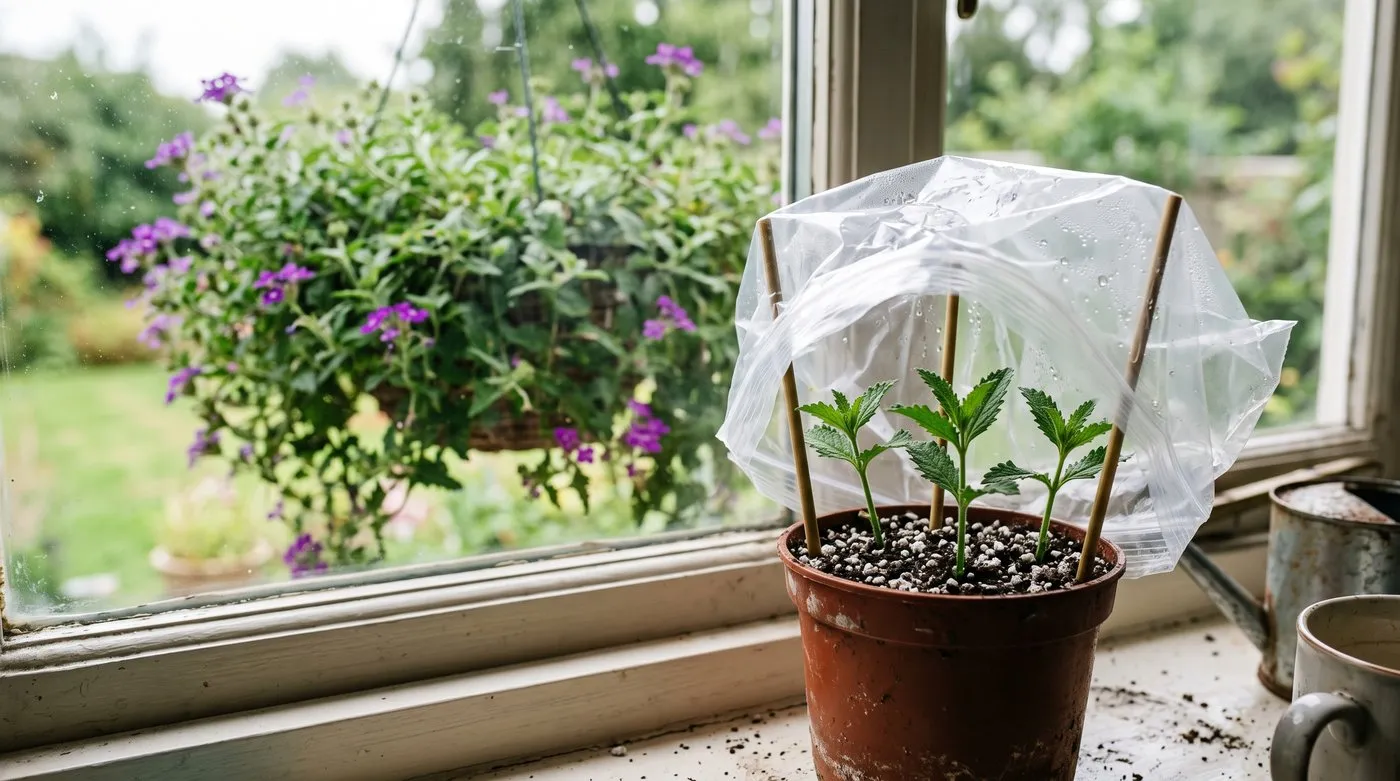
Take cuttings in August from shoots without flowers. Kept frost-free over winter, they’ll be strong new plants by May.
Can I keep the whole plant?
You can try, but cuttings work better. Old woody stems don’t regrow well. If you want to have a go, cut back to 10cm, pot up in John Innes No. 2, keep frost-free and water sparingly.
How to help Verbena bonariensis survive winter
Wet soil kills it more often than cold does. Soggy ground rots the crown, so good drainage is the answer.
Four simple steps
- Plant on a slight mound so water drains away
- Mulch around the crown with grit in November, not bark
- Leave the old stems standing over winter to shelter the crown
- Don’t cut back until March, when new shoots appear at the base
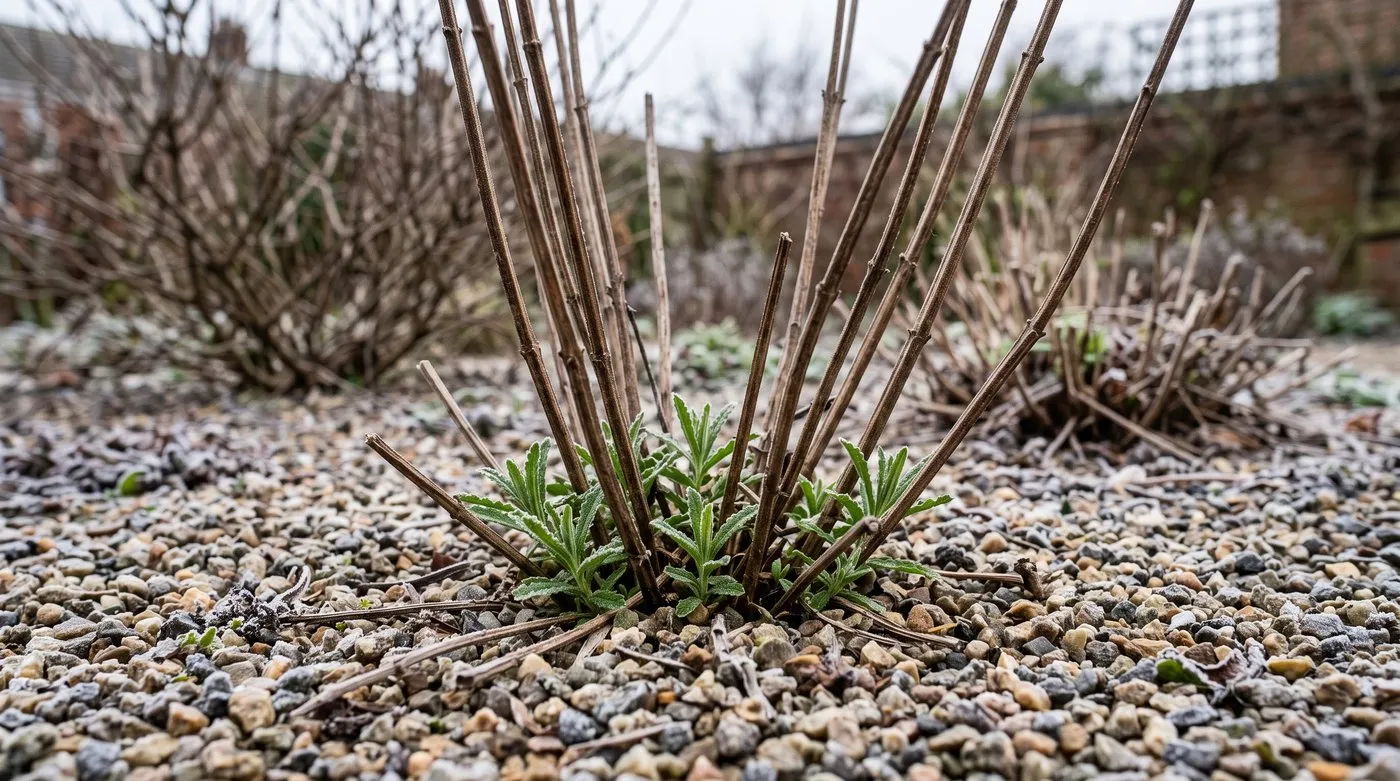
Leave the old stems standing over winter to shelter the crown. Cut them down only when new shoots appear in March.
Your back-up plan
Even with care, you may lose some plants in a hard winter. That’s where self-seeding comes in. Leave a few plants to set seed in autumn and you’ll find seedlings around them next spring. Move them in April to wherever you want them. Free plants every year.
Verbena for butterflies and bees
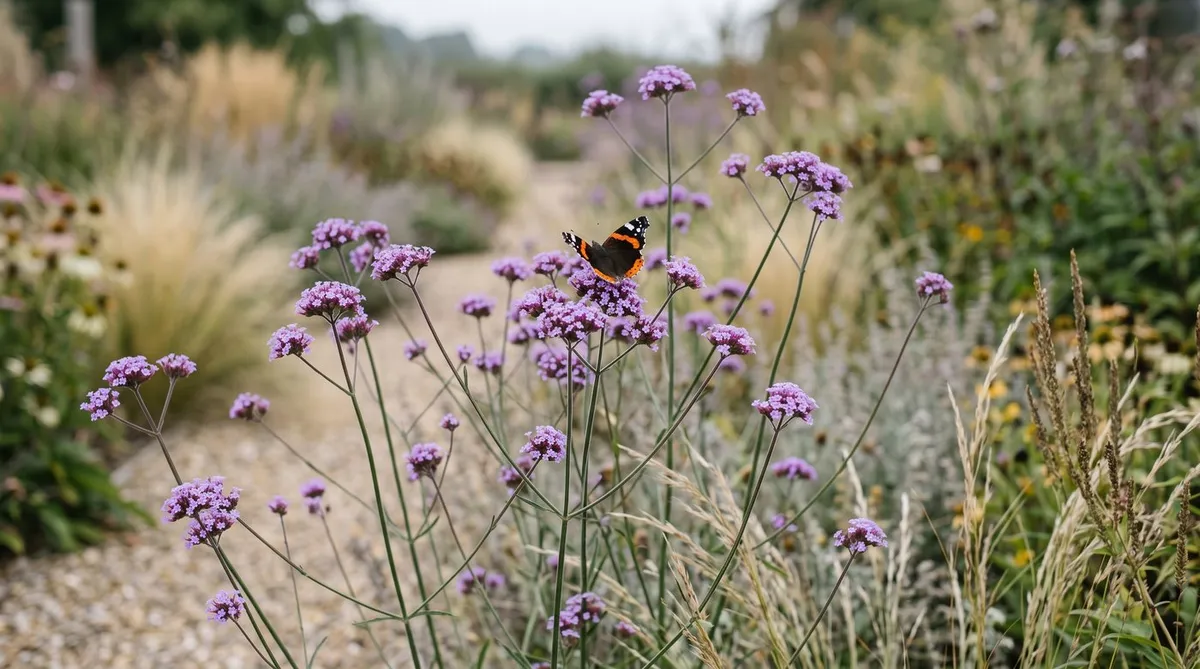
Verbena is one of the best plants you can grow for butterflies. The flat flower clusters make easy landing pads, and the short tubes let bees and hoverflies reach the nectar. It keeps flowering for months.
Who comes to visit
- Butterflies, including peacock, red admiral, small tortoiseshell and painted lady
- Honeybees and bumblebees from July to October
- Hoverflies, especially on bonariensis
- Moths such as the silver Y and hummingbird hawk-moth
For a bee and butterfly border, grow bonariensis with echinacea, sedum, asters and grasses. Together they’ll feed insects from July into November.
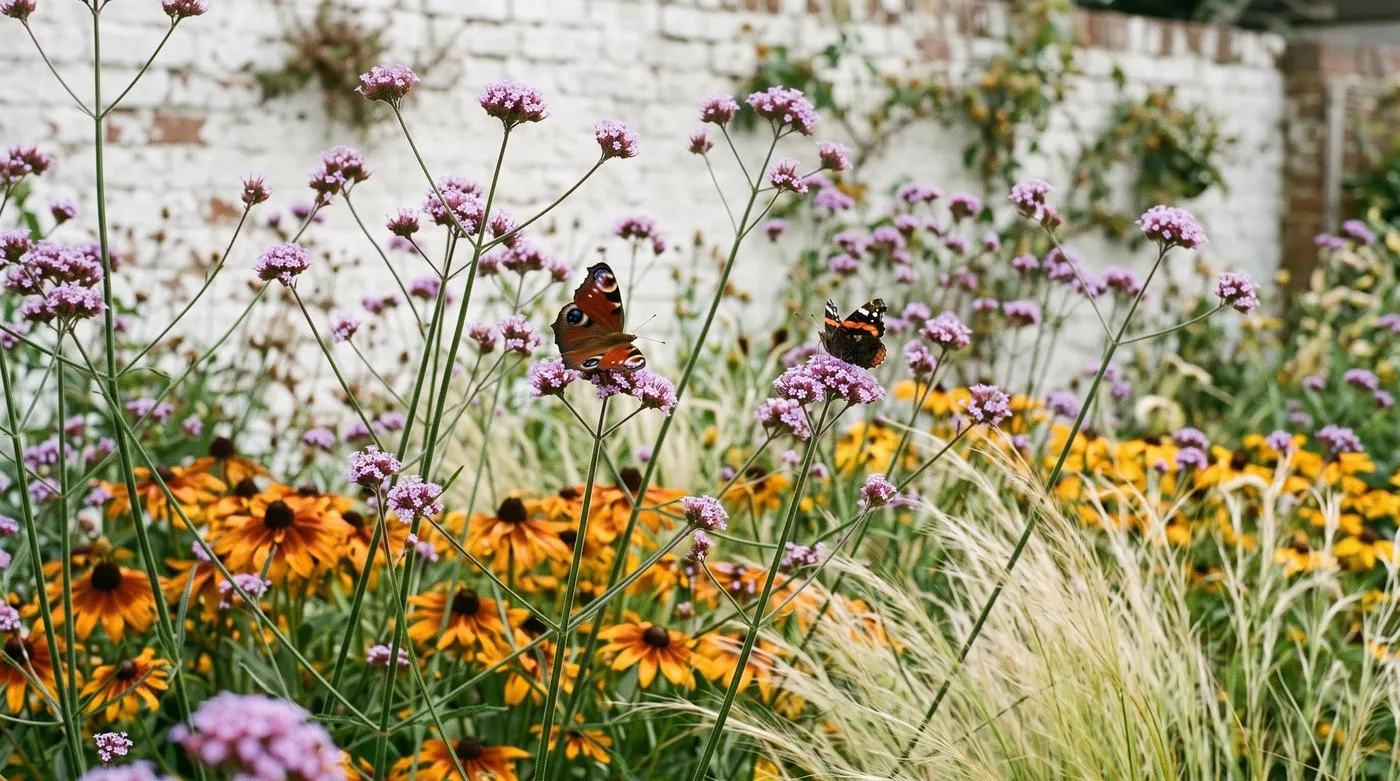
The flat flower clusters make easy landing pads for butterflies. Plant five or more together for a haze of purple that feeds insects for months.
What to plant with verbena
Almost anything, because bonariensis doesn’t block the view. Its tall stems rise above shorter plants, adding height and movement without casting shade.
Great partners
| Partner | Height | Flowers | Why it works |
|---|---|---|---|
| Echinacea purpurea | 90cm | July to October | Flowers at the same time, different flower shape |
| Rudbeckia ‘Goldsturm’ | 60cm | July to October | Orange and purple look great together |
| Stipa tenuissima | 60cm | Summer | Soft, swaying grass under the wiry stems |
| Miscanthus sinensis | 180cm | Autumn | Matches the height, with autumn plumes |
| Aster x frikartii ‘Mönch’ | 75cm | July to October | Both feed late-summer pollinators |
| Sedum ‘Autumn Joy’ | 45cm | September to November | Flat heads contrast with airy verbena |
Plant bonariensis in groups of five to seven. One plant on its own gets lost. For more ideas, see our best plant combinations for UK borders.
Verbena jobs month by month
| Month | Jobs |
|---|---|
| February | Sow Quartz types indoors in warmth |
| March | Cut old bonariensis stems down to 5cm |
| April | Move self-sown bonariensis seedlings |
| Late May | Plant out trailing and bedding verbenas |
| June | Water pots daily in hot weather. Start feeding bedding types |
| July | Bonariensis and rigida start flowering |
| August | Take cuttings of trailing verbenas |
| September | Peak flowering. Enjoy the butterflies |
| October | Let some seed heads form |
| November | Flowering ends with hard frost. Mulch crowns with grit |
| December | Leave stems standing |
Common verbena mistakes
Cutting bonariensis back in autumn
Wait until March. The old stems shelter the crown in winter and drop the seed for next year’s plants.
Planting in soggy soil
Bonariensis and rigida rot in wet clay. Add grit before planting so water drains away.
Feeding too much
Rich feeds give soft, leafy growth. Use a tomato feed on trailing types only and leave the perennials unfed.
Expecting trailing types to come back
Garden centre trailing verbenas won’t survive winter. Enjoy them as annuals or take cuttings in August.
Planting one bonariensis on its own
A single plant looks thin. Plant at least five, about 45cm apart, for that floaty purple haze.
Frequently asked questions
Is Verbena bonariensis hardy in the UK?
It’s borderline hardy in most of the UK. It usually comes through winter in southern and central England on well-drained soil. On cold, wet clay or in exposed northern gardens it often dies. It self-seeds so well that new plants usually appear anyway. Leave the stems until March to protect the crown.
Does trailing verbena come back every year?
No, trailing verbena dies in a UK winter. Most people grow types like Tapien, Quartz and Homestead Purple as annuals. To keep a favourite, take soft cuttings in August, root them in gritty compost and keep them frost-free over winter. Plant them out in late May.
How tall does Verbena bonariensis grow?
About 1.5 to 1.8m tall and 45 to 60cm wide. The stems are thin and wiry, so you can see the plants behind it. That means it works at the front or middle of a border, not just the back. ‘Lollipop’ is a shorter type, about 60cm tall, for small gardens and pots.
Does Verbena bonariensis self-seed?
Yes, it self-seeds freely. Seedlings appear in spring and often flower the same summer. Leave the seed heads standing through winter for more seedlings. Hoe out any you don’t want while they’re small.
Can I grow verbena in pots?
Yes, trailing verbenas are perfect for pots and baskets. Use John Innes No. 2 with some grit added. Water daily in hot weather and feed weekly with tomato feed from June. Bonariensis and rigida grow in big pots too, but need very good drainage in winter.
When does verbena flower in the UK?
From early summer until the first hard frost. Trailing types start soonest once planted out in late May. Bonariensis flowers from mid-July and can keep going into late autumn in mild years. V. rigida flowers from July to October.
What is the difference between verbena and Verbena bonariensis?
Verbena is the plant family; bonariensis is one tall type. Garden centres sell low, trailing verbenas alongside the tall bonariensis, and they grow very differently. Trailing types spread sideways to about 60cm, while bonariensis shoots up to about 1.8m. Both need full sun and good drainage.
Want more ideas? Our guide to the best perennial plants for UK gardens will help you build a border that flowers from spring to autumn. The RHS verbena growing guide is handy too.
Our team produces practical UK gardening guidance from source research, contributor records and established horticultural practice. Editorial standards are overseen by Matt W.