
Key takeaways
- Allotments grew out of the loss of common land to enclosure
- The 1908 Smallholdings and Allotments Act is still the basis of council allotments today
- Around 1.4 million plots were dug during the Second World War
- Numbers fell for decades after the war, then started recovering in the 2000s
- The 2020 lockdowns sent waiting lists soaring
- Statutory allotment land can't be sold off without government consent
Some British allotment sites have been dug by local families for well over a century, through wars, rationing and changing fashions. Few things in British life have lasted so long with so little fuss.
Here’s the story of how allotments came about, how they helped feed the nation in wartime, what nearly finished them off, and what brought them back. The familiar plot, rented from the council with a shed at one end and cabbages in the middle, was shaped by laws from 1845, 1908 and 1925. Knowing that history helps explain how allotments work today.
Before allotments: enclosure and the loss of common land
To understand allotments, start with what people lost.
For centuries, country people had rights over common land. Depending on the area, they could graze a cow or pig, gather firewood, cut turf for fuel and grow a few vegetables. These weren’t favours. They were old rights, often going back to medieval times.
From the mid 1700s, Acts of Parliament enclosed huge areas of common land, handing it to private owners, usually big landowners. Within a generation, many poor rural families lost their grazing, their fuel and their space to grow food.
Hard times followed. Jobs dried up, poor relief costs rose, and people moved to the growing industrial towns. Some writers and politicians argued that taking land away from ordinary people was a disaster. The first “allotments”, small plots lent to labourers by landowners, appeared as private charity to fill the gap. But they had no legal protection, and a landowner could take them back at any time.
 Early allotment holders were often factory workers and miners from the industrial towns.
The General Enclosure Act 1845
The first big allotment law came, oddly enough, as part of yet more enclosure. The General Enclosure Act 1845 made it easier to enclose common land. To soften the blow, new enclosures under the Act had to set aside some land as field gardens for the labouring poor.
These field gardens are the direct ancestors of today’s allotments. Some of them are still allotment sites now.
The Act wasn’t perfect. Places with little new enclosure got few or no plots, and enforcement was patchy. But it set an important idea in law: allotments were a public good, not just a landowner’s kindness.
The Allotments Acts of 1887 and 1890
The next laws came during a farming slump in the late 1800s. Cheap grain from abroad had hit farm wages hard, and politicians of all sides wanted ordinary people to have more access to land.
The Allotments Act 1887 let early local councils provide allotments where working people wanted them. For the first time, plots could be provided on purpose, not just as a side effect of enclosure.
The Allotments Act 1890 built on this and made it easier for local people to ask for plots.
Thousands of new town allotments followed, especially in industrial cities such as Sheffield, Birmingham, Manchester and Leeds. Strips of spare land beside railway lines became the long, thin sites you still see in many British cities.
The Smallholdings and Allotments Act 1908
This is the big one, and it’s still in force today.
The 1908 Act tidied the earlier laws into one, and added a key duty: councils must provide allotments where there’s demand. If six or more people on the electoral register ask for plots, the council has to take the request seriously.
That “six residents” rule is what makes the Act so lasting. It lets ordinary people ask for land without needing money or connections, and it still sits behind many allotment campaigns today.
Two more Acts followed. The Allotments Act 1922 gave tenants more security. The Allotments Act 1925 protected statutory allotment land, so it can’t be sold or used for something else without government consent. Together, these laws have kept many older sites safe.
Dig for Victory: 1939-1945
The Second World War turned allotments into a national movement. Dig for Victory became one of the best-known gardening campaigns ever.
The Ministry of Agriculture launched it in 1939. Britain bought much of its food from abroad, and German U-boats were attacking supply ships. The country needed to grow far more of its own food, and fast.
How big it got: Allotment numbers rose to around 1.4 million at the wartime peak.
Where the plots came from: Just about anywhere flat. The Tower of London moat was planted with vegetables. Parks, golf courses, railway banks, bomb sites and school playing fields were all dug up, and allotments appeared in Hyde Park.
Who did the growing: Everyone. The campaign reached out to women, older people and children. Posters showed families digging and harvesting together, and schools taught vegetable growing.
Getting the message out: Posters, films and radio all pushed the same idea, that growing food at home was a patriotic thing to do. The BBC radio gardener C.H. Middleton, known as “Mr Middleton”, became a household name. The spirit of Dig for Victory still shapes how many Brits feel about growing veg.
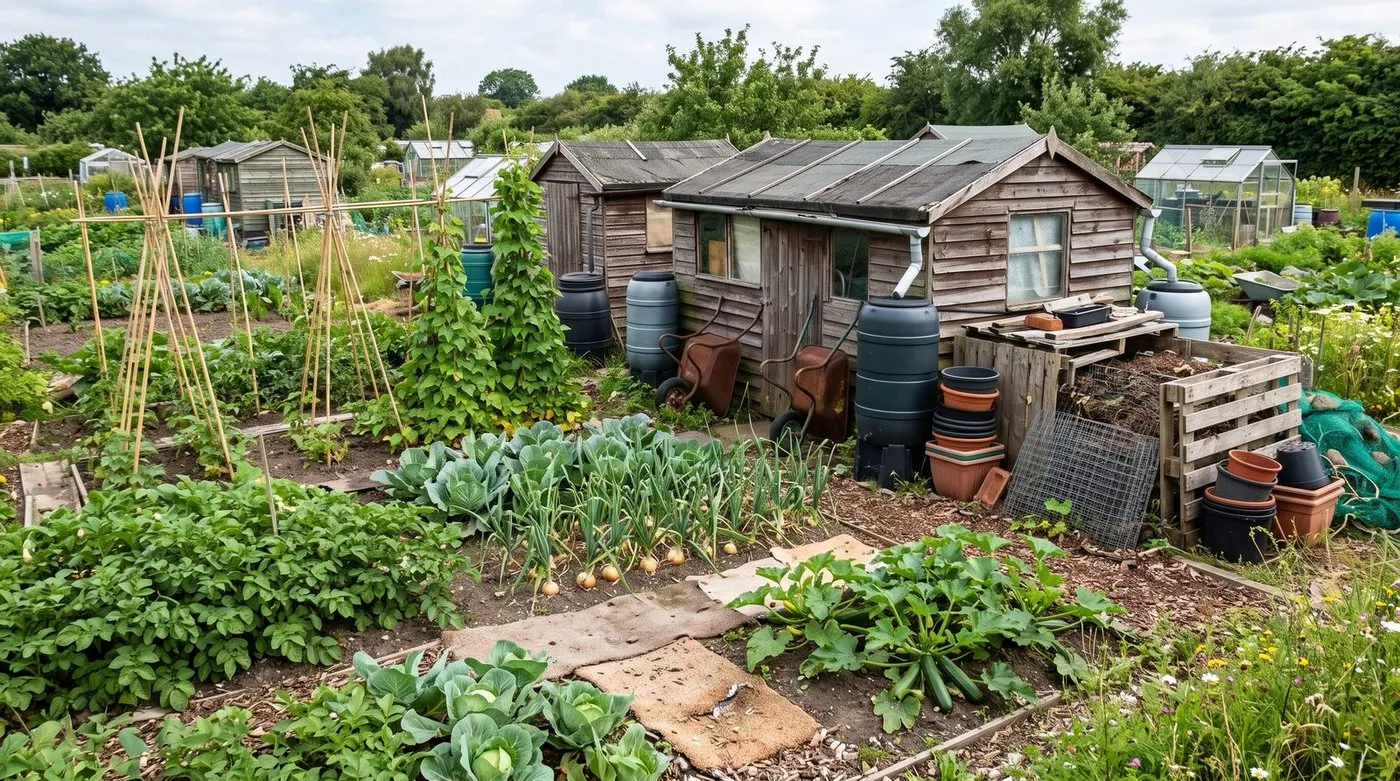 Dig for Victory got the whole nation growing, and the spirit lives on in allotments up and down the country.
The campaign made a real difference. Home-grown vegetables helped stretch the rations and kept families fed through some very hard years.
Postwar: rationing, reconstruction, and the long decline
Rationing didn’t end with the war. Bread was rationed after the war, and some foods, including meat, stayed rationed until 1954. So allotments stayed important well into the 1950s.
Late 1940s to mid 1950s: the dip begins. Many temporary wartime plots went back to being parks and playing fields. Even so, lots of working families still grew some of their own vegetables.
Mid 1950s to mid 1970s: a slow decline. Rationing ended and supermarkets spread, so allotments felt less essential. Many families swapped veg beds for lawns, and new housing swallowed up some sites.
Mid 1970s to 2000: the low point. Television gardening turned to flowers and design. Frozen veg and convenience food were cheap. Some inner-city sites were sold for housing, and others were left to go wild.
A government review in 1969, the Thorpe Report, warned that allotments would struggle without investment. Little changed.
2000s: the comeback starts. A growing interest in where food comes from, helped along by TV cooks such as Hugh Fearnley-Whittingstall, put allotments back in the spotlight. Waiting lists began to grow again.
 After the war, the family allotment was still part of everyday life while rationing carried on.
The 2020 boom
The COVID-19 lockdowns of 2020 changed things almost overnight.
People were stuck at home with time on their hands, and empty supermarket shelves made many think about growing their own food. Councils across the country saw a rush of applications, and waiting lists shot up. Some sites split full plots in half so more people could have a go.
Demand has calmed down a little since, but it’s still well above where it was before 2020. Most waits now run from 18 months to 4 years, and London waits are often 3-5 years or longer. FOI research backed by Greenpeace counted 174,183 people on waiting lists across England, Scotland and Wales in 2023 (UK gardening statistics).
The new wave of plot holders has changed the feel of many sites too. There are more young families, more women and a wider mix of people than ever.
What the 1908 Act protects today
More than a century on, the laws from 1908 and 1925 still matter.
Councils sometimes look at allotment land when they need space for housing or development. Because of the 1925 Act, statutory allotment land can’t be sold or used for something else without government consent. Plot holders have used these laws, often with help from the National Allotment Society, to challenge closures.
The protection isn’t perfect. It works best when tenants know their rights and are willing to speak up. Some sites are still lost, and some councils are slow to deal with waiting lists. But the basic legal protection has lasted a very long time.
 Today’s allotments are a happy mix: polytunnels, raised beds, no-dig plots, wildlife corners, fruit cages and traditional dug beds side by side.
What survives from the past
Walk around an older allotment site and you can often spot bits of its history:
- Old brick paths and walls from Victorian times
- Iron gates and railings from before the First World War
- Patched-up sheds made from whatever timber was to hand
- Old water tanks and troughs from the postwar years
- Trench beds for long carrots and show leeks, dug the old way
- Polytunnels and no-dig beds from the modern revival
An allotment isn’t a museum. Each generation adds its own layer. On many sites, people who’ve had a plot for decades work alongside newcomers who joined in 2020.
That kind of continuity is rare. Allotments have lasted thanks to the law, to people’s love for them, and because a plot gives you good food and good company.
What comes next
The next few years bring a mix of challenges and chances for allotments.
Climate change: Hotter, drier summers and wetter winters are changing how people grow. Many plot holders now collect rainwater, and no-dig methods help hold moisture in the soil.
Housing pressure: As land gets more valuable, some councils will keep eyeing allotment sites. The 1908 and 1925 Acts are likely to be tested again.
New growers: Today’s plot holders are a more varied bunch than ever, and they swap tips online as much as over the fence.
Food prices: Rising prices and worries about food supplies are making people think about growing their own again. The spirit of Dig for Victory feels very current.
The plots that helped feed Britain in wartime look set to keep growing food for a long time yet.
Frequently asked questions
When was the first UK allotment law passed?
The General Enclosure Act of 1845 is usually seen as the first big one. It said some land had to be kept as field gardens for the poor when common land was enclosed. Before that, some landowners and parishes offered small plots out of goodwill. Later laws, especially those of 1887 and 1908, put duties on councils.
Why was the 1908 Smallholdings and Allotments Act important?
It made councils responsible for providing allotments where people wanted them. Allotments stopped being a matter of charity and became a legal duty. The Act is still in force today and underpins many tenants’ rights. It’s a big reason so many British towns still have allotment sites.
How many allotments existed during World War 2?
There were around 1.4 million allotments at the wartime peak. The Dig for Victory campaign urged everyone to grow their own food during rationing. Parks, sports grounds, railway banks and even the Tower of London moat were dug up for vegetables. Home-grown food made a real difference to the wartime diet.
When did UK allotment numbers fall?
Numbers fell steadily from the late 1940s onwards. Once rationing ended, fewer people needed to grow their own food. Many temporary wartime plots went back to their old use or were built on. The decline carried on through the 1960s and 1970s, though statutory sites kept their legal protection.
Why has interest in allotments grown since 2020?
The 2020 lockdowns sent demand soaring and waiting lists grew fast. People had more time at home and wanted safe outdoor space. Many also worried about food supplies and rising prices, and loved how good growing made them feel. Demand has settled a little since, but waiting lists are still long in many places.
Related articles
Our team produces practical UK gardening guidance from source research, contributor records and established horticultural practice. Editorial standards are overseen by Matt W.


