Key takeaways
- Climbing beans, tall peas, cucumbers, cordon tomatoes, climbing squash and melons need support
- Dwarf beans, bush peas and bush tomatoes manage without a trellis
- Check the seed packet, as the variety decides it, not the vegetable
- Put the support in before you sow or plant, not after the plant flops
- Heavy fruit grown upwards, such as melons and small squash, needs a sling
- Fit cane toppers to protect your eyes when bending over the bed
Climbing and runner beans, tall peas, cucumbers, cordon tomatoes, climbing squash and melons all need a trellis or support in a UK veg garden. Dwarf beans, bush peas and bush tomatoes don’t. The other golden rule is timing: put the support in before you sow or plant.
This guide is a quick checklist of which crops need support, what kind suits each one, and the easy mistakes to avoid. For staking flowers and other garden plants, see our guide to staking and supporting garden plants.
Which vegetables need support and which don’t?
Vegetables need support for one of three reasons. They climb naturally, they carry heavy fruit the stem can’t hold, or they simply crop better off the ground.
Need support: climbing and runner beans, tall peas and mangetout, cucumbers, cordon tomatoes, climbing courgettes, small climbing squash and melons.
Don’t need support: dwarf French beans, bush peas, bush tomatoes, ordinary courgettes, large pumpkins, root crops, brassicas and leafy greens.
The variety decides it, not the vegetable. Words like “climbing”, “runner”, “pole”, “cordon”, “indeterminate” or “tall” on the packet mean you’ll need a support. “Dwarf”, “bush”, “patio” or “determinate” mean you won’t.
Vegetable support chart
This table shows which crops need support, what type suits them and when to put it in.
| Vegetable | How it climbs | Best support | Rough height | When to add |
|---|---|---|---|---|
| Climbing and runner beans | Twines round canes | Wigwam or A-frame of canes | 2-2.5m | Before sowing or planting |
| Cordon tomatoes | Doesn’t climb, needs tying | Single cane or string | 1.8m or more | At planting out |
| Cucumbers | Tendrils | Netting, mesh or string | 1.5-2m | At planting out |
| Tall peas and mangetout | Tendrils | Pea netting or twiggy sticks | 1.2-1.8m | At sowing |
| Small squash and melons | Tendrils, heavy fruit | Sturdy A-frame plus slings | 1.5-2m | At planting out |
| Climbing courgettes | Rambles | Obelisk or strong trellis | 1.5-2m | At planting out |
| Dwarf beans, bush peas, bush tomatoes | Don’t climb | None, or a few twiggy sticks | Under 75cm | Not needed |
Climbing and runner beans
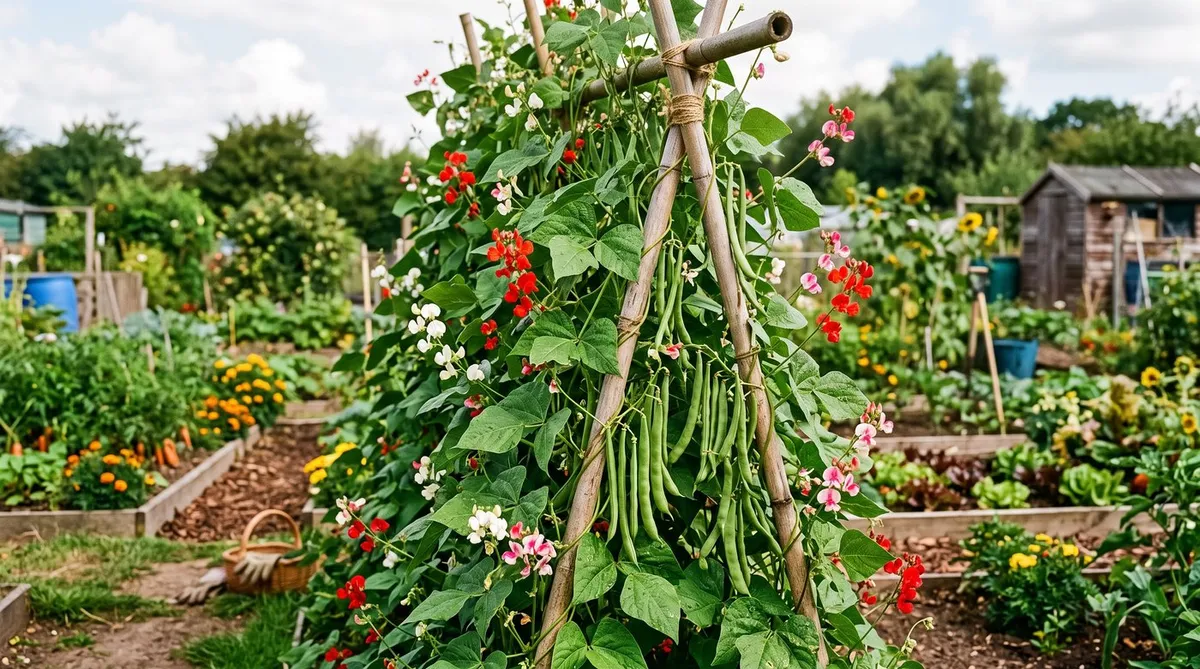
Climbing and runner beans can’t crop properly without support. Their stems twine round anything upright and reach 2m or more. Left to sprawl, the pods rot on the soil and slugs move in.
Build the frame before you sow. A wigwam of six to eight canes tied at the top is the classic. An A-frame, made of two rows of canes leaning together and tied to a ridge cane, suits a long bed. Use stout canes about 2.4m long and push each one 30cm into firm soil. Thin canes snap under a heavy, wet crop.
Sow two beans at the foot of each cane outdoors from late May, then keep the stronger seedling. Pinch out the tips when they reach the top of the frame. Our guide to growing runner beans covers sowing and picking.

Runner beans twine up a wigwam all by themselves once they find a cane. Tie the top tightly so wind can’t shift it.
Peas: tall, mangetout and dwarf
Most peas climb with tendrils, but height varies a lot. Tall peas and mangetout reach 1.2-1.8m and need netting or twiggy sticks. Dwarf peas such as ‘Kelvedon Wonder’ stay under about 60cm and only need a few short twigs.
Put pea netting or a row of twiggy sticks in at sowing time. Seedlings start reaching for support within a couple of weeks. Hazel or birch prunings make brilliant free pea sticks, and our guide to hazel pea sticks shows how to use them.
Match the support to the height on the packet. Tall varieties like ‘Alderman’ need a frame as tall as they grow.

Lash the top of an A-frame tightly, then add netting for peas to grab. Build it before the seeds go in.
Cucumbers: up, not along
Cucumbers crop better climbing than trailing. Fruit that hangs down grows straighter and stays cleaner. Fruit lying on damp soil can curl, rot and get nibbled by slugs.
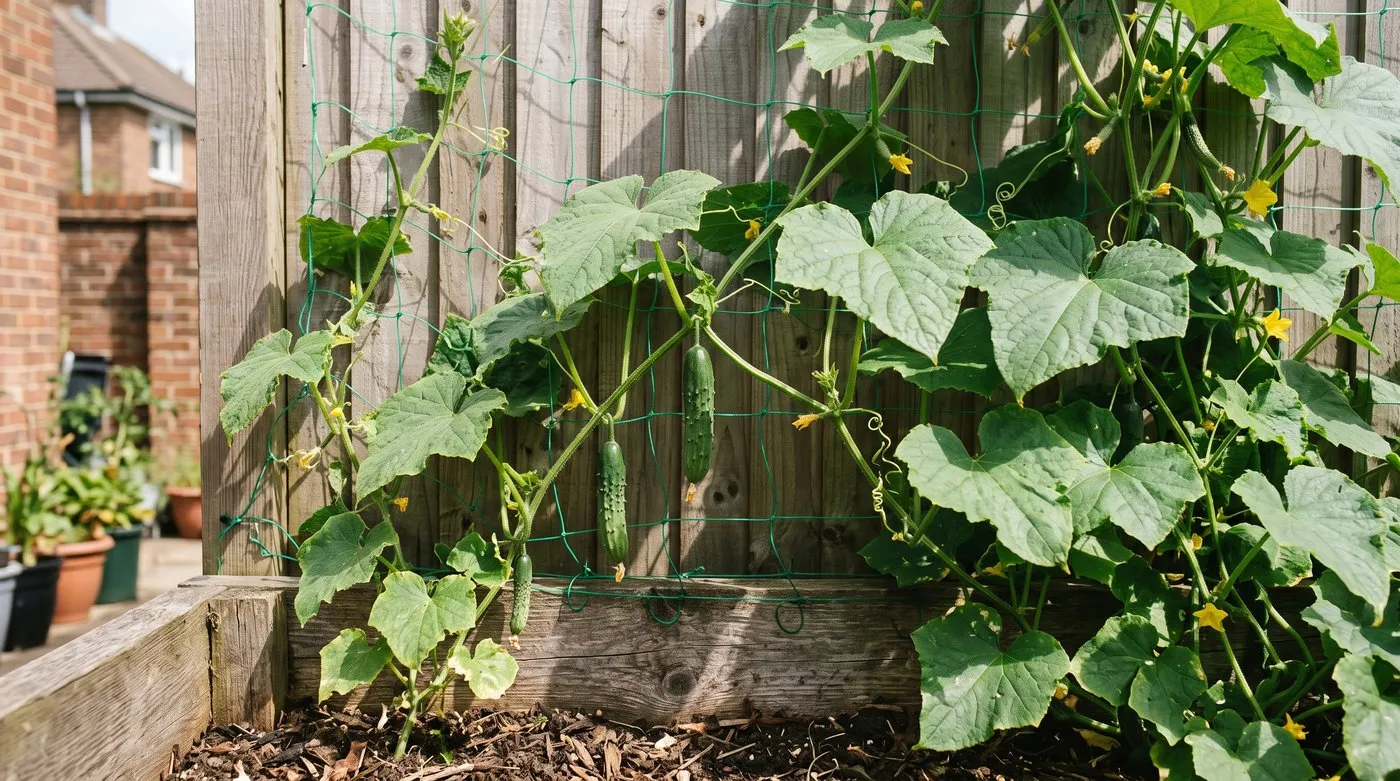
Grown up netting, outdoor cucumbers hang straight and clean, and slugs can’t reach them so easily.
In a greenhouse, train each plant up a vertical string tied to the roof. Twist the growing tip round the string every few days. Outdoors, grow ridge cucumbers up netting or an obelisk, planting out in early June at the foot of the support. Our guide to growing cucumbers covers training in more detail.
Cordon tomatoes vs bush tomatoes
Cordon tomatoes need a cane or string from planting day. Bush tomatoes usually don’t. This is one of the most confusing points in veg growing.
Cordon (or indeterminate) tomatoes grow as one tall stem and can’t stand up alone. Push in a tall cane at planting, or tie a string from an overhead wire to the base of the plant. Tie the stem in as it grows, using soft twine. Remove side shoots to keep one main stem, as our guide to pinching out tomato sideshoots explains.
Bush (or determinate) tomatoes, such as ‘Tumbling Tom’, stay short and sprawl. They’re bred that way, so leave their sideshoots on and let them get on with it.

Cordon tomatoes climb strings tied to the roof, and a cucumber climbs an obelisk beside them. Both stay clean and easy to pick.
Squash, pumpkins and melons
Small squash and melons climb well, but the fruit gets heavy. As it swells, it can tear away from the vine. A sling takes the weight.
Make a sling from old tights, a net bag or soft cloth. Cradle each fruit once it’s about tennis-ball size and tie both ends to the frame. The stretch in tights grows with the fruit. Small squash such as ‘Uchiki Kuri’ suit this, and melons are usually grown this way under glass.
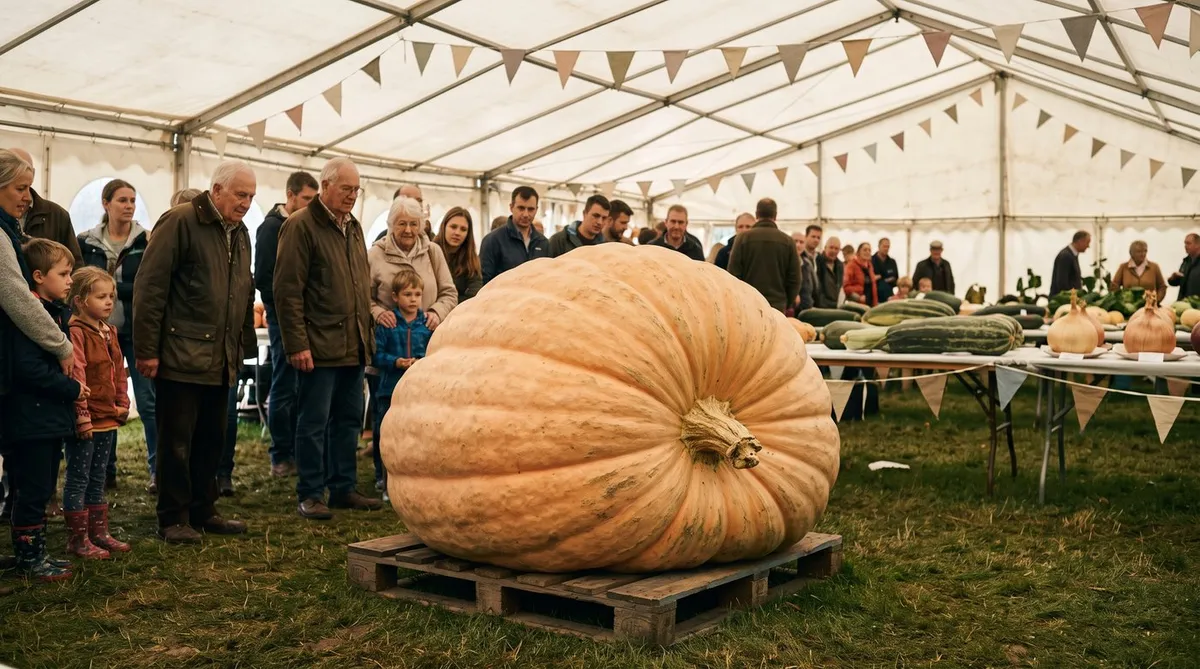
Large pumpkins are far too heavy for a frame. Let them trail on the ground, with a tile or board under each fruit to keep it off wet soil. Our guide to growing pumpkins and squash covers both.

A sling made from old tights holds a swelling melon. Tie it on at about tennis-ball size, before the weight pulls the fruit off.
When to put the support in
Put the support in before you sow or plant. A support added later can damage roots, and a plant that has already flopped rarely climbs straight.
- Build the frame on the empty bed.
- Sow or plant right at the foot of each cane or along the netting.
- Guide the first shoots onto the support by hand if they miss it.
- Tie in tomatoes and cucumbers loosely with soft twine as they grow.
- Pinch out the tops when plants reach the top of the frame.

Canes go into bare soil first, then the seeds go in at their feet. It’s much harder to add supports once plants are growing.
Vegetable support calendar
This calendar shows when to sort out supports through the year.
| Month | What to do |
|---|---|
| March | Gather canes, netting and pea sticks. Check last year’s frames |
| April | Put up pea netting or twiggy sticks, then sow tall peas |
| May | Build bean wigwams and A-frames. Stake cordon tomatoes as you plant them |
| June | Plant cucumbers, squash and melons at the foot of supports |
| July | Tie in weekly. Add slings as squash and melons swell |
| August | Check frames are secure before summer storms. Pinch out tops |
| September | Leave frames up until the last crops finish |
| October | Take frames down. Dry canes and netting, and store them under cover |
Common vegetable support mistakes
These are the slips that leave crops in a heap.
- Adding supports too late. Plants that flop develop kinked stems and are hard to lift without snapping.
- Using thin canes. A heavy, wet bean crop snaps flimsy canes. Use stout ones, pushed in deep.
- Forgetting slings. Melons and climbing squash can tear off the vine without them.
- Crowding plants. Climbers packed too tightly hold damp air, which encourages mildew.
- Tying with wire or thin string. It cuts into stems as they thicken. Use soft jute twine in a loose figure of eight.
Warning: Fit a cane topper or small upturned pot on every upright cane. Bare cane tips are a real eye-injury risk when you bend over a bed, especially with children around.
Short on ground? Our vertical gardening ideas show how to grow more upwards in a small space. Browse more crop guides on our growing hub.
Frequently asked questions
Which vegetables need a trellis in the UK?
Climbing beans, tall peas, cucumbers, cordon tomatoes, climbing squash and melons all need support. Dwarf and bush varieties of the same crops usually don’t.
When should I put up a vegetable trellis?
Put it up before you sow or plant. Pushing canes in later can damage roots, and a plant that has already flopped rarely climbs neatly.
Do cucumbers need a trellis or can they trail?
They can trail, but they crop better climbing. Fruit grown upwards stays straighter, cleaner and easier to pick, and away from slugs.
Do squash and pumpkins need a trellis?
Small squash can climb a sturdy frame, with slings for the fruit. Large pumpkins are too heavy, so let them trail on the ground.
Do bush tomatoes need staking?
Bush tomatoes usually don’t need staking. They’re bred to sprawl. Cordon tomatoes, which grow as one tall stem, always need a cane or string.
How tall should a bean trellis be?
Aim for about 2m above ground. Use canes around 2.4m long and push them 30cm into firm soil.
Now your supports are sorted, read our guide to growing mangetout and sugar snap peas for an easy climbing crop to start with.
Our team produces practical UK gardening guidance from source research, contributor records and established horticultural practice. Editorial standards are overseen by Matt W.