Key takeaways
- Grow each carrot in its own bored hole or pipe about 1m deep, filled with a fine, stone-free mix
- Sieve every ingredient, because one stone or lump can make the root fork
- Sow two or three seeds per hole from late March to April and thin to the best seedling
- Keep the mix evenly moist and never put manure in the holes
- Put up a fleece or mesh barrier at least 60cm tall to keep carrot fly out
- Lift by washing or easing the mix away, never by pulling, so the long tip stays whole
Long show carrots are grown one per hole, in deep bored holes or pipes filled with a fine, stone-free mix. The idea is to give each root a straight, soft path about a metre down so it can grow a long, smooth taper. It takes patience, but the method itself is simple.
This guide walks through making the holes, filling them, sowing, protecting against carrot fly, and lifting and washing for the show bench. For an overview of showing, from reading schedules to staging, start with the guide to growing for your village veg show. If you’d rather grow shorter, chunkier roots, see stump carrots for show.
How to make bore holes for long carrots
Each carrot grows in its own bore hole: a narrow, deep hole filled with a fine mix. The traditional method is a deep bed or large barrel of sharp sand or sandy soil. Drive a steel crowbar straight down, rocking it to widen the hole into a cone about 1m deep. Space holes about 20-25cm apart so the foliage has room.
Lengths of plastic pipe stood upright in a raised bed are a popular alternative. They keep each root separate and are easy to fill. Whichever you use, make the holes in late winter or early spring so the mix can settle before sowing.

Drive the bar straight down and rock it to make a cone-shaped hole. Damp ground in late winter makes the job easier.

Upright pipes are an alternative to bored holes. They keep each root on its own straight path.
What to fill the holes with
Fill each hole with a fine, stone-free mix. A common base is sieved peat-free compost with sharp sand, plus a little sieved leaf mould. Some growers add a small amount of balanced base fertiliser. Keep it light on nitrogen, which pushes leaf rather than root.
Sieve everything through a fine riddle. One stone or hard lump can deflect the tip and make the root fork. Never add manure, fresh or rotted, to the holes.
Fill in stages, firming and watering each layer gently as you go. A hole filled in one go settles later, leaving the top of the carrot sunk below the surface. Top up any settling before you sow.

Fill the holes a layer at a time and water each one in. That stops the mix sinking after you sow.
Which long carrot varieties to grow
Traditional long, tapering varieties such as St Valery and New Red Intermediate are the usual starting points. Many exhibitors grow selected show strains from specialist exhibition seed suppliers, which tend to be more uniform.
Check your show schedule carefully. Shows often have separate classes for long, intermediate and stump-rooted carrots, and the judges expect the right type in each. The guide to the best carrot varieties covers kitchen types too.
How to sow long show carrots
Sow from late March to April for shows in late summer and autumn. In colder parts of the north and Scotland, sow towards the later end.
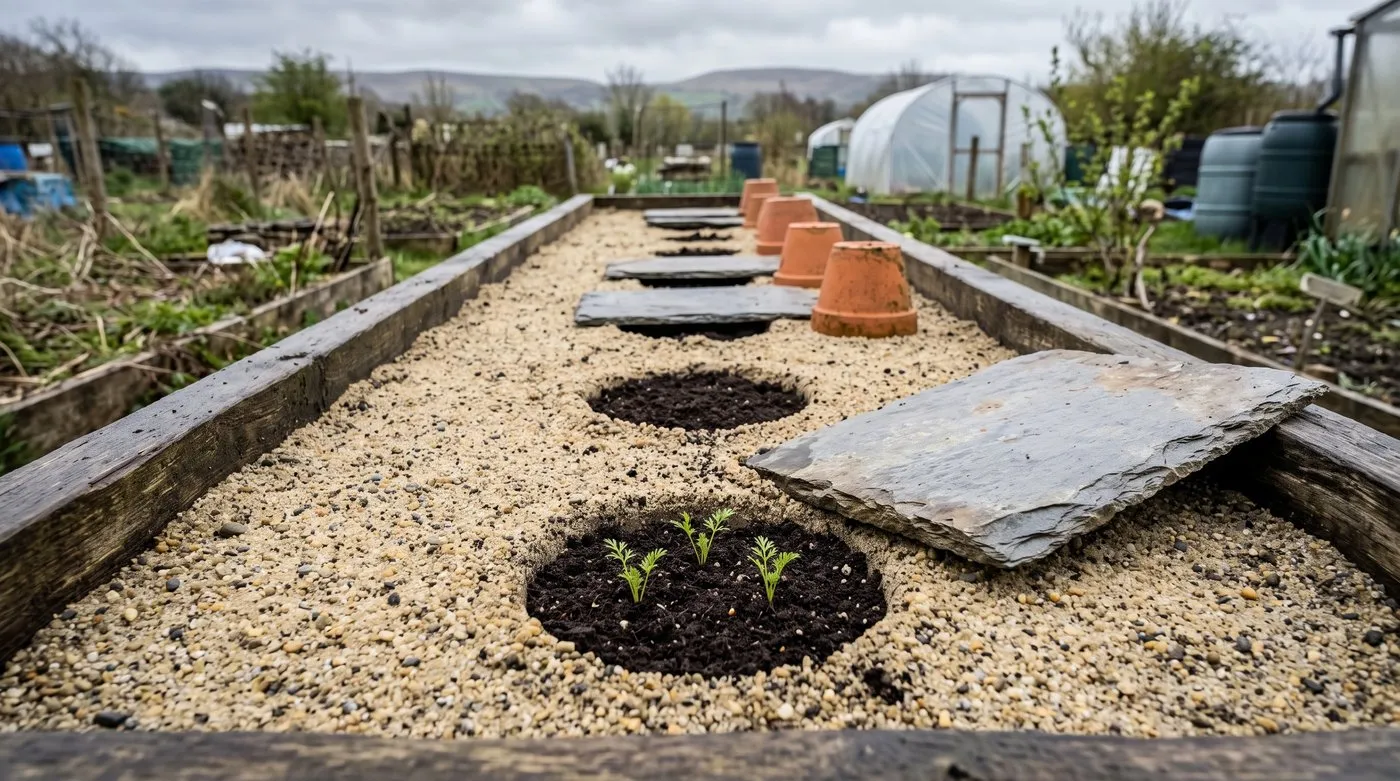
Cover each sown hole to keep the surface moist, then lift the cover as soon as the seedlings show.
- Make a shallow dip in the centre of each filled hole
- Sow two or three seeds and cover lightly with sieved mix
- Water gently with a fine rose
- Cover each hole with a slate, tile or upturned pot to keep the surface moist
- Check daily and remove the cover as soon as seedlings appear
- Thin to the single strongest seedling once they are big enough to handle
Thin on a still evening, nip off the extras rather than pulling them, then water. The smell of bruised carrot foliage draws carrot fly.
Watering, feeding and carrot fly
Watering is the big one. Keep the mix evenly moist from sowing onwards. A dry spell followed by a soaking can split roots, and drying out early can damage the growing tip.
Feeding should be light. Too much nitrogen gives lush leaves and poorer roots. A gentle liquid feed in summer is plenty if the mix had a base fertiliser.
Carrot fly is the main pest. Its maggots tunnel into roots, which ruins them for the show bench. The flies stay low, so surround the bed with a fleece or fine mesh barrier at least 60cm tall from sowing. Or cover the whole bed with fine mesh. The guide to carrot root fly explains the timing.
Warning: Keep manure out of carrot holes. It is one of the most common causes of forked roots.
Lifting long show carrots without breaking the tip
Lift a few days before the show, so you have time to wash and stage without rushing. Water the holes well the day before to soften the mix.
Never pull a long carrot. The thin tip snaps easily. Instead, ease the mix away from the root. With a bored bed, dig a trench alongside and gently wash or brush the sand away. With pipes, slide the pipe up or cut it, then ease the mix off the root, working from the shoulder down.
Support the root along its length as soon as it’s free. Wrap it straight away in a damp cloth so it doesn’t dry out.

Dig alongside and ease the mix away rather than pulling. Then support the root along its length and wrap it in a damp cloth.
Washing and staging long carrots
Wash show carrots gently in cool water with a soft sponge. Never scrub or use a brush, as scratches show on the bench. Work from the shoulder down, turning the root as you go.
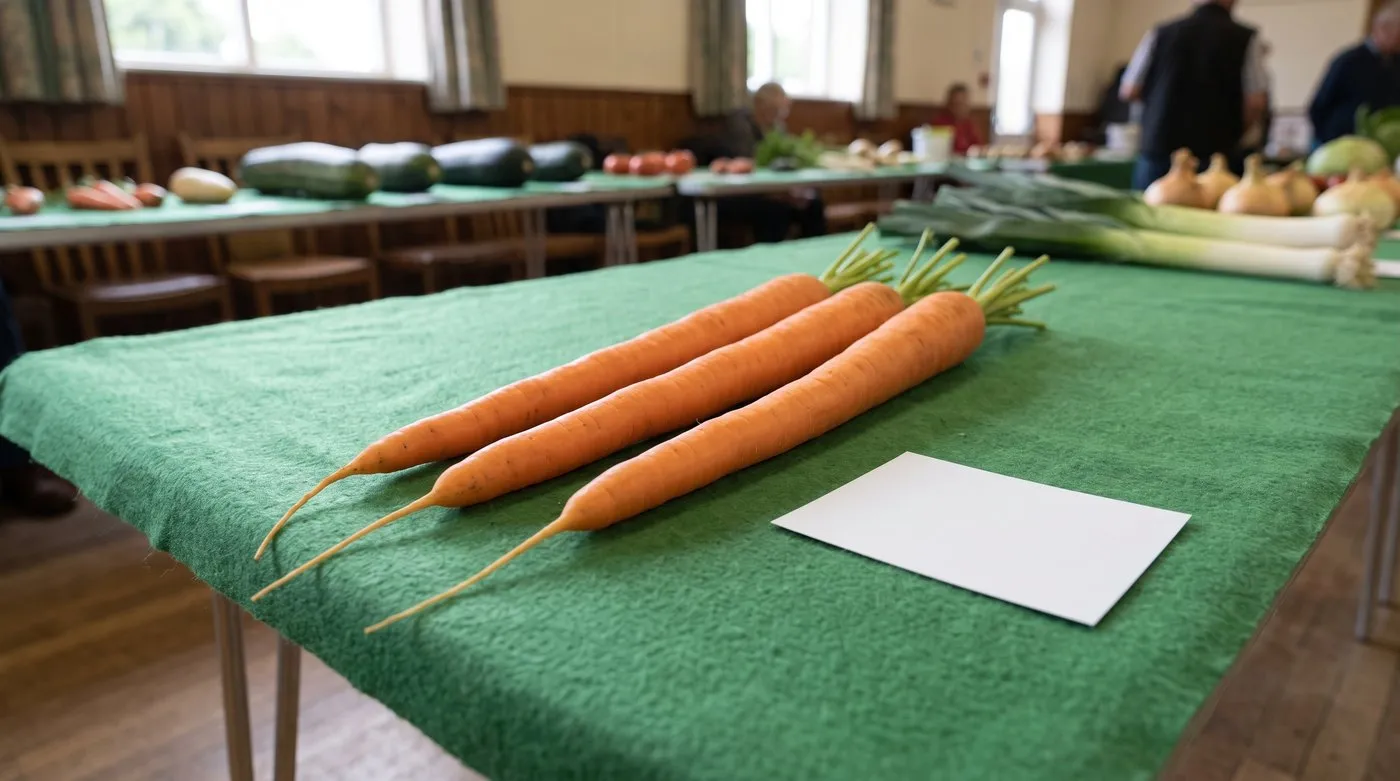
Judges like a matched set: three clean roots of the same length, shape and colour. Lift a spare so you can choose.
Trim the foliage to the length your schedule asks for, usually a short tuft. Stage the roots as the schedule says, as a set of three or a single. A matched set, with roots similar in length, shape and colour, scores better than one big carrot with two weaker partners. Lift a spare or two so you can pick the best match.
How long carrots are judged
Judges look at condition, uniformity, size and colour. That means clean, unmarked skin, no splits, forks or fly damage, a smooth even taper, and roots that match each other. Many shows follow the National Vegetable Society’s judging guide. The guide to how allotment show judging works explains scoring in plain terms.
Long show carrot calendar
| Month | What to do |
|---|---|
| January | Order seed. Clean and check pipes, barrels and covers |
| February | Bore holes or set up pipes. Sieve the mix |
| March | Fill holes in layers. Start sowing late in the month |
| April | Finish sowing. Remove covers as seedlings appear. Put up a carrot fly barrier |
| May | Thin to one seedling on a still evening. Water steadily |
| June | Keep the mix evenly moist. Check the barrier for gaps |
| July | Light liquid feed if needed. Keep watering steadily |
| August | Check show dates. Lift a few days before early shows |
| September | Lift, wash and stage for autumn shows |
| October | Empty the holes. Store pipes and covers |
Common mistakes with long show carrots
- Stones in the mix. One lump can fork the root. Sieve everything.
- Filling in one go. The mix settles and the carrot sinks. Fill in layers and top up before sowing.
- Manure in the holes. It causes forking. Keep it out.
- Uneven watering. Dry then wet splits roots. Water little and often.
- Pulling at the lift. The tip snaps. Ease the mix away instead.
- No carrot fly barrier. One maggot ruins a show root. Cover from sowing.
Now you can grow long carrots, try the same bore-hole method with long parsnips for show. For more crops and ideas, browse the growing veg section.
Frequently asked questions
How deep do the holes need to be for long show carrots?
About a metre deep, so the long tapering root has room to grow. Growers bore holes with a crowbar into a deep bed of sand or sandy soil, or use lengths of pipe. Either way, fill the hole with a fine, stone-free mix.
What is the best variety of long carrot for showing?
Traditional long varieties such as St Valery and New Red Intermediate are good starting points. Serious exhibitors often buy selected show strains from specialist exhibition seed suppliers. Check your show schedule to be sure you enter the right class.
What mix do you fill bore holes with for long carrots?
A fine, stone-free mix of sieved peat-free compost and sharp sand. Some growers add a little sieved leaf mould and a balanced base fertiliser. Sieve everything so no stones or lumps are left to fork the root.
Why do my show carrots fork or split?
Usually stones or lumps in the mix, manure, or uneven watering. Sieve the mix finely and keep manure out of the holes. Water steadily so the soil never swings from dust-dry to soaking, which can split roots.
When do you sow long carrots for show?
Sow from late March to April for shows in late summer and autumn. Sow two or three seeds per hole and thin to the strongest seedling. Thin on a still evening and water afterwards to avoid attracting carrot fly.
How do you wash a show carrot without damaging it?
Wash it gently in cool water with a soft sponge. Never scrub or use a brush, as that marks the skin. Keep the root wrapped in a damp cloth until you stage it so it doesn’t dry out.
Our team produces practical UK gardening guidance from source research, contributor records and established horticultural practice. Editorial standards are overseen by Matt W.