Key takeaways
- In the UK, milkweed is a nectar plant for bees and hoverflies, not a monarch nursery
- Swamp milkweed (Asclepias incarnata) is the easiest and copes with damp soil
- Butterfly weed (A. tuberosa) has bright orange flowers but rots in wet winter soil
- Common milkweed (A. syriaca) is a listed invasive species, so don't plant it
- The milky sap irritates skin and eyes and the plant is poisonous to pets, so wear gloves
- Milkweed comes up very late in spring, so mark where it is
Milkweed (Asclepias) is a cracking late-summer nectar plant for UK gardens, but not for the reason you read about online. In North America it’s planted to feed monarch caterpillars. Monarchs don’t breed in Britain, so here you grow it for the bees, hoverflies and butterflies that crowd its flowers from July into September.
The trick is picking the right one. This guide covers which milkweeds suit UK gardens, the one to avoid, how to handle the toxic sap, and how to grow it from seed.
Does milkweed attract monarch butterflies in the UK?
No, not in any real sense. Monarch butterflies don’t breed in the UK. A few strays arrive some years, usually on the south-west coast after Atlantic gales, but they can’t complete their life cycle here.
So forget the “plant milkweed to save the monarchs” line. It’s true in Texas and not in Tewkesbury. What milkweed does give a UK garden is a long run of nectar in late summer, when many border plants are finishing. That’s a great reason to grow it. Our list of the best plants for butterflies has more late nectar plants for native species.
The name comes from the milky sap that bleeds from any cut stem. After flowering come slim, horn-shaped seed pods that split to release silky seeds.
Which milkweed should you grow?
For reliable results, grow swamp milkweed (Asclepias incarnata). It’s the easiest, copes with damp soil and flowers well without fuss.
| Milkweed | Soil | Height | Habit | Verdict |
|---|---|---|---|---|
| Swamp milkweed (A. incarnata) | Damp, moisture-retentive | 1-1.5m | Tidy clump | Best choice |
| Butterfly weed (A. tuberosa) | Dry, sharp drainage | 40-70cm | Slow clump with a deep taproot | Lovely but fussy |
| Common milkweed (A. syriaca) | Any | 1-2m | Spreads by runners | Don’t plant |
| Balloon plant (Gomphocarpus) | Free-draining | Up to 2m | Tender, grown like an annual | Fun in a pot |
Notice the soil column. Swamp milkweed and butterfly weed want opposite conditions. Plant them the wrong way round and both struggle.
How to grow swamp milkweed
Swamp milkweed is the one to choose if you grow only one. In the wild it grows in wet meadows and ditches, so it’s happy in damp, heavy soil that defeats most drought-loving perennials. A border that stays moist or the edge of a wildlife pond is perfect. Our guide to plants for wet, boggy soil has good partners.
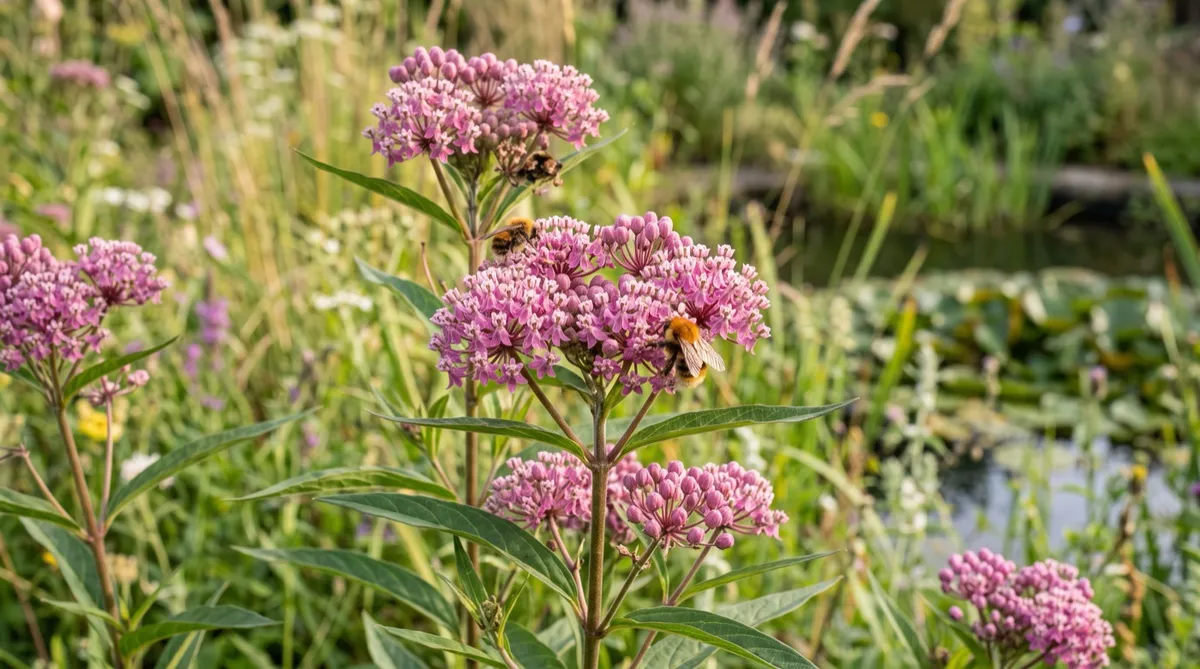
It grows into an upright clump 1-1.5m tall with narrow leaves and domed heads of small pink flowers in July and August. They’re lightly scented and very popular with bees. It sits nicely with other bee-friendly plants and is one of the few nectar plants happy in ground too damp for lavender or salvia.
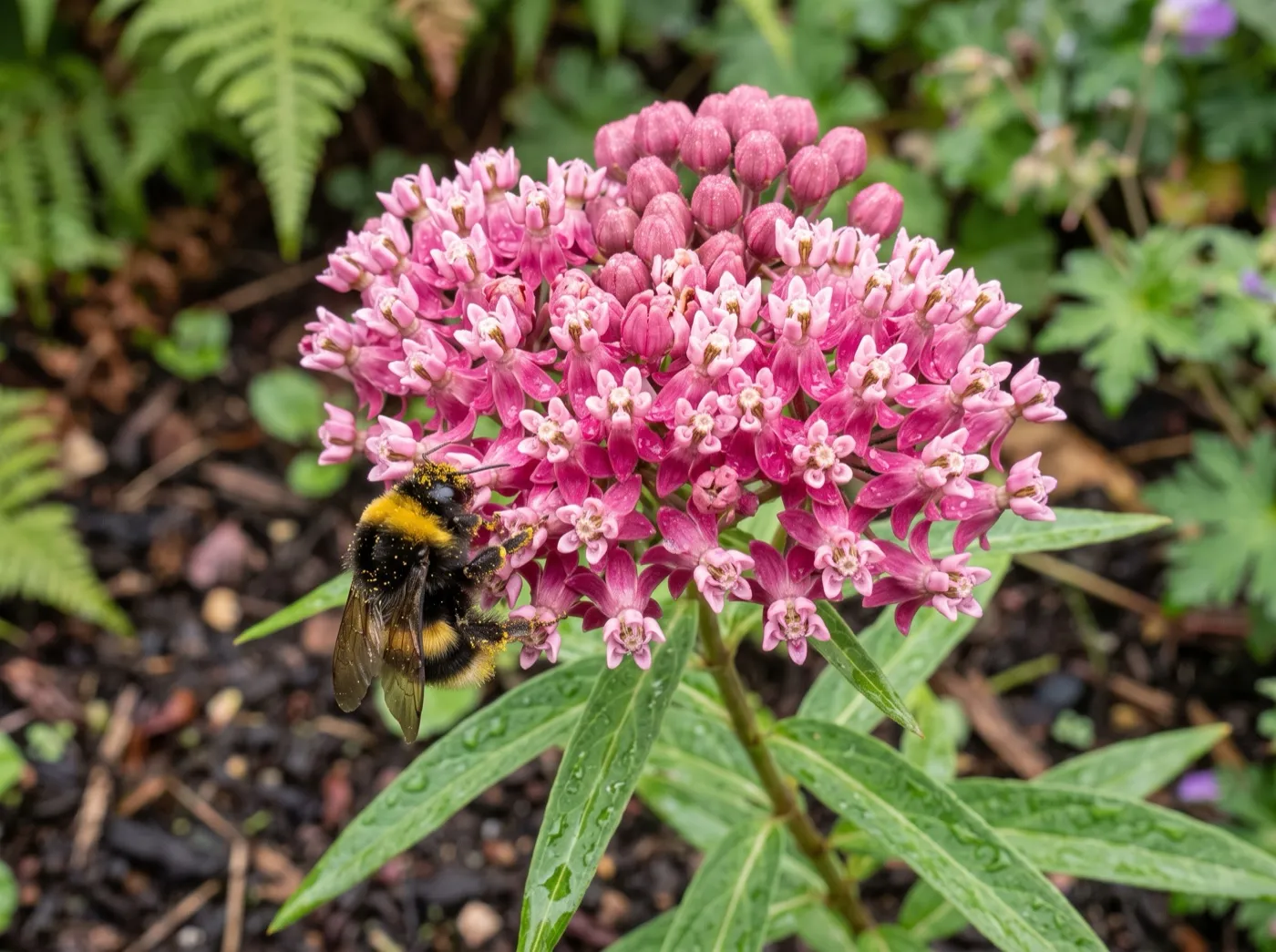
Swamp milkweed’s pink flower heads are a bumblebee magnet. On damp soil it needs no special treatment.
How to grow butterfly weed
Butterfly weed (Asclepias tuberosa) has vivid orange flowers in flat heads on stems 40-70cm tall. It’s the one everyone wants, and the one most likely to disappoint. Cold isn’t the problem. Wet is.
It has a deep taproot that rots in cold, soggy soil over winter. Grow it in a raised bed, a gravel garden or a planting hole with plenty of grit added, with the crown set slightly high. It hates being moved, so pick the spot once and leave it. It’s slow to settle and often does little in its first year, then flowers better each season.
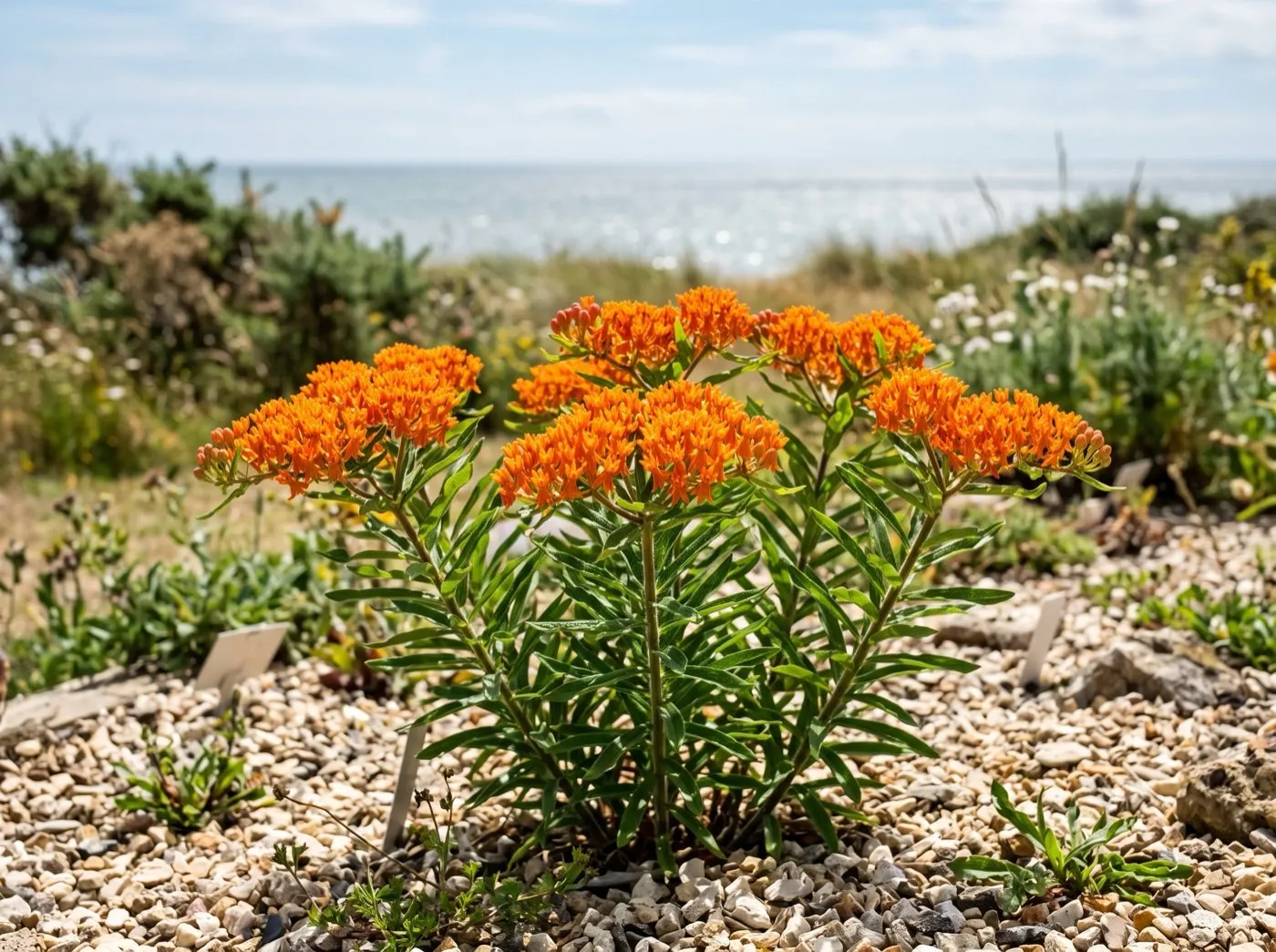
Butterfly weed’s orange heads are hard to beat, but it needs sharp drainage. A gravel bed suits it well.
Why you shouldn’t plant common milkweed
Common milkweed (Asclepias syriaca) is tall, with big greyish leaves and scented, dusky pink flowers. It’s easy to grow, and that’s the trouble. It spreads by running underground roots, throwing up shoots well away from the parent and forming dense patches. Every bit of root left behind can regrow.
It’s on the list of invasive species of special concern, so it shouldn’t be sold, grown or allowed to spread in Great Britain. Choose swamp milkweed instead. It gives you the same nectar in a clump that stays put.
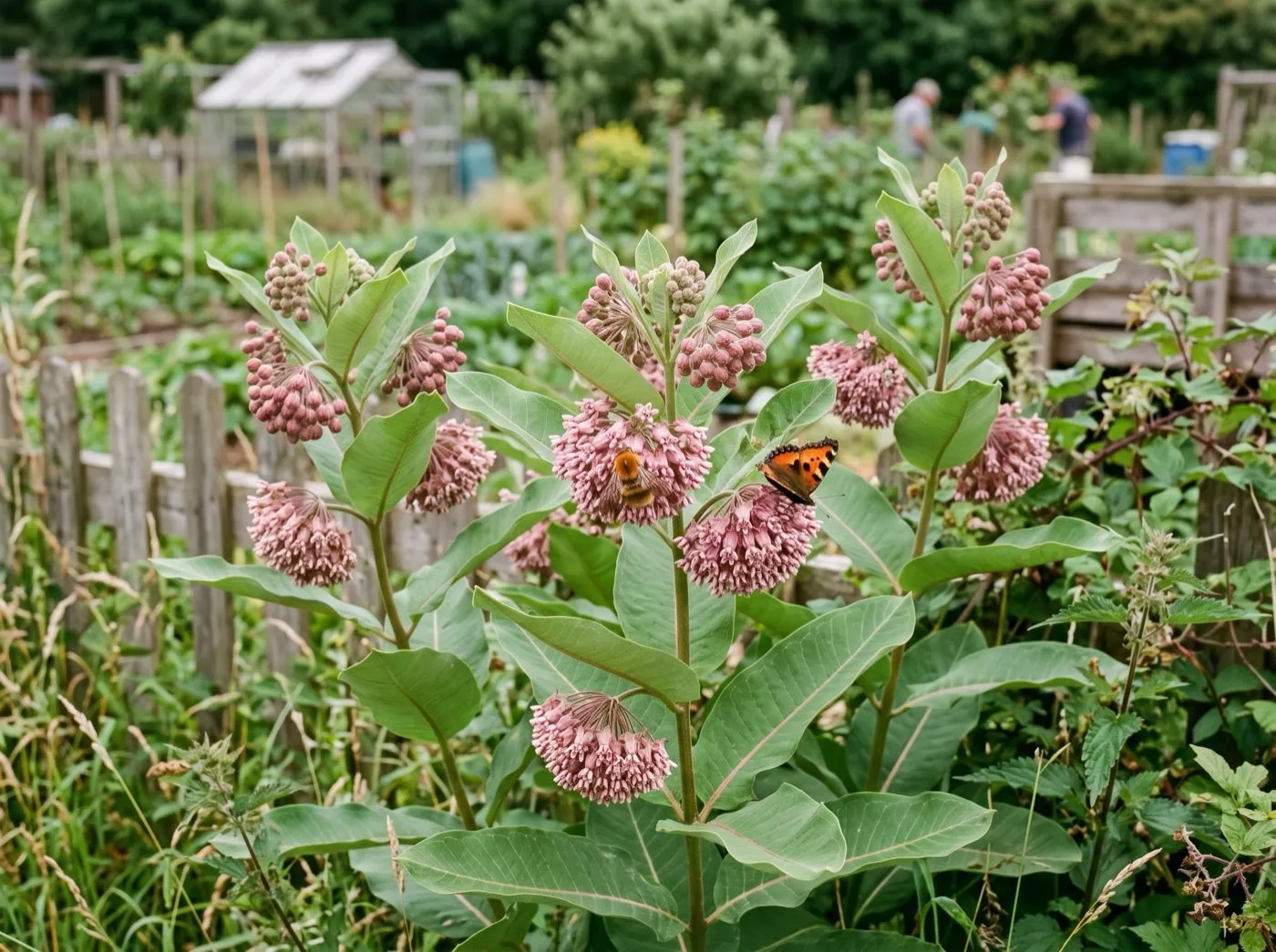
Common milkweed spreads by running roots into dense patches, so leave it out of UK gardens.
Is the balloon plant worth growing?
Gomphocarpus physocarpus, sometimes sold as Asclepias physocarpa, is a milkweed relative grown for fun. It shoots up to about 2m in a season and has small cream flowers. The draw is the seed pods: pale green, hairy, inflated balls the size of a plum. Children love them, and they look great in arrangements.
It’s frost-tender, so treat it like a half-hardy annual. Sow under glass in spring and grow it in a warm spot or a big pot. It sets its balloons by late summer. Let it die off with the frost, or move the pot into a frost-free greenhouse for winter.
How to handle milkweed sap safely
All milkweeds bleed a milky sap when cut, and it’s toxic. It irritates skin and can damage your eyes. Always wear gloves when cutting, dividing or collecting seed. Don’t touch your face, and wash your hands afterwards.
The whole plant is poisonous if eaten, to people, dogs, cats, horses and livestock. Keep it out of paddocks, and think about where you put it if you have pets or small children. That’s not a reason to avoid it. It just needs the same care you’d give foxgloves.
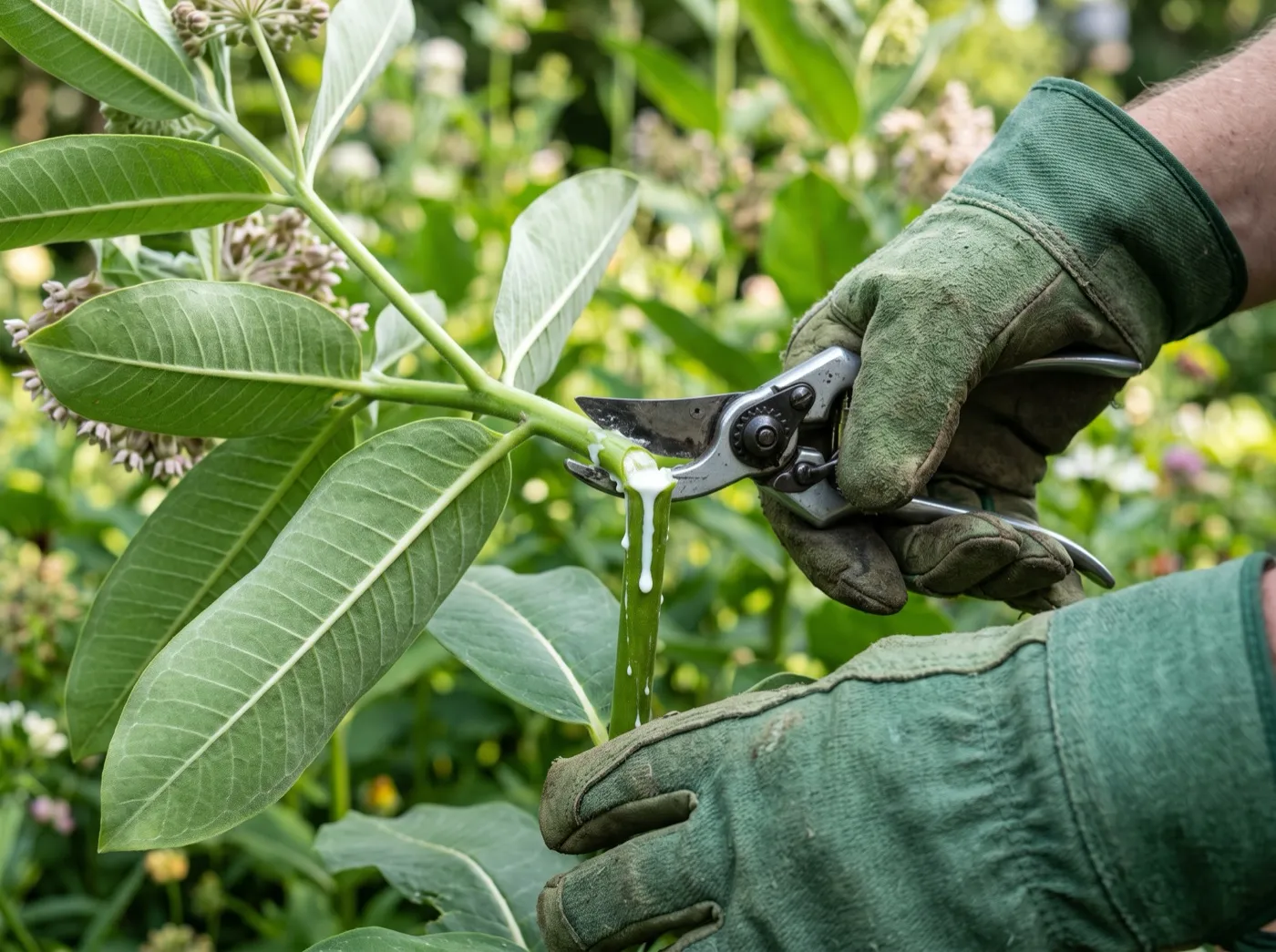
The white sap bleeds from any cut and irritates skin and eyes, so gloves are a must.
How to plant milkweed and why it’s late in spring
Plant pot-grown milkweed in May or June, once the soil has warmed. That gives it a full season to root before winter. Plant at the same depth it sat in the pot, 45-60cm apart, and water in. Groups of three or five look best and draw more insects. Swamp milkweed goes into ordinary or damp soil. Butterfly weed needs grit and a slightly raised crown.
The most useful thing to know is that milkweed comes up very late. While everything else is growing in April, the spot looks bare and dead. Shoots often don’t appear until May, and sometimes June. Plenty of healthy plants get dug up by mistake.
The fix is easy. Push a labelled cane in beside the crown in autumn, so you know where it is. Then be patient. Once it starts, it grows fast.
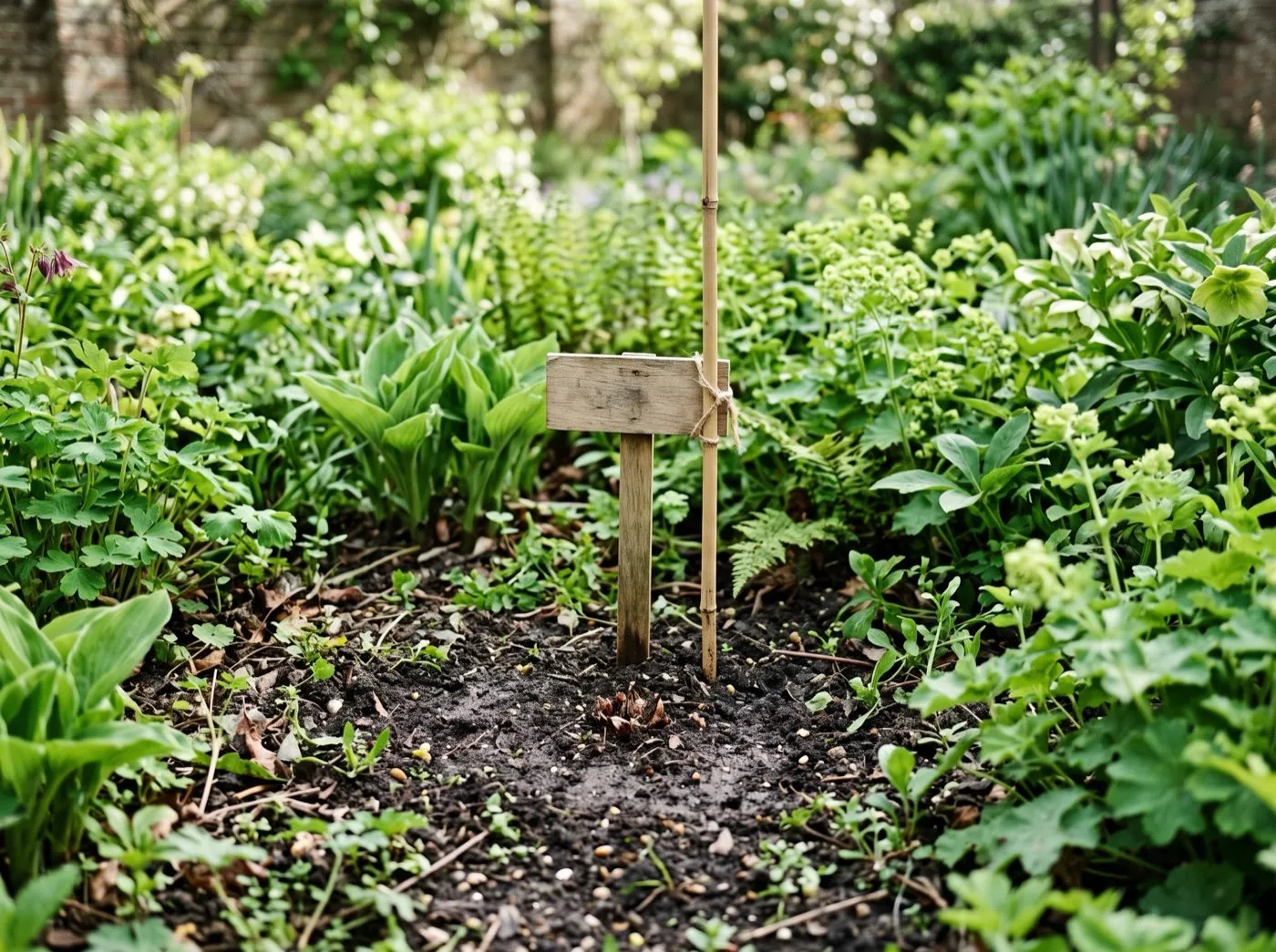
Mark the spot in autumn. Milkweed stays hidden long after other perennials are up.
How to grow milkweed from seed
Milkweed seed needs a cold spell to sprout well. In the wild it falls in autumn and sits through winter. Butterfly weed seed hardly sprouts without it.
- Sow outdoors in autumn. Sow in pots, stand them in a cold frame or by a shady wall, and let winter do the work. Seedlings appear in spring.
- Chill it in the fridge. In late winter, mix the seed with damp vermiculite in a labelled bag and keep it in the fridge for about four weeks. Then sow indoors in spring.
Cover the seed lightly and keep it moist and warm. Pot seedlings on early into deep pots, before the taproot gets long, as milkweed dislikes root disturbance. Harden off and plant out after the last frost. Swamp milkweed often flowers in its second year. Butterfly weed can take two or three years, so buy a plant if you want flowers sooner.
Collecting milkweed seed
After flowering, each head can make slim pods 5-10cm long that turn from green to brown in autumn. When ripe, they split to show rows of flat brown seeds, each with a tuft of silky fluff that carries it on the wind.
To save seed, wear gloves and cut the pods just as they begin to split. Open them indoors and pull the seeds away from the fluff over a bowl. Store dry seed somewhere cool over winter. Our guide to seed saving for beginners covers drying and storing. If you’d rather it didn’t self-sow, cut the pods off before they open.
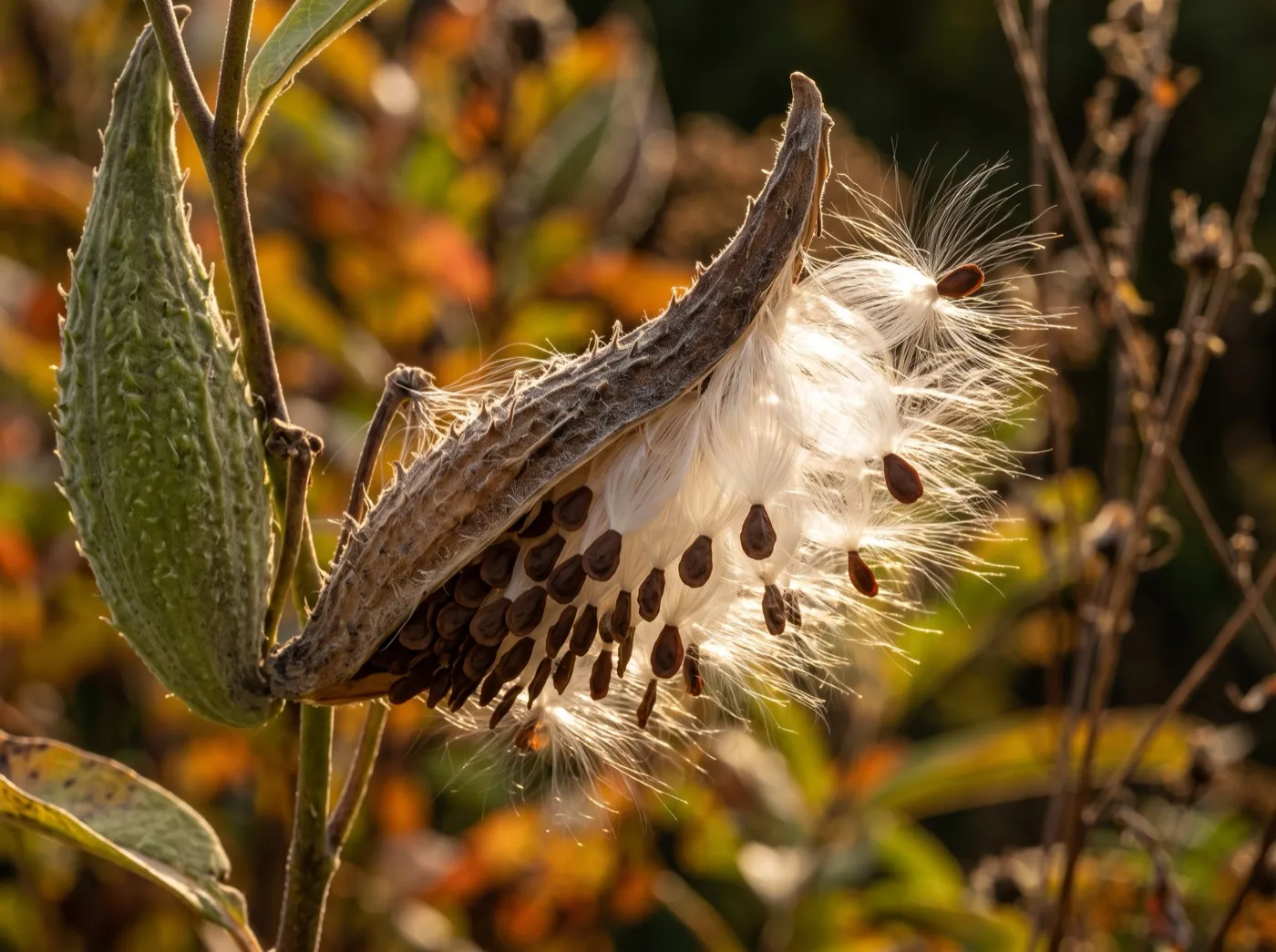
Ripe pods split to release seeds on silky parachutes. Cut them just before they open to collect the seed.
Which insects visit milkweed in the UK?
From July into September, milkweed flowers draw a steady crowd of bumblebees, honeybees, hoverflies and butterflies such as small tortoiseshells. Plant it in a sunny, sheltered spot near other nectar plants so insects linger.
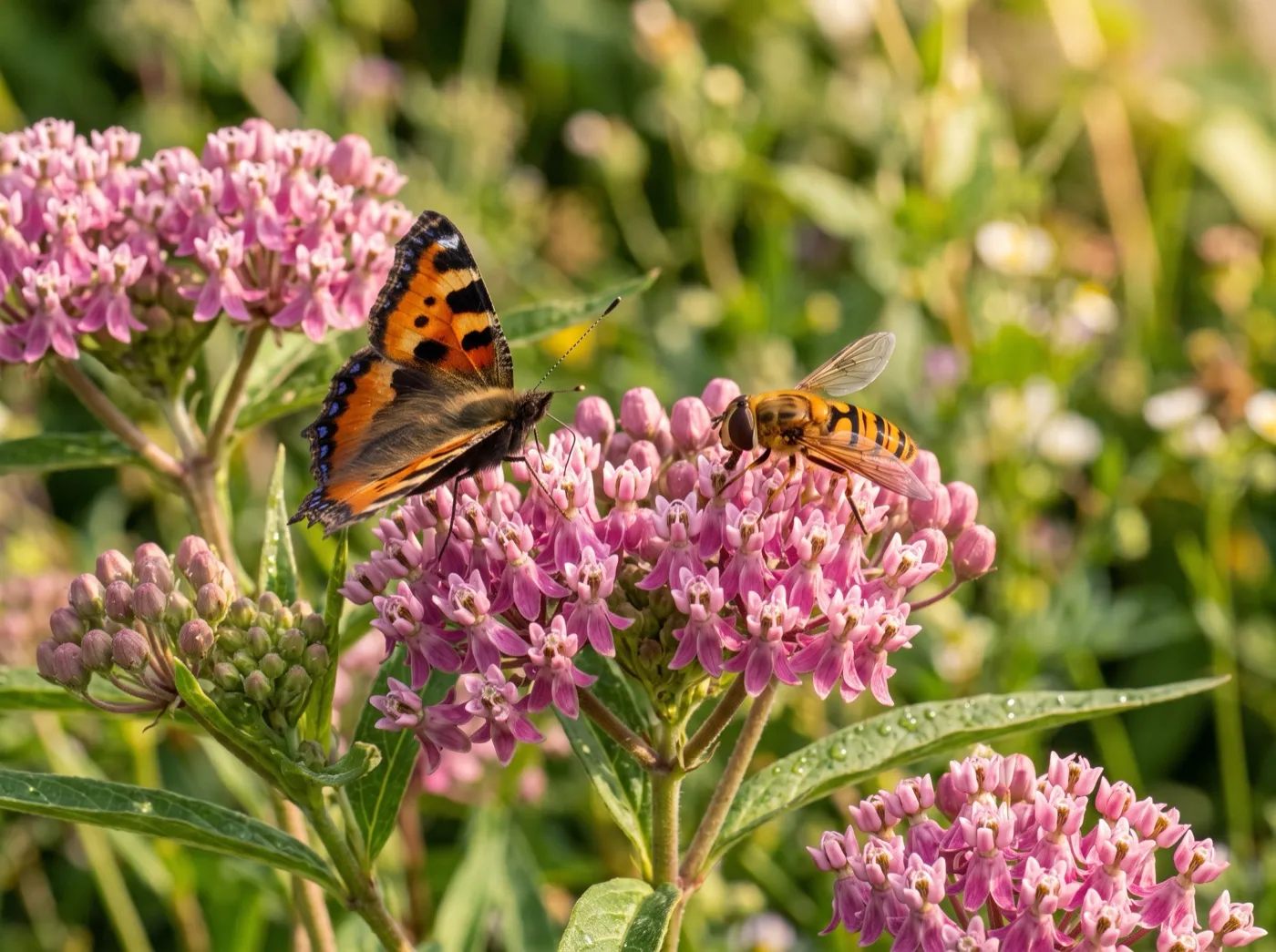
A small tortoiseshell and a hoverfly sharing a milkweed head. Late-summer nectar is its real value in a UK garden.
Milkweed care calendar
| Month | What to do |
|---|---|
| January to February | Leave dead stems standing. Chill seed in the fridge in February |
| March | Sow chilled seed under glass. Leave outdoor crowns alone |
| April | The bare spot isn’t dead, just late. Don’t dig it |
| May | Shoots appear. Plant pot-grown plants once the soil is warm |
| June | Late crowns show. Plant out seedlings after hardening off |
| July to August | Flowering and peak insect visits. Water swamp milkweed in dry spells |
| September to October | Pods ripen. Collect seed with gloves on, or cut pods off |
| November to December | Growth dies back. Mark each crown with a labelled cane |
Common mistakes with milkweed
Growing it for monarchs. They don’t breed here. Judge it as a nectar plant and it does brilliantly.
Planting butterfly weed in wet clay. It rots over winter. Give it sharp drainage or grow swamp milkweed instead.
Digging up a late crown. It looks dead in April. Mark it in autumn and wait until June.
Handling the sap bare-handed. It irritates skin and eyes. Always wear gloves.
Planting common milkweed. It spreads hard and is a listed invasive species. Stick to the clump-forming kinds.
Frequently asked questions
Do monarch butterflies visit UK milkweed?
Very rarely, because monarchs don’t breed in Britain. A few strays turn up some years, mostly in the south-west after Atlantic storms. The advice to plant milkweed for monarchs comes from North America. In the UK, grow it as a nectar plant for bees, hoverflies and native butterflies.
Is milkweed sap dangerous to handle?
Yes, the milky sap irritates skin and can hurt your eyes. Wear gloves when cutting or dividing milkweed, and don’t touch your face. Wash your hands afterwards. The whole plant is poisonous if eaten, so keep it away from pets, livestock and children.
Which milkweed is hardiest in the UK?
Swamp milkweed (Asclepias incarnata) is the most reliable choice. It likes moist soil, which suits many British gardens. Butterfly weed (Asclepias tuberosa) is fairly hardy too, but it needs very sharp drainage to get through a wet winter.
Why has my milkweed not come up in spring?
Milkweed is one of the last perennials to wake up. A healthy plant may show nothing until late May or even June. Don’t dig over the spot. Mark it with a cane in autumn so you know where it is, and wait.
Does milkweed seed need cold stratification?
Yes, most milkweed seed sprouts better after a cold spell. Give it about four weeks in a damp bag in the fridge, or sow it outdoors in autumn and let winter do the job. Butterfly weed seed especially needs the cold.
Is milkweed invasive in the UK?
One kind is, so avoid common milkweed (Asclepias syriaca). It spreads hard by underground roots and is listed as an invasive species of special concern. Swamp milkweed and butterfly weed stay in tidy clumps.
Can you grow milkweed in pots?
Yes, especially butterfly weed in a deep pot of gritty compost. Swamp milkweed can go in a pot too, but needs regular watering. The tender balloon plant (Gomphocarpus) is best in a pot so it can come under glass before frost.
Now you know which milkweed to grow, find more ideas in our flowers and plants hub, or keep the nectar flowing with our guide to autumn-flowering plants for bees.
Our team produces practical UK gardening guidance from source research, contributor records and established horticultural practice. Editorial standards are overseen by Matt W.