Key takeaways
- Clean, shallow water is the most useful thing you can give birds in a heatwave
- Use dishes a few centimetres deep with a stone or sloping edge so small birds can't drown
- Put water and feeders in dappled shade with shrubs nearby for cover
- Empty, scrub and refill bird baths every day to stop disease spreading
- Offer small amounts of seed, sunflower hearts or soaked mealworms; skip soft fat and bread
- Leave nest boxes alone; site next year's boxes out of the midday sun
Water is the best thing you can give garden birds in a UK heatwave. Put out clean, shallow dishes in the shade, refill them every day, and the birds will do the rest. A few small changes to feeding and a hands-off approach to nest boxes cover everything else.
This guide is for hot spells, when a heatwave is on the forecast. For the year-round basics, see the guide to bird bath placement and cleaning.
Why water matters most in a heatwave
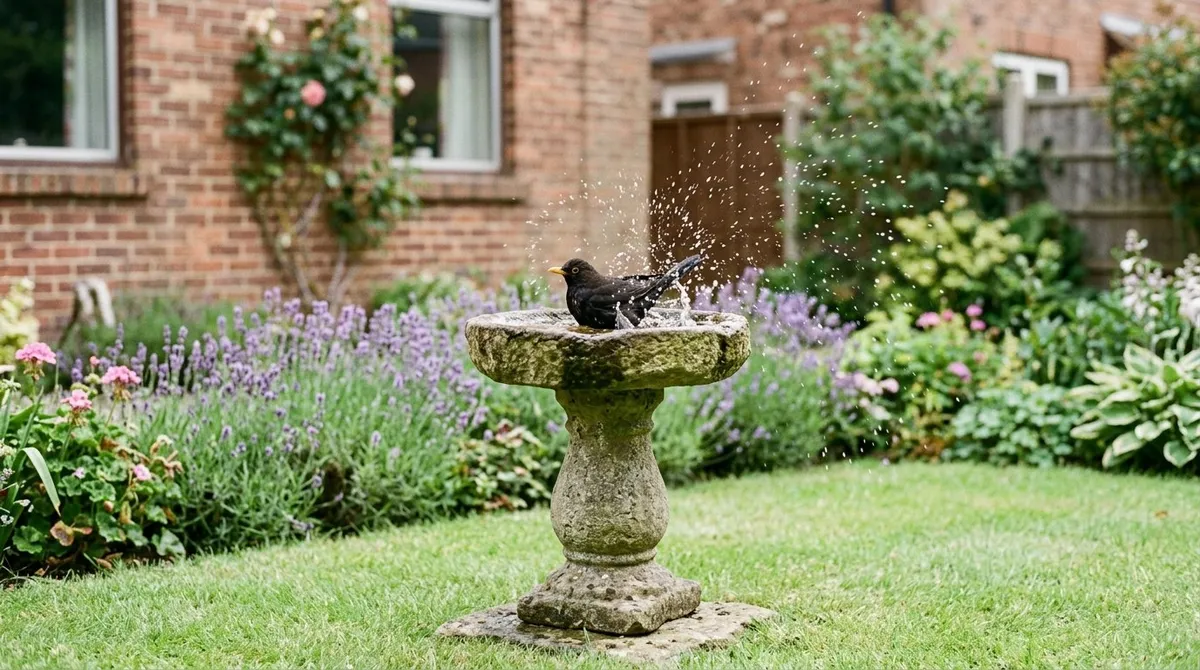
Birds need water to drink and to bathe. Bathing keeps their feathers in good order, which helps them stay cool. In a dry spell, puddles and ponds dry up, so a garden dish can be a real lifeline.

An open beak is how birds pant to lose heat. A shallow dish at ground level lets ground-feeders like sparrows drink in safety.
How to set up water for birds in hot weather
Put out two or three shallow dishes rather than one. That way there’s still water if one gets dirty or knocked over.
- Depth: a few centimetres at most, shallower at the edges
- Footing: a sloping side or a flat stone in the middle, so small birds can stand
- Height: one at ground level near a hedge for blackbirds and dunnocks, and a raised bath for tits and finches
- Spot: dappled shade, about two metres from shrubs, away from places a cat can hide
A plant saucer works fine at ground level. For a raised bath, a shallow stone bird bath in a shady corner is ideal. Top up through the day if the water level drops.
A low dish left out overnight helps hedgehogs too. Just water, never milk. The guide to a hedgehog-friendly garden has more ideas.
Keep bird baths clean every day
In hot weather, lots of birds share the same water, and it warms up fast. That’s how diseases such as trichomonosis spread, which hits greenfinches and chaffinches hard.
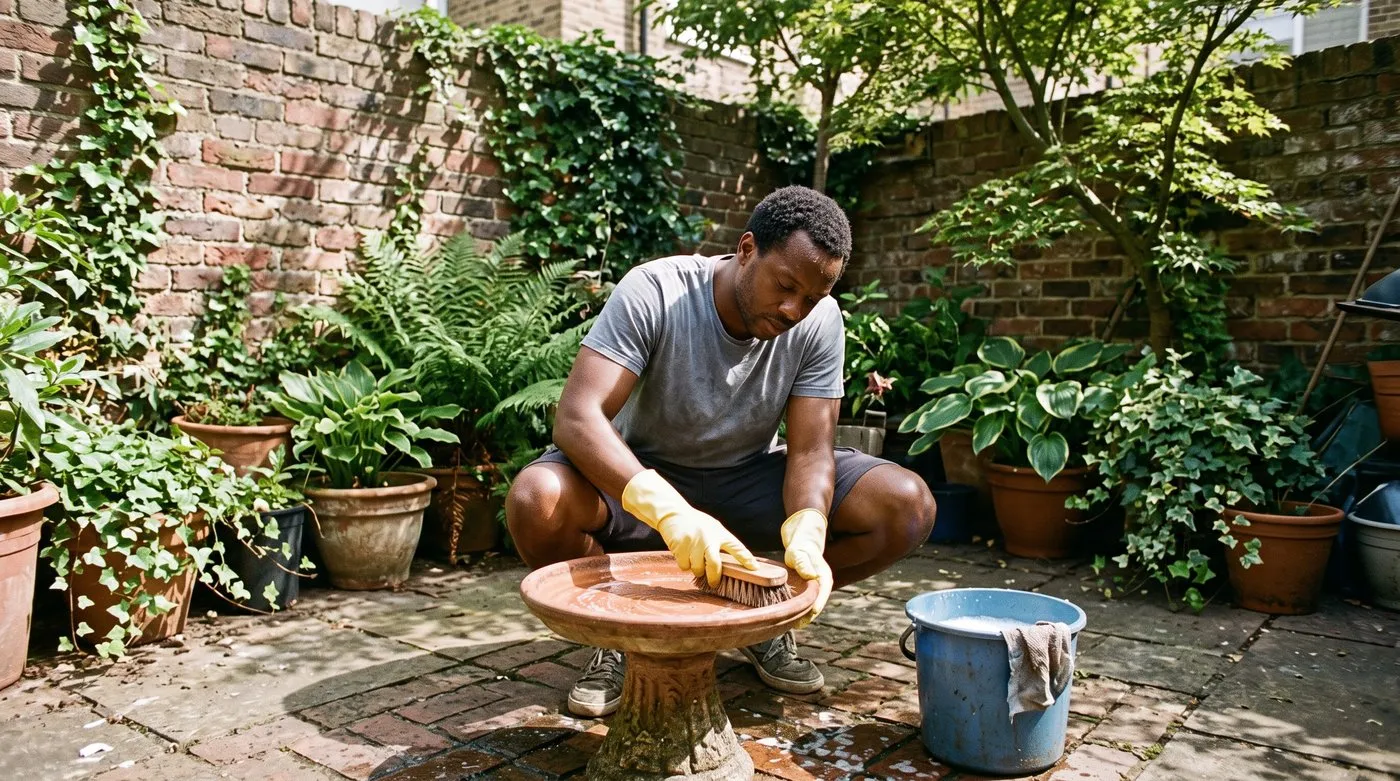
A quick daily scrub and fresh water stops diseases spreading between birds sharing the bath in hot weather.
- Tip out the old water every day
- Scrub the dish with a stiff brush and hot water
- Rinse well and refill with fresh water
- Do the same for feeders every week or two
If you spot sick birds, fluffed up and lethargic at the feeders, take everything down for a couple of weeks. The guide to cleaning bird feeders covers what to use.
Shade for feeders and water
Birds feed and bathe more happily out of the full glare of the sun. Food and water in the shade also stay fresher for longer.
- Move feeders and baths under a tree or beside shrubs for the summer
- Keep some thick cover close by so birds can dash to safety
- If there’s no natural shade, a simple shade-net canopy above the feeding station helps

No tree handy? A bit of shade netting over the feeding station keeps the food and water out of the hottest sun.
What to feed birds in a heatwave
Keep feeding, but put out small amounts that get eaten the same day. Food left sitting in the heat goes off and attracts flies.
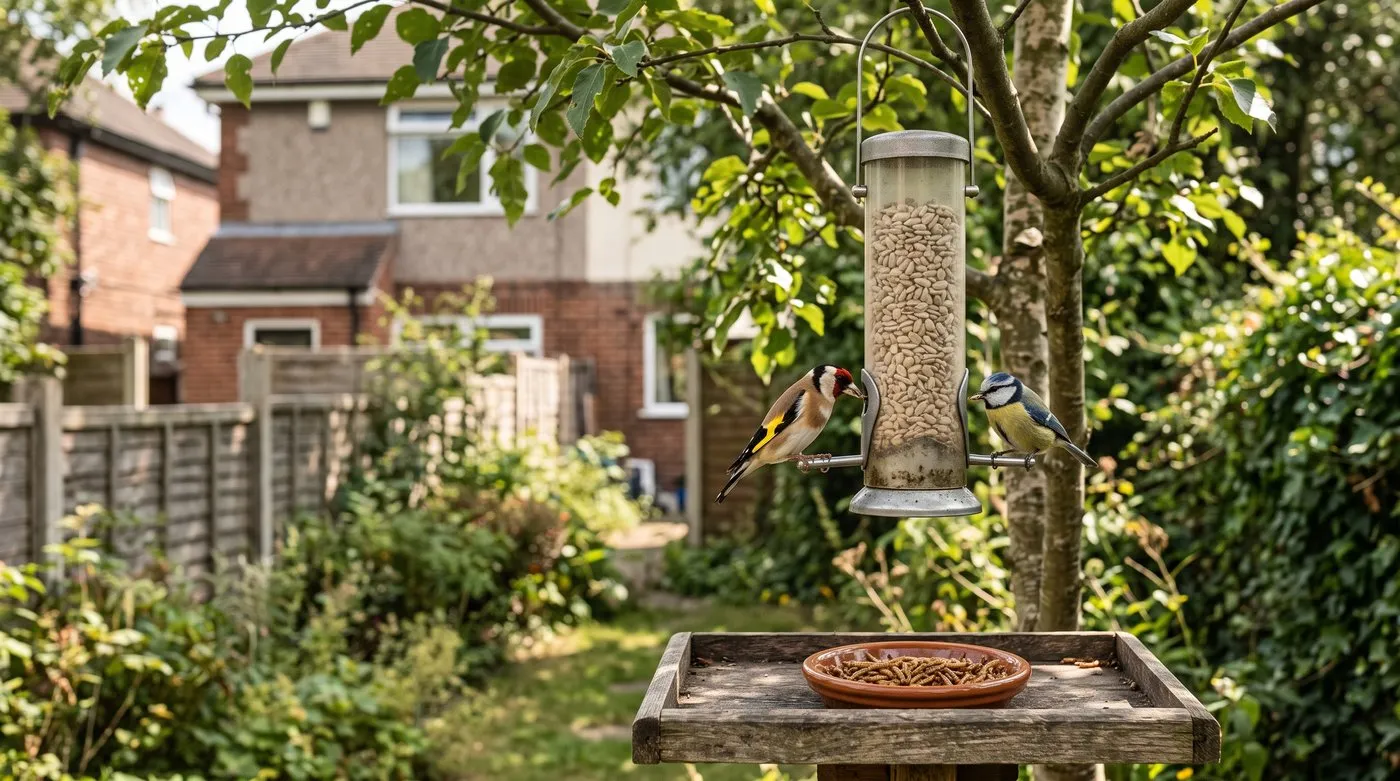
Sunflower hearts in a shady spot are a good summer choice. Put out a little at a time so nothing goes off in the heat.
Good choices in hot weather:
- Sunflower hearts
- Good-quality seed mixes
- Dried mealworms soaked in water first, which adds moisture
- Soft fruit such as apple or pear pieces
- Nyjer seed for goldfinches
Hold back on:
- Soft fat, suet blocks and fat balls, which can melt and go rancid, unless they’re made for summer use
- Loose whole peanuts in spring and early summer, as they can choke chicks; use a mesh feeder instead
- Bread, which fills birds up with very little goodness
Clear away leftovers each evening. The bird feeding guide by season covers what to put out the rest of the year.
Nest boxes in hot weather
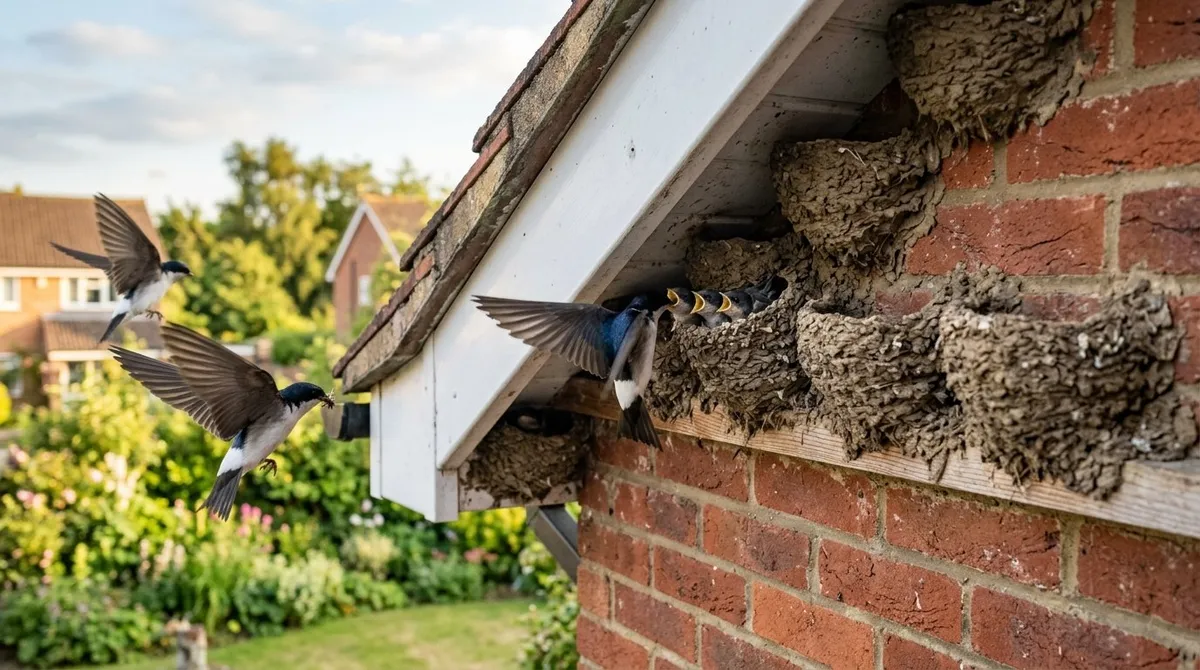
Leave active nest boxes alone. Opening, moving or fiddling with a box can make the parents abandon it. Draping cloths or shades over it disturbs them too.
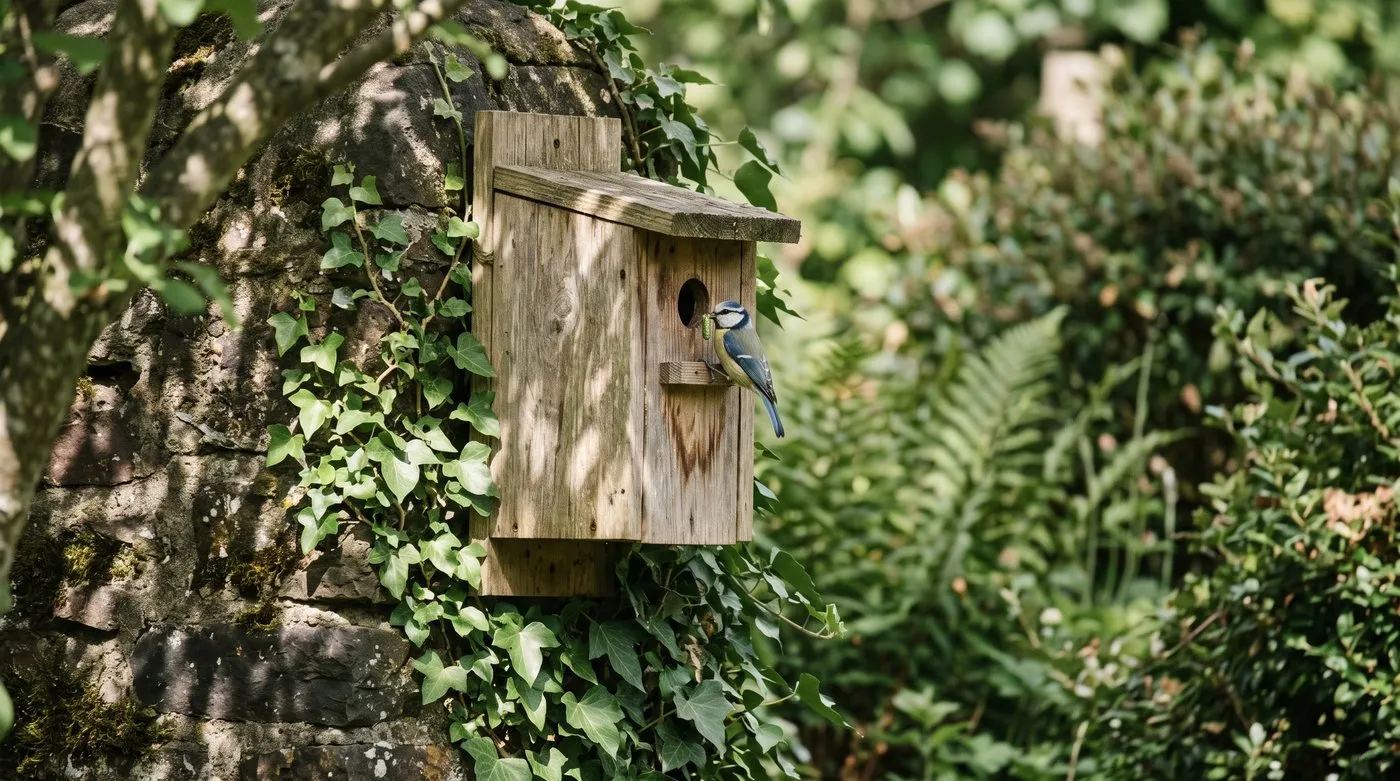
A box that misses the hot midday sun stays cooler for the chicks. Watch from a distance and let the parents get on with it.
It’s also against the law to damage or destroy an active nest. The kindest thing is to keep water and food nearby, so the parents don’t have to fly far.
For next year: put boxes where they miss the strong midday and afternoon sun. A spot facing roughly north to east, with some shade from foliage, suits most garden birds.
Common mistakes in a heatwave
- One big bath, cleaned once a week. It gets warm and grubby fast. Use smaller dishes and scrub them daily.
- Water too deep. A deep bowl can drown small birds. Add a stone or choose a shallow dish.
- Feeders in full sun. Birds visit less and food spoils faster. Move them into the shade.
- Putting out too much food. Leftovers go off in the heat. Little and often is better.
- Checking on the nest box. It’s tempting, but it risks the brood. Watch from a distance.
Garden bird summer care through the year
| Month | Task |
|---|---|
| April to May | Set up a second water dish; use mesh feeders for peanuts |
| June | Move feeders and baths into shade before the first hot spell |
| July to August | Scrub and refill water daily in heatwaves; feed little and often |
| September | Keep water out in dry spells; clean feeders thoroughly |
| October to March | Move feeders back to sunnier spots; keep water ice-free in frost |
Frequently asked questions
How do I help garden birds in a UK heatwave?
Put out clean, shallow water in the shade. Refill and scrub it daily, and add a second dish if you can. Move feeders out of full sun, offer small amounts of food, and leave nest boxes undisturbed.
How deep should bird bath water be in hot weather?
A few centimetres at most, with shallower edges. Small birds need to stand in the water to drink and bathe. A sloping side or a flat stone in the middle gives them a safe footing and stops them drowning.
Should I feed birds in a heatwave?
Yes, but put out small amounts and keep it fresh. Sunflower hearts, seed mixes, soaked dried mealworms and soft fruit all work. Skip soft fat, bread and anything that goes off quickly, and clear leftovers every evening.
Where should I put a bird bath in summer?
In dappled shade, about two metres from shrubs or a hedge. That keeps the water cooler and gives birds somewhere to dash to. Keep it away from spots where a cat could hide and pounce.
How can I tell if a bird is too hot?
Look for an open beak and wings held away from the body. Birds pant like this to lose heat, and it’s normal on hot days. Give them water and shade, and leave them be unless one is clearly collapsed.
Can I cool down a hot nest box?
No, leave an active nest box alone. Opening, moving or draping things over it can make the parents abandon the chicks. For next year, put boxes where they miss the strong midday and afternoon sun.
Once your birds are sorted for the summer, read how to attract birds to your garden all year round, or explore more garden wildlife guides.
Our team produces practical UK gardening guidance from source research, contributor records and established horticultural practice. Editorial standards are overseen by Matt W.