Key takeaways
- Most rare woodland butterflies need sunny woodland clearings and won't breed in an ordinary garden
- Gardens help most as nectar stops and stepping stones between woods
- Dog violets feed fritillary caterpillars, honeysuckle feeds the White Admiral and sallow feeds the Purple Emperor
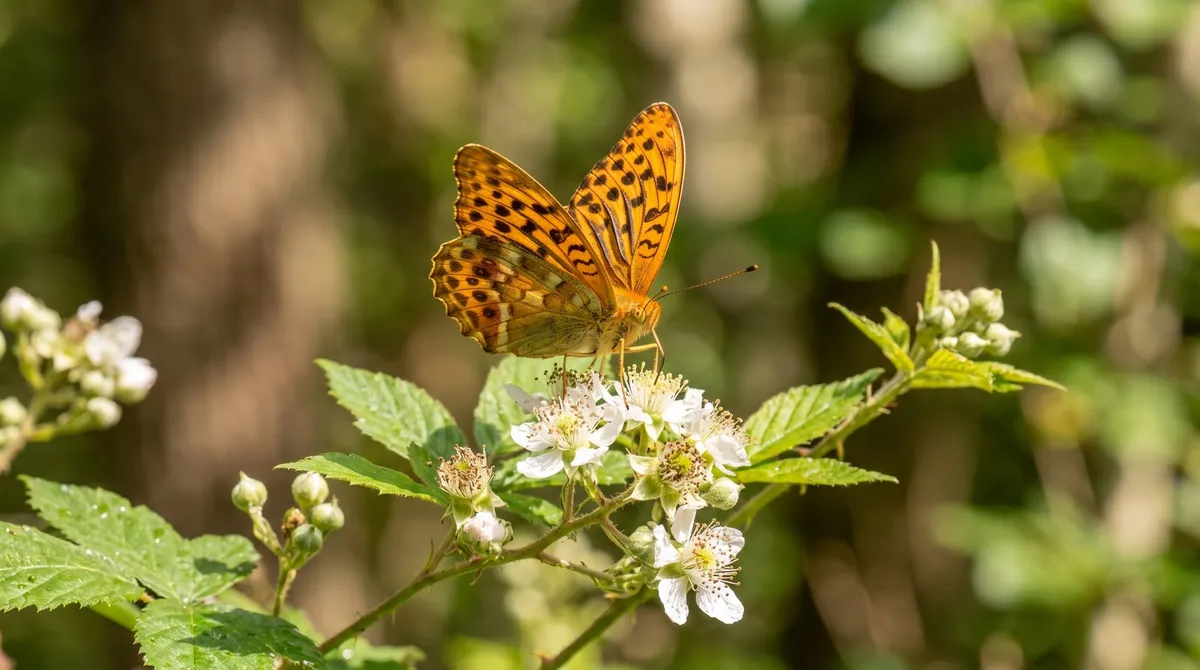
- Flowering bramble is a favourite nectar plant of the White Admiral and Silver-washed Fritillary
- Gardens next to or near woodland can make the biggest difference
- Skip pesticides, as they kill caterpillars along with pests
The UK’s rare woodland butterflies are some of our most beautiful insects, and some of our most threatened. The Purple Emperor, White Admiral and Silver-washed Fritillary belong to sunny clearings and old broadleaf woods. That habitat has shrunk and grown darker over the last century.
A garden can’t replace a well-managed wood. But it can help more than you might think, especially if you live near one. Here’s how to recognise these butterflies and what a garden can realistically do.
Why have woodland butterflies declined?
Mainly because woods are no longer coppiced or opened up. For centuries people cut woodland in rotation for poles and firewood. That let light flood in, and violets, grasses and flowers filled the sunny clearings.
As coppicing and ride-clearing stopped, many woods grew tall and shady. The clearings closed over, the foodplants faded and the butterflies went with them. Butterfly Conservation monitors these species, and several are among its highest priorities. Woods cut off from each other and a changing climate add to the pressure.
Seven rare woodland butterflies to know
Each of these butterflies depends on a particular caterpillar foodplant and a particular kind of warm, sheltered woodland.
| Butterfly | Caterpillar foodplant | When it flies | Where to look |
|---|---|---|---|
| Purple Emperor | Goat willow and other sallows | July to August | High in oak canopy, woodland rides |
| White Admiral | Honeysuckle | June to August | Shady rides, gliding flight |
| Silver-washed Fritillary | Common dog violet | Late June to August | Sunny clearings, on bramble flowers |
| Pearl-bordered Fritillary | Violets | Late April to June | Warm, freshly cut clearings |
| Duke of Burgundy | Cowslip and primrose | May to June | Scrubby grassland near woods |
| Wood White | Vetches and bird’s-foot trefoil | May to August | Sheltered ride edges |
| White-letter Hairstreak | Elm | July to August | Around elm treetops |
The ones you’re most likely to see in a garden are the Silver-washed Fritillary and the White Admiral, if you’re near the right sort of wood. The High Brown Fritillary is rarer still and almost never seen away from a few special sites.
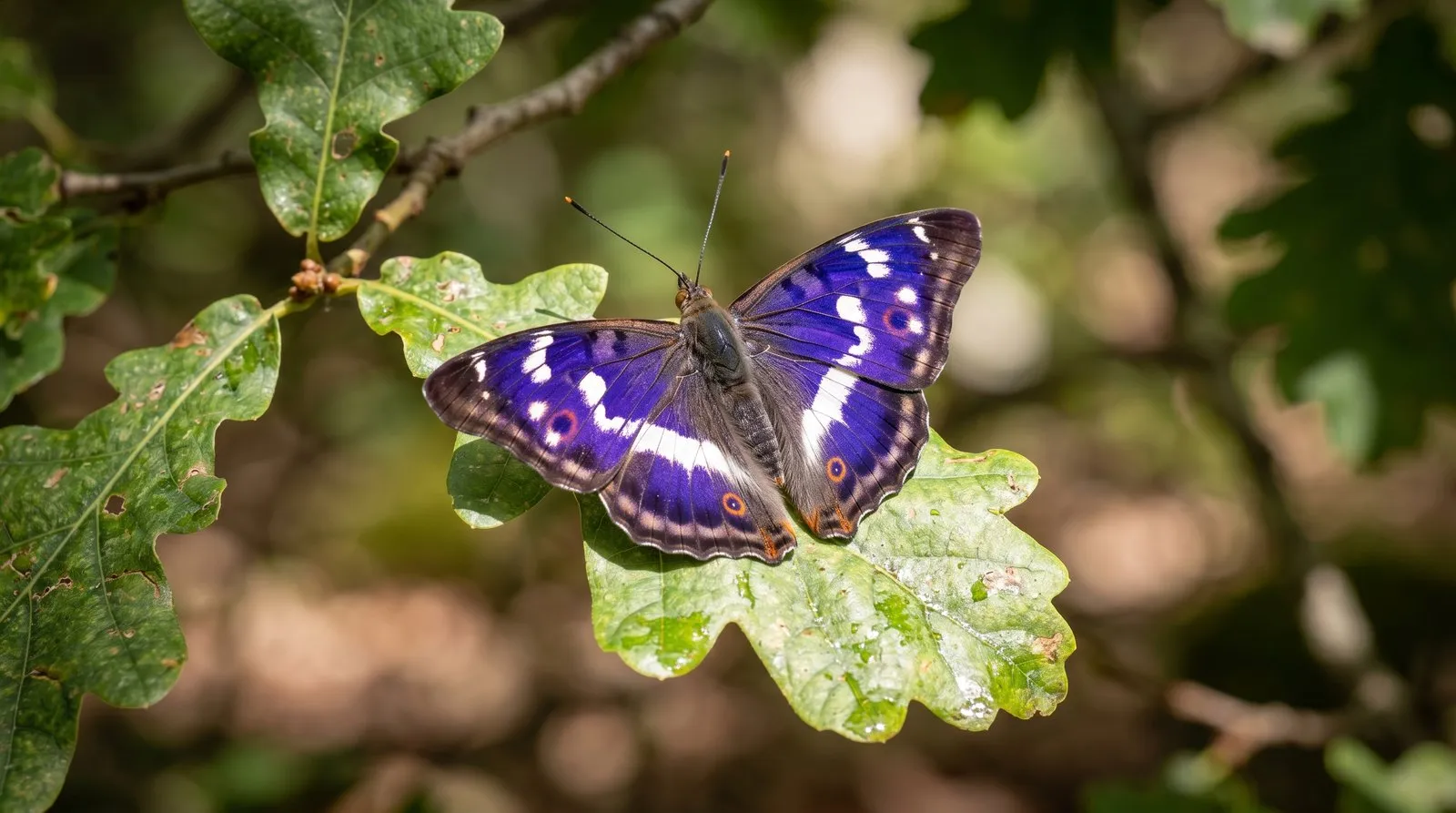
The Purple Emperor spends most of its time high in the oaks, but its caterpillars feed on sallow. Males only show the purple sheen at certain angles.
Which foodplants help woodland butterflies breed?
Growing the right native foodplants is the best way to go beyond feeding the adults. A few are easy in a garden with a wild corner or hedge.
Common dog violets feed the caterpillars of the Silver-washed and Pearl-bordered Fritillaries. They’re small, tough native plants that like light shade under shrubs or along a border edge. Once settled, they seed around. Our guide to UK native plants for gardens has more native choices.
Native honeysuckle, also called woodbine, is the White Admiral’s foodplant. The butterfly lays its eggs on honeysuckle trailing in shade. Choose the wild native kind rather than a showy garden variety, and let it scramble through a hedge or up a shady fence. Our guide to growing honeysuckle covers it.
Goat willow and other sallows feed the Purple Emperor. They’re trees, so they suit a bigger garden or a wild boundary, and their spring catkins feed bumblebees too. Our guide to native trees for UK gardens helps you choose. For the Duke of Burgundy’s cowslips and primroses, a sunny bank or a wildflower meadow patch is ideal.
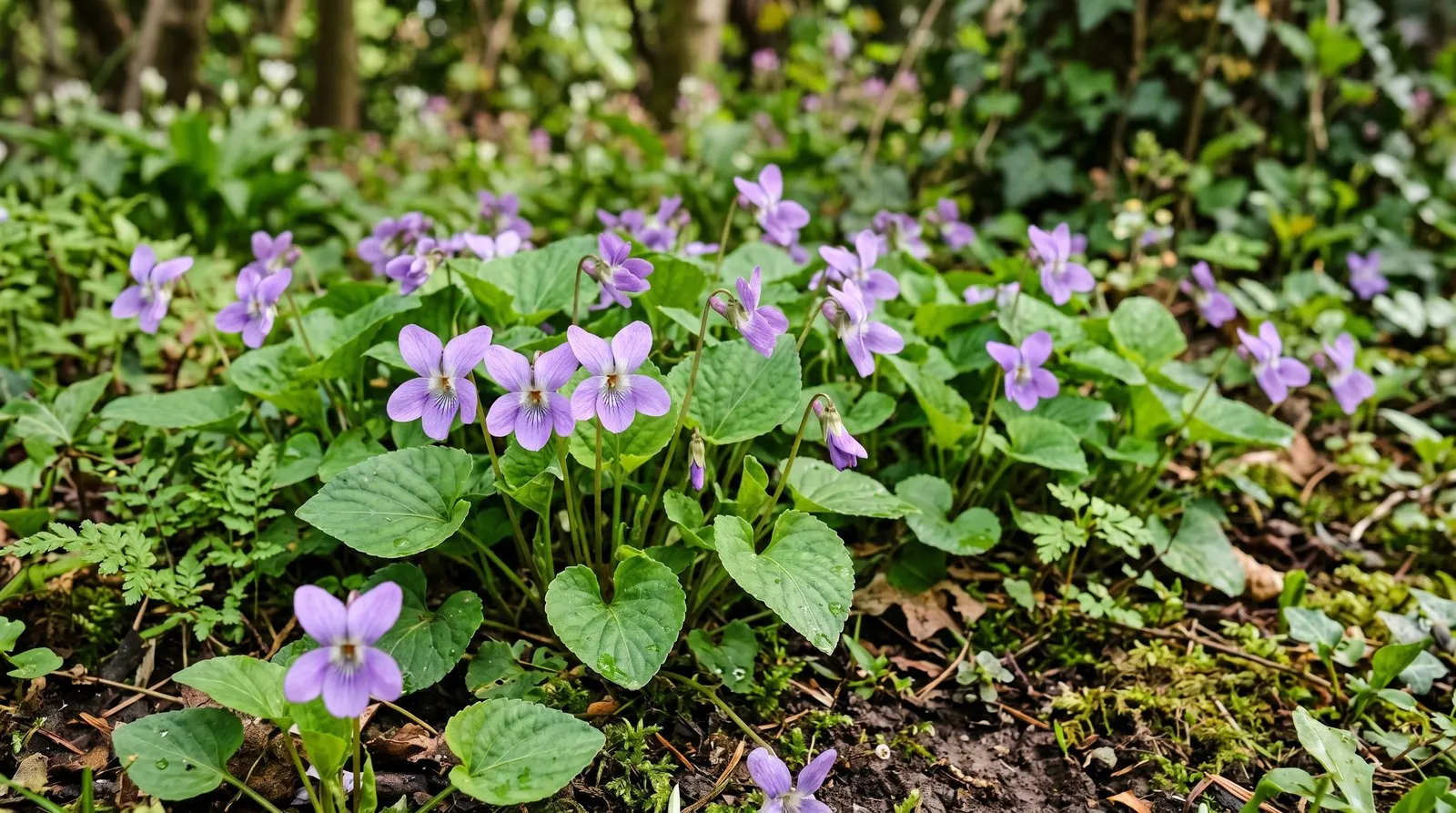
Dog violets are the caterpillar foodplant of several fritillaries. A patch in light shade is a great start.
Which nectar plants do woodland butterflies visit?
Bramble blossom is the big one. The White Admiral and Silver-washed Fritillary both feed on it in high summer. It looks weedy, but letting a patch flower along a back fence or wild edge is one of the simplest things you can do.
Add knapweed, field scabious, marjoram and thistles in sun for the wider butterfly community. A buddleia can be a summer magnet for many common butterflies too.
The Purple Emperor is different. It rarely visits flowers and feeds mostly on honeydew and tree sap high in the canopy. Males sometimes come down to puddles and damp ground.
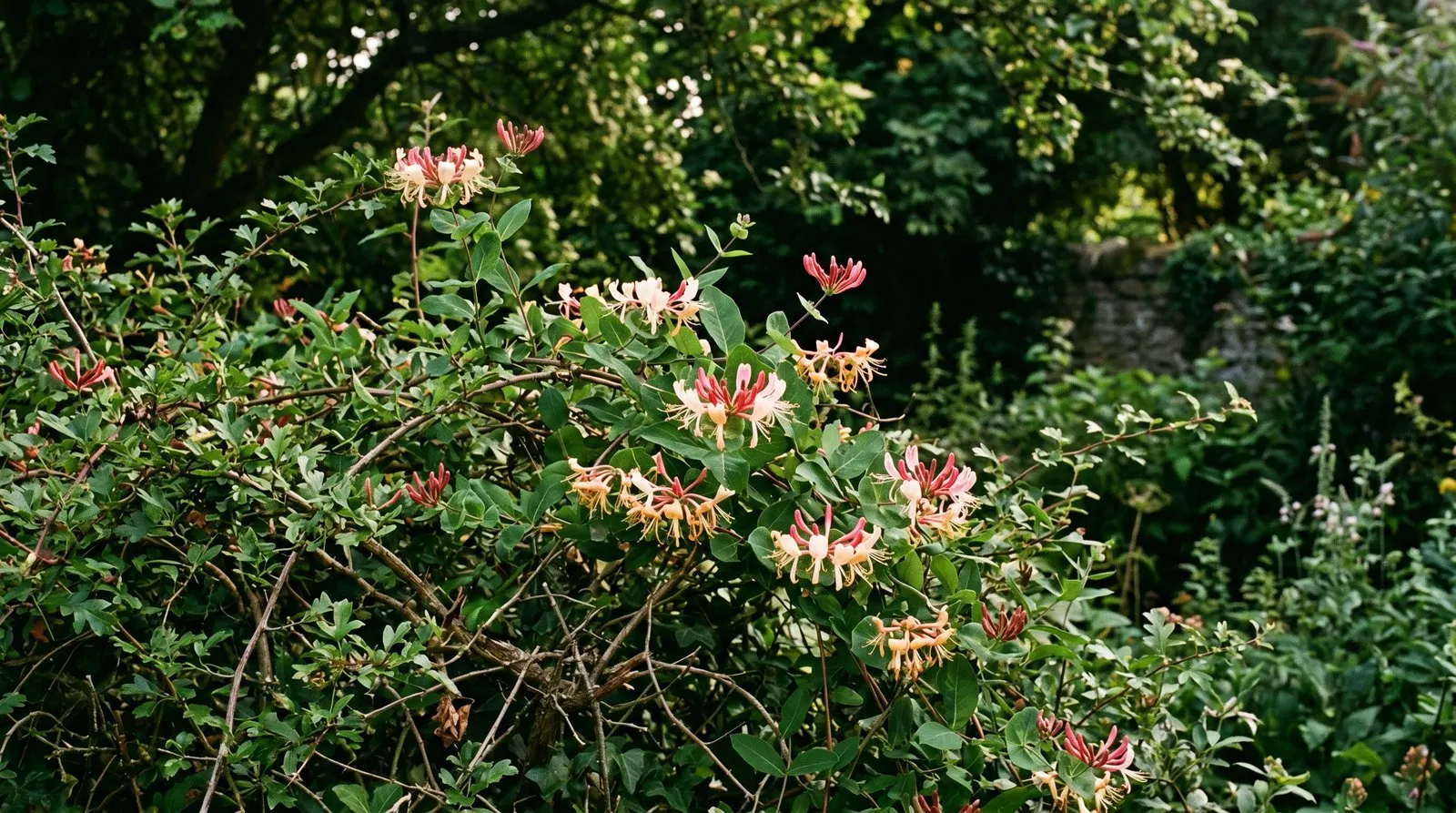
Native honeysuckle in a shady hedge is where the White Admiral lays its eggs.
What can a garden really do for rare butterflies?
A garden can’t recreate a managed wood. But it can be a nectar stop, a source of foodplants and a stepping stone between woods. Near woodland, that combination really helps.
Be realistic. Planting a border won’t start a breeding colony of Purple Emperors or Pearl-bordered Fritillaries. They need the size and sunny clearings of real woodland that’s actively looked after.
Here’s what you can do:
- Leave a wild, unmown corner of native grasses, violets and trefoils.
- Let bramble and honeysuckle scramble along a boundary.
- Grow nectar plants in a sunny spot.
- Plant native trees and a native hedge.
- Never use pesticides. They kill caterpillars as well as pests.
If you garden near a wood, you directly feed and shelter the butterflies breeding there. Further away, your garden is still a stepping stone across the countryside.
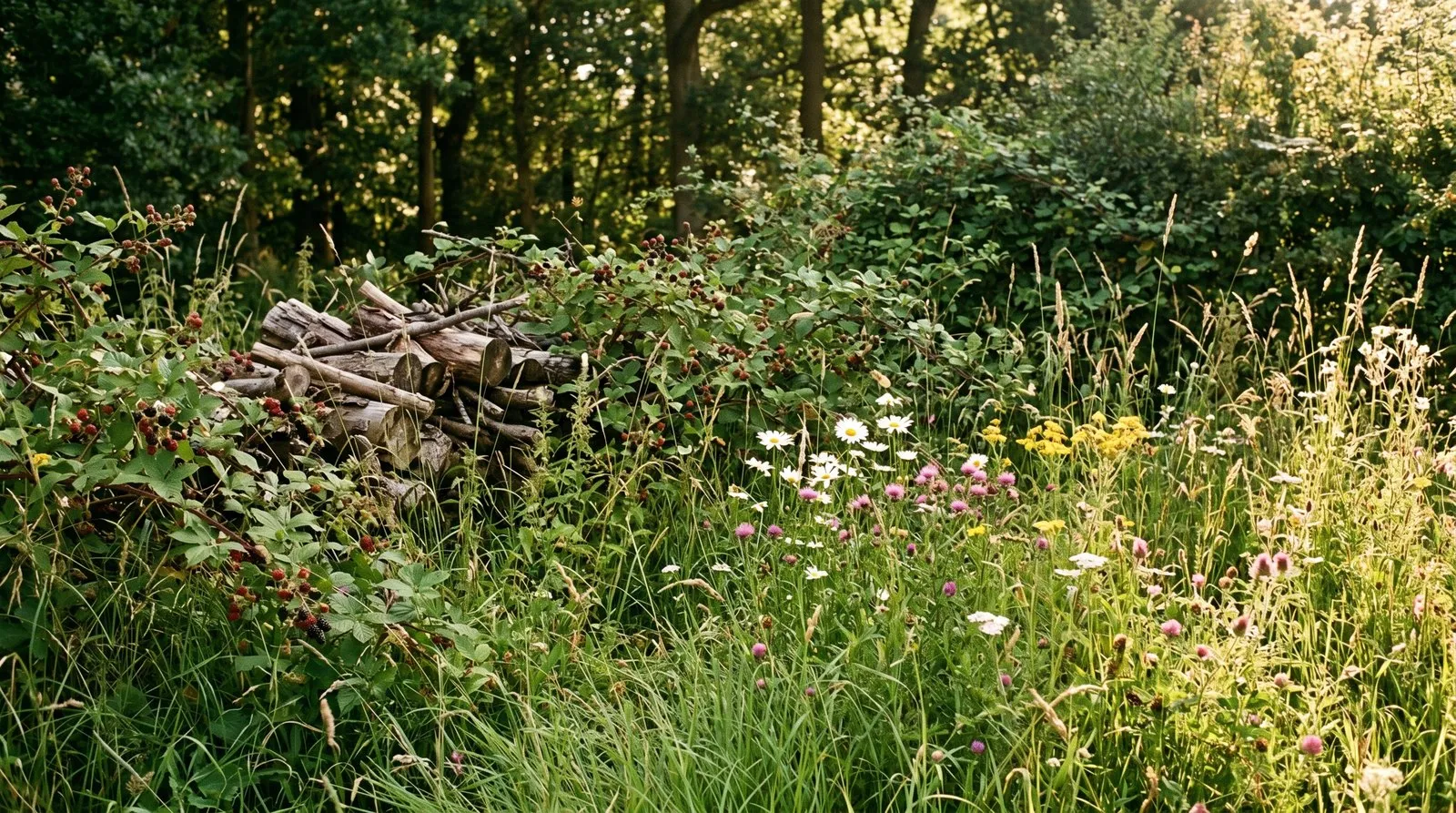
A wild corner with long grass, flowers and bramble gives butterflies food and shelter at the garden’s edge.
Why the White-letter Hairstreak needs elm
The White-letter Hairstreak shows how one change can hit a butterfly hard. Its caterpillars feed only on elm. When Dutch elm disease swept the country, it lost most of its foodplant.
It hangs on around surviving elms and elm regrowth in hedges, usually high in the treetops. You can spot it by the fine white line on its underwing, shaped like a “W”. If you have a mature elm, or space for a disease-resistant elm variety, you can help this butterfly directly. Our guide to Dutch elm disease explains how to spot it.
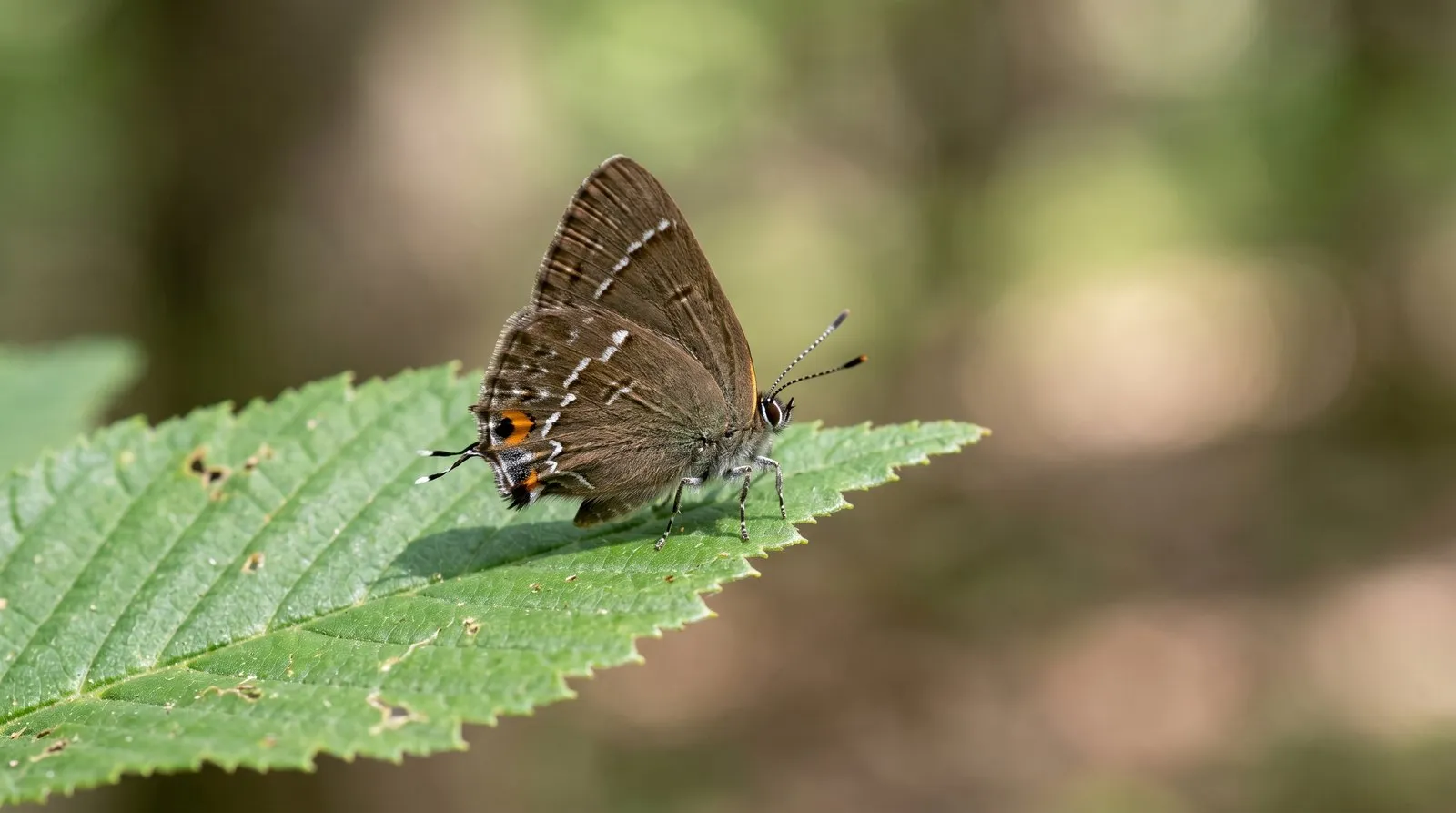
The White-letter Hairstreak is small and brown, with a fine white line across the underwing. It breeds only on elm.
Common mistakes when gardening for woodland butterflies
- Clearing every bramble. Keep a flowering patch along an edge for summer nectar.
- Planting showy honeysuckle only. Grow the native kind for the White Admiral.
- Tidying every corner. Long grass and violets in a wild patch are valuable habitat.
- Spraying. Pesticides kill caterpillars, including the ones you’re trying to help.
For species details and where to see them, Butterfly Conservation’s species pages are the best place to start. Ready to plant? Read our guide to the best plants for butterflies to fill your sunny borders with nectar. For more wildlife ideas, visit the wildlife hub.
Frequently asked questions
Which woodland butterflies are rarest in the UK?
The High Brown and Pearl-bordered Fritillaries are among the very rarest. The Duke of Burgundy and Wood White are rare too. The Purple Emperor, White Admiral and Silver-washed Fritillary are scarce woodland specialists too, though some are spreading again.
Can I attract rare woodland butterflies to my garden?
You may attract some to feed, but rarely to breed. Gardens near woods can draw Silver-washed Fritillaries or White Admirals to flowering bramble and other nectar in sun. Breeding needs their exact foodplants and woodland conditions.
What plants help woodland butterflies?
Bramble, knapweed, marjoram and thistles for nectar, plus the right caterpillar foodplants. Grow dog violets for fritillaries, native honeysuckle for the White Admiral, sallow for the Purple Emperor and cowslips or primroses for the Duke of Burgundy.
Why have woodland butterflies declined?
Mainly because woods are no longer coppiced or opened up. Regular cutting once kept woods sunny, with clearings full of violets and flowers. As it stopped, many woods grew dark and shady, and the butterflies lost their habitat.
Do I need to live near a wood to help?
It helps a lot, but it isn’t essential. Gardens near woodland can feed and shelter woodland species directly. Gardens further away still help the wider butterfly population by offering nectar, native plants and a pesticide-free patch.
Our team produces practical UK gardening guidance from source research, contributor records and established horticultural practice. Editorial standards are overseen by Matt W.