Key takeaways
- Deep water culture is the simplest system: plants sit in net pots with roots in bubbling nutrient solution
- Start with lettuce, basil, pak choi or spinach, which are quick and forgiving
- Keep the solution at pH 5.5-6.5; most UK tap water needs a little pH-down
- Use an opaque container so light can't reach the water and grow algae
- Change the solution every one to two weeks and keep it below about 22°C to avoid root rot
- Add an LED grow light from October to March for steady winter growth
Hydroponics means growing plants in water mixed with nutrients instead of soil. Plants don’t really need soil. They need water, food, oxygen and light. Give the roots those directly and leafy crops often grow quickly, with no weeding and no muddy kitchen floor.
The easiest way to start is a deep water culture tub you can build in an evening. This guide walks you through building one, mixing the feed, sorting out pH for UK tap water and choosing your first crops. If you’d rather grow in compost, the guide to growing vegetables on a windowsill covers the soil route.
How does hydroponics work?
In hydroponics, plant roots sit in or are fed by a solution of water and dissolved plant nutrients. An air pump, or moving water, keeps oxygen around the roots. The plants still need good light from a window, a greenhouse or a grow light.
In soil, roots spread out searching for water and food. In hydroponics, everything is right there. Because no soil is involved, you have to supply every nutrient yourself, using a feed made for hydroponics. You also need to check the pH (how acid or alkaline the water is) now and then.
Which hydroponic system should a beginner choose?
Start with deep water culture. It is cheap, simple and forgiving.
Deep water culture: the best starter system
In deep water culture (DWC), plants sit in small mesh pots set into the lid of a tub. Their roots hang down into the nutrient solution. An aquarium air pump bubbles air through a stone at the bottom, keeping the roots supplied with oxygen. There are no water pumps or timers to go wrong.
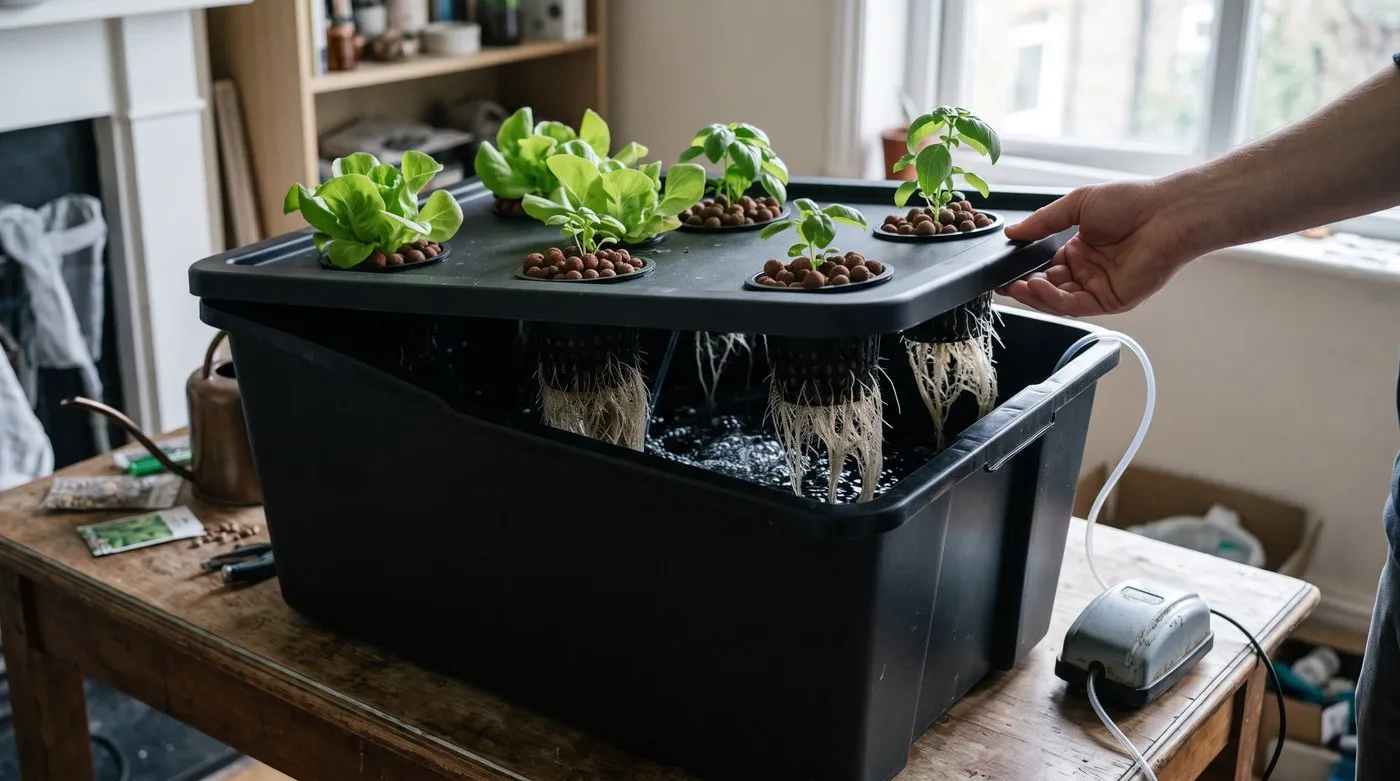
Roots hang into the bubbling solution while the plants grow up through the lid. An opaque tub keeps light out of the water.
Wick systems: no electricity, but limited
A wick system uses a cotton or nylon cord to draw solution up from a reservoir into a pot of growing medium. It suits small herbs such as basil, mint and parsley. Bigger plants drink faster than a wick can deliver.
NFT and drip systems: the next step up
NFT (nutrient film technique) runs a thin stream of solution along a sloping channel. Drip systems pump solution to each plant from a central tank. Both need a pump and timer, so leave them until you are comfortable with pH and feeding. A drip system is the practical choice for taller crops like tomatoes and peppers.
How to build your first DWC system
You can build a simple tub in under an hour with everyday kit.
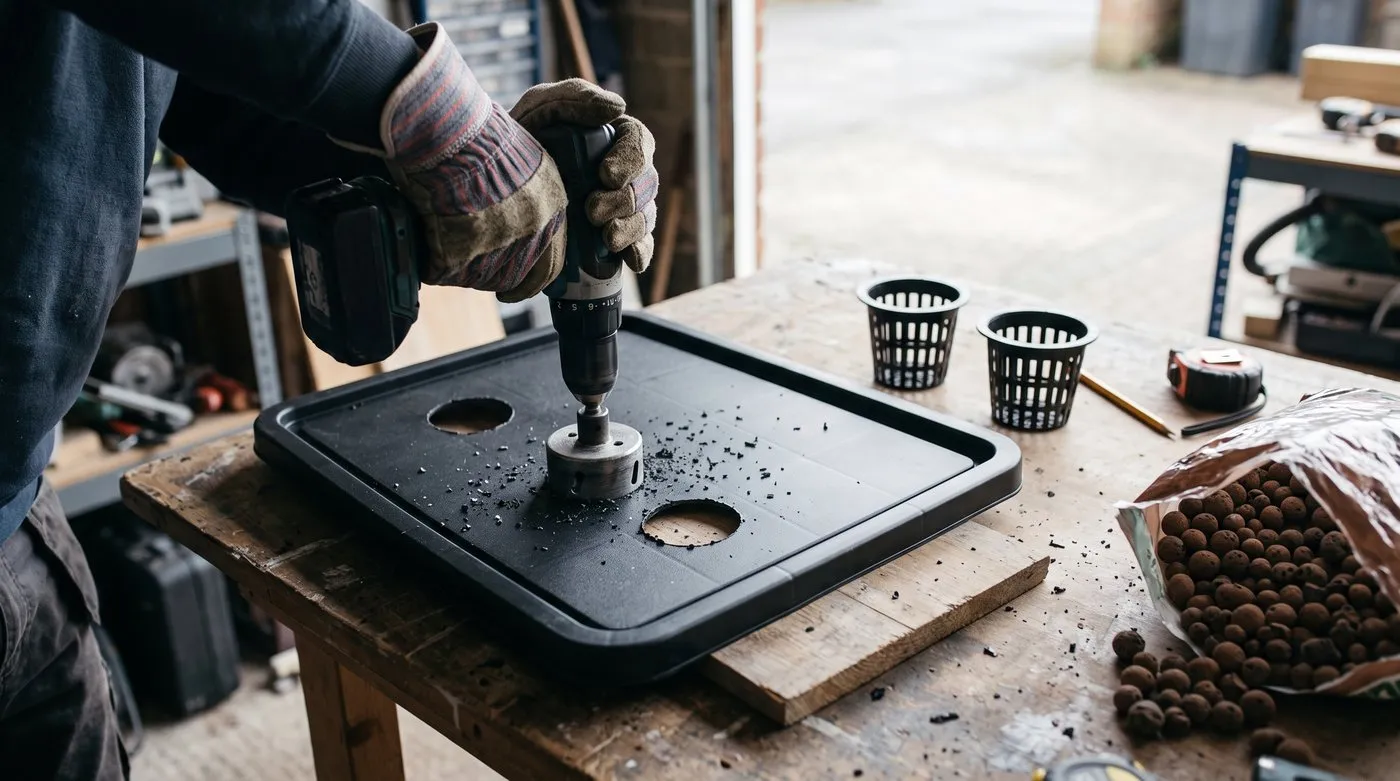
Draw round a net pot to mark each hole, then cut so the pots sit snugly with their rims on the lid.
You will need:
- An opaque plastic storage box with a lid, around 30 litres
- An aquarium air pump, airline tubing and an air stone
- Net pots, about 5cm across
- Expanded clay pebbles, rinsed
- A two-part (A and B) hydroponic nutrient
- pH-down solution and a pH meter or test kit
- An EC meter, which measures feed strength (handy but optional at first)
Build steps:
- Draw round a net pot on the lid to mark six evenly spaced holes
- Cut the holes so each pot sits snugly with its rim resting on the lid
- Make a small hole for the airline
- Put the air stone in the bottom and connect it to the pump
- Fill the box with tap water to about 2cm below the base of the net pots
- Add Part A of the nutrient, stir, then add Part B
- Adjust the pH to about 5.8
- Fill the net pots with clay pebbles and settle a seedling in each
- Switch on the air pump and leave it running day and night
Starting plants: sow seeds in rockwool cubes or root plugs and move them into net pots once roots poke out of the bottom. Supermarket “living” lettuce and basil can go straight in after gently washing the compost off the roots.
Gardener’s tip: Light reaching the water feeds green algae. Use an opaque box and cover any gaps around the net pots.
How to mix hydroponic nutrients
Use a two-part liquid feed made for hydroponics, and follow the dose on the bottle. Soil feeds don’t contain everything plants need without soil.
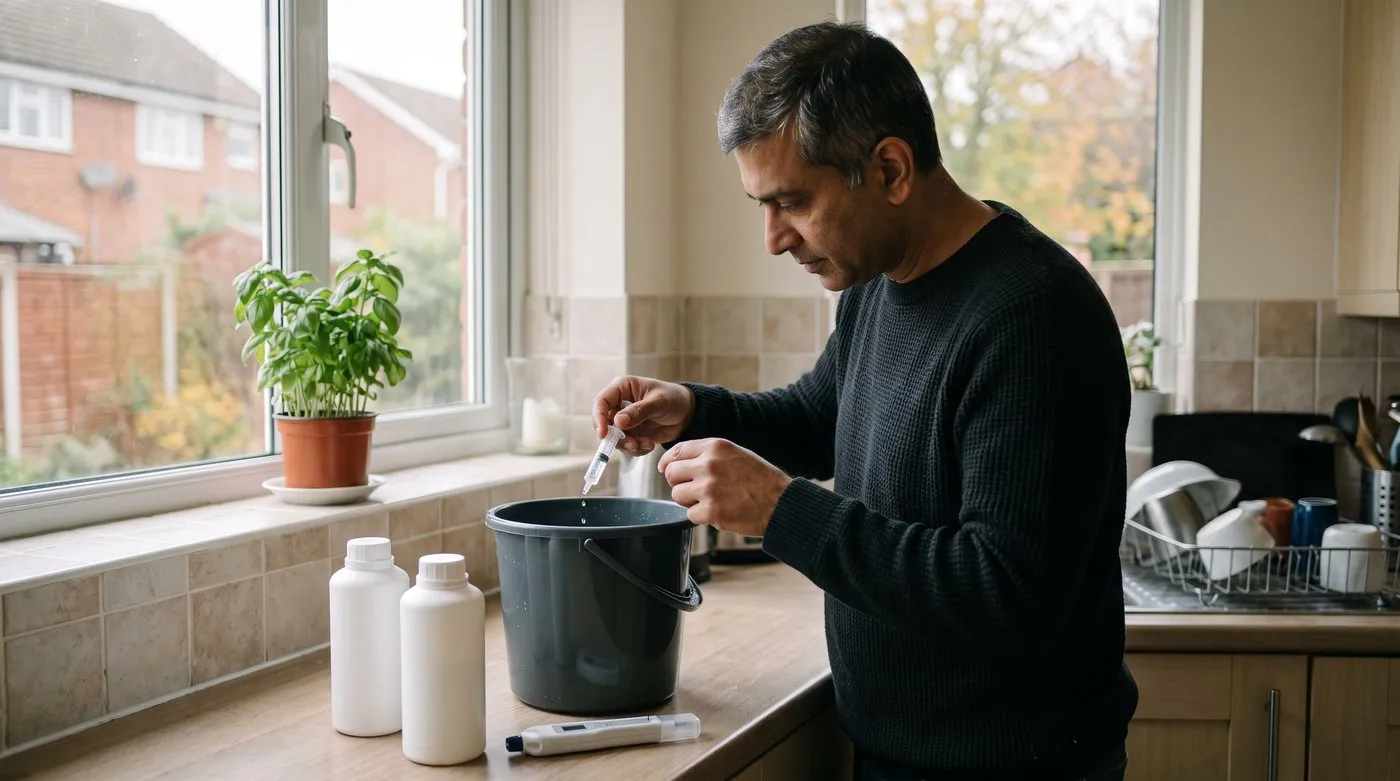
Add Part A, stir well, then add Part B. Measuring with a syringe keeps the dose accurate.
Never pour Part A and Part B together undiluted. Some minerals react and form a solid that plants can’t use. Add Part A to the water, stir well, then add Part B.
How strong should the feed be?
Feed strength is measured as EC (electrical conductivity) with a cheap meter. Start low and raise it over a couple of weeks. Seedlings need about half strength. Burnt, brown leaf tips mean the feed is too strong.
| Crop | Target EC |
|---|---|
| Lettuce and salad leaves | 1.2-1.6 |
| Basil, mint and other herbs | 1.0-1.6 |
| Spinach, pak choi and rocket | 1.8-2.2 |
| Strawberries | 1.2-1.6 |
| Tomatoes, peppers and chillies (fruiting) | 2.0-3.0 |
Getting the pH right for UK tap water
Aim for pH 5.5-6.5. Outside this range, plants can’t take up some nutrients even when they are in the water. Much of England has hard, alkaline tap water, so you will usually need pH-down. Soft water areas, including much of Scotland and Wales, may need very little. Your water supplier’s website lists the hardness for your postcode.
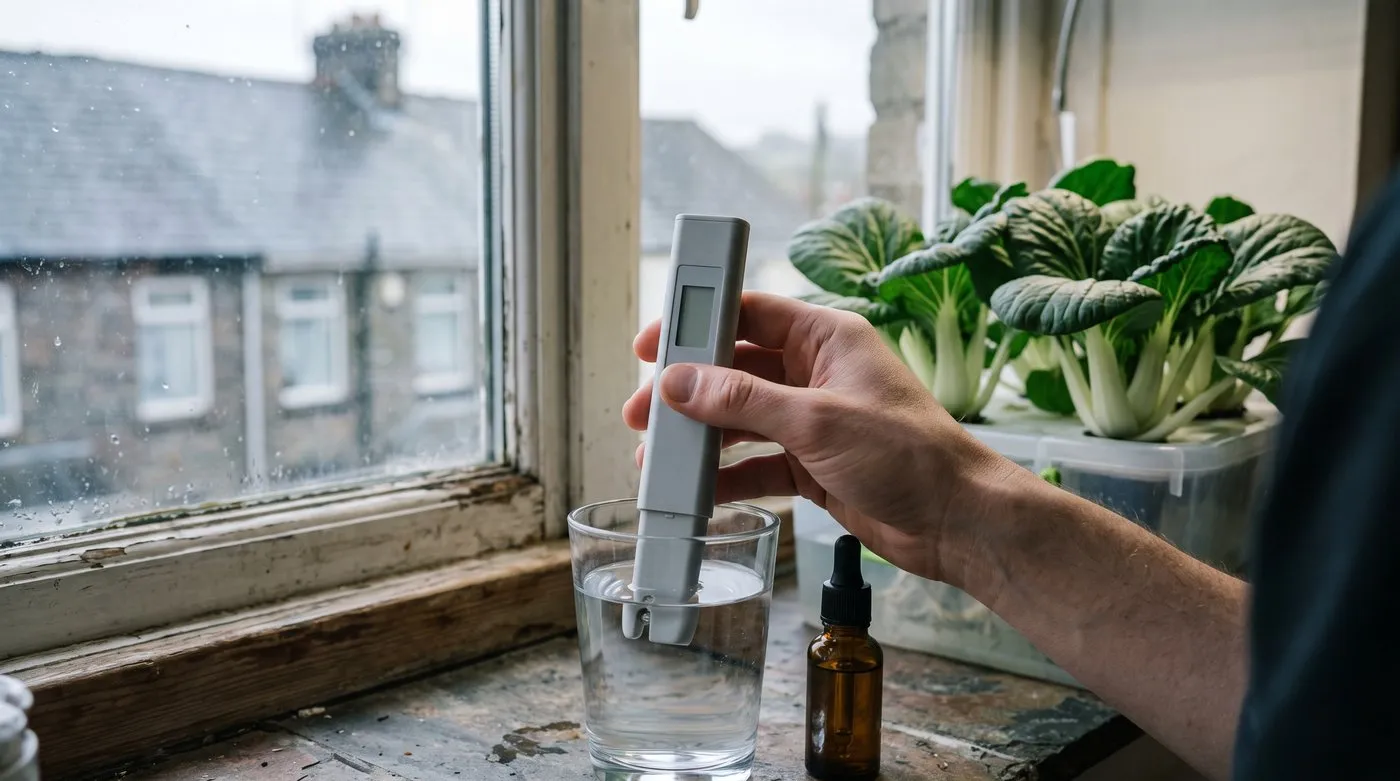
Test the water before and after adding pH-down. A drop or two at a time stops you overshooting.
Add pH-down a drop or two at a time, stir, wait a few minutes and test again. It is easy to overshoot.
What are the best crops for hydroponics?
Start with leafy greens. They are quick, forgiving of mistakes and you can pick them young.
- Lettuce: the best first crop. Butterheads such as All Year Round and Tom Thumb, or loose-leaf types such as Salad Bowl, are reliable. Pick outer leaves for a steady supply. The lettuce growing guide covers varieties.
- Basil: grows fast in a tub. Genovese is the classic. Pinch out the tips to keep it bushy.
- Pak choi: quick and happy in cooler rooms and lower light, which makes it a good winter crop. Canton Dwarf stays compact.
- Spinach: likes cool solution, so it suits an unheated spare room. Perpetual spinach (really a leaf beet) keeps cropping for longer.
Once you are confident, try mint, coriander and dill, or strawberries in an NFT channel. Larger fruiting crops such as chillies and cucumbers need deeper tanks, stronger feed and support.

Healthy hydroponic roots are white and fluffy. Brown or slimy roots mean the water is too warm or short of oxygen.
How much light do hydroponic plants need?
From April to September, a bright south-facing window is usually enough for leafy greens. From October to March, add an LED grow light or plants turn pale and leggy.
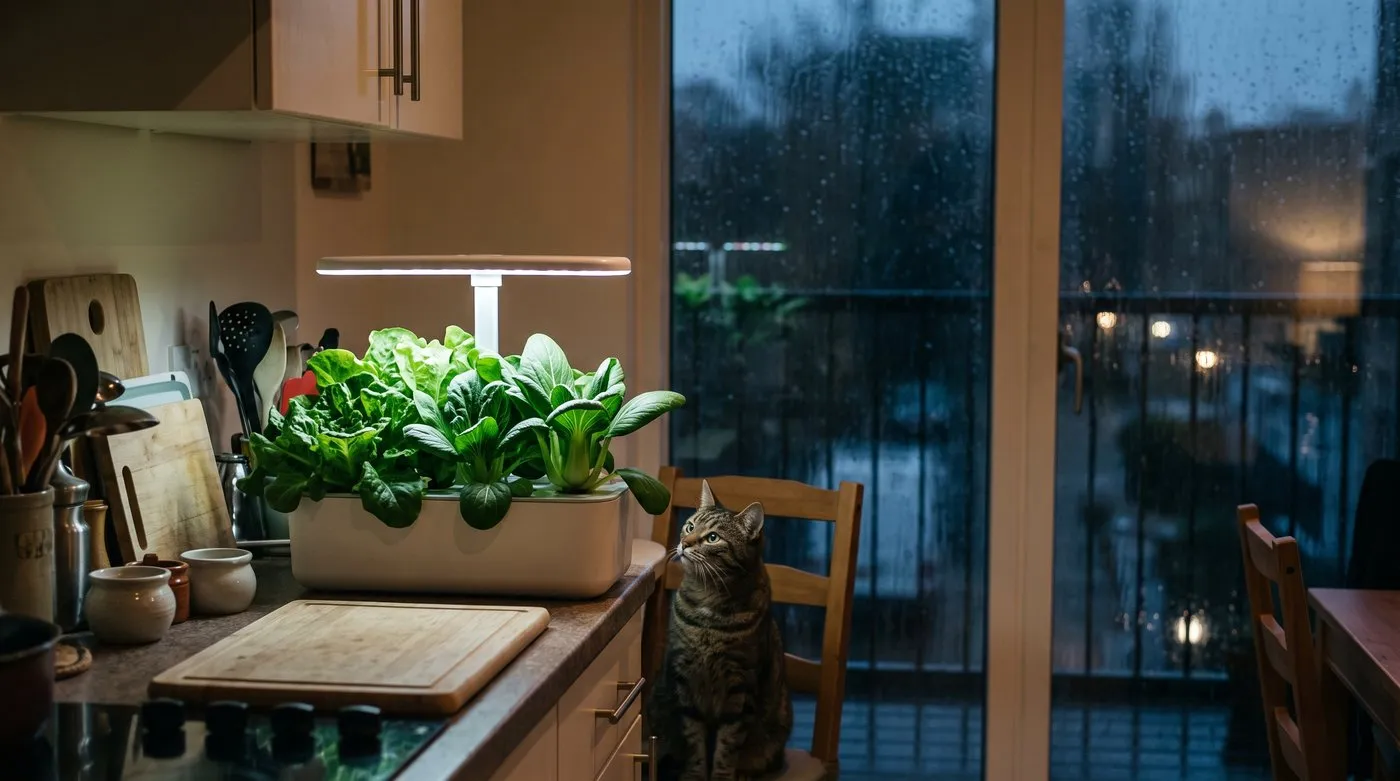
From October to March a small white LED light keeps salad leaves compact and green instead of pale and stretched.
A small full-spectrum LED panel covers one tub. White light is easier to live with in a kitchen than the purple glow of red-blue panels, and lets you see if plants look healthy. Leave lights on for about 12-16 hours a day for lettuce and herbs. The guide to LED grow lights explains how to choose one.
A greenhouse gives more natural light than any windowsill, so a tub there may need no lights at all for much of the year.
Common hydroponic problems and fixes
Most beginner problems come down to pH, feed strength, warmth or light.
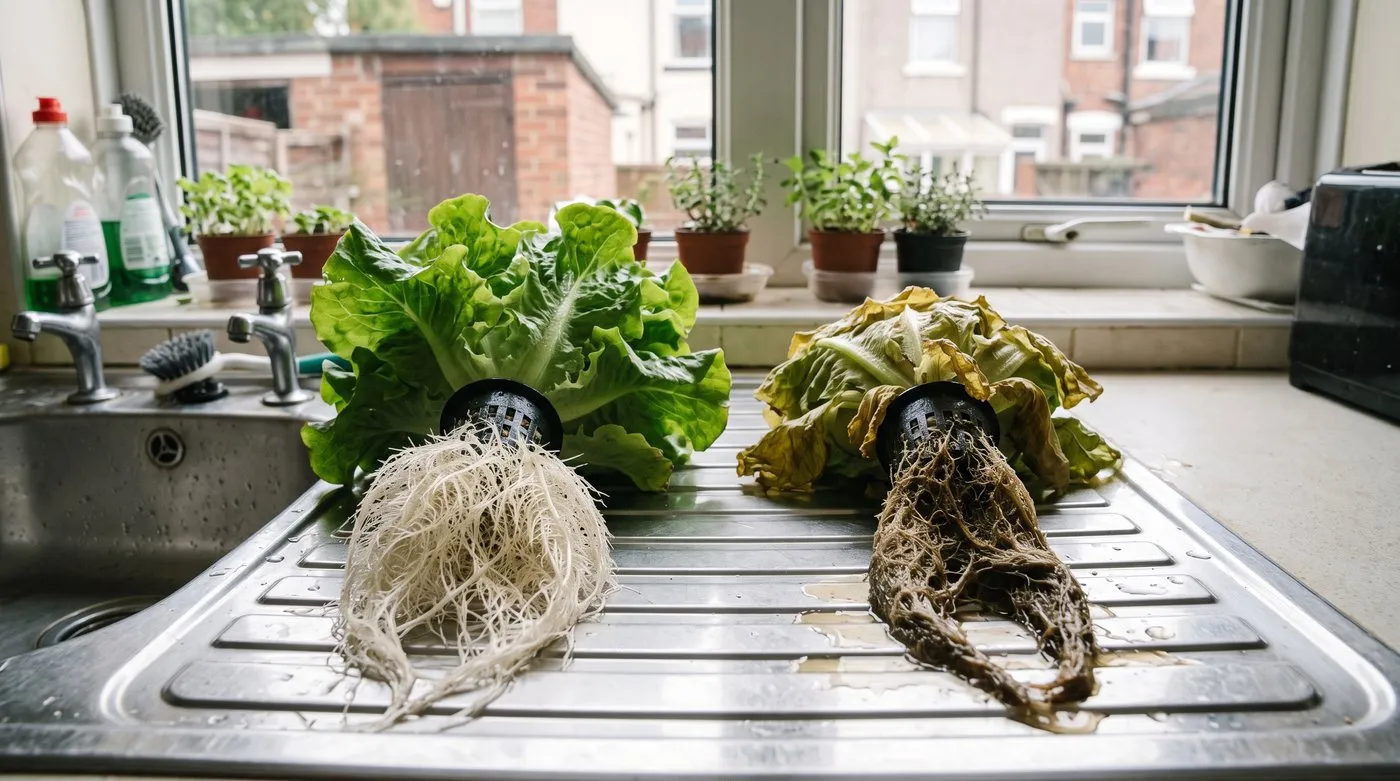
White roots are healthy. Brown, slimy roots mean root rot, usually from warm water or a failed air pump.
| Problem | Likely cause | Fix |
|---|---|---|
| Yellow lower leaves | pH too high | Bring pH back to 5.5-6.5 |
| Brown, burnt leaf tips | Feed too strong | Dilute the solution |
| Slimy brown roots | Root rot from warm water or low oxygen | Clean the tub, check the pump, keep water below about 22°C |
| Pale, stretched plants | Not enough light | Move to a brighter spot or add a grow light |
| Green water | Light reaching the solution | Use an opaque tub and cover gaps |
| Wilting with wet roots | Root rot or a failed air pump | Replace the solution and check the pump |
Root rot is the most common killer. It strikes when the water gets warm and oxygen drops. In summer, move the tub to the coolest spot in the room. A frozen bottle of water floated in the tub helps on hot days.
Is hydroponics worth it compared with soil?
Hydroponics doesn’t replace a veg patch, but it fills some useful gaps. Don’t expect big savings. Herbs and salad leaves are where it pays back best.
Hydroponics suits you if:
- You have no garden, or only a north-facing one
- You want fresh salad and herbs through winter without a heated greenhouse
- You regularly buy pots of basil or bags of salad
Stick with soil for:
- Root crops such as carrots, parsnips and potatoes
- Large harvests of beans, squash and other big plants
- A lower-maintenance approach with less checking
Plenty of people do both: a tub of salad indoors in winter, then beds and pots outside from May. The guide to container vegetable gardening covers growing in pots of compost, and microgreens are another easy indoor crop.
Ready to plan the rest of the year? Browse the growing section, then read about vegetables to grow indoors in winter for more ideas.
Frequently asked questions
How much does it cost to start hydroponics in the UK?
A home-made deep water culture tub is the cheapest way to start. You need a lightproof storage box, an air pump with an air stone and net pots. You also need clay pebbles, hydroponic nutrients and a pH test kit. A grow light adds to the cost if you grow indoors in winter.
What is the easiest hydroponic system for beginners?
Deep water culture (DWC) is the easiest system for beginners. Plants sit in net pots above a tub of nutrient solution, with their roots hanging in the water. An air pump and air stone keep the water bubbling with oxygen. There are no water pumps or timers to fail.
What can I grow in hydroponics in the UK?
Leafy greens and herbs are the easiest hydroponic crops. Lettuce, basil, pak choi, spinach, rocket and mint all do well in a simple tub. Tomatoes, peppers and cucumbers need bigger systems, stronger feed, more light and support for taller plants.
Do hydroponic plants grow faster than soil?
Often yes, especially leafy greens, as long as they get enough light. The roots get water, nutrients and oxygen straight from the solution. In poor winter light, hydroponic plants grow no faster than soil-grown ones.
How often do you change hydroponic water?
Change the nutrient solution about every one to two weeks. Top up with plain water between changes as plants drink. Check pH and feed strength regularly. In warm weather, change it more often, as warm water holds less oxygen.
Is hydroponics cheaper than buying vegetables?
Rarely by much, but it can be for herbs and salad leaves. Running costs include nutrients and electricity for the pump and any grow light. A tub on a sunny windowsill or in a greenhouse costs far less to run than one under lights.
What pH should hydroponic water be?
Keep hydroponic water between pH 5.5 and 6.5 for most crops. Much UK tap water is neutral to alkaline, so you will often need a little pH-down. Outside this range plants struggle to take up some nutrients, and leaves can yellow.
Our team produces practical UK gardening guidance from source research, contributor records and established horticultural practice. Editorial standards are overseen by Matt W.