Key takeaways
- It's harmless to people and pets, with no sting, bite or irritating hairs
- Look for a thumb-thick grey-brown body, four eye spots and a small tail horn
- When disturbed it pulls its head in and puffs up its eye spots to look like a snake
- It feeds from July to September on willowherb, bedstraws and fuchsias
- Fully grown caterpillars wander in late summer looking for soil to pupate in
- The adult is a pink and olive moth that feeds on flowers at dusk
That huge brown caterpillar with big “eyes” is almost certainly an elephant hawk moth caterpillar, and it’s completely harmless. It can’t sting or bite, and it won’t hurt you, your children or your pets. It might nibble your fuchsia, but the plant will bounce back.
This guide shows you how to identify it, what it eats, what it turns into and what, if anything, to do about it. None of it involves a spray.
Is the elephant hawk moth caterpillar dangerous?
No. It has no sting, no venom, no irritating hairs and no bite. You can pick one up safely, though gently nudging it onto a leaf is kinder.
The fright it gives people comes down to size and showmanship. A fully grown one is up to about 8cm long and as thick as your thumb. Add four staring eye spots, and the way it rears up when touched, and it’s easy to see why people jump. It’s all bluff aimed at hungry birds.
If children find one, it makes a brilliant bit of garden wildlife watching. Let them see it pull in its head and puff up its “eyes”. Just remind them to be gentle and put it back where they found it.
How do you identify an elephant hawk moth caterpillar?
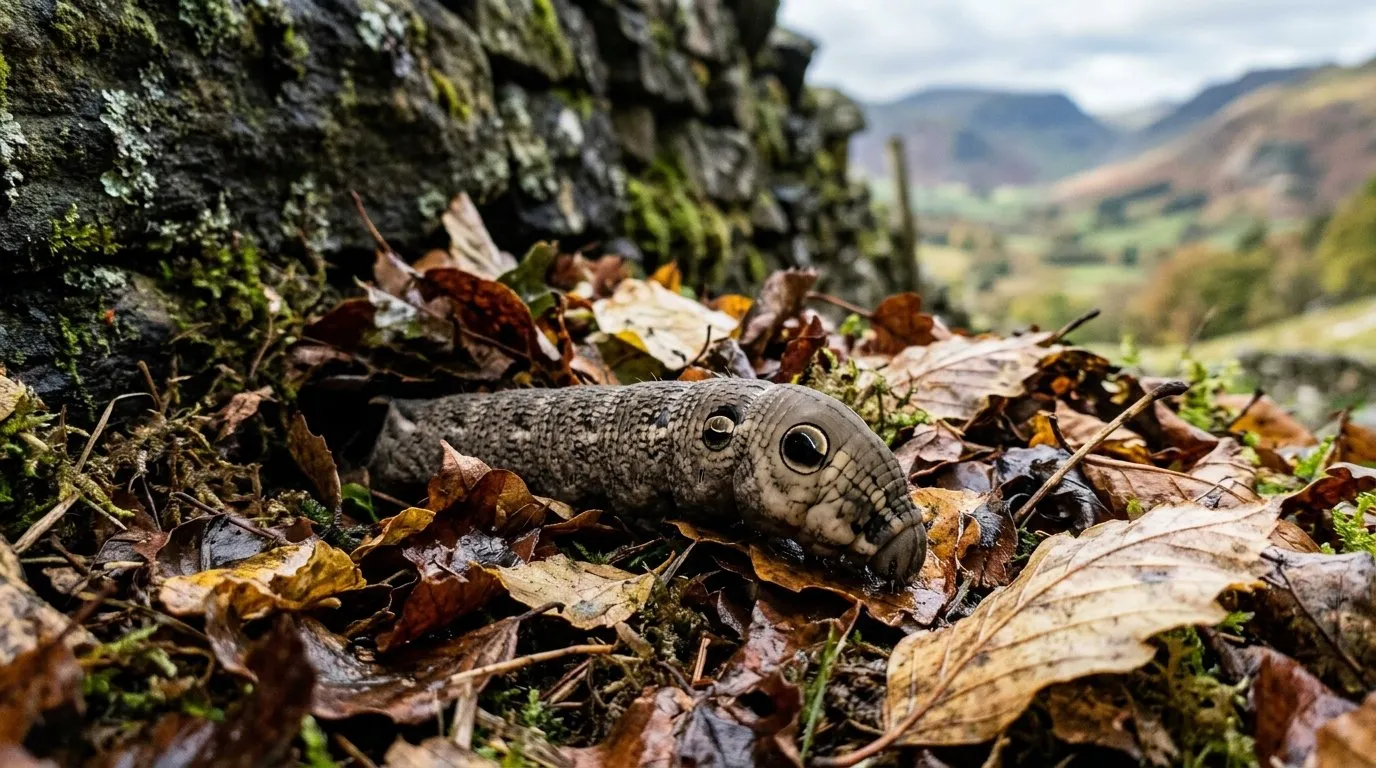
Look for a thumb-thick caterpillar up to about 8cm long, with four eye spots behind the head and a small, curved horn at the tail end. Nothing else in a UK garden has all of those.
Colour. Most are grey-brown with fine dark speckles. A green form turns up too, and young caterpillars are green.
Eye spots. Two pairs of large spots sit just behind the head, dark in the middle with a pale ring. They aren’t real eyes and they don’t mean it’s poisonous.
Tail horn. A short, curved spike at the back end. All hawk moth caterpillars have one, and it can’t hurt you.
Trunk-like front. When it’s feeding, the front end stretches out and tapers, a bit like an elephant’s trunk. That’s where the name comes from.
The snake act. Disturb it and it pulls its head back, swells its front end and pushes the eye spots forward. To a bird, it looks like a small snake.
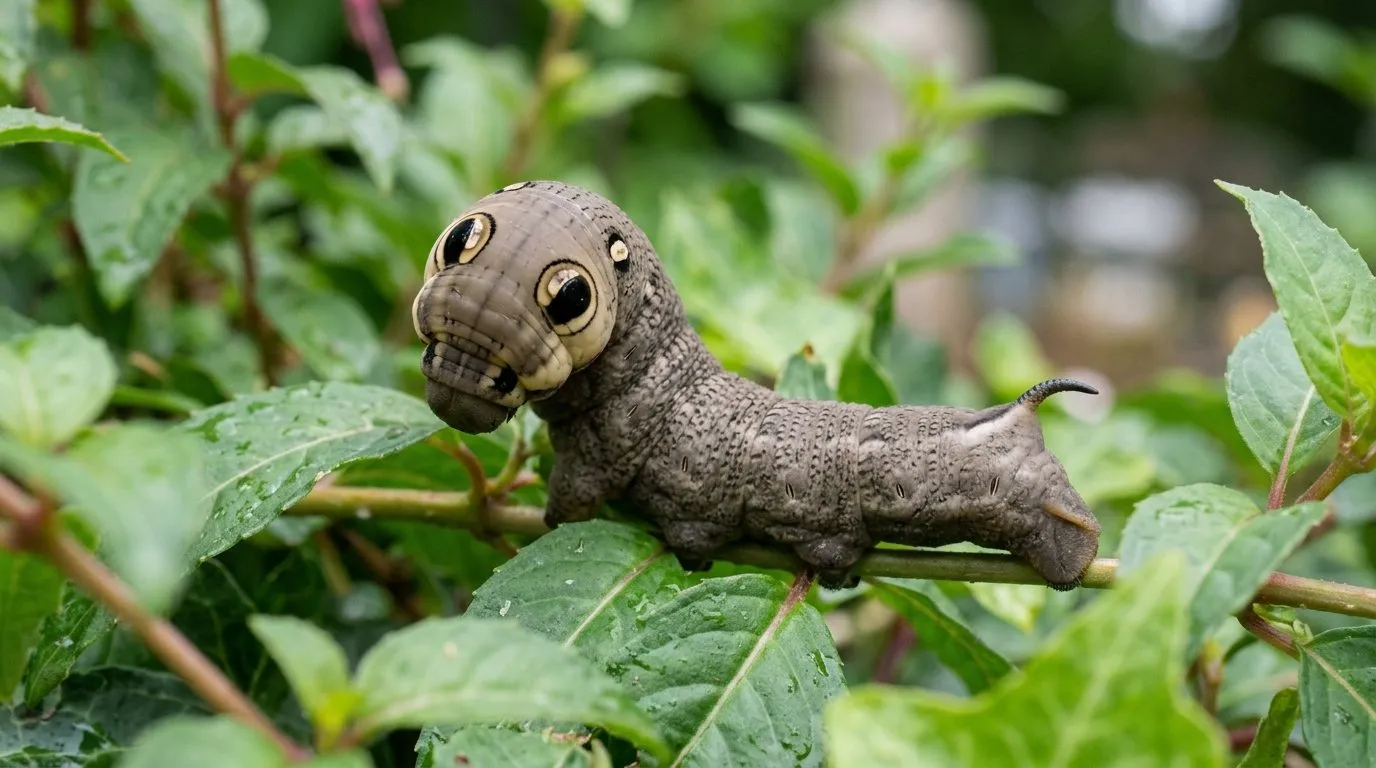
When it feels threatened, the caterpillar puffs up its front end so the eye spots stare back at you. It’s all bluff.
Elephant hawk moth vs other hawk moth caterpillars
A few other big caterpillars turn up in UK gardens. The elephant hawk moth is the grey-brown one with eye spots.
| Caterpillar | Size | Colour | Eye spots | Usual food plants |
|---|---|---|---|---|
| Elephant hawk moth | Up to about 8cm | Grey-brown or green | Four, large | Willowherb, bedstraw, fuchsia |
| Small elephant hawk moth | Up to about 6cm | Grey-brown or green | Four, smaller | Bedstraws |
| Privet hawk moth | Up to about 8cm | Bright green with purple and white stripes | None | Privet, lilac, ash |
| Eyed hawk moth | Up to about 8cm | Green with pale stripes | None | Willow, apple |
The small elephant hawk moth is the easiest to mix up. It’s smaller, its eye spots are less bold, and its tail horn is tiny or missing. The privet and eyed hawk moth caterpillars are bright green with no eye spots.
What do elephant hawk moth caterpillars eat?
Mainly rosebay willowherb, bedstraws and fuchsias. In the wild, willowherb is the favourite, so they’re common on waste ground and woodland edges where it grows in drifts. They also feed on other willowherbs and sometimes busy lizzies.
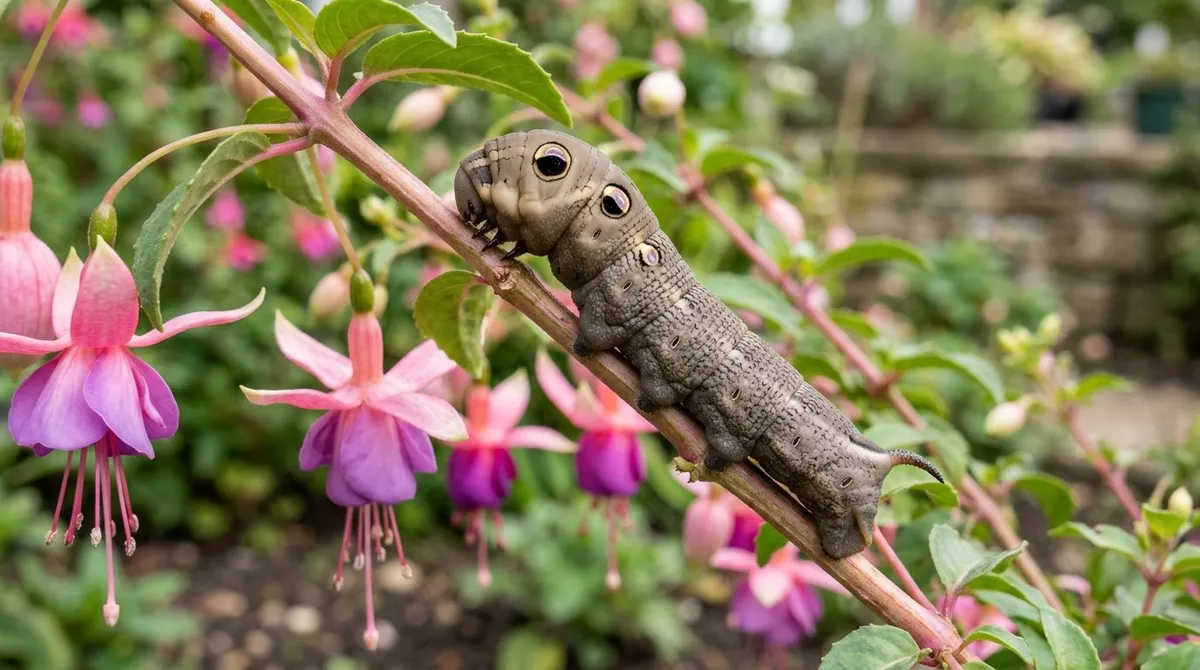
In gardens, most people meet them on fuchsias. A favourite plant can look badly chewed, with one or two big caterpillars sitting on the bare stems. It looks dramatic, but there’s rarely lasting harm. A fuchsia chewed in August usually sprouts again and flowers normally the next summer. There are seldom more than a few caterpillars, and they finish feeding within weeks. Our guide to growing fuchsias covers cutting back and feeding to help a plant recover.
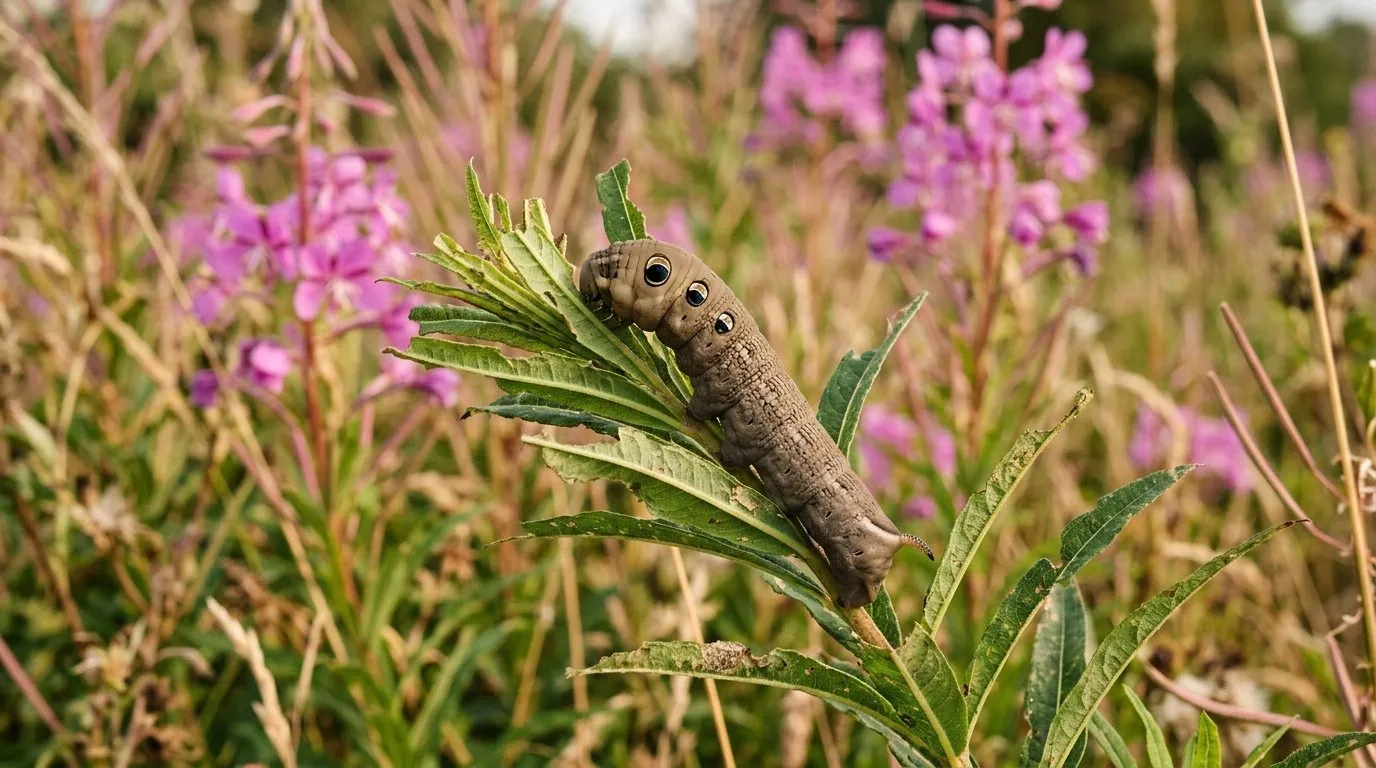
Rosebay willowherb is the main wild food plant. In gardens, they switch happily to fuchsias.
What does the elephant hawk moth caterpillar turn into?
A stunning pink and olive-green moth. It’s one of the prettiest moths you’ll see in a British garden.
Adult moths fly from May to July. They fly at dusk and after dark, hovering at flowers such as honeysuckle to drink nectar. They’re attracted to light, so you may spot one near a lit window.
Eggs are laid in early summer on willowherb and fuchsia leaves.
Caterpillars feed from July to September. They hatch small and green and grow quickly, darkening as they go.
Winter is spent as a pupa. The fully grown caterpillar burrows into loose soil or leaf litter and turns into a brown pupa. The moth comes out the next spring or early summer.
Butterfly Conservation’s elephant hawk-moth page has more on where and when to see the moth.
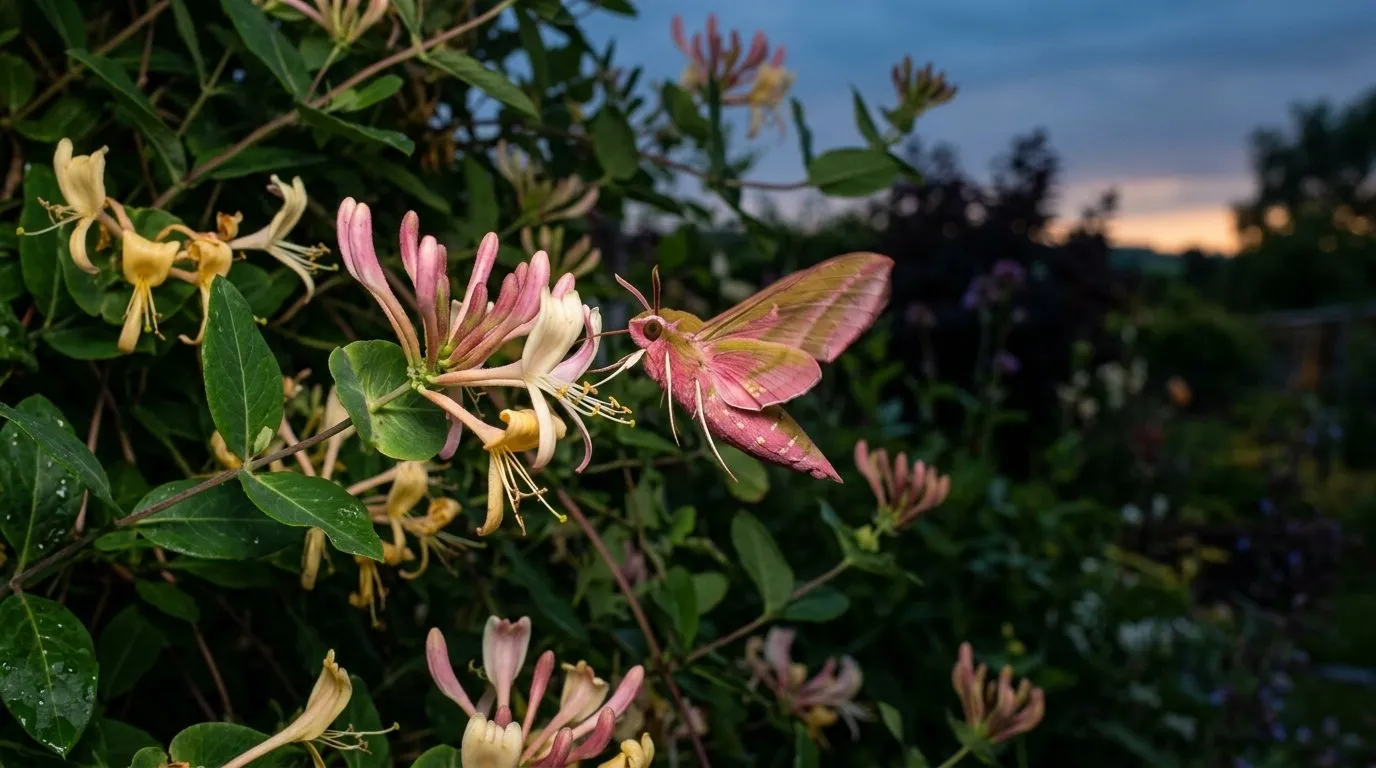
The adult moth is pink and olive-green, and visits honeysuckle and other scented flowers at dusk.
Why is the caterpillar crawling across my lawn or path?
It’s fully grown and looking for somewhere to pupate. This is normal and nothing to worry about.
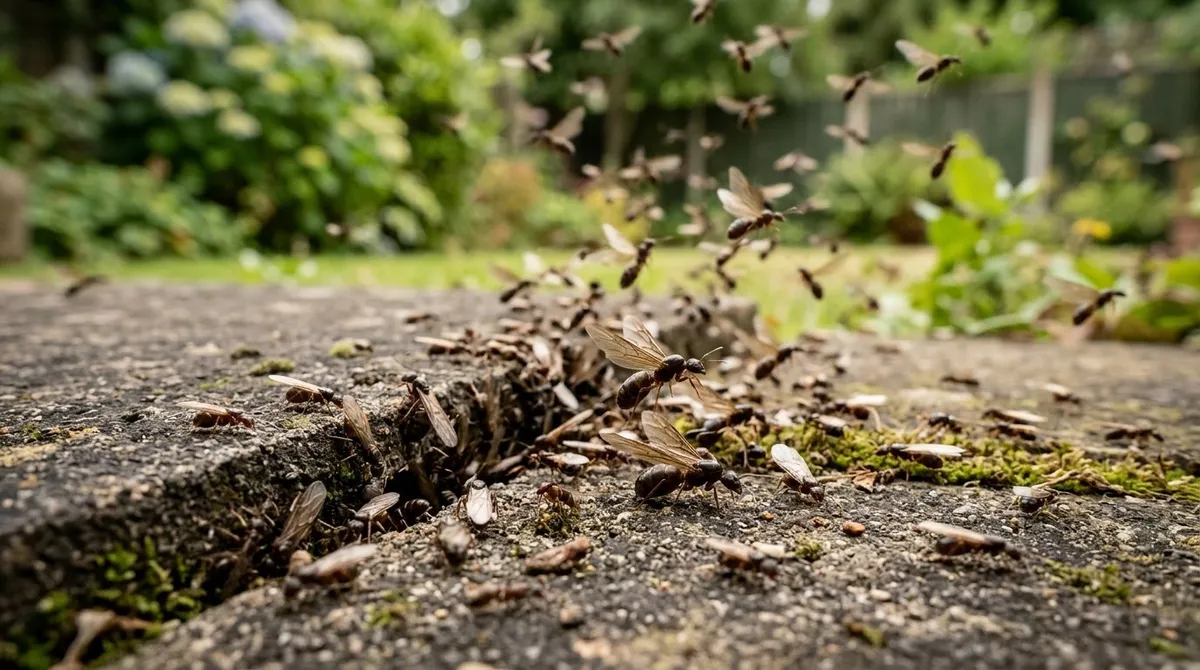
Once it has finished feeding, the caterpillar leaves its plant and goes walkabout. It can travel several metres, crossing lawns, patios and paths in broad daylight, looking for loose soil or leaf litter to burrow into.
The best thing to do is let it carry on. If it’s heading somewhere risky, like a busy path or the road, nudge it onto a leaf and pop it in a quiet border. Keep it outdoors. It needs a natural winter outside to develop properly.
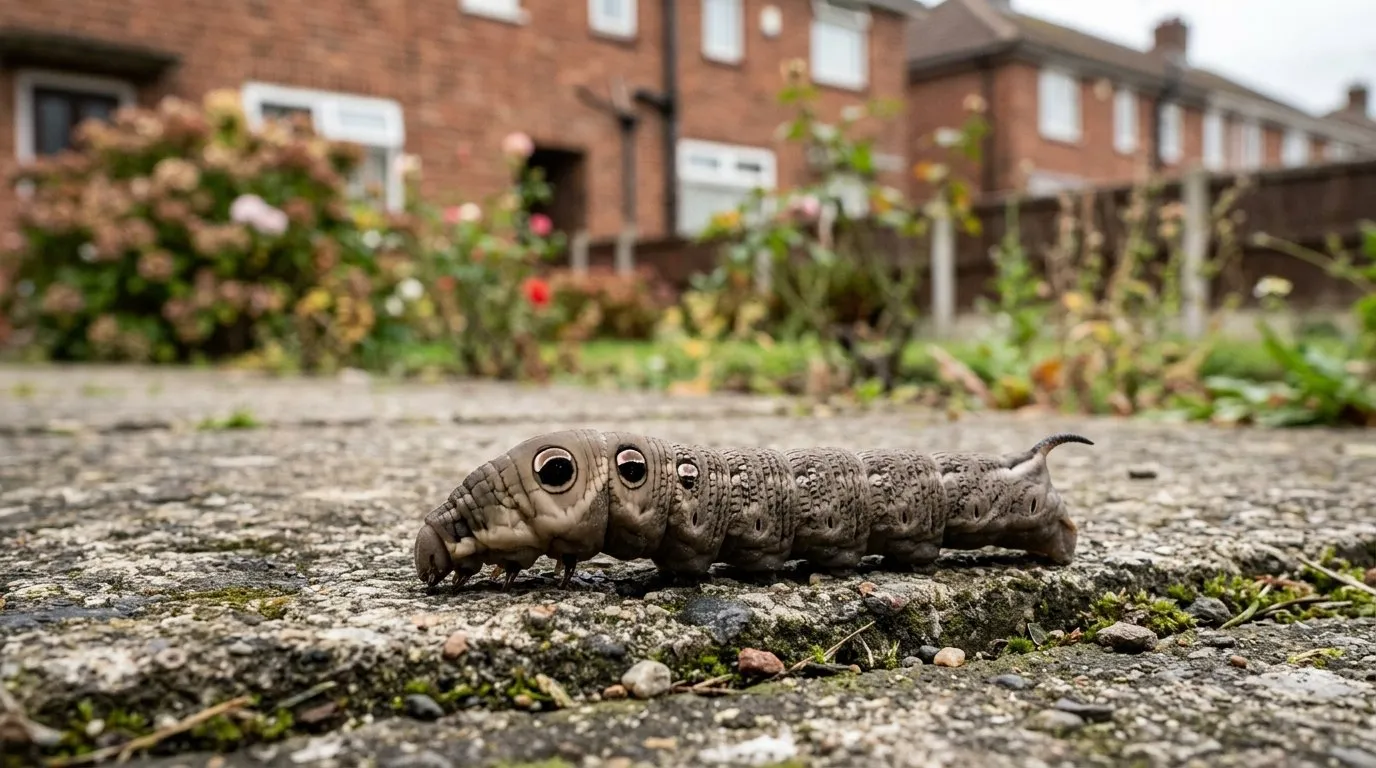
A fully grown caterpillar crossing a path in late summer, looking for soft soil. Let it carry on its way.
What should I do if I find one?
Leave it alone, or move it a short distance. There’s no need to kill it, spray it or call anyone.
If it’s on a fuchsia you’d rather protect, lift it gently on a leaf and move it to some willowherb or another quiet spot. It’ll settle quickly. Don’t use insecticides. They kill the moths and caterpillars you want along with helpful garden insects.
How to help elephant hawk moths in your garden
Give them food plants for the caterpillars, flowers for the moths and some undisturbed ground for winter.
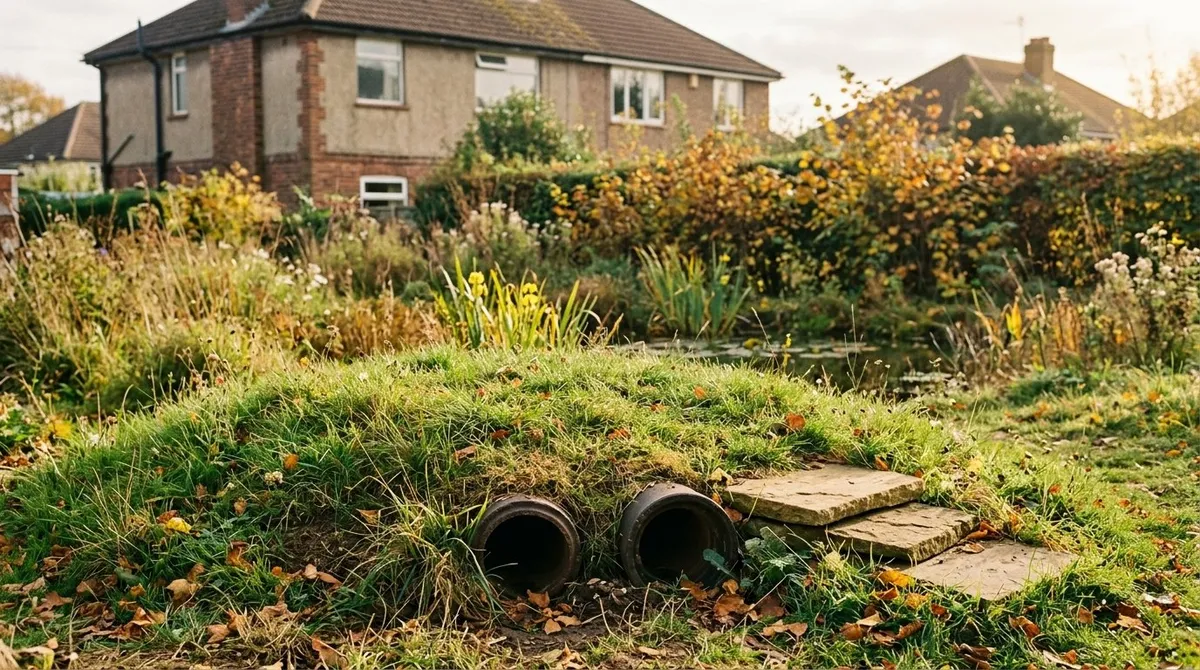
Leave a patch of willowherb. A wild corner with rosebay willowherb is the best thing you can offer. It’s also loved by bees.
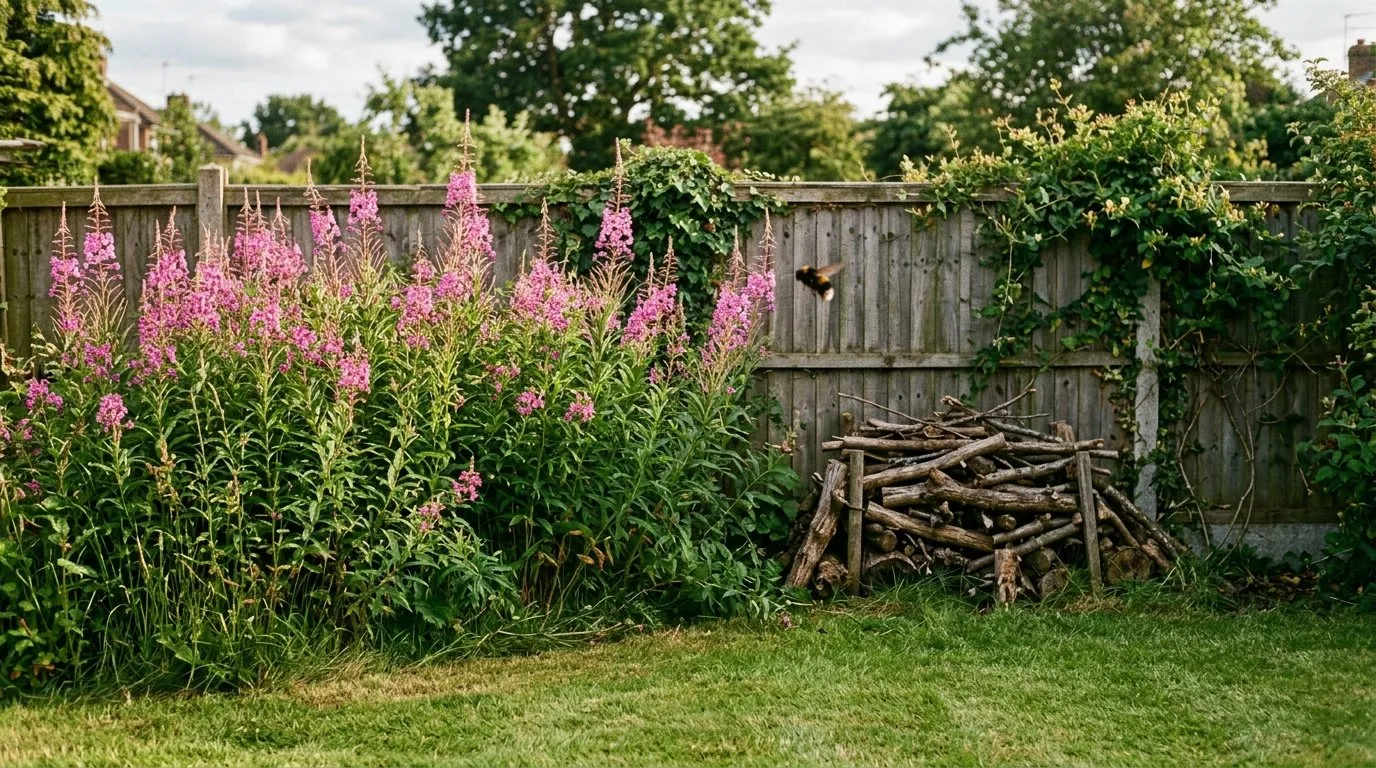
A wild corner of willowherb feeds the caterpillars, and a log pile nearby adds shelter for other wildlife.
Grow evening-scented flowers. Honeysuckle, red valerian and tobacco plants feed the adults at dusk. See our guides to growing honeysuckle and nicotiana for evening scent.
Leave soft ground and leaf litter. Pupae spend winter just under the surface. A leaf mould heap or an undug border edge is ideal. Go gently when digging borders in autumn and winter.
Fully grown caterpillars tuck into leaf litter or loose soil to pupate. Leave that ground undisturbed over winter.
Common mistakes with elephant hawk moth caterpillars
Killing it in a panic. It’s harmless, and it’s a native moth worth having.
Spraying the fuchsia. Insecticides do far more harm than a few chewed leaves. The plant will recover.
Taking it indoors to “save” it. It needs to pupate outside in the cold.
Clearing every bit of leaf litter. Pupae may be sleeping just below. Leave some ground undisturbed.
Now you know this caterpillar is a friend, read our guide to the best plants for butterflies to feed more of the garden’s winged visitors. You’ll find more in our wildlife guides.
Frequently asked questions
Is the elephant hawk moth caterpillar dangerous?
No, it’s harmless to people and pets. It has no sting, no venom and no irritating hairs, and it can’t bite you. The snake-like display is pure bluff to scare off birds. If you need to move one, nudge it onto a leaf.
What is the huge brown caterpillar with eyes in my garden?
It’s almost certainly an elephant hawk moth caterpillar. Look for a grey-brown body up to about 8cm long with four eye spots behind the head. It’s often found on fuchsias or willowherb in late summer. The eye spots are a bluff, not a sign of poison.
What do elephant hawk moth caterpillars eat?
Mainly rosebay willowherb, bedstraws and fuchsias. In the wild, willowherb is the favourite. In gardens they’re known for stripping fuchsias. It looks bad, but the plant usually grows back and flowers again the next year.
Should I kill the caterpillar eating my fuchsia?
No, leave it or move it. The elephant hawk moth is a native moth and its adults visit flowers at night. A stripped fuchsia usually recovers. If you can’t bear the damage, move the caterpillar to some willowherb or a quiet border.
Why is the caterpillar crawling across my lawn or path?
It’s fully grown and looking for somewhere to pupate. In late summer they leave their food plant and wander, searching for loose soil or leaf litter. This is normal. Let it carry on, or move it to a quiet border edge if it’s in danger.
What does the elephant hawk moth caterpillar turn into?
A beautiful pink and olive-green moth. It spends winter as a brown pupa in the soil, and the moth comes out between May and July. It feeds at dusk on honeysuckle and other flowers.
How long do elephant hawk moth caterpillars feed before pupating?
For several weeks between July and September. They hatch small and green, then darken as they grow. Once fully grown, they stop feeding and look for soft ground to spend the winter in.
Our team produces practical UK gardening guidance from source research, contributor records and established horticultural practice. Editorial standards are overseen by Matt W.