Key takeaways
- Earwigs are both helpers and pests, so most gardens are better off with them than without
- They eat aphids at night, including woolly aphid on apple trees
- The main damage is chewed petals on dahlias, chrysanthemums and clematis in summer
- An upturned pot stuffed with straw on a cane catches them; release them under fruit trees
- Avoid insecticides, which kill earwigs and the other predators that keep aphids down
- Earwigs don't crawl into ears and their pinch is harmless
Earwigs are mostly a gardener’s friend. They spend their nights eating aphids and tidying up dead plant bits. The trouble is their taste for soft petals, which can leave dahlias and chrysanthemums looking ragged. So the answer is to leave them be in most of the garden and trap them only where the damage bothers you.
This guide covers how to recognise earwigs, what they do for you, which plants they spoil, and how to move them on without harming them. For a wider look at the insects that help or hinder, the guide to good bugs and bad bugs is a good companion.
How to identify an earwig
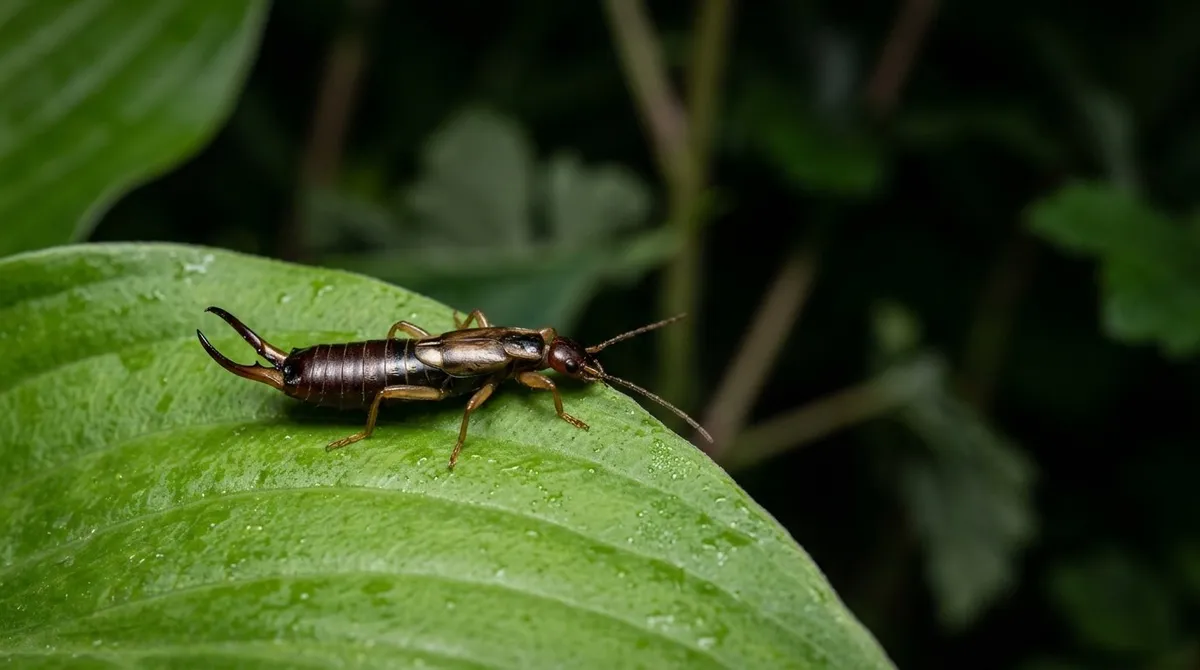
The common earwig is the one you’ll find in UK gardens. It is about 12-15mm long, shiny chestnut brown, with paler legs and a pair of pincers at the tail end. Males have strongly curved pincers. Females have straighter ones.
Earwigs have short wing cases and can fold delicate wings underneath, though you’ll rarely see them fly. They come out at night and spend the day tucked into tight, dark spots. Look under pots, in hollow stems, behind loose bark, in rolled leaves and deep inside flowers.
The name comes from the Old English for “ear insect”. Despite the old story, earwigs don’t crawl into people’s ears.
The common earwig. Males have curved pincers like these; females have straighter ones.
Earwigs as a friend in the garden
Earwigs are useful predators. After dark they climb plants and eat aphids, insect eggs and other small soft-bodied insects. They are especially welcome in fruit trees, where they help keep aphids down, including the woolly aphid on apples.
They also eat dead and decaying plant material, helping it break down. That makes them part of the clean-up crew alongside woodlice and worms.
In veg plots, orchards and mixed borders, leaving earwigs alone is usually the best trade. A few nibbled petals cost less than an aphid problem. The guide to getting rid of aphids shows how predators like earwigs fit into aphid control, and the woolly aphid guide covers the fluffy colonies earwigs help clear on apple trees.
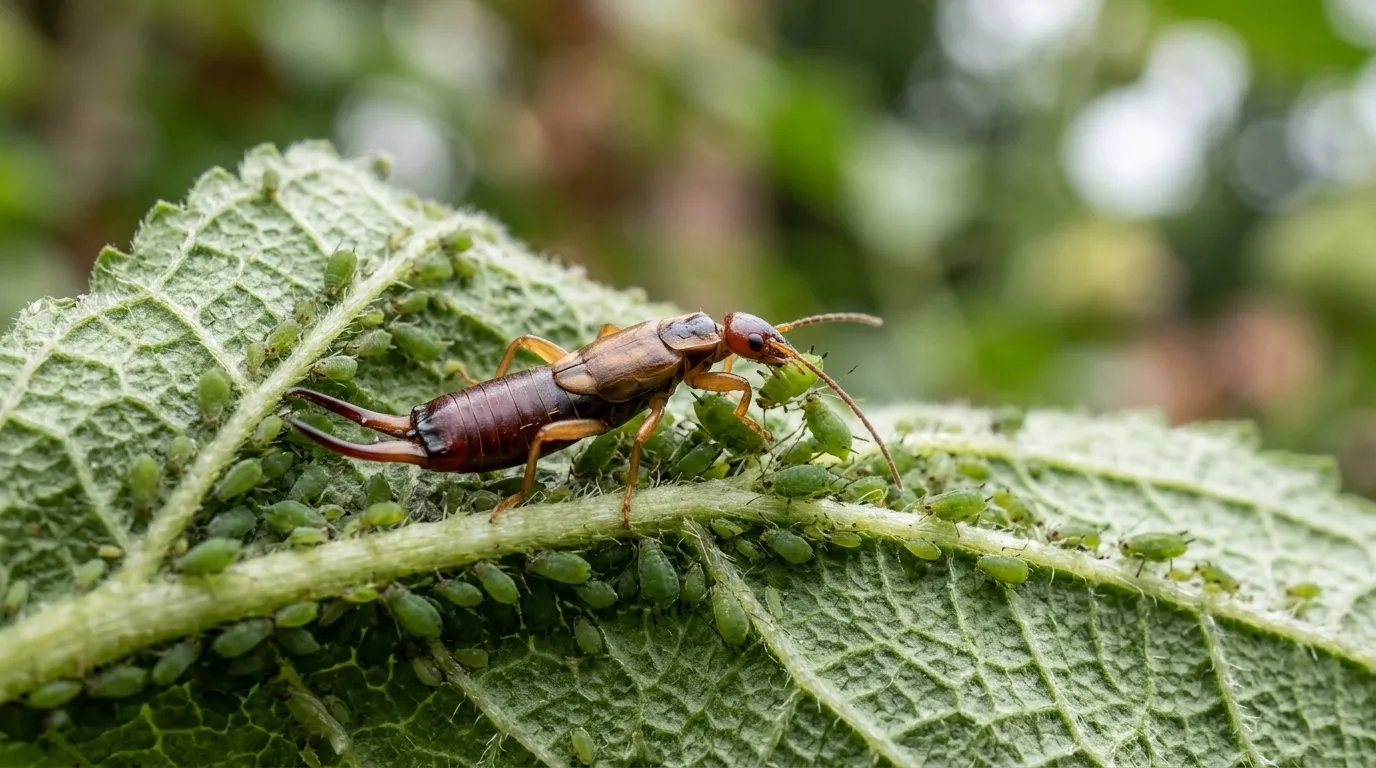
Earwigs hunt aphids at night. Spraying would kill these helpers along with the pests.
Earwigs as a foe: the plants they damage
Earwig damage tends to hit a few favourite plants rather than the whole garden. It is nearly always cosmetic and rarely harms the plant itself.
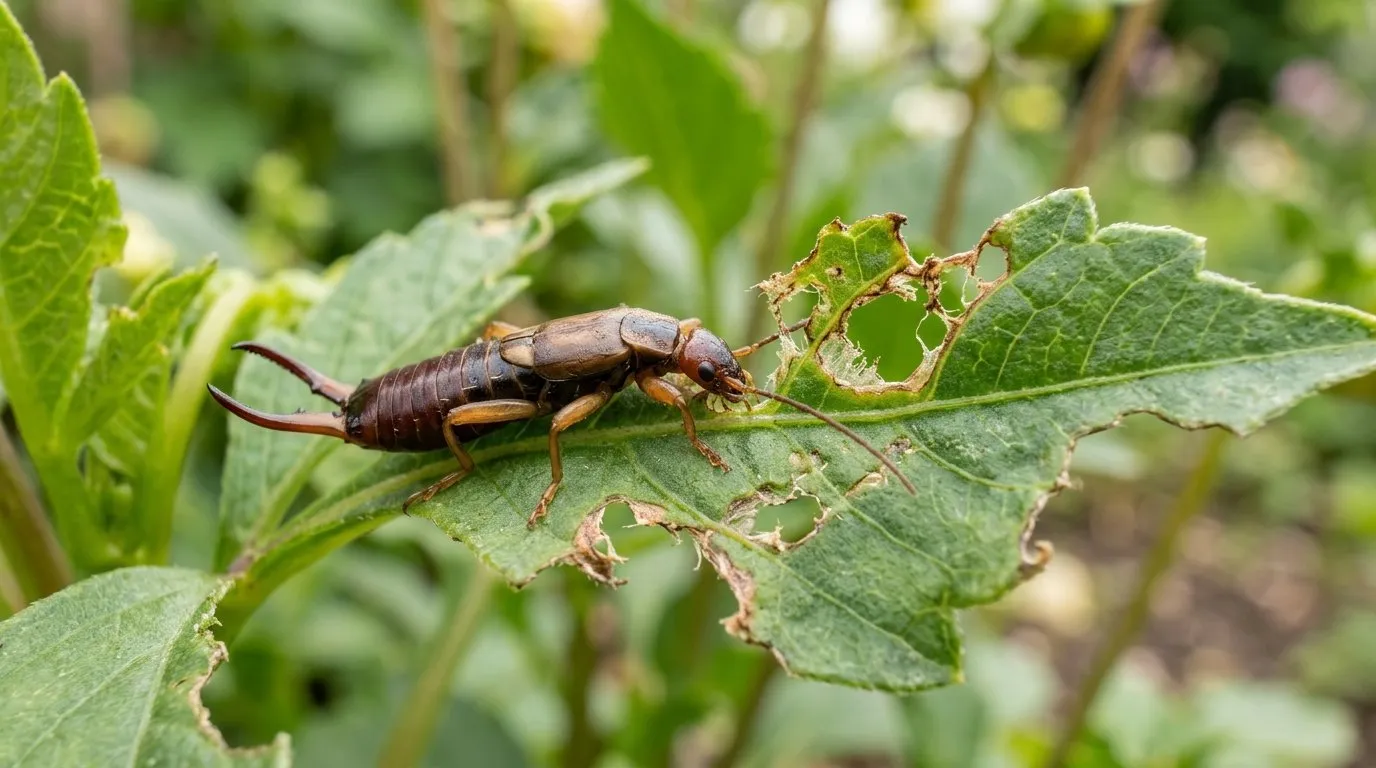
- Dahlias are the main complaint. Earwigs chew holes in the petals and young leaves. Double and pompon types with tightly packed petals give them the most places to hide.
- Chrysanthemums suffer in the same way, especially fully double forms.
- Clematis flowers can be nibbled, particularly large-flowered types.
- Soft fruit such as strawberries, apricots and peaches can be hollowed out, usually where birds, wasps or splits have already broken the skin.
- Seedlings and young leaves sometimes get small ragged holes, but plants usually grow through it.
Damage builds from midsummer into early autumn, when adult earwigs are most active.
How to tell earwig damage from slugs and caterpillars
Earwig damage is ragged holes in petals and soft leaves that appear overnight. Here’s how to rule out the other suspects:
| Culprit | What you see | Other clues |
|---|---|---|
| Earwigs | Ragged holes in petals and young leaves | No slime; earwigs hiding in flowers by day |
| Slugs and snails | Holes in low leaves and petals | Silvery slime trails |
| Caterpillars | Larger chewed areas | Caterpillars and green droppings on the plant |
| Capsid bugs | Small holes in young leaves and tattered flowers | Damage appears as leaves expand |
The quickest check is to go out with a torch after dark and see who is feeding. If slugs are the problem, the guide to stopping slugs eating dahlias has the fixes.
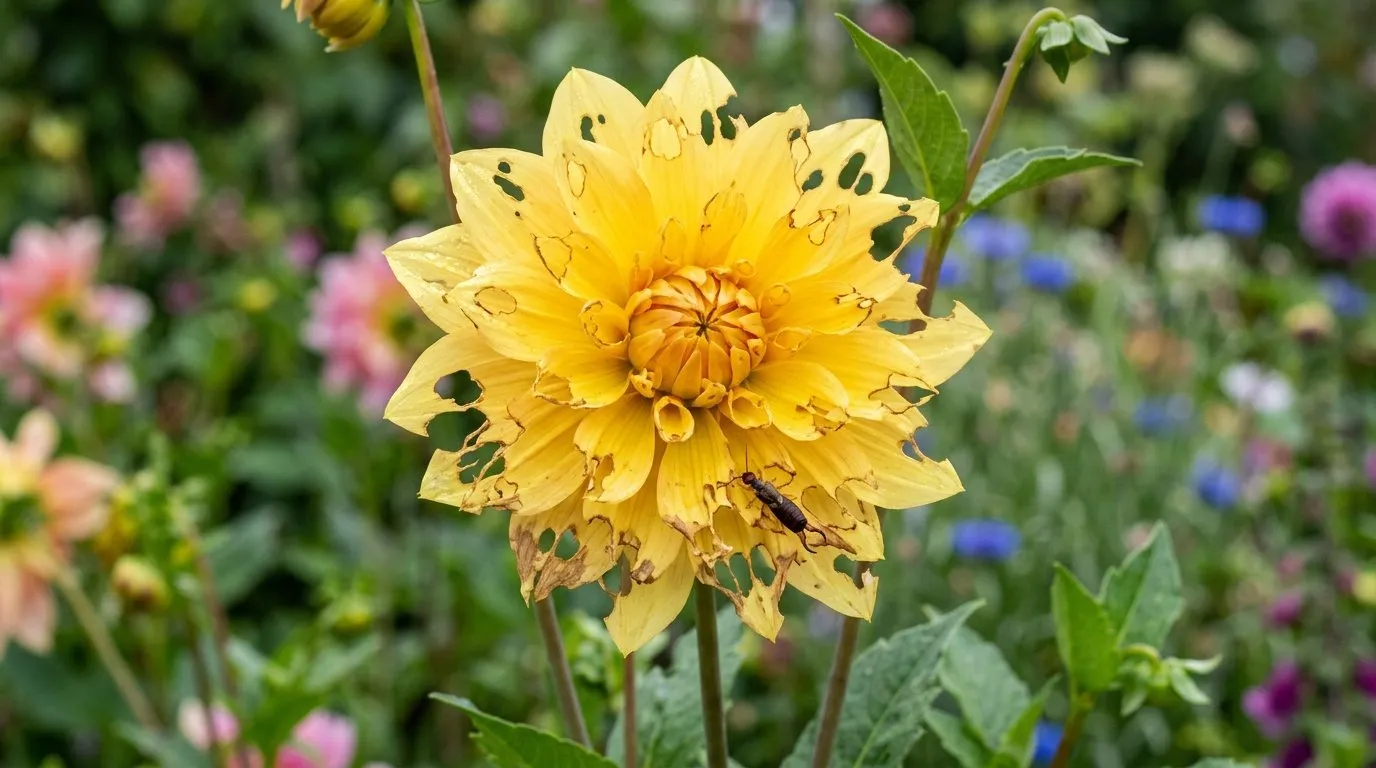
Ragged holes in dahlia petals with no slime trail usually point to earwigs.
How to trap earwigs on dahlias
An upturned flowerpot trap gives earwigs somewhere cosy to hide by day, so you can move them on. It is simple, cheap and harms nothing.
- Loosely stuff a small flowerpot with straw, hay or crumpled newspaper.
- Turn it upside down and push it onto the top of a cane among the plants.
- Check it each morning. Earwigs crawl in at dawn to hide.
- Shake them out under fruit trees, a hedge or into the compost heap, well away from flowers you want to keep.
- Keep going from early summer until the flowers finish.
Rolled-up corrugated cardboard or short lengths of hollow cane laid among plants work the same way.
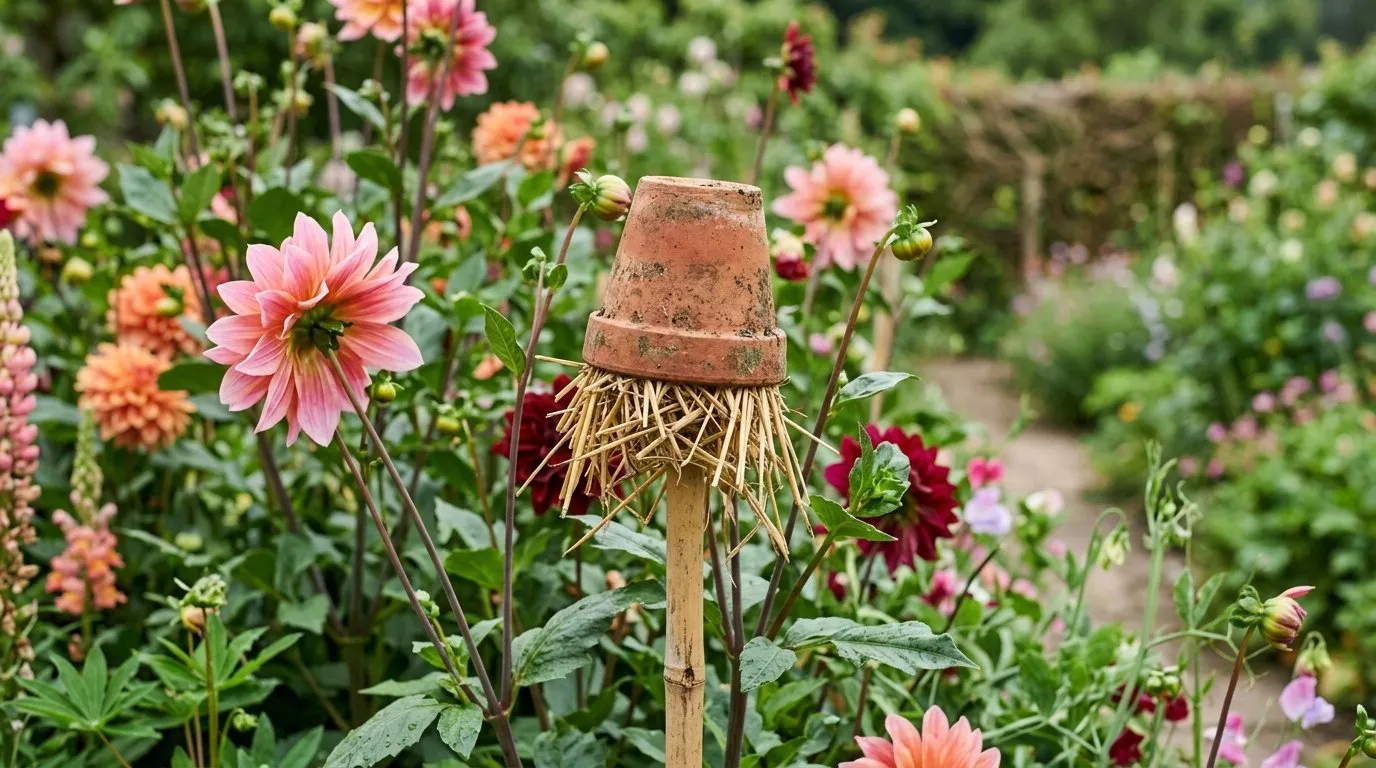
An upturned pot of straw on a cane is all you need. Earwigs crawl in by morning and you can move them on.
You’ll find the best varieties, staking and feeding in the guide to growing dahlias. The same trap works among chrysanthemums.
Living with earwigs: a simple approach
Most gardens are better off working with earwigs than against them.
- Trap only where damage matters, such as show dahlias or cut-flower beds.
- Leave them alone elsewhere, especially around fruit trees and veg.
- Avoid insecticides. They kill earwigs, ladybirds, hoverflies and other helpers, and aphids often bounce back faster than their predators.
- Give night-time hunters places to live. Leaf litter in corners, log piles and dense ground cover all help earwigs, ground beetles and other predators.
The earwig year
| Season | What earwigs are doing |
|---|---|
| Winter | Adults shelter in the soil. Females lay eggs in a small burrow and guard them |
| Spring | Eggs hatch and the mother looks after the young for a while |
| Early summer | Young earwigs leave the burrow and grow through several moults |
| Midsummer to autumn | Adults are at their busiest; petal damage is most noticeable |
| Late autumn | Adults look for winter shelter in soil and crevices |
Female earwigs are unusually caring parents for insects. They clean their eggs to keep mould off and stay with the young after they hatch.
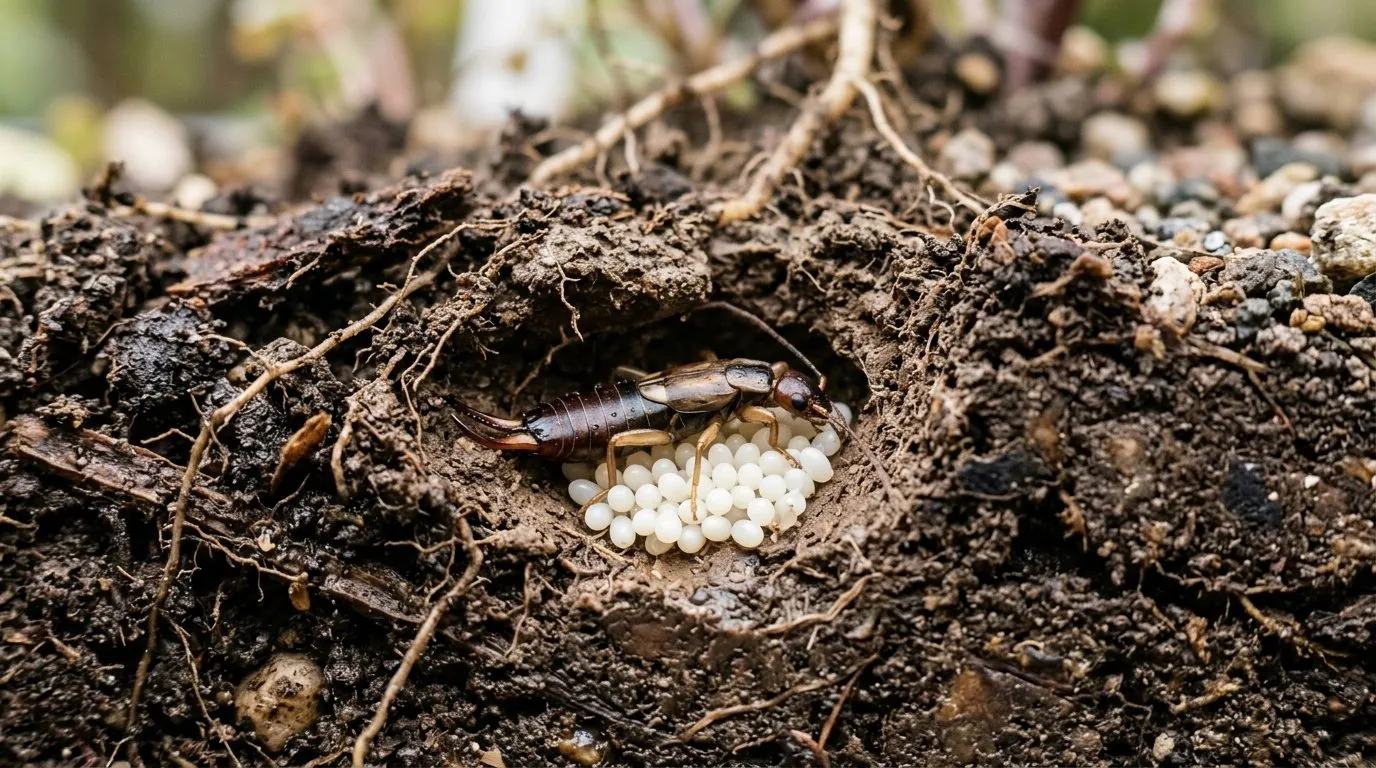
A female earwig guarding her eggs. She keeps them clean and stays with the young after they hatch.
Earwigs in the house
An earwig or two indoors is normal and nothing to worry about. They wander in looking for shelter, often after wet weather, in dry spells or as nights turn cold. They don’t breed indoors, don’t damage furniture and don’t carry disease.
To cut down on visitors, seal gaps around doors, windows and airbricks. Keep thick mulch and piles of pots away from the house walls. Pop any you find into a jar and put them back outside.
Common mistakes with earwigs
- Spraying them. It kills the helpful insects too and isn’t needed.
- Trapping the whole garden. You’ll lose a useful aphid predator. Trap only on the plants you care about.
- Blaming earwigs for slug damage. Check for slime trails before you act.
- Drowning trapped earwigs. Release them under fruit trees instead, where they’ll keep eating aphids.
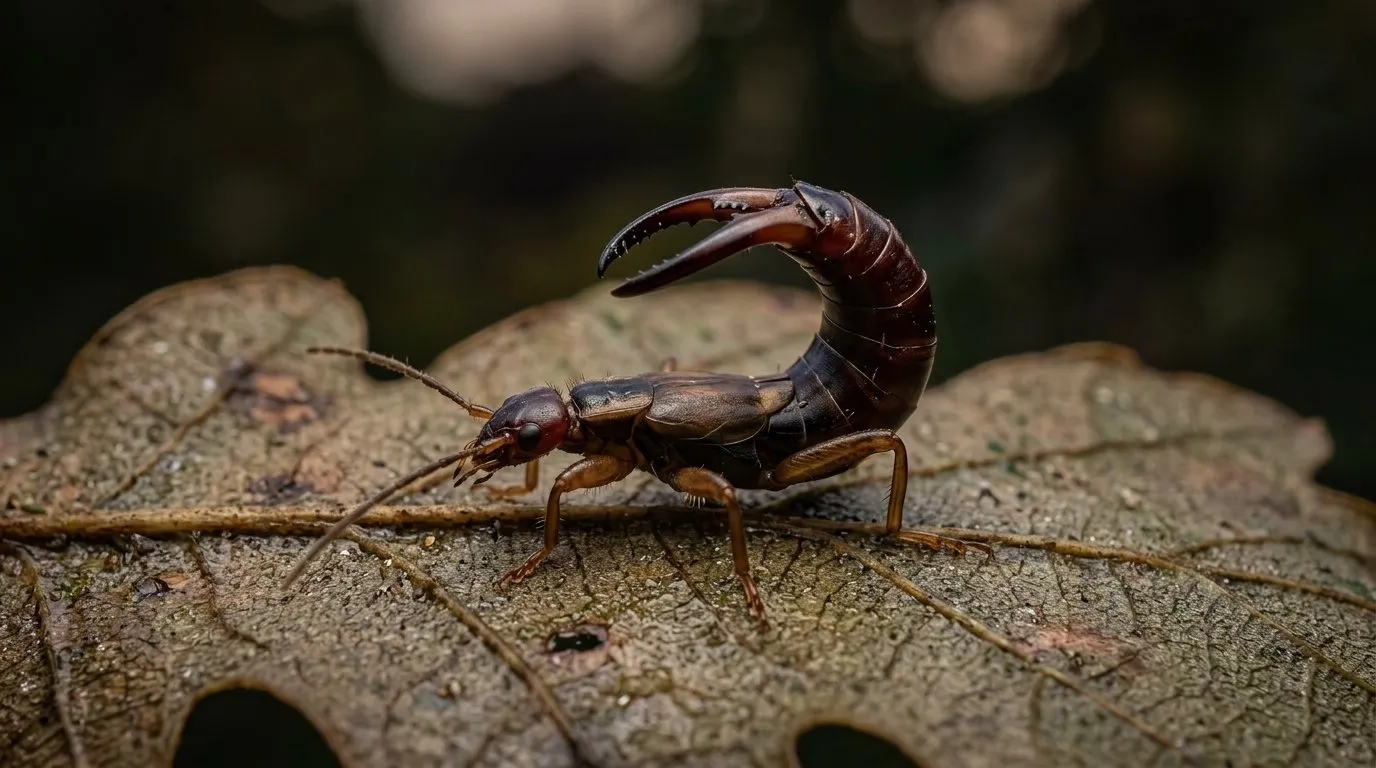
Earwigs raise their pincers when disturbed. It looks fierce, but they’re harmless to people.
Want to bring more helpful predators into your garden? Read the guide to ground beetles in UK gardens for another night-time ally. More garden wildlife guides are in the wildlife section.
Frequently asked questions
Are earwigs good or bad for gardens?
Mostly good, with a few problem plants. They eat aphids and other small insects, and help break down dead plant material. They also chew petals on dahlias, chrysanthemums and clematis. Trap them only where that damage matters to you.
How do I get rid of earwigs in dahlias?
Use upturned flowerpots stuffed with straw on canes among the plants. Earwigs crawl in to hide at dawn. Check the pots each morning and shake the earwigs out under fruit trees or hedges, well away from your dahlias.
Do earwigs really go in human ears?
No, that is an old myth. Earwigs hide in dark, damp crevices in the garden, not in people. The name comes from the Old English for “ear insect”, which probably grew out of the myth.
What do earwigs eat in the garden?
Earwigs eat both small insects and plant material. Their diet includes aphids, insect eggs, dead and decaying plants, and soft petals and leaves. They feed at night and hide by day.
How long do earwigs live?
Most live for about a year. Adults spend winter in the soil, and females lay eggs in a small burrow in winter or early spring. The young grow through spring and early summer, and adults are most noticeable from midsummer to autumn.
Are earwigs dangerous to humans?
No, earwigs are harmless to people. They can give a tiny nip with their pincers if handled, but it rarely hurts. They don’t sting, don’t carry disease and don’t damage your house.
Why are there so many earwigs in my house?
Usually they’ve wandered in looking for shelter. Wet weather, dry spells or the first cold nights can send them indoors. Seal gaps around doors and windows, and pop any you find into a jar and back outside.
Our team produces practical UK gardening guidance from source research, contributor records and established horticultural practice. Editorial standards are overseen by Matt W.