Key takeaways
- In Great Britain you must register your hens with APHA, even if you only keep one
- Check your deeds and tenancy before buying, as some ban poultry
- Start with three or four hens, as they need company
- Hybrids and calm breeds such as Buff Orpington suit beginners
- Use welded mesh, not chicken wire, and bury it about 30cm to stop foxes
- Never feed kitchen scraps to hens, as it's against the law
Keeping chickens in a UK garden gives you fresh eggs, friendly company and a steady supply of manure for the compost heap. A few hens fit happily into an ordinary back garden.
Before you buy, there are a few rules to follow and a fox to plan for. This guide covers the paperwork, picking hens, the coop and run, keeping foxes out and everyday care. If hens are part of a plan to grow more of your own food, our kitchen garden design guide shows how to fit beds and a run together.
Is it legal to keep chickens in a UK garden?
Yes, you can keep a few hens in most gardens. There are three things to check.
- Deeds and tenancy. Some houses have covenants or tenancy terms that ban poultry or livestock. Check before you buy any birds.
- Registration. In Great Britain, all poultry keepers must register with the Animal and Plant Health Agency (APHA), however few birds they have. It’s free, and you’ll get bird flu alerts for your area. The GOV.UK poultry registration page explains how. Northern Ireland has its own scheme.
- Neighbours and buildings. You don’t need a cockerel for eggs, and crowing at dawn upsets neighbours. A big coop or walk-in run may count as a garden building, so check with your council if it’s large.
What are the best chicken breeds for UK beginners?
Most beginners do best with hybrid hens or a calm traditional breed. Buy healthy birds from a reputable breeder or rehoming charity.
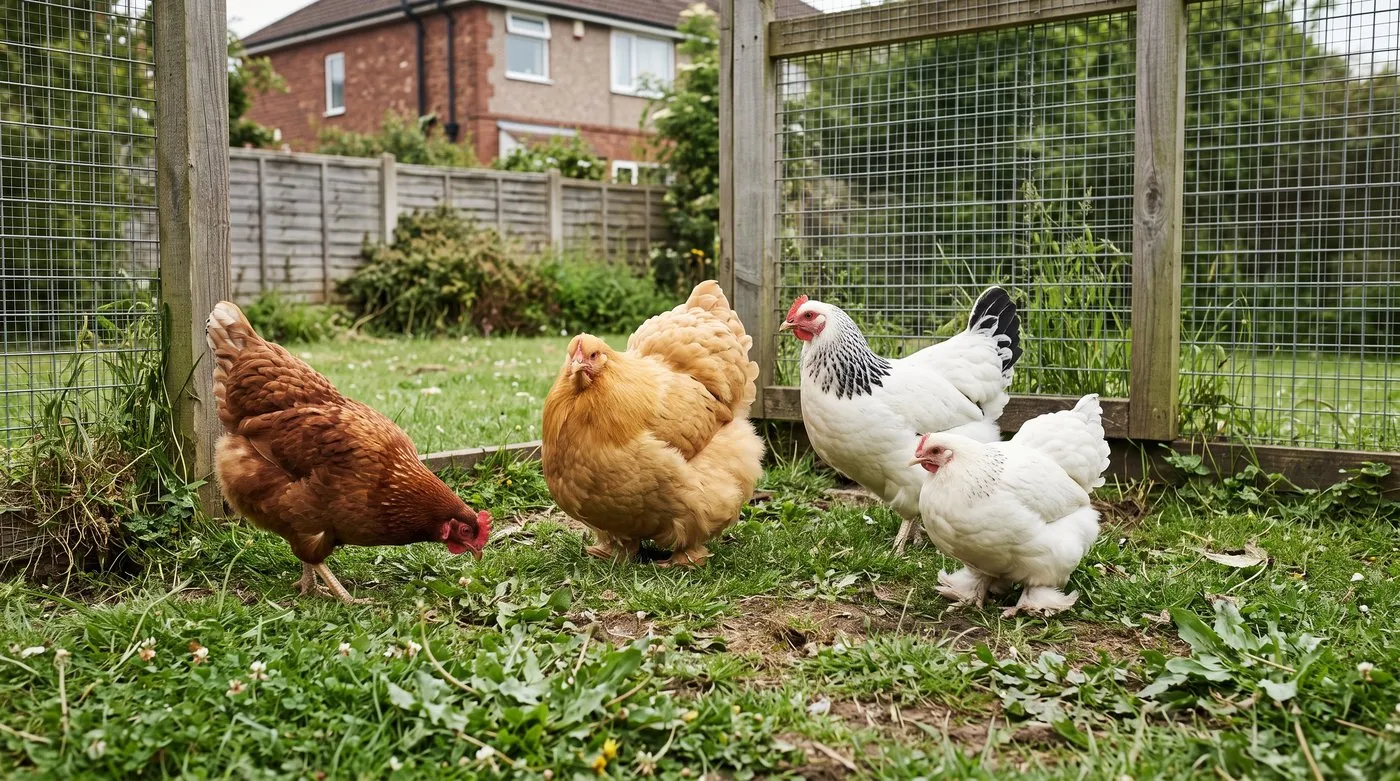
A mixed beginner flock. Hybrids lay the most eggs, while Orpingtons and bantams bring the cuddles.
| Breed | Laying | Size | Temperament | Good for |
|---|---|---|---|---|
| Warren or other brown hybrids | Very good | Medium | Calm, friendly | Plenty of eggs |
| Buff Orpington | Moderate | Large | Very gentle | Families with children |
| Light Sussex | Good | Large | Confident, hardy | An all-round traditional breed |
| Rhode Island Red | Good | Medium | Active | Hardy all-rounder |
| Pekin bantam | Low, small eggs | Small | Gentle | Very small gardens |
| Silkie | Low | Small | Very friendly | Pets and broody mothers |
Most people buy point-of-lay hens, young birds that are about to start laying. Avoid day-old chicks for your first flock, as they need heat and lots of care. Rehomed ex-commercial hens are another option. They may need a few weeks to feather up and settle, but they’re often very friendly.
How big does a chicken coop and run need to be?
Give hens a dry, draught-free coop with good ventilation, and as much run space as you can.
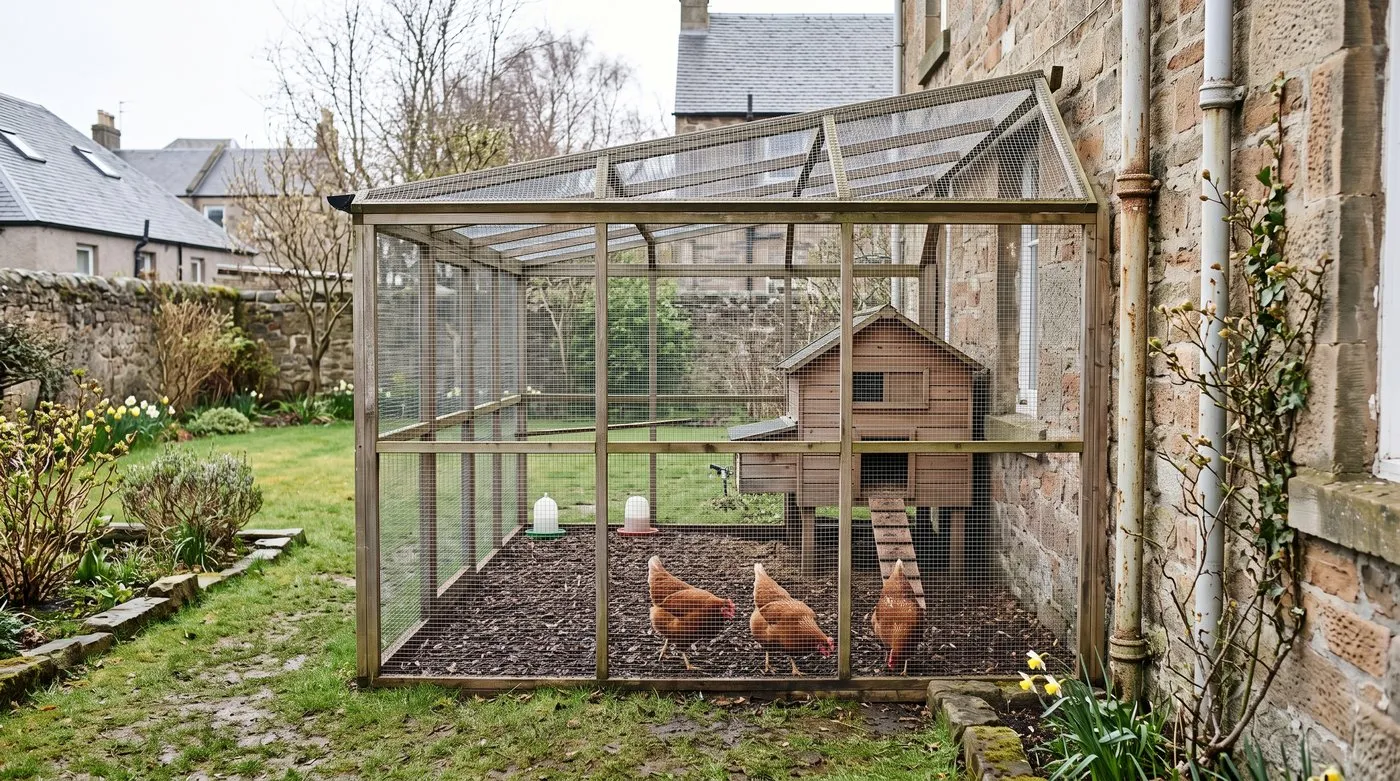
A walk-in run gives hens room to scratch and makes feeding and cleaning much easier on your back.
- Perches: about 20-30cm per hen, higher than the nest boxes.
- Nest boxes: one for every three or four hens.
- Run: at least 1 square metre per hen, and more is better.
- Height: a walk-in run makes feeding, cleaning and catching hens much easier.
Crowded hens get bored and stressed, and start pecking each other. Choose a coop you can open up fully for cleaning. That makes it much easier to deal with mites.
How do I fox-proof my chicken run?
Use welded wire mesh, not chicken wire, and stop foxes digging under or climbing over. Foxes can tear through thin chicken wire.
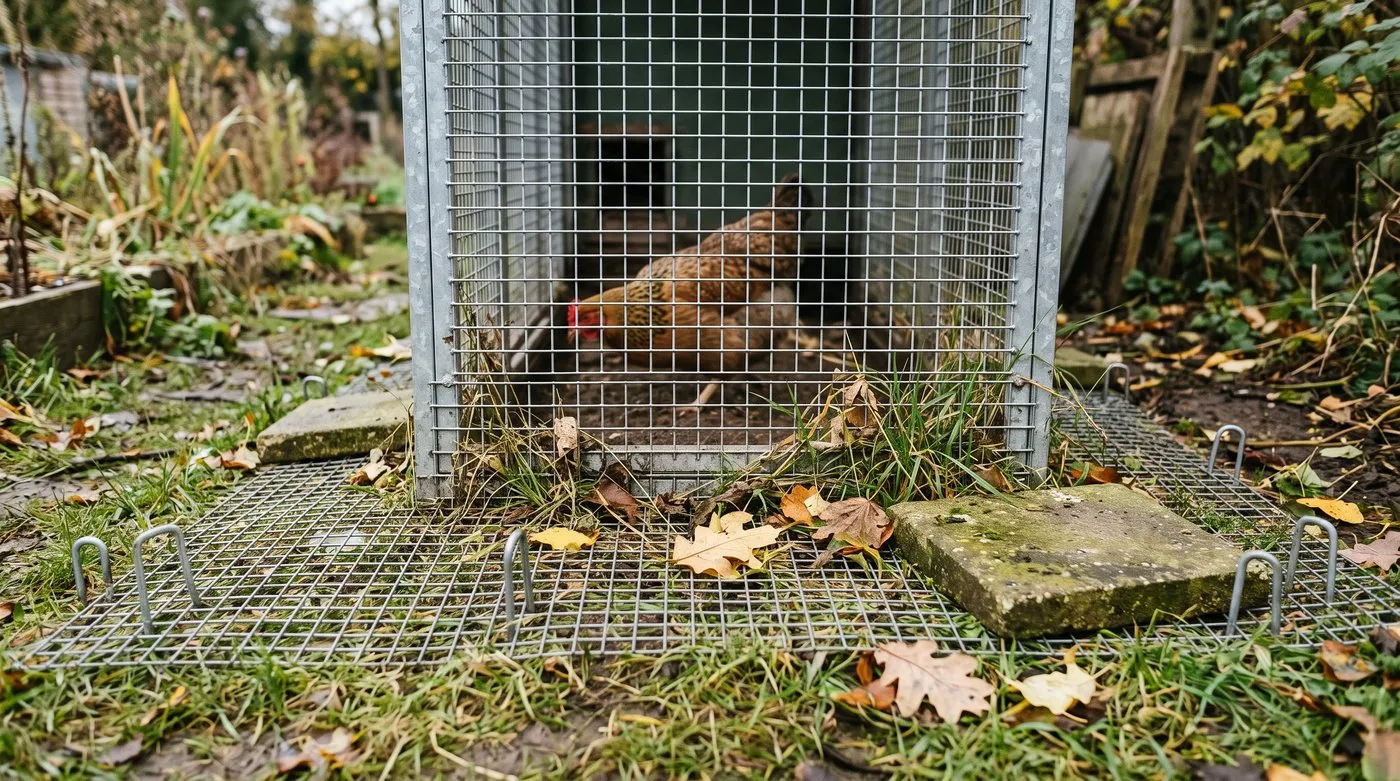
A mesh apron pegged flat around the run stops foxes digging under, without needing to dig a trench.
- Bury the mesh about 30cm down, or lay a 30cm apron outwards along the ground and peg it down.
- Cover the top with mesh or a solid roof.
- Use secure catches on doors and pop holes. Foxes are good at nudging simple latches open.
- Lock hens in every night at dusk, without fail. An automatic pop-hole door helps if you’re late home.
- Keep watch in spring. Foxes with cubs often hunt in daylight from about March to June.
Our guide to getting rid of foxes in the garden covers humane ways to put them off. Spilled feed can also bring in rats. Use a rat-proof feeder and store feed in a metal bin. The guide to getting rid of rats in the garden has more.
What do chickens eat?
Feed hens a complete layers pellet or mash, with clean water at all times. Add a handful of mixed corn as a treat in the afternoon, plus oyster shell for strong eggshells and grit to help them digest.
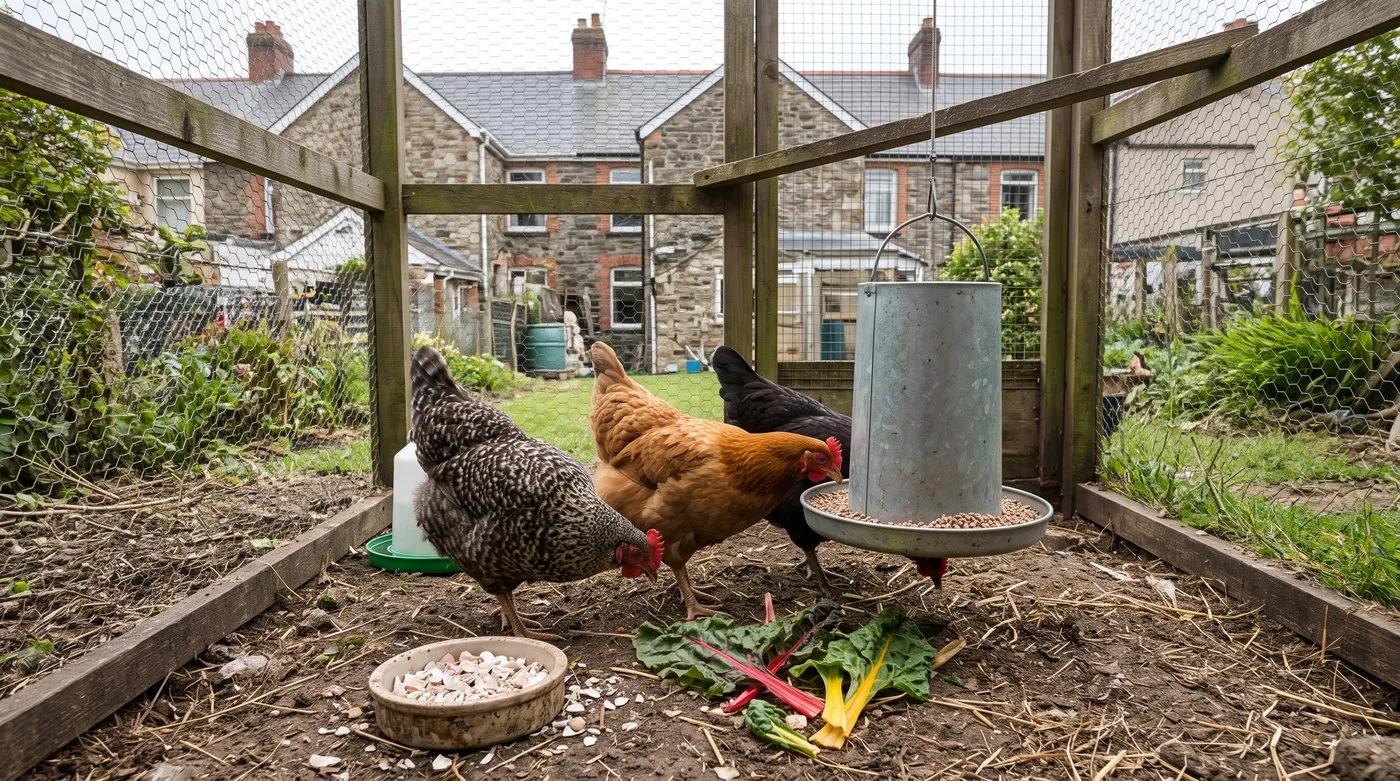
Layers pellets do most of the work. Greens picked straight from the garden make a fine treat.
Warning: It is illegal in the UK to feed kitchen scraps to chickens, even vegetarian ones. That includes peelings and leftovers that have been in your kitchen. Greens picked straight from the garden are fine.
Hens love pecking at weeds, grass and insects. Garden-grown greens such as chard leaves and lettuce thinnings make a good treat, as long as they go straight from the plot to the run.
How many eggs will my chickens lay?
A young hybrid hen lays most days in spring and summer. Laying slows in autumn and winter as the days get shorter. Hens also stop for a few weeks while they moult, which means losing and regrowing their feathers, usually in autumn.
Traditional breeds and bantams lay fewer eggs than hybrids. All hens lay less as they get older. Three or four good layers usually give a household plenty of eggs through the summer.
What do chickens need every day?
Looking after hens takes a few minutes each morning and evening, plus a bigger clean once a week.
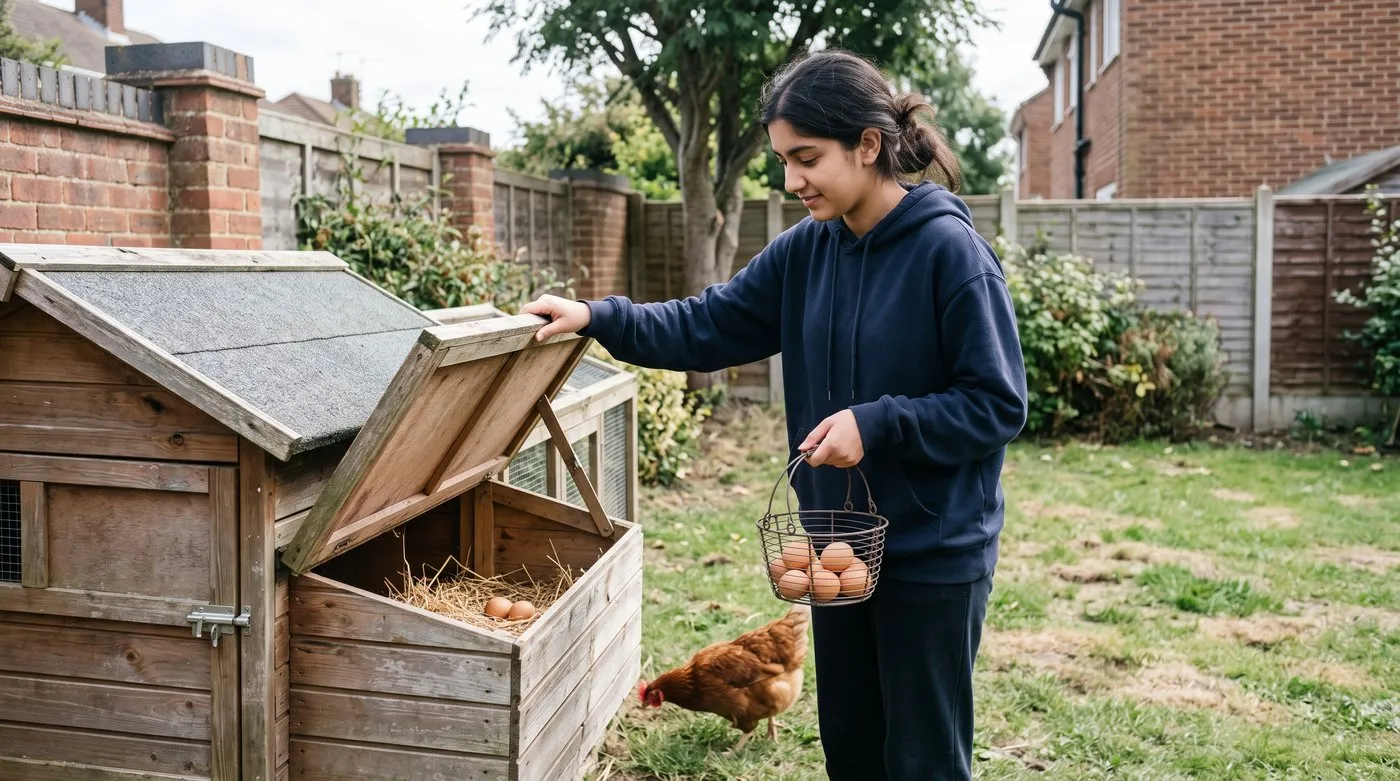
Collecting the eggs is the best bit of the daily routine, and a job children love.
Every day:
- Let the hens out in the morning
- Check food and water, and break any ice in winter
- Collect the eggs
- Look over the birds for anything unusual
- Shut them in at dusk
Every week:
- Clean out droppings and replace the bedding
- Scrub the drinker
- Check under perches and in cracks for red mite
- Top up grit and oyster shell
- Walk round the run looking for dig holes
Chicken droppings and used bedding make good compost, but they’re strong. Compost them before using them on the garden. Our guide to animal manures explains how chicken manure compares with others.
How do I keep my chickens healthy?
Most problems come from red mite, worms and overcrowding. Buy healthy birds, keep the coop clean and give them space.
Red mite is the most common problem. These tiny mites hide in cracks by day and feed on hens at night. Signs include pale combs, tired hens and grey or red specks under perches. Clean the coop thoroughly and use a red mite treatment made for poultry, following the label.
Treat for worms with a wormer licensed for chickens, following the pack. For anything more serious, such as a swollen crop, a hen that seems egg-bound, or a bird that sits hunched and fluffed up, call a vet who treats poultry.
What about bird flu housing rules?
During bird flu outbreaks, the government can order all keepers to house their birds or keep them away from wild birds. Being registered with APHA means you hear when rules start and end. Plan for a covered run, so wild bird droppings can’t fall in and you can keep hens in if needed.
Can chickens and a nice garden get along?
Yes, with a bit of planning. Free-range hens scratch and dust-bathe, and they eat seedlings, salad leaves, strawberries and soft new shoots.
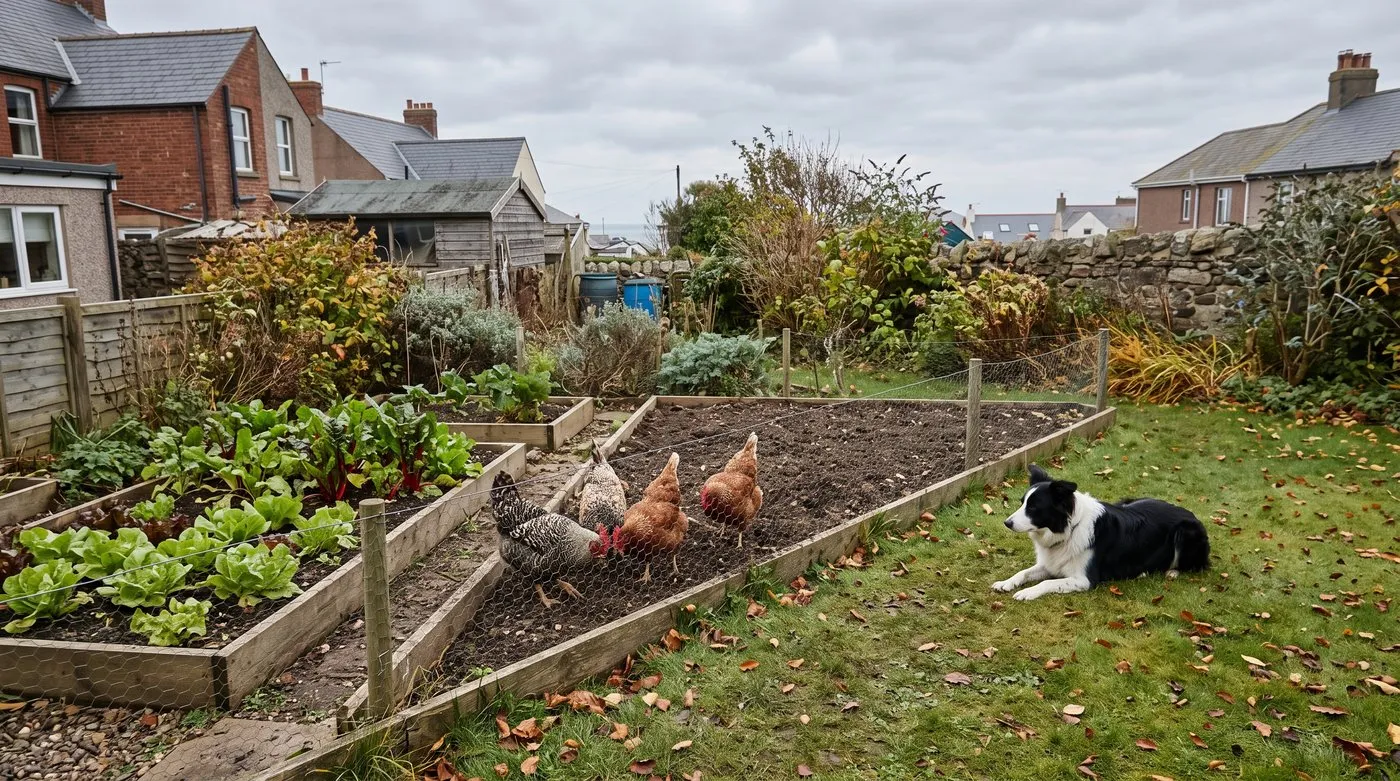
Pen the hens on the beds you’ve finished with and they’ll clear them while your growing crops stay safe.
- Fence off the veg patch and new plantings.
- Let hens into borders mainly in winter, when there’s less to damage.
- Woody plants such as established shrubs, rosemary and lavender usually cope.
- Hens are great at clearing a finished veg bed of grubs and weeds before winter.
Some garden plants are toxic to hens, including foxgloves, yew, rhubarb leaves and daffodil bulbs. Keep hens away from them rather than trusting that they’ll leave them alone. Our guide to poisonous plants in UK gardens lists the common ones.
Common mistakes with backyard chickens
- Using chicken wire for the run. Foxes can break it. Use welded mesh.
- Forgetting to lock up. One missed evening is often all a fox needs.
- Feeding kitchen scraps. It’s illegal and can spread disease. Stick to layers feed and garden greens.
- Keeping one hen. Hens need company. Start with three or four.
- Ignoring red mite. Check the coop every week, especially in summer.
Ready to put that manure to work? Read our guide to making compost to turn coop bedding into rich compost for your beds. For more on sharing your garden with animals, visit the wildlife hub.
Frequently asked questions
Do I need planning permission to keep chickens in my UK garden?
Usually not for a few hens kept for eggs. Check your deeds and tenancy first, as some ban poultry. A very large coop or run may count as a garden building, so check with your council if in doubt.
Do I need to register my chickens?
Yes, in Great Britain all poultry keepers must register with APHA. That applies however few birds you keep. It’s free, and it means you get warnings about bird flu in your area.
How many chickens should a beginner keep?
Three or four hens is a good start. Chickens are sociable and get stressed on their own. A small flock also fits a typical garden coop and run.
What is the best chicken breed for UK beginners?
Hybrid hens such as Warrens are the easiest for eggs. They’re calm and lay well. Buff Orpingtons are gentle and good with children. Pekin bantams suit very small gardens.
How big should a chicken coop and run be?
Give each hen about 20-30cm of perch and plenty of run space. Aim for at least 1 square metre of run per hen, and more if you can. Crowded hens peck each other and get ill more easily.
How do I stop foxes killing my chickens?
Use a strong welded-mesh run and lock hens in every night. Bury the mesh about 30cm deep or lay an apron outwards so foxes can’t dig under. Cover the top too. Foxes also hunt in daylight in spring.
Can I feed my chickens kitchen scraps?
No, feeding kitchen scraps to chickens is illegal in the UK. This includes vegetable peelings that have been in your kitchen. Feed layers pellets, with a little mixed corn and fresh greens picked from the garden.
Do chickens destroy gardens?
Yes, free-range hens will scratch up lawns, beds and seedlings. Fence off the veg patch and young plants. Let them into borders mainly in winter, or keep them in a run with occasional supervised outings.
Our team produces practical UK gardening guidance from source research, contributor records and established horticultural practice. Editorial standards are overseen by Matt W.