Key takeaways
- Count the legs on one body section: one pair means centipede, two pairs means millipede
- Centipedes are flat and fast, millipedes are round and slow and often curl up
- Centipedes hunt small pests at night, so they're on your side
- Millipedes recycle dead leaves and rarely harm healthy plants
- The spotted snake millipede is the one that can nibble strawberries and potatoes
- Log piles, leaf litter and mulch bring more centipedes into the garden
The quick answer: centipedes are hunters that eat garden pests, while millipedes are recyclers that break down dead plant material. Both are usually good news, so there’s rarely any need to do anything about either.
They’re both “many-legged” creatures, but they do very different jobs. One is a little night-time pest hunter. The other is a quiet compost maker. Here’s how to tell them apart and keep the balance right.
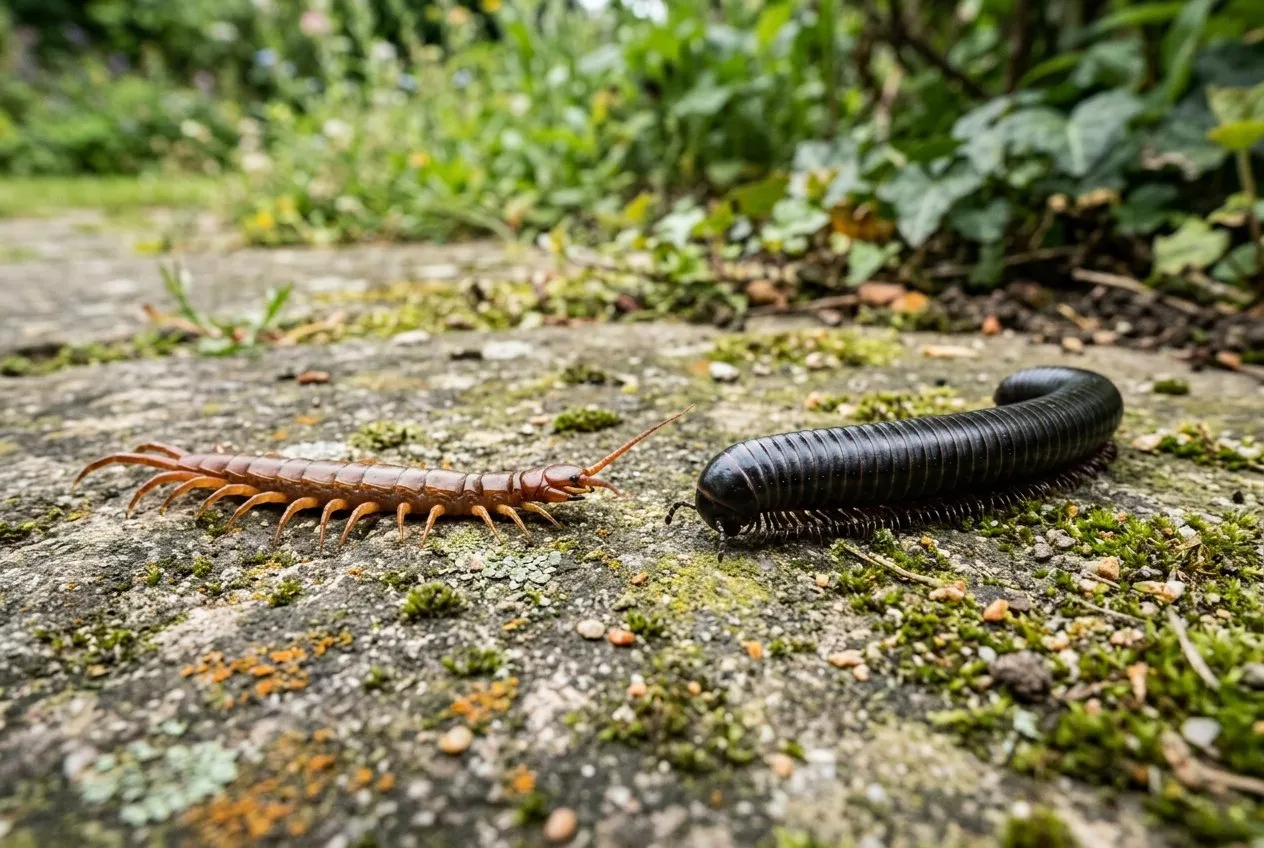 A flat, fast centipede beside a round, slow millipede on a garden path.
How do I tell a centipede from a millipede?
Count the legs on one body section. Centipedes have one pair. Millipedes have two pairs. That’s the surest test.
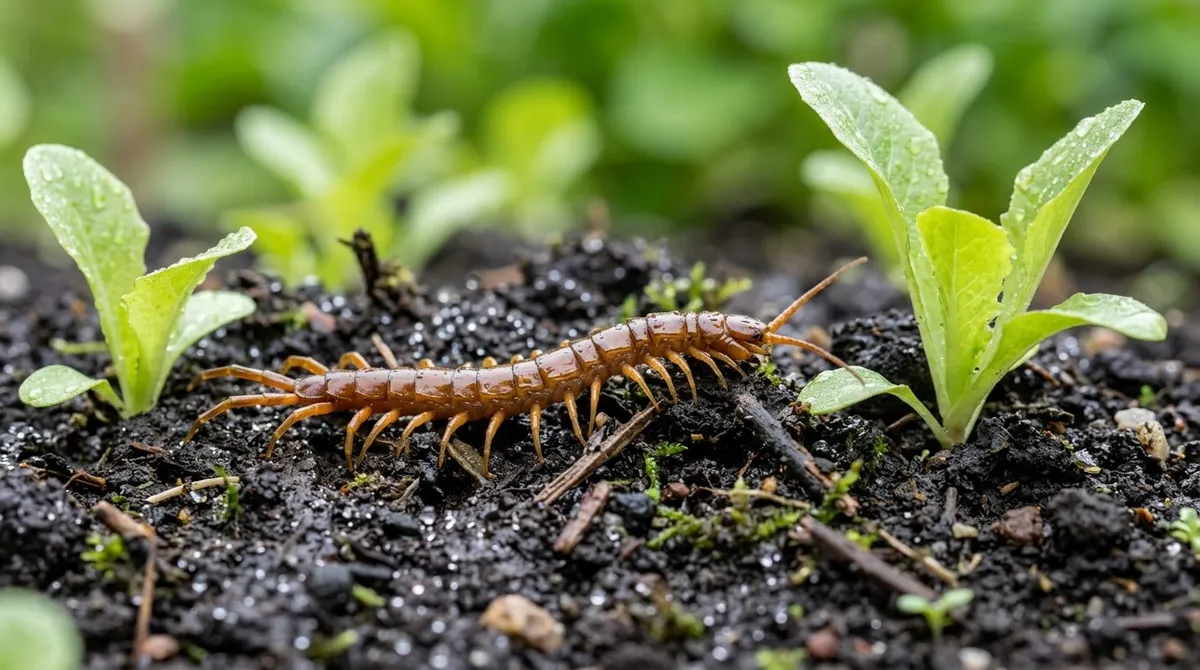
Body shape is a quick clue too. Centipedes are flat and wide. Millipedes are round like a pencil. Lift a stone, and the flat one that zooms off is the centipede. The round one that curls up into a coil is the millipede.
| Feature | Centipede | Millipede |
|---|---|---|
| Legs per body section | 1 pair | 2 pairs |
| Body shape | Flat | Round |
| Speed | Fast | Slow |
| When disturbed | Runs and hides | Curls into a coil |
| Feelers | Long, waving about | Short |
| Colour (UK) | Amber to reddish-brown | Dark grey, black or brown |
| Eats | Small live creatures | Dead plant material |
Fun fact: despite the name, no centipede has exactly 100 legs. The common brown garden centipede has 30.
Which centipede species live in UK gardens?
The UK has plenty of centipede species, but you’ll usually meet just a few.
Brown centipede (Lithobius forficatus) is the one you’ll see most. It’s chestnut-brown, about 2-3cm long, and dashes away when you lift a pot or stone. It hunts small creatures in the soil and leaf litter.
Blind soil centipedes (Cryptops) live underground and are pale yellow to orange. You’ll only see them when digging.
Long soil centipedes are thin, yellow-orange and have lots of legs. They slide through soil like little worms, hunting around the roots.
All of them are hunters. None of them eat plants, so every centipede in your garden is on your side. The Wildlife Trusts have good photos if you’d like to put a name to yours.
Which millipede species live in UK gardens?
Blunt-tailed millipede (Cylindroiulus punctatus) is the most common. It’s dark brown to black and lives in leaf litter and compost. It only eats dead material, so it’s harmless to plants.
Flat-backed millipede (Polydesmus angustus) is grey-brown and looks flat on top. It mostly eats dead leaves, but now and then nibbles soft, damaged fruit lying on the soil.
Spotted snake millipede (Blaniulus guttulatus) is the one to watch. It’s pale cream and very thin, with a row of red spots down each side. It can bore into strawberries, potatoes and root veg, usually where slugs or rot have already made a way in.
Are centipedes good for the garden?
Yes, centipedes are great to have around. They hunt small creatures like slug eggs, small slugs, fly larvae and springtails. They come out at night, which is when slugs are busy too.
The fewer chemicals you use, the more of these helpers you’ll have. That’s the idea behind biological pest control: let nature’s predators do some of the work.
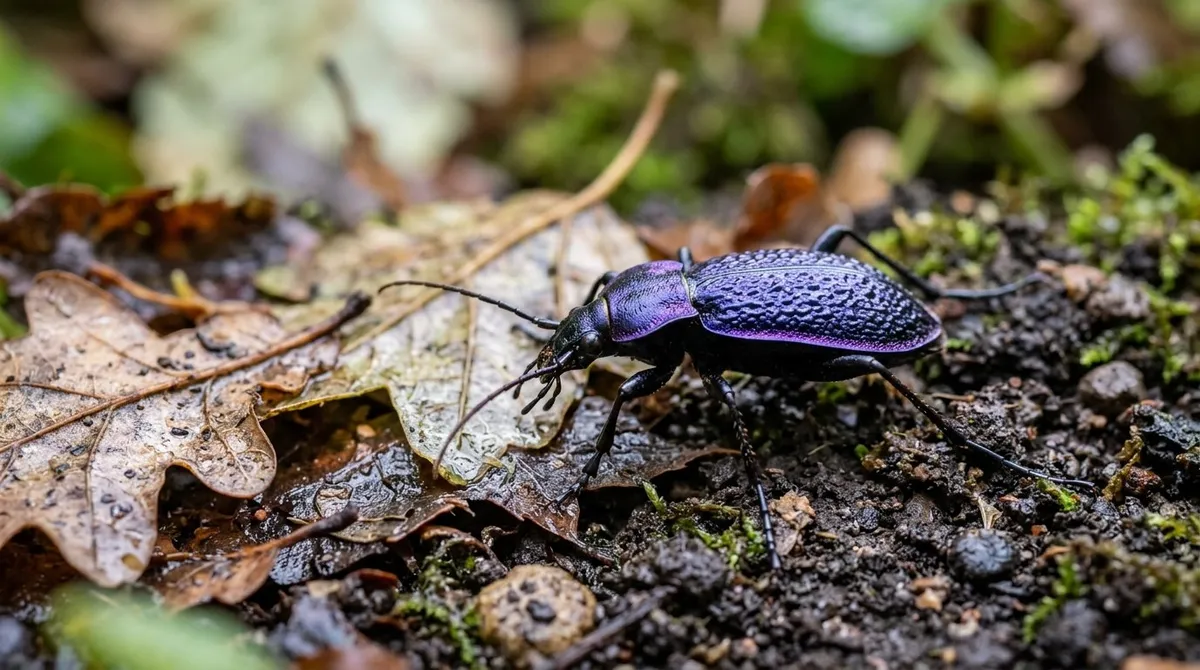
Ground beetles and centipedes make a good team. Ground beetles tackle bigger slugs, while centipedes go for smaller prey and eggs. Encourage both.
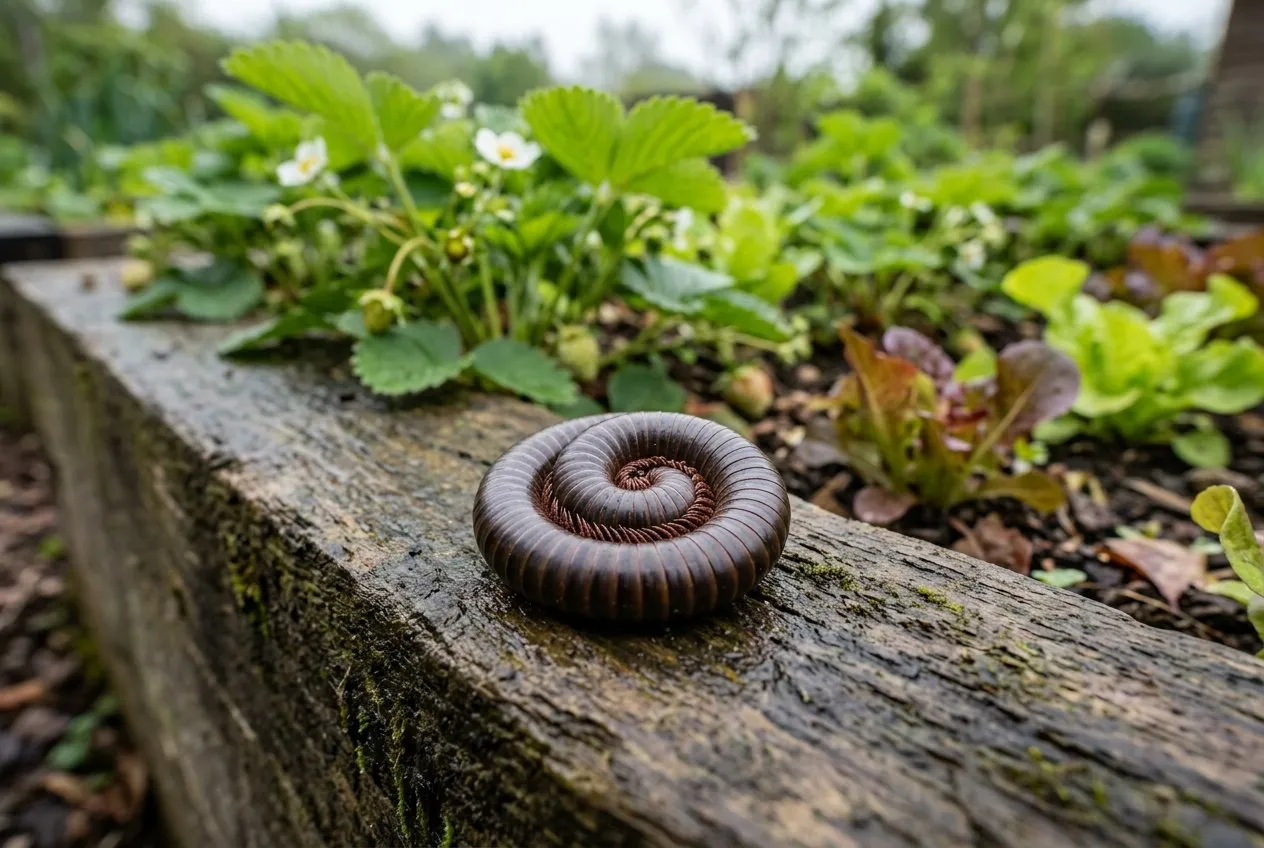 A millipede curled up tight. Centipedes never do this, they just run.
Do millipedes damage garden plants?
Hardly ever. Millipedes eat dead leaves, rotting roots, fallen fruit and old wood. They’re doing the same job as earthworms, woodlice and springtails. They’re composters, not pests.
The spotted snake millipede is the exception. It can damage:
- Strawberries lying on damp soil
- Potatoes left in the ground too long
- Carrots and other roots, especially where slugs have been
- Seeds and seedlings in very wet, rich soil
The fix is simple. Keep the soil surface around young plants a bit drier, clear away rotting material, tuck straw under strawberries and lift root crops when they’re ready.
How to encourage centipedes in your garden
Give centipedes shelter, damp and something to eat. They dry out easily, so they need cool, damp hiding places by day.
Mulch your beds. A layer of bark or wood chip keeps the soil damp and is full of the little creatures centipedes eat. Leave it alone as much as you can.
Go easy on chemicals. Insecticides and soil drenches can kill centipedes as well as pests. Try targeted options like nematodes for specific problems.
Leave a bit of mess. Very tidy gardens have the fewest centipedes. A wildlife-friendly garden with rough edges, log piles and leaf litter gives them a home.
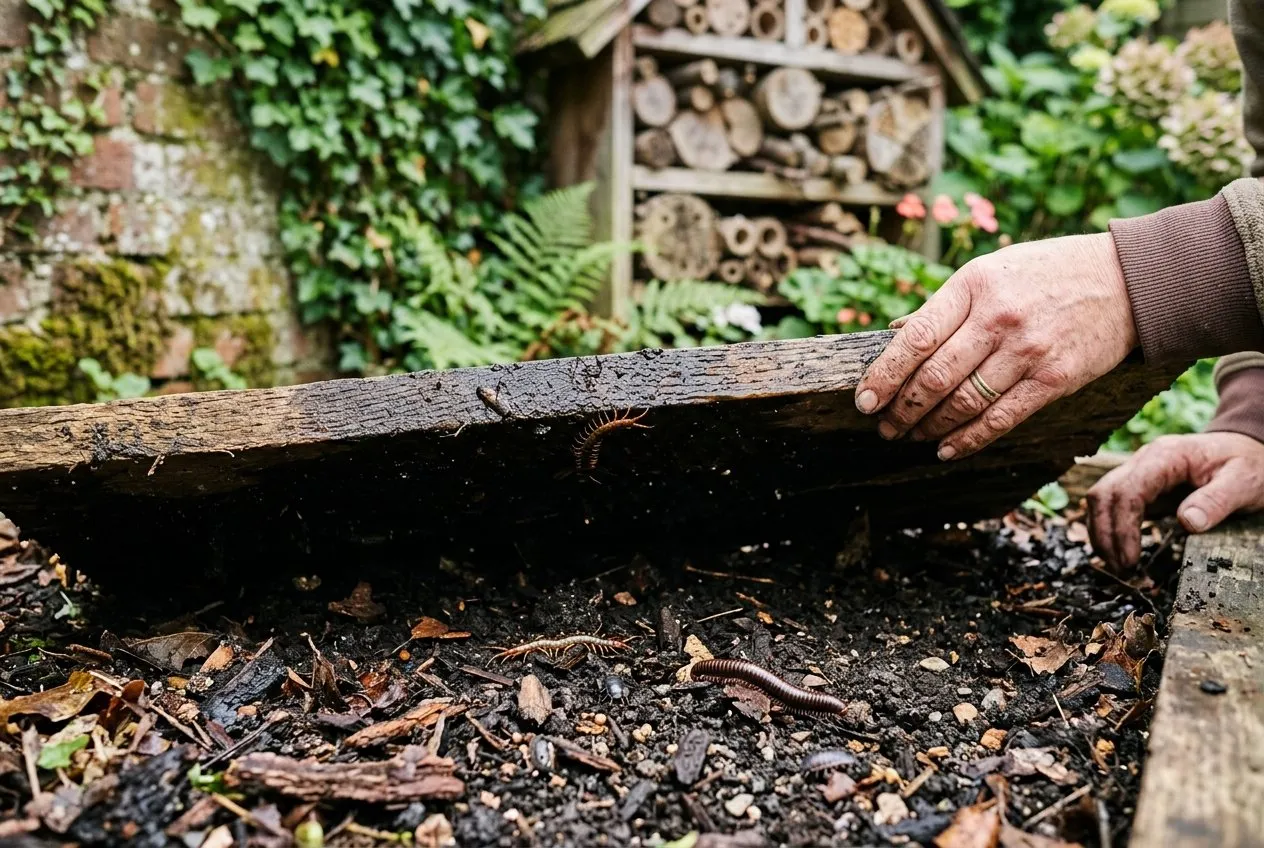 Lift an old board and you’ll find the damp, dark hideaway centipedes love.
When should I worry about millipede numbers?
Only when they’re damaging living plants, which for most gardens is never.
Keep an eye on seedlings in spring if your soil is very rich and wet. That’s when spotted snake millipedes tend to be busiest.
Signs of millipede damage on seedlings:
- Small round holes in the stem at or just below soil level
- Seedlings collapsing even though they’ve been watered
- Thin, pale millipedes in the compost when you disturb it
- Small round tunnels in potatoes with no slime trail
Easy ways to cut damage:
| What to do | Best for |
|---|---|
| Straw under the fruit | Strawberries |
| Lift crops when ready | Potatoes, carrots |
| Less loose compost on the surface | Seedling beds |
| Better drainage | Wet spots |
| Potato halves as a trap | Seeing where they are |
To check, put a few halved potatoes cut-side down on the soil and look under them after a couple of days. A handful of millipedes is normal. Lots of spotted ones means that bed needs a little attention.
Centipede and millipede lifecycle in UK gardens
Both live for a few years and grow slowly. They lay eggs in the soil in spring and summer. The young start with fewer legs and add more each time they shed their skin.
Centipedes hunt from spring to autumn, just when slugs are after your seedlings. Spotted snake millipedes are busiest in spring, when seedlings are most at risk.
| Month | Centipedes | Millipedes |
|---|---|---|
| January-February | Resting deep in the soil | Resting in soil and compost |
| March | Waking up | Waking up, starting to lay eggs |
| April | Laying eggs, hunting | Busy near the surface |
| May-June | Busy hunting | Watch seedlings and strawberries |
| July-August | Hunting, young growing up | Eating dead summer leaves |
| September-October | Hunting as slugs get busy after rain | Moving into compost |
| November-December | Heading deeper | Tucked into soil and compost |
The role of compost heaps and leaf mould
Compost heaps are a favourite home for both. They share the heap with worms, woodlice and springtails.
Centipedes stay in the cooler outer layers, hunting. Millipedes work all through the heap, breaking down tough stems.
When you spread compost on your beds, you move both into your growing areas. That’s a good thing. The centipedes get hunting and the millipedes keep turning the compost into goodness for your plants.
Centipedes, millipedes, and companion planting
Low ground cover between crops keeps the soil shady and damp, which centipedes love. A companion planting plan that includes ground cover suits them nicely.
Plants that give centipedes shelter:
- White clover between veg rows
- Creeping thyme along path edges
- French marigolds, which also bring in hoverflies
- Comfrey leaves laid on the soil as a mulch
No-dig gardening helps too. Adding compost on top instead of digging leaves their homes alone. Garden Organic explains how to get started.
A lively soil means healthier plants. Hedgehogs will happily eat both centipedes and millipedes, along with slugs, so a garden full of little creatures feeds bigger wildlife too.
Frequently asked questions
Are centipedes in the garden dangerous to humans?
No, UK garden centipedes are harmless to people. A big one may give a little nip if you handle it roughly, but it’s no worse than a nettle sting and soon fades. Just let them be and they’ll get on with their work.
Do centipedes eat slugs and snails?
They eat small slugs and slug eggs among other things. Centipedes hunt at night, the same time slugs come out. They also go for fly larvae, springtails and other little soil creatures. Together with ground beetles, they help keep slug numbers down.
Why are there millipedes in my raised beds?
Because there’s lots of tasty compost and dead plant material. Millipedes eat rotting roots, fallen leaves and old mulch, turning them back into goodness for the soil. Seeing them usually means your soil is lively and healthy. They only become a nuisance if they start on seedlings.
How do I tell a centipede from a millipede?
Count the legs on one body section. Centipedes have one pair, millipedes have two. Centipedes are flat, fast and run for cover. Millipedes are round like a pencil, slow, and often curl into a coil when touched.
Should I kill millipedes in my vegetable garden?
No, leave them be unless they’re damaging young plants. Most millipedes are helpful recyclers. If the spotted snake millipede is nibbling your crops, keep the soil surface drier, clear rotting material from around young plants and lift crops promptly.
What attracts centipedes to a garden?
Damp shelter and plenty to eat. By day they hide under logs, stones, leaf litter, mulch and compost heaps. At night they come out to hunt. A slightly untidy garden with log piles and ground cover suits them best.
Do millipedes damage strawberries and potatoes?
Sometimes, mainly the spotted snake millipede. It usually gets in where slugs or rot have already made a hole. It’s worst in wet summers. Lift strawberries off the soil with straw, and dig up potatoes once they’re ready.
Our team produces practical UK gardening guidance from source research, contributor records and established horticultural practice. Editorial standards are overseen by Matt W.