Key takeaways
- Winston and Vales Sovereign are popular whites; Kestrel and Cara are popular coloureds
- Judges want a matched set with even size, true shape, shallow eyes and clean skin
- Large bags or deep beds of sieved, stone-free compost give the smoothest tubers
- Cut the tops off about two weeks before the show so the skins firm up
- Grow far more plants than you need so you can pick a well-matched set
- Read the show schedule first, as class rules and tuber numbers vary
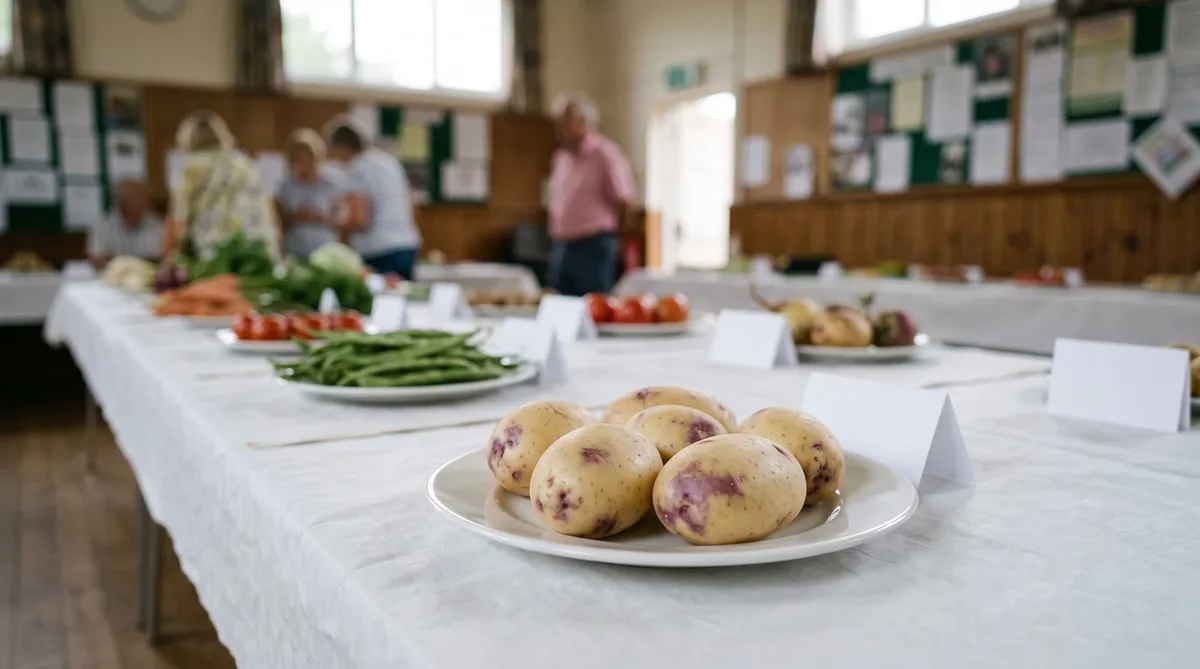
Show potatoes are grown for the judging table, not the kitchen. What wins is a matched set: tubers of the same size and shape, with shallow eyes and clean, unmarked skin. Get the variety, the growing medium and the harvest timing right, and any keen grower can be in with a chance at a local show.
This guide focuses on potatoes. For onions, carrots, beans and general show-day tips, see the guide to growing vegetables for your village show.
What do judges look for in show potatoes?
Judges look for uniformity first. Every tuber in the set should match in size, shape and colour. Then they check that each is true to the variety, with shallow eyes and clean, unblemished skin.

Judges look closely at every tuber. Shallow eyes and clean, unmarked skin matter as much as size.
Anything damaged loses points. That includes greening, common scab, slug holes, cracks and bruises. A smaller, perfectly matched set usually beats bigger tubers that don’t match.
Show classes vary, but many shows have a whites class and a coloureds class. Some add reds, salad potatoes or a heaviest-tuber class. Read your schedule before you order seed. It tells you the classes, the number of tubers and any other rules.
Best potato varieties for showing
Show growers favour varieties with smooth skins, shallow eyes and an even shape. These are popular choices.
| Variety | Class | Why growers like it |
|---|---|---|
| Winston | White | Smooth, oval tubers with shallow eyes |
| Vales Sovereign | White | Even shape and a clean finish |
| Kestrel | Coloured | Cream skin with purple patches around the eyes |
| Cara | Coloured | White skin with pink eyes, crops well |
| Picasso | Coloured | Cream skin with red eyes, a striking look |
| Maris Peer | White | Neat, smooth tubers |
| Charlotte | Salad | Pale, even, long-oval tubers |
Grow two or three varieties at first, matched to the classes you want to enter. The guide to the best potato varieties for UK gardens has more on each one.

A matched set of Kestrel: cream skins, purple eyes and all the same size. This is the look judges want.
Growing show potatoes in sieved compost
The shape and skin of a show potato are set by what it grows in. Stones and lumps give forked, knobbly or scarred tubers.
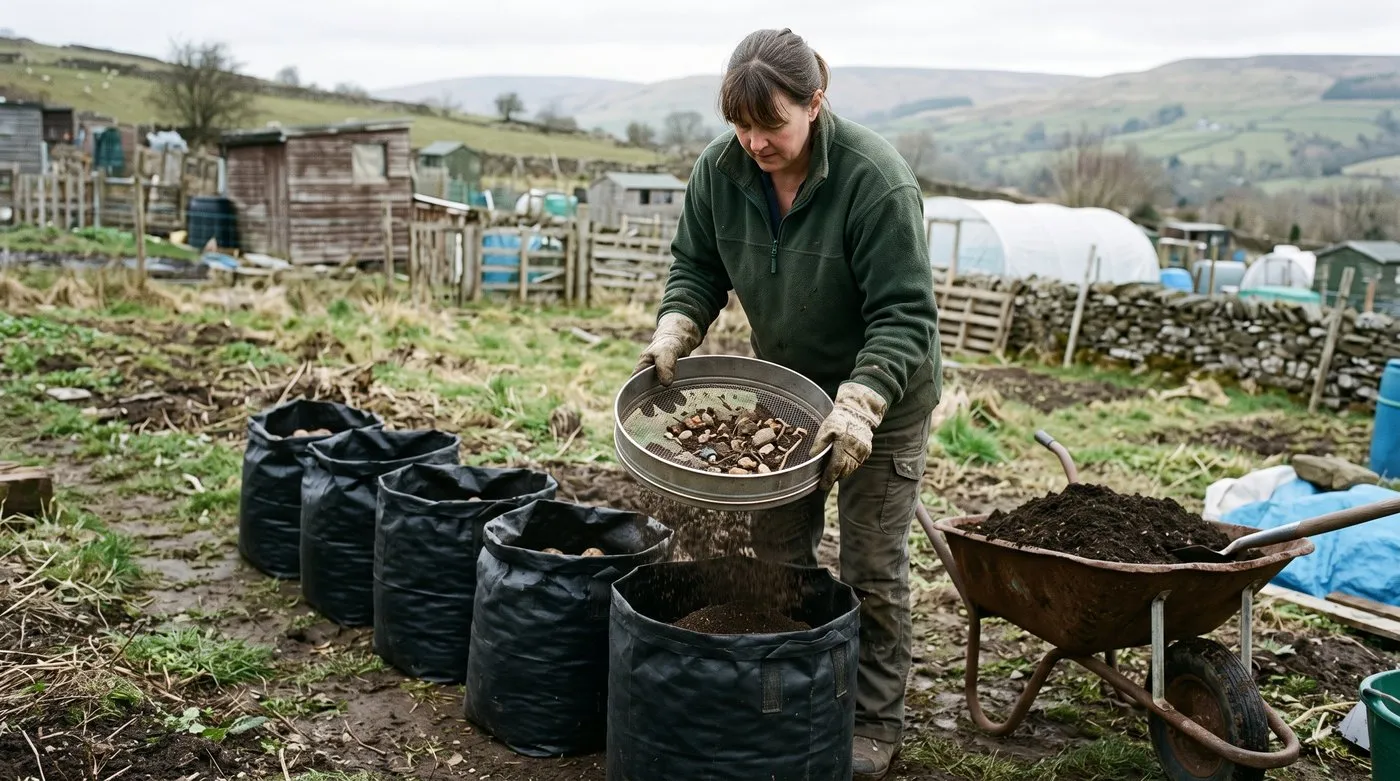
Sieving takes out the stones that make tubers forked and marked. Bags make lifting easy too.
Many show growers use large bags or tubs filled with sieved compost. It’s easy to control, and you tip the bag out at harvest without stabbing tubers with a fork. Others build a deep bed of sieved compost mixed with loam and a little sharp sand.
Whichever you choose, sieve everything through a garden riddle to remove stones, twigs and lumps. Don’t add lime. Common scab is worse in limy, dry soil. The guide to growing potatoes in bags and buckets covers sizes and drainage.
Chitting and planting show potatoes
Buy certified seed potatoes of a known show variety. Chit them from February by standing them in egg boxes in a cool, light, frost-free room. Aim for short, sturdy, dark shoots. Throw out any with thin, pale shoots or soft spots.
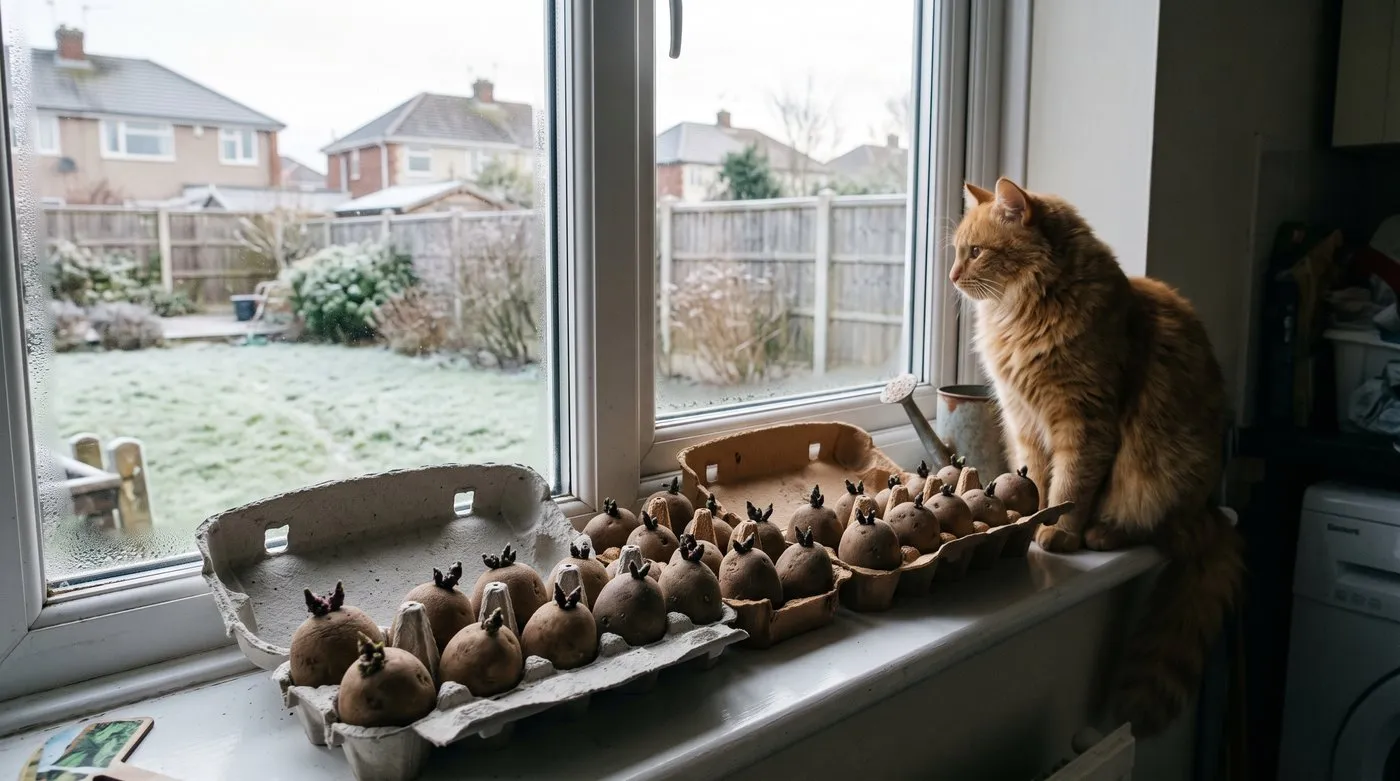
Short, sturdy, dark shoots are what you want. Long pale ones mean the room is too warm or too dark.
Plant from March to April, earlier in the south-west and later in the north. Plant about 12-15cm deep, shoots upwards. Space them a little wider than kitchen potatoes, or grow one tuber per large bag. More room helps each plant grow evenly sized tubers.
Count back from your show date. Allow for the variety’s growing time, plus about two weeks at the end for the skins to firm up. When to plant potatoes in the UK gives the timings for earlies and maincrops.
Watering, feeding and earthing up
Steady moisture is the key to smooth skins. Uneven watering can cause cracks and odd shapes, and dry compost encourages scab. Water regularly, especially once the plants flower, and don’t let bags dry out.
Feed with a general fertiliser at planting, then a high-potash liquid feed every couple of weeks once plants are growing well. Avoid lots of nitrogen, which gives big leafy tops and fewer good tubers.
Earth up or top up the compost as the shoots grow, so no tuber sees daylight. Light turns potato skin green, and green tubers are marked down. The guide on how to earth up potatoes shows how. Keep an eye out for blight in warm, damp summers. The potato blight guide explains what to watch for.
Timing the harvest for show day
Cut the tops (the haulm) off at soil level about two weeks before the show. The tubers stop growing and their skins firm up, so they are less likely to scuff.
Lift the day before the show, or that morning. Tip bags out onto a sheet, or work a fork in from well outside the row. Handle every tuber gently, as skin damage darkens quickly.
Wash the tubers gently in cold water with a soft sponge or cloth. Never scrub. Dry them carefully, wrap each one in soft tissue or paper and keep them in the dark so they don’t turn green.

Lift carefully and lay the best tubers straight onto something soft. A scuff today shows up as a dark mark tomorrow.
Picking a matched set
Lay out everything you’ve lifted and be ruthless. Reject any tuber with damage, scab, greening, deep eyes or an odd shape. Then sort the rest into groups by size, using kitchen scales if it helps.
From the best group, pick the tubers that look most alike in shape and colour. Take one or two spares to the show in case something gets marked on the way.
On the bench, set them out as the schedule asks. Many shows like potatoes on a plate, with the rose end (where the eyes cluster) facing the same way.

Matched, smooth ovals on the left, rejects on the right. Choosing the set is half the work.
Show potato calendar
| Month | What to do |
|---|---|
| January | Read last year’s schedule. Order certified seed of show varieties |
| February | Chit seed in a cool, light room. Sieve compost |
| March | Fill bags or prepare a deep bed. Plant earlies in mild areas |
| April | Plant the main show crop. Earth up or top up as shoots appear |
| May to June | Water steadily. Feed with high-potash feed. Watch for frost and blight |
| July to August | Keep watering. Cut the tops about two weeks before your show |
| Show week | Lift, wash gently, select a matched set and wrap them |
Common show potato mistakes
Stony growing medium. Stones cause forked and marked tubers. Sieve everything.
Liming the soil. Lime and dry conditions encourage common scab. Keep the compost moist and lime-free.
Uneven watering. Dry spells followed by soakings crack the skin. Water little and often.
Light reaching the tubers. Even a little daylight turns skins green. Keep them covered.
Lifting too soon after cutting the tops. Soft skins scuff easily. Give them about two weeks.
Too few plants. A small harvest rarely gives a perfect set. Grow plenty extra.
The National Vegetable Society publishes judging standards that many shows follow. It’s worth a look once you catch the showing bug.
Frequently asked questions
What are the best potato varieties for showing in the UK?
Winston and Vales Sovereign for whites, and Kestrel and Cara for coloureds. All give smooth, even tubers with shallow eyes. Maris Peer and Charlotte are also shown. Pick varieties that suit the classes in your show schedule before ordering seed.
How big should show potatoes be?
Medium-sized, evenly matched and typical of the variety. Many growers aim for roughly 170-225g each for standard classes. Very large tubers rarely win outside a heaviest-potato class. Always check the show schedule, as rules vary.
What do judges look for in show potatoes?
A matched set with good shape, shallow eyes and clean skin. Every tuber should be the same size and shape and true to its variety. Greening, scab, slug holes and bruises all lose points. A well-matched set often beats bigger but uneven tubers.
When should I plant show potatoes in the UK?
Plant chitted show potatoes from March to April. Plant earlier in the mild south-west and later in Scotland and the north. Count back from your show date, allowing for the variety’s growing time and two weeks for the skins to firm up.
Should I use special compost for show potatoes?
Many show growers use sieved compost in large bags or deep beds. Sieving removes stones that make tubers misshapen or marked. A light, even, stone-free mix helps give smooth skins and true shapes.
How many show potatoes do I need to grow?
Grow many more plants than the number of tubers you need. Shows often ask for around five matched tubers. Finding a perfect set means choosing from a big harvest, so plant extra for every class you enter.
For the everyday basics behind a good crop, read how to grow potatoes in the UK, or browse more growing guides for your plot.
Our team produces practical UK gardening guidance from source research, contributor records and established horticultural practice. Editorial standards are overseen by Matt W.