Key takeaways
- A sand bed is 15-30cm of washed sharp sand, with no topsoil or compost added
- Rinse all compost off the roots and plant bare-root, crown level with the sand
- Never use play sand or soft building sand, which pack down and stay wet
- On heavy clay, put a layer of coarse gravel under the sand
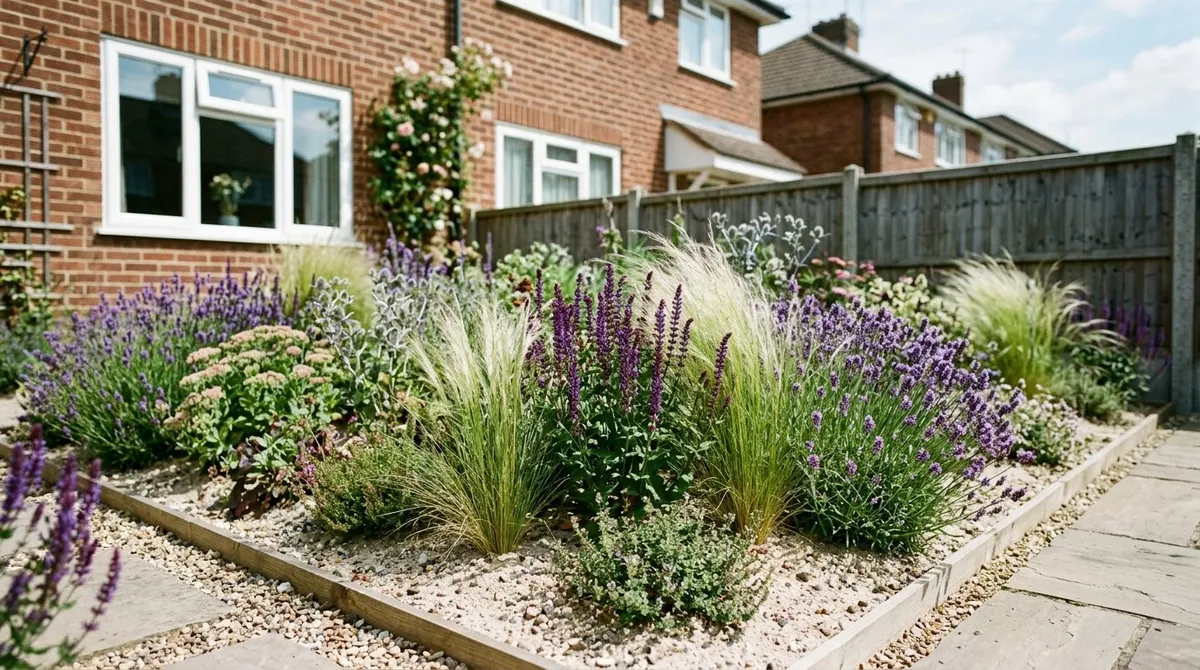
- Choose sun-loving, dry-soil plants such as lavender, thyme, Salvia and Stipa
- Water new plants weekly for their first couple of months, then rarely
A sand garden is a border where plants grow in a deep layer of sharp sand instead of soil. It sounds odd, but it works. With no rich topsoil near the surface, roots grow down to find moisture. The plants stay compact and tough, and they cope with dry summers and wet winters well.
This guide covers the build: which sand to buy, how deep to lay it, how to plant and what to grow. If you just want a list of tough plants for an ordinary border, see our guide to drought-tolerant plants for UK gardens instead.
What is a sand garden, exactly?
A sand garden, or sand bed, is a planted border made from 15-30cm of washed sharp sand laid over cleared ground. Plants go in bare-root, with the compost rinsed off. Nothing is added: no topsoil, no compost and no fertiliser.
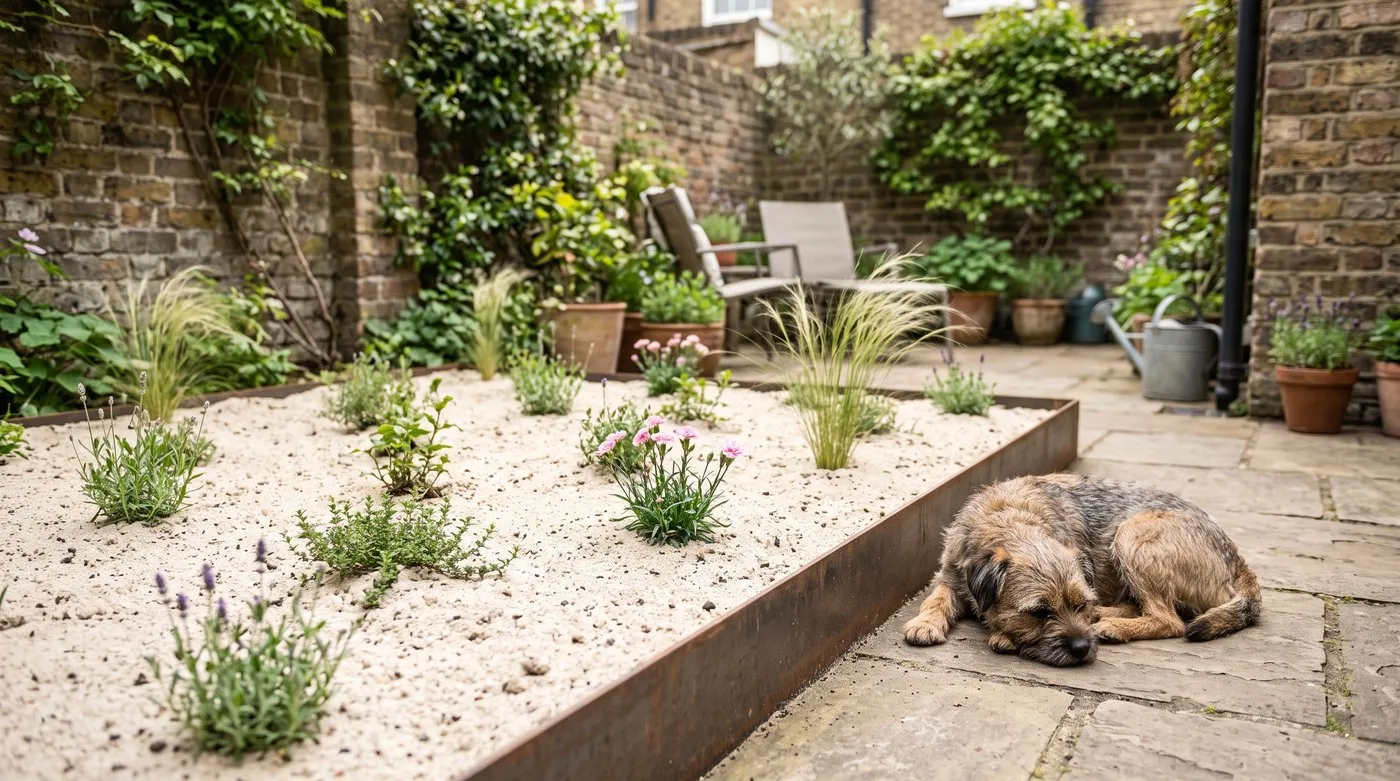
A new sand bed looks sparse at first. The plants fill out over a couple of summers.
The idea was made popular by the Swedish plantsman Peter Korn, who grows a huge range of plants in deep sand beds. It has caught on in the UK as gardeners look for borders that need less watering.
From the outside it looks much like a gravel or prairie border. The difference is underneath. The whole root zone is sand, so the bed drains fast and stays lean.
Why plants do so well in deep sand
In rich, moist soil, plants keep most of their roots near the surface, where food and water are easy to find. When a dry spell comes, that top layer dries first and the plant wilts.
In sand, there’s nothing to keep the roots near the top. They grow down to find moisture, so the plant is less bothered by a dry week. The lean diet also keeps growth firm and compact, so lavender and Salvia rarely flop. And because the crown sits in fast-draining sand rather than cold mud, many plants come through a wet winter better than they would in clay.
Sand garden, gravel garden or zen garden?
These three get muddled, but only one is a sand bed.
- A planted sand garden uses sand as the whole root zone. That’s what this guide covers.
- A gravel garden grows plants in ordinary or improved soil with a gravel mulch on top. Our guide on how to create a gravel garden walks through that method, and the Beth Chatto dry garden is the famous UK example.
- A zen garden (karesansui) is raked sand or gravel used as ornament, with few or no plants. It’s a design style rather than a growing bed, covered in our guide to Japanese garden design.
| Sand bed | Gravel garden | Ordinary border | |
|---|---|---|---|
| Root zone | 15-30cm of sharp sand | Soil under a gravel mulch | Soil, often improved |
| Watering once settled | Rarely | Occasionally in long dry spells | Regularly in summer |
| Feeding | Never | Rarely | Usually yearly |
| Plant choice | Dry-loving plants only | Mostly dry-loving plants | Almost anything |
Choosing the right sand for a sand bed
Buy washed sharp sand. It feels gritty, pours freely and drains fast. Ask your builders’ merchant or aggregate supplier for washed sharp or grit sand, and check it isn’t dusty or claggy.
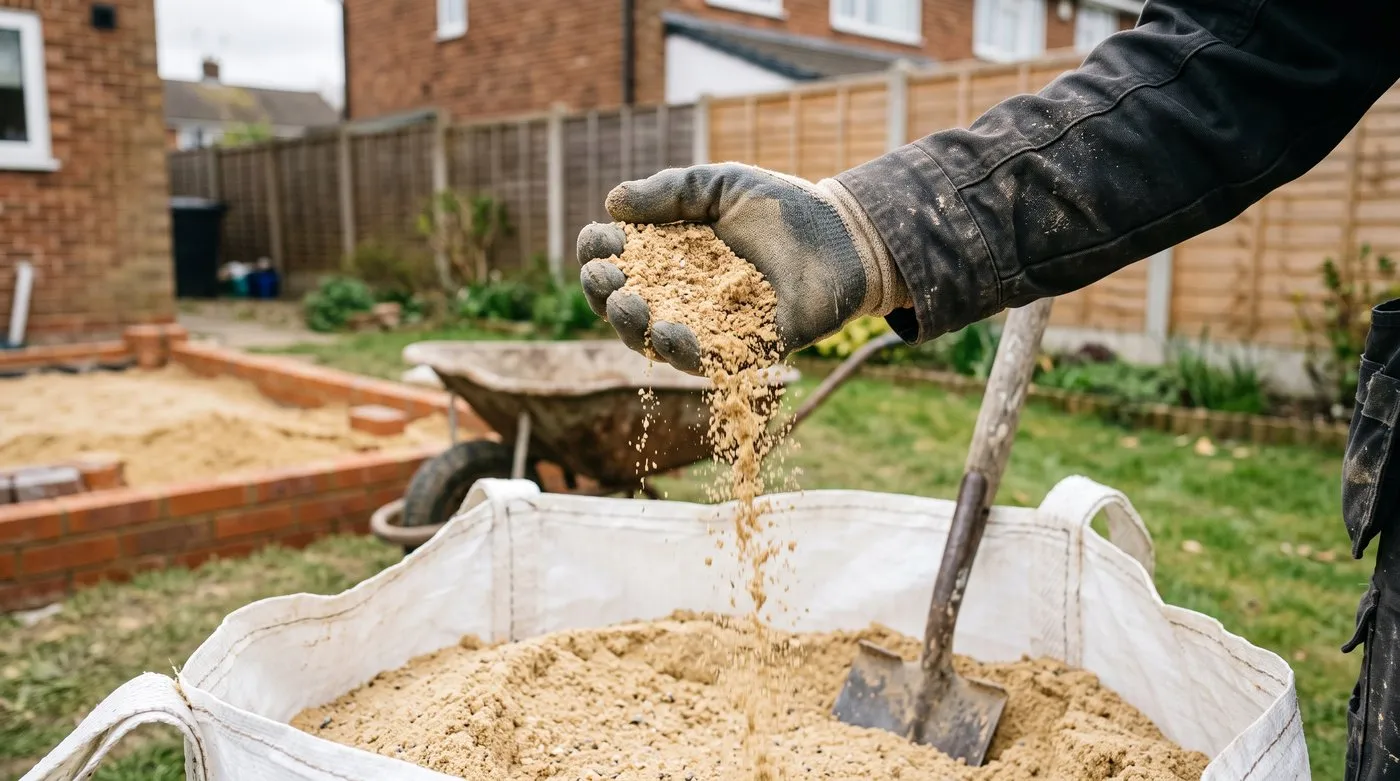
Good sharp sand feels gritty and pours freely. If it’s soft, dusty or claggy, it’s the wrong stuff.
Don’t use play sand or soft building sand. Both are full of fine particles that pack down and hold water, which is exactly what you’re trying to avoid. Skip salted, marine or kiln-dried block-paving sand too.
Sand usually comes loose in bulk bags. A typical bulk bag covers roughly 2 square metres at 25cm deep, so measure the bed before you order.
How deep to lay the sand, and beds on clay
Lay about 15cm of sand for low alpines and thymes on ground that already drains well. Go for 25-30cm for Salvia, Eryngium, grasses and larger perennials.
On heavy clay, sand laid straight on top can trap water underneath it in winter. Dig out some of the clay, lay about 10cm of coarse gravel, then put the sand on top. Raising the bed edges a little with stone, brick or steel edging helps shed heavy rain.
Before any sand goes down, dig out every bit of perennial weed root. Couch grass and bindweed will happily grow up through sand and are miserable to remove later.
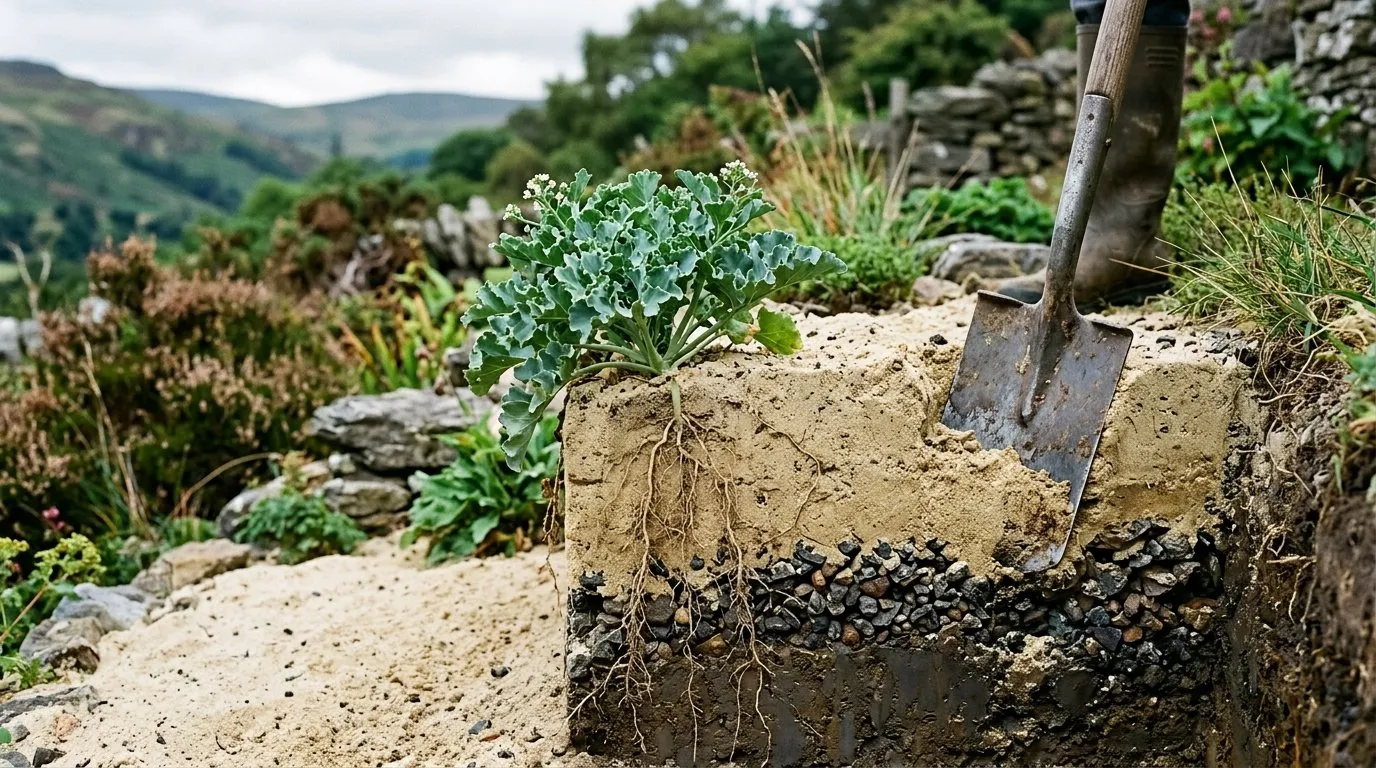
Sand on top, coarse gravel underneath. On clay, that gravel layer stops the bed sitting wet all winter.
How to plant bare-root into sand
Planting bare-root is the step that makes a sand garden work. If you leave the compost on, the roots stay in that comfy pocket and never really move into the sand.
- Knock the plant out of its pot and gently loosen the root ball.
- Rinse off all the compost in a bucket of water until the roots are clean.
- Make a deep, narrow hole in the sand with a trowel or a piece of dowel.
- Lower the roots in so they hang straight down, then trickle sand back around them.
- Keep the crown level with the sand, not buried, or it may rot in wet weather.
- Water in well to settle the sand around the roots.
Spring, from March to May, is the best time to plant, with September a good second choice. Space plants as you normally would.
Gardener’s tip: Take your time with the rinsing. Clean roots grow into the sand far faster than roots still wrapped in compost.
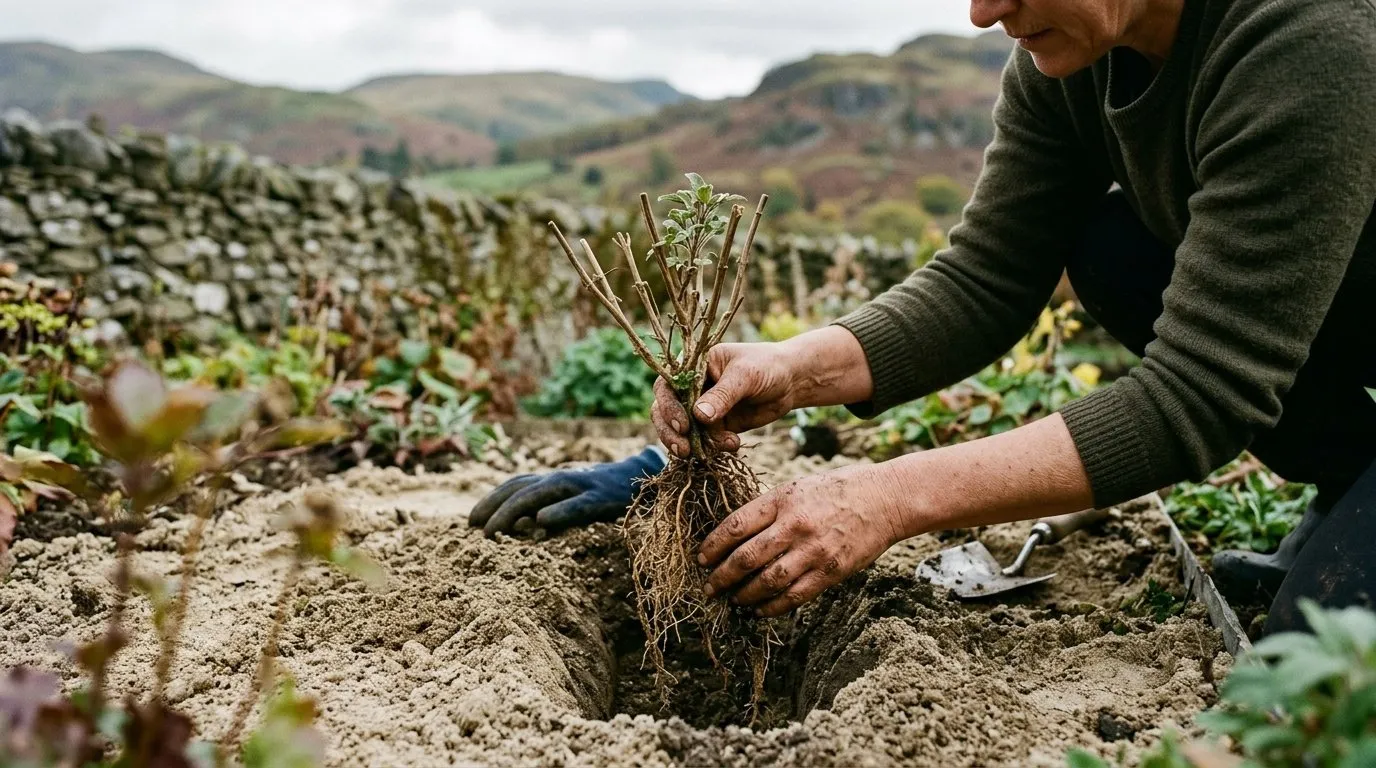
Roots rinsed clean and hanging straight down. That’s what sends them deep into the sand.
The best plants for a UK sand garden
The best sand-garden plants are sun-lovers that like dry, poor soil. Mediterranean and prairie plants lead the way.
- Lavender, such as Lavandula angustifolia ‘Hidcote’ and ‘Munstead’.
- Thyme, for low, scented mats.
- Dianthus (pinks), for scent and grey evergreen cushions.
- Salvia nemorosa, such as ‘Caradonna’, for months of upright spikes.
- Eryngium (sea holly) and Verbascum, both deep-rooted and striking.
- Sedum and Sempervivum, for chunky leaves and easy care.
- Grasses such as Stipa tenuissima, Stipa gigantea and Festuca glauca, for movement.
- Self-seeders like Verbena bonariensis, Erigeron karvinskianus and California poppy, which pop up in the open sand.
Mix in plenty of evergreen and grey-leaved plants so the bed still looks good in winter. The same plants star in Mediterranean garden planting.
Warning: Euphorbia suits a sand bed, but its milky sap irritates skin and eyes. Wear gloves and eye protection when you cut it.
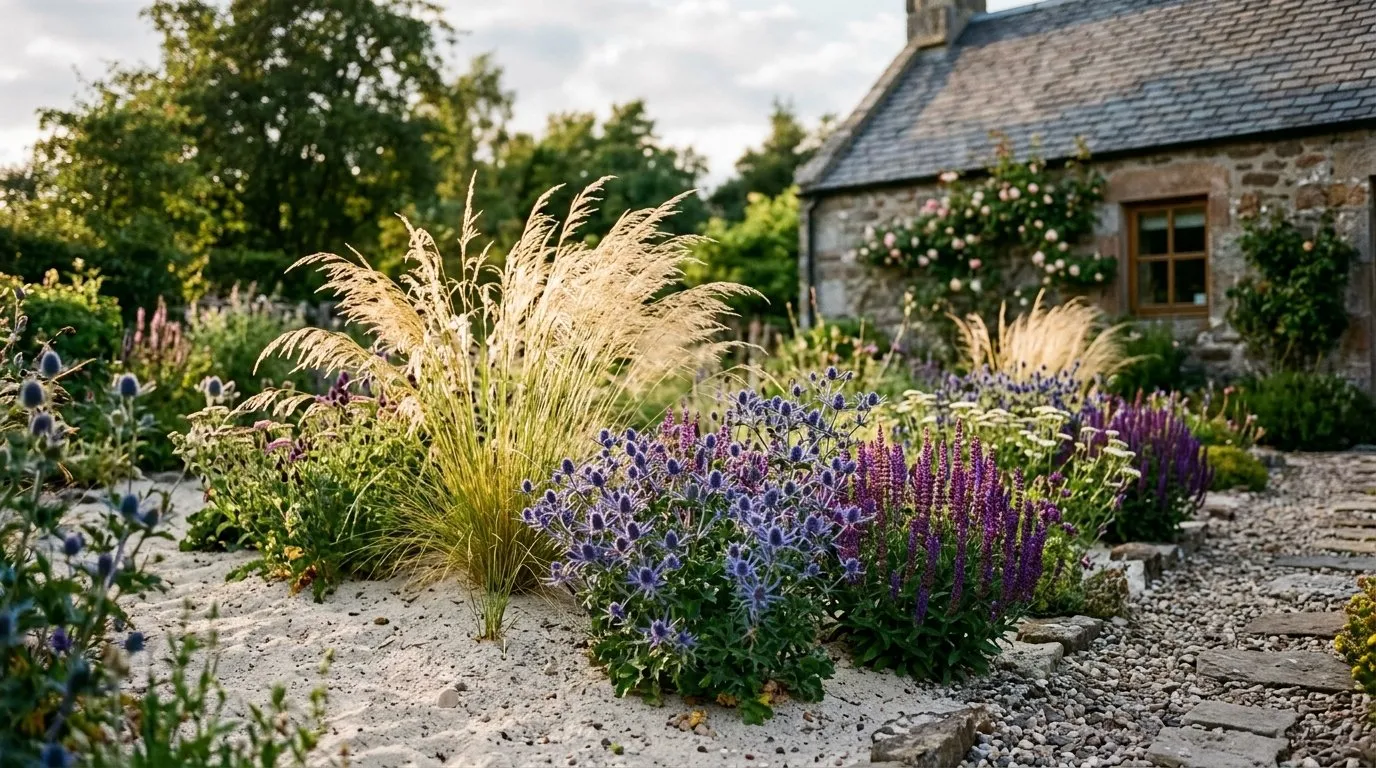
Stipa, sea holly and Salvia growing together in sand. The lean diet keeps them compact and upright.
Alpine, seaside and small-space sand beds
The sand-bed idea works at any size, not just as a full border.
Alpine troughs are a classic use. Alpines hate wet crowns, and a stone trough with about 15cm of sharp sand over a little gravel keeps them dry through a soggy winter. Sempervivum, saxifrages and dwarf pinks all do well. Our guide to alpine trough displays has more ideas.
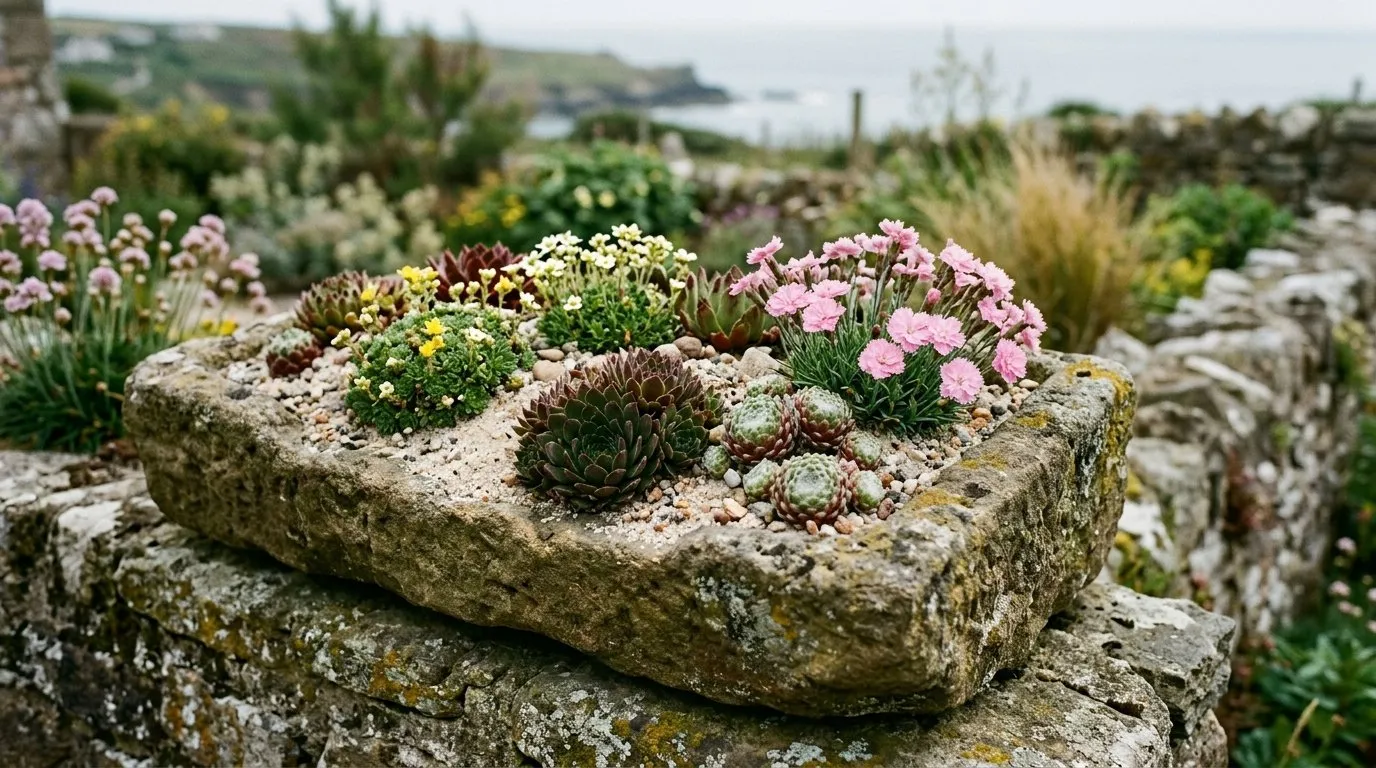
A stone trough of sharp sand keeps alpine crowns dry, which is what usually kills them in a wet UK winter.
Seaside gardens often have sandy ground already. Sea thrift (Armeria maritima), sea kale and Eryngium shrug off salt wind and love the drainage. See our guide to salt-tolerant coastal plants for more.
Small spaces can use a raised bed or a big trough. Thyme, sedums and pinks in sharp sand need very little water once settled.
Lavender, thyme and Salvia are also great for bees, so a sunny sand bed is good news for pollinators.
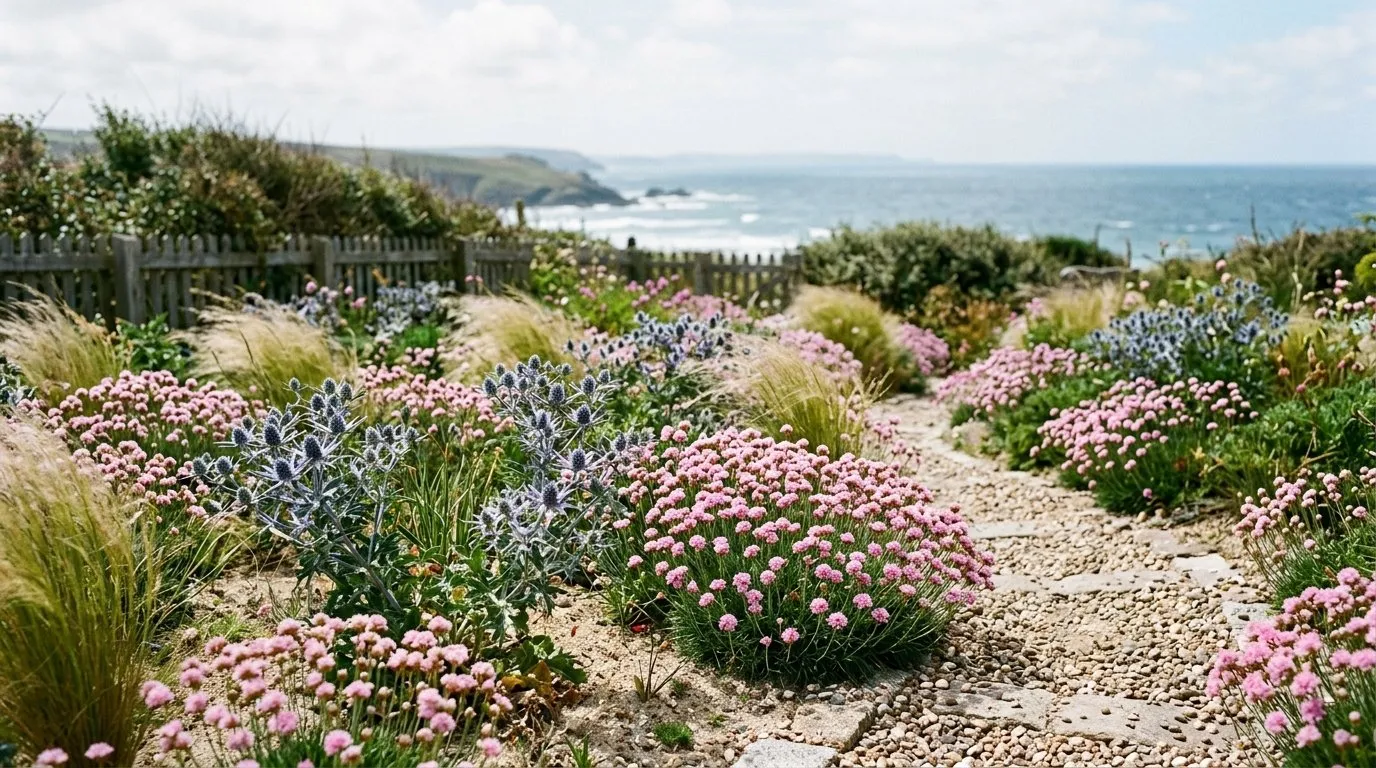
Sandy coastal ground gives you the drainage for free. Sea thrift and sea holly love it.
Month-by-month sand garden calendar
| Month | Task |
|---|---|
| January | Leave the bed alone and enjoy the evergreen shapes |
| February | Cut back old grass stems and dead growth before new shoots appear |
| March | Start planting bare-root. Top up any thin patches of sand |
| April | Keep planting. Water new plants in well |
| May | Last spring planting. Water this spring’s plants weekly in dry spells |
| June | Deadhead early Salvia for a second flush |
| July | Water only this year’s new plants, and only if it’s very dry |
| August | Trim leggy thyme and Erigeron. Take lavender and pink cuttings |
| September | Second planting window while the sand is still warm |
| October | Leave grasses and seedheads standing for winter interest and birds |
| November | Clear fallen leaves off the sand so it stays open and dry |
| December | Nothing to do. The bed looks after itself |
Common mistakes that ruin a sand bed
- Using the wrong sand. Play sand and soft building sand pack down and stay wet. Buy washed sharp sand.
- Leaving the compost on the roots. The roots stay in the old compost and never grow into the sand. Rinse them clean.
- Skipping the gravel on clay. Water gathers under the sand and crowns rot over winter. Add a gravel layer first.
- Feeding the bed. Compost or fertiliser makes soft, floppy, thirsty growth and helps weeds. Keep it lean.
- Picking moisture-lovers. Hostas, astilbes and hydrangeas will sulk or die. Stick to dry-loving plants.
Frequently asked questions
What is a sand garden?
It is a border where plants grow in a deep layer of sharp sand. There is no topsoil and no feed. Roots grow down looking for moisture, so plants stay compact and cope well with dry spells. It is not the same as a raked zen garden, which has no plants.
How deep should a sand garden bed be?
Lay 15-30cm of sharp sand. Around 15cm suits thymes and alpines on ground that already drains well. Go for 25-30cm for Salvia, grasses and bigger perennials, or for any bed over heavy clay.
What sand do you use for a sand garden?
Use washed sharp sand, which feels gritty and drains fast. Never use play sand or soft building sand. They are full of fine particles that pack down and hold water. Avoid salted or kiln-dried paving sand too.
Do plants in a sand garden need watering?
Only while they settle in, then rarely. Water new bare-root plants in well, then about once a week for the first couple of months in dry weather. After that, most established plants manage on rainfall.
Can I make a sand garden on clay soil?
Yes, but add drainage under the sand. Dig out some of the clay, lay about 10cm of coarse gravel, then 25-30cm of sharp sand on top. Raising the edges a little helps the bed shed heavy rain.
What plants grow best in a sand garden?
Sun-lovers that like dry, poor soil grow best. Try lavender, thyme, pinks, Salvia nemorosa, Eryngium, Verbascum, sedums and grasses such as Stipa. Skip hostas, astilbes and anything that wants rich, damp ground.
Is a sand garden the same as a Japanese zen garden?
No, a zen garden is raked sand or gravel with no plants. A planted sand garden is a growing bed for dry-loving perennials. This guide covers the planted kind.
Ready to fill your bed? Browse more ideas in our garden design guides, or read our guide to watering less in a dry summer for the rest of the garden.
Our team produces practical UK gardening guidance from source research, contributor records and established horticultural practice. Editorial standards are overseen by Matt W.