Apple Tree
Malus domestica
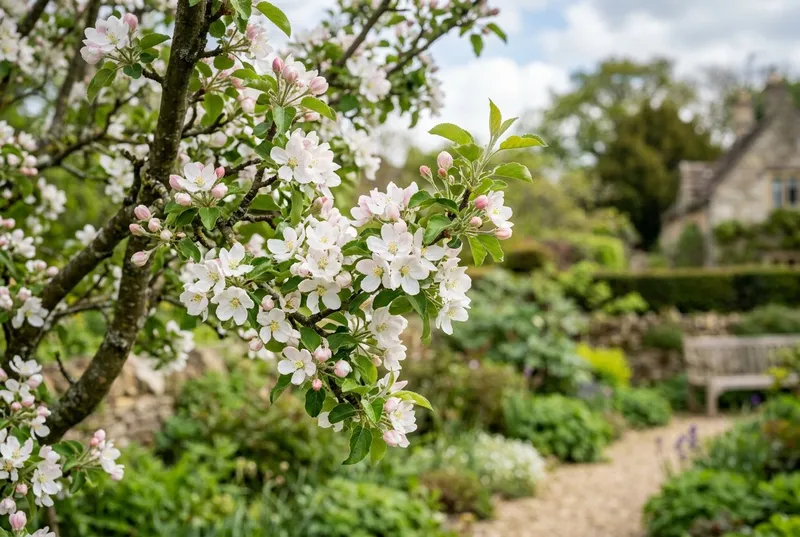
The apple tree is the most widely grown fruit tree in the UK, with hundreds of cultivars suited to our climate. From compact patio trees to full-sized orchard specimens, there is an apple for every garden. Blossom in spring attracts pollinators, and fruit ripens from late summer through autumn. Most varieties are fully hardy and crop reliably across all UK regions.
How to grow apple tree
Choose a sunny, sheltered site with well-drained, fertile soil. Buy trees on a rootstock suited to your space: M27 or M9 for small gardens and containers, MM106 for medium gardens, and M25 for full-sized orchard trees. Plant bare-root trees between November and March, staking firmly. Most apples need a pollination partner from the same flowering group, so plant at least two compatible varieties or a self-fertile cultivar. Water regularly during fruit development, especially in the first three years. Mulch annually with well-rotted manure in late winter. Thin fruitlets in June to one or two per cluster for better-sized fruit.
Pruning
Prune free-standing trees in winter (November to February) to create an open goblet shape. Remove dead, diseased, and crossing branches. Cut back leaders by one-third and laterals to four buds. Trained forms such as espaliers and cordons are pruned in late summer (August) by cutting new side shoots to three leaves above the basal cluster.
Propagation
- Grafting
- Budding
Common problems
- Apple scab
- Codling moth
- Canker
- Woolly aphid
- Brown rot
Good companions
Related guides
How to Grow Apple Trees in the UK
Complete UK guide to growing apple trees. Covers rootstocks, pollination groups, best dessert and cooking varieties, planting, pruning, and pest control.
How to Grow Fruit Trees in the UK
UK guide to growing fruit trees from apple and pear to plum, cherry, and fig. Rootstock choices, pruning, and the best varieties for British gardens.
How to Train Fruit Trees: Espalier
Learn how to train fruit trees using espalier, fan, cordon, and step-over forms. UK pruning guide with rootstock advice, wire setup, and seasonal calendar.