Delphinium
Delphinium elatum
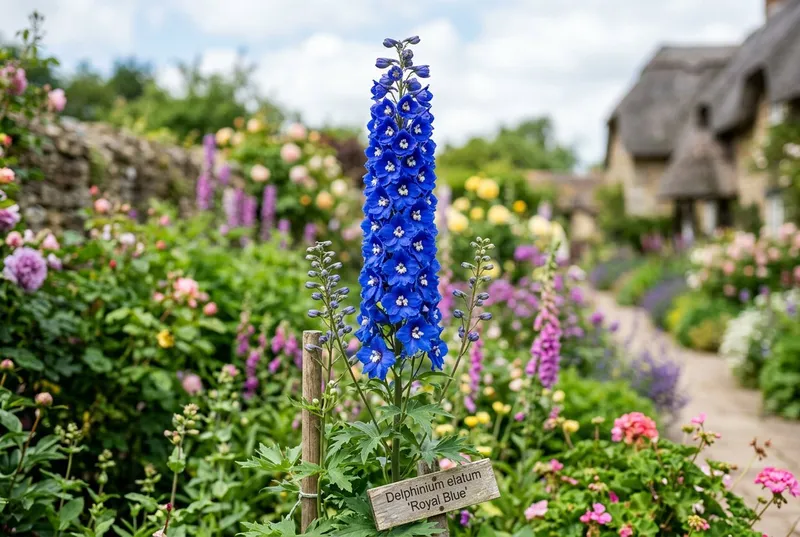
A tall, stately perennial producing magnificent spires of blue, purple, white, or pink flowers from June to July. Delphiniums are quintessential English cottage garden plants, reaching up to 180 cm in ideal conditions. They need rich, fertile soil and a sheltered position to protect their hollow stems from wind damage in exposed UK gardens.
Full growing guide
How to Grow Delphiniums in the UK
How to grow delphinium
Plant in autumn or early spring in deep, fertile, moisture-retentive soil enriched with well-rotted manure. Choose a sheltered spot in full sun, ideally backed by a wall or hedge that provides wind protection without shade. Stake tall varieties from early May using grow-through supports or individual canes — waiting until stems flop causes permanent damage. Water deeply during dry spells and feed fortnightly with a high-potash liquid fertiliser from May onwards. After the first flush finishes in July, cut flowering stems back to 15 cm above the ground and feed well to encourage a second flush in September.
Pruning
Cut spent flower spikes down to a strong lateral shoot or to 15 cm above ground level after the first flush. In late autumn, cut all growth back to ground level once it has died down. Remove any weak or thin shoots in spring, leaving the four or five strongest per clump.
Propagation
- Basal cuttings in spring
- Division in early spring
- Seed sown fresh in autumn
Common problems
- Slugs and snails on young shoots
- Powdery mildew in dry conditions
- Crown rot in waterlogged soil
- Wind damage to tall stems
Good companions
Related guides
How to Grow Delphiniums in the UK
How to grow delphiniums in the UK: the best varieties, rich soil and shelter, staking, slug control, sowing seed and cutting back for more flowers.
Cottage Garden Planting Plan for the UK
How to plan a cottage garden border: the classic plants, how to layer them, colour ideas and a ready-made planting plan for a sunny UK border.
Best Plants for Butterflies in the UK
The best nectar flowers and caterpillar food plants for UK butterflies, season by season, plus a simple border plan and what to skip.