Virginia Creeper
Parthenocissus quinquefolia
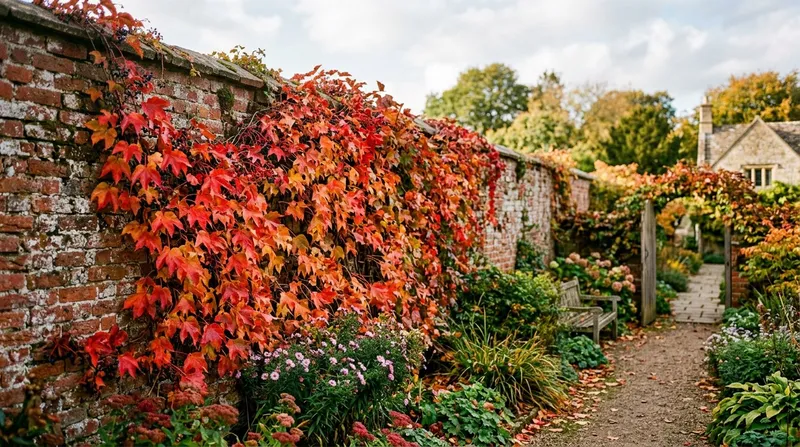
Virginia creeper is a vigorous, self-clinging deciduous climber grown primarily for its spectacular autumn colour. The five-lobed leaves turn brilliant shades of scarlet, crimson, and orange in September and October before falling. It covers large walls, buildings, and fences rapidly, climbing via adhesive pads on its tendrils. Fully hardy throughout the UK and tolerant of all aspects including north-facing walls.
How to grow virginia creeper
Plant at any time of year in any soil or aspect. Virginia creeper is one of the most adaptable climbers available, thriving in sun, partial shade, or full shade and tolerating pollution, coastal conditions, and poor soil. The best autumn colour develops in full sun. Plant 30-45 cm from the base of the wall to avoid the dry rain shadow. Guide young shoots towards the wall initially; once the adhesive pads grip, no additional support is needed. Water regularly during the first growing season. Virginia creeper needs space, so it is not suited to small gardens or fences under 3 metres. The closely related Boston ivy (Parthenocissus tricuspidata) has three-lobed leaves.
Pruning
Prune in late autumn or winter to keep within bounds. Cut back shoots growing into gutters, windows, and roof areas. Virginia creeper tolerates hard pruning and regenerates freely from old wood. Trim annually if growing on a fence or smaller wall to prevent it overwhelming the structure.
Propagation
- Hardwood cuttings
- Layering
- Seed
Common problems
- Adhesive pads can mark paintwork
- Leaf spot
- Scale insects
- Can be invasive
Good companions
Related guides
Best Climbing Plants for UK Gardens
Best climbing plants for UK gardens covering walls, fences, pergolas, and small spaces. Planting advice, aspect guidance, and care tips.
Garden Fence Ideas and Inspiration
Garden fence ideas for UK homes. Covers materials, styles, paint colours, climbers, living fences, and how to make fences a design feature.
Vertical Gardening Ideas for Small Spaces
UK vertical gardening ideas for walls, fences, and tight plots. Living walls, trellis systems, pocket planters, and the best plants for growing upwards.