Key takeaways
- Sissinghurst, Great Dixter and Hidcote are among the most loved UK gardens
- The National Garden Scheme opens thousands of private gardens to raise money for nursing and health charities
- Late April to June is peak season for borders, wisteria and bluebells
- RHS members get free entry to all five RHS gardens
- Many private gardens open only a few days a year, so always check dates
- Scotland's Crarae and Inverewe gardens are worth the trip north
Open gardens are one of the loveliest ways to spend a day out in Britain. Whether it’s a grand country estate, an RHS showpiece or someone’s back garden opening for charity, every one has a story to tell.
The UK has some of the most famous gardens in the world. Thousands of private gardens open through the National Garden Scheme alone, and then there are National Trust, RHS and botanic gardens on top. Here are the best, grouped by type, with tips for your visit. Prices change every year, so check each garden’s website before you go.

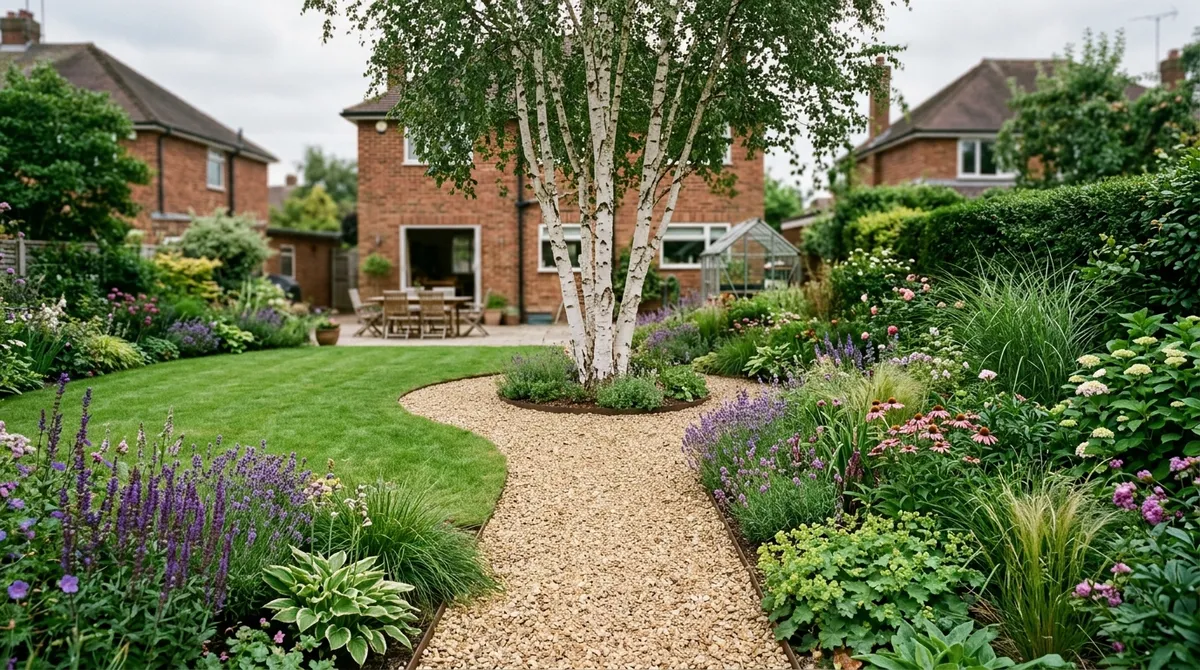
Classic English borders in full summer bloom at a historic garden.
Best historic gardens to visit
The best historic gardens are Sissinghurst, Hidcote, Great Dixter, Stourhead and Bodnant. Each has a long history and the kind of mature planting no new garden can match.
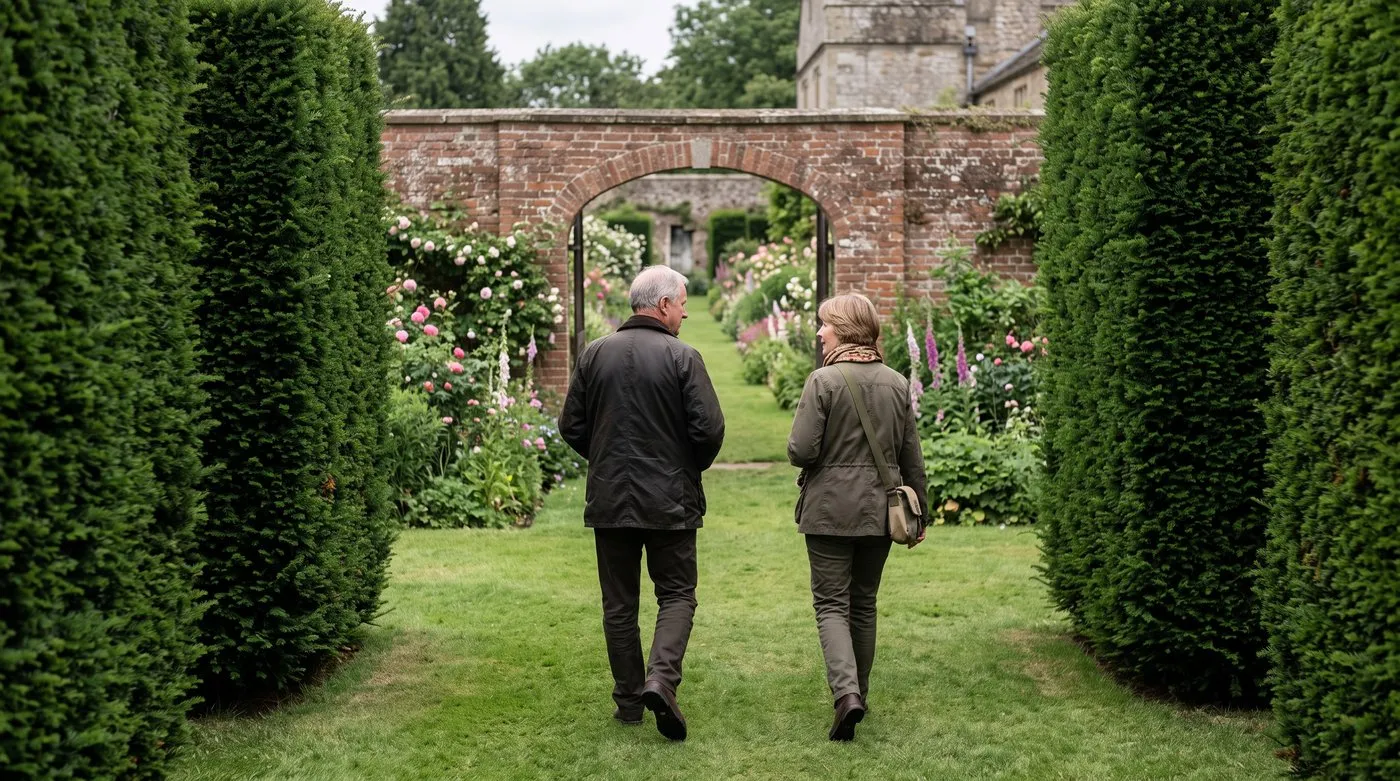
Historic gardens are made of rooms. Follow the hedges and paths and there’s a new view round every corner.
Sissinghurst Castle Garden, Kent
Sissinghurst is the garden everyone wants to copy. Vita Sackville-West and Harold Nicolson made it in the 1930s, splitting it into outdoor “rooms” with tall brick walls and clipped yew hedges. The White Garden is probably the most famous garden room in Britain, with white roses, white delphiniums and silver artemisia glowing against dark hedges. The Cottage Garden blazes with hot oranges and reds in midsummer. It’s run by the National Trust. June and July are busiest, so arrive early or go midweek. Allow at least three hours.
Hidcote Manor Garden, Gloucestershire
Hidcote is the original Arts and Crafts garden. Major Lawrence Johnston started it on a bare hillside above Chipping Campden in 1907. It’s a series of hedged rooms, each with its own colour theme. The Red Borders steal the show, with crimson dahlias, dark-leaved cannas and red hot pokers against copper beech and yew. The Bathing Pool Garden cools things down with blues and whites. It’s a National Trust garden. Go in late June for the borders at their peak, and you’ll see why they’ve inspired so many cottage garden planting plans.
Great Dixter, East Sussex
Great Dixter was the home of Christopher Lloyd, one of Britain’s best-loved gardening writers. The Long Border mixes perennials, annuals and tropical plants with joyful, fearless colour. Lloyd famously dug up his rose garden and filled it with cannas, dahlias and bananas. The meadows, with wildflowers seeding through long grass, are some of the best in the country. The nursery sells plants grown from the garden. Visit from July to September for the exotic garden at its best.
Stourhead, Wiltshire
Stourhead is a grand 18th-century landscape garden, laid out in the 1740s around a man-made lake with classical temples, grottoes and rare trees. The walk round the lake takes about 90 minutes and passes rhododendrons and azaleas in spring. Autumn is just as special, with Japanese maples reflected in the still water. It’s run by the National Trust. Spring and autumn are the best times to go.
Bodnant Garden, Conwy
Bodnant looks out over the River Conwy in North Wales, with views towards Snowdonia. Its Laburnum Arch is one of the most photographed sights in any British garden. In late May, the long tunnel drips with golden flowers. Below the terraces, the Dell follows a stream through woodland planted with magnolias and camellias. It’s a National Trust garden. Go in late May for the laburnum, or October for autumn colour.
Best RHS gardens to visit
The five RHS gardens are Wisley, Harlow Carr, Hyde Hall, Rosemoor and Bridgewater. All are free for RHS members. Each sits in a different part of the country, so the planting varies a lot.
RHS Wisley, Surrey
Wisley is the RHS flagship. There’s a big Glasshouse full of tropical and desert plants, long Mixed Borders, and trial grounds where new varieties are put through their paces. The Exotic Garden shows bold planting at its best, and the Rock Garden is one of its oldest features. Allow a full day. For ideas to take home, see our ideas worth borrowing from RHS Wisley.
RHS Harlow Carr, North Yorkshire
Harlow Carr, on the edge of Harrogate, shows what grows well in the colder, wetter north. The Streamside Garden is the star, with moisture-loving plants along a natural beck. The Kitchen Garden is great for veg growers. If you grow flowering shrubs in a northern garden, the borders here show what copes without winter protection. There’s a Bettys café on site too.
RHS Hyde Hall, Essex
Hyde Hall sits on a windy hilltop in one of the driest parts of England. The Dry Garden proves you can have a stunning garden without watering. Mediterranean herbs, grasses and tough perennials do brilliantly, even on heavy clay. The Global Growth Vegetable Garden shows crops from around the world.
RHS Rosemoor, Devon
Rosemoor, near Great Torrington, enjoys Devon’s mild, damp climate. The formal Rose Gardens are a summer highlight, and the Cottage Garden is traditional planting at its finest. The young Arboretum puts on good autumn colour.
RHS Bridgewater, Greater Manchester
Bridgewater opened in 2021 and is the newest RHS garden. It’s centred on a big Walled Garden at Worsley New Hall. The Chinese Streamside Garden and the Paradise Garden show off modern planting design.

A walled garden gives roses and tender plants a cosy, sheltered home.
Best botanical gardens in the UK
The best botanical gardens in the UK include Kew, Edinburgh, Cambridge, Oxford and Chelsea Physic Garden. They’re the perfect places to see plants from all over the world. Planning a trip abroad? See the best gardens in the world to visit.
Royal Botanic Gardens, Kew
Kew in south-west London has one of the biggest plant collections on the planet. The Palm House, built in 1848, is a steamy rainforest under soaring glass. The Temperate House is a huge Victorian glasshouse, and the Princess of Wales Conservatory holds ten climate zones under one roof. The Treetop Walkway takes you up into the canopy. The Rock Garden, Alpine House and Grass Garden are brilliant too. Allow a full day, or even two.
Royal Botanic Garden Edinburgh
Edinburgh’s Botanics cover more than 70 acres on Inverleith Row, a short walk from the city centre. The restored Victorian Palm Houses reopened in October 2026 and need a timed ticket. The Rock Garden, made in 1871, is one of the finest alpine collections anywhere. The Chinese Hillside recreates mountain plant life from Yunnan. The long Herbaceous Border peaks in July, and the views of Edinburgh Castle are superb.
Cambridge University Botanic Garden
Cambridge Botanic Garden has one of the best Winter Gardens in Britain, full of scented shrubs and colourful bark from November to February. The Systematic Beds group plants by family, which makes it easy to see how plants are related.
University of Oxford Botanic Garden
Founded in 1621, Oxford Botanic Garden is the oldest in Britain. It’s small but packed with plants. The Walled Garden has beds arranged by plant family, and the glasshouses hold tropical, desert and carnivorous plants.
Chelsea Physic Garden, London
Chelsea Physic Garden was founded in 1673 to study medicinal plants. It hides behind high walls by the Thames in Chelsea. The Garden of Edible and Useful Plants shows how many everyday foods, medicines and materials come from plants. It isn’t open every day, so check before you go.
Best open gardens in Scotland
Scotland’s west coast is warmed by the Gulf Stream, so tender plants grow where you’d expect only heather and pine. These four gardens make the most of that mild, wet climate.
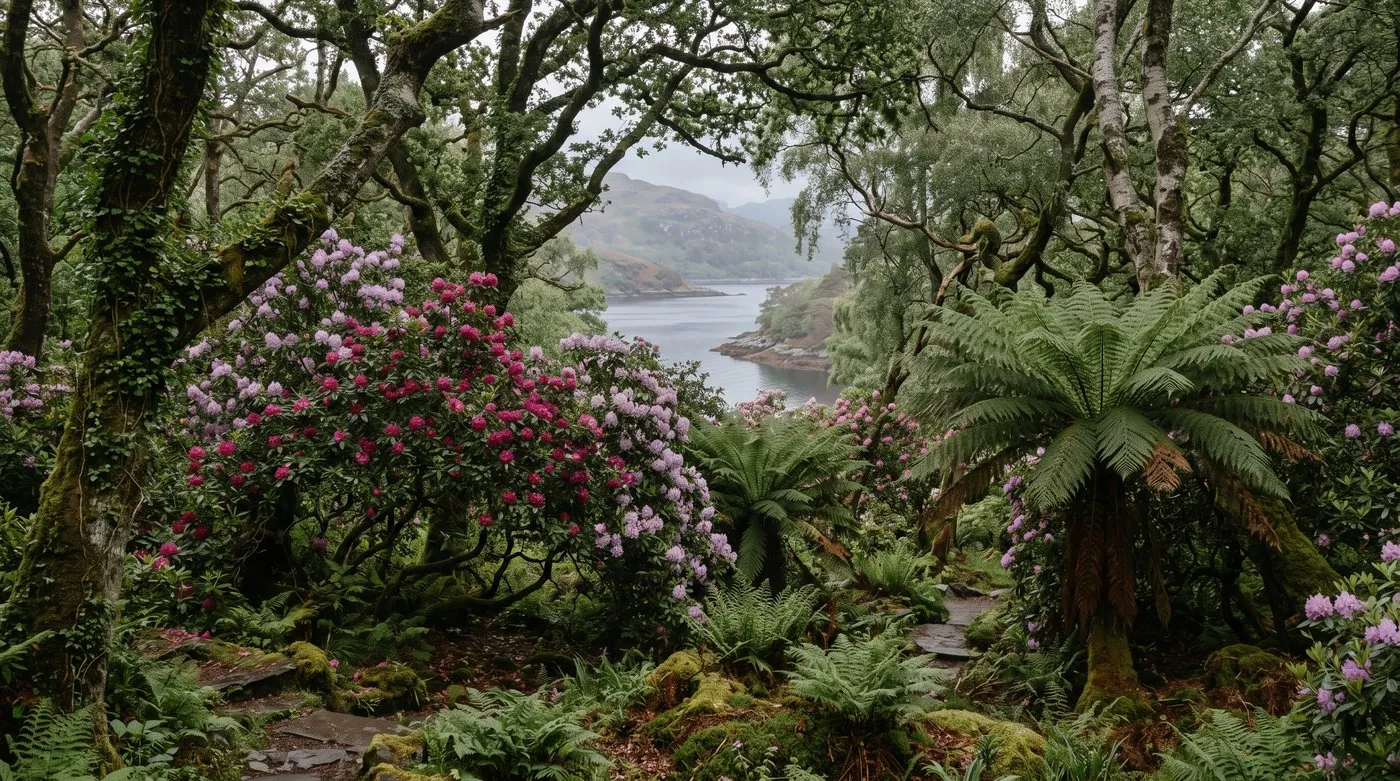
The mild west coast lets Scottish gardens grow plants you’d never expect this far north. Late spring is the best time for rhododendrons.
Crarae Garden, Argyll
Crarae is a woodland garden in a steep gorge beside Loch Fyne. Himalayan rhododendrons, Chilean fire bushes and Japanese maples grow along a tumbling burn. The autumn colour is as good as anywhere in Britain. It’s run by the National Trust for Scotland.
Inverewe Garden, Wester Ross
Inverewe sits on a peninsula in the Highlands, warmed by the North Atlantic Drift. Osgood Mackenzie began it on bare, rocky ground in 1862. Today it has tree ferns, Himalayan blue poppies and southern hemisphere plants that wouldn’t survive in most of mainland Britain. It’s run by the National Trust for Scotland.
Drummond Castle Gardens, Perthshire
Drummond Castle has one of Scotland’s finest formal gardens. From the terrace you look down on an Italian-style parterre of clipped box, gravel and colourful bedding, with St Andrew’s Cross at its heart. It opens seasonally, so check dates first.
Royal Botanic Garden Edinburgh (at Benmore)
Benmore Botanic Garden is Edinburgh’s sister garden on Argyll’s Cowal peninsula. An avenue of giant redwoods, planted in 1863, greets you at the entrance. Its big rhododendron collection flowers from late winter into early summer.
National Garden Scheme open days
The National Garden Scheme is a charity that opens private gardens to visitors to raise money for nursing and health charities. It started in 1927 to fund district nurses. Today the money goes to charities including Macmillan Cancer Support, Marie Curie, Hospice UK, Carers Trust and Parkinson’s UK.
Thousands of gardens take part across England, Wales, Northern Ireland and the Channel Islands. Scotland has its own scheme, Scotland’s Gardens Scheme. Gardens range from big country estates to tiny courtyards. Many belong to keen amateur gardeners who open their gates for just a weekend or two each year.
How to find NGS gardens
Use the Find a Garden search on the NGS website to see every garden, with dates, descriptions and directions. You can search by county or date. There’s a printed Garden Visitor’s Handbook too. Most gardens open between April and September.
What to expect
Each garden sets its own entry price, shown on its listing. Lots serve homemade teas and cakes, which also raise money for the charities, and many sell plants grown in the garden. Some ask you to book ahead, so check the listing. Arrive early for the best plants and the shortest tea queue.
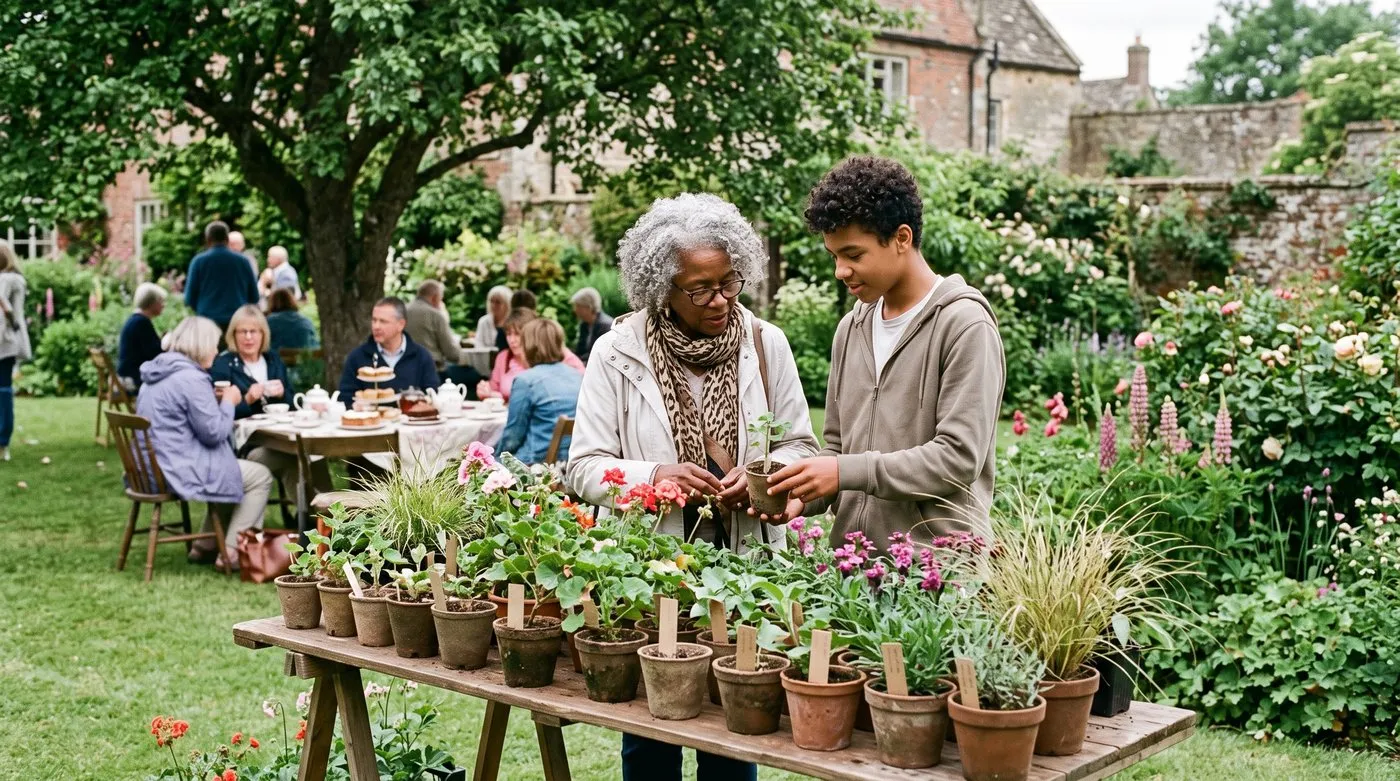
Plants for sale at open gardens have already proved themselves in that garden. Arrive early for the best choice, and the cakes.
What is an NGS “by arrangement” visit?
It’s a private visit you book directly with an NGS garden owner, outside the public open days. It’s ideal for a garden club, a group of friends or family. Each garden sets its own dates and group size, from a handful of people to around 50.
Find these gardens in the NGS “By Arrangement” listings or the Find a Garden search, then contact the owner through the garden’s page. The money still goes to the NGS charities. It’s a lovely way to see a garden when it’s quieter.
Can you open your own garden for the NGS?
Yes. The NGS welcomes gardens of all sizes, from big plots to small town gardens opening as a group. Apply through the NGS website or get in touch with your local county volunteer team.
You’ll describe your garden’s size, style and plants, with photos, and the local County Organiser decides whether to take it on. Approved gardens appear in the handbook and on the website. Several small neighbouring gardens can open together on the same day, which helps if your plot is modest. The county team will help you plan the day.
NGS gardens are the best places to see what real gardeners grow in real conditions. There are no professional teams here, just honest, personal gardening at every scale. Visiting an NGS garden near you is a brilliant way to learn what does well in your local soil and weather.
For ideas to bring home, see our guide to cottage garden planting ideas.
What is the difference between NGS, National Trust and RHS gardens?
NGS gardens are mostly private gardens that open on set days for charity. National Trust and RHS gardens are run by charities with professional gardeners and open most of the year.
National Garden Scheme gardens belong to individuals. Many open only a few days a year, and the money goes to nursing and health charities. They’re the best places to see what grows locally.
National Trust gardens usually go with historic houses, like Sissinghurst, Hidcote and Stourhead. Members get in free. The National Trust for Scotland runs Scottish gardens such as Crarae and Inverewe, with its own membership.
RHS gardens are the five gardens run by the Royal Horticultural Society. They’re about teaching and trying out plants as well as looking beautiful. RHS members get in free, plus entry to partner gardens at certain times of year.
Best gardens to visit by season
Woodland gardens shine in spring, borders in summer, arboretums in autumn and winter gardens from December.
| Season | Best gardens | What to see |
|---|---|---|
| Spring (April-May) | Sissinghurst, Bodnant, Kew, Sheffield Park | Bluebells, wisteria, tulips, magnolias, laburnum |
| Early summer (June-July) | Hidcote, Great Dixter, Wisley, Mottisfont | Roses, borders, alliums, peonies |
| Late summer (August-September) | Great Dixter, Wisley, Beth Chatto | Dahlias, grasses, exotic planting, late perennials |
| Autumn (October-November) | Stourhead, Westonbirt, Sheffield Park, Winkworth | Maples, golden larch, beech colour |
| Winter (December-February) | Cambridge Botanic, Anglesey Abbey, Dunham Massey | Scented shrubs, snowdrops, colourful bark, witch hazel |
Spring is the busiest time, and bluebell woods draw big crowds. Fallen for the roses in June? Our guide to how to grow roses covers everything from bare-root planting in November to first blooms in June.
Autumn is underrated. Stourhead and Sheffield Park are at their most beautiful in October, when the trees reflect in still water. Go midweek for quieter paths.
Winter gardens are hidden gems. Cambridge Botanic Garden’s Winter Garden shows how much interest you can pack in from November to March. Anglesey Abbey near Cambridge is known for its winter garden and snowdrops. For winter colour at home, our front garden ideas guide includes winter planting ideas.
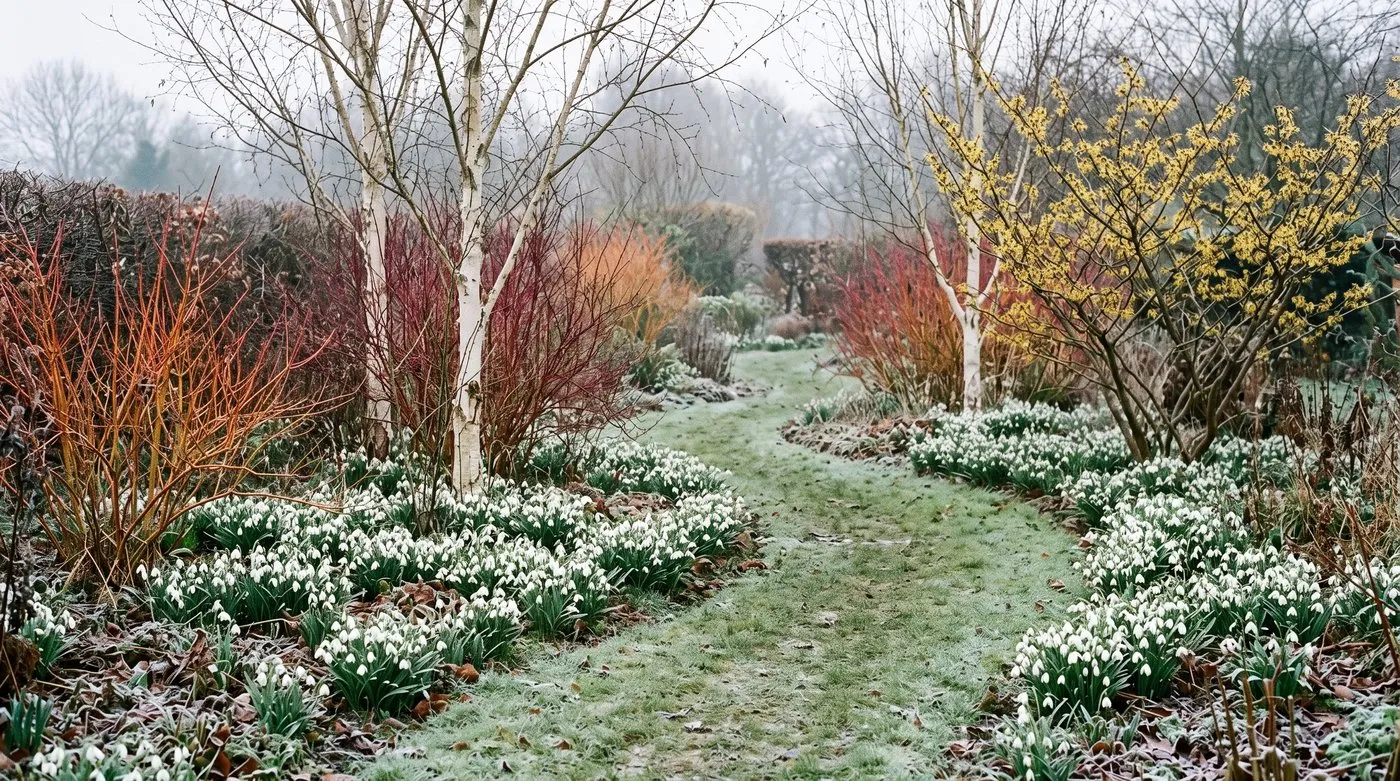
Don’t save garden visits for summer. Snowdrops, coloured stems and scented shrubs make a February trip well worth it.
Tips for visiting open gardens
Check opening dates, dress for the weather and jot down plants you love.
Wear layers. British weather changes fast, and a sunny morning can turn wet by lunch. Take a light waterproof and shoes that cope with gravel and wet grass.
Bring a notebook. Write down plant names, colour combinations and ideas you like. Photos alone aren’t enough, and you’ll have forgotten the name of that perfect blue geranium by the time you get home. Copy the full name from the label.
Take useful photos. Snap wide shots of borders to see the overall colour, and close-ups of plant labels. Photograph a border from both ends, as it often looks quite different.
Buy plants from the garden. Many gardens sell plants grown on site. They’ve proved themselves in that garden, and they’re often unusual varieties you won’t find at the garden centre.
Gardener’s tip: Keep a cool box or damp bag in the car for any plants you buy. Plants suffer in a hot boot. Water them as soon as you get home and plant or pot them up within a couple of days.
Chat to the gardeners. Staff and volunteers love to talk plants. Ask what’s done well this year, what hasn’t and what they’d change. Five minutes with a head gardener teaches you more than an hour of reading.

NGS cottage gardens show what keen amateur gardeners can do in a small space.
How to plan a garden visiting day out
Plan your day around two gardens close together. Lots of Britain’s best gardens are clustered in the same counties.
Kent has Sissinghurst, with Great Dixter just over the border in East Sussex and Godinton House not far away. The Cotswolds has Hidcote, Kiftsgate Court (right next door) and Bourton House. North Yorkshire has RHS Harlow Carr, Studley Royal and Parcevall Hall within easy reach.
See the smaller garden first, while you’re fresh. Save the bigger one for the afternoon, when you can take your time. Allow at least two hours per garden, three for big ones.
Tea rooms matter. A good tea room makes the day. Bettys at Harlow Carr is worth the trip on its own. Pack a picnic for NGS gardens, as the homemade cakes can run out early on busy days.
Check access before you go. Big National Trust and RHS gardens have good wheelchair and pushchair access on the main paths. Many historic gardens have gravel, steep slopes and narrow gates. NGS listings give access details, and it’s worth phoning ahead if you have specific needs.
Think about membership. If you visit National Trust gardens often, compare membership with paying at the gate. RHS membership gets you into all five RHS gardens, plus partner gardens at certain times. National Trust for Scotland membership covers Crarae, Inverewe and more. And if you’re after garden ideas for every budget, visiting open gardens is one of the cheapest ways to find inspiration.
Common mistakes when visiting gardens
The usual slip-ups are trying to see too much, ignoring labels and not checking opening times.
Too many gardens in one day. Two is ideal and three is doable. Four leaves you too tired to take anything in, and a lovely day turns into a slog.
Ignoring the plant labels. Every label tells you exactly which variety made that effect. Without it, you’re guessing when you try to copy it at home. Read the labels and write the names down.
Only going in summer. Most people visit between June and August, and miss snowdrops in February, magnolias in March and blazing maples in October. A garden that looks ordinary in July may be stunning in April.
Not checking opening times. Many gardens open only on certain days, and some NGS gardens open just one weekend a year. Glasshouses often close earlier than the grounds. Always check, because a locked gate after a two-hour drive is no fun.
Copying without adapting. A combination that looks amazing in a sandy Surrey garden may fail in heavy Midlands clay. Note the soil and aspect of each garden and compare them with your own before you copy. Our small garden design ideas show how to shrink big-garden ideas down to size.
Frequently asked questions
When is the best time to visit open gardens in the UK?
Late April to mid-June is the peak. Spring borders, wisteria and bluebell woods are at their best. October is lovely too, with glorious leaf colour at gardens like Westonbirt and Sheffield Park.
How much does it cost to visit open gardens?
It depends on the garden and changes each year. Check the official website before you go. NGS gardens set their own price, and the money goes to charity. National Trust gardens are free for National Trust members, and RHS gardens are free for RHS members.
What is the National Garden Scheme?
The NGS is a charity that opens private gardens to visitors. Thousands of gardens take part across England, Wales, Northern Ireland and the Channel Islands. Your entry fee, tea and cake raise money for nursing and health charities.
Are open gardens suitable for children?
Yes, most open gardens welcome children. Bigger gardens like Kew, Wisley and Alnwick have special children’s areas. Check each listing for pushchair access and play areas.
Can I take my dog to open gardens?
It depends on the garden. National Trust places usually allow dogs on leads in the grounds but not in the formal gardens. NGS gardens set their own rules, which you’ll find on each garden’s page.
What are the best free gardens to visit in the UK?
Lots of council parks and public gardens are free. All five RHS gardens are free for RHS members, and National Trust gardens are free for National Trust members. Check each garden’s website for current prices.
Our team produces practical UK gardening guidance from source research, contributor records and established horticultural practice. Editorial standards are overseen by Matt W.