Nigella
Nigella damascena
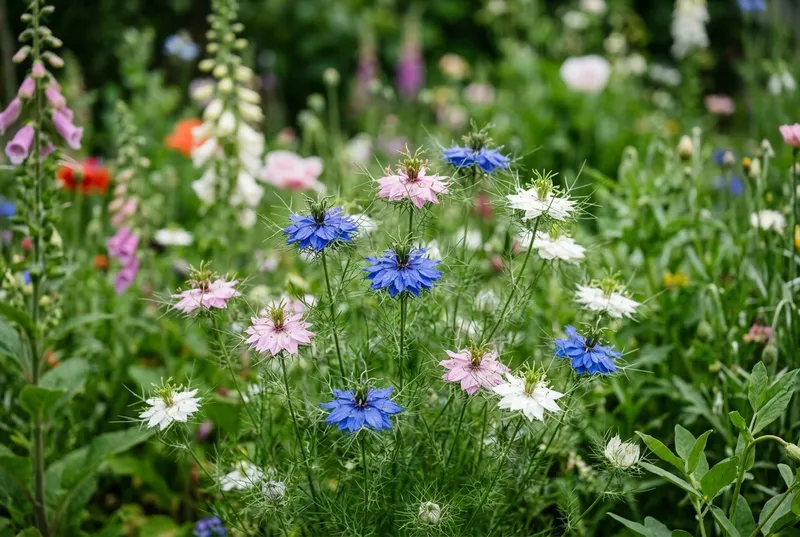
Love-in-a-mist is a charming hardy annual producing delicate blue, pink, or white flowers surrounded by a ruff of fine, thread-like foliage from June to August. The ornamental inflated seed pods that follow are highly valued by florists for dried flower arrangements. Native to southern Europe, it self-seeds so reliably that a single packet often provides flowers for years. The hazy, romantic quality of the foliage makes it a cottage garden essential.
Full growing guide
Nigella: Love-in-a-Mist for Easy UK Colour
How to grow nigella
Sow seed directly outdoors from March to May, or in September for earlier flowers the following year. Scatter thinly and rake in lightly — cover with no more than 5 mm of soil. Thin seedlings to 15-20 cm apart. Nigella has a delicate taproot and resents transplanting, so always sow where it is to grow. Choose a sunny or lightly shaded spot with well-drained soil. Water only during prolonged dry spells. No feeding is needed. The flowering period is relatively short — about four to five weeks — so make successional sowings at monthly intervals for a longer display. For dried seed pods, cut stems when the pods are fully formed but still green. Hang upside down in a cool, dry place. Allow some pods to remain on the plant for self-seeding. Nigella naturalises beautifully, reappearing year after year once established.
Pruning
No pruning required. Leave attractive seed pods for dried arrangements and self-sowing. Pull up spent plants once they look untidy.
Propagation
- Seed (sow directly March-May or September)
- Self-seeding (reliable)
Common problems
- Aphids
- Powdery mildew in dry conditions
- Short flowering season
Good companions
Related guides
Cottage Garden Planting Plan for the UK
How to plan a cottage garden border: the classic plants, how to layer them, colour ideas and a ready-made planting plan for a sunny UK border.
UK Flower Planting Calendar
What flowers to sow and plant each month in the UK, from sweet peas in winter to tulips in November, with easy tips on frost, bulbs and biennials.
How to Create a Wildflower Lawn
Turn part of your lawn into a wildflower meadow: getting the soil right, yellow rattle, when and how to sow, and the one cut a year it needs.