Key takeaways
- Charcoal, near-black and deep green make planting stand out and look smart in most gardens
- A dark fence fades into the background, so a small garden feels bigger
- Soft grey or muted sage brightens a small, shady, north-facing plot
- Bright orange, red and vivid blue date a garden fast and fight with planting
- Paint only onto dry wood, on a dry, mild day, in two thin coats
- Check climbers on the fence for nesting birds before you paint in spring or summer
The best fence paint colours for most UK gardens are charcoal, near-black and deep green. These dark shades fade into the background, so your plants become the star and the garden feels bigger. If your garden is small and shady, a soft grey or muted sage works better.
This guide is about choosing the colour, and painting it so it lasts. For other fence ideas, from styles to toppers, see our garden fence ideas. If the fence itself is broken or leaning, fix that first with our fence repair guide.
Which fence paint colours look the smartest?
Dark, muted colours look the smartest. Charcoal, near-black and deep green pull back from the eye, so the boundary stops competing with the garden.
A near-black fence gives the boldest frame. Green leaves and pale flowers leap forward against it, and white flowers almost glow at dusk. Deep forest green or sage ties the fence to the foliage and feels softer and calmer. Mid to dark grey sits between the two and suits modern gardens and courtyards.
If you’re thinking about selling, calm, muted colours are a safe bet, because they suit most planting and most tastes.

White flowers and pale leaves almost glow against a black fence.
Do dark fences make a garden look bigger?
Yes, in most gardens. A dark fence fades back into shadow, so your eye reads the planting in front and not the panels behind. The edge of the garden blurs, and it seems to carry on further.
This works best when there’s planting in front of the fence. A bare black fence on its own can feel heavy. Climbers and shrubs against it make the trick work. For more ways to stretch a small space, see our visual tricks to make a small garden look bigger.
When are pale fence colours better?
Pale colours win in small, shady or north-facing gardens. A soft grey, muted sage or warm off-white bounces light back into a gloomy space.
A pale fence also suits a cottage-style garden with pastel flowers, where you want a gentle backdrop. The downside is upkeep. Pale colours show algae, mud splashes and dirt much faster, so expect to wash them more often.
Skip stark brilliant white. It glares in sun, goes green with algae quickly and looks harsh next to soil and leaves. A warm off-white or stone colour ages much better.

In a shady courtyard, soft grey bounces light around where black would feel gloomy.
Fence colour comparison
Use this table to match a colour to your garden.
| Colour | Effect | Best for |
|---|---|---|
| Near-black | Fades back strongly, planting pops | Modern gardens, sunny plots |
| Deep forest or sage green | Fades back, blends with leaves | Almost any garden |
| Charcoal or dark grey | Fades back, looks sleek | Courtyards, small modern gardens |
| Soft grey | Brightens gently | Small, shady, north-facing plots |
| Muted sage | Soft and natural | Cottage and informal gardens |
| Warm off-white or stone | Bounces light | Very shady or seaside gardens |
| Bright orange-brown | Draws the eye to the fence | Best avoided |
| Strong red or vivid blue | Clashes with planting | A single feature panel at most |

Hold samples against your own fence in daylight. Colours change a lot between bright sun and a grey afternoon.
Which fence colours should you avoid?
Bright orange, strong red and vivid blue are the ones to skip. They pull the eye straight to the boundary, clash with most planting and make a small garden feel smaller.
The classic orange-brown fence stain is the one most people want to cover up. Painting over it with a dark colour is one of the quickest ways to make a garden look fresher.

An orange-brown fence next to one painted charcoal. The dark version lets the planting take over.
How to test a fence colour before you commit
Paint a sample of two or three colours on an offcut or a hidden panel. Then live with them for a week.
Look at them in the morning, at midday and on a grey afternoon. A colour that looks right in the tin can look very different across a whole fence. Dark colours often dry darker than the sample card, and greens can look bluer or more yellow on orange-toned wood.
How much fence paint do you need?
Check the coverage on the tin, then allow extra for rough wood. Most fence panels are rough sawn, which soaks up much more paint than smooth planed timber. The first coat on rough wood often covers far less than the tin says.
Plan for two coats on rough panels. Measure the length and height of your fence, multiply them, and double it if you’re painting both sides. Spraying uses more paint than brushing, so buy a bit more if you’re using a sprayer.

A sprayer is quick on long runs. Brush the edges and end grain by hand afterwards.
How to paint a fence so the colour lasts
Most fence paint fails because of damp wood or poor prep, not the paint itself. Wood swells when wet and shrinks as it dries, which cracks paint that hasn’t gripped properly.
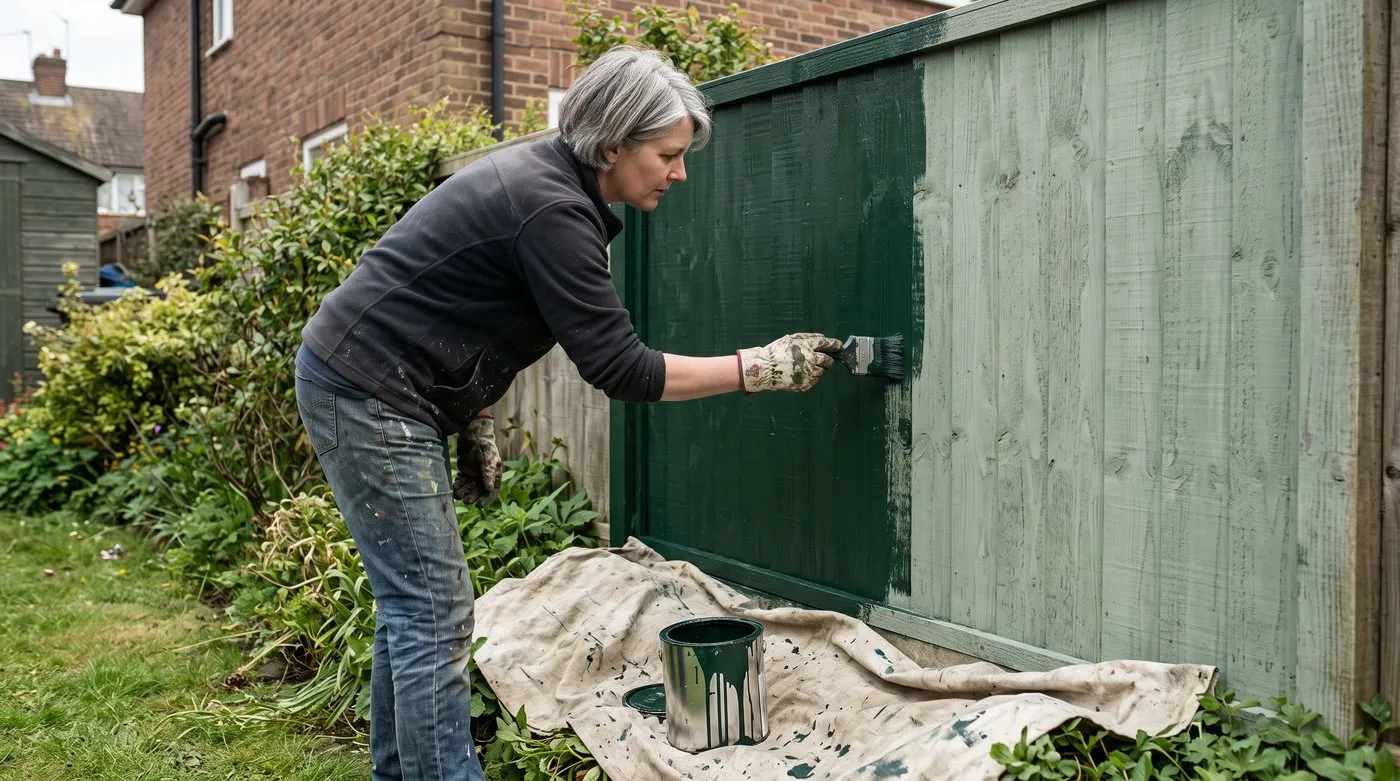
Two thin coats beat one thick one. A dust sheet keeps paint off the plants below.
- Wait for dry wood. After rain, give the fence a few dry days first. Paint on damp wood blisters and peels.
- Pick the right day. Choose a dry, mild day with no rain forecast. Avoid frost and hot midday sun, and check the tin for temperature limits.
- Clean it. Brush off dirt, cobwebs and algae with a stiff brush and plain water, then let it dry.
- Remove anything flaking. New paint only sticks to sound wood. Scrape and sand off loose old paint or stain.
- Treat bare wood. Bare, untreated timber needs a wood preserver before colour. New pressure-treated panels need to dry out first.
- Protect plants and paving. Cover plants and the patio with old sheets. Gently tie climbers away from the fence where you can.
- Apply two thin coats. Work the paint into the grain. Thick coats run and crack. Give the end grain and gravel boards an extra coat, as they soak up water and fail first.
Wildlife check: look through climbers and hedges on the fence before painting in spring and summer. Disturbing an active bird nest is an offence, so wait until the young have flown. If there’s a hedgehog highway gap at the base, leave it open.
If the fence belongs to your neighbour, ask before painting their side.
Keeping your painted fence looking good
Give the fence a wash with a soft brush and plain water once a year. Pale colours need it more often than dark ones.
Touch up tired or faded patches with a single coat before they start flaking. That’s a quick job, whereas leaving it means scraping everything back. Check the end grain and gravel boards each spring, as these go first. Keep soil and dense plants from piling up against the boards so the timber can dry out.
A dark fence plus climbers is the best way to hide an ugly boundary. Once your colour is on, pick plants from our list of climbers that cover an ugly fence fast. For more on choosing colours across the whole garden, see using colour in garden design, or browse our garden design hub.
Frequently asked questions
What fence paint colour looks best?
Charcoal, near-black and deep green suit most gardens. They fade into the background, so plants and flowers stand out. Soft grey and muted sage are better for small, shady gardens. Test a patch first, as colours look different on your own wood.
Does a dark fence make a small garden look bigger or smaller?
Usually bigger. A dark fence fades back, so the eye reads the planting in front, not the boundary behind. In a very shady garden, a soft pale colour can feel lighter and more open.
How many coats of fence paint do I need?
Usually two, especially on rough sawn wood. The first coat soaks in and often looks patchy. Dark colours on smooth wood sometimes cover in one. Leave the drying time on the tin between coats.
When is the best weather to paint a fence?
A dry, mild day with no rain forecast. Spring and early autumn are ideal. Avoid frost, damp wood and hot midday sun, which dries the paint too fast. Check the tin for the lowest temperature it can go on at.
How often should I repaint a garden fence?
Every few years, when it starts to look faded. Sunny, exposed fences fade faster than sheltered ones. A single refresh coat before the paint flakes saves you a full scrape-down later.
Is it better to spray or brush fence paint?
Brushing works the paint into the wood better. A sprayer is much quicker on long runs, but it uses more paint and needs plants and paving covering. Many people spray, then brush the edges and end grain.
What colours should I avoid on a garden fence?
Bright orange, strong red and vivid blue. They draw the eye straight to the boundary, clash with most planting and make a small garden feel smaller. Stark brilliant white also looks harsh and goes green quickly.
Do I need to treat new fence panels before painting?
It depends on the panel and the paint. Many new panels are already pressure-treated, but they need to dry out before painting. Bare, untreated wood needs a preserver first. Always check the instructions on the tin.
Our team produces practical UK gardening guidance from source research, contributor records and established horticultural practice. Editorial standards are overseen by Matt W.