Key takeaways
- Pick the mood first, then the colours, then the plants
- Cool blues, purples and whites make a small garden feel bigger and brighten shade
- Hot reds, oranges and yellows need full sun and suit a border at least 1.5m deep
- Keep each border to three colour families, with one colour clearly in charge
- Purple, gold and silver foliage carries colour from March to November
- Plant in groups of three or five so the colour reads from a distance
The best garden colour scheme is the one that suits your space, your light and how you want the garden to feel. Cool colours calm things down and make a plot look bigger. Hot colours bring energy and warmth. White glows in shade and at dusk.
This guide helps you choose a scheme and keep it going all year. If you want the theory behind which colours pair up, our colour wheel guide to garden design explains complementary and analogous schemes in more detail.
How do you choose a colour scheme for your garden?
Start with the mood, then check your space and light. Those three things narrow the choice quickly.
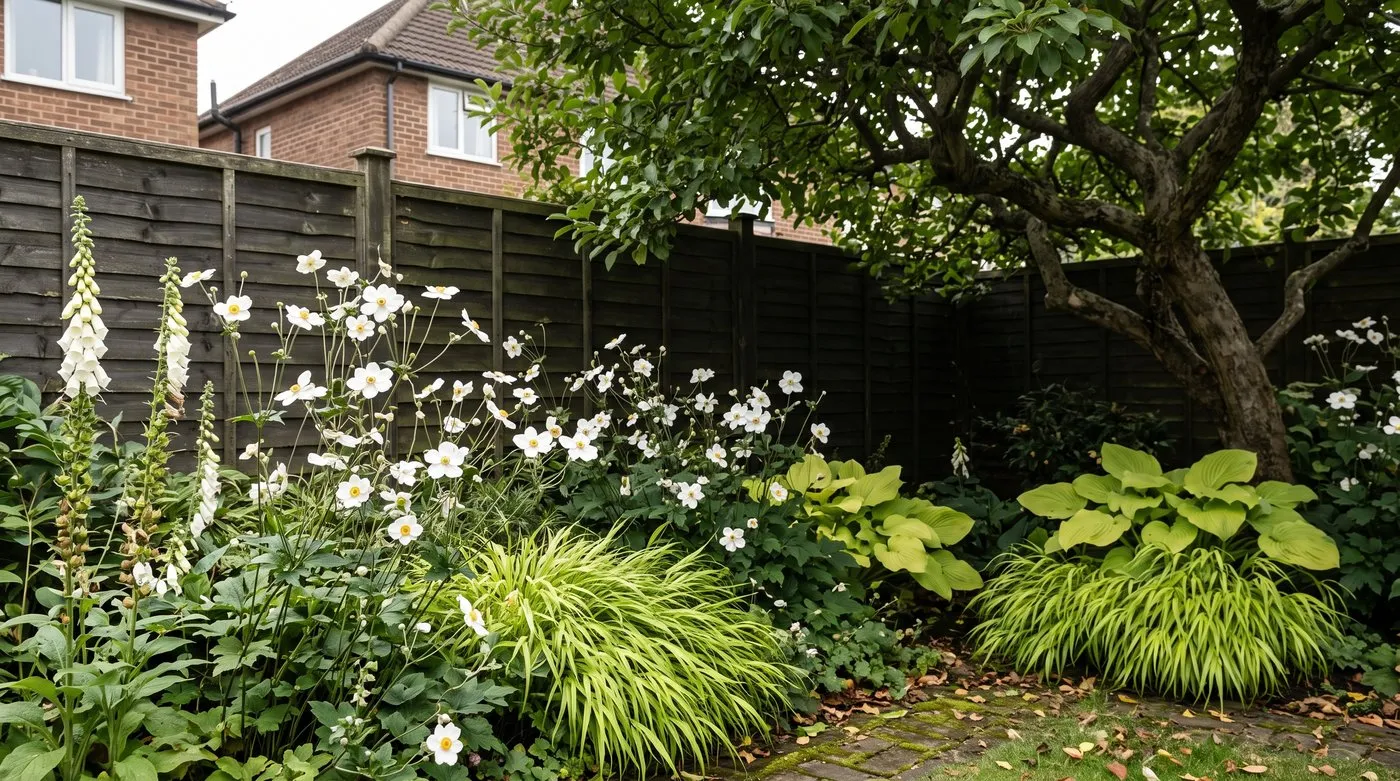
Pale flowers and golden leaves light up a shady corner where reds and oranges would turn dull.
Mood. Do you want a lively spot for summer parties, or a calm place to unwind? Hot colours feel exciting. Cool colours feel restful. A single colour in many shades feels smart and deliberate.
Space. Cool colours seem to sit further away, so they make a small garden feel bigger. Warm colours seem to jump forward, so they make a long garden feel shorter and cosier.
Light. Reds and oranges look their best in full sun. In shade they turn dull and muddy. Whites, pale blues, lime greens and golden leaves shine in shady corners.
Then pick three colour families at most for each border, and let one of them lead. Our guide to the 70-30 rule for garden borders shows how to balance a main colour with an accent.
Hot colour schemes for sunny borders
A hot scheme uses reds, oranges and yellows. It needs full sun and a border about 1.5m deep, so you can layer tall plants at the back and short ones at the front.
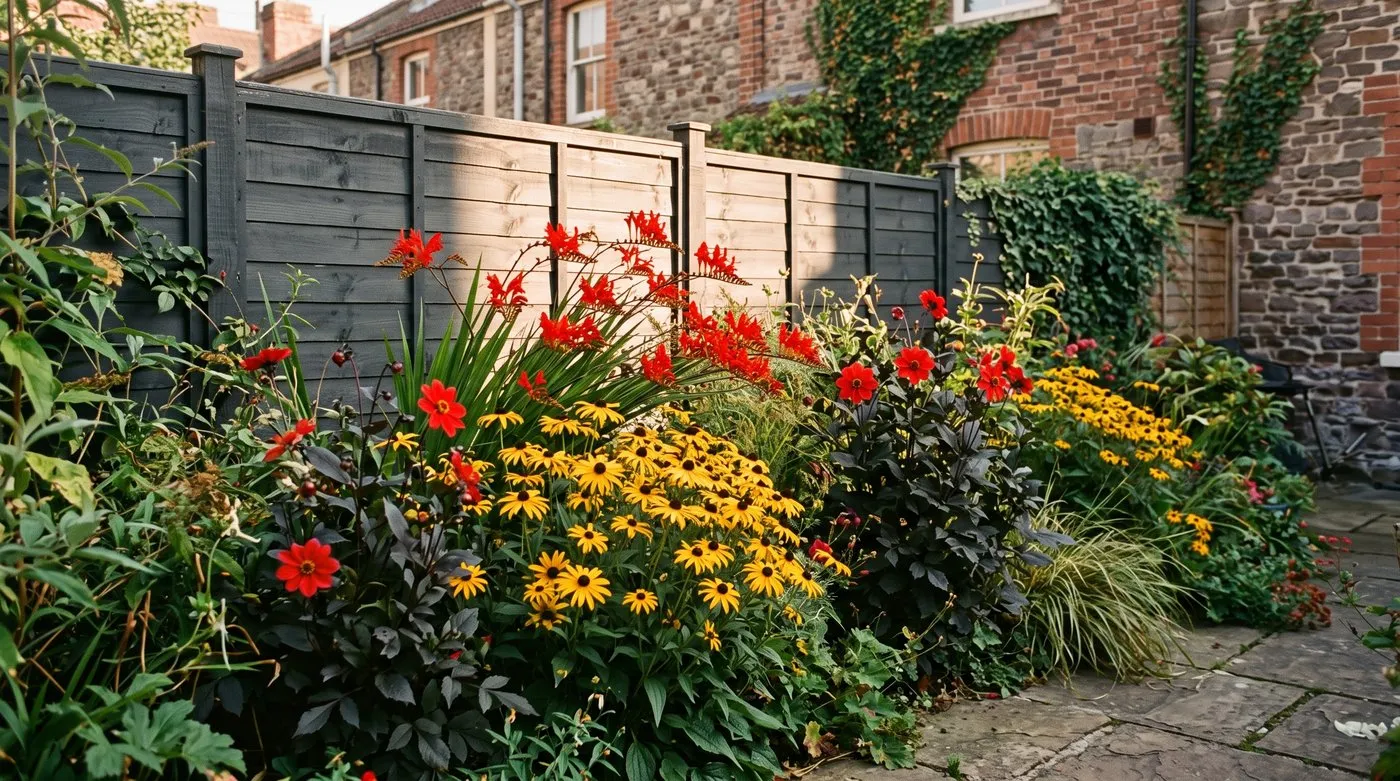
A dark fence and dark dahlia leaves make the reds and golds glow instead of looking flat.
Good backbone plants include:
- Back: Helianthus ‘Lemon Queen’ (soft yellow) and cannas (red or orange)
- Middle: Crocosmia ‘Lucifer’ (scarlet), Rudbeckia ‘Goldsturm’ (golden yellow) and Dahlia ‘Bishop of Llandaff’ (scarlet with dark leaves)
- Front: Geum ‘Totally Tangerine’ (apricot) and Heuchera ‘Marmalade’ (amber leaves)
Dark foliage is what makes it work. Bronze fennel, dark-leaved dahlias and Actaea ‘Brunette’ stop all that brightness looking flat. A dark yew hedge or fence behind makes the colours glow.
For a full plant list and a June to October plan, read our guide to planting a hot colour border.
Cool colour schemes for calm and small spaces
A cool scheme uses blues, purples, whites and silvers. It feels calm and makes boundaries seem further away, which is why it suits small garden designs so well.
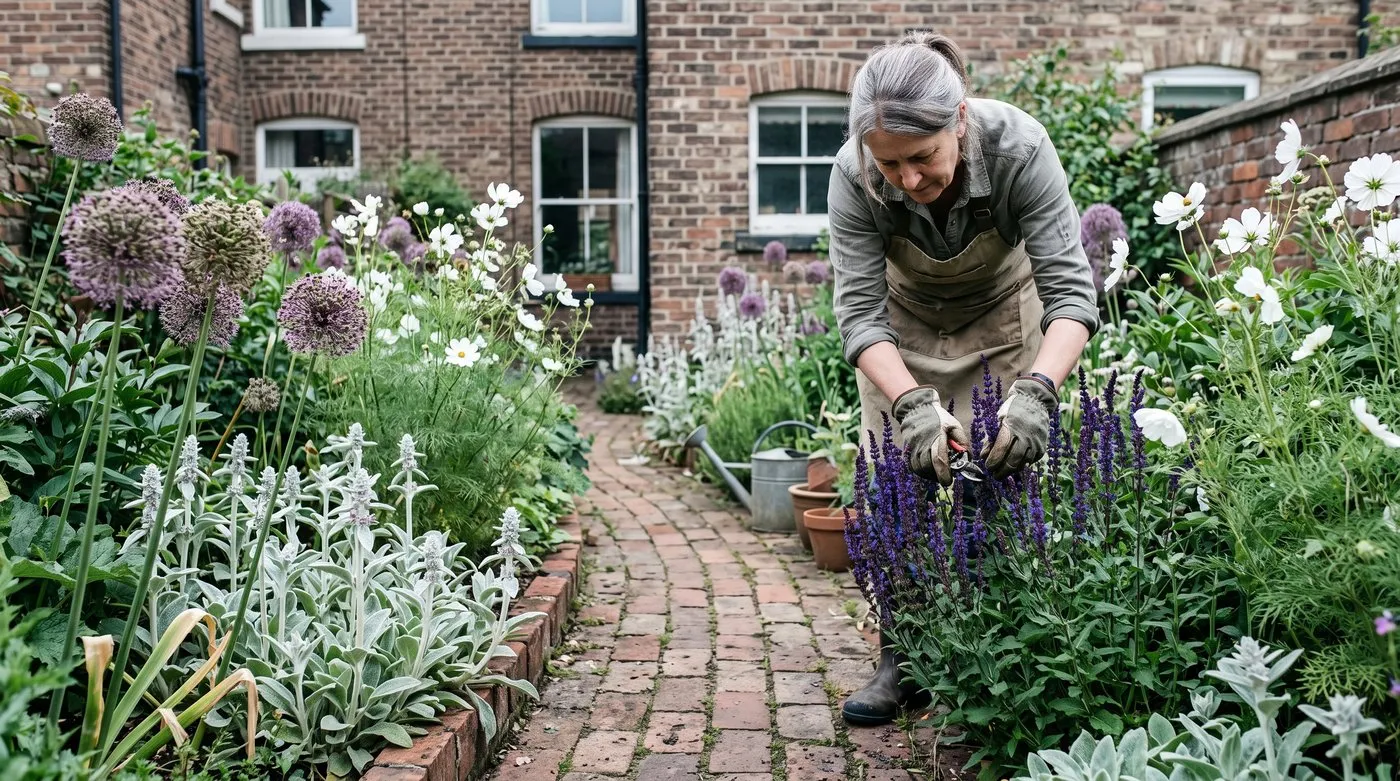
Silver leaves knit a blue and purple border together and keep it feeling light and airy.
Reliable plants include:
- Blues: Salvia nemorosa ‘Caradonna’, agapanthus and Echinops ritro (steel-blue globes)
- Purples: Verbena bonariensis, Allium ‘Purple Sensation’ and Lavandula angustifolia ‘Hidcote’
- Whites: Cosmos ‘Purity’, gaura and Hydrangea arborescens ‘Annabelle’
- Silvers: lamb’s ears (Stachys byzantina), Artemisia ‘Powis Castle’ and Eryngium ‘Big Blue’
Silver foliage ties a cool border together. It reflects light and smooths the step from one colour to the next. Without it, a blue and purple border can feel heavy.
Pet owners: alliums, lavender and hydrangeas are not safe for dogs and cats to eat, so site them where pets don’t graze. The best purple, pink and blue flowers guide has plenty more choices.
White and single-colour gardens
A single-colour garden uses one colour in many shades. It looks calm and deliberate, and it makes you notice shape and texture.
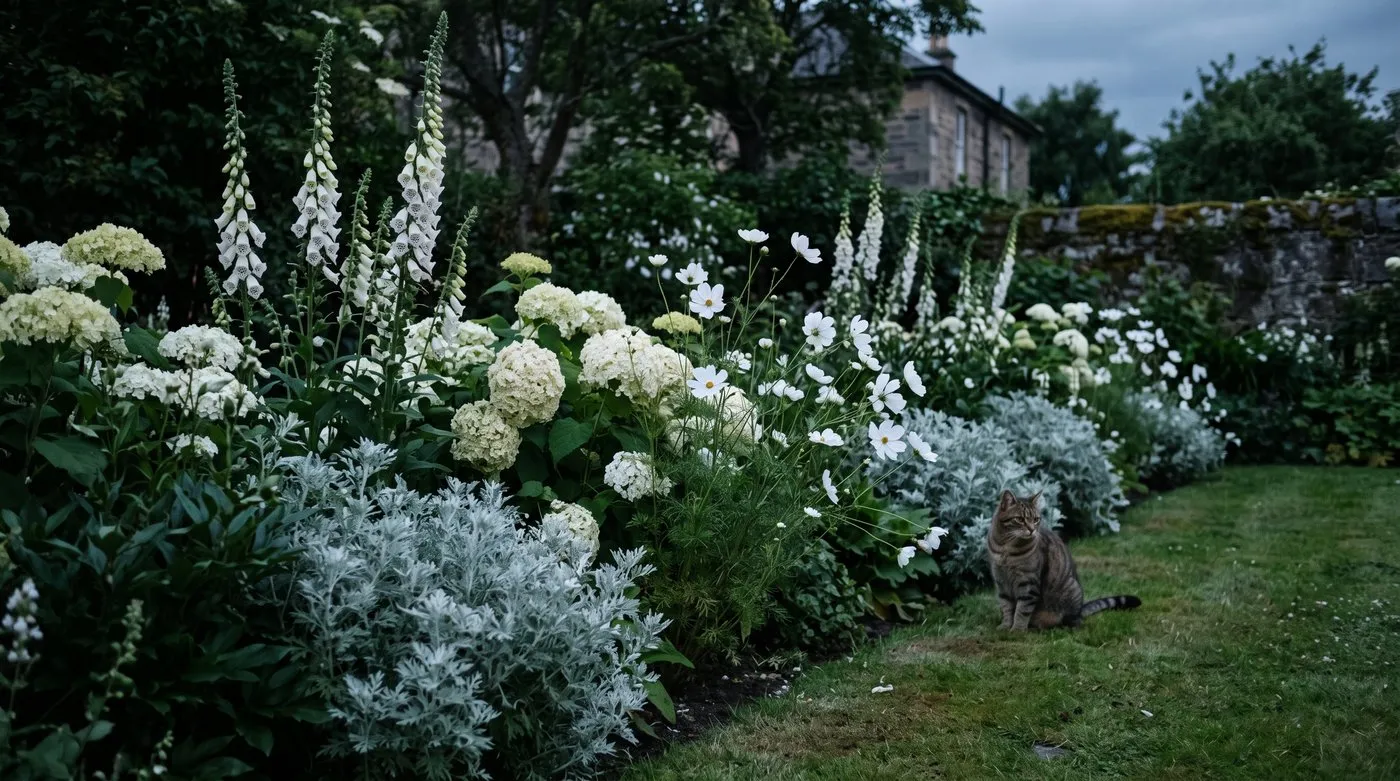
White flowers keep showing up long after sunset, which is why white schemes suit British evenings.
The White Garden at Sissinghurst in Kent, made by Vita Sackville-West, is the famous UK example. White suits our soft grey light. It glows on dull days and keeps showing up well after sunset.
Other single-colour ideas:
- Purple: dark plum smoke bush (Cotinus ‘Royal Purple’), mid-purple salvia and pale lilac catmint
- Yellow and gold: acid-yellow euphorbia, primrose daffodils and golden-leaved shrubs
The trap is a border that looks samey. Avoid it by mixing shapes and heights. A round allium beside a spiky salvia beside a flat-topped achillea keeps the eye moving, even if all three are purple. Our best white flowers for UK gardens list is a good starting point for a white scheme.
How does foliage keep colour going through the year?
Flowers last weeks, but leaves last months. A border that relies only on flowers has long dull spells, so use leaf colour as the backbone.
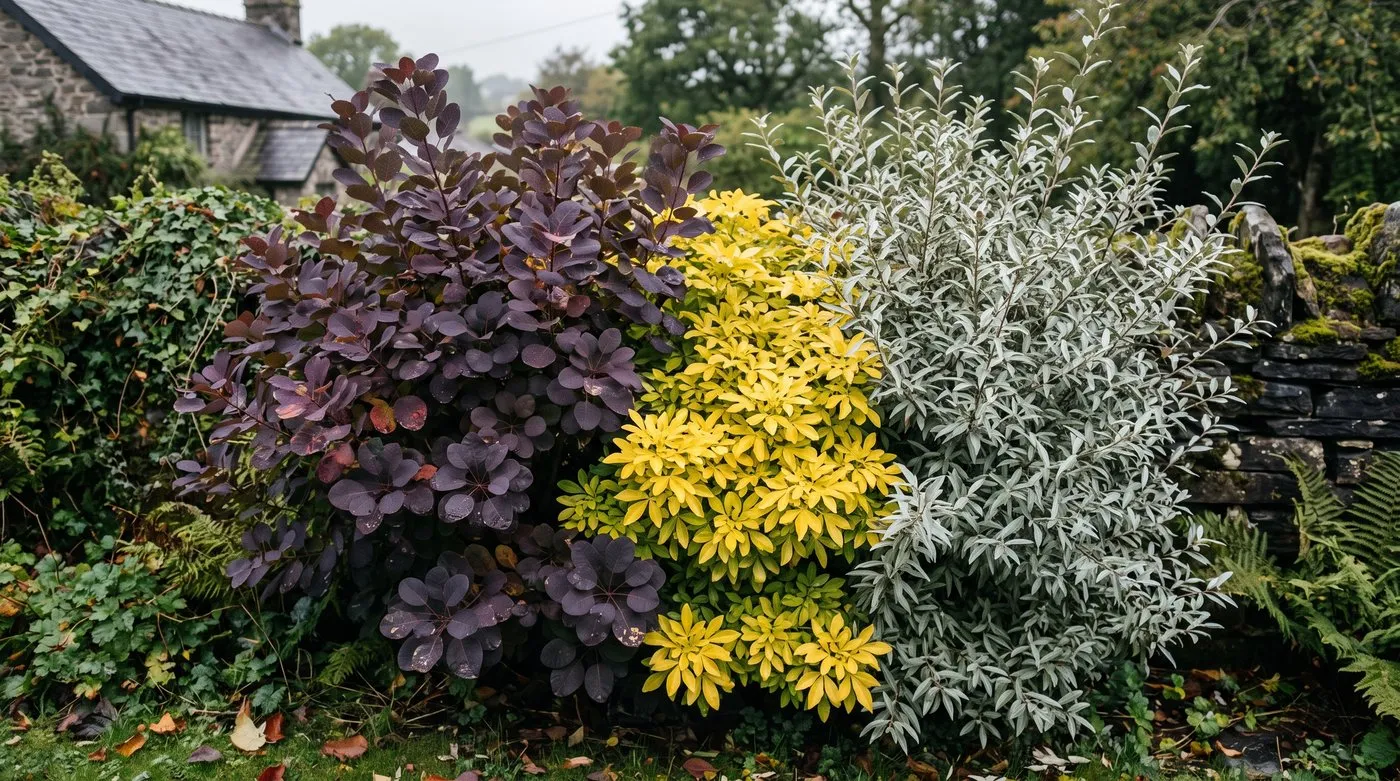
Purple, gold and silver leaves give a border colour for months, even when nothing is in flower.
| Leaf colour | Plants to try | Best spot |
|---|---|---|
| Purple or bronze | Cotinus ‘Royal Purple’, Heuchera ‘Palace Purple’, Cercis ‘Forest Pansy’ | Sun, with warm colours |
| Gold or lime | Choisya ‘Sundance’, Spiraea ‘Gold Flame’, Hakonechloa ‘Aureola’ | Light shade, to brighten it |
| Silver or grey | Lavender, Elaeagnus ‘Quicksilver’, Convolvulus cneorum, lamb’s ears | Hot, dry, sunny spots |
| Variegated | Cornus alba ‘Elegantissima’, Euonymus ‘Silver Queen’, hostas | Dark corners |
Put one purple, one gold and one silver-leaved plant in each border of about 3m or more. They give colour from leaf-break in March to leaf-fall in November. Evergreens carry on through winter: see the best evergreen shrubs for UK gardens for ideas.
Month-by-month garden colour planner
Use this table to fill gaps, so something is always looking good.
| Month | Warm colours | Cool colours | Leaves, stems and berries |
|---|---|---|---|
| January | Witch hazel (yellow, orange) | Snowdrops, Iris unguicularis | Evergreens |
| February | Winter jasmine, Crocus ‘Orange Monarch’ | Purple crocus, hellebores | Red and orange dogwood stems |
| March | Daffodils, forsythia | Grape hyacinths, pulmonaria | New leaves |
| April | Tulip ‘Ballerina’, euphorbia | Brunnera, white blossom | Fresh green |
| May | Geum, Welsh poppies | Alliums, Iris sibirica, wisteria | Purple smoke bush leafing up |
| June | Roses, day lilies | Delphiniums, lavender | Golden leaves at their best |
| July | Crocosmia, heleniums | Agapanthus, campanula, echinops | Silver artemisia |
| August | Dahlias, rudbeckia | Salvias, phlox | Grasses colouring up |
| September | Dahlias, kniphofia | Asters, Japanese anemones | First autumn tints |
| October | Acers, berberis | Asters, ceratostigma | Peak autumn colour |
| November | Liquidambar, hawthorn berries | Nerines, cyclamen | Last autumn leaves |
| December | Holly berries | Viburnum bodnantense, hellebores | Evergreens and stems |
How to make a colour planting plan
You can plan a border’s colour in an afternoon with a notebook and some coloured pencils.

Colouring in a quick sketch shows up clashes before you spend a penny on plants.
- Choose the mood: hot, cool or one colour.
- Pick three colour families, for example blue, purple and silver.
- Cover three seasons: spring bulbs, summer perennials and autumn flowers.
- Add foliage in at least one contrasting leaf colour.
- Sketch it on squared paper and colour in each group. Clashes show up before you buy anything.
- Plant in groups of three or five. Single plants look spotty. Put plants that flower at different times side by side, so one fills the gap as the other fades.
Look at it again each summer. Move anything that clashes in autumn, and add bulbs where spring looks thin.
Common colour mistakes to avoid
Too many colours. More than three colour families in one border looks muddled. Move misfits to another part of the garden.
Same shapes everywhere. Colour contrast works better with shape contrast. Put daisies next to spikes, and globes next to plumes.
Hot colours in shade. Reds and oranges go dull without sun. Use white, pale blue and gold leaves in shade instead.
Forgetting winter. Red Cornus alba ‘Sibirica’ and orange Cornus sanguinea ‘Midwinter Fire’ stems, white birch bark and gold evergreens keep a border alive from December to March.
Equal amounts of two strong colours. Half purple and half yellow looks like a fight. Let one lead and use the other as an accent.
Frequently asked questions
What colours go together in a garden border?
Neighbouring colours, such as blue, purple and pink, always sit happily together. For more punch, add a small amount of the opposite colour, such as yellow achillea in a purple salvia border. Keep to three colour families in one border, or it starts to look random.
What is the best colour scheme for a small garden?
Cool blues, purples, silvers and whites suit small gardens best. They seem to sit further away, so boundaries feel less close. Keep hot reds and oranges away from the far fence, where they jump forward and shrink the space. A single colour in many shades also looks smart in a tight spot.
Do white gardens work in the UK?
Yes, white gardens suit the UK’s soft, grey light very well. White flowers glow on dull days and at dusk. Mix white flowers with silver and grey-green leaves, and vary the flower shapes so it never looks flat. The White Garden at Sissinghurst in Kent is the famous example.
What are the best blue flowers for UK gardens?
Delphiniums, agapanthus, salvias and echinops give the strongest summer blues. For spring, try forget-me-nots and Brunnera ‘Jack Frost’. Ceratostigma and asters such as ‘Little Carlow’ carry blue into autumn. True blue is rare, so most will lean a little towards purple.
How do I use foliage colour in garden design?
Add one purple, one gold and one silver-leaved plant to each border. Purple smoke bush grounds warm colours, golden Choisya ‘Sundance’ lifts shade, and silver lamb’s ears suits dry sun. Between them they give colour long after the flowers fade.
How do I get colour in the garden all year?
Plan for something flowering, fruiting or showing bright stems every month. Witch hazel and hellebores cover winter, bulbs cover spring, and perennials carry summer into autumn. Coloured dogwood stems and berries fill the gaps from November to February.
Now you’ve picked your scheme, try our best plant combinations for UK borders for ready-made pairings, or browse more garden design ideas.
Our team produces practical UK gardening guidance from source research, contributor records and established horticultural practice. Editorial standards are overseen by Matt W.