Key takeaways
- Welsh onions are perennial, so you cut the leaves and the clump regrows
- Spring onions are annual and pulled whole, so you sow them again and again
- Sow from March to May, or multi-sow in modules and plant out as mini-clumps
- Cut leaves a few centimetres above the base and leave some on each clump
- Divide crowded clumps every three years or so in spring or early autumn
- Very hardy, so they often give green leaves through winter
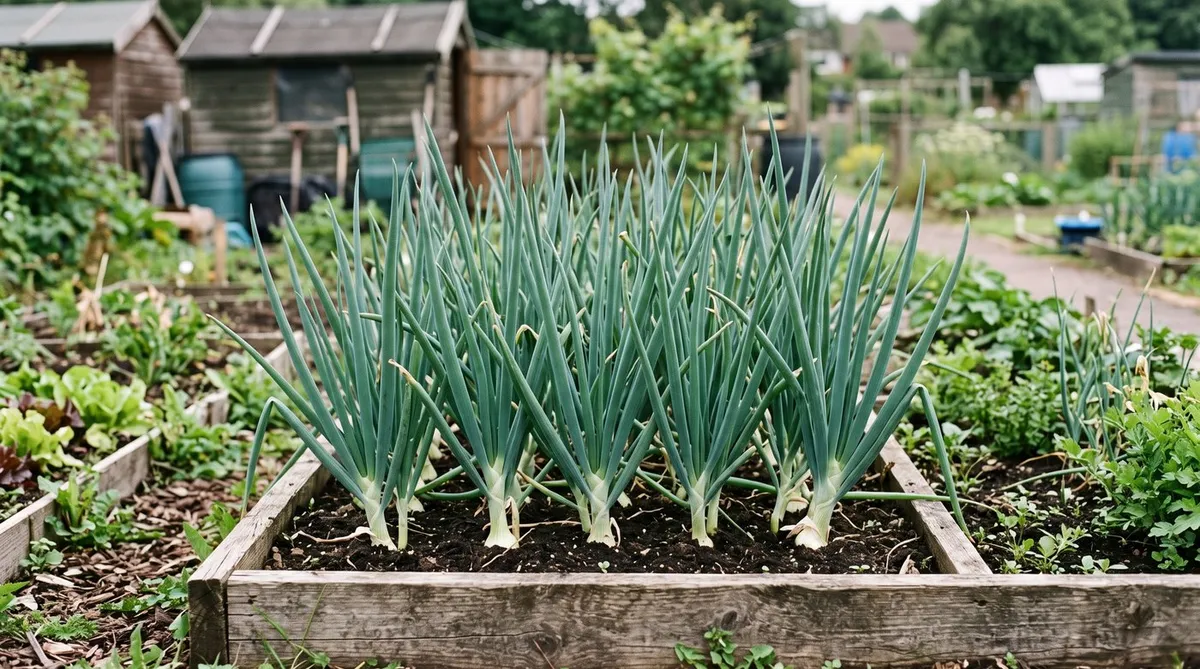
Welsh onions are perennial bunching onions: plant them once and cut from the same clump for years. Instead of pulling them like spring onions, you snip the hollow leaves and they grow back. They’re very hardy too, so you can often pick green onion leaves in the middle of winter.
They’re a good fit for a perennial veg bed alongside chives, rhubarb and asparagus. This guide covers sowing, cutting, dividing and keeping a clump productive.
Welsh onions or spring onions: what’s the difference?
Welsh onions are perennial and you cut them. Spring onions are annual and you pull them. They look alike in the shops, but they grow very differently.
Spring onions are usually young plants of ordinary onion (Allium cepa), such as ‘White Lisbon’. You sow them, pull them a couple of months later, and sow again.
Welsh onions (Allium fistulosum) never make a proper bulb. The base slowly splits, so one plant becomes a clump. You cut the leaves and the clump regrows.
| Welsh onion | Spring onion | |
|---|---|---|
| Lifespan | Perennial, crops for years | Annual, one harvest |
| How you harvest | Cut leaves, plant regrows | Pull whole plant |
| Winter | Often stays green | Usually finished by winter |
| Sowing | Once, then divide | Every few weeks in season |
| Where it grows | Permanent bed | Moves round with the rotation |
Spring onions still win for a crisp white end in salads, so many people grow both. The guide to growing spring onions covers the annual crop.
Why are they called Welsh onions?
They have nothing to do with Wales. Welsh onions come from east Asia and are the everyday bunching onion of Chinese and Japanese cooking. The name is thought to come from an old word meaning “foreign”.
Which Welsh onion varieties to grow
For a clump that multiplies and keeps going, grow ordinary Welsh onion seed. It’s sold in red-stemmed and white-stemmed forms. Both are very hardy.
‘Ishikura’ is a Japanese bunching onion of the same species, grown for long, straight white stems. It forms clumps more slowly and is often grown like a spring onion. It’s a good choice if you want long stems to earth up and blanch.
How to sow Welsh onions
Sow from March to May, once the soil has started to warm. Seed sown into cold, wet soil is slow and patchy.
Sowing outdoors:
- Make drills 1cm deep and about 25cm apart.
- Sow thinly and cover lightly.
- Thin seedlings to about 5cm apart. The plants will fill the gaps as they clump up.
Sowing in modules works better on cold or heavy ground. Sow six to eight seeds in each module under cover. Plant each module out whole as a mini-clump once the roots fill the cell, about 20cm apart. This also gets young plants past the slug-prone seedling stage.
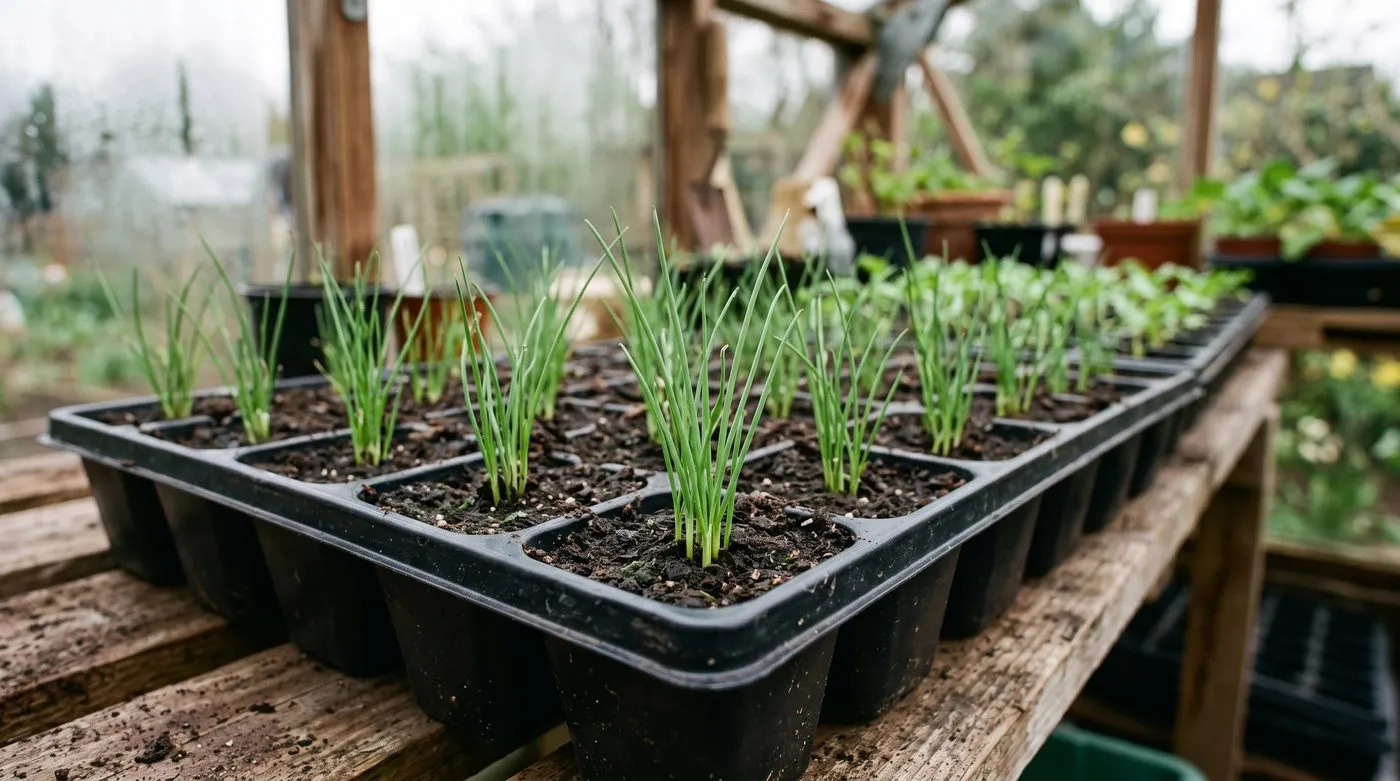
Several seeds per module grow into a ready-made mini-clump. Plant each one out whole, about 20cm apart.
How to harvest Welsh onions so they regrow
Cut the leaves with scissors a few centimetres above the base. Never pull the whole plant, or you lose a perennial that could crop for years.
- First cut: wait until the leaves are a good size and the clump has several shoots.
- Leave some leaves: cut no more than about half the shoots on a clump at once, so it keeps growing.
- Go round the clump: cut from different parts each time. New leaves soon push up from the cut stems.
- Winter: growth slows right down, so cut lightly and less often.
You can also lift a whole shoot or two from the edge of a big clump for the thicker white stem.
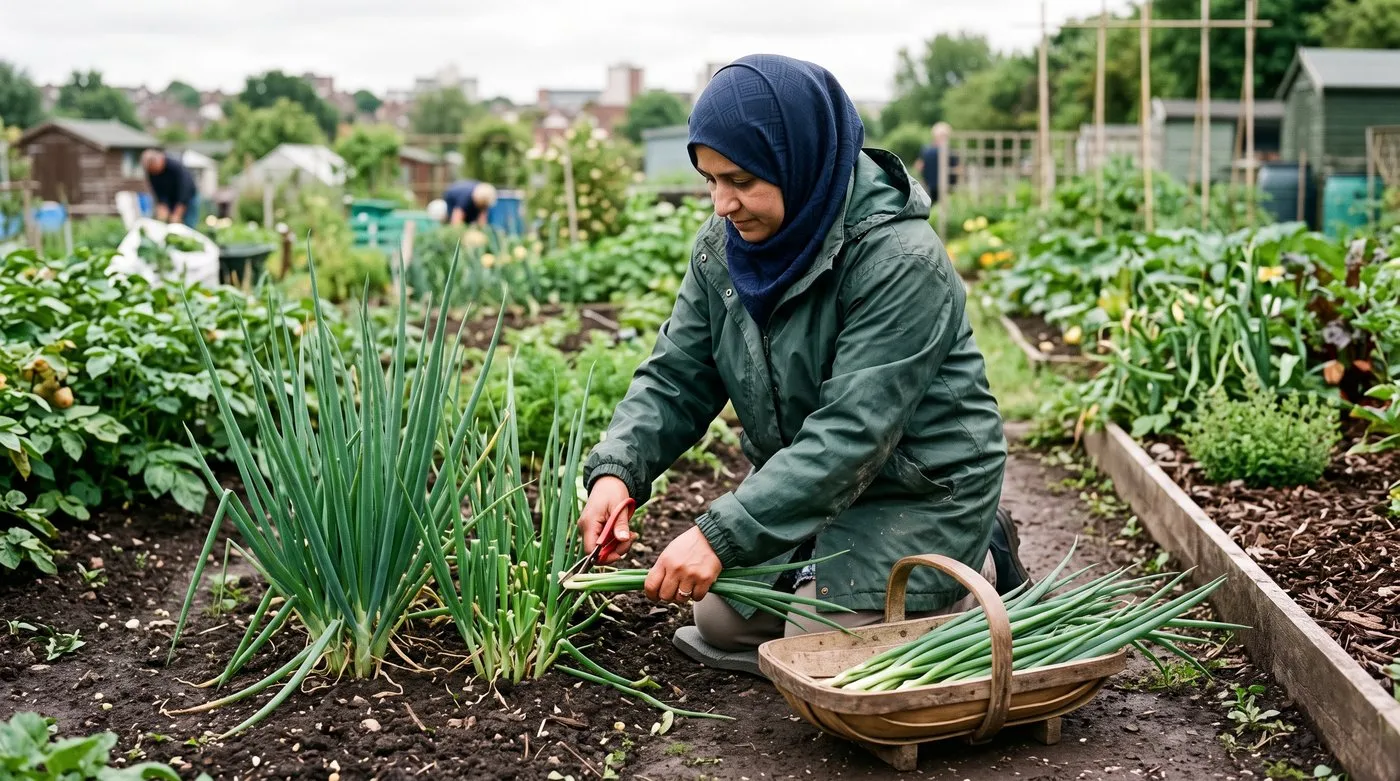
Snip the leaves a few centimetres above the base and leave plenty on the clump. It’ll soon grow back for the next cut.
How to divide Welsh onion clumps
Divide clumps roughly every three years. A crowded clump gives thinner, tougher leaves that flop over. Splitting it gives you strong new plants for free.
- Divide in spring or early autumn, when the soil is workable.
- Lift the whole clump with a fork, working a little way out from the edge.
- Shake off the soil and pull the clump apart by hand into small groups of three to five shoots.
- Trim the leaves back by about half, so the divisions don’t dry out.
- Replant about 20cm apart, at the same depth as before, and water well.
Give them a few weeks to settle before you start cutting again. On heavy clay, early autumn is often the better time, as divisions can root in warm soil before winter.
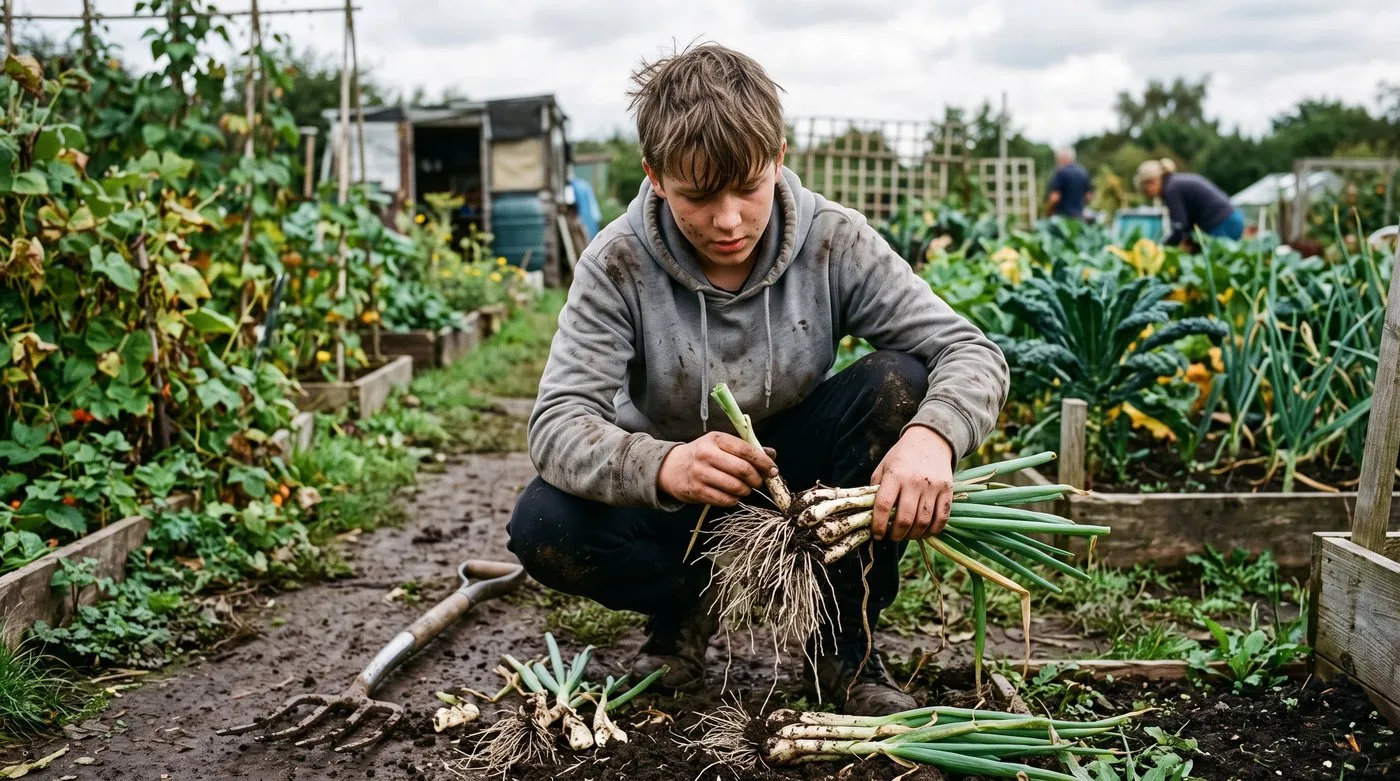
Pull a crowded clump apart by hand into small bunches of shoots. Each one grows into a new clump.
Soil, feeding and where to grow them
Welsh onions like fertile, moisture-retentive soil that doesn’t waterlog, in sun or light shade. They cope with heavier soil than bulb onions, as there’s no bulb to rot.
Give them a permanent bed out of your veg rotation, so the clumps aren’t disturbed. Regular cutting is hungry work, so feed each spring with a general fertiliser or pelleted chicken manure, following the pack. A mulch of garden compost in early spring helps hold in moisture.
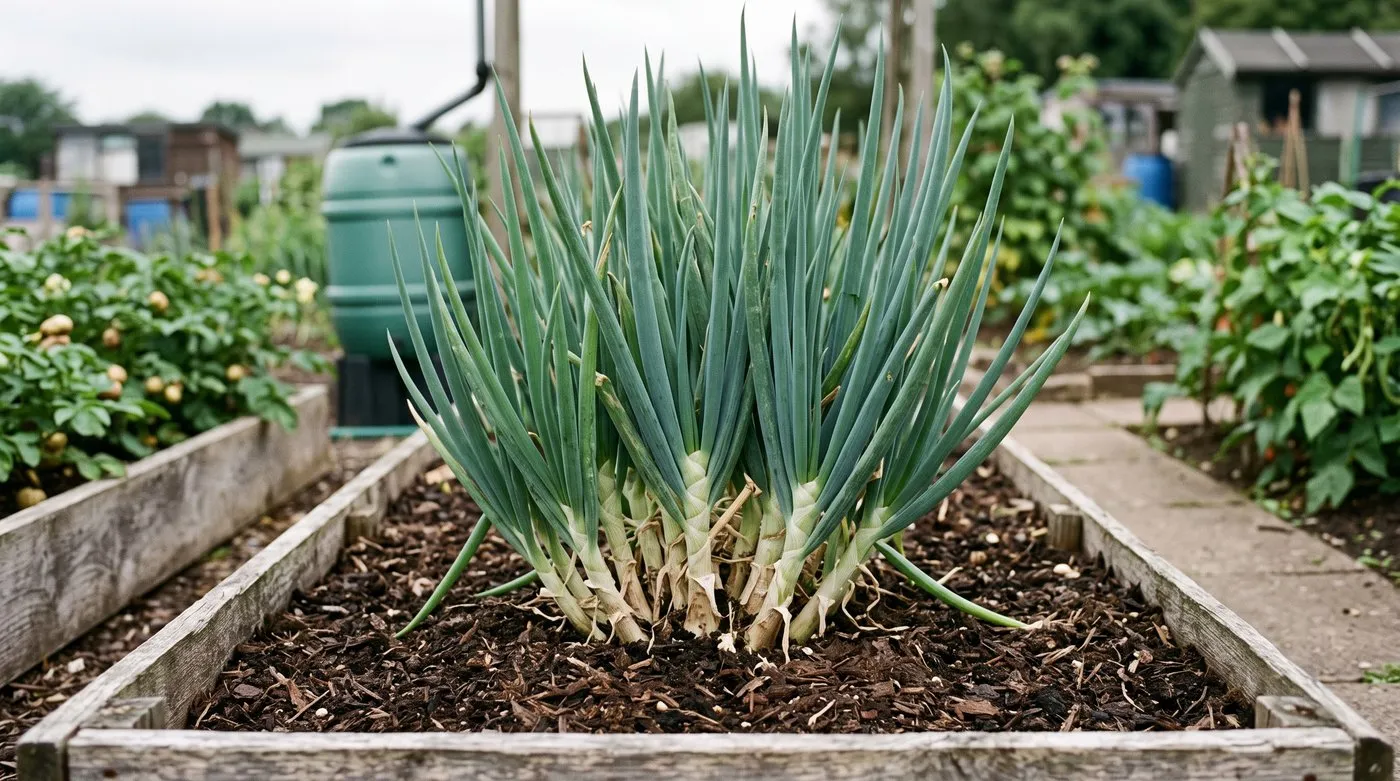
An established clump in its permanent bed. Every one of these shoots grew from the base of the original plant.
Should you let Welsh onions flower?
Welsh onions send up round, creamy-white flower heads in early summer, usually from their second or third year. The flower stems are tough and use energy the plant would put into leaves.
For the most leaves, cut flower stems out at the base as the buds swell. Bees and hoverflies love the flowers, though, so you could let one clump bloom. It may also seed around, giving you free seedlings.
A flowered Welsh onion isn’t finished. Once the stem is cut out, it carries on growing.
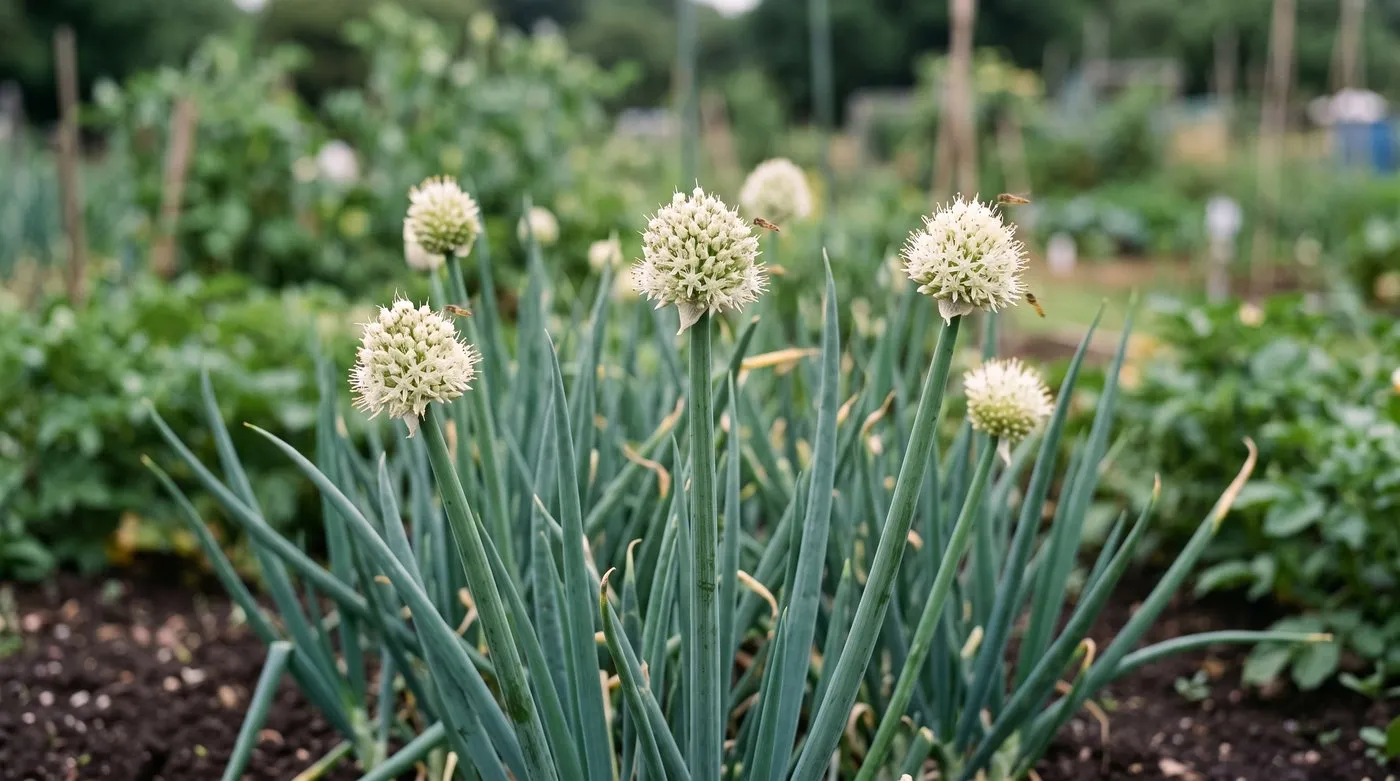
Bees and hoverflies love Welsh onion flowers. Leave one clump to bloom and cut the stems out of the rest for more leaves.
Welsh onion pests and problems
Welsh onions get the same pests and diseases as other onions.
- Allium leaf miner: tiny grubs tunnel into the leaves and stems. Cover plants with fine insect mesh in spring and autumn. See the allium leaf miner guide.
- Onion fly: maggots eat into the base. Cover new plantings with mesh. The onion root fly guide has more.
- Rust: orange spots on the leaves in damp weather. Cut off badly affected leaves and feed the clump. The leek rust guide covers the same disease.
- White rot: yellowing plants with fluffy white mould at the base. Dig up and bin affected plants, and don’t grow onions in that spot again.
Welsh onion calendar
| Month | Task |
|---|---|
| January to February | Cut lightly. Mulch with compost late in the period |
| March to April | Sow seed. Divide crowded clumps. Feed established clumps |
| May to June | Plant out module-sown clumps. Start cutting established plants |
| June to July | Cut out flower stems, or leave one clump for bees |
| August | Keep cutting. Water in dry spells |
| September | Divide clumps, especially on heavy clay |
| October to December | Cut less often as growth slows. Tidy dead outer leaves |
Common mistakes with Welsh onions
- Pulling them like spring onions. You lose the plant. Always cut the leaves.
- Cutting the whole clump to the ground. Leave some leaves so it keeps growing.
- Never dividing. After a few years leaves go thin and tough. Split the clump.
- Forgetting to feed. A permanent bed gets hungry. Feed every spring.
- Sowing into cold, wet soil. Germination is slow and patchy. Wait until it warms up a little.
Using and storing Welsh onion leaves
Use the leaves like spring onions or chives. Chop them raw into salads and dressings, or add them to stir-fries and noodles at the very end of cooking.
Cut leaves keep for several days in a bag in the fridge. They also freeze well chopped, though they go soft, so use frozen ones in cooking.
For longer white stems, draw soil up around the base of a few shoots in early summer. Lift those shoots from the edge of the clump when you divide. Another perennial for the same bed is chives, which you cut in just the same way.
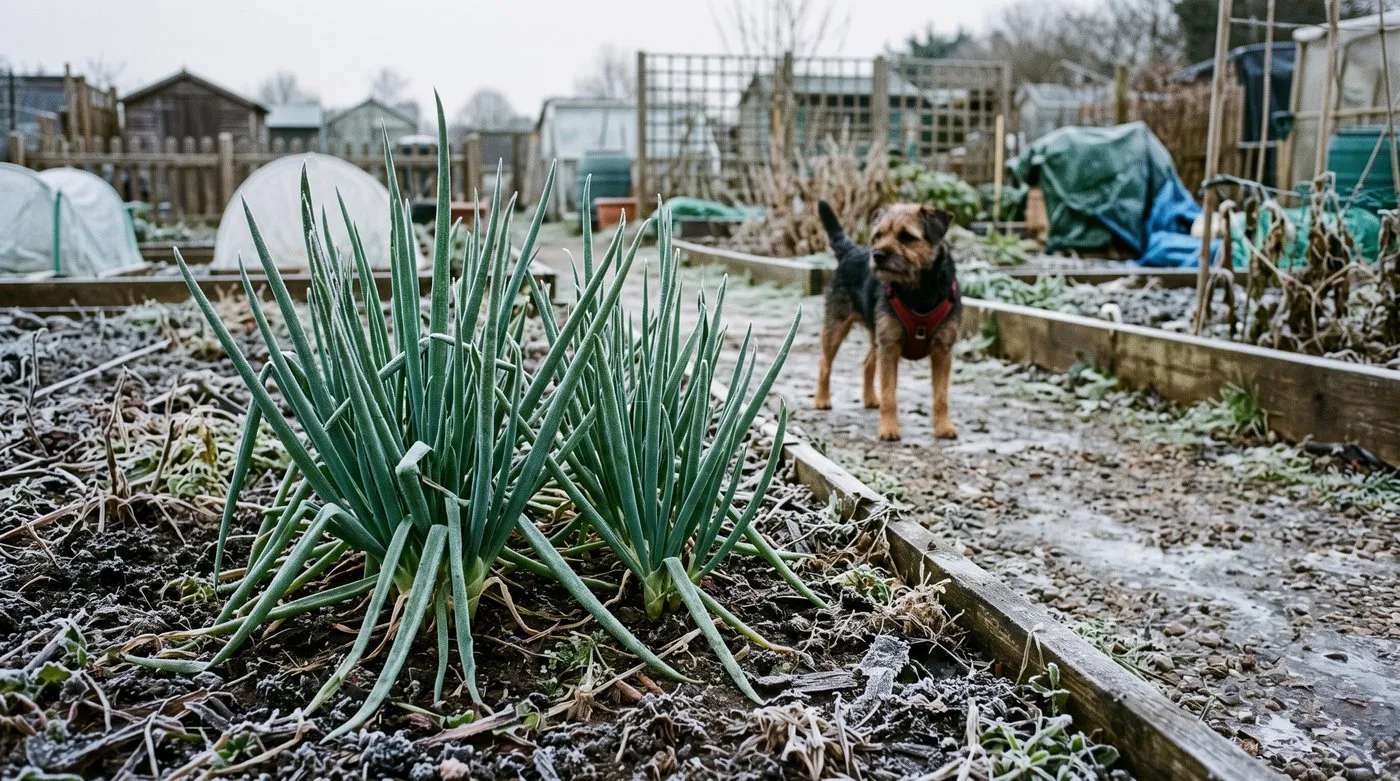
Welsh onions usually stay green through frost, so there’s something to cut in midwinter when spring onions are long gone.
Frequently asked questions
What is the difference between Welsh onions and spring onions?
Welsh onions are perennial and cut again and again; spring onions are pulled once. Welsh onion is Allium fistulosum and forms a clump that slowly multiplies. Most spring onions, such as ‘White Lisbon’, are young plants of ordinary onion, sown every few weeks and lifted whole.
Are Welsh onions actually from Wales?
No, they come from east Asia, not Wales. The name is thought to come from an old word meaning foreign. They’re the everyday bunching onion of Chinese and Japanese cooking.
When should I sow Welsh onion seed in the UK?
Sow from March to May, once the soil has started to warm. Sow thinly 1cm deep outdoors, or sow several seeds per module under cover. Seed sown in cold, wet soil is slow and patchy.
How do you harvest Welsh onions without killing the plant?
Cut the leaves with scissors a few centimetres above the base. Don’t pull the whole plant, and leave some leaves on each clump. The clump then regrows for more cutting.
How often should you divide Welsh onion clumps?
Roughly every three years, in spring or early autumn. Crowded clumps give thinner, tougher leaves. Lift the clump, pull it into small groups of shoots and replant them about 20cm apart.
Do Welsh onions survive a British winter?
Yes, they’re very hardy and often stay green. Growth slows right down in cold weather, so cut lightly. A cloche over one clump keeps the leaves in better condition in cold, exposed gardens.
Which Welsh onion varieties are best for UK gardens?
Start with ordinary red or white Welsh onion seed for a clump that multiplies. ‘Ishikura’ is a Japanese bunching type grown for long white stems. It forms clumps more slowly and is often grown like a spring onion.
Fancy onions you can store for winter too? The guide to growing onions is the next step, and there are more crops in the growing veg guides.
Our team produces practical UK gardening guidance from source research, contributor records and established horticultural practice. Editorial standards are overseen by Matt W.


