Key takeaways
- There is no single compulsory qualification, but a design diploma or degree helps greatly
- Strong plant knowledge, often via an RHS qualification, underpins good design
- Drawing, planning and an eye for space matter as much as plant choice
- A portfolio of real gardens, even unpaid early ones, is what wins clients
- Many garden designers retrain from other careers, often in mid-life
- The Society of Garden Designers is the UK's main professional body
It is an honest picture, including the slow, lean early years. But for the right person, few careers are as rewarding as handing a client the keys to a garden you have brought to life.
Is garden design the right career for you?
Before the how, be clear on the what, because the job is broader than most people imagine. Garden design combines creativity with plant knowledge, technical drawing, budgets and client management, so it suits people who enjoy both the artistic and the practical. It is not just choosing pretty plants.
A designer surveys a site, listens to what a client wants, then produces plans that balance beauty, function and budget. That means drawing layouts, planning levels and surfaces, choosing and combining plants, and often managing the build. You move between studio work and muddy sites, and between creative freedom and a client’s wishes.
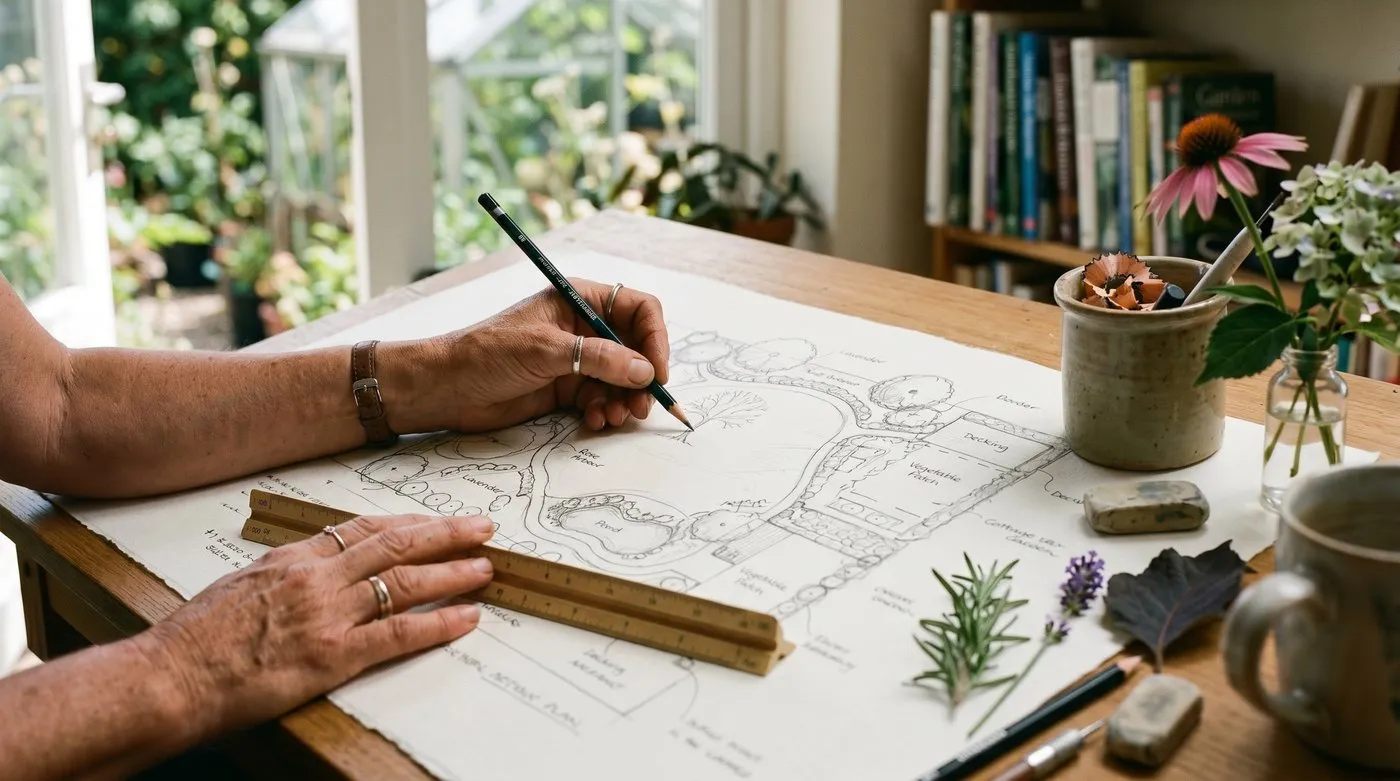 Garden design blends the creative and the technical: surveying, drawing plans, choosing plants and managing budgets. It is far more than choosing pretty flowers.
Routes into garden design
There is no single road in, which is both freeing and confusing. Most garden designers train through a diploma or degree in garden design, often after an RHS horticulture qualification, though some are self-taught. Pick the route that fits your time and money.
A garden design diploma is the most popular route, taking around a year part-time, and many run in the evenings or online so you can study while working. A full degree in garden design takes three years and goes deeper, suiting those starting fresh. Short courses and self-study can work for the determined, especially alongside hands-on experience.
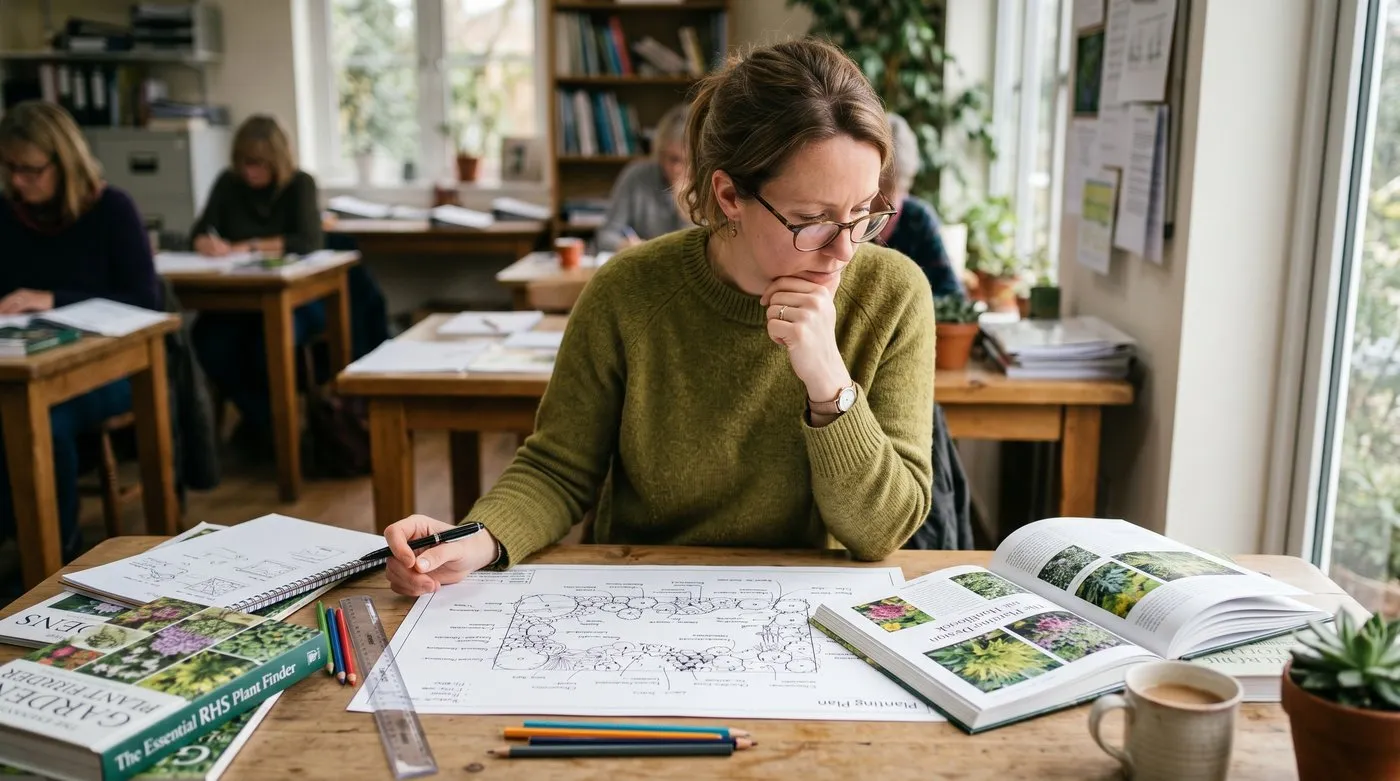 A diploma is the most popular route, often studied part-time or in the evenings. Ground it in plant knowledge, ideally an RHS qualification, before or alongside design study.
The skills you really need
Qualifications open the door, but daily success rests on a spread of skills. A garden designer needs plant knowledge, spatial and drawing ability, and the people skills to manage clients, budgets and builds. Weakness in any one shows in the work.
Plant knowledge is the foundation: how plants grow, combine, and perform across the seasons, so a planting plan still looks good in February. Spatial and drawing skills let you plan a space and communicate it clearly, whether by hand or with design software. Increasingly, clients expect clear plans and visuals they can understand.
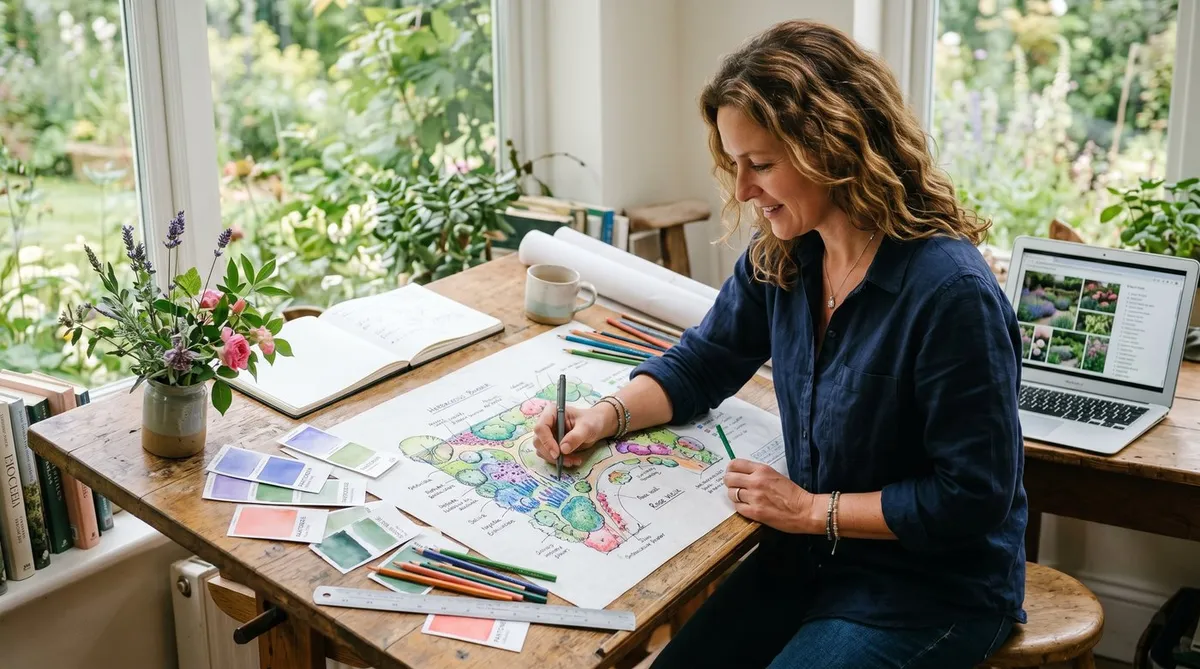
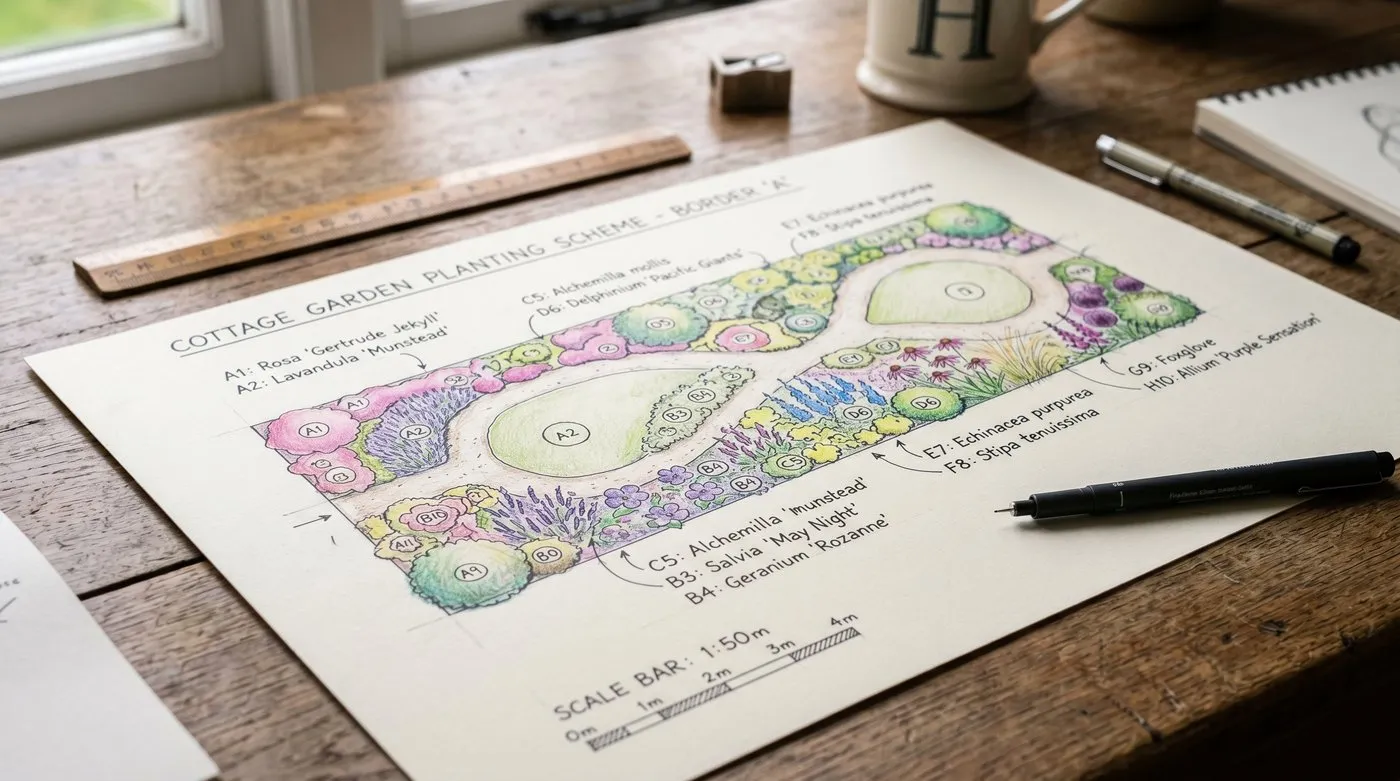 A clear plan is how you communicate a design. Plant knowledge, drawing skill and an eye for space combine in a planting plan a client and a builder can both follow.
Training routes compared
The right route depends on your time, budget and starting point. This table compares the main ways into garden design.
| Route | Time | Cost | Best for |
|---|---|---|---|
| Garden design diploma | Around 1 year part-time | Medium | Career changers working alongside study |
| Degree in garden design | 3 years full-time | High | School leavers, deep grounding |
| RHS horticulture plus self-study | 1 to 2 years, flexible | Low to medium | The plant-focused and self-motivated |
| Short courses and workshops | Weeks to months | Low | Testing the water, topping up skills |
| Apprenticeship or work experience | Ongoing | Earn while you learn | Hands-on learners, site experience |
For most career changers, the diploma plus an RHS qualification is the sweet spot, giving credibility and plant knowledge without three years out of work. A degree suits those starting young who want the deepest grounding. Whatever route you pick, pair study with real, hands-on experience, because design on paper and design that survives contact with a real garden are different things.
Building a portfolio and finding clients
This is where careers are really made, and it starts before you are fully qualified. A portfolio of real gardens, even unpaid early ones, is what wins clients, so build and photograph it from your very first project. Clients hire from evidence, not promises.
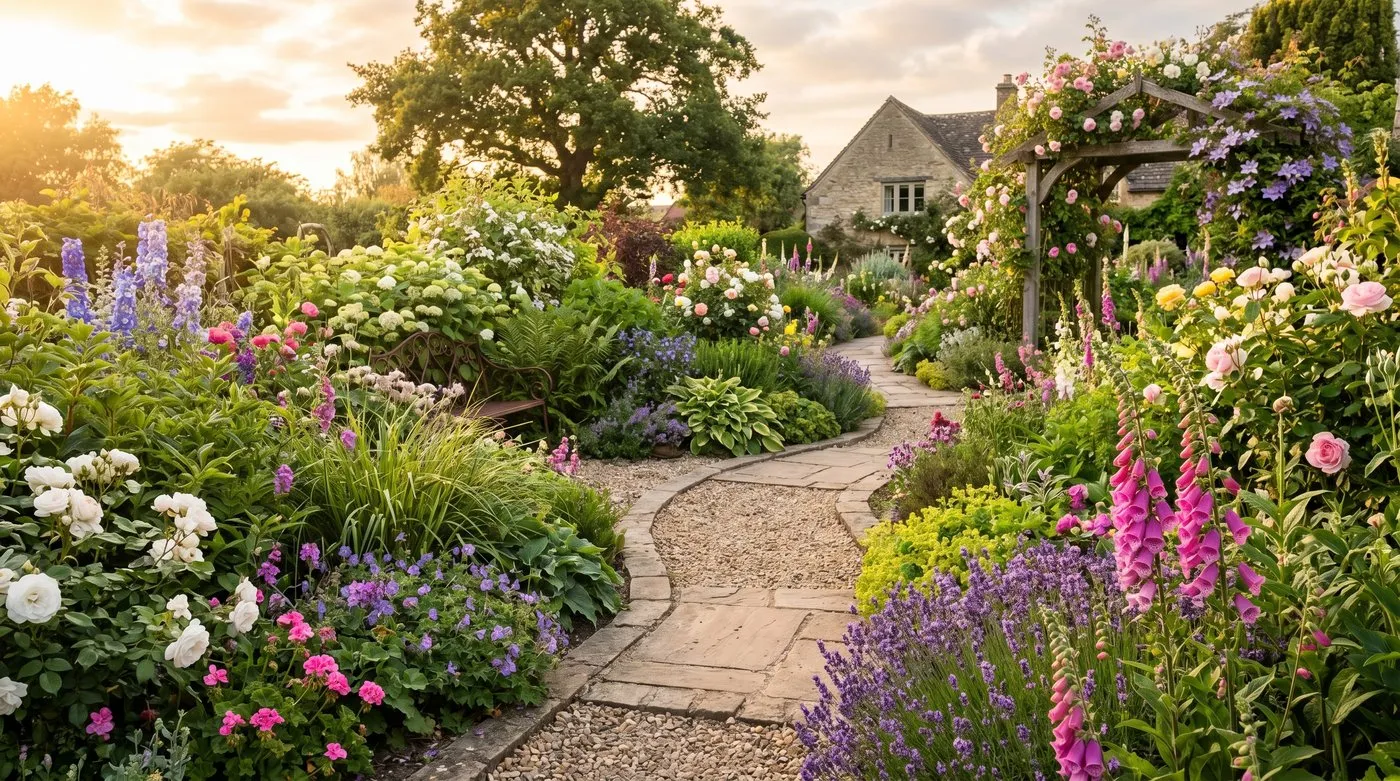 Clients hire from photographs, not promises. Design real gardens, even unpaid ones at first, see them built, and photograph them well. The portfolio is your shop window.
What you can earn and going professional
Be realistic about the money, especially at the start. Early fees in garden design are modest, but established designers can earn a solid living, with income rising as reputation and portfolio grow. It is a build-up, not a quick win.
Most designers start part-time or charge low rates while building a name, and the first year or two can be lean. As your portfolio and reputation grow, day rates and project fees rise. London and the South East command higher fees than rural areas. Most income comes from design fees, charged per project or as a percentage of the build, and some designers add project management of the build for extra income.
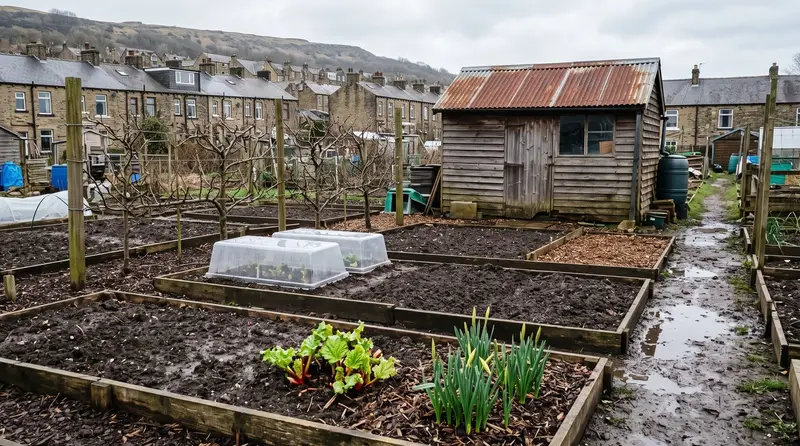
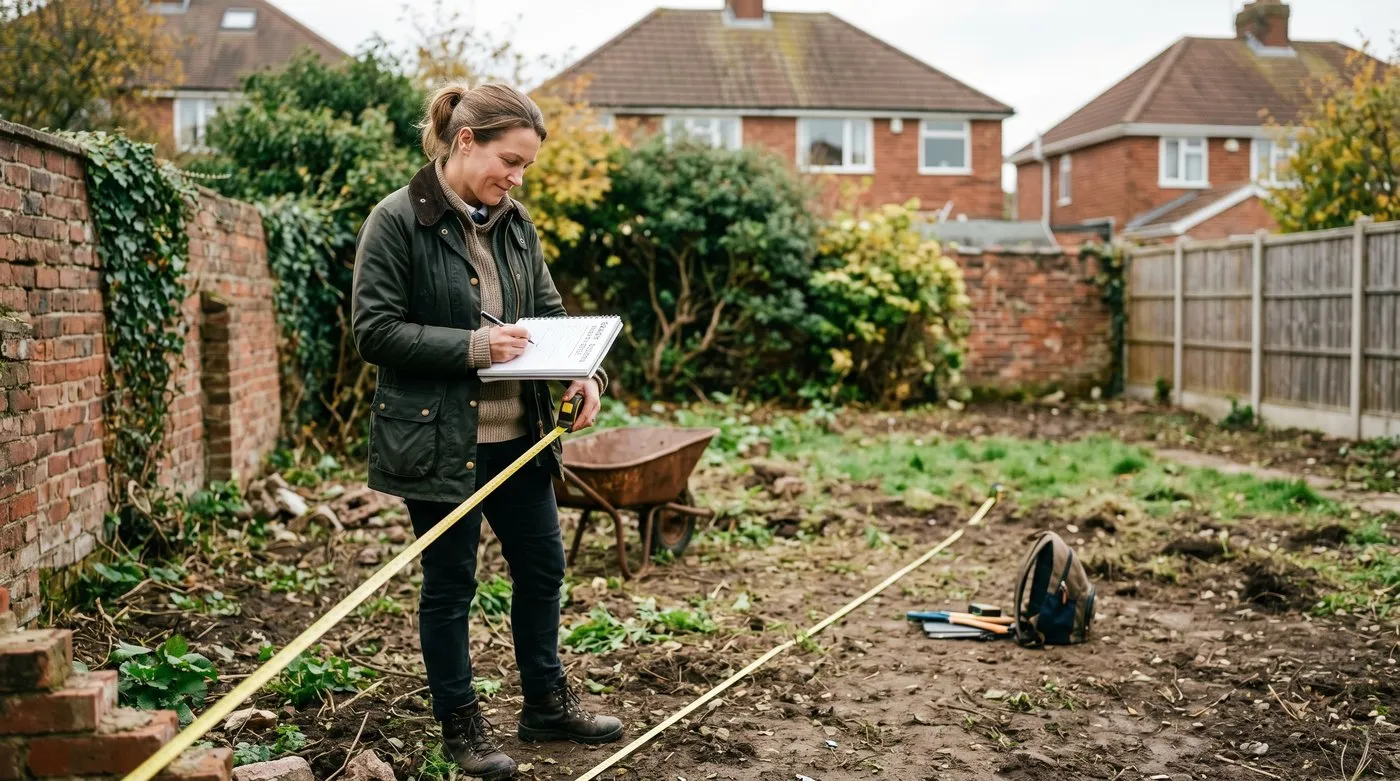 The job moves between studio and muddy site. Surveying a plot, listening to the client, and working to a real budget are as much the craft as drawing the plan.
Frequently asked questions
Do you need a qualification to be a garden designer?
No, there is no legally required qualification to call yourself a garden designer in the UK. However, most successful designers train through a garden design diploma or degree, often after an RHS horticulture qualification. Training builds the plant knowledge, drawing skills and credibility that win clients, so while not compulsory, it is strongly worth doing.
How long does it take to become a garden designer?
It typically takes one to three years of training, plus time to build a portfolio. A garden design diploma can take a year part-time, while a degree takes three. Many people retrain while working, then build up clients gradually. Allow a few years from starting study to earning a steady living, as reputation and portfolio grow with each project.
What skills does a garden designer need?
A garden designer needs plant knowledge, spatial and drawing skills, and the people skills to work with clients and budgets. You must understand how plants grow and combine, how to plan space and levels, and how to draw plans clearly. Project management, an eye for detail, and good communication matter just as much as creativity and plant choice.
How much do garden designers earn in the UK?
Earnings vary widely by experience, location and reputation. Early fees are modest, and many designers start part-time or charge low rates while building a portfolio. Established designers can earn a solid living, with day rates and project fees rising with reputation. London and the South East pay more. Most income comes from design fees, with some adding build management.
Can you become a garden designer later in life?
Yes, garden design is one of the most common careers people move into later in life. Many designers retrain in their forties, fifties or beyond, often bringing useful skills from previous careers in art, project management or horticulture. Life experience and a mature eye are real assets in design, and clients often value a designer who has run projects before.
Our team produces practical UK gardening guidance from source research, contributor records and established horticultural practice. Editorial standards are overseen by Matt W.