Key takeaways
- Water with rainwater, distilled or reverse-osmosis water, never ordinary tap water
- Use carnivorous plant compost, never multipurpose or houseplant compost
- Give them the sunniest spot you have and keep the compost wet in summer
- Venus flytraps and Sarracenia need a cold winter rest, roughly November to February
- Cape sundew is the easiest starter plant and grows all year on a windowsill
- Don't feed them meat or set off traps for fun
Carnivorous plants are easier than their reputation, as long as you stop treating them like ordinary houseplants. Give them rainwater, a proper carnivorous plant compost, lots of sun and, for some, a cold winter rest. Get those right and Venus flytraps, sundews and pitcher plants grow happily for years.
They come from bogs, where the soil has almost no food in it. That’s why they catch insects, and why tap water and normal compost do them so much harm. This guide covers the easiest plants to start with, how to grow them on a windowsill or outdoors, and the winter care that trips most people up.
Four rules for growing carnivorous plants
Almost every carnivorous plant death comes down to one of these four things.
- Rainwater, not tap water. Tap water carries minerals that build up in the compost and damage the roots. Use rainwater from a water butt, or distilled or reverse-osmosis water. Boiled or jug-filtered tap water doesn’t work.
- Carnivorous plant compost, not multipurpose. They need a low-nutrient, acidic mix. Buy a ready-made carnivorous plant compost from a specialist. Normal compost contains fertiliser, which burns their roots.
- Plenty of sun. Most want the sunniest spot you can give them: a south-facing windowsill, a conservatory, a greenhouse or a sunny bog garden. In shade they grow weak, pale and floppy.
- A winter rest for the hardy ones. Venus flytraps and Sarracenia need a cool winter, roughly November to February. Without it they weaken over a year or two.
In summer, stand pots in a tray holding 1-2cm of rainwater so the compost never dries out. This tray method is the easiest way to keep them happy.
Gardener’s tip: Put a water butt on a shed or greenhouse gutter before you buy your first plant. Our guide to installing a water butt shows how.

Rainwater from a greenhouse or shed gutter is free and keeps carnivorous plants healthy.
The easiest carnivorous plants for beginners
Start with one of these. They are forgiving, easy to find and fun to watch.
| Plant | Where to grow it | Winter rest? | Good to know |
|---|---|---|---|
| Cape sundew (Drosera capensis) | Sunny windowsill | No | The easiest of all. Catches fruit flies and gnats |
| Venus flytrap (Dionaea muscipula) | Sunny windowsill, greenhouse or porch | Yes, cool and bright | Needs the winter rest to last |
| Purple pitcher plant (Sarracenia purpurea) | Bog garden or outdoor pot | Yes, outdoors is fine | The hardiest pitcher plant |
| Yellow trumpet (Sarracenia flava) | Greenhouse, porch or sheltered outdoor pot | Yes | Tall yellow pitchers in summer |
| Mexican butterworts (Pinguicula) | Sunny windowsill | No cold rest, but water less in winter | Pretty flowers and sticky leaves |
Cape sundew
The Cape sundew is the best first carnivorous plant. It grows all year on a windowsill, needs no winter rest and often seeds itself into nearby pots. Its leaves are covered in sticky, glistening hairs that trap small flies, then slowly curl around them.
Venus flytrap
The Venus flytrap is the famous one, and it’s reliable once you know about its winter rest. Keep it in full sun in summer, standing in rainwater. In winter, move it somewhere cool, bright and frost-free, such as an unheated porch or cold greenhouse. Red forms such as ‘Akai Ryu’ are widely sold.
Sarracenia pitcher plants
Sarracenia have tall, tube-shaped leaves that trap insects inside. S. purpurea is the hardiest and happy outdoors all year in a bog garden or pot. Taller types such as S. flava and S. leucophylla do best in a greenhouse or porch, or a sheltered sunny spot.

A Venus flytrap only needs the occasional insect. It catches plenty on its own, even indoors.
Growing carnivorous plants on a windowsill
A sunny windowsill suits Cape sundews, Mexican butterworts and Venus flytraps. Tropical pitcher plants (Nepenthes) also grow indoors but prefer bright light without hot midday sun, and more humidity.
- Pick a south- or west-facing window with several hours of direct sun.
- Stand pots in a saucer or tray of rainwater, 1-2cm deep, from spring to autumn.
- Let the tray dry out between top-ups in winter, keeping the compost just damp.
- Turn pots now and then so plants don’t lean towards the light.
- In a dull room, a small LED grow light keeps them compact.
Indoor sundews and butterworts catch a surprising number of fruit flies and fungus gnats. For a houseplant that’s already plagued with gnats, see our guide to getting rid of fungus gnats. If you’d rather have easy foliage plants for the same window, browse our pick of the best indoor plants for UK homes.

Sundews trap small flies on glistening sticky hairs, then slowly fold their leaves around them.
Growing carnivorous plants outdoors in a bog garden
Hardy carnivorous plants look wonderful in a small, sunny bog garden. Sarracenia purpurea and native sundews can live outside all year.
The build is the same as any bog garden: a lined hole with a few drainage holes near the top. Our guide to creating a bog garden walks you through it. The key difference for carnivorous plants is the fill:
- Use carnivorous plant compost, or a mix of it with lime-free sand and perlite.
- Never add garden soil, manure or multipurpose compost.
- Top up only with rainwater.
- Choose the sunniest spot you have.
Sphagnum moss makes a natural-looking surface cover. Buy it from a nursery, never from the wild. Wild sundews, butterworts and bog mosses are part of fragile habitats and must not be dug up. Cotton grass is a good non-carnivorous partner, and our list of plants for wet, boggy soil has more ideas for around the edges.

Purple pitcher plants and fluffy cotton grass make a lovely mini bog that looks after itself.
Winter care and dormancy
Hardy carnivorous plants need a winter rest, or dormancy. It usually runs from about November to February. They slow down, leaves may die back, and they can look half-dead. That’s normal.
Needs a winter rest:
- Venus flytraps
- Sarracenia pitcher plants
- Hardy sundews, such as the native round-leaved sundew
Stays growing all year:
- Cape sundews
- Mexican butterworts (they slow down and need less water in winter)
- Tropical pitcher plants (Nepenthes)
For the resting plants:
- Move pots to a cold greenhouse, cold frame or unheated porch. A shed works only if there’s a window.
- Keep the compost damp but take them out of standing water.
- Snip off dead leaves and traps to stop mould.
- Bring them back into warmth and sun from about March, when new growth appears.
Plants in a bog garden rest naturally over winter. In early spring, cut the old, brown Sarracenia pitchers off at the base before the new ones come through.

Taller Sarracenia enjoy a greenhouse or porch, where they get full sun in summer and a cold rest in winter.
Buying carnivorous plants
Buy from a specialist carnivorous plant nursery if you can. Plants are labelled by species, grown in the right compost, and come with care advice. Many nurseries sell by mail order and have stands at RHS shows.
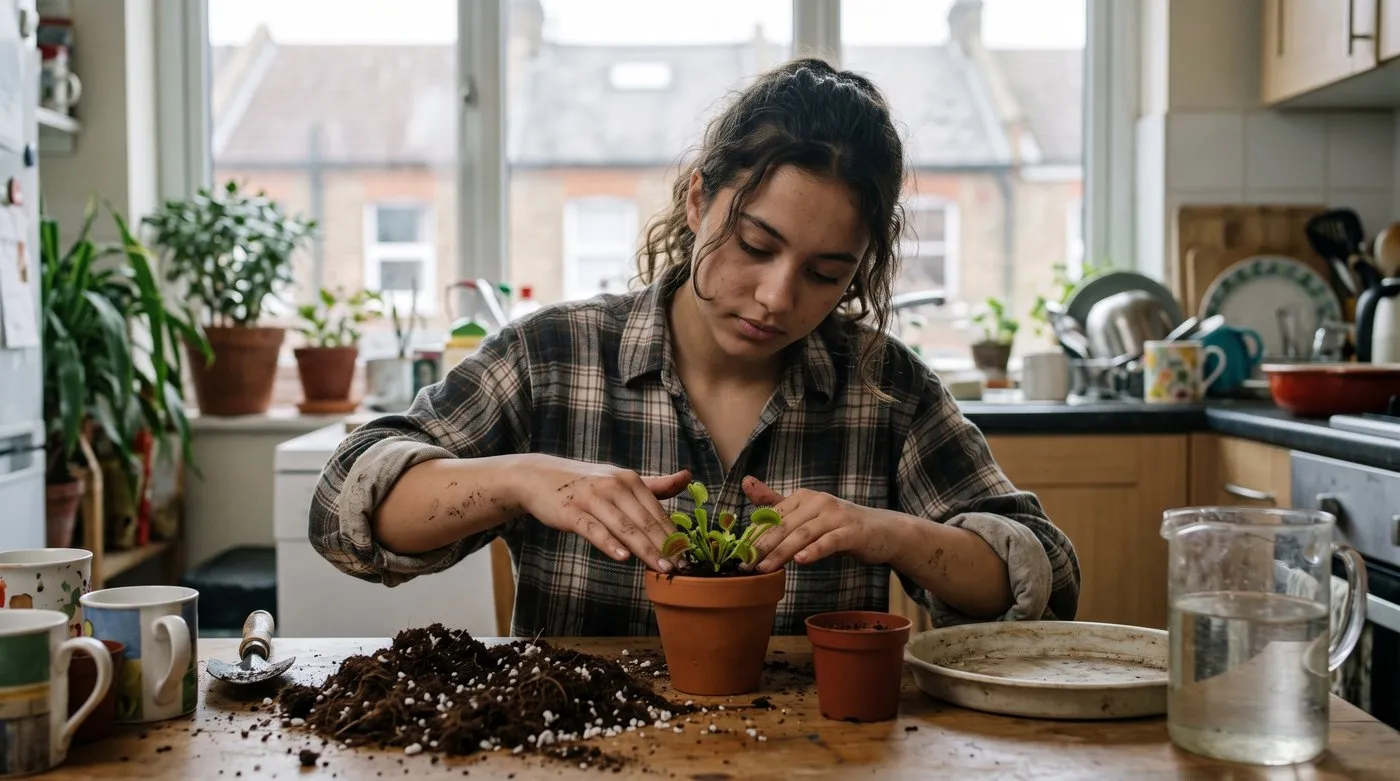
Repot a shop-bought flytrap into carnivorous plant compost and switch to rainwater straight away.
Supermarket and garden centre plants can be fine, but they’re often unlabelled and kept too warm. If you buy one, repot it into carnivorous plant compost and switch to rainwater straight away. The Carnivorous Plant Society is a friendly place to find growers and advice.
Common mistakes with carnivorous plants
- Using tap water. Leaves yellow and plants slowly fail. Switch to rainwater and flush the pot through with it a few times.
- Repotting into normal compost. Roots blacken and the plant collapses. Repot into carnivorous plant compost at once.
- Skipping the winter rest. Flytraps and Sarracenia look fine for a year, then weaken. Give them a cool winter from next November.
- Feeding them food. Meat and cheese rot inside the trap and kill it. Let them catch their own.
- Too little light. Plants go pale and stretched and stop catching. Move them to your sunniest window.
- Letting them dry out. Plants crisp and wilt. Keep a tray of rainwater under them in summer.
Carnivorous plant care calendar
| Month | What to do |
|---|---|
| January to February | Hardy plants resting somewhere cool. Keep compost just damp. Cut off old Sarracenia pitchers late February |
| March | Bring resting plants back into full light. Repot if needed |
| April to May | Stand pots in trays of rainwater. Plant up bog gardens |
| June to August | Peak growth. Keep trays topped up with rainwater. Snip off flower stems on flytraps if you want stronger traps |
| September to October | Growth slows. Tidy dead traps and leaves |
| November to December | Move flytraps and Sarracenia to a cool, bright spot. Water less |
Frequently asked questions
Can carnivorous plants survive UK winters outdoors?
Some can. Sarracenia purpurea and native sundews survive outdoors in a bog garden. Venus flytraps need a cold winter rest but are safest in a cold greenhouse or unheated porch. Cape sundews and tropical pitcher plants (Nepenthes) are not hardy and must stay indoors.
Why do carnivorous plants need rainwater?
Tap water carries dissolved minerals that build up and damage their roots. These plants come from bogs where rain is the main water source. Use rainwater, distilled water or reverse-osmosis water. Boiling or jug-filtering tap water doesn’t remove enough minerals.
What compost should I use for carnivorous plants?
Use a ready-made carnivorous plant compost. It is low in nutrients and acidic, usually mixed with perlite or lime-free sand. Never use multipurpose or houseplant compost, because the fertiliser in it burns the roots.
How often should I feed my Venus flytrap?
Usually never, as it catches its own insects. Never give it meat, cheese or other food, which rots the trap. If an indoor plant catches nothing, offer a small live insect now and then. Don’t trigger traps for fun, as each trap only closes a few times.
Why is my Venus flytrap turning black?
A few black traps are normal, as old traps die off. Lots of blackening usually means tap water, the wrong compost, feeding it food, or no winter rest. Snip off dead traps and check those four things.
Where should I buy carnivorous plants?
A specialist carnivorous plant nursery is the best place. Many sell by mail order and at RHS shows, with plants labelled by species. Supermarket plants are often unlabelled and stressed, so check them carefully.
Ready to collect rain for your plants? Our guide to rainwater harvesting covers butts, diverters and storage, and the plants hub has care guides for hundreds more.
Our team produces practical UK gardening guidance from source research, contributor records and established horticultural practice. Editorial standards are overseen by Matt W.