Key takeaways
- Biophilic planting uses greenery to make indoor spaces feel calmer and more natural
- Group three or more plants together for a stronger effect than single pots
- Put plant groups where you rest your eyes, from your favourite chair or desk
- Turn seating or a desk towards a window with a green view where you can
- Match each plant to the room's light so it thrives rather than struggles
- Many popular houseplants are toxic to pets, so check before you buy
Biophilic planting means using plants to make your home feel calmer and closer to nature. The key is not how many plants you have, but where you put them. A group of plants by a window, in view from your favourite chair, does far more than a dozen single pots dotted about.
This guide explains the idea in plain terms and shows you how to green your home room by room. If you want to choose plants first, the guide to the best indoor plants has easy options for every room.
What is biophilic planting?
Biophilia is the idea that people feel a natural pull towards living things. Biophilic design uses that in buildings, with natural light, natural materials and plenty of greenery.
Biophilic planting is the plant part, and it’s the easiest bit to do at home. It treats plants as part of how a room is laid out, not as an afterthought. In practice that means three things:
- Grouping plants so they read as a bit of nature, not ornaments.
- Placing them where you look, from where you sit, work or lie.
- Framing a green view, indoors or out of the window.
The same thinking works outside too. The guide to sensory garden design uses scent, touch and sound to make a garden calming.

A group by the window becomes a green focal point for the whole room. Mixed heights and leaf shapes make it look natural.
Why plants make a room feel calmer
Most of us notice that a room with plants feels softer and more relaxing. Leaves break up hard lines, add life and colour, and give the eye somewhere restful to land.
Caring for plants helps too. Watering, turning pots and picking off old leaves is a small, calming routine. Watching a new leaf unfurl is a simple pleasure.
Keep expectations sensible. Plants won’t fix a stressful situation, and they aren’t a treatment. But as a cheap, easy way to make a room nicer to be in, they’re hard to beat. Spending time in a garden has even more to offer, as the guide to gardening for mental health explains.
Frame a green view from where you sit
A view of greenery is one of the simplest biophilic moves. A desk facing a window onto the garden feels very different from a desk facing a blank wall.
Try these:
- Turn your desk or favourite chair towards a window with trees, shrubs or a garden view.
- If the view outside is grey, create one indoors with a group of plants you can see from your seat.
- Plant something green outside the window, such as a climber, a small tree or a window box.
Sit in your usual chair and look around before you buy anything. Where does your eye rest? That spot is where plants will do the most good.

A desk that looks out at the garden is calmer than one facing a wall. A small plant on the desk adds green when you look down.
Choosing plants for each room’s light
Light decides which plants will thrive. A plant in the wrong spot struggles and looks sad, which is the opposite of calming.
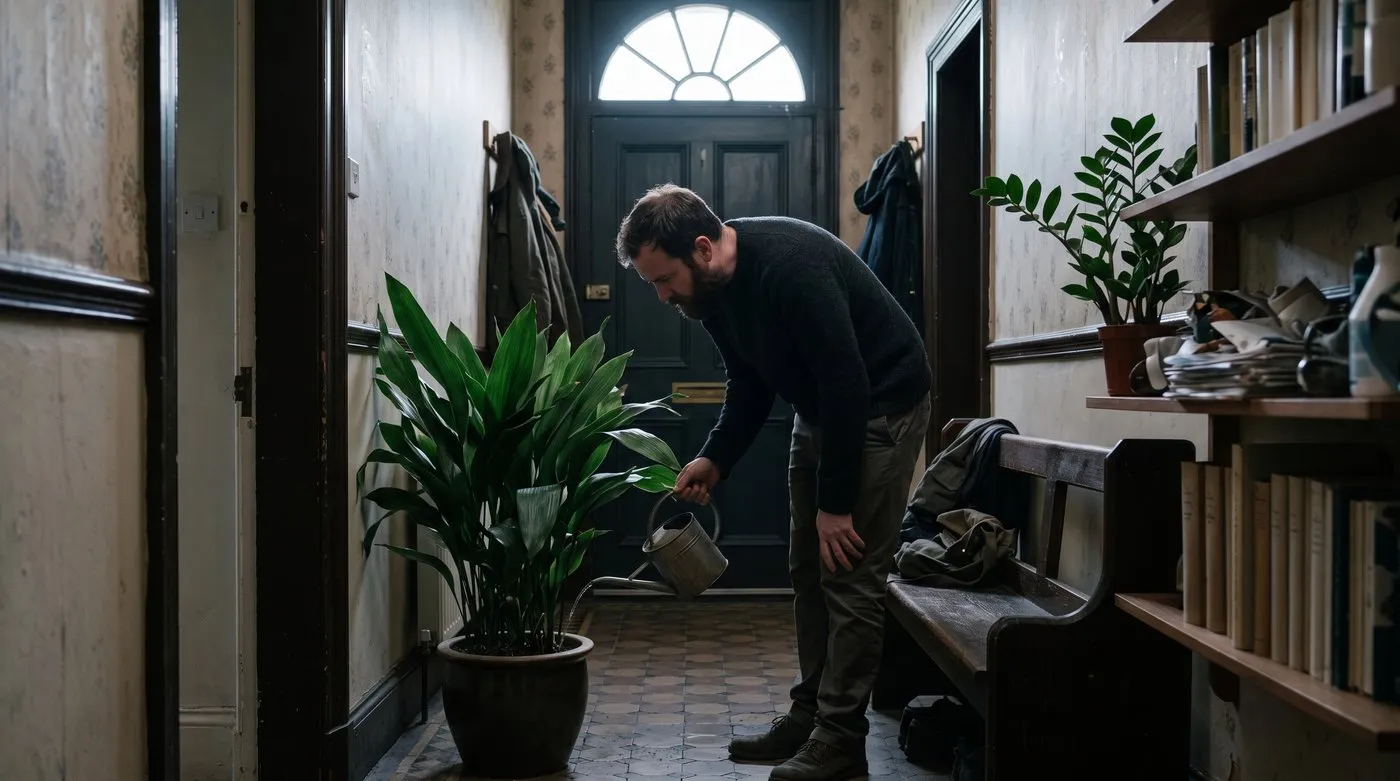
Aspidistra and ZZ plant cope happily with a gloomy hallway. Choosing for the light is what keeps a plant looking good.
- Bright, sunny windowsills: succulents, cacti, aloe and citrus.
- Bright rooms out of direct sun: most popular foliage plants, such as monstera, pothos, peace lily, calathea and spider plant.
- Darker rooms and corners: tough plants such as aspidistra (cast iron plant), ZZ plant and snake plant.
Choose easy, forgiving plants if you’re new to houseplants or often away. For a desk, the best office plants cope with dry air and neglect. The guide to low-light houseplants helps with gloomier rooms.
Pet note: Pothos, peace lily, monstera, snake plant, ZZ plant, aloe and dieffenbachia are all toxic to cats and dogs if chewed. Spider plants, calatheas, Boston ferns, parlour palms and aspidistra are safer choices. The PDSA and ASPCA both publish lists to check.
Biophilic planting room by room
Each room has a different job, so each suits a slightly different approach. Aim for one or two green focal points per room.
| Room | Aim | Where to put plants | Good plants |
|---|---|---|---|
| Living room | A calm green focal point | Grouped by a window or near the sofa | Monstera, Boston fern, parlour palm |
| Home office | A restful break for the eyes | On and around the desk, in view | Pothos, snake plant, small ferns |
| Bedroom | Soft, restful greenery | Bedside table and a shelf | Calathea, spider plant, pothos |
| Bathroom | Plants that like humidity | Shelf or bright windowsill | Ferns, moth orchids, calathea |
| Kitchen | Green and useful | Sunny windowsill | Herbs, spider plant, aloe |
| Hallway | A green welcome | One large plant or a wall group | Aspidistra, ZZ plant |
For the trickier rooms, the guides to the best plants for bedrooms and best plants for bathrooms go into more detail.

Soft foliage by the bed is the first thing you see in the morning. Trailing pothos on a high shelf keeps it out of a pet’s reach.
How to group houseplants for impact
Grouping is the one trick that makes the biggest difference. A cluster reads as a piece of nature. Single pots dotted about look like ornaments.
Build a group like a tiny border:
- Use odd numbers, such as three or five plants.
- Vary the heights. Put a tall plant at the back, medium in the middle and trailing plants at the front or edge.
- Mix leaf shapes. Pair big, bold leaves with fine fronds and strappy leaves.
- Tie it together with pots in one material or colour.
- Raise some plants on a stool, shelf or plant stand to add layers.
Grouping helps the plants too. Plants close together keep the air around them a little more humid, which ferns and calatheas enjoy.

A tiered stand lets you build a whole group in one corner. Mix bold leaves, fine fronds and trailing stems for interest.
Common biophilic planting mistakes
Dotting single pots everywhere. Lots of lone plants look cluttered. Group them into one or two focal points.
Choosing plants for looks, not light. A sun-lover in a dark hallway will sulk. Check the light first.
Putting plants where you never look. Greening a corner you never see is wasted. Start where you sit.
Overwatering. It is the most common way houseplants die. Water when the top of the compost feels dry, not on a fixed day.
Forgetting pets. Many favourite houseplants are toxic to cats and dogs. Pick safer plants or keep risky ones well out of reach.
Frequently asked questions
What is biophilic planting?
It means using plants to bring a feel of nature into your home. It comes from biophilic design, which uses light, natural materials and greenery in buildings. At home, it means grouping plants, framing green views and choosing the right plant for each room.
Do indoor plants really improve wellbeing?
Many people find a room with plants feels calmer and more pleasant. Looking after plants is a gentle, rewarding routine too. Plants aren’t a treatment for stress or illness, but they are an easy way to make a space nicer to be in.
Which plants are best for a calm, green home?
Easy, leafy foliage plants that suit your light. Spider plants, Boston ferns, calatheas and parlour palms are good choices and are pet-safe. Pothos, peace lilies and snake plants are easy too, but keep them away from pets.
Where should I put plants for the best effect?
Group them where you spend time and naturally look. A cluster by a living room window, a plant on your desk and foliage near the bed all work well. Turning a chair or desk to face greenery helps most.
How many plants do you need for a biophilic effect?
There is no set number. A group of three or more plants makes far more impact than a single pot. Aim for one or two green focal points in each main room rather than spreading plants thinly.
Do houseplants clean the air?
Not enough to notice in a normal home. Opening windows and good ventilation do far more. Grow houseplants because they look good and make a room feel calmer.
Now your plants are in place, read the guide to propagating houseplants to grow your green corners for free, or browse more houseplant guides.
Our team produces practical UK gardening guidance from source research, contributor records and established horticultural practice. Editorial standards are overseen by Matt W.