Key takeaways
- Rain gardens catch water from downpours and let plants use it later
- Drifts of grasses and perennials give a relaxed look that lasts into winter
- Veg like artichokes and chard can look great in a flower border
- Lavender, sage and other Mediterranean plants cope with dry summers
- Reclaimed brick, stone and timber add instant character
RHS Chelsea Flower Show 2026 was packed with ideas you can borrow for your own garden. Here are five of the best, the plants that go with them, and simple ways to try each one at home.
Most of the ideas share a theme: gardens that cope with heavier rain and drier summers, help wildlife and don’t need endless upkeep. Rain gardens, drifts of grasses and perennials, edible borders, tough Mediterranean plants and reclaimed materials were all in the spotlight.
Trend 1: Rain Garden Design
Making rainwater part of the design was one of the stand-out ideas.
Look out for these in show gardens and try them at home:
- Swales: shallow channels that guide rainwater to a planted area
- Permeable paving: gravel, grass pavers or stone laid with gaps so water soaks in
- Rain beds: slightly sunken planting areas that hold water after heavy rain
- Bog gardens: damp patches planted with moisture-lovers
- Rain butts and water tanks: shown off as features rather than hidden away
Why bother? Our weather seems to bring heavy downpours with dry spells in between. A rain garden holds onto water when it pours, so your plants can use it later.
Try it at home:
- Find the lowest, dampest spot in the garden
- Make a shallow dip there
- Plant it with moisture-lovers such as Lobelia cardinalis and Iris ensata
- Guide water from a downpipe or path towards it
If you’d like to go a step further, our wildlife pond guide shows how to add water for wildlife too.
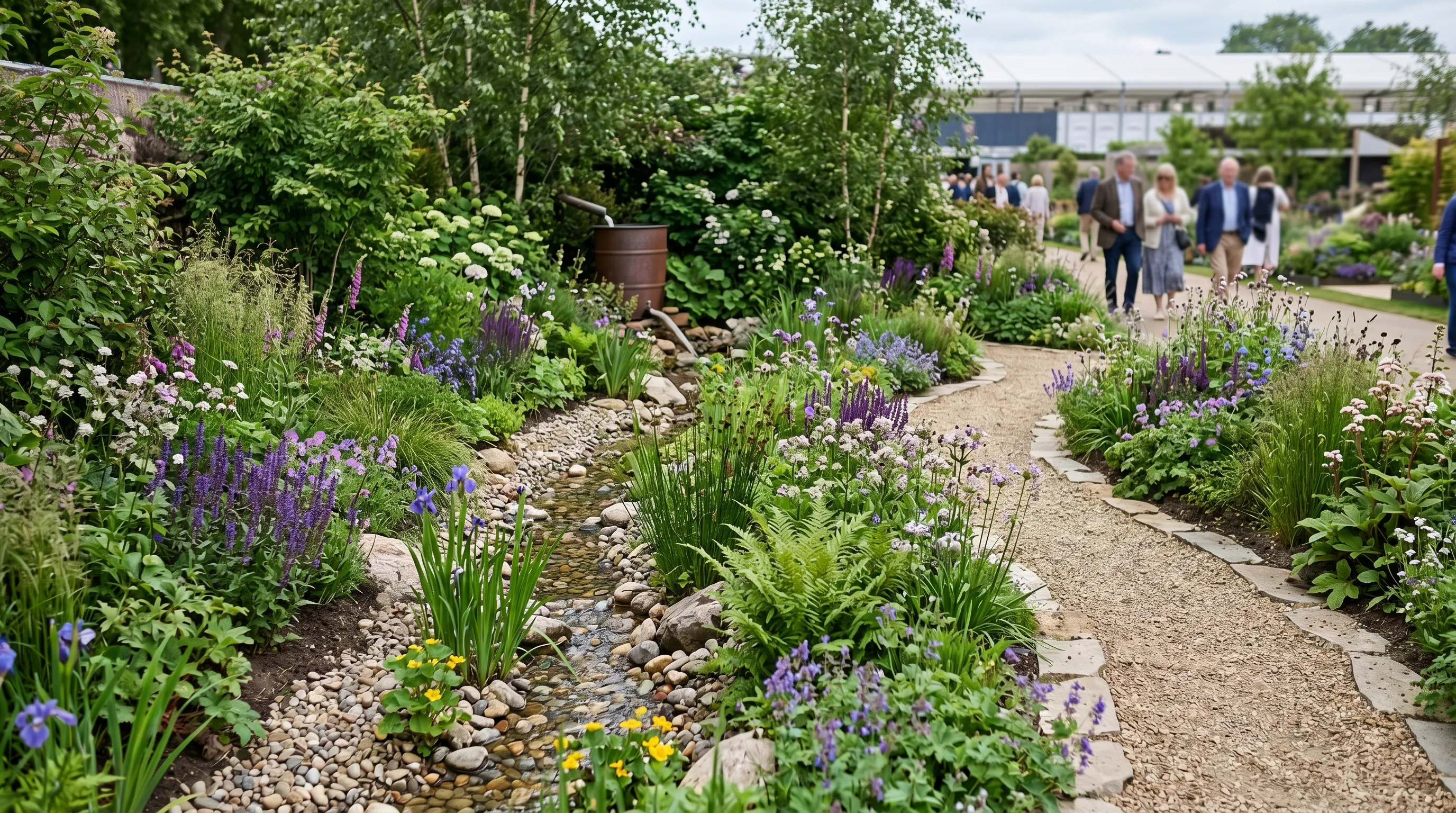 A swale running through relaxed planting, with gravel paths that let the rain soak in.
Trend 2: Prairie-Style Perennial Planting
Relaxed, naturalistic planting was everywhere, very much in the spirit of Piet Oudolf. Look for:
- Lots of grasses: pennisetum, stipa and calamagrostis as the backbone
- Repeated plants: the same plant dotted through the border in drifts
- Late colour: the show running from midsummer into autumn
- Winter seed heads: plants left standing after they finish
Plants to look out for:
| Plant | What it adds |
|---|---|
| Verbena bonariensis | Tall, airy purple flowers you can see through |
| Eryngium giganteum | Spiky silvery heads |
| Pennisetum ‘Hameln’ | Soft, arching grass |
| Stipa tenuissima | Wispy, pony-tail grass |
| Echinacea purpurea | Long-flowering pink daisies |
| Salvia ‘Caradonna’ | Deep purple spikes |
| Allium sphaerocephalon | Little crimson drumsticks |
| Stachys byzantina | Soft, silvery lamb’s ears |
They’re all good in UK gardens, cope well with dry spells once settled in, and bees love most of them.
Try it at home:
- Swap one bedding scheme for a mix of perennials and grasses
- Plant in groups of five or more of each plant
- Weave grasses through the whole bed
- Leave the seed heads standing through winter
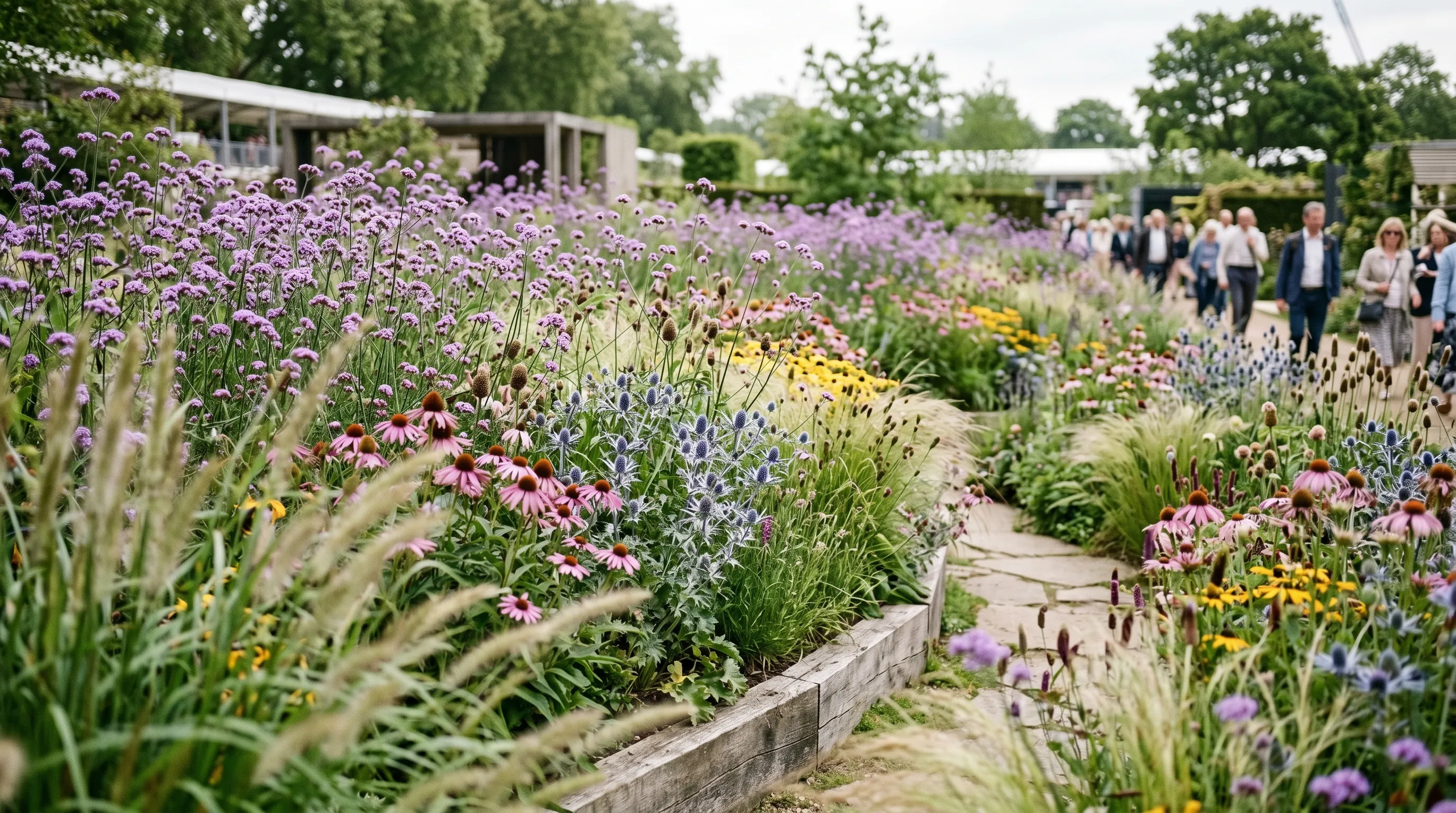 Verbena bonariensis, echinacea, eryngium and soft pennisetum grass mingling together.
Trend 3: Edible Mixed Borders
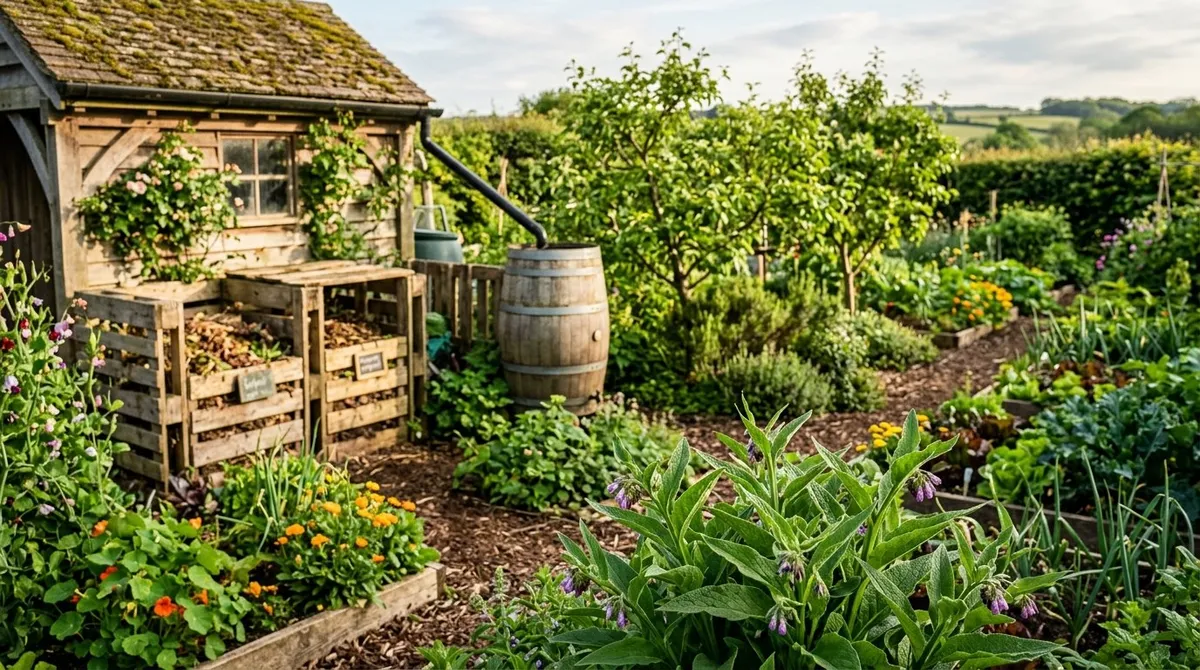
Fruit and veg mixed in with flowers made a lovely, practical point.
- Globe artichokes for bold shape
- Cardoons for big silver leaves
- Rainbow chard for bright stems
- Espalier apples on walls
- Strawberries as ground cover
- Herbs like sage, oregano and fennel tucked through the border
The message: you don’t need a separate veg patch to grow food. A potager garden is the classic way to mix the two.
Try it at home:
- Add an artichoke or cardoon to a flower border
- Use chard for colour at the front
- Train fruit flat against a sunny wall
- Use herbs as edging and ground cover
For a dedicated spot for herbs, see our herb bed guide.
Trend 4: Mediterranean Drought-Tolerant Palette
Plants that shrug off dry summers were a big theme.
Plants to look out for:
- Lavender
- Salvias as bushy structure
- Cistus (rock rose) for early summer flowers
- Phlomis russeliana for yellow flower whorls
- Santolina (cotton lavender) for silver mounds
- Eryngium for silver-blue spikes
- Olive trees in pots
Watering through July and August is a chore. Plants that cope with dry spells make life easier.
Try it at home:
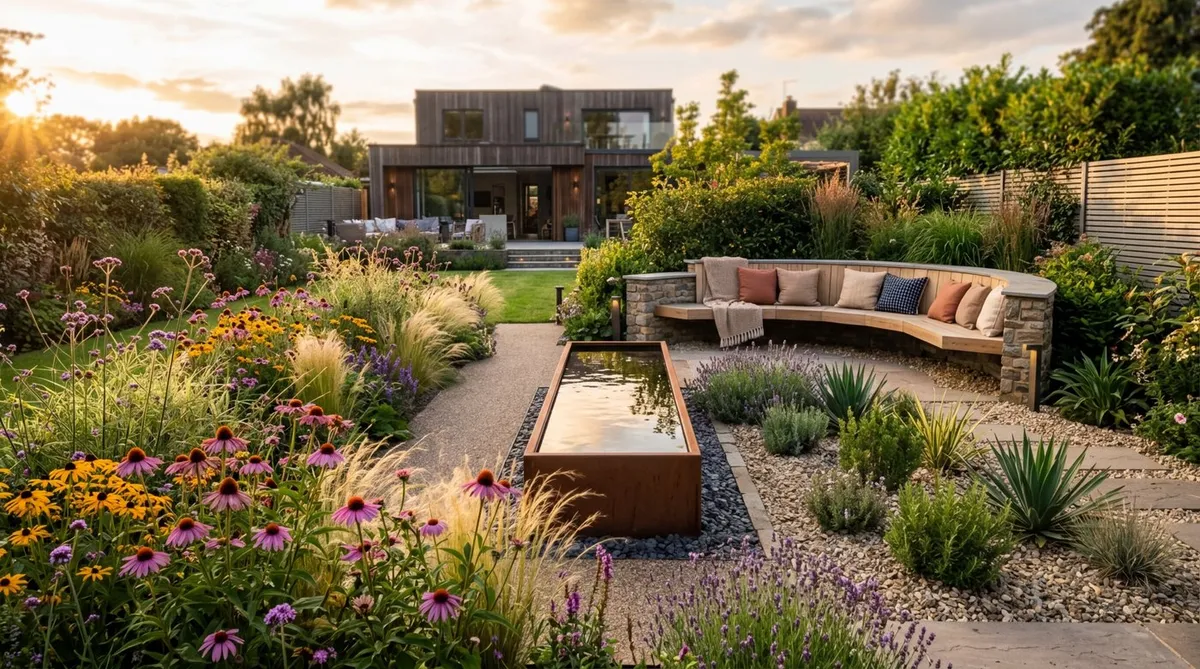
- Edge a lawn or path with Mediterranean herbs
- Fill a sunny south-facing border with these plants
- Look for silver and grey leaves, a good sign a plant copes with dry weather
- Mulch with gravel rather than bark for better drainage
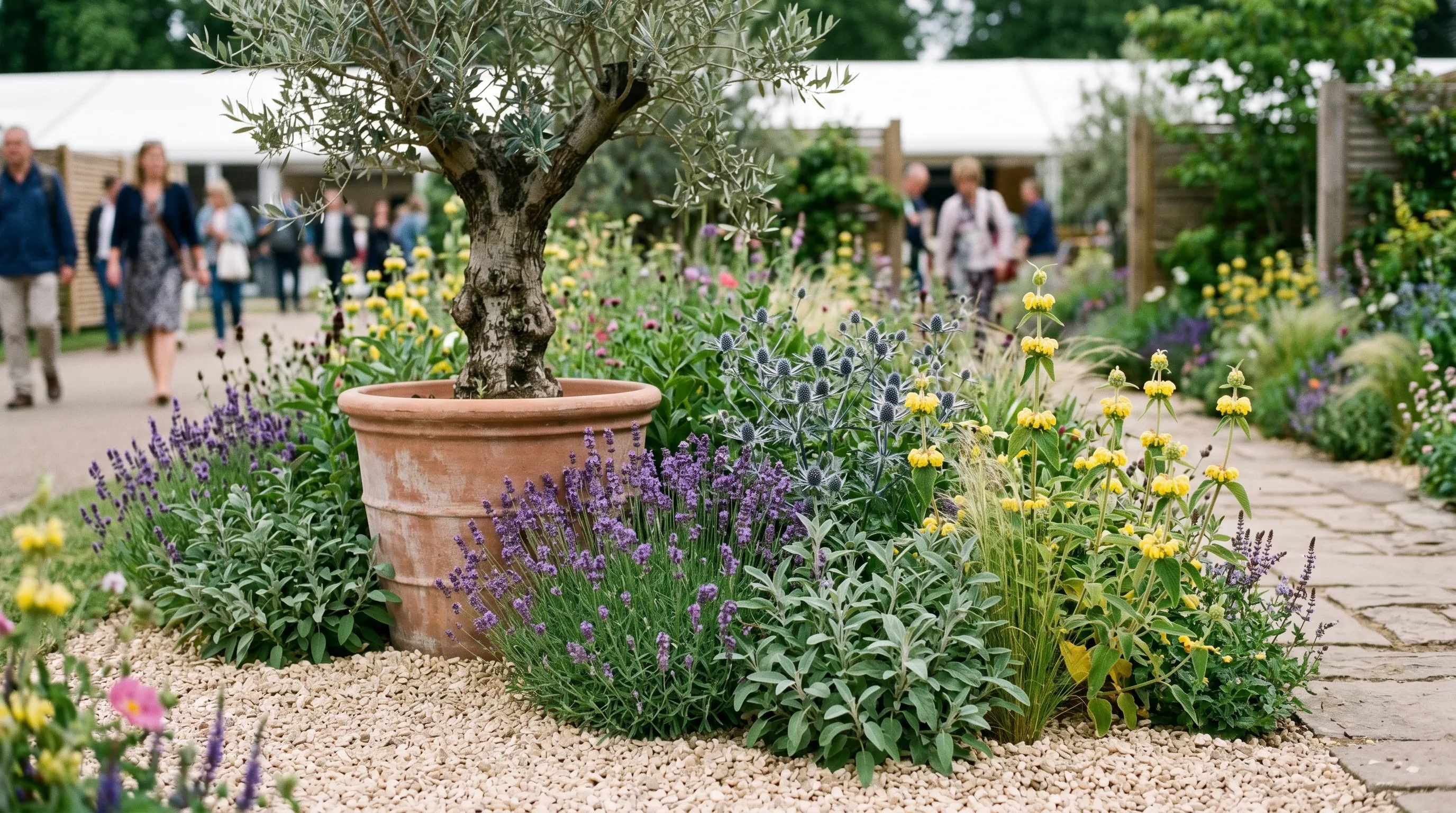 Lavender, sage, eryngium and phlomis on gravel, with an olive in a terracotta pot.
Trend 5: Reclaimed and Sustainable Materials
Paths, walls and edges made from reclaimed materials looked fantastic.
- Old brick paths with plenty of character
- Salvaged York stone paving
- Recycled timber for raised beds and seats
- Rusted steel edges and water features
- Handmade clay tiles
- Crushed brick paths
- Charred timber cladding
Why it’s a good idea at home:
- Reusing materials is kinder to the planet than buying new
- Reclaimed brick and stone can cost less than new
- They look weathered and settled from day one
- Local reclamation yards often have plenty to choose from
Try it at home:
- Visit a local reclamation yard for bricks and stone
- Use steel edging instead of plastic
- Build raised beds from reclaimed timber
- Use gravel mulch instead of plastic sheeting
Plant of the Year and Notable Introductions
Every year the RHS crowns a Chelsea Plant of the Year from a shortlist of new plants. The RHS website has the 2026 winner and the full shortlist.
New plants launched at Chelsea often turn up in garden centres in the months after the show. If one caught your eye, ask your local nursery.
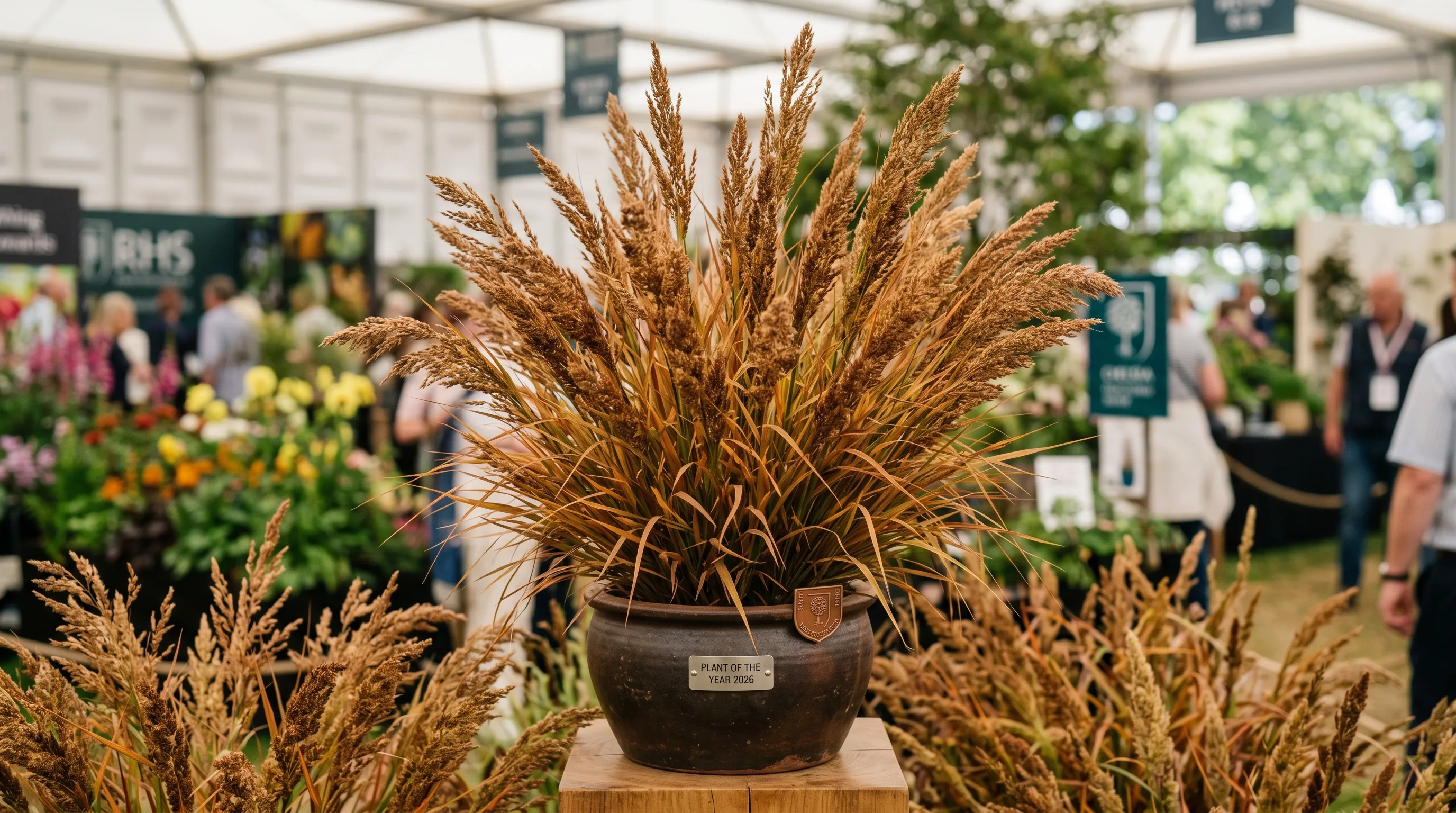 A new grass on display. Keep an eye out for Chelsea newcomers at your garden centre.
How to Visit Chelsea (2027 Planning)
Thinking of going next year?
- Dates: 18-22 May 2027
- Members’ days: Tuesday and Wednesday are for RHS members only
- Public days: Thursday to Saturday, with early mornings the calmest
- Tickets: book early, as popular days sell out
- Time: allow a full day to see it all
- Notebook or phone: for snapping plant labels
- Comfy shoes: a must
Our Chelsea Flower Show guide has dates, tickets and travel tips.
What Did Not Work at Chelsea 2026
A few things to avoid at home:
- Water features so busy they distract from the plants
- Too many different plants squeezed into a small space, which looks frantic
- Old-style bedding like begonias and busy lizzies, which can feel dated next to relaxed planting
- Too much hard landscaping crowding out the plants
- Very formal designs, which can feel stiff beside looser planting
Keep it simple, natural and green and you won’t go far wrong.
For a related look, see our contemporary cottage garden guide.
Chelsea Trends Calendar UK Month-by-Month
| Month | Chelsea-inspired job |
|---|---|
| January | Plan where a rain garden could go |
| February | Hunt for reclaimed materials for spring jobs |
| March | Dig your rain garden dip |
| April | Plant perennials and grasses in drifts |
| May | Visit Chelsea, or watch it on TV, for ideas |
| June | Water new perennials while they settle in |
| July | Add Mediterranean herbs to sunny borders |
| August | Note new plants you’d like to try |
| September | Plant new perennials while the soil is warm |
| October | Leave seed heads standing for winter |
| November | Mulch your rain garden with leafmould |
| December | Plan next year’s projects |
Frequently asked questions
What was the best garden at Chelsea 2026?
The RHS website lists the official medal winners and Best in Show. For home gardeners, the more useful thing is the shared theme. Many gardens leaned towards relaxed planting, less paving, clever use of rainwater and plants that cope with dry spells.
What plants were popular at Chelsea 2026?
Tough, relaxed perennials and grasses were everywhere. Think Verbena bonariensis, eryngium, pennisetum, echinacea, Salvia ‘Caradonna’, Stipa tenuissima, drumstick alliums and lamb’s ears. Mediterranean herbs like rosemary, lavender and thyme were popular too.
Can I copy Chelsea designs in a small UK garden?
Yes, but borrow the ideas rather than copying the whole garden. Show gardens are built for looking at, not living in. Take the plant combinations, the materials and the overall feel, then fit them to your space. A small rain garden works in quite a modest plot.
What sustainable trends came out of Chelsea 2026?
Reclaimed materials and smarter use of rain. Reclaimed brick, salvaged stone, recycled timber and rusted steel featured strongly. Gravel, permeable paving, swales and boggy planting kept rainwater in the garden. Planting for wildlife and dry summers ran right through the show.
What new plants debuted at Chelsea 2026?
Check the RHS Chelsea Plant of the Year shortlist for the full list. New plants launched at Chelsea often reach garden centres over the following months. Ask at your local garden centre or nursery if one catches your eye.
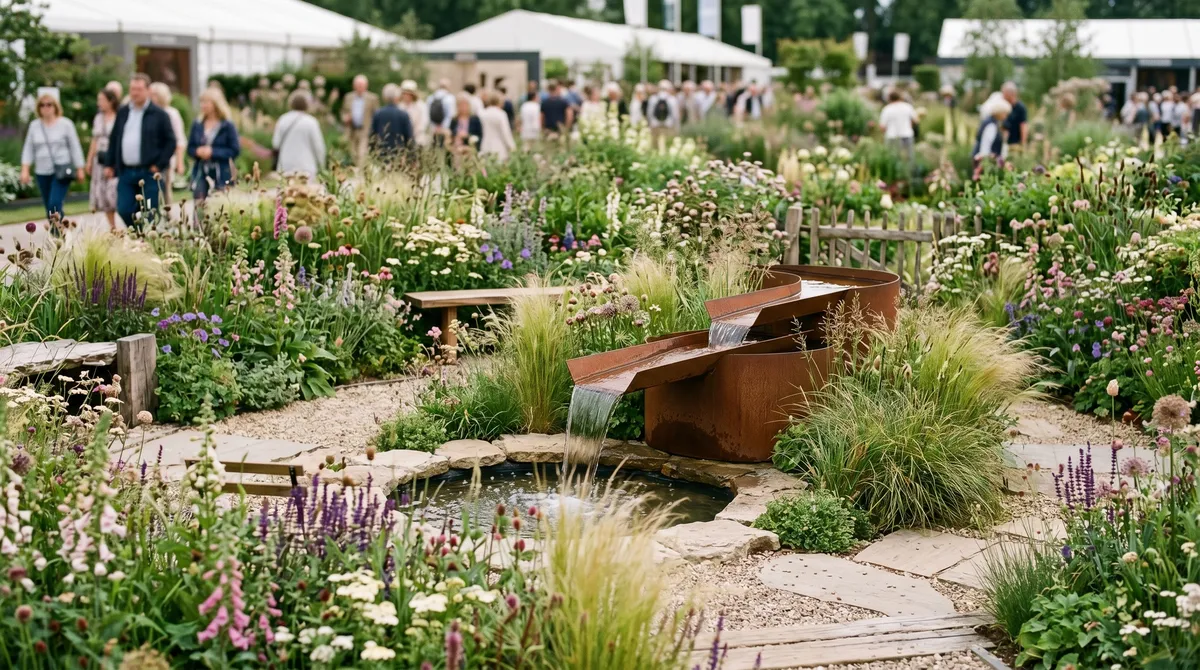
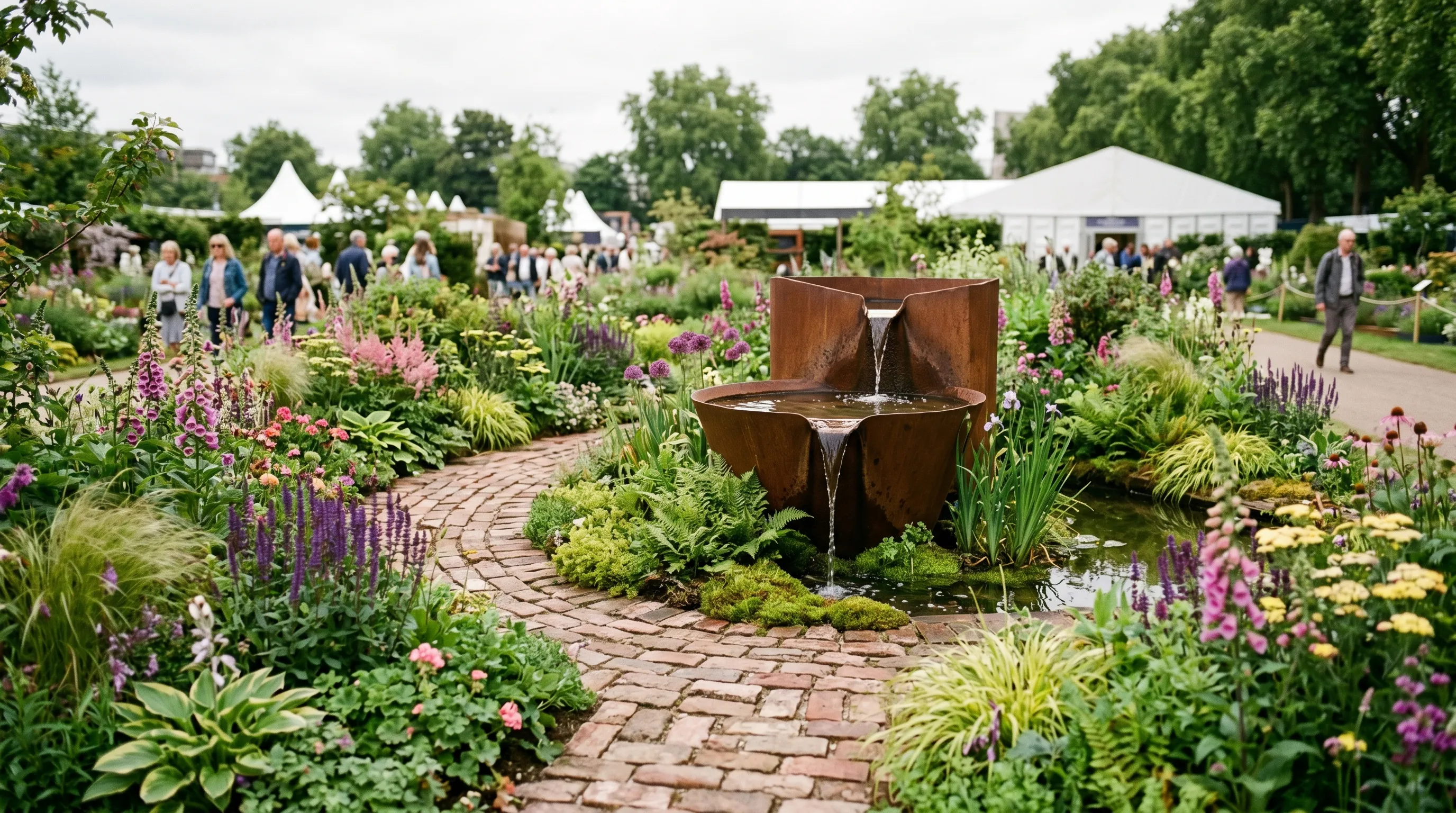 A reclaimed brick path winding through relaxed planting to a rusted steel water feature.
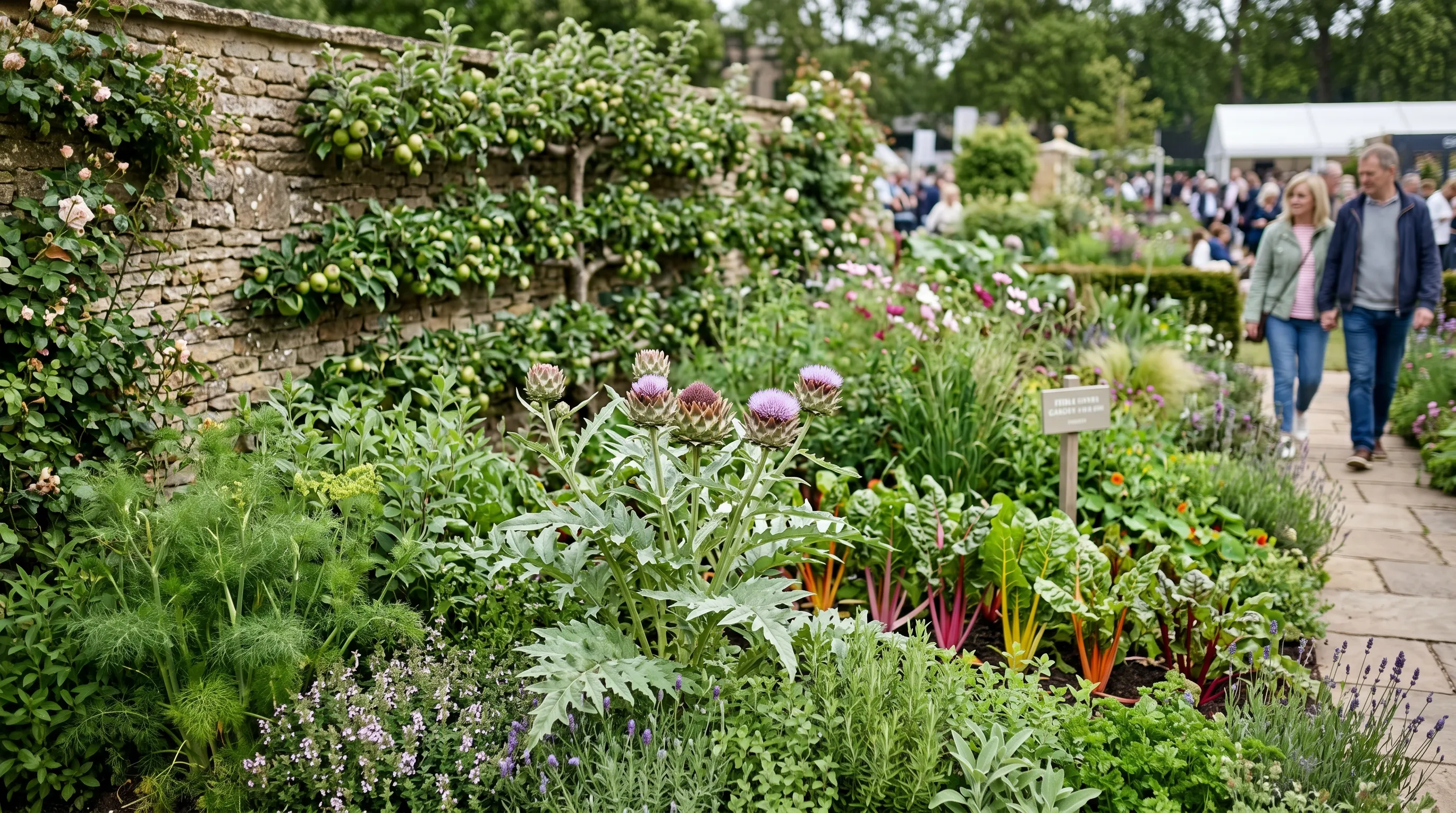 Artichokes, rainbow chard, an espalier apple and herbs, all in one pretty border.
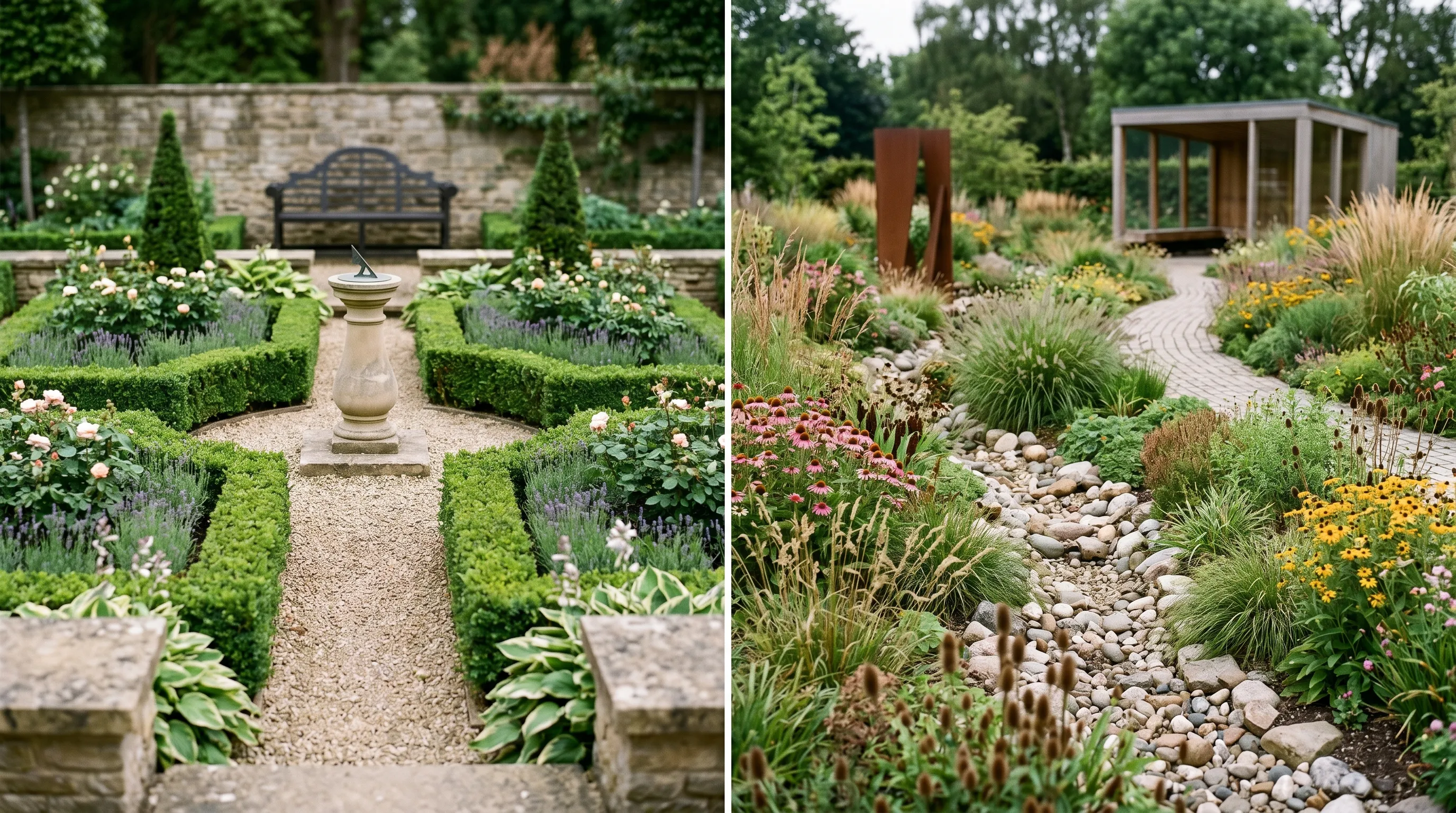 Then and now: a formal design on the left, a relaxed rain garden on the right.
Now plan the Chelsea-inspired UK garden
Pick one idea to start with, perhaps a small rain garden or a drift of grasses, and see how it grows on you.
Our team produces practical UK gardening guidance from source research, contributor records and established horticultural practice. Editorial standards are overseen by Matt W.