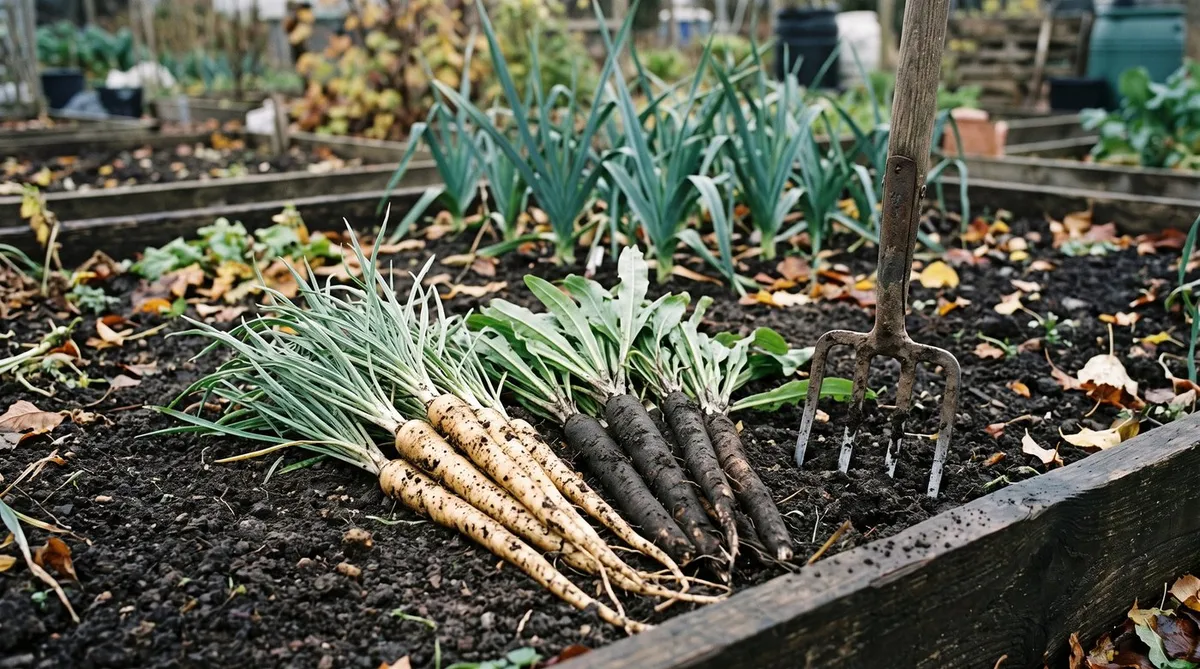
Key takeaways
- Salsify has creamy-white skin; scorzonera has black skin and is a little more forgiving
- Sow fresh seed directly outdoors in April or May, as the seed doesn't keep well
- Deep, stone-free soil without fresh manure gives long, straight roots
- Lift roots from October or November and dig them as needed through winter
- Roots left in the ground can be covered in late winter for tender spring chards
- Scorzonera peels easily after cooking; peeled salsify browns fast, so use lemony water
Salsify and scorzonera are long, slender root vegetables you rarely see in British shops. Both are easy to grow if you give them deep, stone-free soil and a little patience. Sow in spring, then dig the roots through winter when the veg plot is otherwise quiet.
They share the same growing method, soil needs and place in the kitchen. Salsify has creamy-white skin and a gentle flavour. Scorzonera has black skin and is a little more forgiving. This guide covers both, from sowing to the spring chards.
What is the difference between salsify and scorzonera?
Salsify and scorzonera are close cousins in the daisy family. Salsify (Tragopogon porrifolius) is nicknamed the vegetable oyster for its mild, delicate flavour. Scorzonera (Scorzonera hispanica) tastes similar, perhaps a touch nuttier.
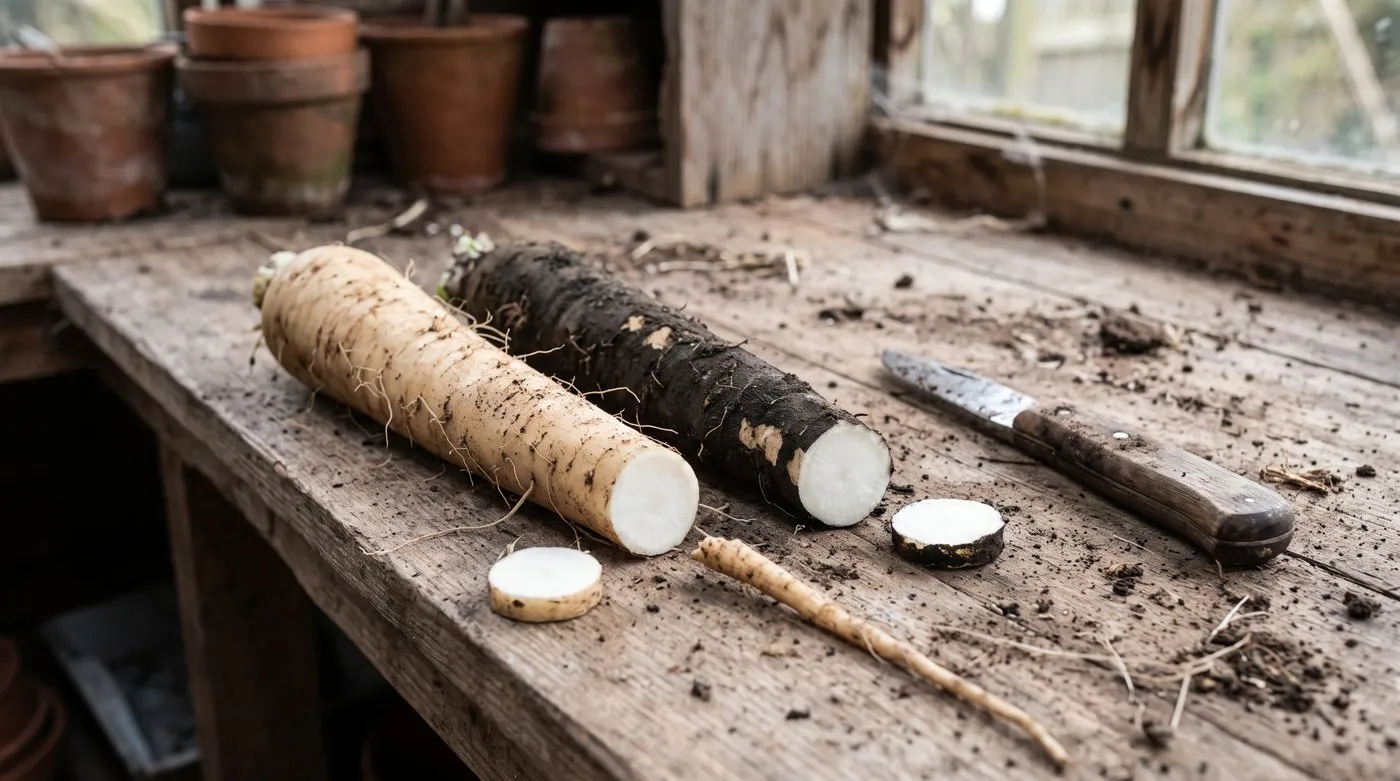
Same white flesh, very different skins. Salsify is the pale one, scorzonera the black one.
The roots look quite different. Salsify is creamy-white, a bit like a thin parsnip. Scorzonera has black skin over white flesh. Salsify is a biennial, so it flowers and runs to seed in its second year. Scorzonera is a perennial, so small roots can be left for another year to bulk up.
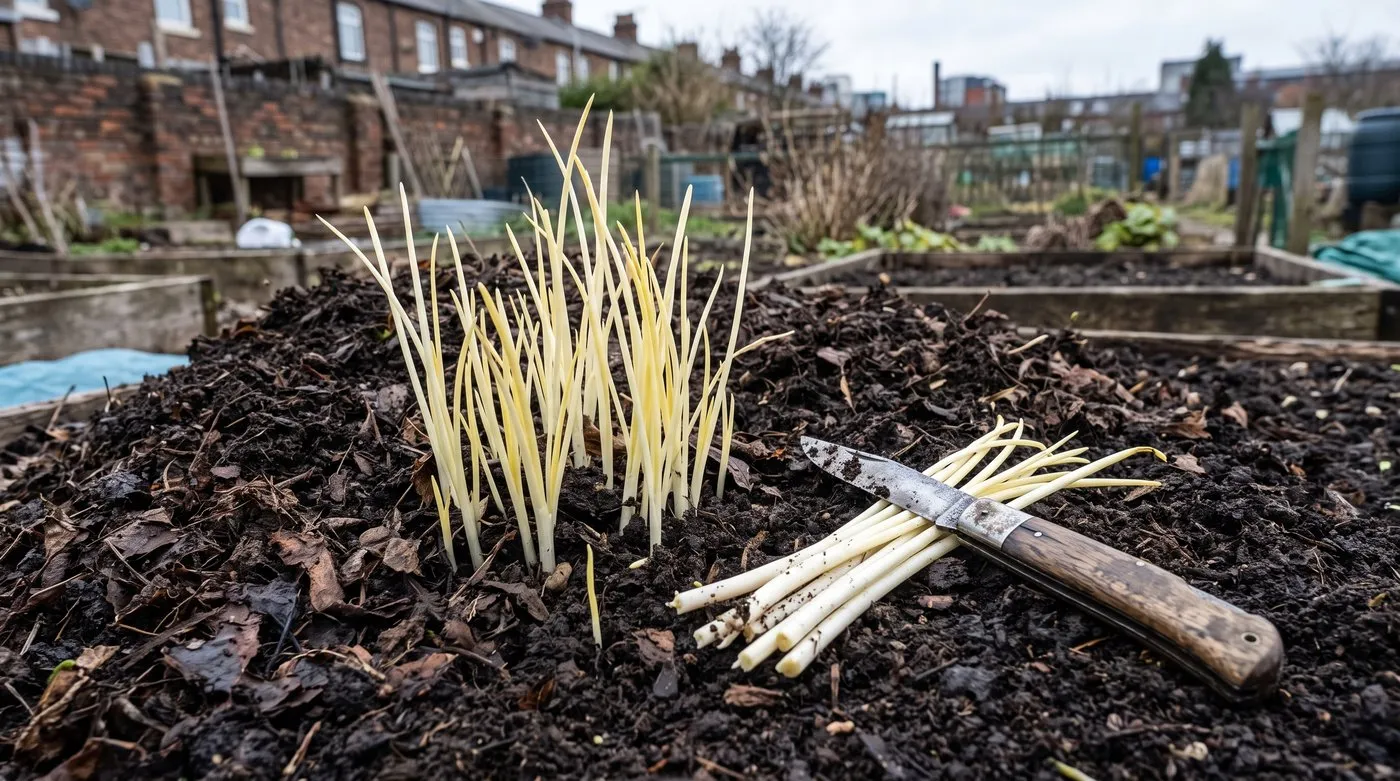
Covering the crowns in late winter gives pale, tender shoots that are a real spring treat.
| Feature | Salsify | Scorzonera |
|---|---|---|
| Skin | Creamy white | Black |
| Lifespan | Biennial: lift in the first winter | Perennial: can be left a second year |
| Flowers if left | Purple | Yellow |
| In the kitchen | Peel into lemony water | Cook in the skin, then peel |
| Variety to look for | ’Mammoth Sandwich Island' | 'Russian Giant’ |
If you can only grow one, scorzonera is a good place to start. If you like the idea of oyster-ish roots, grow a row of each and compare.
How do I prepare the soil for salsify and scorzonera?
Deep, loose, stone-free soil is the secret. Both crops make long taproots, and a stone, a hard layer or a lump of fresh manure makes them fork or twist.
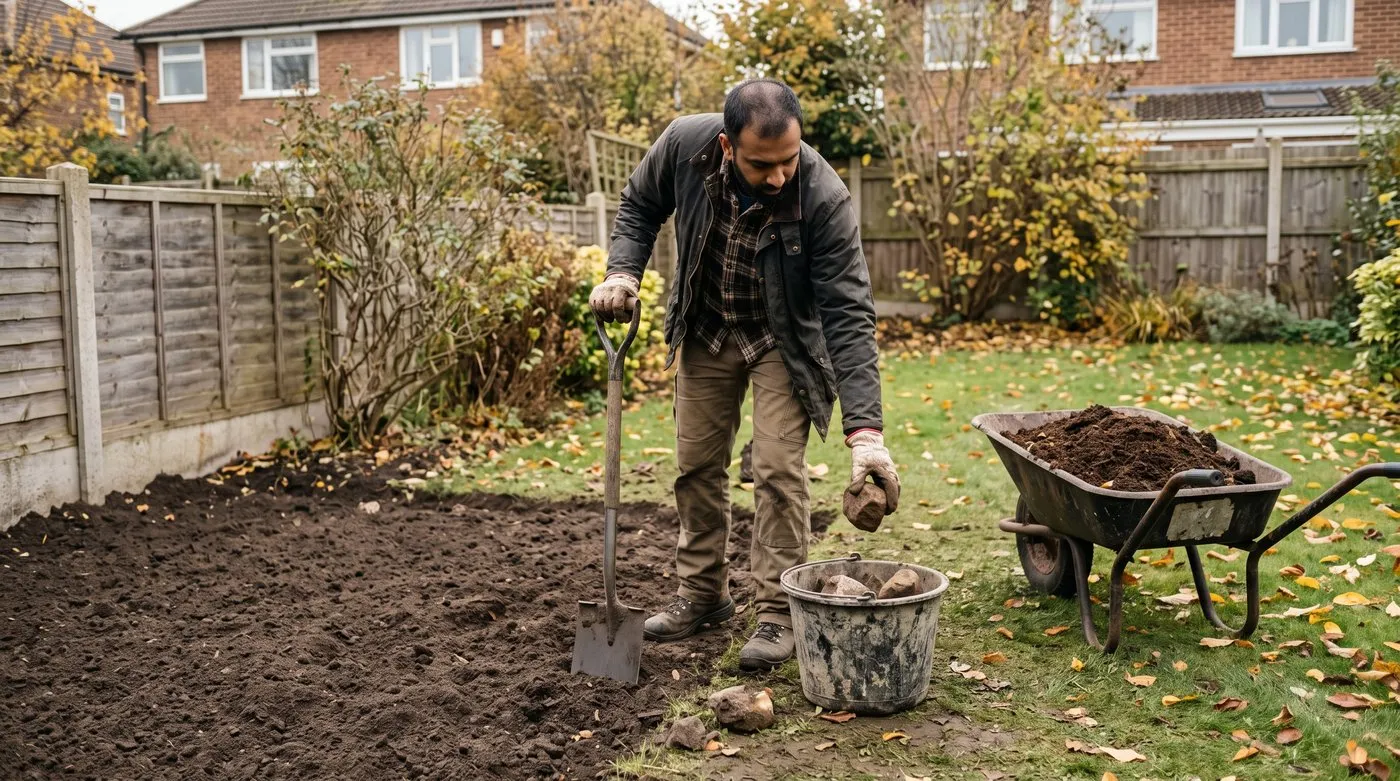
Digging deep and picking out stones now is what gives you long, straight roots next winter.
Dig the bed at least a spade and a half deep in autumn or winter. Pick out stones as you go and break up any hard layer underneath. Add well-rotted compost the autumn before sowing, but never fresh manure. It makes roots fork and pushes leaves at the expense of roots.
On heavy clay or stony ground, a raised bed at least 30cm deep filled with sieved soil gives the straightest roots. The guide to raised bed gardening covers building one. In a crop rotation, they slot in with the other root crops.
How and when to sow salsify and scorzonera
Sow directly outdoors in April or May, once the soil has warmed a little. Both make a single deep taproot that hates being moved, so don’t start them in pots.
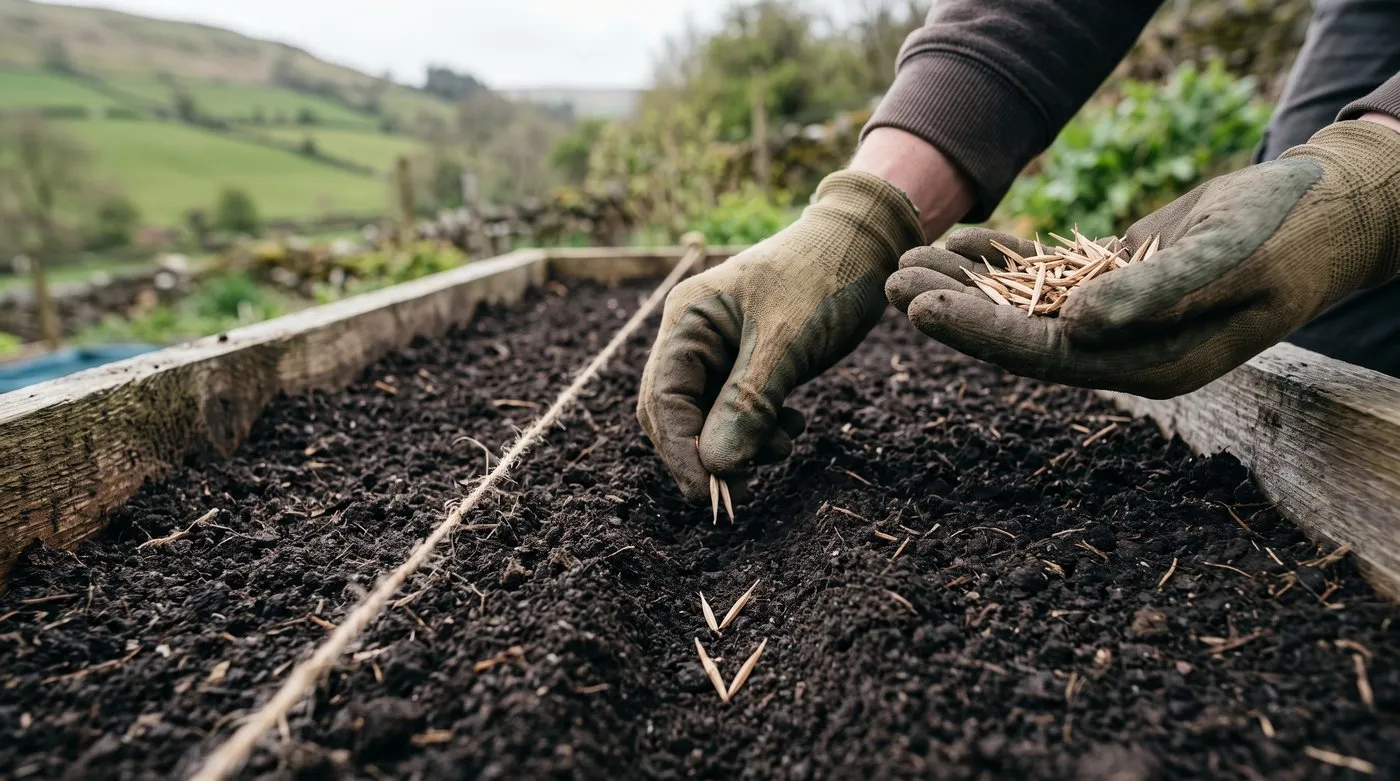
The seeds are long and easy to handle, so you can space them neatly and thin later.
Use fresh seed every year. The seed doesn’t keep well, and old seed often comes up patchily. The long, thin seeds look a bit like slivers of wood and are easy to handle.
- Make drills about 1cm deep, with rows 30cm apart.
- Sow two or three seeds every 10-15cm.
- Cover, firm gently and water.
- Once seedlings have their first true leaves, thin to the strongest at each spot.
If you already grow parsnips, the method will feel familiar. Same soil, same direct sowing, same long wait.
Caring for the growing crop
Once they’re up, both crops need little fuss. Salsify has narrow, grassy leaves. Scorzonera has broader, strap-shaped ones.
Watering: Keep the soil moist while seedlings get going. After that, water deeply in long dry spells, as drought can make roots tough and fibrous.
Weeding: Seedlings are slow and grassy-looking, so weed carefully by hand at first. Hoe between rows, keeping the blade away from the plants. A mulch of compost or leaf mould once plants are 10cm tall keeps weeds down and holds moisture.
Feeding: No extra feed is needed on well-prepared soil. Avoid high-nitrogen feeds, which give leaves rather than roots.
Pests and diseases: Both are fairly trouble-free. Slugs may nibble young seedlings. Salsify can get white blister, white pustules on the undersides of leaves, which rarely affects the roots. The guide to getting rid of slugs covers seedling protection.
When and how to harvest the roots
Start lifting from October or November, once the roots have filled out. Many growers find the flavour sweeter after a frost. Leave the rest in the ground and dig as needed through winter. The soil is the best store.
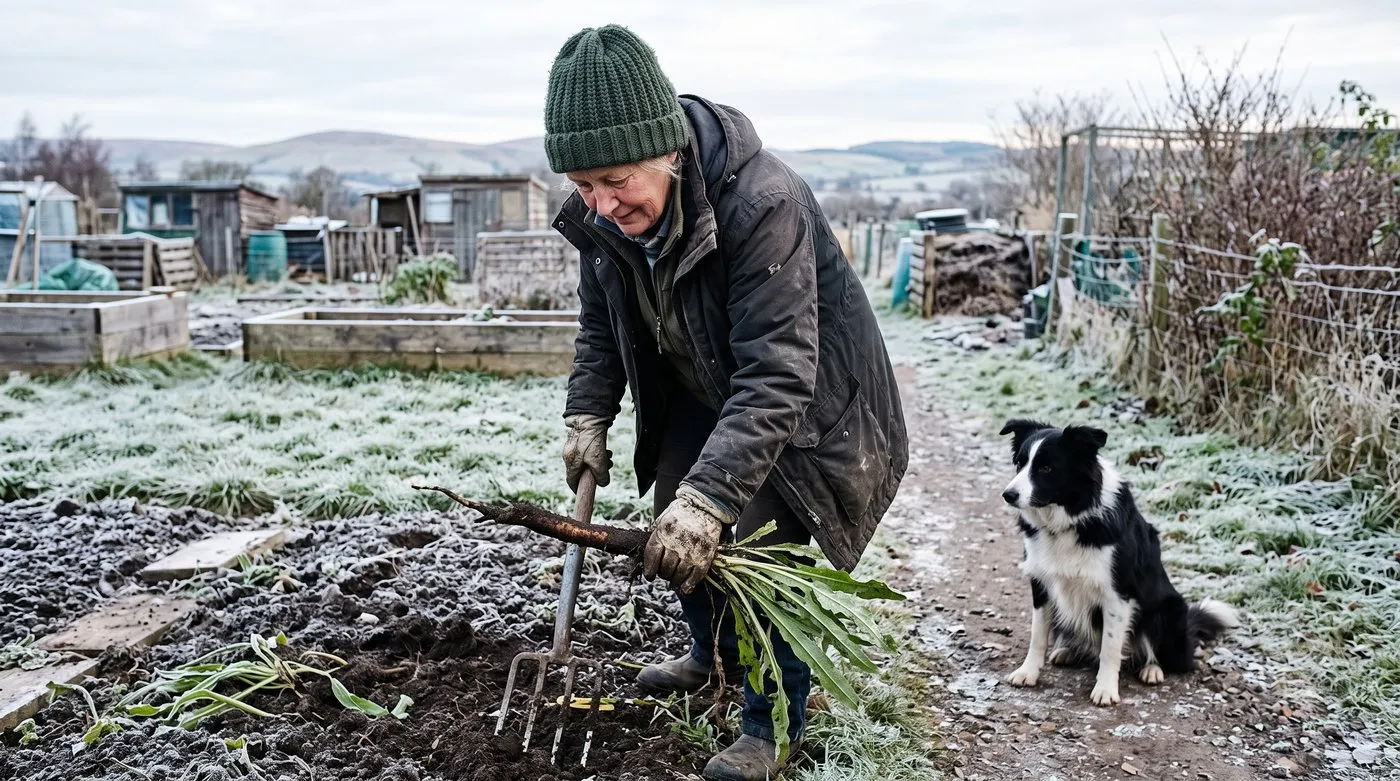
Loosen the soil first and ease the root out gently. A snapped root won’t keep.
The roots are long and brittle, so dig carefully. Push a fork into the ground a little way from the row and work down beside the root. Loosen the soil before you pull. A snapped root bleeds sap and won’t keep, so use those first.
Heavy clay is easier to work after rain, when the soil is moist but not waterlogged.
Storing salsify and scorzonera
Lifted roots keep for a few weeks in a box of damp sand in a cool shed. Don’t wash them first, as the soil helps stop them drying out. For longer storage, simply leave them in the ground. The guide to storing root vegetables over winter covers sand boxes and clamps.
What are chards and how do I grow them?
Chards are a bonus spring crop of blanched shoots from roots left in the ground. Leave a few plants unharvested over winter. In late winter, cover the crowns with about 15cm of soil, leaf mould or straw.
The new shoots grow up through the covering, pale and tender. Cut them at ground level once they push through. They taste a little like chicory, with a hint of asparagus. Without blanching, the shoots are green and more bitter.
It is the same idea as forcing rhubarb under a pot. Steam the chards or toss them in butter for a few minutes.
How to cook salsify and scorzonera
Both roots have a mild, refined flavour, so keep the cooking simple.
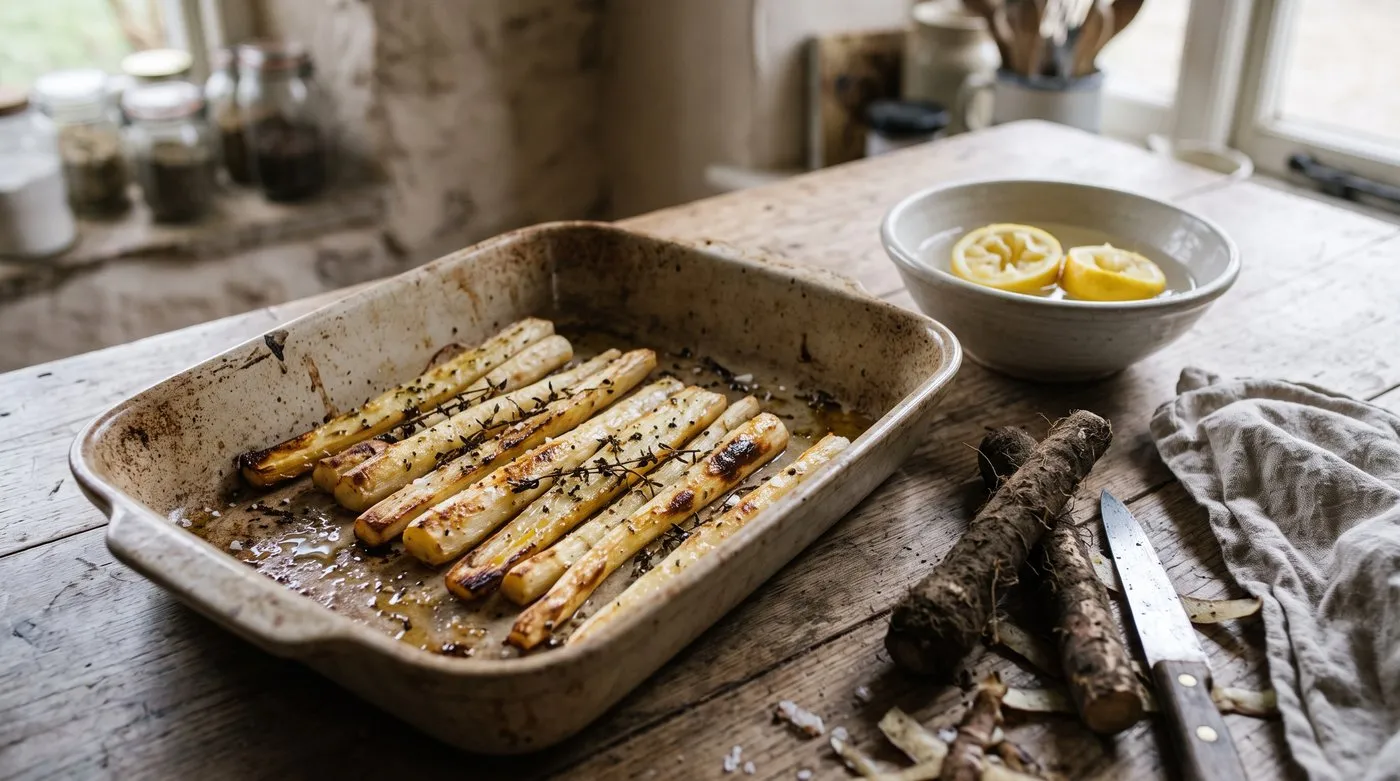
Roasting brings out their gentle, sweet flavour. Keep it simple with oil, salt and thyme.
Preparing: Scrub the roots under running water. Salsify browns quickly once peeled, so peel it straight into water with a squeeze of lemon. Scorzonera is easier: cook it in its skin, then rub the black skin off. Its sap is sticky and can stain your fingers, so gloves help.
Roasting: Cut into even lengths, toss in oil with salt and thyme, and roast in a hot oven until golden and tender.
Boiling: Simmer in salted water until tender, then serve with melted butter and parsley.
Soups and gratins: Simmer with onion, potato and stock, then blend for a silky winter soup. Or part-boil, layer with cream, garlic and cheese, and bake.
Salsify and scorzonera growing calendar
| Month | What to do |
|---|---|
| Autumn before | Dig deeply, remove stones, add well-rotted compost |
| April to May | Sow fresh seed outdoors where the plants will grow |
| May to June | Thin seedlings to 10-15cm; weed carefully |
| July to August | Water deeply in long dry spells; mulch |
| October to November | Start lifting roots as needed |
| December to February | Keep lifting through winter; cover crowns of a few for chards |
| March to April | Cut blanched chards; lift remaining salsify before it flowers |
Common mistakes with salsify and scorzonera
- Stony or shallow soil. Roots fork. Dig deeply and remove stones, or use a raised bed.
- Fresh manure. It causes forking and leafy growth. Use well-rotted compost the autumn before.
- Old seed. Germination is poor. Buy fresh seed each year.
- Transplanting. It damages the taproot. Sow where they will grow.
- Yanking roots out. They snap. Loosen the soil with a fork first.
Frequently asked questions
What does salsify taste like?
Salsify has a mild, delicate flavour often compared to oysters or artichokes. That’s why it is nicknamed the vegetable oyster, though the likeness is gentle. Cooked, it is creamy and smooth, a bit like a finer parsnip.
Is scorzonera easier to grow than salsify?
Yes, scorzonera is usually a little more forgiving. It is a perennial, so small roots can be left to grow on for a second year. Its black skin also slips off easily after cooking. Both need the same deep, stone-free soil.
Why do salsify roots fork?
Roots fork when they hit stones, hard soil or fresh manure. The roots grow long and slender, so any obstruction makes them branch. Dig deeply, remove stones and add only well-rotted compost, ideally the autumn before sowing.
Can I transplant salsify or scorzonera seedlings?
No, sow them directly where they will grow. Moving seedlings damages the long taproot and leads to forked roots. Sow two or three seeds per spot at the final spacing, then thin to the strongest seedling.
When should I harvest salsify and scorzonera?
Start lifting from October or November, once the roots have filled out. Many growers find the flavour better after a frost. Dig them as needed through winter, using a fork carefully because the roots snap easily.
What are salsify and scorzonera chards?
Chards are blanched spring shoots from roots left in the ground. In late winter, cover the crowns with about 15cm of soil or leaf mould. Cut the pale shoots when they push through, and cook them lightly.
How do I cook salsify and scorzonera?
Roasting or boiling both work well. Scrub the roots and cook scorzonera in its skin, which slips off once tender. Peel salsify into water with a squeeze of lemon so it doesn’t brown. Serve with butter and parsley, or in a creamy gratin.
Enjoyed trying something different? Read the guide to unusual crops to grow in the UK for more ideas, or browse the veg growing hub.
Our team produces practical UK gardening guidance from source research, contributor records and established horticultural practice. Editorial standards are overseen by Matt W.


