Key takeaways
- A growing table is a raised bed on legs, at roughly worktop height, so there's no kneeling
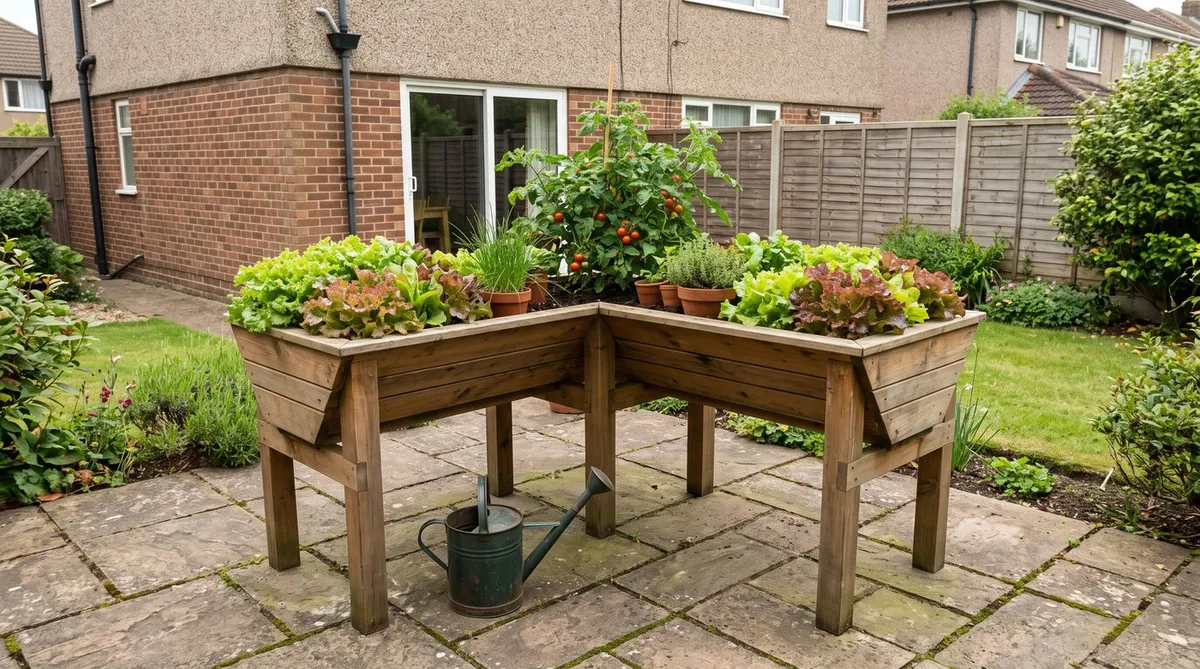
- V-shaped tables are deepest in the middle, so put tomatoes there and salads at the edges
- Salads, herbs, dwarf beans, bush tomatoes and strawberries all do well
- Skip tall or deep-rooted crops such as sweetcorn, runner beans and parsnips
- Tables dry out fast, so check them daily in summer
- Top up with fresh compost each spring and treat the timber once a year
A growing table is a raised bed on legs. It holds compost at about worktop height, so you can sow, weed and pick standing up. They’re a great fit for patios, balconies and anyone whose back or knees don’t love kneeling.
This guide covers what to look for when you buy one, which crops do well at waist height and how to keep a table going for years. If you have open ground and don’t mind bending, a traditional bed may suit you better: our raised bed guide for beginners covers that route.
Is a growing table worth it?
Yes, if you garden on paving, struggle to kneel or want salads and herbs right outside the back door. No, if you have space for ground beds and want big crops of potatoes or brassicas.
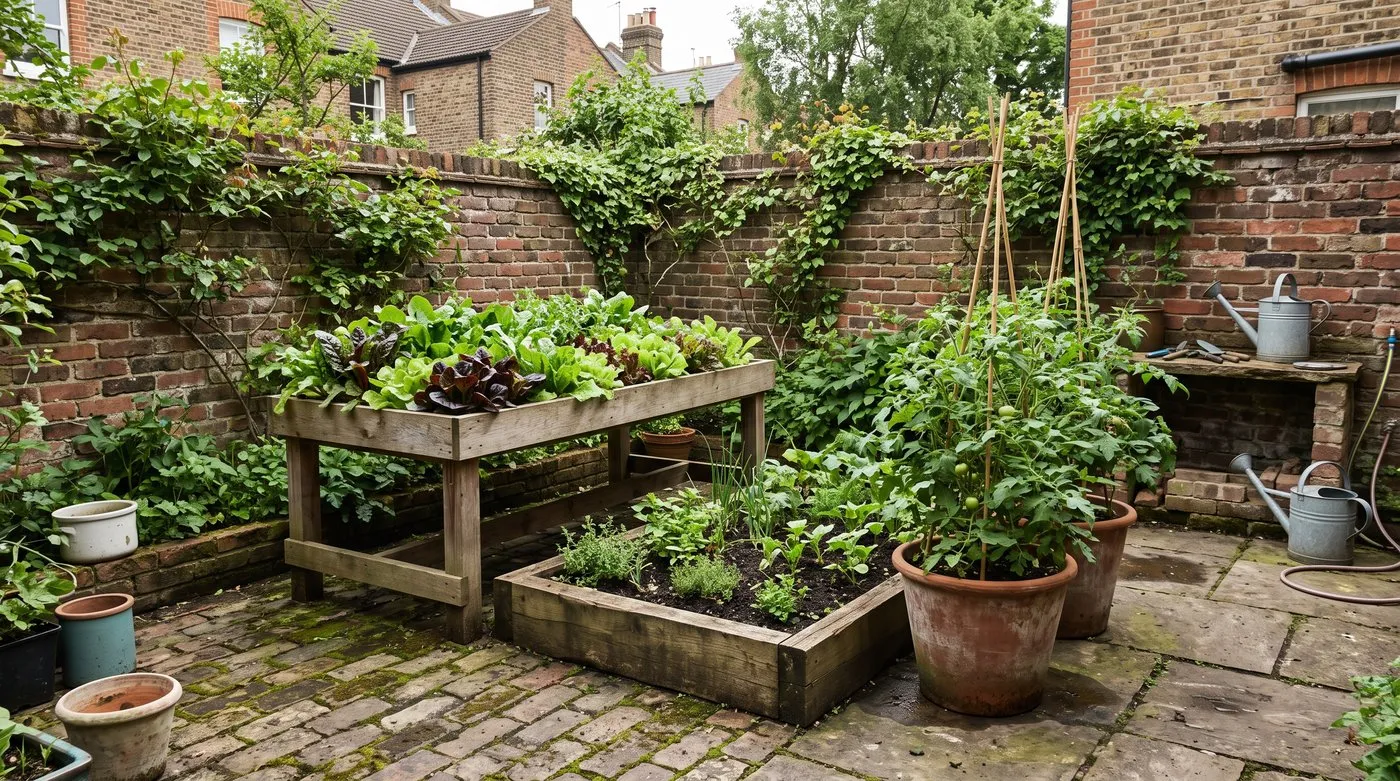
A growing table, a raised bed and big pots each have their place. The table wins when kneeling is the problem.
A growing table gives you a small, tidy, slug-resistant veg patch that’s easy to reach. You won’t grow as much as you would in a large bed, and the compost dries out faster. But for picking a handful of salad leaves or herbs on the way to the kitchen, it’s hard to beat.
Here’s how it compares with other ways of growing on a patio:
| Option | Good for | Watch out for |
|---|---|---|
| Growing table | No kneeling, patios, balconies, easy picking | Shallow compost, dries out fast |
| Raised bed on the ground | Bigger crops, deeper roots | Still needs bending or kneeling |
| Large pots | Tomatoes, potatoes, flexibility | Lots of watering, takes up floor space |
| Grow bags | Cheap tomatoes and courgettes | Short life, flat and low |
For lots more crop ideas in pots, see our guide to container vegetable gardening.
What to look for when buying a growing table
Look at the shape, the depth, the timber and the liner. Price matters less than whether the table suits what you want to grow.
V-shaped or flat-bottomed. V-shaped tables, the style VegTrug is known for, are deep in the middle and shallow at the sides. That lets you grow tomatoes down the centre and salads along the edges. Flat-bottomed tables have an even depth, which makes row sowing easier and leaves room for knees underneath if you garden seated.
Depth. Check the depth at the deepest point. Shallow tables are fine for salads and herbs. Bush tomatoes, beetroot and dwarf beans want more.
Timber and finish. Most tables are softwood. Look for FSC-certified timber and a sturdy frame with cross-bracing. Hardwood and metal tables cost more but last longer.
Liner and drainage. A good liner keeps wet compost off the wood. Make sure water can drain out, or roots will sit in soggy compost after rain.
Size. Measure your space first. A short herb table fits a balcony. A long table gives room for mixed crops.

Growing tables come in lots of lengths. Measure your patio before you buy, and leave room to walk round it.
What grows well in a growing table?
Shallow-rooted and compact crops are the stars. Plant the deeper-rooted ones down the middle of a V-shaped table.
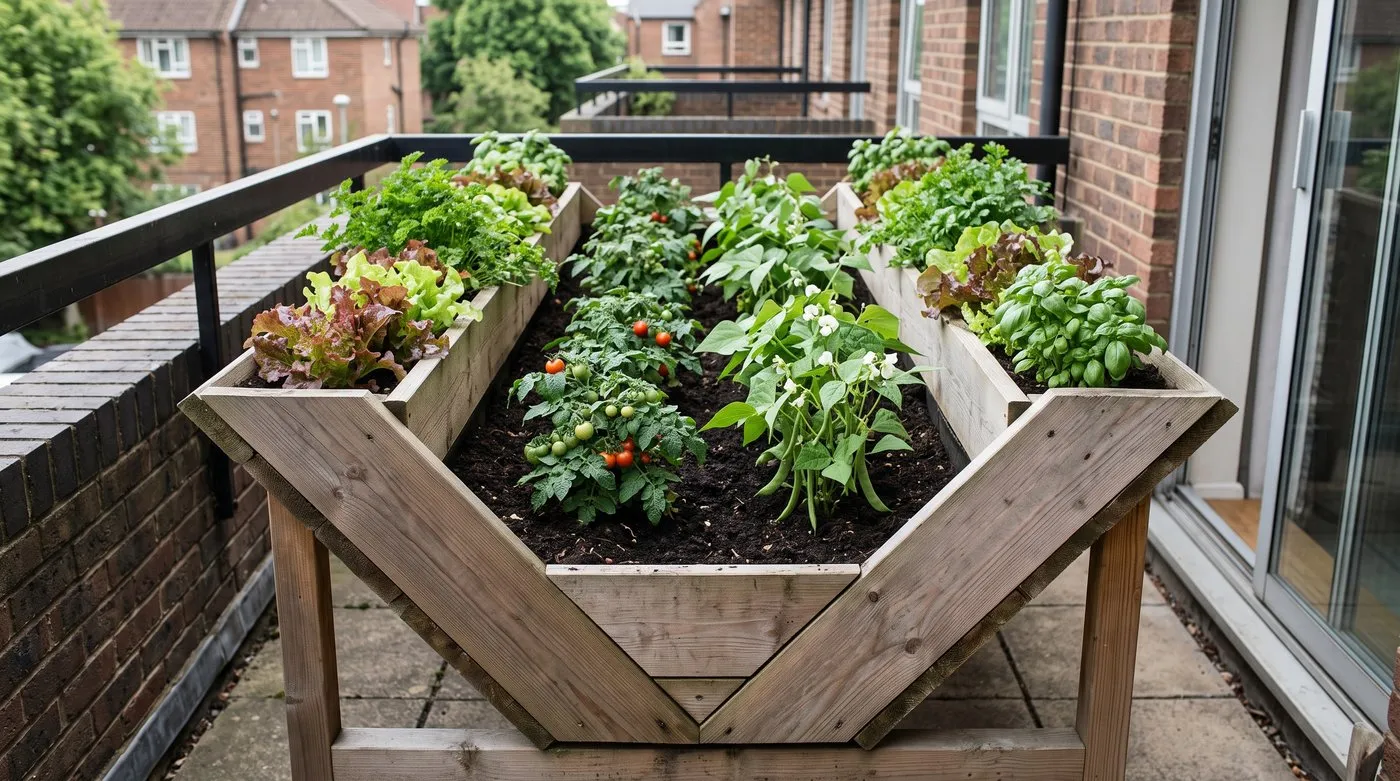
Deep-rooted crops go down the middle of a V-shaped table, with salads and herbs along the shallow sides.
- Salad leaves. Cut-and-come-again lettuce, rocket and mixed leaves are the easiest crop of all at waist height. Sow little and often along the edges. Our list of the best lettuce varieties has some good picks.
- Herbs. Thyme, oregano and sage like the sharp drainage. Basil, parsley and chives do well too. Keep mint in its own pot sunk into the table, or it will take over.
- Bush tomatoes. Choose bush or tumbling types such as ‘Tumbling Tom Red’. Tall cordon tomatoes such as ‘Sungold’ get out of reach once the table adds its own height.
- Dwarf beans. Dwarf French beans such as ‘Tendergreen’ need no canes and crop well. See our guide to growing dwarf French beans.
- Strawberries. Lifted off the ground, the fruit stays cleaner and further from slugs.
- Short roots. Radishes, spring onions, beetroot and short carrots all fit.
- Leafy greens. Chard, dwarf kale and pak choi crop for months, often into winter in mild areas.
What doesn’t work in a growing table?
Tall, deep-rooted and long-term crops are a poor fit. They either get top-heavy, run out of root room or tie up the space for too long.
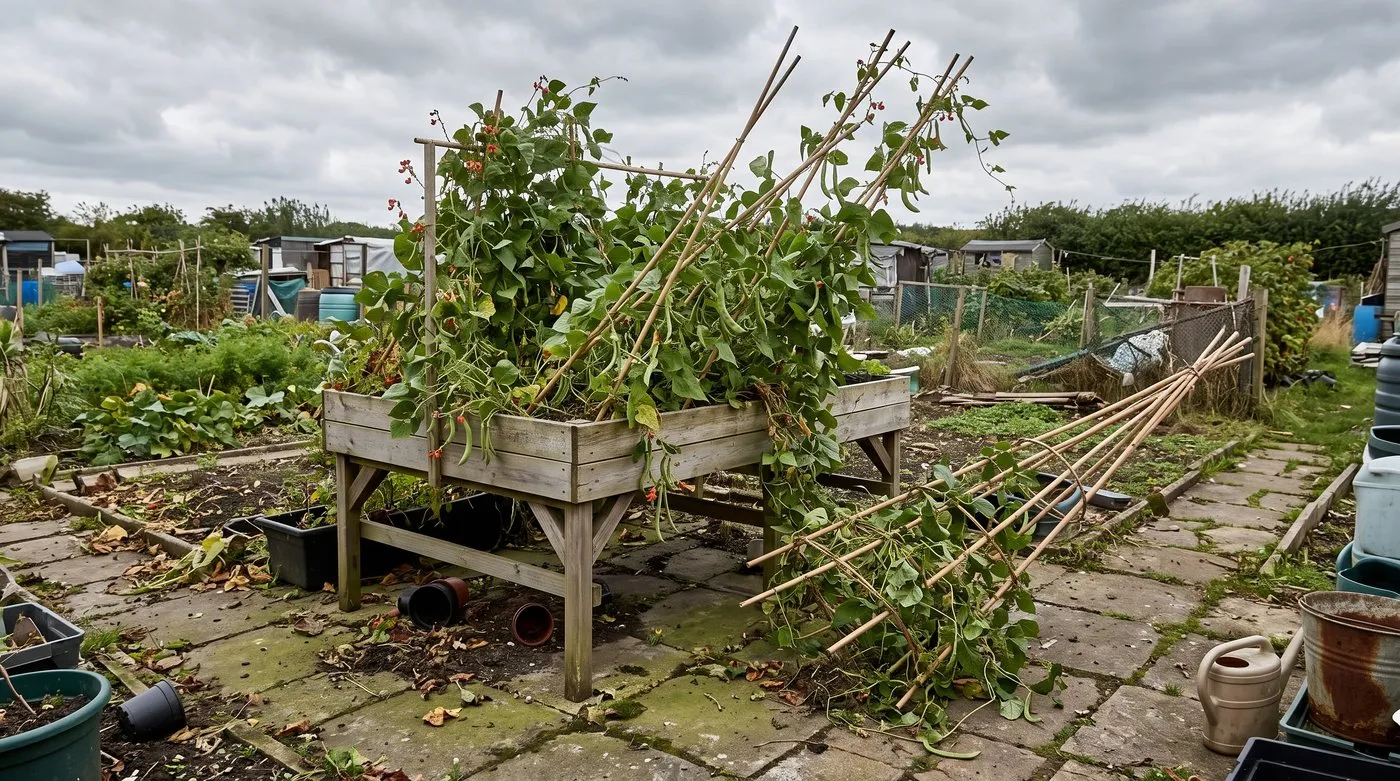
Tall canes catch the wind and make a growing table top-heavy. Save climbing beans for the open ground.
- Sprouting broccoli and Brussels sprouts. Big, top-heavy plants that catch the wind and stay in for most of the year.
- Parsnips and swede. They need deeper soil than most tables offer.
- Sweetcorn. It is pollinated by wind, so it needs a block of plants. A table only fits a few.
- Runner beans and tall peas. Tall canes make the whole table top-heavy in the wind.
- Maincrop potatoes. They fill the whole table. Grow them in a potato bag instead.
- Perennial veg. Rhubarb and asparagus live for many years and need deep ground.
If space is tight, our guide to dwarf vegetables for small spaces lists compact varieties that suit tables and pots.
Best compost mix for a growing table
Use peat-free multipurpose compost mixed with some loam-based compost or good topsoil. The loam holds water and food much better than multipurpose alone, which matters in a shallow table.
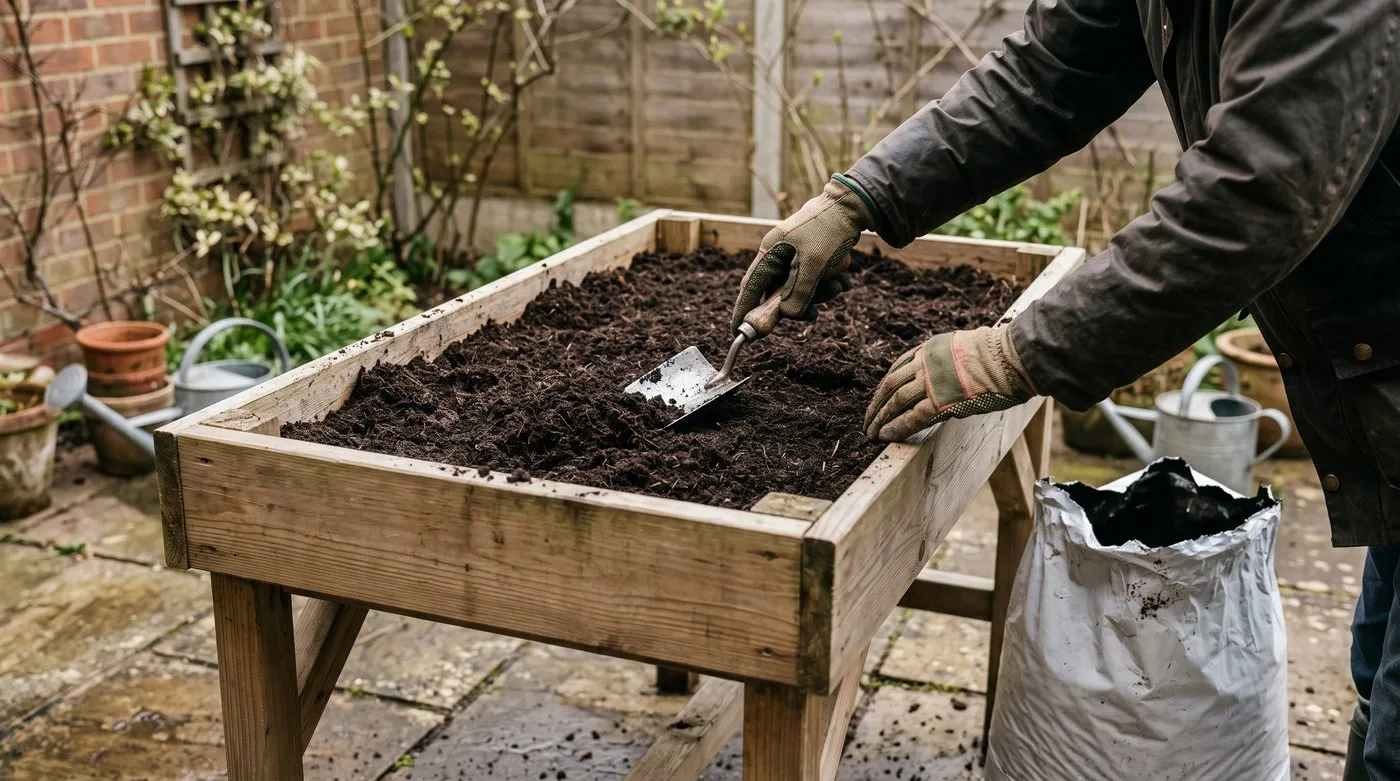
A spring top-up of fresh compost keeps a table productive. No need to empty the whole thing.
- Fit the liner and check the drainage holes are clear.
- Fill with your mix, firming lightly as you go.
- Add a slow-release fertiliser if the compost has none, following the pack.
- Water well and let it settle for a day before sowing.
Each spring, scrape off the top few centimetres of tired compost. Replace it with fresh compost and a sprinkle of a general organic feed such as chicken manure pellets. There’s no need to empty the whole table every year.
How often should you water a growing table?
Check it every day in summer and water whenever the top few centimetres feel dry. Air moves round the sides and underneath, so tables dry out much faster than ground beds.
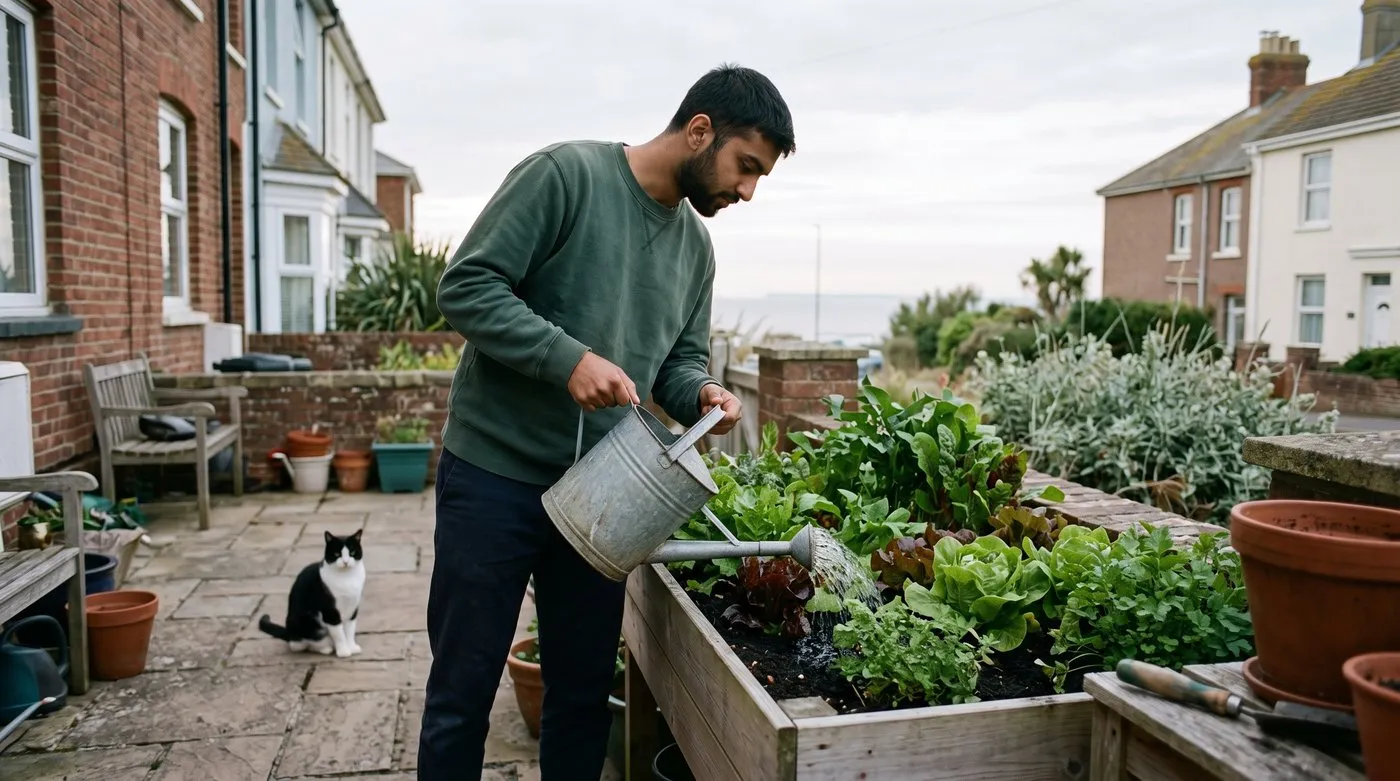
Tables dry out much faster than ground beds. Water the compost, not the leaves, and check daily in summer.
In cool spring weather every few days is usually enough. In a hot spell you may need to water morning and evening, especially for tomatoes. Water the compost, not the leaves, and give a good soak rather than a quick splash.
A simple drip kit on a tap timer is a big help if you’re often out or away. A mulch of compost around larger plants also slows drying.
Growing tables for accessible gardening
Growing tables are one of the easiest ways to keep gardening with back, knee or hip trouble. Everything is within reach, so there’s no kneeling and much less bending.
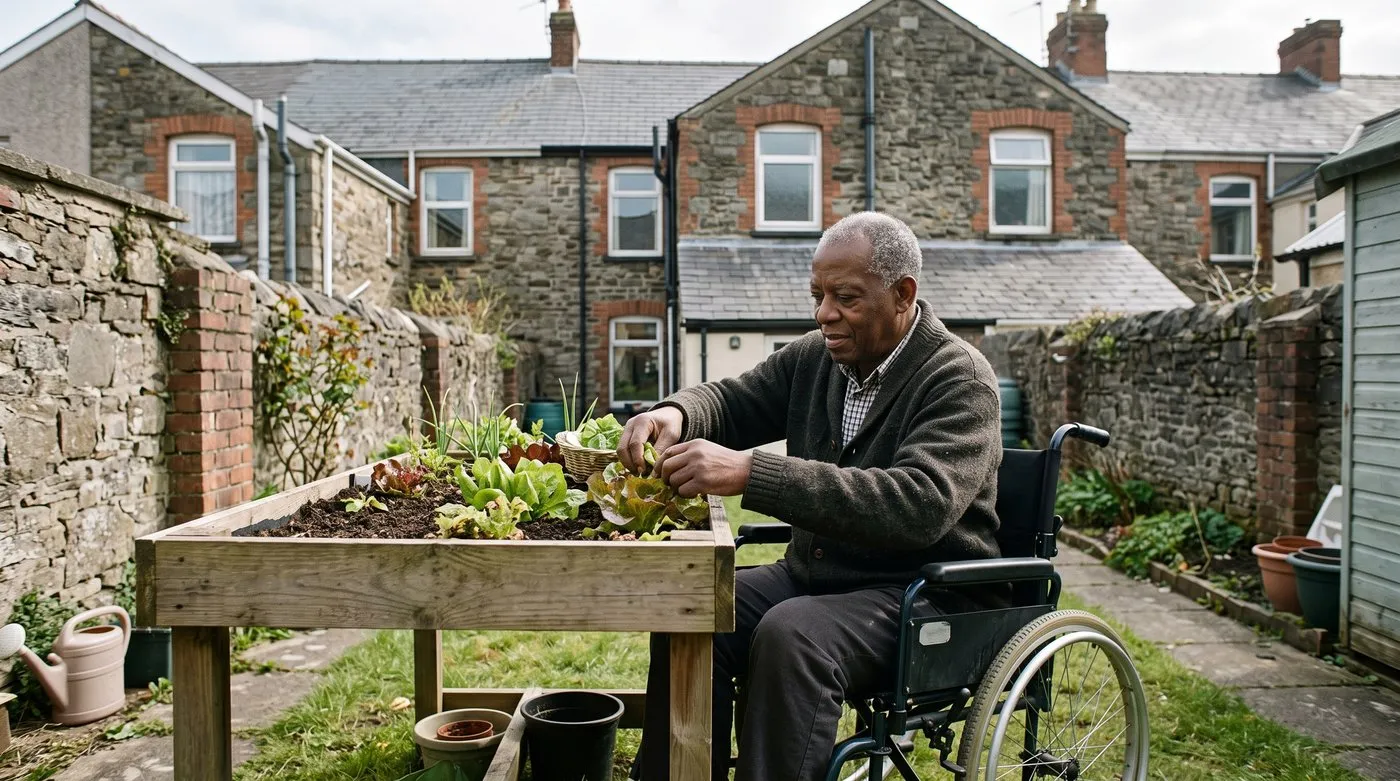
A flat-bottomed table with knee room lets you garden seated without reaching sideways.
If you use a wheelchair or like to sit while you garden, choose a flat-bottomed table with room for your knees underneath. A V-shaped table gets in the way when you’re seated, so you end up reaching sideways. Try the height before you buy if you can: it should let you work with your elbows relaxed. Our guide to accessible gardening has more ideas, and the gardening charity Thrive offers advice on adapting a garden.
Looking after your growing table through the year
A little care each season keeps the table sound and the compost productive.
| When | What to do |
|---|---|
| March | Treat the timber with a plant-safe wood treatment. Check the legs, joints and liner. Top up the compost |
| April to May | Sow salads, radishes and herbs. Plant strawberries |
| Late May to June | Plant out bush tomatoes and dwarf beans once frosts are over |
| July | Feed tomatoes weekly. Sow more salad. Top-dress hungry crops |
| August to September | Keep picking. Sow winter salads and pak choi |
| October to November | Clear spent crops to the compost heap. Cover winter salads with fleece |
| Winter | Check the table is level and stable after storms |
Common growing table mistakes
- Overplanting. It’s tempting to cram it full. Crowded plants fight for water and crop poorly. Give tomatoes plenty of room.
- Forgetting to water. A missed hot day can wilt a whole table. Put it near a tap.
- Planting tall crops. Tall tomatoes and climbing beans make the table top-heavy and hard to reach.
- Using only multipurpose compost. It dries out and runs out of food fast. Mix in some loam.
- Skipping the timber treatment. Untreated softwood weathers and softens much sooner, especially at the feet.
Ready to choose what to plant? Our guide to the best vegetables for container growing has plenty of crops that suit a growing table, and there’s more on the growing hub.
Frequently asked questions
What is a growing table?
A growing table is a raised planter on legs that holds compost at waist height. It works like a raised bed lifted off the ground. Growing tables suit patios, balconies and gardeners who find bending difficult. Most are made of timber, metal or plastic.
What can you grow in a VegTrug?
Salads, herbs, dwarf beans, bush tomatoes and strawberries all grow well. Peppers, chillies, compact kale, spring onions, radishes, beetroot and short carrots are happy too. Put the deeper-rooted crops in the middle of a V-shaped table. Avoid deep-rooted crops such as parsnips, and tall plants such as sweetcorn or runner beans.
How long does a growing table last in the UK?
A timber growing table lasts several years if you look after it. Treat the wood once a year with a plant-safe timber treatment and keep the liner in good repair, so wet compost doesn’t sit against the wood. Standing the feet on paving rather than wet soil helps too. Check joints and legs each spring and tighten fixings.
How much compost does a growing table need?
It depends on the size, so check the maker’s figure before buying. Small herb tables take far less than a long V-shaped table. A mix of peat-free multipurpose compost with some loam-based compost or topsoil holds water and food better than multipurpose alone. Top up each year as the compost settles.
Are growing tables good for back pain sufferers?
Yes, they take away the need to kneel or bend deeply. The growing surface sits within easy reach, which helps people with back, knee or hip pain. If you want to garden sitting down, choose a flat-bottomed table with room for your knees underneath. Keep tools and water close by to cut down on carrying.
Where should you put a growing table?
Put it in a sunny, sheltered spot near a tap. Fruiting crops such as tomatoes need at least six hours of direct sun, while salads cope with less. A south or south-west facing wall works well. Make sure the ground underneath is level and firm, and that the table is out of strong wind.
Our team produces practical UK gardening guidance from source research, contributor records and established horticultural practice. Editorial standards are overseen by Matt W.