Key takeaways
- Check the roof's load capacity with a structural engineer before adding pots, paving or water
- Turning a roof into a terrace usually needs planning permission and safe edge protection
- Slatted screens with gaps calm the wind better than solid panels
- Use lightweight planters and peat-free compost mixed with perlite
- Raise pots on feet so water drains and the roof membrane stays dry
- Choose small-leaved, flexible plants such as grasses, lavender, rosemary and pittosporum
A rooftop garden can be the best space in the building, but it plays by different rules. Weight, wind and fast-drying pots shape every decision up there. Check the roof first, shelter your plants, keep everything light, and choose tough plants that don’t mind a battering.
This guide covers the three things that make rooftops different from a garden at ground level. If you have a balcony rather than a roof, the guide to balcony gardening ideas is a better fit.
Can my roof take a garden?
Only a structural engineer can tell you. Many flat roofs were built to keep the rain out and allow the odd maintenance visit, not to carry people, pots, furniture and water. Extensions, garage roofs and older buildings can be especially weak.

Get the roof checked before anything heavy goes up. An engineer can tell you what it will safely carry.
An engineer checks the roof deck, the span, the waterproofing and the safe load. They’ll also tell you where the walls are underneath, which is where heavy items should go. Get this done before you buy anything heavier than a few small pots.
Planning, building regulations and your lease
Turning a flat roof into a usable terrace usually needs planning permission, as it can overlook neighbours. The edge needs safe guarding, such as railings or a parapet of the right height, to meet building regulations. In a flat, you’ll also need the freeholder’s permission, and your lease may say who can use the roof. Check with your council and your freeholder first.
Warning: Never put pots, planters or anything else on top of a parapet or railing. A gust can tip it over the edge onto people below.
How heavy are pots on a roof?
Heavier than you think. Wet compost weighs far more than dry, and a pot that felt manageable in the garden centre gets much heavier after rain. A few large planters, a table and a couple of people add up quickly.
Keep the load down with these rules:
- Put the heaviest pots near the edges, over the walls the engineer has marked, never in the middle of the roof.
- Use timber or composite decking rather than paving slabs, which are very heavy.
- Choose lots of medium pots over a few giant ones, so the load is spread.
- Never let water pool in trays or blocked pots.
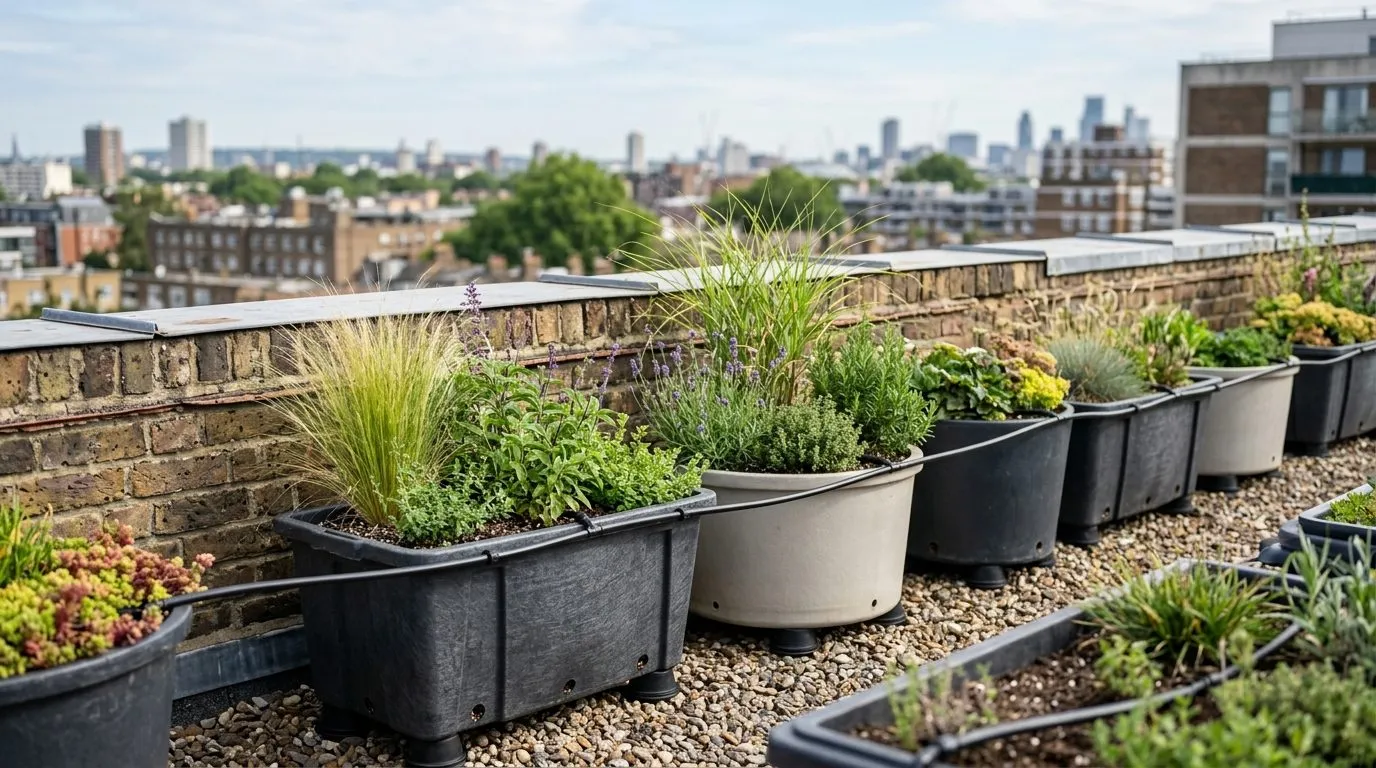
Lightweight planters lined up along the parapet wall keep the heavy load at the edge, where the roof is strongest.
Choosing light containers and compost
Lightweight planters and a light compost mix make a big difference to the load. Terracotta, stone and concrete look lovely but are heavy. These give a similar look for much less weight:
- Fibreglass: strong, frost-proof and very light, in stone or metal finishes
- Rotomoulded plastic: tough, cheap and the lightest option
- Fibre-clay: a terracotta look at a fraction of the weight
- Galvanised steel troughs: light and modern
For compost, use a peat-free multipurpose and mix in plenty of perlite, which is very light and helps drainage. Avoid loam-based composts like John Innes in big pots, as they’re much heavier. Top each pot with bark or fine gravel to slow drying. These ideas work for any container garden, but they matter most up high.
How to deal with wind on a rooftop
Slow the wind before it reaches the plants. Roofs are far windier than gardens at ground level, and nearby buildings can funnel gusts into corners. Wind topples pots, shreds soft leaves and dries compost out within hours.
A solid screen feels protective, but wind pours over the top and swirls down behind it. A slatted screen with gaps of roughly half its surface works better. It slows the wind without the downdraught. Slatted timber, woven willow and steel mesh all work, fixed securely to the structure. The guide to exposed garden plants and windbreak ideas explains more about how shelter works.
Put seating and softer plants in the calm zone just behind the screen. Use the exposed edges for tough grasses and lavender.
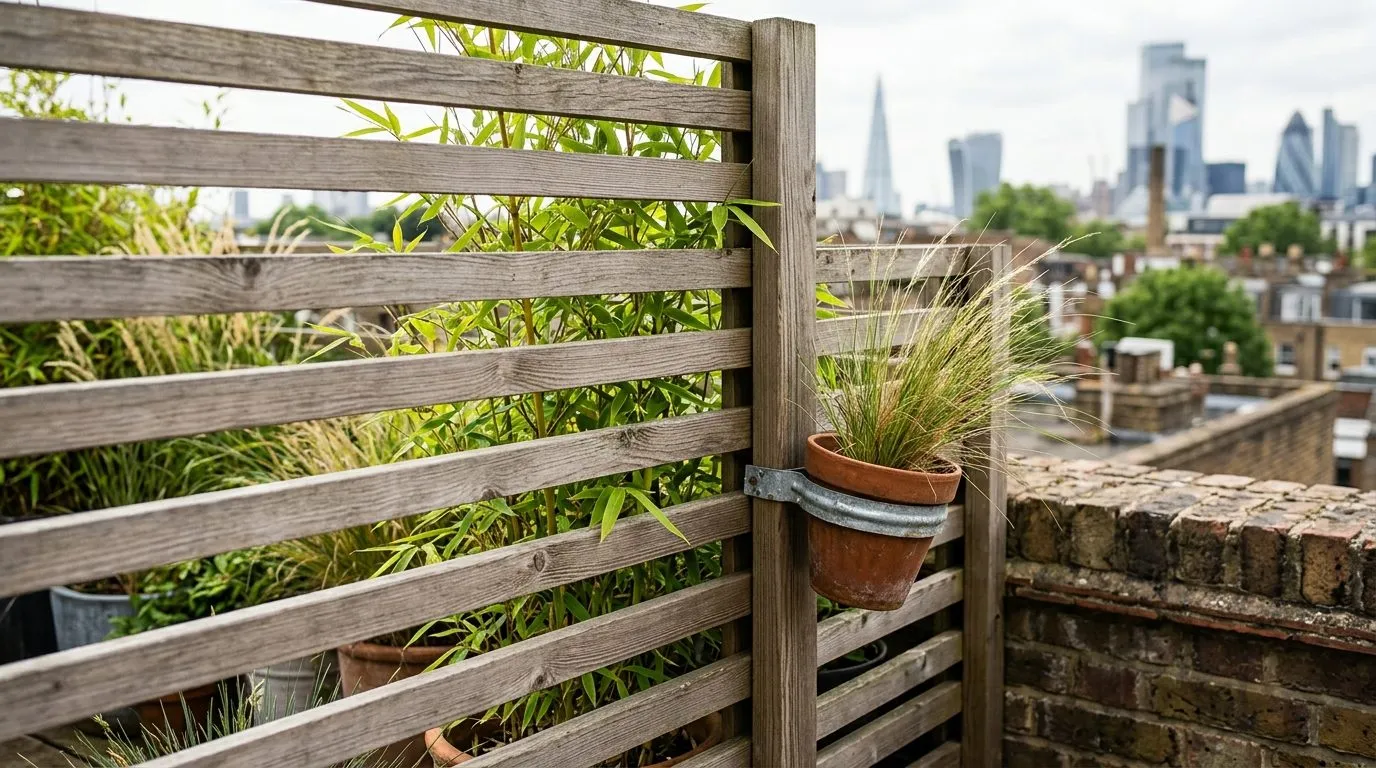
Slatted screens slow the wind without the swirling downdraught a solid panel creates.
Stopping pots blowing over
Choose wide, low pots over tall, narrow ones, and group them together so they shelter each other. Keep tall plants behind the windbreak, and tie any tall shrubs or climbers to a sturdy screen or frame.
Drainage and watering on a roof
Every pot needs free drainage. Blocked pots drown roots and add the weight of standing water. Stand every pot on pot feet so water runs away and the roof membrane underneath can dry out. Pots sitting in puddles can damage the waterproofing over time.
Wind and sun dry rooftop pots very quickly. In hot weather you may need to water twice a day by hand. A drip system on a battery timer is the easy answer. Run supply tubing along the pots, fit a dripper to each one, and set the timer for early morning. Self-watering planters with a built-in reservoir suit smaller roofs.
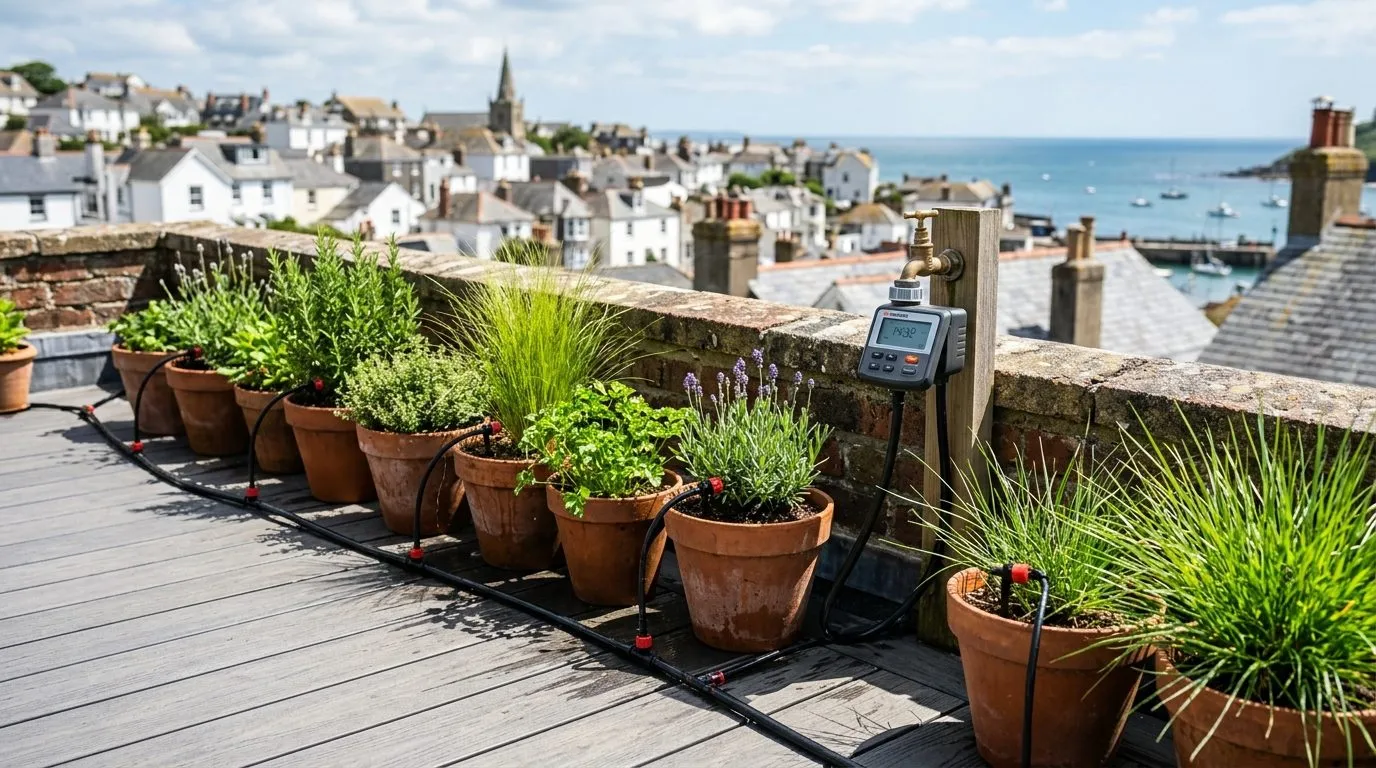
A battery timer and drip tubing water every pot early each morning, even when you’re away.
Best wind-tough plants for UK rooftops
Small-leaved, flexible, drought-tolerant plants cope best. Think coastal and Mediterranean plants, which are used to wind, sun and dry spells. Grasses are the backbone because they bend rather than snap.
| Plant | Type | Why it copes |
|---|---|---|
| Stipa tenuissima | Grass | Bends in gusts and bounces back |
| Festuca glauca | Grass | Compact blue tufts, tough and drought-tolerant |
| Lavender | Small shrub | Loves sun and dry, exposed spots |
| Rosemary | Shrub | Woody, evergreen, coastal-hardy |
| Pittosporum tenuifolium | Shrub | Small leathery leaves shrug off wind |
| Sedum (hylotelephium) | Perennial | Fleshy leaves store water |
| Dwarf mountain pine | Conifer | Dense and evergreen, takes full exposure |
| Erigeron karvinskianus | Perennial | Flowers for months and self-seeds into gaps |
Many of these are also great drought-tolerant plants, as wind and drought ask for the same toughness. The guide to growing sedum covers the best ones for pots.
Avoid big, soft leaves and tall, brittle stems. Hostas shred, bananas tear, and tall dahlias and delphiniums snap. Acers scorch in the wind. If a plant struggles by the sea, it’ll struggle on a roof. The guide to coastal garden design has more plants that thrive in exposed spots.

Grasses, lavender and sedum shrug off rooftop wind that would shred soft, leafy plants.
Designing a rooftop layout
Plan a sheltered core and a tough outer edge. Put seating and softer plants in the lee of the windbreak. Line the edges, over the walls, with grasses, lavender and other tough plants that don’t mind wind.
Composite decking gives a level floor without the weight of paving. Keep materials and colours simple so the view does the work. A sedum mat gives greenery with far less weight than pots, and the guide to green roofs for sheds and garden buildings shows how they’re built.
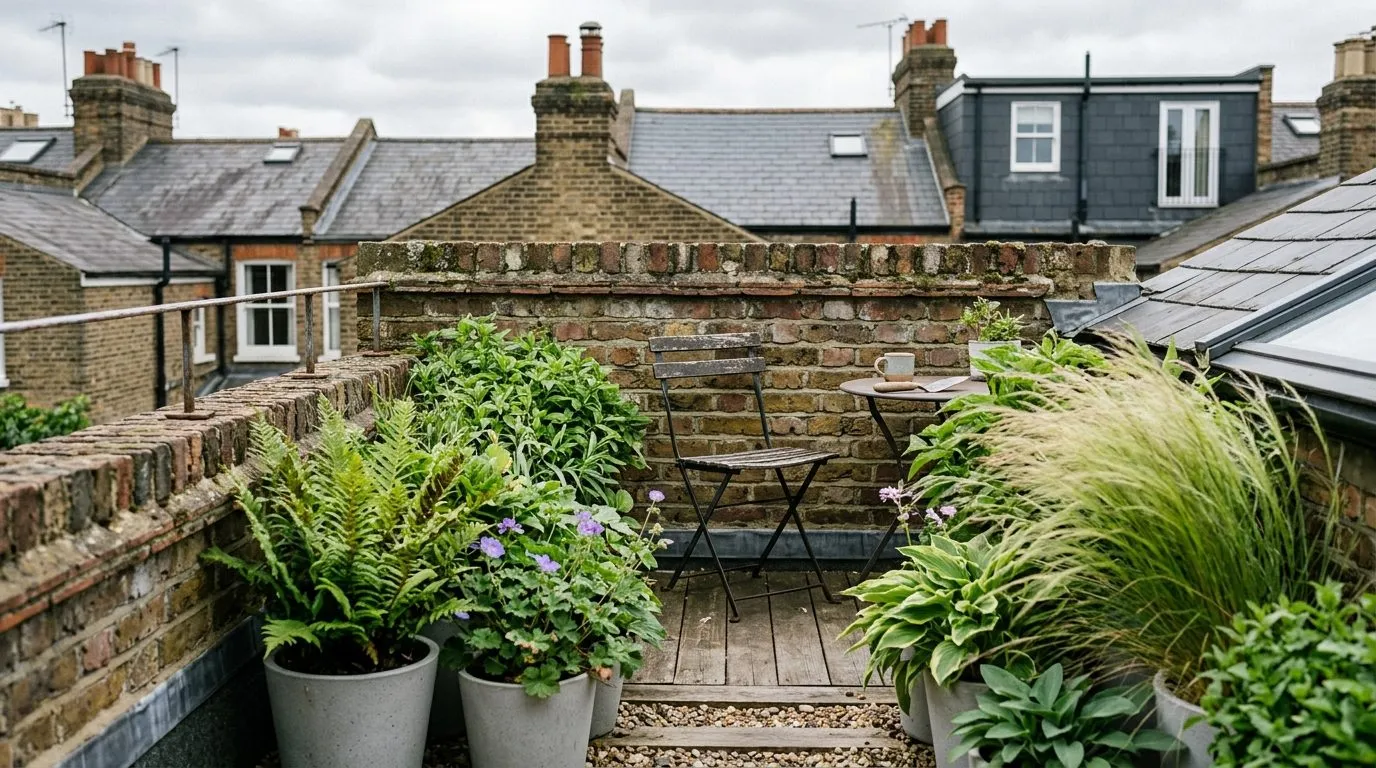
Behind a high wall, a small roof terrace is sheltered enough for ferns and softer plants.
Common rooftop garden mistakes
- Loading the roof before checking it. The most serious mistake. Get a structural check first.
- Heavy pots and compost. Terracotta, concrete and loam-based compost add a lot of weight for no benefit.
- Ignoring the wind. A roof feels calm on a still summer day. The first autumn gale tells the truth.
- Pots sitting in water. Standing water adds weight and can damage the roof membrane. Use pot feet.
- Relying on hand-watering. Pots dry fast up high. Fit a drip timer or use self-watering planters.
- Anything on the parapet. Keep pots and furniture off ledges and away from the edge.
Now you’ve planned your roof garden, read the guide to container vegetable gardening to grow food up there too. For more ideas, browse our garden design guides.
Frequently asked questions
Do I need permission for a rooftop garden in the UK?
Often, yes. Turning a flat roof into a terrace usually needs planning permission, and the edge protection must meet building regulations. Flats and leasehold homes also need the freeholder’s consent. Listed buildings and conservation areas have extra rules, so check with your council first.
How much weight can a flat roof hold?
It varies a lot, so only a structural engineer can tell you. Many flat roofs were built for occasional maintenance access, not for people, pots and furniture. Older roofs, extensions and garage roofs can be especially weak. Get the roof checked before you add anything heavy.
What plants survive on a windy rooftop?
Small-leaved, flexible and drought-tolerant plants do best. Ornamental grasses, lavender, rosemary, pittosporum, sedum and dwarf pine all cope with wind. Avoid big soft leaves like hostas and bananas, which shred. Coastal and Mediterranean plants are reliable choices.
How do I stop pots blowing over on a roof?
Use wide, low pots and group them together. Low, squat planters are far more stable than tall narrow ones. Put the most exposed pots behind a windbreak, and tie tall plants to a screen or sturdy frame rather than leaving them freestanding.
What compost should I use in rooftop containers?
A lightweight peat-free compost mixed with perlite. Perlite is very light and helps drainage. Avoid heavy loam-based composts like John Innes for big pots. Topping pots with bark or fine gravel slows drying in the wind.
Do rooftop gardens need irrigation?
Most do, because wind and sun dry pots quickly. A drip system on a battery timer keeps pots watered while you’re away. Self-watering planters with a reservoir also help. Without either, expect to water every day in summer.
Can any flat roof become a garden?
No, only roofs that are strong enough and safe to use. Many flat roofs were never designed for foot traffic or extra weight. An engineer needs to check the structure, the waterproofing and the edge protection before you start.
Our team produces practical UK gardening guidance from source research, contributor records and established horticultural practice. Editorial standards are overseen by Matt W.