Key takeaways
- An enclosed, south-facing courtyard makes a warm, sheltered sun-trap
- Use terracotta or warm stone underfoot, with patterned tile in bands only
- A small tiled wall fountain gives the sound of water without much work
- Winter wet kills more Mediterranean plants than cold, so drainage matters
- Move tender citrus, pelargoniums and agave under cover before the first frost
- Keep colours warm: white, ochre and terracotta with cobalt blue accents
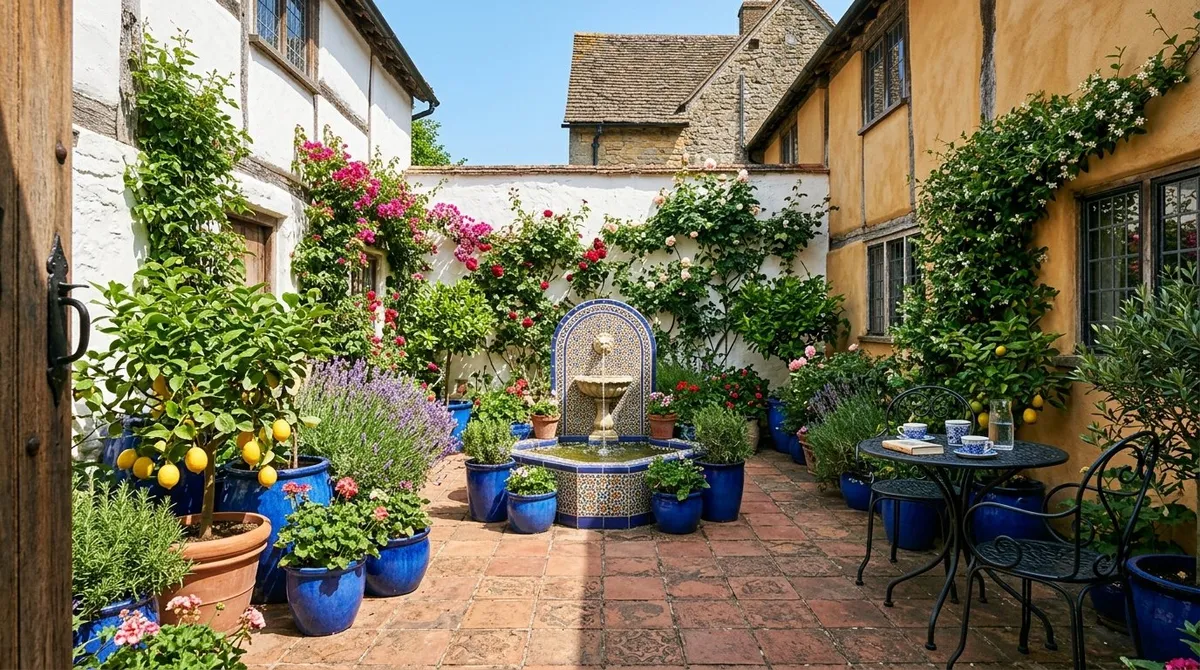
A Spanish courtyard is a garden built around shelter, water and shade. Think walls on every side, warm terracotta underfoot, a trickling fountain and pots of scented plants. It’s a lovely fit for a UK plot, because so many of us have an enclosed yard that catches the sun.
The style comes from the Moorish courtyards of southern Spain, where high walls and a fountain make a cool escape from the heat. Here the walls do the opposite job: they trap warmth and shelter, turning a small yard into a sun-trap. This guide covers the materials, water, shade and pots that create the look. For a deeper dive into the planting itself, see our guide to Mediterranean garden planting in the UK.
Why a courtyard suits the Spanish style
The Spanish look depends on enclosure, and plenty of UK gardens already have it. A space boxed in by house walls, fences or brick does three helpful things:
- It traps warmth. Walls soak up sun by day and give it back in the evening, so the courtyard stays a little warmer than the open garden.
- It gives shelter. Out of the wind, Mediterranean plants cope far better, and you can sit out earlier and later in the year.
- It frames the design. The walls are the room, and you decorate them.
Our wider guide to courtyard garden ideas covers other styles if you’re still choosing.
The floor: terracotta, tiles and gravel
The floor does a lot of the work. Warm, earthy materials look Mediterranean straight away.
- Terracotta tiles are the classic choice. Buy frost-proof tiles, as cheap terracotta can flake and crack in a hard UK winter.
- Patterned tiles in blue, white and yellow add the Moorish touch. Use them as a band, a fountain surround or on step risers, not over the whole floor.
- Warm gravel is cheap, drains well and lets you plant straight into it, as in a gravel garden.
- Cobbles and pebbles add texture to thresholds and small areas.
Lay everything on a free-draining base so water never sits on the surface.
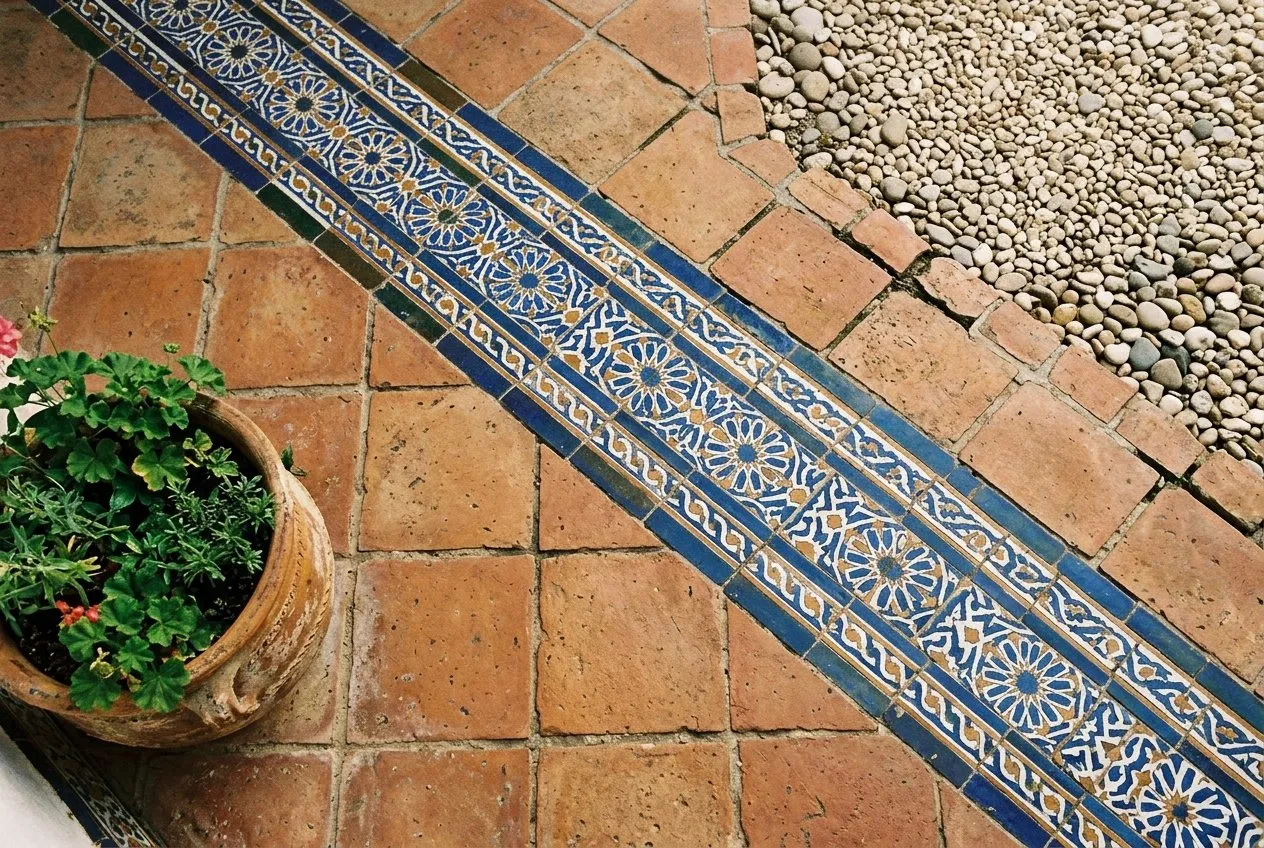
Warm terracotta with a single band of patterned tile. A little pattern goes a long way.
Water at the heart of the courtyard
Every Moorish courtyard has water at its centre. The sound is soothing and the surface reflects the sky. You don’t need much.
- A wall fountain is the easiest choice for a small yard. A spout trickling into a basin needs only a small pump and a power supply, or a solar kit in a sunny spot.
- A narrow rill, a shallow formal channel, echoes the famous Spanish palace gardens on a home scale. Our guide to water rill design explains how to build one.
- A raised tiled pool doubles as seating.
Keep any open water covered or very shallow if young children visit.
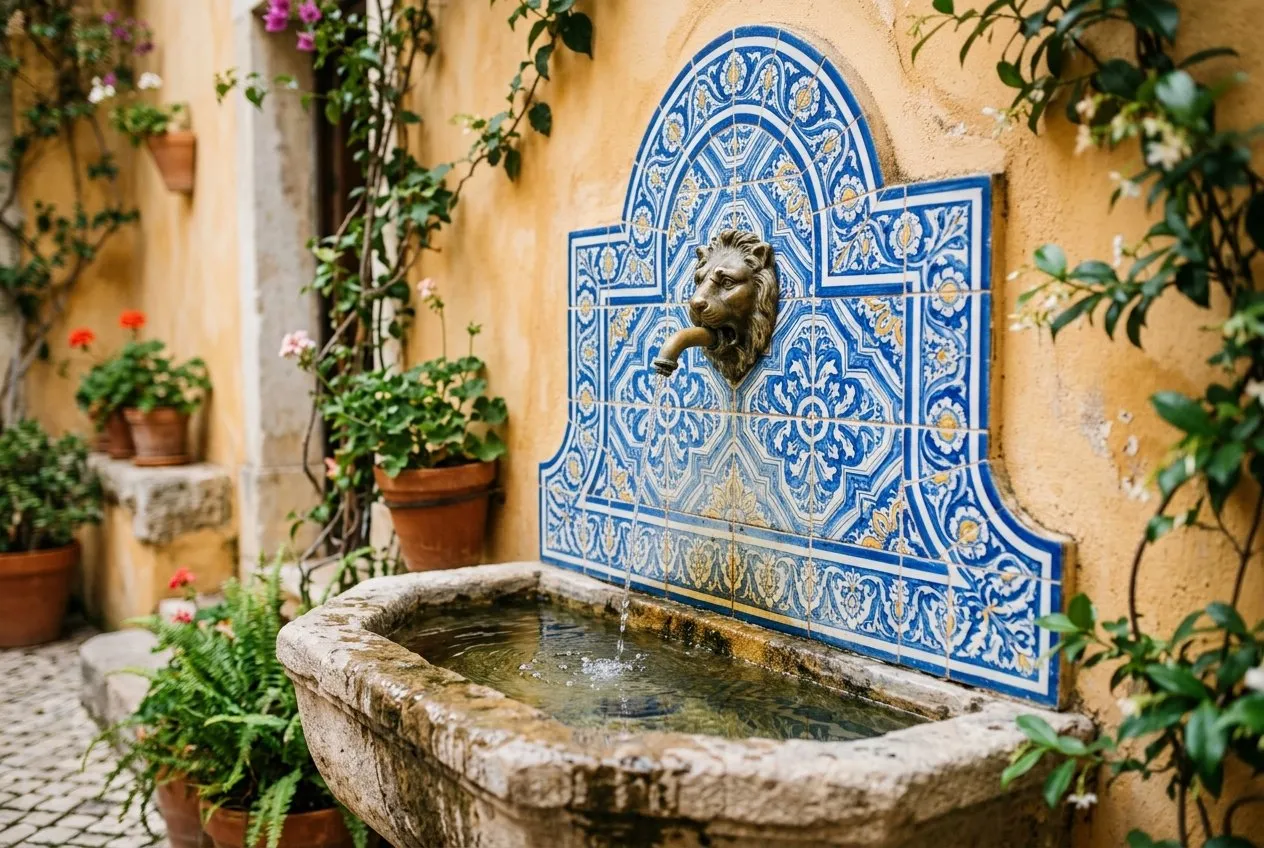
A tiled wall fountain brings the sound of water without taking up floor space.
Shade, walls and colour
A sun-trap needs some shade to be comfortable in July, and warm colours to set off the plants.
Shade: A timber pergola draped in a grapevine or wisteria is the classic answer. A small fig or olive gives dappled shade too. A canvas awning or big parasol works in tight spaces. See our pergola ideas for designs.
Walls: Keep them warm: limewashed white, soft ochre or terracotta render. A tired fence painted ochre shifts the whole space south. Add a strip of tiles, an iron grille or a row of small pots for detail.
Colour: White, ochre and terracotta make the backdrop. Cobalt blue and green in pots, tiles and shutters lift it. Cool grey takes the warmth out of the look, so avoid it.
Pots and Mediterranean plants
Pots are at the centre of the style. Group terracotta and glazed pots in odd numbers, vary the heights and plant them for scent and shape.
| Plant | Role in the courtyard | Winter care |
|---|---|---|
| Olive in a pot | Sculptural centrepiece | Fairly hardy in a sheltered spot, protect in hard frost |
| Lavender | Scented edging | Hardy in free-draining soil |
| Rosemary | Evergreen structure | Hardy in free-draining soil |
| Star jasmine (Trachelospermum) | Scented wall climber | Hardy in a sheltered spot |
| Cistus | Summer-flowering shrub | Mostly hardy with sharp drainage |
| Pelargoniums | Bright pot colour | Tender, bring indoors |
| Agave and aeonium | Sculptural pots | Tender, keep frost-free |
| Lemon tree | Scent and fruit | Tender, keep under glass |
| Bougainvillea | Hot climbing colour | Tender, conservatory or porch |
Our guide to growing citrus trees covers feeding and watering lemons in pots through the year.
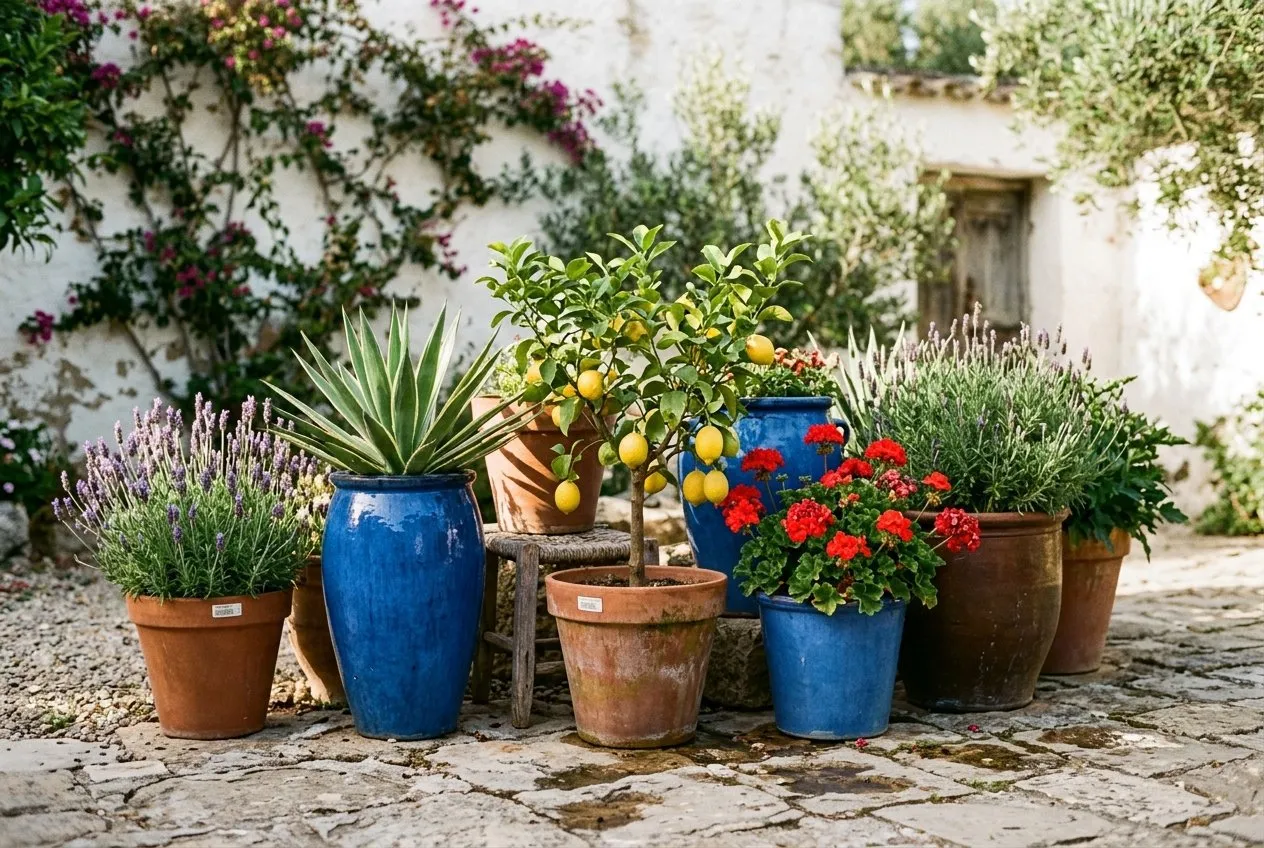
Mix hardy lavender with tender lemons, agave and pelargoniums, then move the tender ones inside for winter.
Helping it survive a UK winter
This is where most Mediterranean gardens fail. The main enemy is winter wet, not cold.
- Plant into free-draining soil. Raise the beds and mix in plenty of grit, about a third by volume.
- Mulch with gravel. About 5cm of gravel keeps water off stems and looks the part.
- Raise pots on feet so they don’t sit in puddles.
- Bring tender plants in. Move citrus, pelargoniums, agave and bougainvillea into a frost-free greenhouse, porch or conservatory before the first frost. Our guide on how to overwinter plants explains the details.
Get the drainage right and the hardy plants look after themselves.
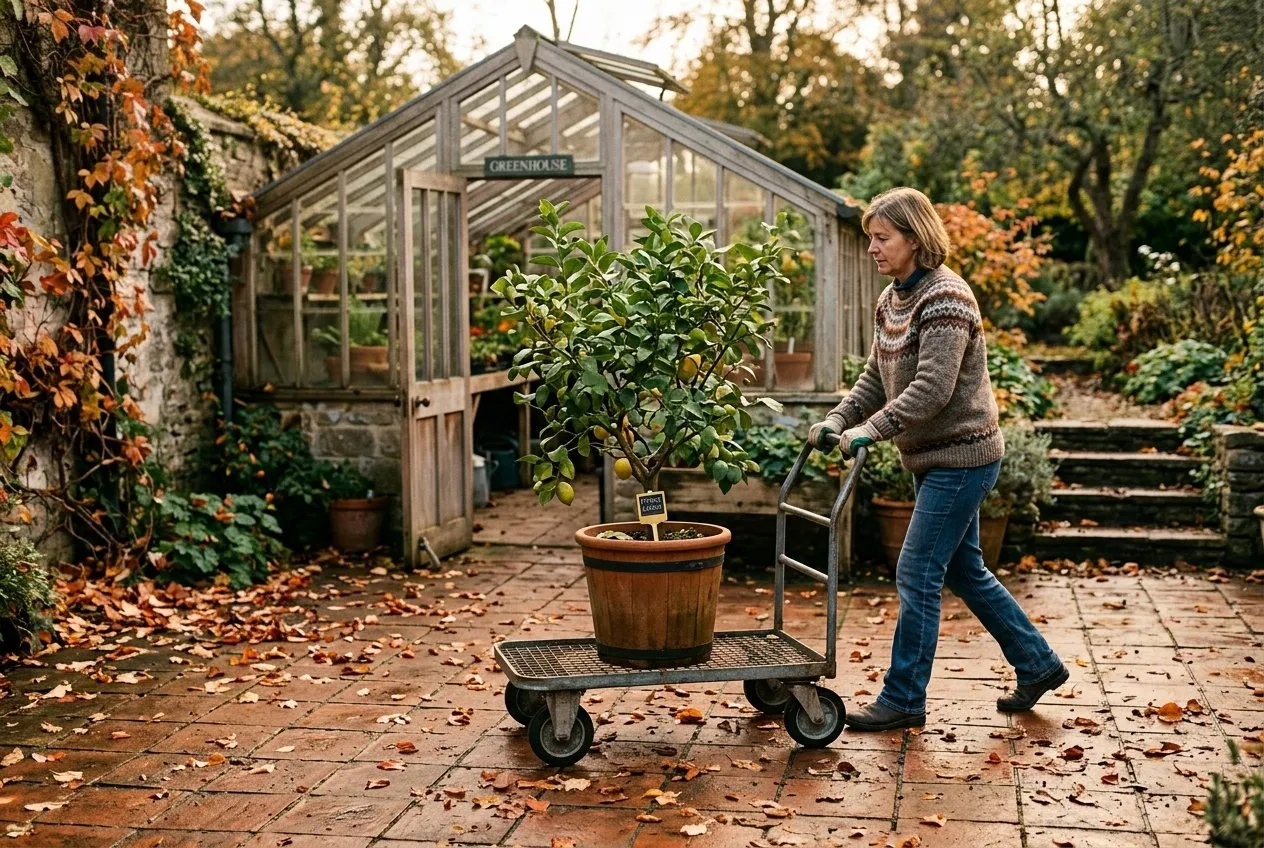
A sack truck or pot trolley saves your back when it’s time to move the lemon tree under cover.
Furniture, lighting and finishing touches
A wrought-iron or mosaic-topped bistro table sets the tone. Add lanterns and festoon lights for warm evening light. A patterned outdoor rug, glazed bowls and a few pots fixed to the wall finish the look.
Keep it warm, simple and a little worn. A Spanish courtyard should feel lived in, not brand new.
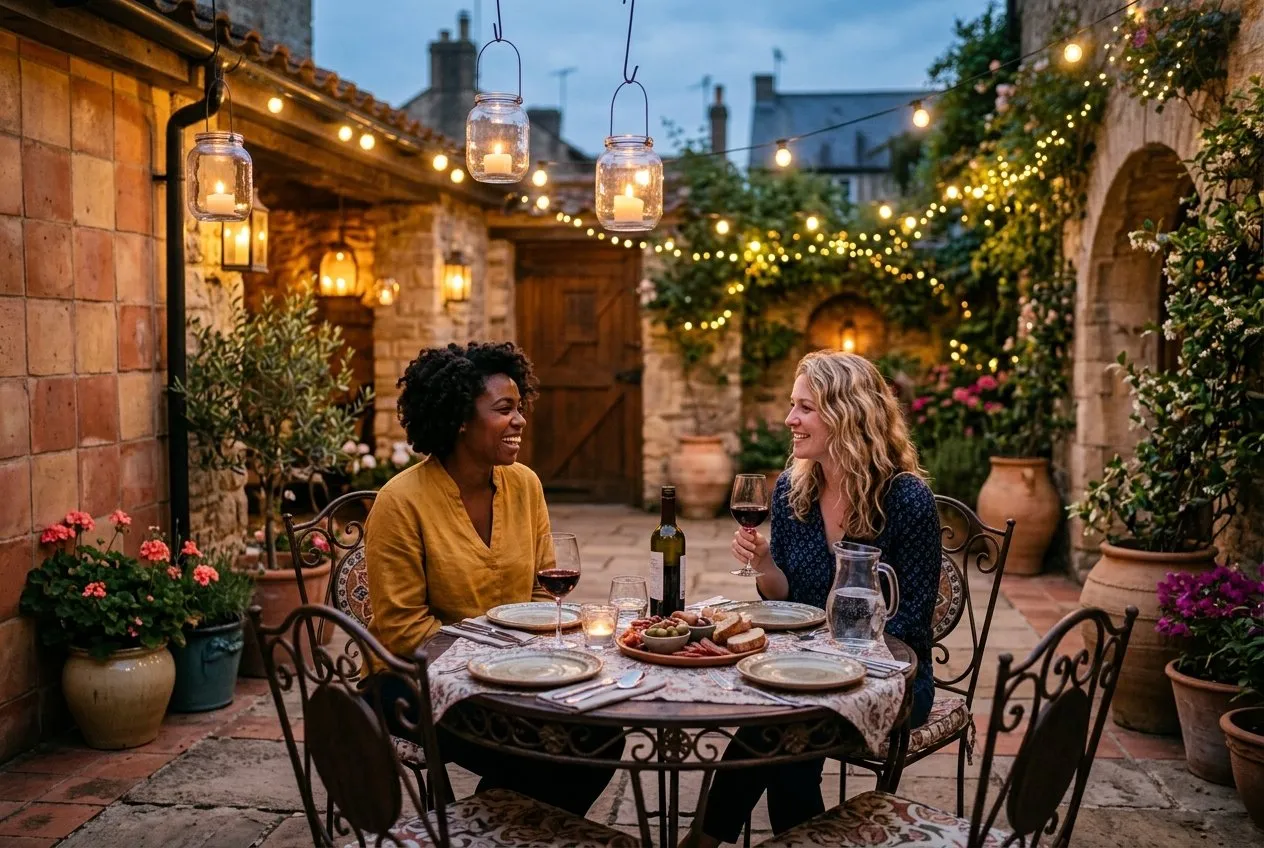
Lanterns and festoon lights turn a sheltered courtyard into the best seat in the house on a summer evening.
Common Spanish courtyard mistakes
- Ignoring drainage. Mediterranean plants in heavy, wet soil rot over winter. Raise and grit the beds.
- Cool grey surfaces. Grey paving and render kill the warmth. Go for terracotta and ochre.
- No shade. A sun-trap with no shady corner is too hot to sit in by July.
- Leaving tender plants out. Citrus and pelargoniums need winter cover in the UK.
- Too much patterned tile. A whole floor of pattern overwhelms the space. Use it in bands.
Frequently asked questions
Can you make a Spanish courtyard garden in the UK?
Yes, especially in an enclosed, south-facing space. Walls trap warmth and give shelter. Use terracotta, tiles, water and Mediterranean plants. Good drainage and winter cover for tender pots keep it looking good year after year.
What plants suit a Spanish courtyard in the UK?
Lavender, rosemary, olive, cistus and star jasmine are good hardy choices. Add pots of citrus, pelargoniums, agave and bougainvillea for colour and character. Move those tender ones under cover for winter.
Why do Mediterranean plants die in UK gardens?
Usually because of winter wet rather than cold. Roots rot in heavy, soggy soil. Plant in raised, gritty beds and mulch with gravel so water drains away from the stems. Raise pots on feet too.
What flooring works in a Spanish courtyard?
Terracotta tiles, warm stone, gravel and cobbles all suit the style. Use one as the main surface and add bands of patterned blue-and-white tile for detail. Choose frost-proof materials and lay them on a free-draining base.
How do I add shade to a Mediterranean courtyard?
A pergola covered in a grapevine or wisteria is the classic answer. A small fig or olive tree also gives dappled shade. In a tight space, a large parasol or an awning works well.
What colours define a Spanish courtyard garden?
Warm white, ochre and terracotta are the base colours. Add cobalt blue and green in tiles, pots and shutters. Avoid cool greys, which take the warmth out of the look.
Ready to add the sound of water? Read our guide to water feature ideas, or browse more garden design ideas.
Our team produces practical UK gardening guidance from source research, contributor records and established horticultural practice. Editorial standards are overseen by Matt W.