Key takeaways
- Bergenia is tough evergreen ground cover for sun, shade, clay and dry spots
- Plant about 45cm apart and it knits into weed-smothering cover in a few seasons
- Pink, magenta or white flowers appear on red stems from late winter to spring
- Choose 'Bressingham Ruby' or 'Eroica' for red winter leaves
- Pull off tatty old leaves in early spring and divide crowded clumps every few years
Bergenia, or elephant’s ears, is the easy answer for tricky spots. It is a tough evergreen perennial with big, leathery, rounded leaves that cover the ground all year. In late winter and spring it sends up pink, magenta or white flowers on chunky red stems. Some varieties turn rich red in winter too.
It thrives in dry shade, heavy clay and windy gardens, the places that defeat fussier plants. This guide covers choosing a variety, where and how to plant it, the one seasonal job that keeps it looking smart, and dividing clumps for free plants.
Why bergenia earns its place
Bergenia is a group of evergreen perennials from the mountains of central and eastern Asia, which is why it shrugs off British cold and wind. It grows from thick rhizomes (creeping stems) that run along the surface of the soil and slowly spread into wide clumps.
Three things make it a garden workhorse:
- It is evergreen, so it covers the ground and gives structure all winter.
- It smothers weeds once established, because the big overlapping leaves shade the soil.
- It copes with tough spots, including dry shade, clay, coastal gardens and exposed sites.
Use it as a path edging, a front-of-border filler or a carpet under trees. For other shade-tolerant options, see the guide to the best ground cover plants for UK gardens.

Big, leathery leaves like this give bergenia its nickname, elephant’s ears, and shade out weeds beneath.
Which bergenia should you choose?
Decide whether you want red winter leaves, the best flowers or the biggest leaves. Some varieties do a bit of all three.
For winter leaf colour, choose ‘Bressingham Ruby’, ‘Eroica’ or ‘Overture’. Their leaves turn red, bronze or burgundy as the weather gets cold, giving months of colour when the garden is bare. They look best where low winter sun catches them.
For white flowers, choose ‘Bressingham White’ or ‘Silberlicht’. The flowers open white and often age to pale pink, and the leaves stay mostly green.
For the biggest leaves, choose Bergenia cordifolia ‘Purpurea’. It has large leaves with a purplish winter tint and magenta flowers on tall red stems. It is a great choice for covering a shady bank.
| Variety | Winter leaves | Flowers | Best for |
|---|---|---|---|
| ’Bressingham Ruby’ | Deep red-bronze | Rose-pink | Winter colour |
| ’Eroica’ | Red-purple | Bright magenta | Winter colour and flowers |
| ’Overture’ | Burgundy-red | Magenta-pink | Winter colour in small spaces |
| ’Silberlicht’ | Green | White ageing to pink | White spring flowers |
| ’Bressingham White’ | Green | White | Clean white flowers |
| B. cordifolia ‘Purpurea’ | Purple tint | Magenta | Big leaves, ground cover |
Gardener’s tip: Plant a red-leaved variety like ‘Bressingham Ruby’ with a white-flowered one like ‘Silberlicht’ in the same drift. You get winter leaf colour and bright spring flowers from one patch.

Red-leaved varieties really come into their own in cold weather, glowing on a frosty morning.
When does bergenia flower?
Bergenia flowers mainly from late winter into spring, depending on the variety and how mild your garden is. Sturdy red stems rise above the leaves, carrying clusters of bell-shaped flowers in pink, magenta, rose or white.
It flowers best in sun or light shade. In deep shade you get fewer, shorter flower spikes, though the leaves stay lush. Some varieties give a lighter second flush later in the year. Cutting off the spent flower stems keeps clumps tidy.
Slugs and snails love the flowers in wet spring weather. Check emerging spikes on damp evenings and pick off any you find.

Clusters of pink bells on chunky red stems. They bring colour to the garden well before most perennials wake up.
Where to grow bergenia
Bergenia grows in full sun to full shade, in most soils, acid or alkaline. That makes it one of the most adaptable perennials you can plant.
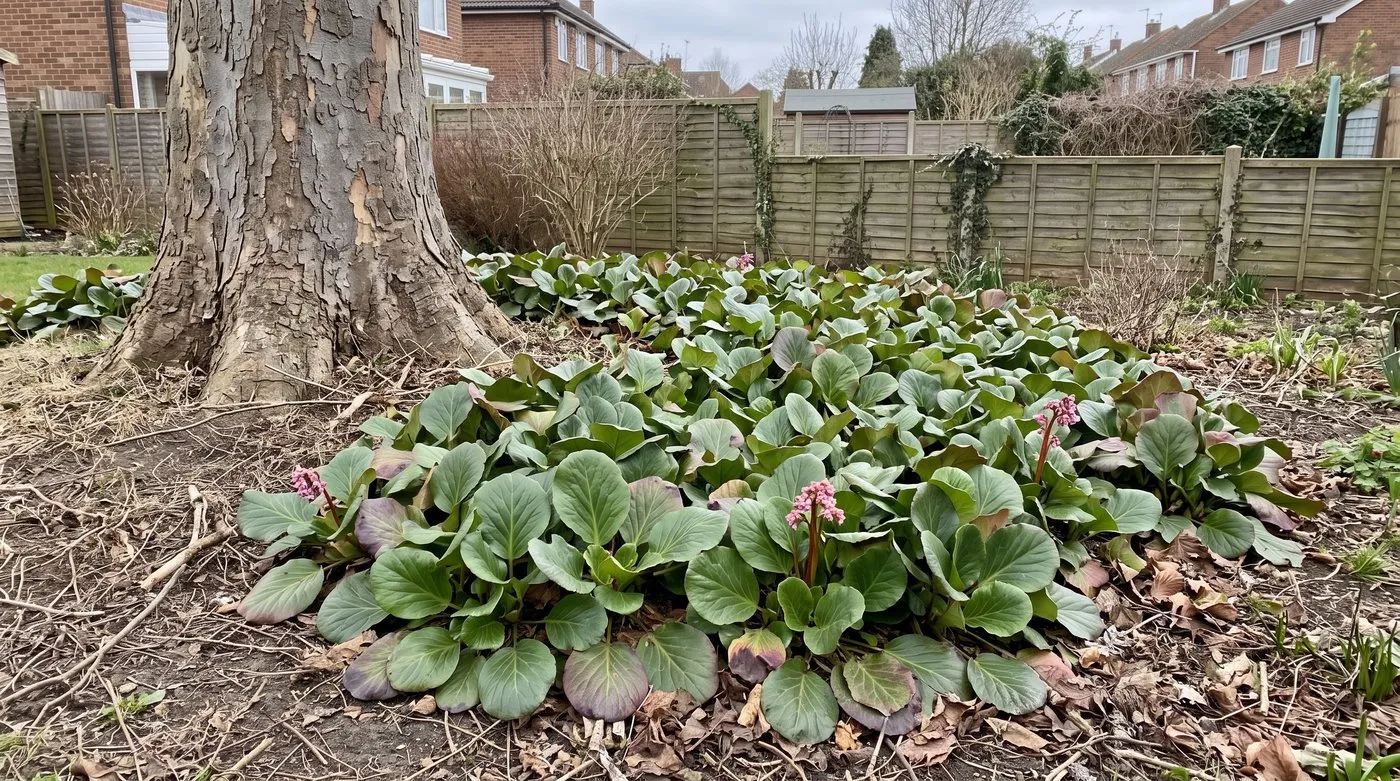
Under a thirsty tree, where grass gives up, bergenia still makes a solid evergreen carpet.
For the lushest leaves and the most flowers, give it moisture-retentive soil in sun or light shade. In dry shade under trees it still covers the ground, but leaves are smaller and flowers fewer. That’s often a fair trade for evergreen cover where little else grows. Improve very poor soil with some garden compost at planting time, then mulch.
It does well in coastal and windy gardens too. The leaves may get a bit battered by late winter, but the plant carries on. The guides to the best plants for dry shade and best plants for shade suggest good companions.
How to plant bergenia as ground cover
Plant bergenia about 45cm apart in staggered rows for ground cover. The leaves knit together into weed-smothering cover within a few seasons. Plant a bit closer for faster cover, or wider apart for a looser look.
Spring and autumn are the best times to plant, when the soil is moist. Pot-grown plants can go in at any time the ground isn’t frozen or bone dry.
- Dig a hole a little wider than the root ball.
- Set the plant so the rhizome sits at or just below the soil surface. Don’t bury it deep.
- Firm in and water well.
- Water through the first dry spell while it settles.
- Mulch bare soil between young plants with bark or compost to hold back weeds.
For a path edging, plant a single row of one variety about 40cm apart. It makes a neat evergreen ribbon that looks good all year.

A single row along a path soon becomes a neat evergreen edge that softens the gravel all year.
Caring for bergenia through the year
Bergenia is nearly plant-and-forget. The one job that really matters is the early spring tidy.
By late winter, last year’s leaves are often wind-burnt, frost-scorched and slug-holed. Pull or snip away the worst of them before the new leaves and flowers appear. Fresh growth soon fills the gaps.
After flowering, cut the spent flower stems off at the base. On decent soil, bergenia needs no feeding. A thin layer of compost in spring is plenty. Too much feed gives soft, floppy leaves and fewer flowers. Once settled, it rarely needs watering, though a soak in a long dry spell helps plants in shade.

Pull the old, scorched leaves away in early spring. The fresh leaves and flowers look far better for it.
Dividing bergenia for free plants
Divide bergenia every few years, in autumn or spring. It makes new plants and revives old clumps that have gone bare in the middle.
- Lift the clump with a fork or spade.
- You’ll see thick, woody rhizomes with roots underneath and leaves along them.
- Cut the rhizomes into pieces with a sharp knife or spade. Each piece needs roots and at least one shoot or leaf rosette.
- Throw away the old, bare, woody centre.
- Trim any long, tatty leaves, then replant about 45cm apart at the same depth.
- Water in well.
Bergenia roots so readily that division almost always works. One big clump gives plenty of new plants to spread along a border or share with friends.

Those thick rhizomes are easy to cut into pieces. Make sure each one has roots and a shoot before replanting.
Vine weevil and slug damage
Bergenia is mostly trouble-free, but two pests leave their mark.
Vine weevil adults chew neat notches from leaf edges in summer, mostly at night. The notches are cosmetic and don’t harm a garden plant. The real problem is the C-shaped white grubs, which eat roots and can kill bergenia in pots over winter. Tip out pot-grown plants in autumn and look for grubs. If you find them, water a vine weevil nematode into the pots in late summer or early autumn while the compost is still warm. The RHS vine weevil page has photos of the adults and grubs.
Slugs and snails rasp holes in soft new leaves and chew the flowers in wet springs. The tough older leaves mostly resist them. Clear leaf litter where they hide, and pick them off on damp evenings. The guide to getting rid of slugs has more ideas.
Using bergenia in the garden
Bergenia works hard in lots of roles. As edging, a row of one variety makes a crisp evergreen line along a path or bed. As ground cover, a drift under trees or on a shady bank smothers weeds with little effort.
It really shines in winter, holding the front of a border together when other perennials have died back. Plant it with the bare red stems of dogwoods, ornamental grass seedheads or spring bulbs pushing through. For a softer, low ground cover that pairs well under trees, try sweet woodruff. For a grassy evergreen that also copes with dry shade, see liriope.
Bergenia care calendar
| Month | What to do |
|---|---|
| January | Enjoy red winter leaves. Clear fallen leaves off clumps |
| February | First flower stems in mild areas. Watch for slugs |
| March | Pull off tatty old leaves. Flowering gets going |
| April | Main flowering. Plant new bergenia |
| May | Cut off spent flower stems. Divide if you didn’t in autumn |
| June | Look for vine weevil notches. Check pots for grubs |
| July | Little to do. Water new plants in dry spells |
| August | Water pots and new plants. Apply vine weevil nematodes to pots |
| September | Good month to divide and replant clumps |
| October | Divide and plant while the soil is warm and moist |
| November | Winter colour starts on red-leaved types |
| December | Enjoy the evergreen leaves and red winter tints |
Common mistakes with bergenia
- Planting too deep. The rhizome likes to sit at the surface. Buried deep, it can rot and won’t spread.
- Skipping the spring tidy. Clumps look scruffy all year. A few minutes pulling old leaves makes a big difference.
- Never dividing. Old clumps go bare in the middle and flower less. Divide every few years.
- Expecting lots of flowers in deep shade. It survives there but flowers poorly. Use shady spots for leaf cover.
- Overfeeding. Rich soil gives floppy leaves and fewer flowers. Lean to average soil suits it best.
Plan your shady border
Bergenia is the backbone of a tough, low-maintenance shady bed. For more ideas, browse our growing guides, or read about the best perennial plants for UK gardens to fill the gaps around it.
Frequently asked questions
Where does bergenia grow best in the UK?
In sun or light shade on moist soil, though it copes almost anywhere. It also covers dry shade under trees, heavy clay and windy or coastal spots, where it gives smaller leaves and fewer flowers.
How far apart should I plant bergenia for ground cover?
About 45cm apart in staggered rows. At that spacing the leaves knit together into weed-smothering cover within a few seasons. Plant closer for faster cover, or in a single row for a path edge.
When does bergenia flower?
Mainly from late winter to spring. Pink, magenta or white flowers rise on red stems above the leaves. Some varieties flower a little again later in the year.
Why are my bergenia leaves going brown and tatty?
Usually winter wind, frost and slug damage on old leaves. Pull or snip away the worst leaves in early spring and fresh new leaves soon replace them.
How do I propagate bergenia?
Divide the rhizomes in autumn or spring. Cut a lifted clump into pieces, each with roots and a shoot. Replant them about 45cm apart at the same depth.
Does bergenia need much care?
No, it is one of the easiest perennials. Tidy old leaves in early spring, remove spent flower stems and divide every few years. It rarely needs feeding or watering once settled.
What is eating notches out of my bergenia leaves?
Usually adult vine weevils, which chew neat notches from leaf edges. The notches are only cosmetic. The grubs eat roots and are mainly a problem in pots.
Our team produces practical UK gardening guidance from source research, contributor records and established horticultural practice. Editorial standards are overseen by Matt W.