Key takeaways
- Sow in February or March at 18-21C, like chillies
- Plant out after the last frost, 75cm apart, in a sunny, sheltered spot
- Lean soil fruits best: rich soil and nitrogen feed give leaves, not berries
- Pick only when the husk is papery and straw-brown and the berry is golden
- Berries keep for a few weeks at room temperature left in their husks
- Overwintered plants kept frost-free start fruiting earlier the next year
Cape gooseberries are the golden berries in papery lanterns that supermarkets sell as physalis. They’re easy to grow at home in the UK, much like a slow tomato. The berries taste sweet and sharp, somewhere between pineapple and gooseberry. This guide covers sowing, planting, the lean-soil trick for more fruit, and how to tell when they’re ripe.
What is a cape gooseberry?
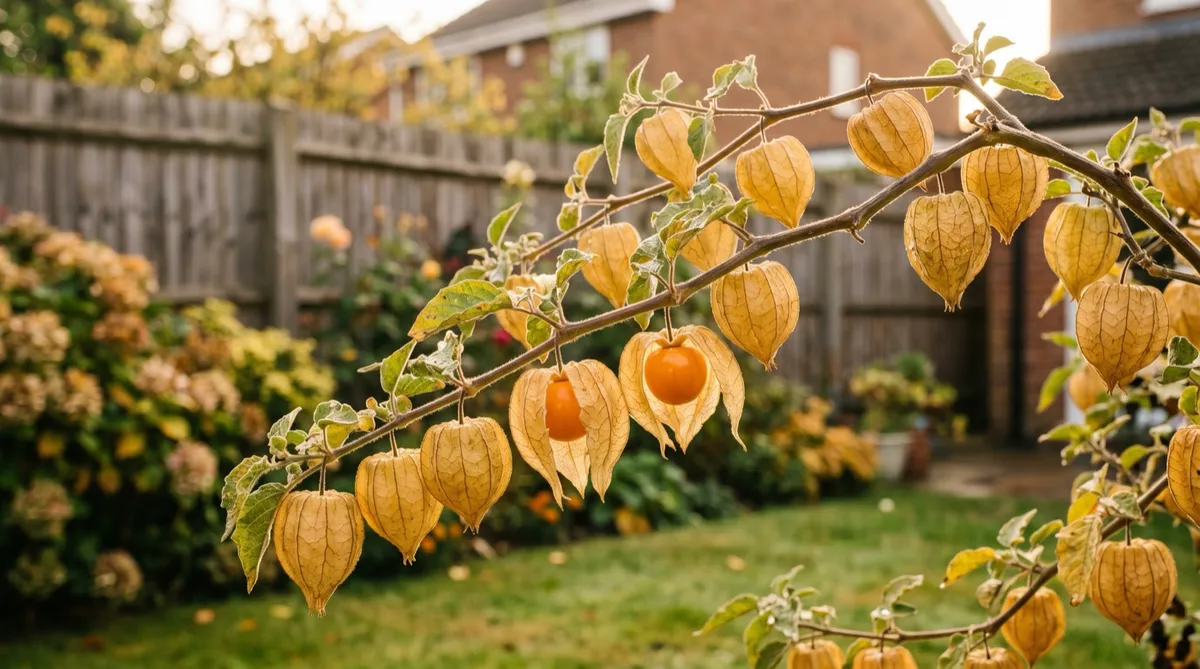
Cape gooseberry (Physalis peruviana) is a sprawling, soft-stemmed plant from South America. The fruit is a round golden berry, 1-2cm across, inside a papery husk shaped like a Chinese lantern.
It’s a close cousin of the tomatillo, but the two have different jobs in the kitchen. Tomatillos are bigger, green and savoury, made into salsa. Cape gooseberries stay small and sweet, and are eaten raw, dipped in chocolate or made into jam. For the savoury one, see the guide to growing tomatillo.
In the UK it’s grown as an annual, or kept under cover over winter and grown on for a second year.
Warning: Only eat fully ripe, golden berries. The leaves, husks and unripe green fruit are toxic, so keep children and pets from nibbling the plant.
How to sow cape gooseberry seed
Sow in February or March at 18-21C, in a heated propagator or on a warm windowsill.
- Fill a tray with moist seed compost
- Sow the tiny seed on the surface
- Cover with a thin layer of vermiculite
- Keep warm and moist
Germination can take two or three weeks and is often uneven, so don’t give up on the tray too soon. Move seedlings into 9cm pots once they have two true leaves. Grow them on somewhere bright, and pot on into 1 litre pots when roots fill the small pot.
The timing matches chillies, so if you follow the guide to growing chilli peppers, raise them side by side. Plants look slow at first. That’s normal, as they build roots before sprawling fast from June.
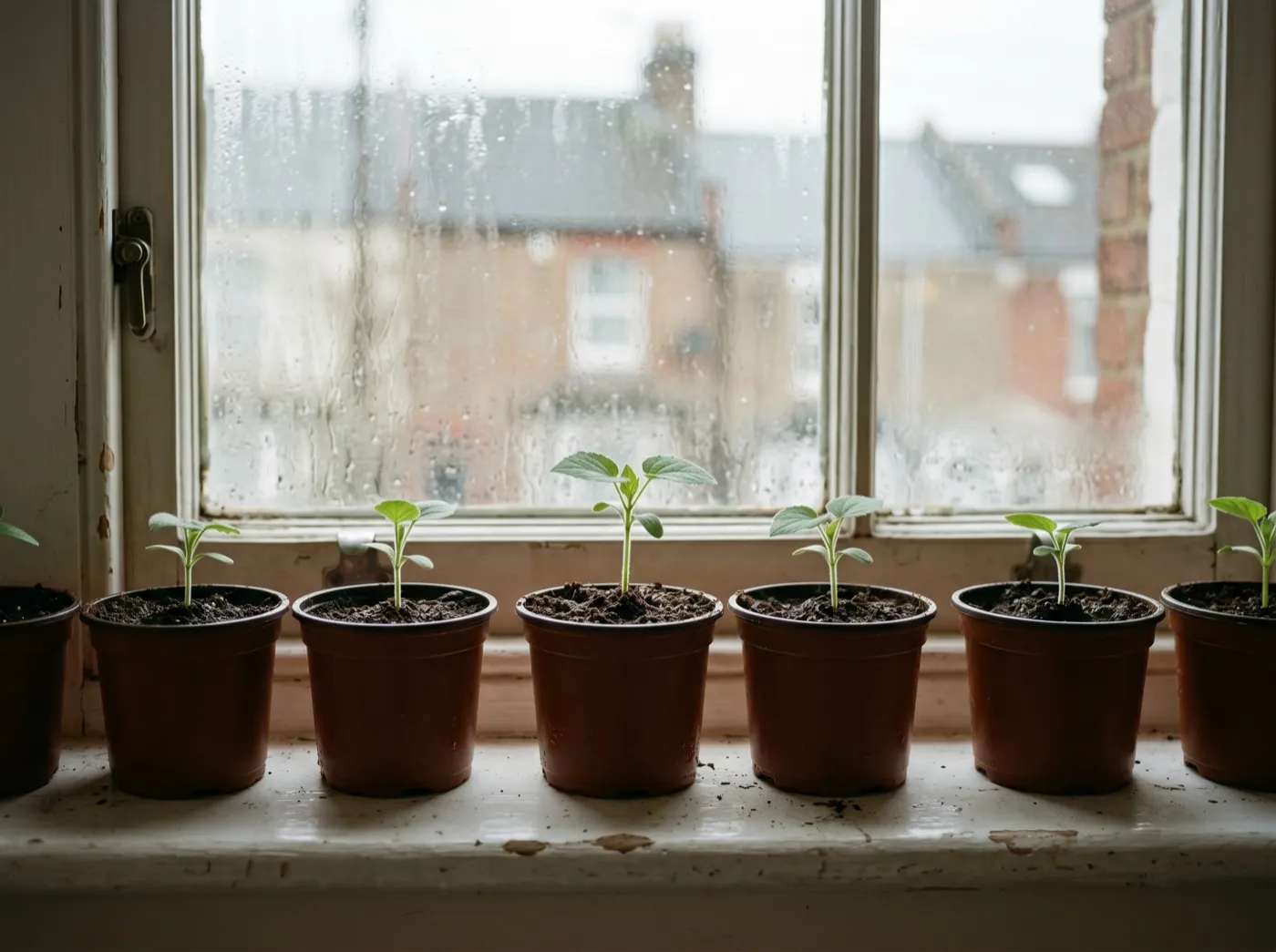
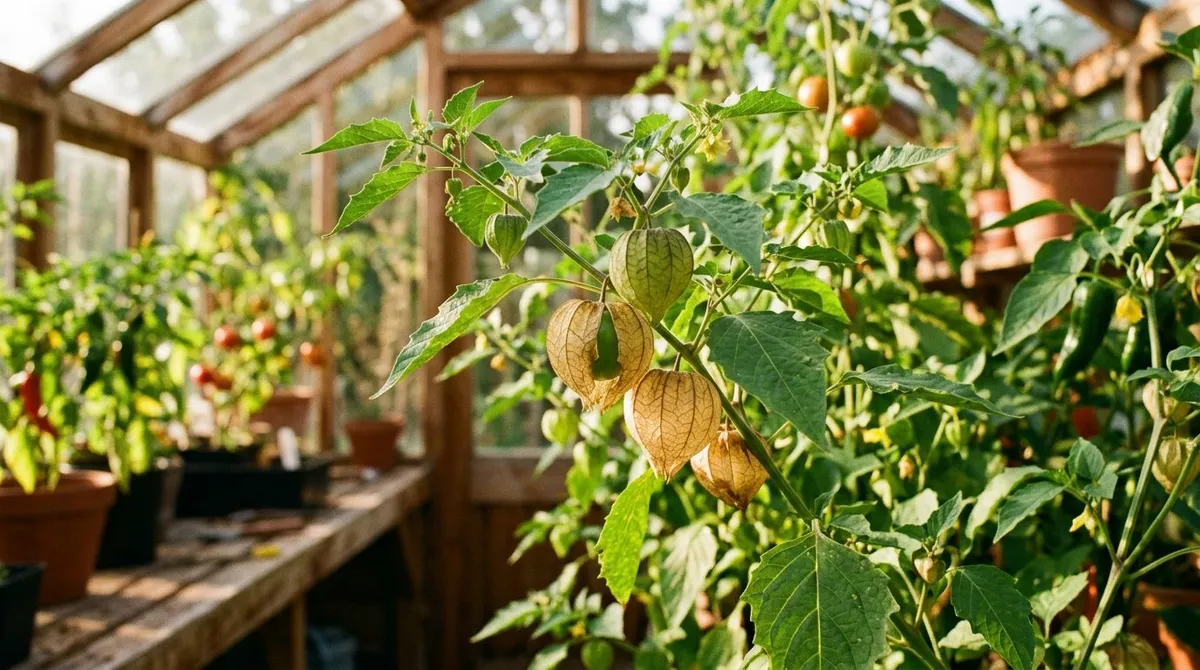
Young plants grow slowly at first. Keep them bright and warm, and they’ll take off once summer arrives.
Planting out: spacing, shelter and pots
Plant out after the last frost, usually late May in the south and early June further north. Harden plants off for a week or two first. If a late cold night threatens, cover them with fleece. The guide to protecting plants from frost has more tips.
- Choose a sunny, sheltered spot, such as a south-facing bed against a fence or wall
- Space plants 75cm apart, as each one sprawls to 1-1.5m wide
- Push in a few canes with string loops to stop laden stems flopping
- Shelter matters, as wind snaps the brittle stems
No bed? A large pot, at least 10 litres, on a warm patio grows a decent plant. A greenhouse border or polytunnel adds weeks at each end of the season, so you’ll ripen more fruit. The greenhouse growing calendar shows how it fits alongside other crops.
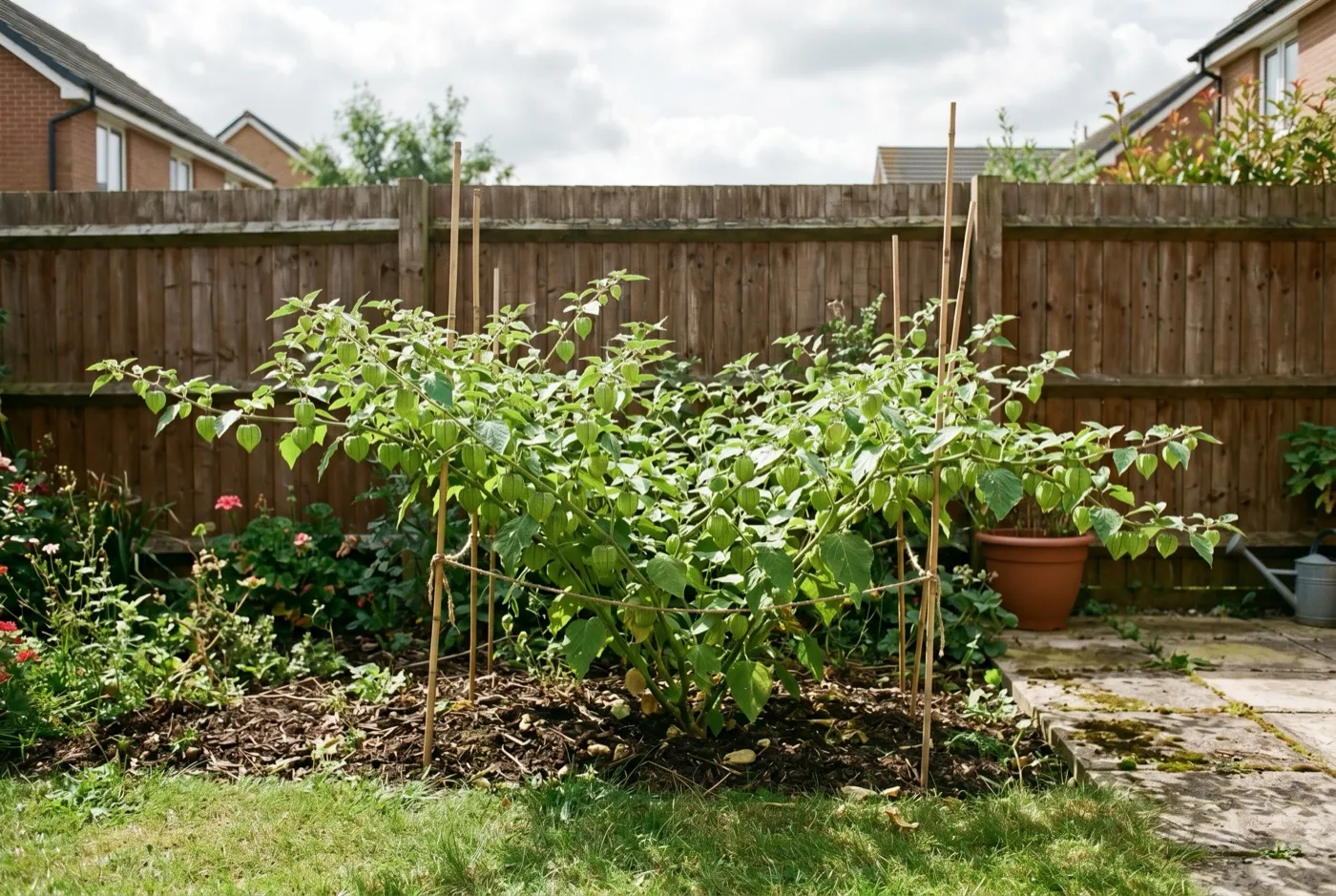
One plant can fill more than a metre by late summer. A few canes and string loops keep the fruiting stems off the ground.
Why does poor soil give more fruit?
Rich soil makes cape gooseberries grow leaves instead of berries. Give them manure or lots of nitrogen feed and you’ll get a big, lush bush with very little fruit.
So do less:
- Plant into ordinary, unimproved soil, or plain multipurpose compost in pots
- Don’t add manure or regular liquid feed
- Water with a good soak in dry spells only
- Give one or two high-potash feeds, such as tomato feed, once flowers appear in July
If a plant is already leafy and flowerless, stop feeding and hold back on water. Flowers often follow a few weeks later. Don’t share your tomato feeding routine with it. Anyone who has raised tomatoes from seed already has the other skills needed.
From flower to ripe berry
From July, small yellow bell-shaped flowers appear, each with dark purple-brown blotches in the throat. They’re self-fertile, so one plant will crop on its own.
After each flower, the green husk swells into a lantern with a tiny berry inside. Over the following weeks the berry fills out. Finally the husk dries to papery straw-brown and the berry turns deep golden.
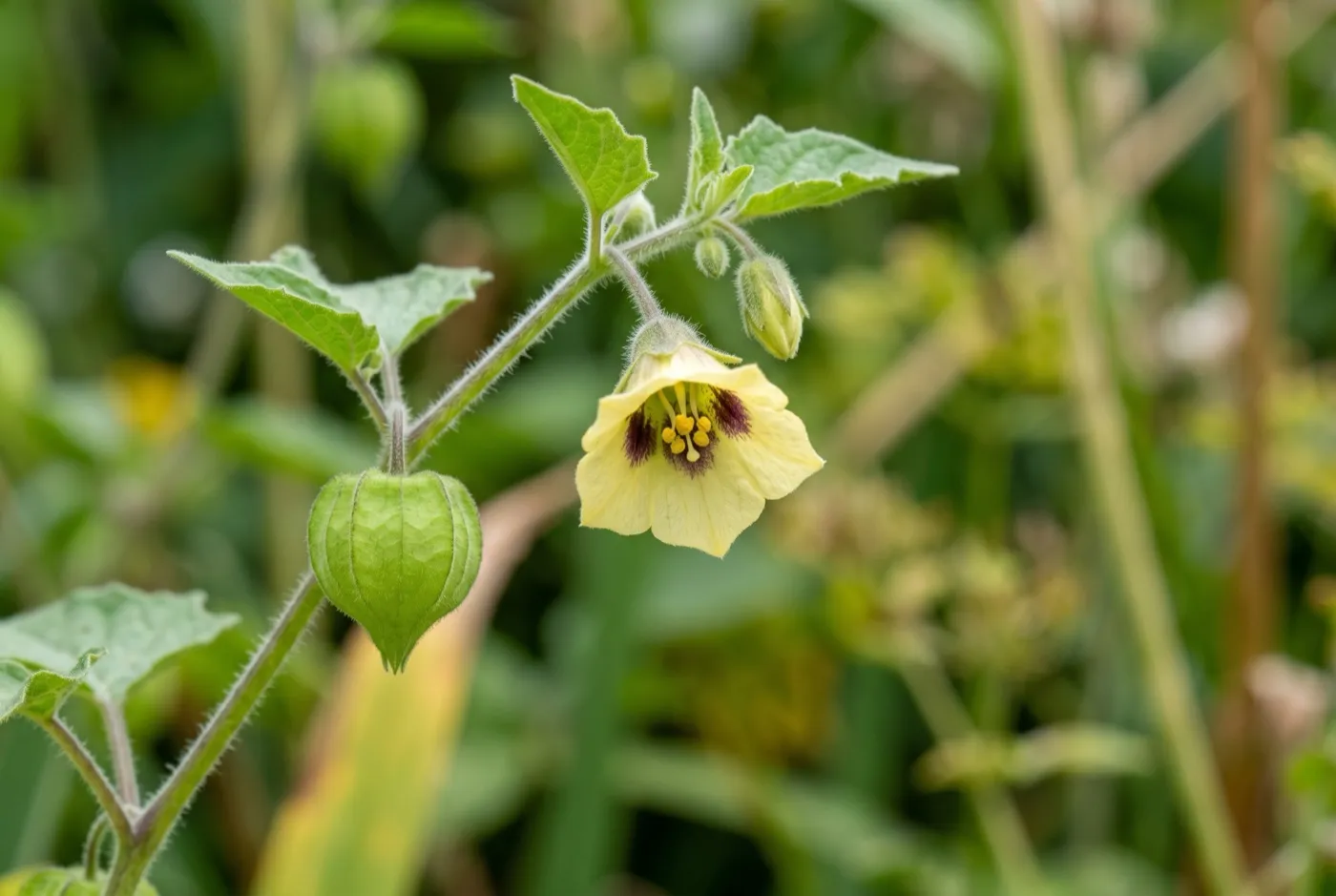
Each of these yellow flowers turns into a green lantern. One plant is enough, as the flowers pollinate themselves.
How do you know when a cape gooseberry is ripe?
Check the husk, not the calendar. A ripe berry sits in a husk that is papery, straw-brown and dry enough to rustle. Peel it back and the berry is glossy golden orange. If the husk is still green, leave it for another week.
Don’t pick early. Berries from green husks never sweeten properly, and unripe fruit isn’t safe to eat. Ripe fruit often falls to the ground in its husk, so check underneath plants every few days from mid September. Those windfalls are perfect.
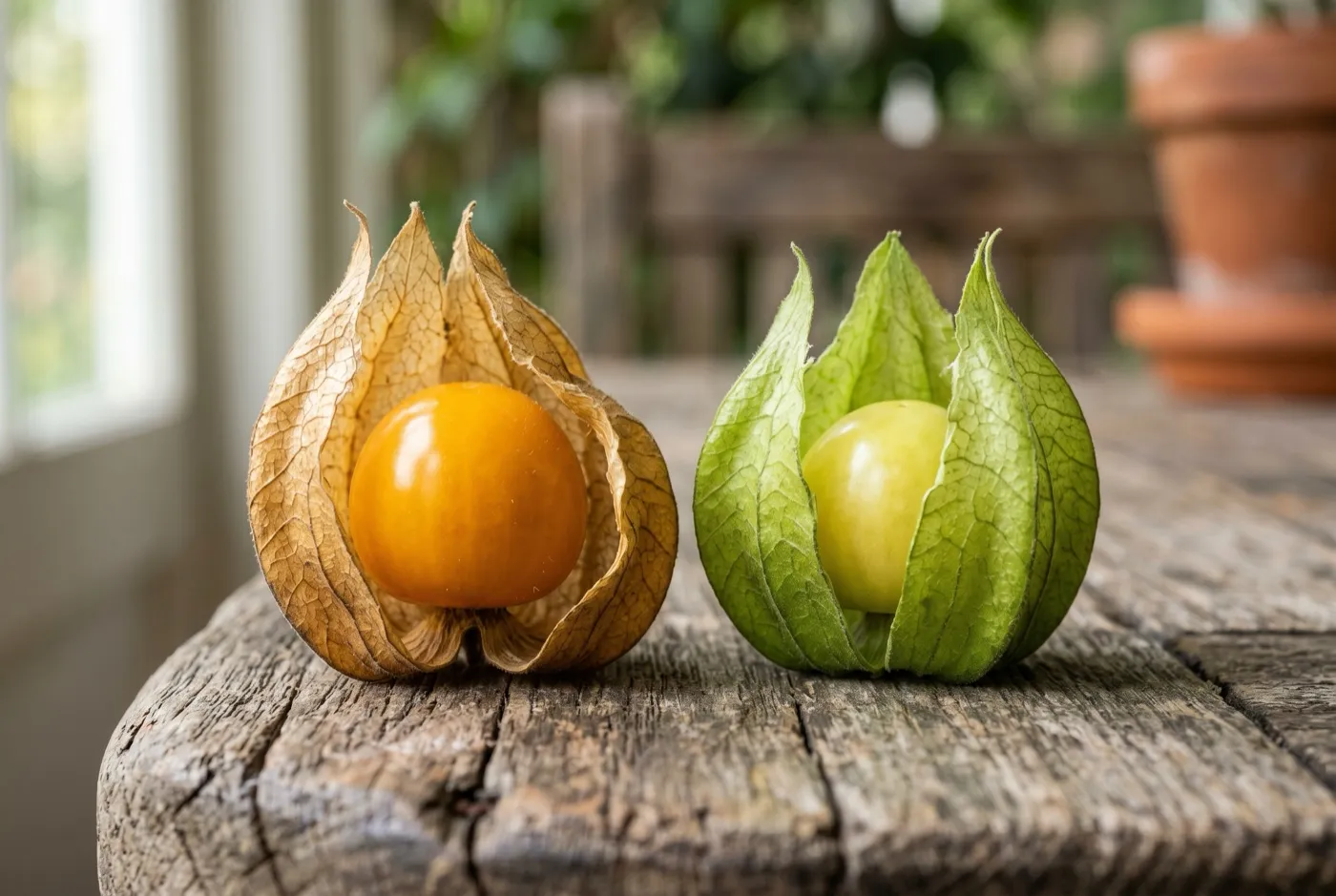
Left is ripe: brown, papery husk and a golden berry. Right is not ready: green husk and a pale, sour berry.
Stored in their husks, the berries keep for a few weeks at room temperature in a single layer. There’s no rush to use them all at once.
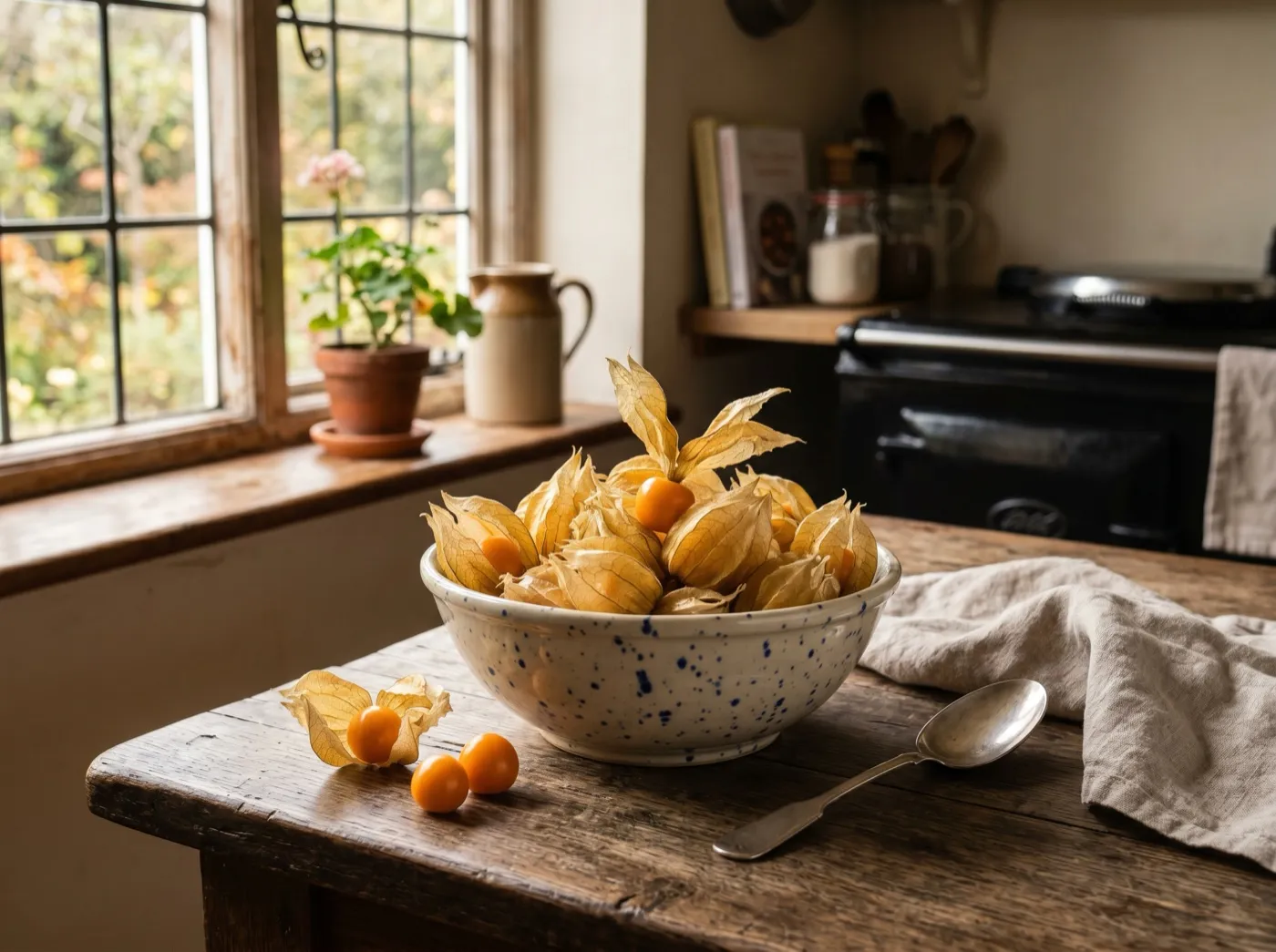
Leave the berries in their husks and a bowl like this keeps on the kitchen table for a few weeks.
Cape gooseberry month by month
| Month | Task |
|---|---|
| January | Check overwintered plants stay frost-free. Keep them nearly dry |
| February | Sow at 18-21C in a propagator |
| March | Main sowing month. Prick out earlier sowings |
| April | Pot on young plants. Start watering overwintered plants again |
| May | Harden off. Plant out in late May in the south |
| June | Plant out further north. Stake sprawling stems |
| July | Flowers appear. Give a high-potash feed |
| August | Husks swell. Give a second high-potash feed |
| September | Pick fruit with papery brown husks. Collect windfalls |
| October | Main harvest. Pick every ripe berry before the first frost |
| November | Cut back to 15cm and bring under cover, or compost |
| December | Keep overwintered plants frost-free and barely moist |
Overwintering for an earlier crop
First-year plants often ripen their heaviest crop just as frost arrives. Keeping a plant for a second year gives it a head start.
- After harvest, cut the plant back to about 15cm
- Pot it up if it grew in the ground
- Keep it frost-free, for example in a heated greenhouse, cool porch or bright shed window
- Water only enough to stop the compost drying out completely
It looks dead until spring, then reshoots from the woody base. Second-year plants flower earlier, so more fruit ripens before autumn. The guide to overwintering plants covers the same routine for fuchsias, salvias and other tender plants.
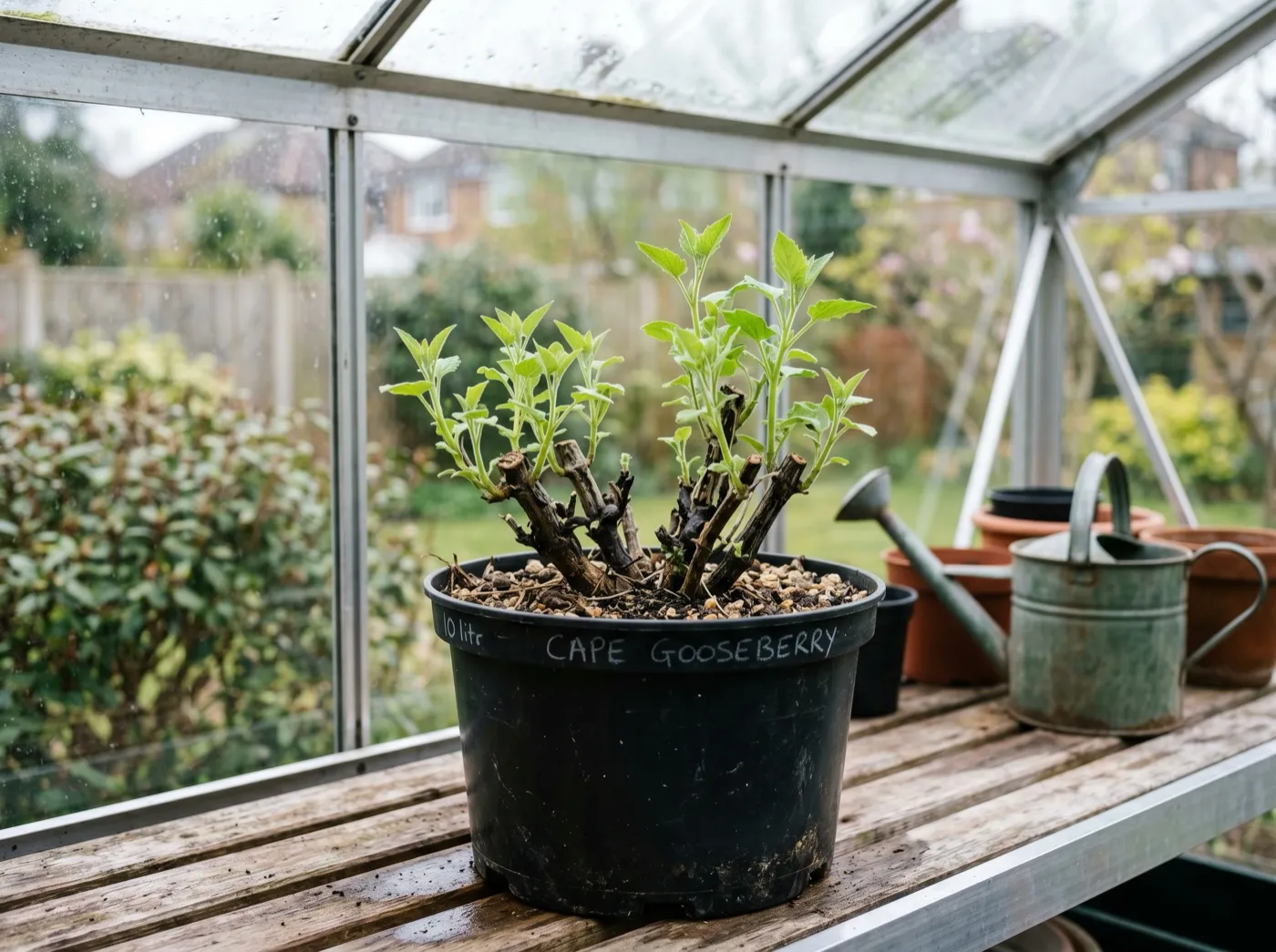
An overwintered plant reshooting in spring. A head start like this means ripe fruit well before the frosts.
Common mistakes with cape gooseberries
- Feeding it like a tomato. Rich soil and weekly feed give leaves, not berries. Grow it lean.
- Picking before the husk papers. Green-husk fruit never sweetens and isn’t safe to eat. Wait for the brown husk and golden berry.
- Planting in an exposed spot. Wind snaps the stems. Choose shelter and stake by July.
- Giving up after year one. A modest first crop is normal. Overwinter the plant for an earlier start.
- Ignoring windfalls. Fallen fruit in a dry husk is ripe and ready to eat.
Frequently asked questions
Can you grow cape gooseberries outdoors in the UK?
Yes, in a sunny, sheltered spot after the frosts. Plant out in late May or early June, 75cm apart. A greenhouse or polytunnel ripens more fruit sooner, but a warm south-facing bed works in many gardens.
Why is my cape gooseberry not fruiting?
Rich soil and too much feed are the usual cause. The plant answers fertility with leafy stems instead of flowers. Grow it in plain, unimproved soil and give just one or two high-potash feeds once flowers appear.
When are cape gooseberries ripe?
When the husk turns papery and straw-brown, usually September to October. The berry inside should be golden orange. Ripe fruit often drops still wrapped in its husk, so check underneath plants.
Are cape gooseberry and tomatillo the same plant?
No, they are different species in the same genus. Tomatillo (Physalis philadelphica) gives larger, savoury green fruit that fills its husk. Cape gooseberry (Physalis peruviana) gives small, sweet golden berries that sit loose inside. They are grown in a similar way.
Can cape gooseberry plants survive a UK winter?
Not outdoors, as frost kills the top growth. It’s a tender perennial, so cut it back to about 15cm and keep it frost-free under cover. Overwintered plants reshoot in spring and fruit earlier.
How long do cape gooseberries keep?
A few weeks at room temperature, left in their husks. The papery husk works as a natural wrapper. Once peeled, eat the berries within a few days or keep them in the fridge.
Is any part of the cape gooseberry plant poisonous?
Yes, the leaves, husks and unripe green berries are toxic. Only eat fully ripe golden berries. Keep children and pets from nibbling the plant.
Fancy more unusual things to grow? See the round-up of unusual crops to grow in the UK, or browse every fruit guide in growing fruit.
Our team produces practical UK gardening guidance from source research, contributor records and established horticultural practice. Editorial standards are overseen by Matt W.